How to Tap into Your Flow State Faster with Scott Donnell & Jim Kwik
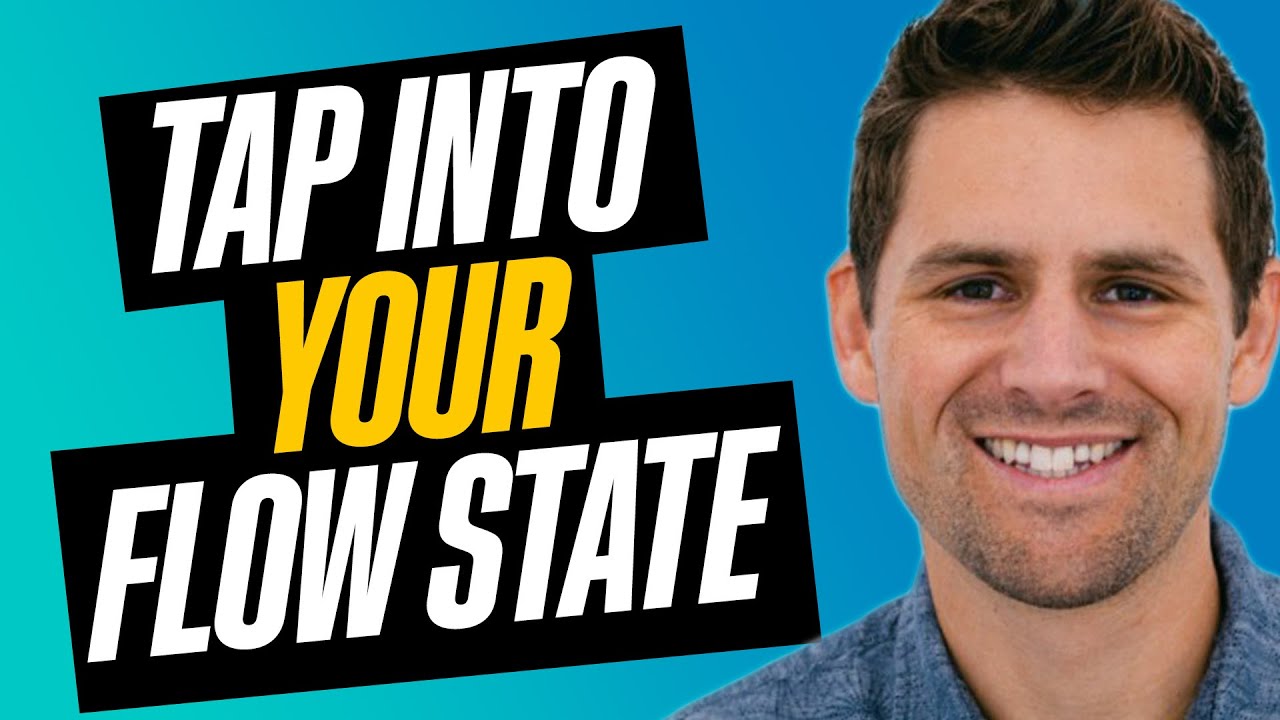
Scott Donnell shares his system for deep work: three daily priorities, protected thinking time, and ruthless delegation. He also discusses Hapbee, a device that delivers magnetic signals mimicking caffeine, CBD, and melatonin to trigger focus or calm states as behavioral cues.
Chapters
Welcome back, Kwik Brain. Your question for today is, how do you induce a flow state? We're talking about flow states. Many of you have listened to our conversation with Steven Kotler, the state of being where you are feeling your best and performing at your best. And who doesn't want that, whether it's accelerated learning or just getting through your emails throughout that day?
Yeah.
And we're shooting this as kind of a part 2. If you haven't listened to the previous episode, make sure you do so. But I'm back here with my friend Scott Donnell, and he is the founder of Happi, which we talked about in a previous episode on sleep, where you could actually choose the way you feel. An amazing new patented technology. I think you have like 40 patents or something like that.
Yep.
You have an army of scientists and PhDs working on this amazing way to be able to, get this magnetic imprint of molecules, anything from caffeine to melatonin. And so you could actually choose the way you feel, choose to be calm, choose to fall asleep faster and deeper, you know, choose to be alert.
Yeah.
And, and, you know, I want to talk to you about a little bit about flow because it seems like this is really in your wheelhouse. Because I don't know, I think a lot of people— we didn't mention this, but you also founded a leadership organization with 3 3 million plus members. You know, you've headed companies like this that produce like 80 different products. You know, that doesn't come always from just working hard, right? There's a method behind what looks like magic. So I wanted to pick your brain. We happen to be both speaking at the biohacking conference, so we kind of set this up impromptu.
Yep.
But thanks for doing this.
Yeah, thanks for coming to my suite at the top of this Hyatt Regency.
Yes, and so let's talk about flow states and how flow has served you as a serial entrepreneur. You know, you've been CEO of multiple companies, including one that recently went public. Yeah, how do you hack flow? How do you induce flow states?
Well, yeah, this is the trillion-dollar question, right? As people grow, as more and more technologies hit our phones, we have more and more things to distract us, right? So how do you work smarter, not harder? I think I've done the harder. I think we both have. And so what I've realised over the years, now with 5 different companies, and I think we have 612, 610 employees now across all of them, it is very difficult. And it doesn't matter if I'm talking about a lot of businesses or having a lot of kids and on the PTA and helping with, like, you know, Girl Scouts. Like, there's a million things that we all have going on, and it's only getting harder. And so how can you protect time for deep work and get the right work done? You know, it's— I actually think of work more as, like, how can you strategize doing the most important things first? That's the number— I think that's the number one tip I would give is a lot of people wake up, Turn on their emails, and that's just a list of everybody else's priority for you.
Mm-hmm.
And so how can you think about your work life as, what do I need to get done today? Short, small, measurable goals that I have to do. And I'm gonna wake up, and those are the things I'm gonna focus on the moment I hit my desk, or wherever your work environment would be. You've got to hit 1, 2, 3, and I never set more than 3 for my day because I get my best work done when I know I'm actually gonna achieve something that's in front of me. And so all the other stuff is gravy. In fact, uh, one of our mutual friends, Dan Sullivan, one of my favorite— he, and he loves Happy, by the way. He's like, uses this.
A lot of our guests also, everyone from Dr. Gundry to Dr. Jay, who's this amazing dentist that's supportive of our sleep that you might have listened to on Kwik Brain. I have raved about Happy.
Yeah, yeah, so they talk about, Dan has this thing called the gap and the gain, and it's one of my favorite strategies. He basically says, you can live in the gap, which is basically thinking your whole life that you're not enough and you're never gonna get it all done, and I got 39 things on my to-do list today, but I missed that 40th, dang it. That's called living in the gap. It's this unending horizon that you'll never reach. He said, that's the worst way to live. It's like living in jail. The best way to live is living in the gain, which is looking back at your achievements each day or each quarter. He lives his whole life in quarters, in 25 years, 'cause he gives himself plenty of time to reach what he wants to do. And so every day he only sets 3 things, and those are the things he focuses on, 1, 2, and 3.
Yeah.
And nothing gets in the way. And then he can look back, be satisfied with the day, have gratitude for the day, and be ready for a good night's sleep and the next day. And so smart, simple goals is the best way to set up deep work. You can't reach a flow state when you're worried about trying to get all the other stuff done.
Right.
You'll spin. And if you're trying to get your phone, you get a text and your email pops up, and then you get a WhatsApp and you get a Slack, and then you get a Zoom call coming up. And focus is one of the hardest currencies to maintain. And every new technology that comes out is just going to make it— the percentage of focus go down.
Yeah.
And so for me, you know, having all these companies and having all these projects, I'm still only— people are like, how do you do this? Did you clone yourself? No, I find amazing people and I choose 3 specific things that I'm gonna do that day, but I prioritise those things and I have a team of people that keep me alive. Like I have teams of people who do my emails, I have teams of people who help, like you should be delegating everything but genius in my opinion. And that doesn't go for just a CEO or founder, that goes for everyone across the organisation. I train this to my admins, customer service, my lawyers. Like, I don't want to spend— I don't want to pay you $400 an hour as a lawyer to look through a bunch of stuff that's not valuable to me right now.
Right.
So how do we prioritise what's done best first? Keith Cunningham, it's one of my favourite books, The Road Less Stupid. If you haven't read that book, I would say the Bible, then Limitless, Jim's book, have changed my life Top 2, and then Keith's book.
Cool.
I put those in the top 3, top 3 out of 5. And Keith, one of the best things he talks about is thinking time, right? And limit distractions, face a wall for goodness sakes, get a pad of paper and a pen out, and just sit and think and ask yourself an inspiring question, right? How might I solve this issue? What's the best next thing to do to move this project down the field the farthest? Having that time, and I try to do a half hour of that every morning, first thing when I get down, it's like, okay, what are the best 3? Are they the best 3 things? And okay, nope, it's this instead. And then I think and I write and I create impact filters, I create delegation lists, I think. And that's probably why we were talking before this episode why I became a lot more introverted.
Right.
Because I've realised the value of being with myself and knowing myself and being able to create so much and help so many other people by being alone and thinking.
And you've made it a priority also as well, because it's not about— we did an episode on scheduling white space, you know, time to just think and be creative, because that's our value today in society. Yeah, you know, to be our ability to solve problems, our ability to imagine, to create, to, uh, to be make better decisions. And yet most of us, that time is usually, like, that thinking time is usually in between something else. That's just if we happen to have a little lull in our schedule. So it's not so much about time management as I'm hearing, as priority management. Those 3 things to be able to thrive.
That's right. You have to have priorities. There's a great, there's another book. I know I'm dropping a lot of books.
Our people love to read.
The Ruthless Pursuit of Rest is a new book that has really changed my life. And there's another book that's out called Essentialism, and those 2 books have really helped me rethink only doing what's most essential and keeping margin.
Yeah. Right?
I am scheduling, actually in my calendar, I have scheduled, I've gotten over that hump of feeling like it's another thing on the calendar, but I am scheduling margin, right? I do no meetings before 9:30. 'Cause I'm with myself, and I'm thinking.
Yeah.
I have a break, you know, an hour and a half, that looks like a meeting, so no one else, none of my teams can add anything to it. It's the most important meeting of rest and rethinking, and this is where I get to learn. I actually block my days out, so some days are just buffer days, where I'm doing, you know, follow-ons and emails and learning and talking to people, and then some days are just focus days, where all I'm doing is selling or marketing or projects that need to move things forward, and then rest days. We call them free days. And that's a day where I am doing no work. I am not looking at my phone. I'm not taking calls. I'm doing those things that rejuvenate me the most because that's where I know and I learn what's best next. And it gives me, like, 4 of my companies, the idea came on a ski lift.
Okay.
How awesome is that? My brain was free and I had that margin and I immediately saw something and it like hit me like a bolt of lightning. And I was like, this needs to become, and so then it, I got back from the trip and I was like, here we go.
Yeah, it is fascinating how the brain works in terms of when it's alert and focused and then it's in this other place where it's more divergent and it's able to see patterns and come up with ideas. And it's interesting how this relates to flow. Essentialism is an amazing book. We've had Greg on our podcast also as well.
That's right.
And we love, and his other book on Effortless is just how do we make this easier or more effortless? So it's the questions we ask ourselves. It can also be a trigger for flow states.
Yes.
Now, for people to be their best and feel their best, one of the things we talk about, you know, our mutual friend Dr. BJ Fogg talks about the power of prompts, right? And having a trigger to be able to set a behavior in motion. And what I like about Happy, so this, how would you explain this to the person? And by the way, everyone should look at the show notes And also listen to the conversation that Scott and I had about having better sleep, because, you know, as running all the companies that you do, it's easy to be able to burn out, and I think everyone can relate to it. So whether somebody has an organization like you or their family, right, you know, or themselves, they could delete and they could delegate and then, you know, delay or do, you know, certain things.
Yeah.
talked about the technology and how it could be a powerful prompt for— because when I look at my app that's connected to this, I go through and I could see like, hey, this is how I could go through my email faster, right? Right, right. Getting those kind of flow states.
In fact, just this morning we launched our blends. So I'll explain it, and then I got to talk to you about the email mastery and the deep work. But so Happy is 18 years of research, R&D in the labs, over $80 million into this now. And like you said earlier, 40— almost 40 patents. I think 38, but 2 more coming. Uh, basically the, the idea was, how can we extract the magnetic signature of a molecule and play that back onto the body and give the effect without any of the negative harmful side effects? No metabolic issues or digestion issues or half-life issues like we were talking about with sleep. And what I—
So it could be like caffeine.
Caffeine, melatonin, CBD, things like that. We have 8 on the app right now, base signals. We have 14 more things for appetite suppression, things that we've talked about behind the scenes for memory trigger and neuron firing and helping people with learning faster. But that's our long-term vision, is to create a platform where people can use it for what they want. And as it relates to flow time and deep work, we have, some incredible nootropics in the app that we've pulled from. You know, one of my favorite, other than caffeine, right, or a nicotinian trigger, is theobromine, which is the stimulant in chocolate, okay?
We have a lot of chocolate fans.
We have a lot of chocolate, yeah, I'm a chocolate fan. It actually curbs, we've had many reports, we're not claiming this, but many people have reported that it helps them curb some of their, or all of their chocolate cravings, which is awesome side note that we didn't even know was possible, but here we are. Dark chocolate, that's right. Over 70%, then you're doing better. But yeah, so when it comes to a nootropic, if I kind of look at happy as like my shield I'm putting on. So this is what our friend BJ Fogg talks about as the perfect prompt, right? Motivation, ability, and prompt map. So you have the motivation to get something done, you know you have the ability to get that done, and the motivation's high enough and the ability isn't as crucial to have a high ability, you don't need much ability, and then the right prompt.
Mm-hmm.
So, many of our customers, other than sleep, they're using it for focus, alert. We call the theobromine signals the boost signal. So, it gives you energy on command. It gives you this focus signaling throughout your body.
Mm-hmm.
And, we can get into the science a lot more about how we're basically triggering receptor sites, and it's all free-ranging electrons mimicking non-covalent bonds. That's another story of the deep back end of this. Practically speaking, I think of it as a shield. So if I have one of my 3 things to get done for the day, I block everything else out, I set a time, I set a goal that's reachable, I get myself into a space where I'm not getting distractions, so phone's in airplane mode, email's off, and I'm just going. Or if it's email, I've got an email that's not getting alerts every 2 seconds, right?
Right.
And I throw on Happy, and I will throw on, my favourite's Focus, right, which is basically, a nootropic trigger that's firing my neurons, helping my brain focus, and getting me in the zone faster. It's this choice that we keep talking about. I'm choosing to put on the shield and get to work. And yes, it's actually making a biophysical change in my body, but what it's also doing is it's prompting me to get in this flow state and continue in it. And there's— everybody has a lot of different prompts out there. I've just found this to be the most effective one-click button, here I go.
Yeah.
And then with the blends we're launching, I'll pull these up. We have the ability now to pulse like a caffeine or a theobromine back and forth. Or if you wanna relax, we have like a CBD and a happy hour signal that you can go back and forth with. But we have our newest blends that just came out this morning, Mastering Your Attention. That's a few of the different blends of the signals.
Wow.
We have Creative Boost, we have Deep Work, we have a Stress Relief. In the middle of it, if you're getting too stressed out in a situation. Or I actually played it right before my speech this morning. I was getting heartbeaten, and there's thousands and thousands of people in the audience, and, you know, I— that made me nervous. And so I played it, and it just sort of calmed me, and I was ready to go.
What I love about Happy is it gives people their agency back. It allows them to realize that they're at You know, at cause, that they can make a choice, that they don't have to hope they're gonna feel alert or calm. And if you struggle with these things, you might wanna look into this technology because it's a supportive device, right? It allows this, it gives you a prompt. If you have anxiety or some angst before going on stage, some butterflies, then you could hit calm or you could hit focus or email mastery and just go through it.
That's right.
Which is amazing. And I wanna thank your team also because you set up a discount for our listeners and our viewers. If you go to hapbee.com/kwik, and that's, you have to spell it right, H-A-P-B-E-E.com/kwik, you can get an exclusive discount on this technology and get all the details. You get to see the leadership team behind this, you know, the science behind this, and then try This amazing device. So if you struggle with focus, becoming calm, falling asleep, or even staying asleep, this is something that I feel like I'm at a disadvantage if I don't use this.
Yeah, yeah. And look, there's a lot— there's a whole tool belt that people use at their disposal for more productivity, more focus, more energy, you know, more relaxation and better sleep. Everybody has their routines. This is our goal. Like you say in the book, we are limitless. Like, we don't even know how much we're capable of. And that's probably one of the biggest sicknesses we have is that we don't know how much we can do. And our mission here is really to help people take advantage of unlocking these abilities in their body and in their life. So for me, it's worked incredibly well. It's actually helped me manage well all the different companies and the people and the projects. But for everybody listening, right, like just, just try it. We have a money-back guarantee. I don't want anybody being sad. I want everyone's lives to be benefited, and if you don't like it, we'll give all your money back. We're not in this, honestly, for money. We're in this because we want as many people to benefit from the technology.
I know in our relationship and our friendship for as long as it's been, it's very mission-driven, not only for yourself, but the team that you lead also as well, so thank you. We'll put all the information in our show notes. If you do end up getting a unit and using it, I'd love to hear your joy stories. So make sure you—
Me too.
Yes, absolutely. Tag Happy, tag myself.
Get Happy, I think, is our Instagram. So yeah, we'd love to hear your stories.
And if you've been using this already, you know, please share them, and I'll repost some of our favorites. And again, as always, we'll put all the details in the show notes. Make sure you, if you haven't, to subscribe to our YouTube channel where we show the whole video so you can actually see see what this looks like. For me, it looks like a little— like an Iron Man.
Yes, that's right. That was the goal.
Superheroes have their, you know, Batman, and, you know, didn't have any necessary powers, but he has technology. Iron Man has his technology.
Honestly, that was my vision, is you can turn the light off if you— for bed and everything, but how can we make this feel like this is my superhero power?
Yeah, well, this, this is, this is a real hero maker. So thank you so much everyone for, for joining us for this episode. I love Scott and be amazing, and everyone choose, choose to be happy.
There you go, there you go, perfect. Thanks everybody.
Hi, Kwik Brain, it's your brain coach. I want to thank you so much for watching this video. 3 things to do. Number 1, make sure you share this because when you teach something, you get to learn it twice. Update your learning so you can update other people's learning as well. Number 2, make sure you subscribe to this channel so you don't miss a thing because if you miss a video, you miss a lot. And finally, make sure you hit that bell so you're notified Notified and you find out when we put out the latest and the greatest. One extra thing, if you want really close attention, then text me. Here is my phone number: 310-299-9362. Did you remember that number? 310-299-9362. Shoot me a text And we'll stay in touch. Ask me your burning question, and I wish your days be full of lots of life, lots of love, lots of laughter, and always lots of learning. I'll see you in our next video.
More from Jim





The Library of Minds: Brain Coach: How to Stay Sharp When AI Does the Thinking | Jim Kwik





