How to Unlock Your LIMITLESS Mind
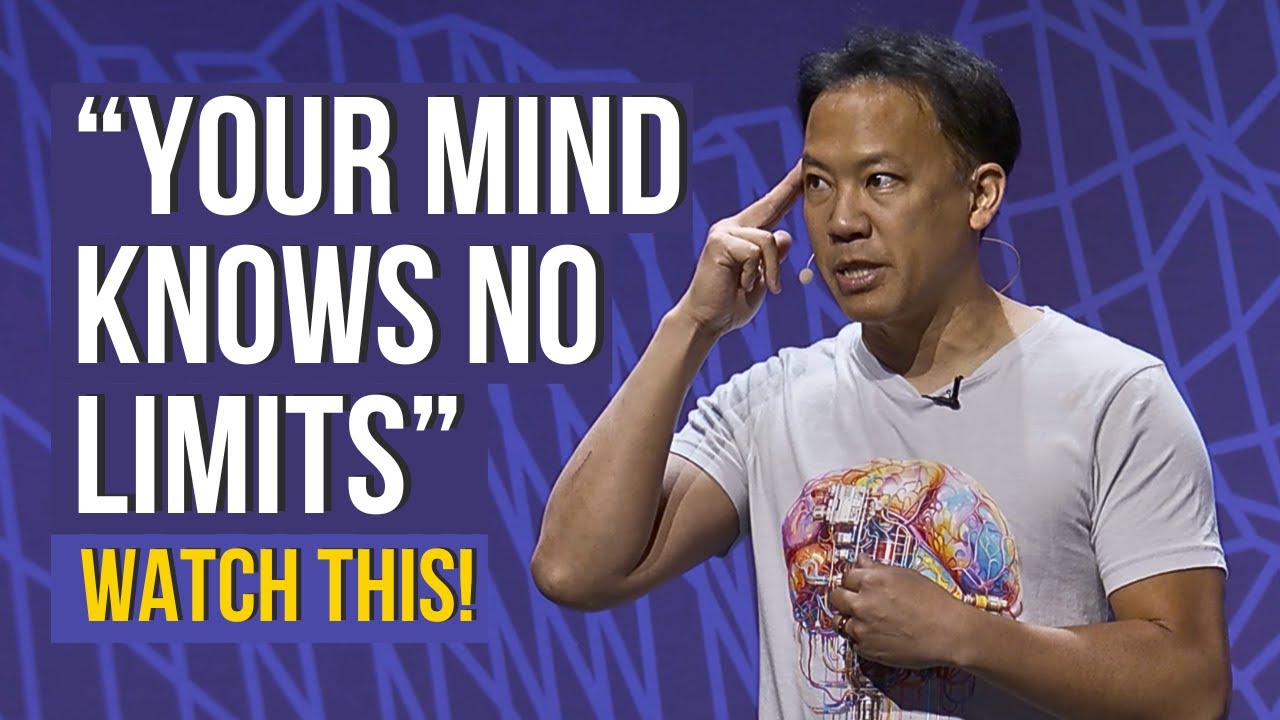
Jim Kwik, a brain coach who recovered from childhood brain injury, shares frameworks for memory and learning used by Google, NASA, and the NBA. He introduces the Limitless Model (mindset, motivation, methods), the MOM technique for remembering names, and a brain animal assessment that matches you to one of four learning archetypes.
Chapters
One of the world's leading experts in brain performance and accelerated learning. Expert on optimum brain performance. Boy with a broken brain.
He's the founder of Quick Learning.
Get ready to upgrade your brain with Jim Quick. Jim Quick. Jim Quick. Jim Quick. Jim Quick.
Jim Quick. Jim Quick.
Jim Quick.
Quick Learning.
Jim is a brain expert.
World's leading memory coach and New York Times bestselling author, Jim Kwik.
Brain genius, Jim Kwik.
Jim the Brain Kwik!
This is a young boy who, when he was 5 years old, had a traumatic brain injury and spent the next 15, 16 years on learning, on learning quickly. Instead of simply accepting defeat, he set about making up for shortcomings through an obscene amount of hard work. Jim's book Limitless is a phenomenal bestseller. His hyper-effective techniques have been sought out by the likes of Virgin, Google, the United States Air Force, Nike, Zappos, Marriott, the NBA, SpaceX, 21st Century Fox, Harvard, and Singularity University.
Mr. Jim Kwik is in this house!
Everyone, welcome New York Times bestselling author and founder of Kwik Brain, Jim Kwik!
Good morning, everybody. How many people are ready to upgrade their brain? Raise your hand. All right, let's see. Stand up, everybody. You're like, oh, he's one of those guys. All right, we're gonna make this a real training. I don't lecture a whole lot. My goal is for you to get this inside of your mind and your body. What I want you to do is I'm going to talk about how to unlock your limitless mind. And this is really— I believe your brain is your number one wealth-building asset. Raise your hand if you agree. We do a lot of training, mind training, at Facebook and places like Google. And I'm so excited to be here because this is Honestly, one of my favorite places to visit. I'm here in Salt Lake City in Utah at least 6 times a year. And how many people traveled to be here for this? Raise your hand. Okay, so we have a lot of locals here. One of my favorite places for our family to be able to visit. And what we're going to do here is I would really want to pour into you this morning and give you some tips and techniques to get the most out of today. So, you come to these events for one of two reasons. You come here either for the content and/or the connections. Is that true? And I want to help you to be able to learn both, to be able to learn the information, focus, retain it, and then also remember the people you meet. And so, how many of you came here today feel like you're overloaded with too much to learn and too little time, like you're taking a sip of water out of a fire hose? How many of you have books on your shelf you haven't read yet?
Yeah.
And it becomes shelf help, not self-help. How many of you came here to like to have a better memory? Raise your hand. How many of you forgot why you came here today? So let's talk about— how about names and faces? How many of you met somebody today, got their name, and seconds later, name just disappeared out of your mind? Look around. All right. Let's start with my name. My name is Jim Kwik of Kwik Learning, and I help people to learn quickly. And I'm going to share with you some of those techniques right now. So what I want you to do is get into groups of 2 or 3 people who you do not yet know. So introduce yourself, go. Find 2 or 3 people. Move around, 2 or 3 people you do not yet know. Quickly, quickly. Raise your hand if you need a group. Raise your hand if you need a group. Get in groups of 4 if you need to. 4 if you need to. 2, 3, or 4. All right, repeat after me.
Shh. Shh.
All right, just move out your body. Now that you have your new group, shake out your body. Remember this. There's a priming process to learning. All right, as your body moves, your brain grooves. So what I want you to do is take your hand or your elbow and raise it, touch the opposite knee, and go back and forth. Show your partners how agile you are. This is something called cross crawls. It increases your brain's connection between your left and right brain. Do this: shake out your hands, massage your opposite earlobe, and then do the same on the other side. And I want you to inhale and go down, exhale and come up. Are we getting this on camera? Good. Inhale, go down. Exhale, come on up. Inhale, go down. Exhale, come on. One more time with a big smile on your face. Exhale, come on up. All right, shake out your body. All right, I'm going to give you a number of techniques, probably about 10 really quick tips to upgrade your brain. And so let's start here. Let's start with how many of you like to remember names better? Is it important in business, yes or no?
Yes.
It is, right? Because how are you going to show somebody you're going to care for their future, their finances, their family, whatever you have to offer them, if you don't care to remember what? Their name. But a lot of stress around a name, right? I want everyone to remember this, MOM, M-O-M. 3 keys to remembering names better in business or in life. All right, the first M. Well, let's say there's a suitcase here of $1 million cash, and you could go home with it tax-free if you just remember the name of the next person you meet in the room. How many people are going to remember that person's name? Raise your hand up high. Now, how come you're all memory experts all of a sudden? So I want to point out as your coach that it had nothing to do with your capabilities. It had everything to do M-O-M, MOM. This is the mother of all memory techniques. The M is motivation. You need to find motivation to remember a person's name. So, I meet somebody for the first time, I'll ask myself, why? One of the most important questions you could ask yourself. Why do I wanna remember this person's name? Something very simple, common sense, but it's not common practice. And so, maybe it's to show the person respect, maybe it's to make a new friend, maybe it's to get a referral, maybe it's to practice these One of the things I learned, if you don't get the— if you don't have a reason, you won't get the result. Remember this, reasons reap results. Now, the O in MOM. Everyone shake out your dominant hand. Look at me. Do this. Shake out your dominant hand. Make sure your neighbor's doing it also. Make a fist. Put it to your chin. Now, come on, everybody. Where's your chin? The O is observation. The art of memory is the art of attention. And paying attention throughout the day, today and tomorrow, is so very important to maintain your concentration. A lot of people, you're not forgetting a name, you're just not hearing the name. Does that make sense? And the final M in MOM are the methods. And we teach a lot of different methods. I'll show you one here. This is a framework. That we use. You could put the slide up. This is how you could truly become limitless. All right? This is a limitless model. You can take a picture of it if you like. How many of you feel stuck in an area of your life, some area of your life, your health, relationships, your career, your income, your impact? If you're stuck in a box, right? Imagine you're stuck in a box.
That's right.
That box, by definition, is 3-dimensional, right? There's 3 forces that contain that box. These are the same 3 forces that will liberate you out of that box. And I call it the Limitless Model, 3 Ms: your mindset, your motivation, and the methods you're gonna use. When you wanna make a difference in your life, you have to control what you can control, right? You can control the controllables, the 3 things you could always Control is your mindset, your motivation, and the methods— your head, your heart, and your hands. And that's really the key to unlimit yourself. You can learn a great method for how to remember names, but if your mindset is, I'm too old— like somebody just 5 minutes ago said, Jim, I'm glad you're here. I have a horrible memory. And I was like, wait, stop. If you fight for your limitations, you get to keep them. Isn't that true? Your brain is the most incredible supercomputer, but if your self-talk is, I can't remember names, you will not remember the name of the next person you meet because that's the program that will run. Does that make sense? Right?
Yes.
So, all behavior is belief-driven. So, what we're gonna do is I'm gonna give you a strategy. It's called SUAVE, S-U-A-V-E, and you're gonna do it with your new partners. The S is you're gonna say their name. All right? So, what we're going to do is turn to our partners, and you're going to introduce yourselves again, and you're going to have a conversation, and you're going to repeat their name back. You're going to say it. Ready? Go. All right. Stop. Stop.
Shh.
Now, the you in suave, you're going to do it right now. The U, shh. The U is you're gonna use the name. You first say the name, then you're gonna use the name in the conversation, all right? So, ready, set, go. Use their name creatively. All right, stop.
Shh.
Now, another technique, the A in SUAVE. How many of you met somebody that has kind of an unusual name? Raise your hand. You just met somebody. The A is you ask about their name. What can you ask about a person's name? Yep, where is it from? How do you spell it? Who are you named after? What does it mean? Right, these are all questions. And sometimes when you forget someone's name, you try to get creative. And you're like, oh yeah, by the way, how do you spell your name? And the person goes, B-O-B, you know, something like that, right? But ask about the person's name, go, go, go. My name is— All right, shh. Okay, finally, the V, the V in SUAVE that you're gonna use throughout today and tomorrow to make these deep connections is visualize. How many of you remember things you see? You remember the face. How many of you are much better with faces than you are with names? You go to someone and say, I remember your face, but I forgot Your name. You never go to someone and say the opposite. You never go to someone and say, I remember your name, but I forgot your face. That wouldn't make a lot of sense, right? And so, what to visualize is, if you tend to remember what you see, try seeing what you wanna remember. Your visual cortex is the largest real estate in your brain, so you tend to remember what you see better. So, what you're gonna do, if a person's name is Mark, imagine yourself putting a checkmark on their forehead, right? If a person's name is Mary, Imagine they're carrying 2 lambs underneath their arms. Mary had a little lamb, right? If a person's name is Carol, you can imagine what? That they're doing Christmas. And it's childish, but who are the fastest learners on the planet? Children, right? So do the best you can to visualize something that reminds you of. All right, tell your partners what you're imagining. Ready? Go. All right, and finally—
Shh.
The E in SUAVE is you end the conversation saying goodbye to the person using their name. Because if you could walk into a room of 20 strangers, meet them, and, you know, have a meeting, and leave saying goodbye to them, every single one by name, who are they all going to remember?
You.
You. And that's a standout skill. It's not just what you know and who you know, It's who knows you, and it's a standout skill. So, say goodbye to that person using their name. Ready, set, go. All right, have a seat, have a seat, everybody. So, remember this, write this down in your notes. What you learn the next couple of days, there's a learning curve, but there's also a forgetting curve. What percent of information do you think people forget after hearing it just once? After reading it once, listening to it on a podcast, having a conversation, after 2 days, how much do you forget?
80%.
80%, right? So take notes. Remember, write down MOM. See if you remember what MOM stands for. Because the last M is methods, right? Motivation, observation, methods. And the first method I taught you is SUAVE. By the way, how many people have this book, Limitless? Wow. So we just updated the book. There's a brand new one coming up next month, Post-Pandemic AI World. And so you can find out more about it there. There's hundreds of dollars of free gifts. And brain training, just as a thank you for supporting that book. All right, what we're gonna do now is I'm gonna share with you 4 things to learn faster today. I want you to remember FAST, F-A-S-T, and we'll finish with this. FAST. These are 4 keys to learning any subject or any skill, because I believe to be truly limitless, to have an unfair advantage, the faster you can learn, the faster you can earn. Because knowledge today is not only power, knowledge is profit, right?
Right.
And so F in FAST stands for focus. We've already talked about this. Turn off your phones, don't get distracted, don't multitask, right? You're gonna focus on one thing at a time. The A in FAST is active. You have to be active in the next couple of days. You could take notes, you could ask questions, Because learning is not a spectator sport. The S in FAST, remember this, most important thing, and I know Tony's gonna talk about this, state, your emotional state. The key to a long-term memory is information by itself is forgettable, but information when you're in an emotional state becomes unforgettable. All right? So, how do you— it's like right now, sit the way you'd be sitting if you're very excited. If you're very interested, sit the way you'd be sitting right now. Now, why do you even have to move? You should be excited, but you know your physiology affects your psychology. So manage your state the next couple of days because you control your state. And then finally, the T in FAST. If you really want to level up your learning, teach. It's called the explanation effect. If you had to give a presentation at work or to a group of friends next week, about what you learned, the highlights of what you learned in the next couple of days, would you focus better? Yes or no? Would you take better notes? The explanation effect says that when you learn to explain it, you're going to learn it in half the time. All right? So when you teach it, you get to learn it twice. And here's a gift for you. I realized after 30 years of doing this, you know, coming back from a traumatic brain injury that led to learning disadvantages and challenges, I couldn't read for 3 years as a child. I was called the boy with the broken brain. I realized that everybody learns differently. It's not how smart you are, it's how are you smart. So, we created an assessment for you that I wanna give you as a gift. There are 4 brain animal types. There's the cheetah, the owl, the dolphin, and the elephant. And you can take the quiz here. It's a gift. There's nothing— you don't have to buy anything. There's nothing there.
Thank you.
And when you understand if you're a fast-acting cheetah or a logical owl or a creative dolphin or an empathetic elephant, then I'm going to give you a detailed personalized report on how you could read faster based on your animal, how you could remember better based on your animal, how you could lead better based on your animal. Don't take this quiz right now, but send this link to a friend or family member or coworker. And they'll take it and they'll tell you how great it is. All right? So my last thing here is this. Thank you for being here. It's such an honor to be back with you. I was here last year also as well. Make the most of the next couple of days because there's a version of you that's patiently waiting. And the goal is we show up every single day for ourselves until we're introduced. Thank you very much, everybody.
Thanks.
More from Jim





The Library of Minds: Brain Coach: How to Stay Sharp When AI Does the Thinking | Jim Kwik





