Improve your Memory in 60 SECONDS! 🧠
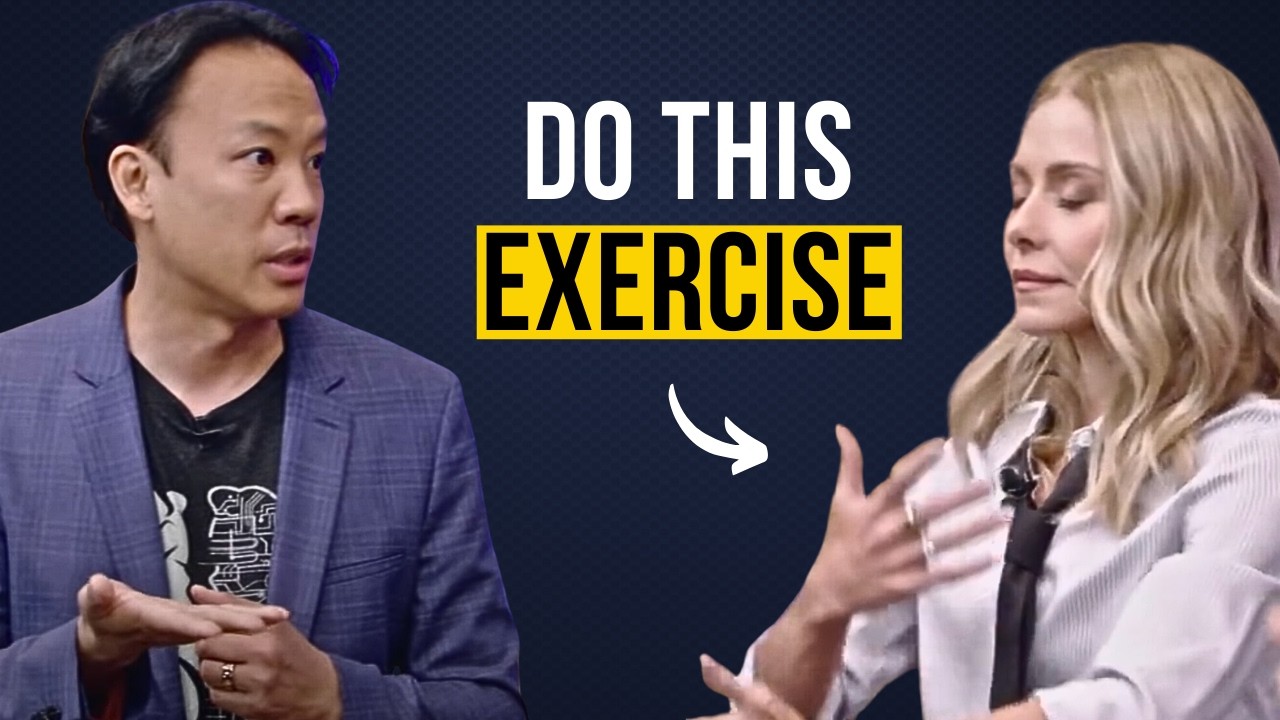
Jim Kwik teaches the body-loci method: assign ten grocery items to ten body parts, visualize vivid images, and remember them all. He also demonstrates cross-crawls and juggling to boost focus, and explains his MOM framework: motivation, observation, and methods matter more than tricks.
Chapters
Welcome back!
We're wrapping up our Turn Back Time week with exercises to keep your brain sharp and improve memory. Here to show us how is brain coach and New York Times bestselling author of Limitless, Jim Kwik.
Hi, Jim!
Hi!
Welcome back!
Thank you.
Okay, why is it so important for us to exercise our brains?
Our brains are our number one asset that we have, and when it's not working, you know what it feels like, right? When it's overloaded, when you're When you're distracted, when you're forgetful, we lose productivity, we lose performance, we lose our peace of mind. And so we wanna use it or lose it.
So teach us some exercises to keep sharp.
Yeah, so there are physical movements you can do that only take seconds a day to help you focus better. And as your body moves, your brain grooves. And so we can all do this. Stand up, and if you will at home also as well. So what you're gonna do is you're gonna take your hand or your elbow and you're gonna touch the opposite knee and go back and forth.
Oh good, I'm in a pencil skirt.
So, okay.
Pencil skirt is added points for a challenge.
This is something out of educational kinesiology that's called cross crawls.
Cross crawls?
And it's in hard— it helps you to be able to focus. I do this before a Zoom meeting or when I'm with You know, my family, to really just be present. It helps integrate your left and right brain.
Uh-huh.
And so here's, here's another one. I want everybody to just pull in some energy. It's like a little bit of qigong, you know, like just to visualize energy coming in. Now I'm gonna test you, 'cause the key to neuroplasticity, creating new connections, is novelty and nutrition. All right, novelty and nutrition. And so what I want you to do now is I want you to take one hand and go in the opposite direction now. So one coming towards you and one coming back.
I'm stuck.
All right, most of you are still doing this. So, but the idea here is to challenge yourself. That's how your brain grows. Just like with—
Wow.
Just like with brushing your teeth in the morning, you could brush your teeth with the opposite hand also as well. And you can challenge yourself.
I'm totally stuck.
Yeah, we'll work on that.
We'll work on it during the break.
Okay.
The last exercise you could do, there was a study done at Oxford University saying jugglers actually have bigger brains. And so learning the act of juggling could actually create more white matter. And so you could, this is just socks that we rolled up.
These seem hard to juggle.
Yeah, but they don't roll around like tennis balls would. And you're just like tossing them around. You don't have to be great at this.
Wow! Yeah, that's amazing.
I used to know how to juggle.
All right, tips for memorizing and remember names and tasks when we come back. All right, we are back with brain coach Jim Kwik.
What are some tips to remembering names and tasks?
Names.
So there's no such thing as a good or bad memory. There's a trained memory and an untrained memory. I think remembering names is one of the most important etiquette skills that there is.
Yes.
And so remember MOM. M-O-M is kind of the mother of principles for remembering things. And the M stands for, well, let me give you an example. Let's say, how many of you would like to be better at remembering names, right?
Everybody.
Let's say there was a suitcase here that Usher left with $1 million cash if you just remembered the name of the next stranger you meet. How many people are gonna remember that person's name? Yeah.
Right?
So the first M in MOM stands for motivation.
Motivation.
So it's not true you can't remember names, it's are we properly motivated? And just ask yourself, why do I wanna remember what I'm reading, what I'm listening to, this person's name? Reasons reap results. The O in MOM is observation. A lot of people, when they forget something, they blame their retention when it's really our attention. The art of memory is the art of attention.
Mm-hmm.
A lot of times you're not hearing the name, you're thinking about what you're gonna say. And if you take the word listen, here's a little brain exercise, and scramble it, it spells another word perfectly. It spells the word silent. Just being silent and present, we can remember it. And finally, the last M in MOM are the methods. And I'll share with you one of my favorite methods for remembering things. Let's say something simple like a grocery list. Let's say you get a phone call at home from Kelly and Mark saying, while you're out, can you pick up these foods? We're gonna have a limitless brain party. And you can't write it down because you're driving, so we're gonna show you how to do it right now.
Okay.
All right, so what I want you to do is we're gonna take 10 places in our body real quick. So you can stand up and everyone say, 1 is top. 1 is top.
Top.
2, nose.
Nose.
Nose.
3, mouth.
3, mouth.
4, ears.
4 ears. 5, throat.
5, throat.
Okay, so we're halfway there. 6, shoulders.
6, shoulders.
7, collar.
7, collar.
8, fingers, wiggle your fingers.
8, fingers.
9, belly.
9, belly.
And 10, bottom.
10, bottom.
All right, now watch this. I'm gonna list 10 foods. These are some of my favorite foods. Avocados, blueberries, broccoli, olive oil. What we're gonna do is we're gonna take each one and put it on that body part.
Okay.
All right, so what was number 1?
Avocado.
Avocado.
Right, top of your head, avocados. Imagine you're using guacamole as a scalp conditioner. All right, what was the second place? Blueberries. Imagine blueberries coming out of your nose. I like to call them brain berries.
Brain berries.
All right, 3 is what?
Mouth.
Broccoli. So imagine broccoli. You know when you have broccoli stuck in your teeth, it's so embarrassing? Yeah, taste what that tastes like. 4, what?
Ears.
Ears. Olive oil.
Olive oil.
Imagine you're cleaning your ears with olive oil.
Yes.
5 is what?
Your throat.
Instead of an Adam's apple, imagine there's a hard-boiled egg. Eggs.
All right?
Eggs.
6 are what?
Shoulder pads.
Green leafy vegetables. So imagine shoulder pads made of kale and spinach. Okay?
All right?
See and feel. Even if you can't imagine it, imagine you can imagine it. 7 is what? Your collar. It was salmon. So imagine a necklace made out of salmon sushi. Pretend it's 10 days old.
All right? Good.
8 is what? We're almost done. Fingers. And that was turmeric. Imagine that golden powder all stuck in your nail bed.
I feel like you switched this list halfway through this exercise.
9 is what? Belly, and imagine walnuts.
Walnuts.
Walnuts, eating walnuts out of your belly button. And then 10 is what?
Bottom.
Bottom.
Dark chocolate. I don't even wanna know. Okay, all right, now you're at the supermarket, you're walking down the aisles, you have the grocery list, you don't have to write in triplicates. What's the first thing you need to buy? Avocados.
Blueberries.
Blueberries out of your mouth. Broccoli. Cleaning your ears?
Olive oil. Olive oil. Eggs.
Eggs.
Green leafy vegetables. Very good. Necklace? Salmon. Salmon on your fingers?
Turmeric.
Turmeric, very good.
Your belly button?
Almonds.
Yeah, walnuts and almonds. And finally, dark chocolate. Give yourself a round of applause.
Thank you, Jim.
Thank you. For these exercises and more, check out our website and pick up Litman List Expanded Edition.
Where all books are sold. We'll be right back.
More from Jim





The Library of Minds: Brain Coach: How to Stay Sharp When AI Does the Thinking | Jim Kwik





