Jim Kwik's Not-To-do List for Better Brain Health 🧠
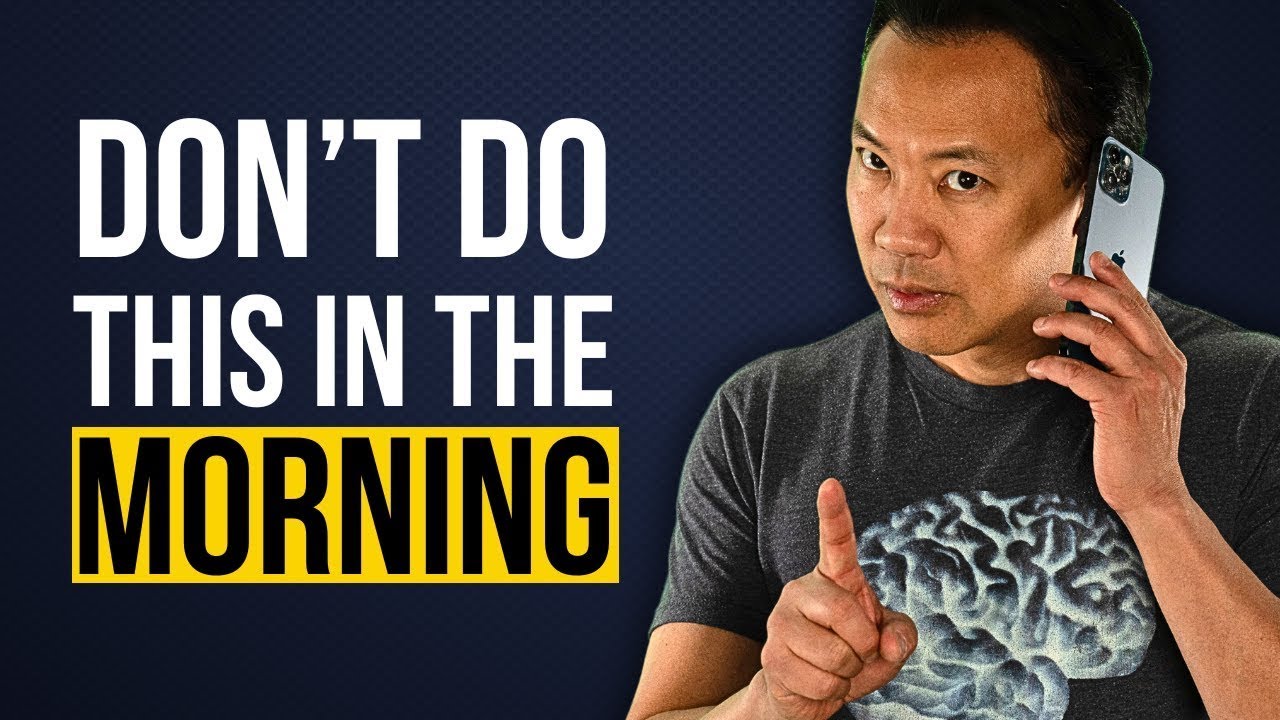
Jim Kwik outlines habits to drop for better brain health: keep phones out of bedrooms and away from dinner tables, don't work in bed, skip screens first thing in the morning and late at night. He also flags mental drains like complaining, overthinking, and comparing yourself to others on social media.
Chapters
The other thing that you talk about is this sort of not-to-do list. And I sort of was always joking is like when I was just overwhelmed, I said, I'm going to create a to-don't list as I begin to realize that my most precious commodity is time, what we're choosing. And I think I'm imagining that your not-to-do list is really about that. And I'd love to hear what your not-to-do list is too.
Yeah, let's do it. And so for me on my to-stop list or to do less of is like checking my phone first thing in the morning.
Don't keep it in your bedroom. How about that?
Yes. And even better, right? Because that would, that would stop that. That would stop that right up front. That would be a lead domino. And I'm always focused on, you know, everybody has— that's the— you're right. That's the one thing that we can't get back is our time. And we all have— that's the one thing that's equal. Not everybody has equal income or education or a Rolodex, but everybody has the same 24 hours in a day. And it's how we're utilizing that time. And so I would say is on my, on my not-to-do list, Because I would say let's first not touch our phone first thing in the morning and then late at night. That's kind of a simple, not necessarily easy, but a simple one. For me, the device also just creates so much stress. So it's not that I'm so enlightened or have such amazing willpower and discipline. It's just something that I've just associated. Like, it's wonderful to use it to connect and to learn, but it's also, you know, can really hurt your peace of mind. And peace of mind is high currency. It's true.
I remember, like, recently I forgot my phone and I was like, Went out for that evening and I was like, wow, I feel so free. And like, I actually had a flashback to what it was like before there were cell phones.
Or even, even, even having— not having the phone at tables. Like, we've done a— we have our own podcast and you've been on a number of times. And just, we know that the stress that's caused, anxiety, the impetus, having the phone on the dinner table makes you want to check it, right? And it's just, it starts like every, every X amount of seconds you have that impulse to do it, even if you don't touch your phone. And so I feel like especially because Because, you know, dinners and meals with family members or friends is kind of a lost— yeah, it's very precious. And, you know, it's kind of a lost time that we're spending less and less time doing that. I think, you know, it allows us higher quality of life and enjoyment, help us live longer also, because it's not just what we eat, it's who we're eating with and how we're eating and when we're eating, right? And why we're eating that stuff to begin with. So many people eat in a stressed state. They're like still working or something and they never get that parasympathetic rest and digest. So even things on my not-to-do list is when I'm eating something, I I don't work, right? Meditation is not limited. To be mindful is not limited to your meditation time. You could take mindfulness into brushing your teeth, right? Into eating a meal and really tasting what you're eating and connecting, using that opportunity to connect with other people. So, yeah, so I don't work. Like, for example, my not-to-dos, I don't work in bed. Something simple. Because we also, part of our learning journey is when we associate unconsciously the environment to the the state that we're in. And if you tend to work sitting in your bed or on your phone, then that's the place where you should be doing only a couple activities, right? And one of them is sleep. And it's hard sometimes for people to turn it off if they're conditioned every single time. Even having a device, let's say they binge watch, they use their device, their laptop for work, but if they're also using it to binge watch Netflix, you're training your nervous system like, hey, these are 2 different— activities, 2 different states that you're anchoring to it. So I would think that not working in bed or not working when you're, when you're eating, it could be very important. And even things like that.
So it sounds like very Zen. When you eat, eat.
When you sleep, sleep.
When you walk, walk. When you breathe, breathe.
It's so profound.
Basically, the Buddha taught this a long time ago.
Yeah, I take absolutely no credit for this. I definitely didn't initiate this. But it's something— sometimes also a coach reminds you of what you're doing when you're doing it well. And sometimes it's hard because we're addicted to, you know, to work or addicted to social media or something like that. I would also say even simple, simple things like I would say on the top of the list also is not complaining, not caring what other people think. And I know it's easier said than done, but if you fuel your life with the opinions of those around you, both positive and negative, you're going to run out of gas, right? Nobody has a right to define who you are. The only opinion that matters about you and your dream is yours. And we do ourselves a disservice when we let the noise of other people's opinions distort You know, our reality and subvert our own thoughts and values. I think also on our list not to do, and this is again easier said than done because so many people are addicted to it, and I know I've been in these places, is complaining.
Oh, man.
We're talking about mental health.
That's a good one.
Mental health. You can't make excuses. You can make excuses or you can make progress, right? But you can't make both. And complaining wastes valuable time, energy, and achieves nothing. Right. And, and so I would say you can't be upset by the results you didn't get from the work you didn't do. So I would just say that nothing, nothing happens after complaining. You mean? Yeah.
After complaining.
No complaining. No overthinking also. 'Cause I think thinking is good, but overthinking and wanting everything to be perfect can end things, you know, before they even have a chance to develop.
Well, it's true. I think, you know, we can go through the world with looking at what's right or looking at what's wrong. And I think some of what's wrong with the world now is we're overfocused on looking at what's wrong instead of what's right. And there's so much beauty and magic. I just came back from Africa, like I mentioned, and I went to the most horrific slum. It was the biggest slum in Africa. Children living literally next to 6-foot piles of garbage and sewage outside their little tin shack door. No sanitation, no running water, living on $3 a day. And, you know, easy to kind of look, what's wrong with that? And then in that, there was this beautiful light of this little school that was formed by a friend of mine called Little Lions and how he really helped these kids emerge from the slums and become something and give them food and nutrition and how he cut these guys who were basically criminals in the neighborhood and got them cleaning up the garbage and paying them and getting rid of all the garbage. And now they're like, just really quite amazing. So there's like, there's so much to look at what's right. And I had a business coach once who was talking to me about an employee of mine who was always complaining about everything. And he said, you know, some people just make wrong machines. And I was like, wow, that is a great phrase. And I think I really pay attention to my own inner narrative about looking at what's right or wrong, and it can really color your whole life. And the good news from a scientific perspective as a doctor and someone now focused on longevity is that optimists live longer even if they're wrong.
So very true. And I think they enjoy the process a little bit more also and more willing to take risks where a pessimist is going to be right more often because they're not going to do much because they're Get out of that. And I think another thing to stop besides complaining and overthinking and caring what other people think is judgment, especially for ourselves, self-judgment. Like, people think that if they're hard on themselves because they didn't, I don't know, exercise that day or eat properly that day, that they're more likely to follow through. But studies done on self-compassion show that when you're actually kind to yourself and you say, hey, I'm human, I had a long— I had a kind of a hard day, you're more likely to follow through. So I think self-judgment, meaning we should lighten up a little bit. It's not about being perfect. It's about personal progress. So we can release self-judgment. I'm not saying, again, it's easy, but those moments when you start criticizing yourself, you could take a pause and a breath and just observe yourself instead, right?
It's hard to tame your inner asshole. Yeah, but it's possible. It's definitely possible.
Yeah, because the former leads to self-doubt, but the latter leads to self-awareness and self-improvement. So we could be so more And I would say, I say this busy because I think that's something else we should stop being, but we should be so busy growing ourselves that we have no time for that self-judgment. Then in those moments we start judging ourselves, we just get curious and we replace judgment with curiosity. So overthinking, comparison. Yeah, comparison. Stop comparing ourselves because another, if you're going to add a 5th digital horse villain, I would say it's It's digital depression, right? Don't compare yourself to anyone but your best self. It's not about being perfect. It's about the consistent action every day that leads to small incremental improvements that little by little, little becomes a lot. But when we compare ourselves to the highlight trailer of everybody on social media, you know, it can make us feel like we're not enough. And there's a lot of artificial turf, like it's greener where we— the grass is greener where we, where we water it, right? But it tends to look greener online because of the filter people use.
Yeah.
There's a lot of artificial, there's a lot of artificial turf online. So I would say, yeah. And then if people are going through a hard time right now, I just want to remind people that there are some things we can only learn in a storm, right? And we have to just control the controllables. We focus on what we could do, and we know that the clouds will eventually part and the sun will shine. And then not all storms come to disrupt your life. Some storms come to clear a path. So those are some of the things on my not-to-do.
That's so great. It's a great list, a great list to start. I encourage everybody to think about what is their to-don't list. It's hard to write that down.
That's weird. It's a whole list.
More from Jim





The Library of Minds: Brain Coach: How to Stay Sharp When AI Does the Thinking | Jim Kwik





