Kwik Brain 112: Mindful Leadership with Presidential Candidate - Tim Ryan
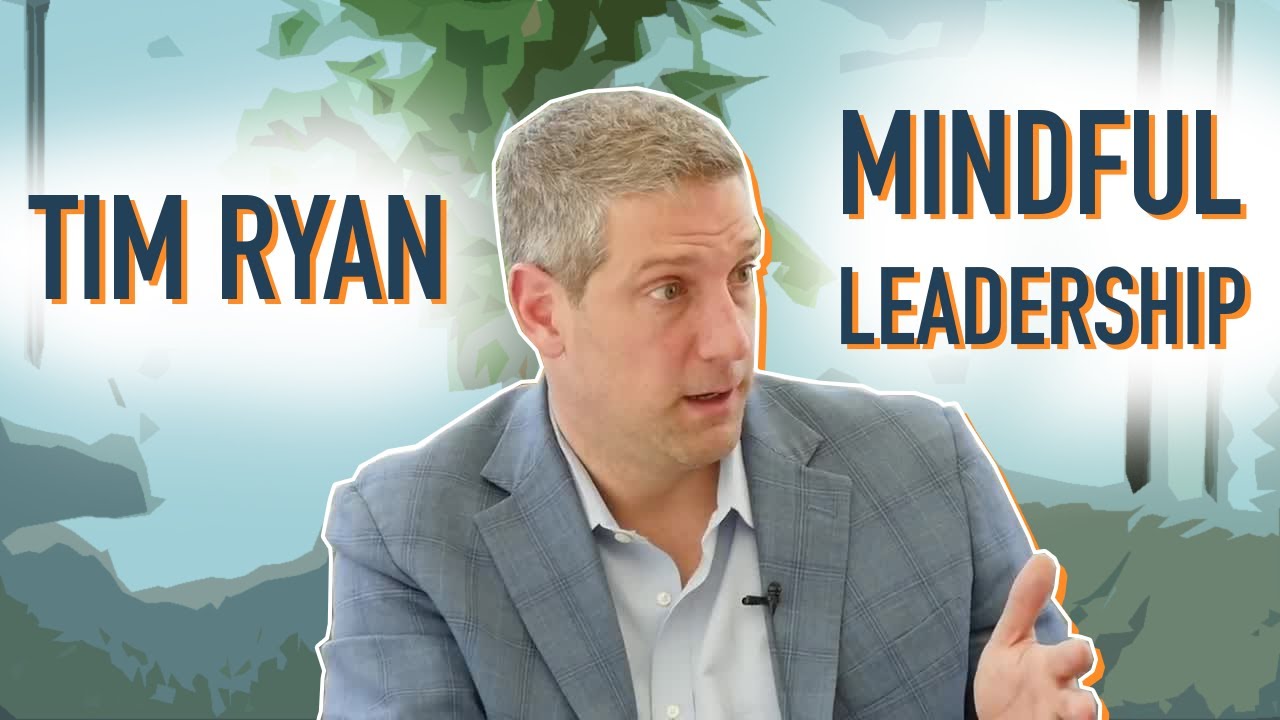
Congressman Tim Ryan discusses his eight-year meditation practice and how mindfulness is entering schools, the VA, and Congress to help people heal from trauma and lead better. He argues that cultivating mindful citizens and leaders is essential for rebuilding a collaborative society in a polarized world.
Chapters
How do you become a more mindful leader? Mindfulness and leadership, those are 2 of the most important words today. So how do you do it? Whether you're a student, you're a parent, you're an entrepreneur, you're somebody interested in elite mental performance, how do you lead yourself and how do you lead others from a place of mindful connection and development? That's what this episode is all about, and I'm excited to have on this show a very special guest, presidential candidate Congressman Tim Ryan. We're here with presidential candidate and Congressman Tim Ryan. And you and I, it's kind of interesting because when we met years ago, our mutual friend Nick Ortner was saying that, you know, there's this congressman who, who wrote these books on the Real Food Revolution and Mindfulness and Mindful Nation, Meditation and Food.
Yeah.
It's a little bit— you must get this a little bit. People don't talk about that as much in politics.
No, unfortunately not. It's starting to happen more and more. We actually had a hearing. I do a lot of work with veterans around yoga and meditation, healthy food, and we actually had the Secretary of the VA brought up without— unprompted from me about how yoga is really helping veterans heal. And his counterpart, the doctor, was talking about How much mindfulness has been helping these vets stay connected, because they can get very isolated, and then that leads to the suicide. So to see this getting infused into our VA system at this level is really exciting.
When I was reading one of your books, Mindful Nation, it talks about the power of meditation. Have you seen meditation positively affect schools and children?
Yeah, you see it in the schools now. There are, you know, There are mindfulness programs, there are breathing programs, there's— the David Lynch Foundation has a quiet time program where they do transcendental meditation in the schools. These are all very helpful because what's happened to our kids, there's so much trauma with our kids today, and they have what's called adverse childhood experiences. And the more adverse childhood experiences you have literally diminishes your cognitive function. You don't feel safe, you have a lot of trauma, your brain doesn't look much different than a vet coming back from, you know, that has post-traumatic stress. Imagine a young kid in a family that has domestic violence. Over 50% of our kids that go to public schools live in poverty. That's an adverse childhood experience. So their brain stops functioning properly.
Their amygdala doesn't feel safe.
You're in fight-or-flight.
Yeah.
Right? So you can't access your prefrontal prefrontal cortex, your executive functions, which are, as you have taught, working memory, ability to focus and mobilize your attention span, decision-making, like 3 pretty key elements to—
For all of us.
Yeah, but to learn. So they're, they're popped right out of that. They're in fight-or-flight. And what these, these programs do, social-emotional learning programs and these contemplative practices in the schools and breathing techniques, it teaches them the personal techniques on how to de-escalate themselves, how to get themselves out of fight or flight, which becomes essential to them being able to learn. So to me, it's like this— yeah, you need computers and you need 3D printers and you need all this fancy stuff, that's great, but if you don't start with taking care of the kid, right, and part one of that is getting that brain to function properly.
Is mindfulness a topic that comes up in the house or in this Senate and politics?
Yeah, not really. I mean, it came up the other day in the hearing.
Do any of your peers— do you know if they meditate?
I met— I met— yeah, there are some. I met a Republican member of Congress who was a vet who was, you know, we did this bill on post-traumatic growth. So we're trying to change the whole dynamic around post-traumatic stress. And it's an opportunity really to heal the trauma and grow from the pain, which You know, you talk about that all the time. And so he started telling me about— he's done 5-day retreats on mindfulness, 7-day retreats on mindfulness. I'm like, are you serious? Like, you want to come out of the closet? You know, he's like, I don't know yet, but—
The mindfulness closet.
Yeah, really. I mean, you know, I had to come out of it a few years ago, you know, and it just becomes a part of it. But we set up a wellness program in the House of Representatives. to deal with health and wellness for the thousands of employees, the Capitol Police, everybody who works on Capitol Hill in Washington. And in the next month or so, we're gonna have about, I think, 4 to 6 mindfulness-based stress reduction teachers.
That's amazing.
That will teach mindfulness to the people who work on Capitol Hill.
Well, let's talk about that mindful, mindful leadership.
Yeah.
You know, 2 topics that were, I think, are so important. You want— I know when I meditate— how long have you been meditating now?
7 years, 8 years.
It makes a huge, huge difference. The studies are very conclusive.
Yeah.
Like, what are some of the benefits that you have found?
You know, it takes the edge off. Not that you're shaking, but like, just sometimes you're on edge and it just kind of takes you down a little bit deeper. I use the example of A long time ago when I used to play football as a quarterback, and you'd have those moments of flow, you know, and then you realize when you read these studies and you practice it, you can actually get yourself into that state of present moment awareness, at least more than you are now.
Right.
And so it's been really helpful for me because I'm in, I'm in like a full contact emotional sport where, you know, people make personal attacks and The country's so divided and there's so much baloney that goes on every single day in, in DC, and how do you kind of get underneath that and maintain your sanity? It's really been helpful.
I think a lot of people are listening. Our community, I'm sure they enjoy this conversation because, because they love the food. They know the food that they eat matters, especially for their, for their gray matter. Yeah, we know mindfulness helps the get people balanced, they make better decisions. Because when you're in this fight or flight, you don't make great decisions.
No.
And I would imagine in politics especially, where they're making decisions, you know, for our community, I would want them to be in a place where they felt a level of peace or harmony so they could make, you know, good decisions for all of us.
Yeah, I mean, leaders over the ages, the good ones, they were They had that calmness. They had that centeredness. You're actually holding the space while the other— the anxiety is around you, but the leader's got to be the one holding the space. I mean, you think of the Cuban Missile Crisis, you think of World War II. It was, you know, Roosevelt holding the country together. That, you know, depression and war and families getting their kids killed in battle and the heartbreak and he would just, he would do fireside chats, and he would talk to the American people, and he just kept them in the center, and he elevated everyone through his leadership. Same with the Cuban Missile Crisis. I mean, that's what leaders are supposed to do. It's harder and harder today with fractured media and people just trying to destroy each other. I mean, it's—
Right.
It's like Game of Thrones sometimes, minus the blood. And so I find mindfulness essential to keeping that, holding that center. And I mean, you go back, I just read a book on Bobby Kennedy and watched the Netflix documentary. The keyword that stood out from the entire book and the entire documentary is we have got to have the imagination to be able to solve these problems.
Hmm.
And everything we've talked about here, it's like, okay, yeah, we know what the problems are, we kind of know how to fix them, but How do we reimagine? How do we have the imagination to really dig in and solve these problems? Think of things differently. Get out of this, this is the way it's always been done, this very narrow view. And that's when we talk about teaching kids how to work in teams in schools, because that's how they're— that's when you really get that kind of mastermind brain trust that all great leaders have.
Right.
The president goes out and says something, or the CEO, oh, goes out and says something, but behind that is a team that has come up with, okay, this is where we're going, and then the leader goes out and communicates it. That's what you get when you bring people together.
They say that knowledge is what is, and the reason why imagination is more powerful than knowledge is knowledge is what is, but imagination is this vision of what things could be.
Yeah.
And without a vision, people, people perish.
Right. I mean, Einstein Imagination. It's all about imagination.
Yeah, that's a real superpower.
It is.
And so, and also having, going back to the defining characteristic of which we were talking about before as this nation, is the courage. You know, once you have that vision or that dream or that imagination, having the courage to be able to make it the way you see it inside.
Yeah, that's always been the magic of the country, which is why you try to maintain some level of hopefulness. The whole country was built on a dream that we don't have to be locked into the power of a king. Yeah, we had an ocean between us and they were busy doing some other things, so we were able to pull it off, but we did it. Then it was like, okay, we can create a more perfect union. Every generation brought to bear their dream of enfranchising women, And people of color, and on and on, and now LGBTQ community. It's just this arc of recreation. The economy, agrarian to industrial to technological, now to artificial intelligence. We're just constantly recreating. Now it's time to recreate the government that hasn't kept up with the technology. Technological and wisdom. Our technology has surpassed our wisdom.
Hmm.
And that's the real rub right now with us is that we don't have the deep connection that usually evolves with technology. So we had, you know, we had that during a lot of the industrial age where we weren't okay with workers getting killed at work. We weren't okay with people working 80 hours a week. We weren't okay with you polluting the streams. The Cuyahoga River caught on fire in Cleveland, around where I'm from. Like, that wasn't okay. So we, as the technology improved, the government kind of moved along with it. Now it's gotten so quick.
Right.
It moves so fastly that we We've got to get the government to catch up, and I think ultimately it starts with the heart because it needs to catch up because it's— people aren't— people are suffering because of it. Farmers are killing themselves. Teenagers are killing themselves. First responders are killing themselves. Veterans are killing themselves to the tune of 20 a day, which is a national disgrace. And the government— so the government's not keeping up, and there's all this suffering. And that starts with us saying, okay, that matters to me even though maybe it hasn't affected my life. Maybe I'm doing okay, but that— I'm still not okay with that. And how do we work together to bring the wisdom to the level of the technology?
And the level of wisdom and emotional intelligence, the empathy, the compassion that allows that. When we're talking about technology and how powerful it is, There's this phrase, with great power comes great responsibility.
Yeah.
And we need to be able to take responsibility for it so then we have power to be able to, to make things better.
We are a species that is here today because of cooperation and collaboration. We weren't the biggest, we weren't the fastest, we weren't the strongest species running around in the savanna, and, uh, but we survived because you and I said A big bear over there, or a big lion, and you and I are gonna make this really sharp object, and we're gonna go get a couple other people, and we're gonna learn how to talk to each other and develop a language and read each other's nonverbals, right?
Mm-hmm.
And we're gonna remember, we're gonna develop a brain that actually remembered where the lion was, and we're gonna outsmart it. But I can't do it on my own, and you can't do it on your own, and so how do we work as a team?
team.
That's why we're here. And why we're not succeeding today is because we're fractured and we're divided.
Hmm.
And so if we can— so that— and that brings anxiety because that's not how we're wired. We're social beings. We're social creatures. And if that social relationship isn't going well, then you feel it. Like, it doesn't feel good. And then it brings stress because it's really at the deepest level It is an issue of survival. Maybe it's not life or death. Some people, maybe it is. Maybe it's healthcare. Maybe it's a job, security, retirement, kids' education, all that stuff that— so it starts with that basic reminder that we're connected. And if we bring harmony into these relationships, that makes everything else go a lot better.
And it's like the metaphor that you and I talked about before about the human body. It's just if it was fragmented and divided, it wouldn't, you know, it would attack itself.
Yeah.
And you would have an autoimmune disease. But it's the difference between, you know, illness and wellness, right? You replace the I in illness with we, and it becomes wellness.
Yeah.
Because it's together.
Yeah, I like that. I may steal that. But you think about what Lincoln said, During the Civil War, he said, if this country is going to die, it's going to die by suicide. Here we are today. Most of the problems we're creating ourselves, or we have failed to move with the changes in the world, keep the wisdom, grow the wisdom, deepen the wisdom to compete and to be on par with the technology.
Right.
We have to get our act together.
'Cause we're drowning in information, but we're starving for that wisdom.
Yeah.
That really can make a difference.
You know, this is overreliance on data. You know, if I get this one more data point, I'm gonna, man, it's gonna be great. If I read one more book, I go to one more conference, it's just gonna make it all click for me. That's not it. I mean, it's the wisdom.
Yeah, 'cause you need the information, but you also need the inspiration to act on it, 'cause a lot of people, they know what to do, but they're not, maybe the emotional. That's why we're talking about self-care, about meditation, you know, taking care of yourself so you have the emotional wherewithal to be able to get through it. And then another third eye besides information, inspiration, also is implementation. So you're actually doing something and not just reading about it, you're employing something.
Right.
And then when all 3 of those align, then you have the fourth eye, integration, and it just becomes who you are. And going back to mindful leadership, You know, when you're thinking about defining who we are as a nation or as a world, as a community, I feel like in order to be truly fulfilled as an individual or as a community, you need the curiosity to know yourself. Like, who are we?
Yeah.
Right? Who are you? Who are we? And then once you know yourself, you need the courage to be yourself, to be able to act on that identity and live it. Because the life we live are the lessons we, we teach.
Yeah.
Can I ask you another question?
I feel like I'm listening to your podcast at home. Keep going. I'm just going to shut up now.
I haven't asked this to a past guest, but I'm just curious, how would— when we're talking about memory and the power of memory, it's not just remembering foreign languages and facts and figures, but it's remembering our life, remembering our loved ones, remembering our lessons. How would you— how would you like to be remembered?
Guy who tried.
Oh.
Guy who tried. I'd be good with that. Not even succeeding, but tried, gave it a shot. I mean, that's what I'd want my kids to remember.
Mm.
You know, go for it.
Yeah, like, I appreciate the— I believe the life we live are the lessons that we teach others, and that when we're talking about this country is we step up. We do everything that we can to be able to get the job done.
I want, 'cause I feel like I've come out of this same world that you come out of. Like when I heard about you, I listened to your podcast 'cause I'm interested in what you do and Wayne Dyer and Deepak Chopra and I go back. And my whole goal has been how do we get people people to see themselves connected to the country in a sense, you know, because we didn't have a world war. We didn't have a Great Depression, our generation, thank God, right? But that generation was really seared to each other, whether it was joining the Rotary Club or you were an usher at church or you were in the union. There was some component to your life outside of your job and your family. And it's different now. I'm not saying it has to be the same, but the world needs people who meditate, like engaged, not on your cushion feeling good, you know, eating all your good food and meditating and doing yoga and working out and feeling good. Like, that's the exact Uh, prototype or person that we want in the political system. Like, not necessarily running for office, but yeah, running for office or working for the government or running for city council or school board. Like, that's the person we need in the, in the game, on the field. Like Teddy Roosevelt said, the man in the arena, like, marred with blood, sweat, tears. Don't know if you won or lost, but you dared greatly. You tried. And to me, your community is like the community we need that can get into an honest conversation without like wanting to beat the shit out of somebody or like getting in a big fight about it. Just like want to help do something good and take all of that work that you've done on yourself and bring that into the world outside of your business or outside of your family. Because if we don't have systems like the education system, the healthcare system, the agriculture system, whatever, reinforcing the growth that they know about and they work on every single day, like, it's not going to sustain itself.
Right.
And so to have those people in the system transforming the system is ultimately how we're going to And that's when we're happiest and most fulfilled, is when we grow.
Because we don't grow for just the sake of growing. We grow so we have more to be able to give to people outside of us, to our families, to our communities, to our country also as well.
So it feels good because that's how we're built. Mirror neurons and all kinds of oxytocin and cortisol and all, depending on how the relationship is going, you're either going to have more stress hormones or more Snuggle hormones and feel-good hormones.
Right, and so it's logical and it's biological.
Yeah.
Also as well.
It's survival.
So when we're talking about difficult times, difficult times, they could diminish you, they could define you, or they could also develop you.
Yeah.
And in times that you're talking about post-traumatic stress and the work that you're talking about in post-traumatic growth, we could, um, it's now is not the time to get bitter, now is the time to get better.
I like that.
Amen.
You can write some speeches for me.
This has been a real, real honor always, and I really appreciate and want to acknowledge again, thank you for all the amazing work that you do. This kind of conversation that you and I are having is the same conversation we would have watching a game or enjoying a drink together. And this is what I really feel like— this is what bonds us, these shared values, the shared vision that we have. That, I mean, that's all we want is everybody has, when it comes down to humanity, the same fears, you know, and also the same aspirations. And it's kind of cheesy, but it's true. Team, you know, together everyone achieves more.
Yeah.
And together is definitely, we could do a lot better.
We had that, I played football at Youngstown State for a while, and that was on our shirts.
Really?
Team, together everyone accomplishes more.
Oh yeah, well, I'm glad, I'm glad that we're teammates on this and everybody else in our community.
I love it.
How would, um, how, what's the best way for people to connect with you? I know social media.
Social media, Tim Ryan for America.
Okay.
And stop in and we're gonna be up to a bunch of really interesting things highlighting, highlighting communities of people who are ready to reimagine a new country, ready to create America 2.0. And I think there's a quiet revolution happening behind the scenes that's about ready to emerge and people that are doing some really cool things and we're gonna be highlighting a lot of that.
It's an exciting time.
Yeah.
So I'll make sure I put all the links in our show notes at jimkwik.com/notes to your social media and also to your website again. And thank you so much.
Thanks, appreciate it. A lot of fun.
More from Jim





The Library of Minds: Brain Coach: How to Stay Sharp When AI Does the Thinking | Jim Kwik





