Kwik Brain Episode 025: Sleep Smarter, Faster, and Deeper with Shawn Stevenson
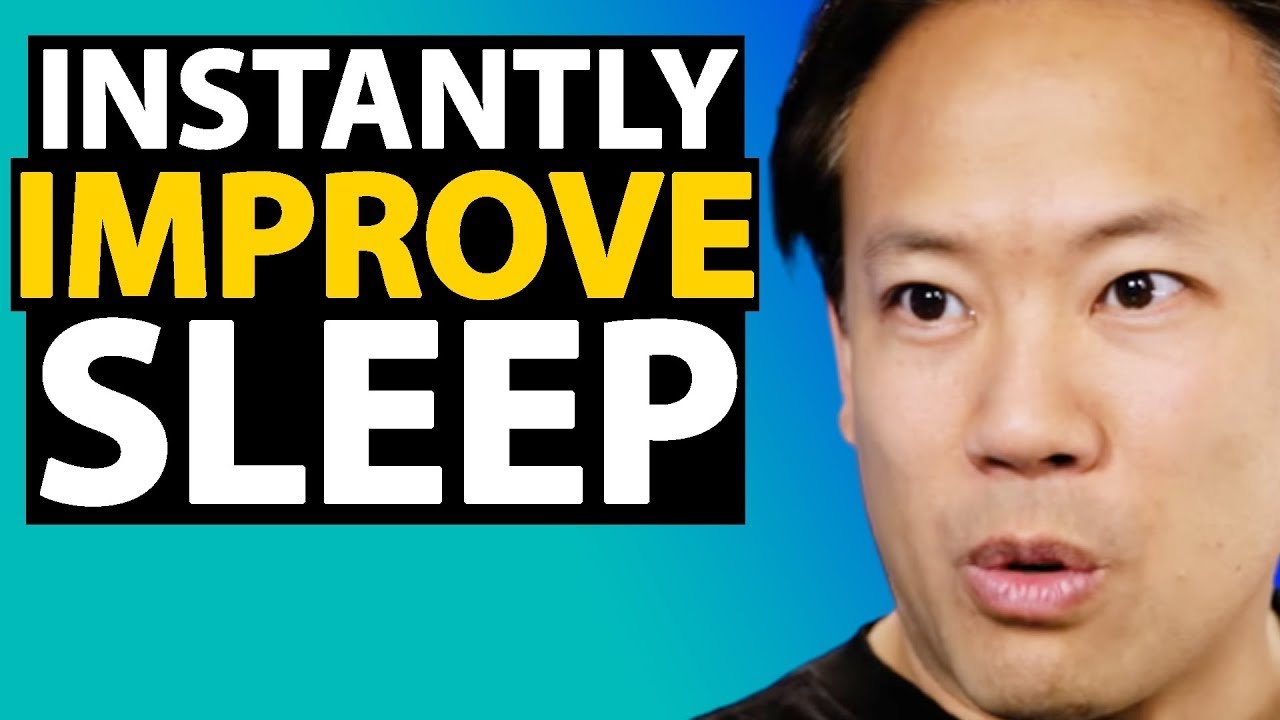
Shawn Stevenson shares three science-backed ways to sleep better: morning exercise triggers a cortisol reset for deeper sleep cycles, magnesium and vitamin C support melatonin production, and meditation works as well as prescription sleep drugs for falling asleep faster.
Chapters
Welcome to Kwik Brain, bite-sized brain hacks for busy people who want to learn faster and achieve more.
I'm your coach, Jim Kwik.
Free your mind.
Let's imagine if we could access 100% of our brain's capacity.
I wasn't high, wasn't wired, just clear. I knew what I needed to do and how to do it. I know kung fu. Show me.
How do you sleep smarter? This is a question that is asked frequently in our private Facebook group. How do I fall asleep faster? How do I stay asleep? How do I sleep deeper? So why are we talking about sleep in a brain show? Well, let me start by asking you a question. When you get a bad night's sleep, and it's happened to all of us, how do you feel the next day? How does your brain feel the next day, right? Sleep plays a critical role in your Kwik Brain performance, your thinking, your memory, your learning, We know that lack of sleep hurts all these cognitive processes in many ways. First, it impairs attention, alertness, concentration, reasoning, and even problem-solving. This makes it more difficult to learn effectively. Second, during the night, various sleep cycles play an important role in consolidating important memories in your mind. So if you don't get enough sleep, you won't be able to remember what you learned and experienced during the day. So if you or someone you love has sleep issues, this is a must-listen and must-share episode. I want to introduce you to a dear friend, Shawn Stevenson. Shawn and I have been friends for over a decade. He's helped me personally to maximize my sleep, especially overcoming sleep apnea, especially when it comes to my crazy travel schedule speaking. He's the bestselling author of Sleep Smarter and the host of the top podcast, The Model Health Show. And he is a speaker at one of our recent Kwik Brain conferences. So whether you want to get into bed more relaxed or get out of bed more rested, this episode will help you get there. So let's get started, my friend. What are 3 quick tips our listeners can use to sleep smarter?
So first one, let's go with the super low-hanging fruit. And I love these, and this is something you can implement immediately. And so this was a study, it was done by Appalachian State University, and this was a study on exercises. They were looking at The timing of your exercise, how would that possibly potentially influence your sleep quality? And what they found was absolutely shocking. So, at one phase of the study, they had the individuals to exercise exclusively at 7:00 AM over the course of that study period. Then they take the same exercisers in another study period and have them work out exclusively at 1:00 PM in the afternoon. A final stage, they had them to train exclusively at 7:00 PM in the evening. And so here's what's crazy. At the end of the study, they found that the morning exercisers on average spent more time in the deepest, most anabolic stages of sleep, which is what we talked about earlier and how important that is. They found that the morning exercisers tended to sleep longer. They tended to have more efficient sleep cycles, which again, that's what we were talking about here, efficient sleep cycles, not necessarily sleeping more. And they also found that the morning exercisers had a 25% greater drop in blood pressure in the evening compared to working at, at the other times. And why that matters, that's a— Kind of correlated with the activation of your parasympathetic or rest and digest system and a deactivation of the sympathetic kind of fight or flight. And so all of that simply by getting some exercise in the morning. And immediately some people are like, well, I don't have time. I work out after work, or maybe I'm not working out right now at all, which is you don't have to stop doing what you're doing if you're working out after you get off of work, if that fits better with your schedule. What I am saying is that you can still take advantage of the benefit by getting Even 4 minutes of exercise in the morning.
Wow.
And so, clinically, what we call this and why it works is it's something called a cortisol reset. And sometimes, we'd see people coming into the clinic where we'd see their— do a hormone panel or just look at their sleep patterns, and we would call them tired and wired. And basically, at night, when they should be tired and ready to go to sleep, they're wired and up. And in the morning, they're just so difficult to peel themselves off of their mattress because their cortisol is too low. And cortisol is not a bad guy. That has to be said really quickly here. It's if it's producing the wrong amounts or at the wrong time. And so, by exercising in the morning, you get this cortisol boost, and that sets the template because your cortisol should be elevated in the morning and gradually drop as the day goes on. So, it really works as simply as that, getting that cortisol reset. You can do Tabata, which is 4 minutes of exercise, it's 10 seconds of rest. So, 20 seconds on, 10 seconds off for 4 minutes. You'll probably kick your butt. It's really difficult. Maybe you just do—
10 seconds.
bodyweight squats for that time period, you're going to get a great workout in, you're going to upregulate your metabolism, and you're going to be able to help your sleep at night. So, that's tip number 1, low-hanging fruit, is to get in some morning exercise. All right. So, for number 2, and this one is a little bit more in my field, I'm a clinical nutritionist, and I've had the opportunity to work with a couple thousand people in a one-on-one context, and many hundreds of thousands of people now, probably into the millions via my show, the Modern Health Show, live events and speaking and traveling and all these different things, programs. And, what I saw was there definitely was a correlation with what we're eating and our sleep. And so, I dug into the research and it was so fascinating. It really blew me away what I found out because when you hear the word melatonin, which is this glorified sleep hormone, we don't tend to really think— and this is what I was taught in the traditional university, melatonin is secreted by your pineal gland, end of story. That's just how it is. Well, come to find out that the vast majority of your melatonin is located in your gut. We're talking like 400 times more melatonin in your gut than in your brain. And so, you could actually have a pinealectomy, which is a removal of your pineal gland, which I don't recommend. I'm not saying to go do that after the show is over. But here's the thing is that they still had the same levels of melatonin in their body after the pineal gland was removed. Crazy, crazy stuff. And so, the environment in your gut, and researchers at Caltech and some other organizations that I looked into for kind of compiling this data and making it all make sense for people, found that certain bacteria in your gut communicate with cells that are responsible for creating sleep-related hormones and neurotransmitters. So, the environment in your gut matters a lot, and the food that you put in there determines in a huge way what's happening in that environment, your microbiome. And so, I'm going to leave that piece with one tip, which is help to support the microbiome. Don't put things in your body that destroy your microbiome if at all possible. So, avoiding unnecessary antibiotics, chlorinated water, processed foods that help to keep opportunistic bacteria in control of your ship. So, that's part 1, and this is much more in-depth in Sleep Smarter, and it's chapter 7. I never forget this chapter because it blew my mind writing this way. But also, we want to add in more what I call good sleep nutrients. All right, so there's certain nutrients that are kind of building blocks or seeds for creating sleep-related hormones and neurotransmitters. I'll just share 2 really quickly. One of them, funny enough, is vitamin C. So we hear about vitamin C for your immune system and things like that, but it's actually important for regenerating tissues. It's also important for your sleep. It helps to regulate this process. And this was a public library of science did a study and found that individuals who were deficient in vitamin C were much more likely to have interrupted sleep. So these are people who tend to wake up more frequently during the night. And so by optimizing your vitamin C, you can help to eliminate that. And again, it depends on you. This might not be the thing that's going to fix that, but it might be something to look at. And I'm a big fan of botanical or food first. So not going and buying a vitamin C supplement, some synthetic thing, but get it from food first and/or a natural food source supplement. And I'll share one other one. There's so many that I wanna tell you about right now, but one other one would be magnesium. Magnesium is responsible for over 300 biochemical— I'm sorry, 325 biochemical processes we're aware of. Many of them involve sleep and recovery. And this is also the number one mineral deficiency in our world today. So that's why this is a big, big problem. It's a kind of a stress-modulating mineral. It really deals with your body's kind of sympathetic nervous system a lot. And so, this gets zapped from your system very quickly. So, you want to be adamant about getting magnesium, optimal magnesium in your diet, food first, and then supplements. There's oral supplements. I would recommend people go supplement with this one too, in addition to food. However, here's the issue. If you take too much of an oral supplement of magnesium, it can cause what we call clinically disaster pants, which is diarrhea. That's another way to say diarrhea, but in a more elegant way, I guess. So, be careful with the amount of magnesium that you're taking in. And, I love topical magnesium from our friend Ian Clark and his amazing company Activation Products. So, topical rubbing it into your skin is a great way to go about that. So, get more good sleep nutrients. And, final tip here. So, we covered exercise, we covered good sleep nutrients. This is something that I don't know if you talked about on your show yet, but I know you've probably weaved it in. And, this is having a session with a therapist. A practice of brain training, AKA meditation. And so, what was so fascinating, the American Sleep Foundation and the American Journal of Clinical Sleep Medicine, they both correlated and put together studies and looked at the research. And, it was so fascinating to see this because you hear about meditation and we tend to think about, oh, that sounds good for relaxation. And, it's like— It can be a little bit airy-fairy, but you and I are very much the same in our thinking. We're very analytical. We want to know that something actually does work. And so, for them to come out and say that, and I cited the study in my book Sleep Smarter as well, that meditation is equally as effective as some of the best sleep medications that are out there is really fascinating. Number one, it's free. And number two, we're not looking at some of the dangerous side effects that take place when taking some of these medications, which I'm not going to name any names, but you guys know what they are. They're in songs and stuff now. So, here's what we want to look at. There was one study and they took individuals, and this was just an 8-week study, and found that they were able to improve their sleep latency, wake after sleep onset, so they didn't wake up as frequently. They improved their total sleep time. Basically, they took insomniacs and they were no longer insomniacs after doing this meditation training.
All right.
And this was, of course, it's not 100% of the people, but there was like 76 or 84%, I don't remember the exact number, effectiveness or improvement for people. It's crazy. And you look at some of the effectiveness for some of these drugs and it just doesn't even measure up. So having a meditation practice each day, and this is why it's called a practice, and what they found was meditating in the morning can help you sleep better at night. And to sum this up really quickly is why does this work? Well, there's this saying that is, you know, my bed, and you're like, you're ready to go to bed at night. And it's a quote that says, my bed, it's this magical place that I go to remember everything I was supposed to do. All right? So kind of like your brain just is going on high gear and you really want it to shut down and relax. And it's happening more than ever today. And so what we wanna do is we have a lot of windows open on the computer screen of our minds, and that's cool through the day because it helps you to serve. It helps you to be able to do your job. It helps you to be able to answer questions and to be there to help people. But at night, we want to be able to minimize all those tabs and just keep the sleep tab open. And that's what meditation really allows you to do, is to help you to support, not to have no thoughts, but to be able to focus your attention on sleep. All right, so there's 3 powerhouse strategies. Of course, we could dive in deep on all of these things, but I hope that provides people a little jumpstart to get going.
Thank you so much, Shawn. There you go. 3 simple and effective Actionable ways to sleep smarter, faster, and deeper. You got exercise, you have nutrition, you have meditation. I highly recommend you get your copy of Shawn's book, Sleep Smarter. It's the ultimate guide to maximizing your sleep. We will put links in our show notes as we always do to all the resources mentioned in this episode at kwikbrain.com and our private Kwik Brain Facebook group. Make sure you subscribe so you can receive our next episode. And until then, sweet dreams.
Good night. Want to double your brain speed and memory power? If you'd like to learn rapidly and get ahead faster, I'd like to give you my brand new Quick Brain Accelerator program. You will discover exactly what I teach my clients to learn, read, and remember anything in half the time. There is no charge. It's my gift to you for being one of our subscribers. That's K W I K Brain.
Or simply text the word podcast to 916-822-7246 and we'll send you a direct link. That's 916-82-BRAIN.
Growing up struggling with learning challenges from a childhood brain injury, it's been my life's mission to help you have your very best brain so you can win more every single day. Now, want more Kwik Brain? Here are 4 ways to fast-track your And lock in what you just learned into your long-term memory. Remember FAST. F-A-S-T. The F stands for Facebook. You're not alone on this journey. I invite you to join our free private online group. There you can connect with me, your fellow brain lovers, links to resources, and even submit your questions for me to answer in future episodes. Go to kwikbrain.com. That's kwikbrain.com. The A stands for apply. Act on what you learned today. Remember, knowledge is not power, it's potential power. It only becomes power when you use it, so use what you just learned. The S stands for subscribe. Don't miss the next episode and other free brain training.
And finally, the T stands for teach.
You want to learn faster now? The key is to lock it in right away by teaching it to someone else. When you When you teach something, you get to learn it twice. Here's a simple way to do that. Leave a review on iTunes. Leave a review with your biggest takeaway from this episode. You could also post and share this podcast on your social media. It helps us spread our mission of building better, brighter brains. And of course, tag us so our team can properly thank you. #KwikBrain, K-W-I-K Brain. Mine is @JimKwik, K-W-I-K. on Instagram, Facebook, and Twitter. So, what does FAST stand for? Facebook, apply, subscribe, teach. I'll see you in our next episode of Kwik Brain. Until then, remember, you are faster and smarter than you think.
More from Jim





The Library of Minds: Brain Coach: How to Stay Sharp When AI Does the Thinking | Jim Kwik





