Kwik Brain Episode 102: How to Quickly Recall - The 10 Sparketypes
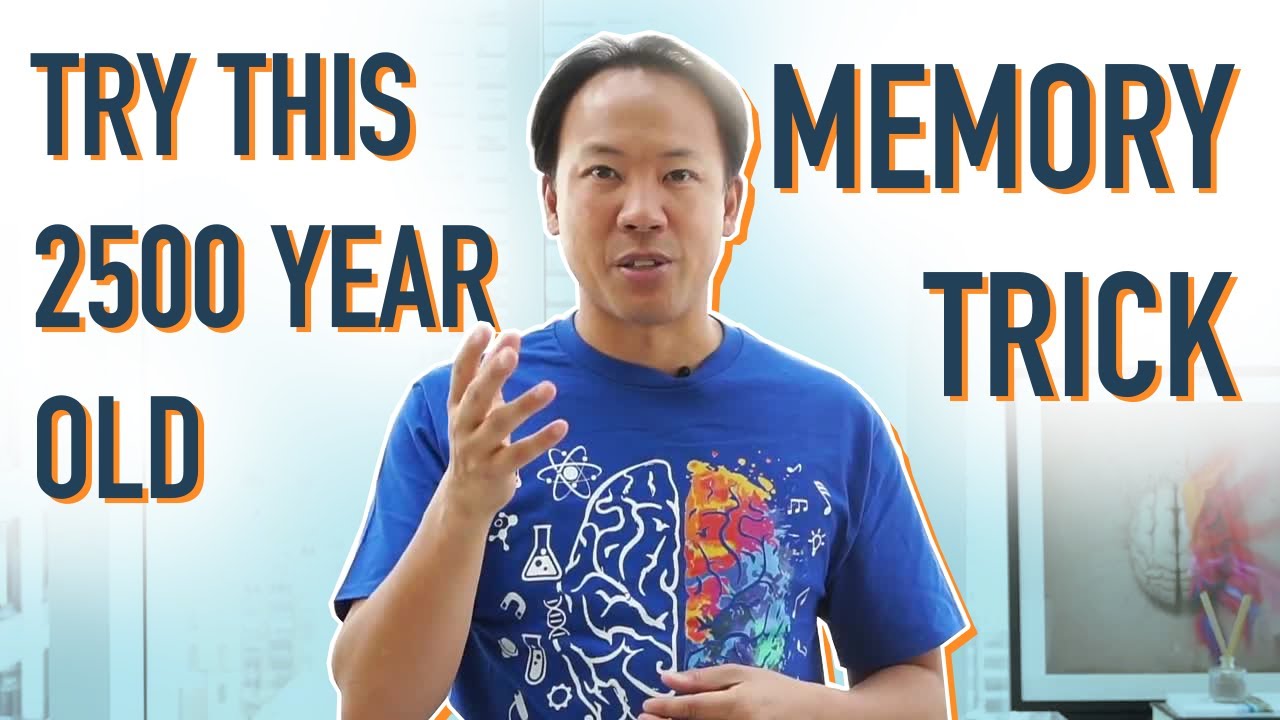
Jim Kwik teaches a body-based memory palace to recall Jonathan Fields's ten sparketypes, assigning each archetype to a location from head to seat. A gingerbread house on your head for the Maker, a microscope on your nose for the Scientist, a raven in your mouth for the Maven. Combining visual, auditory, and kinesthetic cues strengthens memory.
Chapters
Hi, Kwik Brains. So we just did an incredible episode with our friend Jonathan Fields on sparkotypes. These are the 10 archetypes, if you will, that give you life and light you up. And so I'm gonna give you just a really quick tip on how to memorize these 10 sparkotypes. Now, if you haven't listened to both my episodes with Jonathan, I recommend you do that first. But here are the 10 sparkotypes. What we're gonna do is a simple memory mnemonic training device. called the memory palace, and we're going to create a palace right on your body. We're going to find 10 places on your body starting from the top to the bottom, and what we're going to do is I'm going to take each Sparketype and put the first Sparketype in the first place, the second Sparketype in the second place, and so on. I think everybody gets this. So let's talk about the 10 places. Do this with me. Remember, to learn something faster, you don't learn just by hearing it. You have to visualize it and you have to do it. When you use visual, auditory, and what we call kinesthetic, you're gonna learn it better because that's one of the keys to a great memory, is using your creative imagination. So the first place is the top of your head. So I want everyone to touch the top of your head, and that's number 1. The second place is going down your body, your nose. So say it out loud, what's the second place? It is your nose. The third place going down your body is your mouth. So what's the third place? Mouth. Fourth, you're gonna go to the side, you're gonna go to your ears. What's number 4? Your ears. Number 5 is your larynx, which is really your throat area, so touch your throat, larynx. That's number 5. 6, we're halfway through, shoulders. Touch your shoulders. What's number 6? Say it out loud, because you hear the auditory. It is, your auditory memory says, shoulders. 7 is your collar. Touch your collarbone. That's number 7. 8, wiggle your fingers. 8 are your fingers. 9 is your belly. Everyone touch your belly. And finally, 10 is your seat. Your seat. Your rear end, if you're just listening to this. Now, what we're going to do is we have 10 places. We're going to take the first thing and put it in the first place. Now, isn't it interesting, if you've ever found yourself saying, in the first place this, in the second place this, third place that, that's where it came from. That languaging came from a 2,500-year-old memory technique. The memory technique is rarely used. We're bringing it back as an example, but the languaging is still there. So what we're going to do is we're going to visualize here and just imagine and touch that place. Now let's do an example. The first sparketype is the sparketype of the maker. The maker. So I want you to imagine your first place, which is what? The top of your head. That you're making something, that you are making a gingerbread house, or you're making guacamole, or you're making something maker, whatever. When I say the word make or maker, whatever you— whatever comes first to your mind, I want you to put that on the top of your head. And you're thinking, Jim, that's so childish. Who are the fastest learners? Children, right? So that's— you're making something out of— maybe you're making a hat on the top of your head, but that's the word maker. Number 2 is— second place is what? Second place is your nose, and the second place is the scientist. That's the sparkotype. So when I say scientist, what do you think of? Maybe you think about a microscope, right? Put a microscope up your nose and you're like, ouch, that would feel weird. If you create a feeling, remember, Information combined with emotion becomes a long-term memory. So a scientist. So whatever you think of when I say scientist, I want you to put that up your nose. Number 3 is what? Your mouth. Your mouth. When I say mouth, what I want you to think about, the 3rd sparkotype is a maven. Maven. Now, if you don't know what a maven is, something else you could do is you could do a sound-alike. It's kind of like when you're playing Pictionary and you're drawing your team. You got to get them to guess something by showing pictures. Sometimes you don't know, so you draw an ear. And when you draw an ear, what does it mean? Sounds like, right? So if I say Maven, what does it sound like or rhyme with? Most people say raven, right? That black bird. Imagine you're putting a raven inside your mouth. You would never do that, but it stands out. So if you had to give a talk about the sparketypes to your friend or family member, you think about the 3rd place, which is your mouth. What were you biting into? A raven. What is the sparketype it reminds you of? Maven. Very good. The 4th place are your what? Eyes. Your ears, your ears. And the 4th Sparketype is the Essentialist, the Essentialist. So what I want you to think about when I say Essentialist is how do you connect that using imagery to your ears? Essentialist. So some people think, oh, logically my ears are very essential, or maybe they'll be thinking of an essential vitamin and they're making earrings with, you know, on their ears that would remind them essential. Some people think of essential proteins or fatty acids. Some people think of the book Essentialism and they're trying to stuff that book inside their ear. Whatever it is for you, just try to do it because even if it doesn't work, it still works because it gets you to focus on the 4th thing and what the 4th thing happens to be. The 5th thing is what? 5th place is the larynx, your throat area. And I want you to remember when, when I say throat or larynx, I want you to think of the performer. The performer. What comes to mind? You're thinking, okay, a singer or an actor who relies on their larynx, their voice box, if you will. You could think of that, absolutely. Or if you think of a performer, someone comes to mind, maybe it happens to be Justin Bieber, or happens to be Cher, or it happens to be Kate Winslet, or whatever. Imagine that connected to your throat. All right, that's what you want to remember. The 5th place, it reminds you of the performer, and that's the archetype. Now we're halfway there. And by the way, who's— what's on the top of your head? Maker. What's associated to your nose? You're putting a what? A microscope. What does it remind you of? Scientist. Very good. 3rd place is what? It's the mouth. Good. And what are you associating again with the mouth? You're eating a raven, and that reminds you of Maven. 4? Essentialist. Good. Your ears. Good. Number 5 is what? 5 is the— good. It's the larynx. It's the Performer. Good. We're halfway there. Number 6 are on your what? Your shoulders. And what I want you to think about, the 6th Sparketype is the Warrior. The Warrior. So I want you to look to your left and to your right on your shoulders. Shoulders, and I want you to picture warriors. Whatever— when I say warrior, what comes to mind? Maybe the movie 300, right? Maybe it's the ninja samurais. Whatever comes to mind when I say warrior, you have one on your left shoulder, one on your right shoulder, and they're duking it out. They're battling. Good. Number 7 is what? It's your collar, right? And this 7th sparkotype happens to be Sage. The sage, the wise sage. And so I want you to imagine you're using sage and you're putting sage and make a sage necklace, or maybe you're lighting up sage and you're smudging it on what? Your collar. Very, very good. 8 are your what? Wiggle it. They're your fingers. Very good. And the 8 is the advocate, the advocate. Remember Jonathan Fields? He was talking about the advocate, advocating for people who can't speak for themselves. He was standing up for the environment. An advocate stands up for Animals. Just associate your fingers. So let's say you want to save the dolphins. You're, you're swimming and touching with your fingers dolphins. Okay, so that reminds you of advocate. Now if you can't think of something like that, something that sounds like that might be advocate, could be avocados, and you're playing with things. Whatever reminds— whatever first comes to your mind is always the best, right? There's nothing that's right or wrong. It's good, better, and best. Whatever you come up with is is the best. That's number 8. Finally, 9 and 10. 9 is your belly, right? 9 is your belly. And when you go through the Sparkotypes— now some of you will remember this because you're thinking, because it was last, remember recency? But it is what? It is the advisor. Advisor. Good, the advisor. And what I want you to think about is somebody who advises you or gives you advice and they're playing with your belly, or they have a really pronounced belly, or they're, they're Touching your belly button. Something like you would never have your advisor, your financial advisor, your legal advisor, any kind of— your health advisor, and they would take their finger, put it in your belly button, right? That would be weird, but you would never forget it for how long? Forever. And that's what makes things memorable and unforgettable. 9 is belly button, advisor. Finally, the 10th place is your what? It's your seat, it's your rear end, and I want you to think of the 10th Sparketype, which is— The Warrior. The nurturer. The nurturer. You know what? I don't even want to know what you're picturing when it comes to nurturer and your seat. You could use your own imagination. Now, here's your test. You are the memory expert. You're the expert. You want to give a talk at your next meeting, to your friends, to your family. You want to have a conversation with somebody because when you teach something, you get to learn it what? Twice. You get to learn it twice. And you want to remember the 10 spark types forwards and backwards. You can do it because you have your notes on your body, in your, your memory palace, if you will. You could do this whether it's your body, you could do it in your office, you could do it in your living room, 10 different places. So now go from the top to bottom. What is the first sparkotype, quick brains? Number 1 is what? On the top is who? It is— you're the maker. Very good. Number 2 is your second place is what? Your nose. What's coming out of your nose? Microscope. Scientist. Good. 3rd place is touch it is what? Your mouth. And what are you, what are you eating? You're eating a raven. Rhymes with maven. Good. To the side of your face are your ears, the 4th place. And you have the earrings maybe, or you're putting that book. It's the essentialist. The essentialist. And then going down, number 5, your larynx. What do you use your larynx? That's the performer, right? The performer, the singer, the actor. That's number 5, down your body. Number 6, on the side of your shoulders, they are what? Who's fighting on there? Those are your warriors. That's the warrior. Going to your collarbone, you're smudging it with what? With sage. Sage all over. You're making a necklace made out of sage, and you could smell it, right? You could feel it. You could almost taste it. Finally, number 9 is what? 8, sorry. Okay, finally, 8. 8 is what? It's your fingers. Very good. And what are they doing? They're playing with the dolphins, or you're saving the rainforest, or you're helping people in whatever you're passionate about, but you're using your fingers. And that is the advocate. Very good. 9 is your belly button, your belly. And who's putting their finger there? That's your advisor. Your advisor's doing it. Why are they doing that? And finally, the 10th place, whenever you think about that area of your— you're thinking about the nurturer. The nurturer. And notice you could probably do it Forward, you did forwards to back. Even if you got— how many did you get? 5, 6, 7, whatever you got, congratulations. If you missed a few, ask yourself, because genius leaves clues. There's always a method behind the magic. Maybe I didn't visualize it. Maybe I just said it, I didn't see it. Maybe I didn't feel it or make it a little bit memorable, right? But you could probably also go backwards to forward. If you start with number 10 is what? The nurturer. You go up your body to your belly button, your advisor. You go to your fingers, you're the advocate. You go to number 7, which is your necklace made out of sage, and you can go all the way back up. And that's how powerful your memory is. One of the best things, you know, that I tell people is this: there's no such thing as a good or bad memory. There's just a trained memory and an untrained memory. This exercise is amazing because it trains 3 of the things that won't get outsourced or put to a computer or AI or automated. The 3 things we should be teaching more and encouraging in our education, our personal development, and high-performance training: creativity, imagination, and strategy. By doing exercises like this or the exercises we have in our full 21, 30-day courses on speed reading, on memory enhancement, on better focus, on student success, those are exercises to not only make you more mentally intelligent To increase your mental fitness. Just like you have physical fitness, right? It makes you stronger, more flexible, more agile. You want that for your mental fitness. You want to be mentally more agile, mentally stronger, mentally more— have more vitality and energy and strength and power also as well. So you do the exercise because practice makes what? Progress. Practice makes progress. So I hope you enjoy this episode, this minisode if you will. Thank you also for sharing this with everybody else. If you haven't already, join our private Facebook group and just know this, that what's— what you have inside of you is this incredible genius. It's not, as a reminder, it's not how smart you are, it's how are you smart. And that's really our mission with this Kwik Brain Podcast, to be able to unleash your mind power so you can be unstoppable. Every single day. So share this if you will, tag me in it @JimKwik. Make sure you follow me there also as well on Facebook and Instagram and on Twitter because we also do these lives, these lives Q&As that are unannounced because our goal is to help you to reach your goal because— and what keeps you from that is usually this, your brain, right? Your success is our success. I'll see you in the next episode. Take care.
More from Jim





The Library of Minds: Brain Coach: How to Stay Sharp When AI Does the Thinking | Jim Kwik





