Kwik Brain Episode 89: 10X Your Mental Performance with Salim Ismail
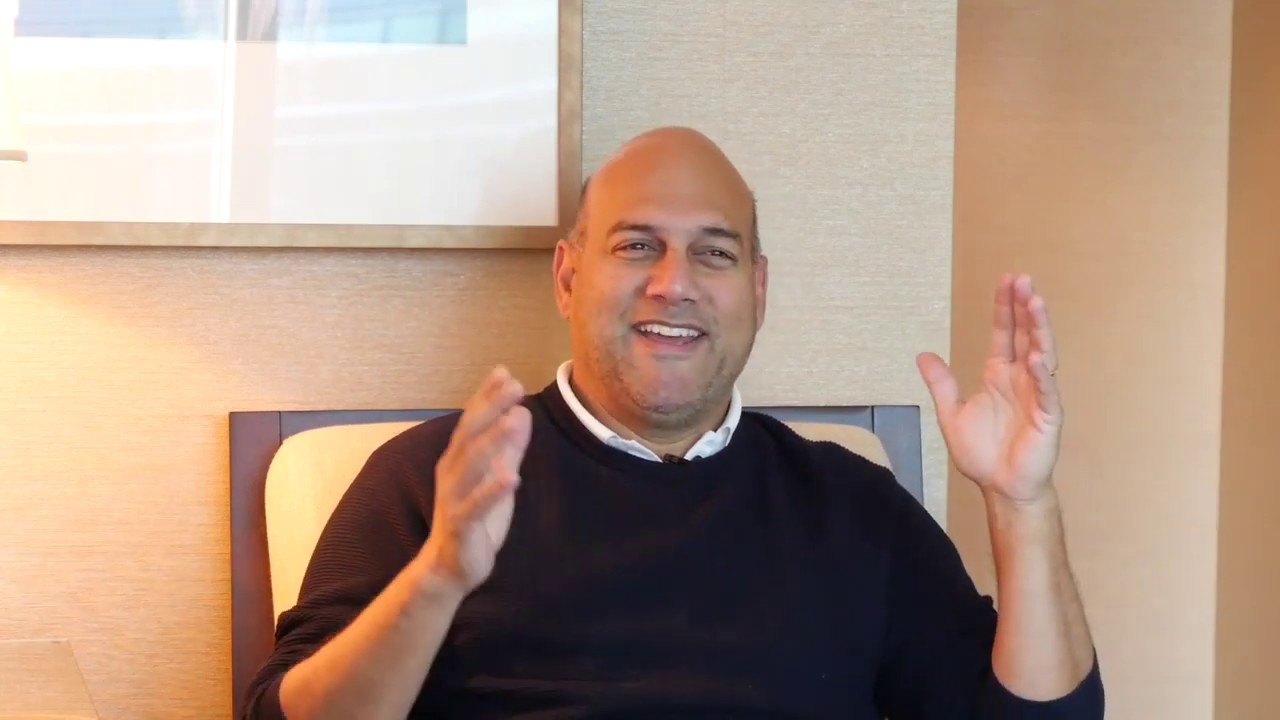
In this Kwik Brain interview, host Jim Kwik talks with Salim Ismail, founding director of Singularity University and author of Exponential Organizations and Exponential Transformations. The conversation explores why most people think linearly, how that limits personal and organizational growth, and what it takes to become an "exponential thinker" capable of 10x performance. Salim introduces the concept of a Massive Transformative Purpose (MTP) as a North‑Star that drives rapid, asset‑light scaling, illustrated with examples such as TED, Uber, Airbnb, and GitHub. He explains the cognitive and institutional resistance to exponential change—rooted in the brain’s amygdala response—and offers practical habits (e.g., 3‑D‑printing mindset, focused passion, leveraging zero‑marginal‑cost technology) to rewire thinking. The dialogue also covers Elon Musk’s 10‑year forecasting method, the importance of decentralized, data‑driven organizational structures, and the pitfalls of hiring legacy‑mindset talent. Salim recommends his two books for deeper learning and shares his social media handles for further engagement.
Chapters
Welcome back, Kwik Brain. So here's your question of the day: how do you become an exponential thinker? Right now, you know, your life is a reflection of your thinking, and I'm so excited today to have a friend who really is an expert on this field. He's going to show you and coach you how to be able to really 10x your performance mentally, and that's really what this show is about. And our guest here is—
Salim.
I appreciate you being here. We met through— you're a founding director of Singularity University. We met there years ago when I was guest— I did some guest lectures. And you're a board member at XPRIZE, which you're incentivizing people to come up with, you know, the incredible solutions to some of the biggest global challenges. You're an international bestselling author. Congratulations on your new book.
Thank you.
I'm excited about it. Exponential Transformation, and your previous book was Exponential Organizations, which worldwide is showing people how to get like literally 10x faster and better, especially in the environment we're in today with technology where people are kind of drowning in information. There's so much competition. But for people watching at home, where do you start? How do you become an exponential Well, I think the first thing—
first of all, thanks for having me. Thrilled to be on your show. I'm a huge fan, as you know. The key question is all of our education, training, intuition about the world teaches us linear extrapolation. You take your past performance, you draw a line as to where things would be, right? And I use the example of TEDx. If Chris Anderson had said, okay, we're going to do 5 in the first quarter, 10 in the next quarter, 15 in the next quarter, And you roll that out over like a 5-year period, he did— he'd do like 2,000 events, which if you would tell a team we want to do 2,000 events in 5 years, they'll freak out, right? But he said he set a huge purpose, ideas worth spreading, and then let anybody in the community go create one. And over a 5-year period, they've done like 15,000.
That's astonishing.
And if you went back to the original team and you said, that's what I want to do, they would literally walk out of the room. And you break the thinking. And so the question is, how can you operate in that paradigm where you can scale both your own performance but your company or your organization performance at like unbelievable levels? And we're seeing this today as a general paradigm with Uber, Airbnb, whole new crop of what I call exponential organizations that are scaling literally 10 times faster than their competitors.
And that's like the ultimate advantage. We're not talking about a 10% Differential. We're talking about—
Minimum 10x, yeah.
Minimum 10x. So how would you define exponential thinking for people who are listening?
So we've seen Moore's Law now operate in computation for 30 years. We double the price performance of computation every 18 months. Ray Kurzweil has probably the best, easiest, most visceral example. If I take 30 steps linearly, I'll go 1, 2, 3, 4, and I'll go 30 meters.
And you can see 30 meters.
And everybody can gauge how far am I going, how far would I be 1/3 or 2/3 of the way in that progression. We're really good at that linear carve-up. But if I take 30 doubling steps— 2, 4, 8, 16— at step 30, I've gone a billion meters. I'm actually 26 times around the world, which is a bit further than, than 30 meters. And it's really hard to gauge how far is 1/3 or 2/3 of the way in that progression. And that's the challenge, because every time we kind of see that, we think it must resolve to a linear level.
Right.
And so a really great negative example around this is if you talk to experts in any domain, they will— even if the domain is growing exponentially and you say, where does this domain grow? They'll go linear. And there's a fantastic chart of solar energy. The growth of solar energy is like this.
Like a hockey stick?
Literally like a hockey stick going up like that over the last, say, 20 years. And every expert in the World Energy Outlook goes this way every year, off that curve, right? And basically our brains, when we come from a legacy environment, have a really tough time mapping onto this curve. curve. And you see that tension everywhere between the bankers and Bitcoin or between Uber and the taxis, that tension of one mechanism growing unbelievably fast and the other stuck in an old paradigm. And our brains are stuck in that old paradigm.
I think a lot of people could identify— when you mentioned those brands, people could identify with the difference between a Kodak and an Instagram.
Really, exactly right. That's exactly right. And Kodak, of course, is legendary for that. But think about this problem. Kodak is operating on a material, physical, chemical environment, a scarcity environment. You can only carry so much film, it costs $1 a photograph, it takes you a few days to get your prints back. You move to digital photography, marginal cost goes to zero, the domain explodes because now you can hold the shutter click, shutter button down and take a billion times more photographs because the cost is gone. But more importantly, you change the business model. You can't make money optimizing, selling courses on photography, publishing books on composition, You now make money by filtering, socializing, other models come up. And the incumbents in many industries were optimized towards old thinking. And trying to make this leap into this new world is almost impossible. That's why you see most of the time the disruptors in an industry don't come from that industry.
Oh, interesting.
Right? Like there's no way the car companies will make it into this new world for the most part. Just like the old ships that carried spices didn't make it into the refrigeration world. That eradicated the need for carrying ice around and so on. So we see this paradigm a lot where it's really hard to make that transition. If you can make that transition both mentally, cognitively, and at an organizational level, then there's unlimited opportunity because you can always map onto what's coming.
So when you're looking at brands like— and I know you and I have talked about this— like Uber, who they have no cars. They own no cars. Or Airbnb, they own zero real estate. And so what is the commonality? What is the pattern of genius for somebody who's listening and they want to— okay, like, I get it, I want to be a 10x thinker, I want to be an exponential thinker. Where would they start?
So if you're trying to build an Uber-type thing, then you start by having a massive transformative purpose, or what I call an MTP, right? Google is called— Google is organize the world's information. TED is ideas worth spreading. Singularity is go impact a billion people positively. Uber is everybody's private driver. And so that gives you your North Star, hones in on the core problem you're trying to solve.
Okay.
In fact, when we're raising kids today, we don't say go learn accounting or go become a great designer. We say, what problem are you passionate about solving? Right? And that's basically the basis of it. Then you have a bunch of externalities that allow you to keep a really small footprint and scale scale really quickly. So Uber doesn't hire its own staff, TED uses community, Airbnb is leveraging other people's assets, and you can use one or more of these to scale outward really quickly. And then there's a bunch of internal mechanisms for running the internal organization like the Lean Startup methodology, decentralized org structures, real-time dashboards, etc. And startups should be doing most of these because if you're doing most of them, then you start off with almost zero fixed costs, you can scale unbelievably fast.
Okay.
And the problem space that you choose— chosen keeps you focused without getting spread into a million different things, and you can move incredibly fast. And then you— once you establish the methodology, Reid Hoffman's now kind of framed the upside of that in the whole blitzscaling methodology that he's doing. And so we have really— we're tracking an index of over 100 companies operating like this.
That's astonishing. So let's take maybe— listen, myself as a case example. I'm very passionate about solving the problem of people because I grew up with a broken brain.
Yeah.
I was labeled a slow learner, and I feel like people are drowning in information that they can't keep up. They have poor focus. They can't remember things. They're suffering from digital overload, digital distraction. digital dementia. And so I want to help people to upgrade their, their brains and really passionate about that. So how would I— that, that's my— let's say that's my purpose. My passion is learning. My purpose is— that's what lights me up. My purpose is what lights other people up, which is really teaching. And then from there, if I wanted to scale that, how do I merge that with—
So your MTP would be something like light yourself up, right? Or light up a community or light up your brain or something around that, right? Then you're actually doing it with podcasts and other mechanisms. You're scaling your capabilities with information-based paradigms because the marginal cost of sending this podcast out is almost zero compared to, say, 20, 30 years ago, getting media into the hands of millions of people, right? And therefore you're scaling naturally. And by— exactly. And by kind of creating core nuggets of wisdom that then you scale very quickly through information, you're actually achieving a very high level of self-actualization. You focused on a really specific area that you were passionate about, and then everything you do lines up underneath that.
Okay, so now we're able to hit millions because if you're not an exponential thinker, like, the brain tends to go, as we've discussed, local and linear, right? Right, where we can't see beyond it. But now it's like a classroom doesn't have 4 walls.
Yeah, exactly. And mapping to that is really hard. I mean, just go back 100 years. Anything important that happened in the world happened within a day's walk. Anything. That's our brain. Billions of years of evolution have got us to that point. And now we have to totally change the game because then something happens in Tokyo affects us in minutes. And so we have to map to that, and it's a really hard transition. It takes— at Singularity, it takes like a week of immersed classroom thinking and experience to get your head to think in this way.
Okay, because before we would only We would only notice things that would affect us directly in our local environment.
Yeah.
And things that happen across the world or across the country wouldn't affect us at all.
Yeah. I mean, you take this thing, right? As Peter often mentions, we have millions of dollars worth of equipment in this.
Right.
Right? But you don't notice it. You just go, oh yeah, that's the thing. And the next thing is like going to be crazier than that and crazier than that. What Ray Kurzweil is famous for is looking at that and saying, wow, not just that this was the size of a building in 20 years, But then in 20 years, this will be a blood cell. And what do you do with this computation when it's in a blood cell? And doing that scaling, riding up that exponential curve, is the basis of successful people in the future.
Okay, so once you have the massive trend, the purpose, and then you go from there, and then you're scaling through technology, and now we're reaching millions of people through our YouTubes and Facebook, where do we go from there?
Well, now you want to scale the organization or scale your effort or scale your passion, right? And so now the big challenge often is, okay, you've got a really successful environment going. How do you retrofit a legacy environment?
Hmm.
So you have unbelievable capabilities and techniques that you've uncovered. If you try and take that into a traditional classroom environment or put it in the primary schools or elementary schools, you'll get this unbelievable immune system response. Right, so we have this at the individual level, which is the amygdala response. When we see something new, the amygdala freaks out. And almost a lot of our work today is how do you solve that amygdala problem? Because when people first see the autonomous car, they freak out and go, oh my God, that car might kill somebody, right? Except as Brad— because as Brad Templeton says, people don't like to be killed by robots.
Right.
We'd much rather be killed by drunk people, which is what's happening today, right? We have very clear evidence that a Tesla driving autonomously saves way more accidents and lives than a human being driving those same miles.
Right.
But people freak out. That's the amygdala. Because— and this is an evolutionary mechanism. When we were running around on the plains of Africa, anything unknown, you heard a noise in the bushes, you ran because bad news could kill you, right? Good news doesn't kill you. And this is why most news stories are negatively focused.
Because if it bleeds, it leads.
Yeah, exactly right. That's right. That's why Fox News does very well. If you watch Fox News, you're going to die this week, right? CNN— Peter calls CNN the Crisis News Network. And so you're kind of constantly tickling the amygdala. So at an individual level, we have to solve for that with reasoned thinking, higher-level cognitive abilities that you talk about. But then when we bring into a group environment, we have the same response. You try and do something really radical in education and the teachers unions go bananas. You try and do that in transportation and the legacy immune systems, you have the fight between Uber and the taxis. And the second book that we wrote that's coming out about this is just talking about that. So in institutions you have the same amygdala response, but it's more of an immune system response at a collective level.
Okay. Yeah, we could do a whole talk on that. We should do another episode.
We totally could.
On organizations. So we're talking about the individual. You have somebody who's listening to this right now, is very passionate and purposeful. They use technology and other means to be able to scale their message to the world or to be able to solve this problem. What gets in the way? Like, how do people— what are the bottlenecks for For people that they might struggle along the way that they can anticipate?
Yeah, there's primarily 2. The first one we've talked about, getting that linear to exponential and really operating in doubling patterns, right? So if you want to practice this, model something on a 3D printer and then actually go build it. And then make the cognitive leap between, well, I imagined something that appeared over here, and that's possible today because most of us don't think in that way. You think about, I want to get something, you think about going to a store and buying it or trying looking on eBay for this. Widget that you might want. We don't think about, oh well, let me just go to a 3D printer and throw up and take a picture, modify that, and print it out. We don't think that way. So start practicing that to anchor that in your brain. The second thing would be, once you have that capability, the brain automatically goes, oh my God, I could do this and this and this and this and this, and you lose focus. And the, and the massive transformative purpose of the MTP allows you to keep focus. After that, you pick a passion You pick the area you're absolutely most excited about, and then anything that doesn't fit in that category, you just block it out. And you stay single-minded around how you want to achieve that transformation. You can change it, but at any given point, be really focused about what you're trying to build and what you're trying to achieve.
Astonishing. The world is really changed by these exponential thinkers. There's a book called The Structure of Scientific Revolution.
Thomas Kuhn.
Right. Yeah. All innovation comes from people outside the field.
Always.
It takes somebody from the outside to look and say, why aren't you doing it this way?
That's right. And if you look at a living example, take Elon Musk, right? No experience in cars, energy, or space, and yet he's created market leaders in all of them. And his methodology, by the way, is really simple. He looks at a technology that's growing exponentially.
Should we interview him?
Yeah, we've— I'm on the board with him at XPRIZE, and I've chatted with him a bit. But he looks at a technology that's growing like this. He aims 10 years out. Where will that technology be in 10 years? And he builds a company aiming to intercept that curve in 10 years. And that's his MO. It's really simple. And A, you have to have the guts to go, that's where it'll be in 10 years, and anchor on that, which we know but cognitively hard to get to. And then just start building. And then you hit the curve, you hit your organization as the technology is literally going vertical and the thing takes off.
Yeah, and this is what I love about this is you're really deconstructing and decoding What looks like magic on the outside, right? But there's actual processes and a method behind it.
Very specific structure methodology. Look for an information-based environment or information-enabled legacy environment. Airbnb's information-enabled extra bedrooms lying around in everybody's apartments and houses, and boom, multi-billion-dollar company, right? And here's a key secret if you want to scale an organization or a business or an idea like this. What's unique today is you can do it for almost zero marginal cost. So the internet allowed us to drop the cost of demand generation. Online marketing, referral marketing, all Silicon Valley companies trying for the holy grail of a viral loop. If you do it, then your acquisition costs go to zero. Fabulous. But what these exponential organizations have figured out is how do you drop the cost of supply exponentially?
Right.
So you think about Airbnb, marginal cost of adding a new room to their inventory Almost zero. If you're Hyatt, you have to build a hotel. That's a very different paradigm. So they can scale infinitely on the supply side, which is really the key for this new type of organization. And the poster child, of course, is GitHub, which is— we have a scoring mechanism to quantify how flexible and adaptable your organization is. It's in the back of the book and it's free. And GitHub was the highest-scoring exponential organization we ever came across. And 9 years later after inception, Microsoft just bought it for $7.5 billion. And the really important part about GitHub is not the price, it's the fact that they have no assets, no workforce, no intellectual property.
Right.
Right? And so if you're not building one of those, what the hell are you doing? Right? Because anything legacy environment can't scale that quickly. And so that's what's possible today.
And what keeps us rooted where we are in terms of— because a lot of people like what's familiar, and for a lot of people who might be listening to this, this could be an uncomfortable conversation.
Yes.
Just like with these, these brands that are no longer— the Blockbusters of the world that are no longer around because they didn't adapt.
Exactly. And you take somebody that's got— let's say you're trying to hire a marketing person. and somebody— you come across somebody who's got 25 years of marketing experience. They're the worst possible person you could hire. Not only because they don't understand what's going on, but they're going to bring old techniques to bear and have you operate in a really traditional linear environment. Whereas you need to probably hire a 25-year-old that lives on Instagram day in, day out, and YouTube. Or the frickin' Ryan, that 7-year-old who's the highest earning YouTube star ever. My kid is 7. I'm like, where's the $22 million? So that, you know, just that story of YouTube is what's possible today, right?
Right.
But this is the enormous challenge. And I'll give you the inverse story, okay? So 2 years ago, we had an offsite board meeting for Singularity, and I was there, and I said to the board, look, we're 8 years old now. When we started SU almost 10 years ago, there was no Facebook platforms, there was no social media platforms, there was no e-learning platforms, none of this stuff. If we had to recreate it today, we'd do it very, very differently. So Peter and the board said, all right, think about that. How would you come back to us? How would you recreate SU if you had to do it today? And you know, I did the exercise 4 times, 4 separate times, and I found I couldn't do it because I was so successful in the model that we actually created. My mind kept going back to that, right?
Mm-hmm.
Subconsciously, my mind kept going back because it, because it worked. And I was like, we're only 8 years old and I can't get out of my own soup. What hope is there if you're a 20-year-old automotive engineer or a 30-year-old oil and gas guru?
Right.
How are you going to get out of that paradigm? This is the enormous tension that exists today. Cognitively, can you make that leap? And so I basically came back and said, I can't do this exercise. Let's hire— put together a little group of some disgruntled alumni, some faculty that come in very rarely, some couple of outside thinkers, and they did the work. And what they came up with was way better than what I would have done, right? And so how do you, how do you have the insight and awareness and self-awareness to operate that way, I think, is the key to success today.
Because, because our brains, they don't naturally want to be able to break those patterns. Yeah. And there, there's self-interest, you know, internally and externally. When you build these systems, there's other things in the systems that are self-reinforcing Right. The people that they don't— they're benefiting from things not changing.
So what happens in life is you evolve genetically and adapt very slowly over time, but in the short term, success is from repetitiveness and predictability, right? And so we can— we in the past, in the last 1,000, 5,000 years of civilization, success came from doing the same thing repeatedly, going out fishing the same way and getting Once you figure out how to fish, you do the same thing again and again, and you grind it into yourself and embed that. But now, today is different. Success comes from constantly changing. And now we're bringing that kind of evolutionary pattern right out to the fore, and it's very hard and uncomfortable for us to do that.
Yeah, it's very emotional. And we know that the same level of thinking that's created a problem or opportunity is not the same that's going to be able to solve that problem.
Exactly right.
I love this conversation. So where would— what do you recommend? I recommend your books, your 2 books, Exponential Organization and your new book, Exponential Transformations. And people can buy that online?
Yep.
And where can they connect with you?
I'm @SalimIsmael on Twitter, @SalimIsmaelEXO on Instagram, Facebook, LinkedIn, etc.
Fantastic. Thanks for joining us.
No, great to be here.
More from Jim





The Library of Minds: Brain Coach: How to Stay Sharp When AI Does the Thinking | Jim Kwik





