Kwik Brain: How To Stop Procrastination (Episode 10)
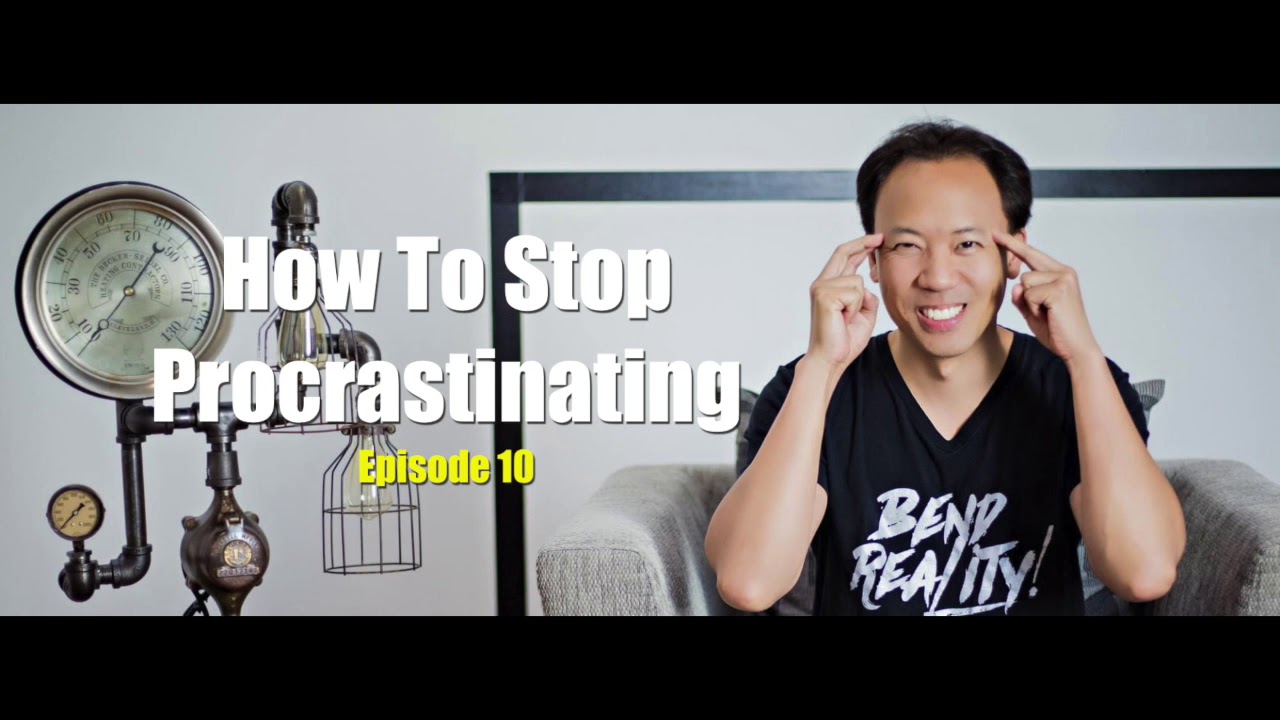
Jim Kwik breaks procrastination into six brain-based fixes: delay the act of procrastinating itself, start any small part of a project to trigger the Zeigarnik effect, break goals into tiny habits, use self-compassion instead of self-criticism, schedule tasks as appointments, and connect to your purpose using the Head-Heart-Hands model.
Chapters
Welcome to Kwik Brain, bite-sized brain hacks for busy people who want to learn faster and achieve more. I'm your coach, Jim Kwik. Free your mind. Let's imagine if we could access 100% of our brain's capacity. I wasn't high, wasn't wired, just clear. I knew what I needed to do and how to do it. I know kung fu. Show me. Let's do this, Kwik Brain. How do you stop procrastinating? How do you overcome procrastination? How do you stop avoiding the things that you need to accomplish in your life? Is this you? Can you all think about right now something that you know you need to do, something that's very important to your health, to your work, to your family, for yourself, but you keep on putting it off? Procrastination really is the practice of doing more pleasurable things in the place of less pleasurable things, or maybe Carrying out less urgent tasks instead of the more urgent and important, the timely ones, the most important things. And so you're putting off impending tasks to a later time. There's such a ripple effect, isn't there? And procrastination can lead to feelings of guilt, inadequacy, depression, self-doubt. I mean, it robs you from the life that you desire and the life you really deserve. So that's the big challenge. Procrastination is a supervillain. It could take hold of any aspect of your life. Whether it's repairing a leaky roof or going to see a doctor or a dentist, getting that report done, studying for that test, dealing with this stressful issue from a loved one or a partner. And so it holds you back. So in this episode, I'm going to share with you my 5 quick brain tips on how to beat procrastination. And acknowledge this, it happens to everyone, right? Even if you have a vision for what you should be doing to reach a goal or complete a project, You can put it off and then you beat yourself up for putting it off. One or more of these techniques can help you really steer away from procrastination and help you get back on track. So number one tip on how to overcome procrastination, if you're such a great procrastinator, I recommend that you procrastinate about procrastinating, meaning that you put it off. Yes, the best way to overcome procrastination may be to put it off and delay your procrastination for another day. And that's kind of tongue-in-cheek, but if you are really good at the ability to put things off, And put off putting things off. Number 2 is start somewhere. All right, start somewhere. And this really employs the Zeigarnik effect. And this is where this therapist noticed that waitstaff had incredible ability to remember orders for meals for their customers while it was still pending. So for example, the waitstaff would take the order and would remember it. Even you might've had somebody at dinner or at lunch, be able to serve you and they don't write it down, which is absolutely, you know, amazing. And I remember growing up with learning challenges and I was 8 years old and we were at a family reunion, busy restaurant, Saturday night, 25 of us, waiter comes around halfway through, I noticed something funny that the waiter wasn't writing it down. And I was just like, there's no way, we're gonna have to send it back, we're gonna have to trade plates, this is gonna be a mess. But when it came back, Every single thing was perfect. I mean, the salad dressings, the appetizers, the beverages, the desserts, how we wanted the meal cooked, everything perfect. And that waiter was using the Zeigarnik effect, basically saying that once somebody starts something, they need to finish it in order to have closure and they retain that information. So using this for procrastination, start somewhere. And if you start somewhere, you're more likely to complete. Number 3 is to break it down. Break it down. This is where you break down this project or your goal into bite-sized pieces, because one One of the biggest challenges that keep you from doing the things that you need to do is sometimes you look at it like a really big monster. And it's so big and you don't even know where to start. And as the saying goes, the journey of 1,000 miles starts with one step. So you can do this with your workout. Instead of anticipating the entire workout, break it down. Tell yourself, I'm just going to put on my workout shoes and just get to the gym. This is employing a concept From BJ Fogg, an amazing, brilliant man. He created this concept called tiny habits. So for example, if you can't get yourself in the habit of flossing your teeth, for example, which we know adds years to your life, he says just floss one tooth. Because who's going to floss just one tooth, right? You're going to obviously do the second and the third and the fourth. But this is breaking it down into tiny little steps because it's less intimidating than the big monster that you might have it in your mind that keeps you from doing what you need to do. Because the same thing when we teach people speed reading, right? We have this course where people are doubling, tripling, quadrupling their reading speed with better comprehension, and it requires a little bit of practice every single day. So I don't ask people just pick up a book and read it. I want them just to read one sentence because I know they won't stop with one sentence. They'll go on the second sentence and the third and so on. And so the third step again is break it down. The 4th key that I would give you to be able to beat procrastination is to be kind to yourself. Now really listen to this because it might surprise you, but beating yourself up because you didn't go to the gym or you didn't make your meal prep or you didn't do this at work or whatever it is that you need to do actually has the reverse effect of what you're trying to do. It actually— you would think that if you gave yourself some pain and some guilt That you're more likely to change your behavior. But according to research, it actually says the exact opposite. That a lot of us beat ourselves up because we miss something that's good for us. And research in the area of self-compassion tells us that if you're kind to yourself, if you're light with yourself, you're more likely to be able to commit and follow through. So don't give yourself a lot of grief about not being able to make it to the gym, for example. Tell yourself, you know, I'm human. This happens to the best of us. I'm going through a lot, but I'm going to do it tomorrow. So be light with yourself and make a plan So that you get it done. And that's really the key. The 5th thing I would recommend to be able to overcome, like, this thing called procrastination is to schedule it. And this sounds like it's obvious and it's common sense, but again, it's not common practice. And finally, here's a bonus one. I wasn't going to add this, but number 6, I would say, is come up with your why. Come up with your why. One of my favorite books is by a friend of ours named Simon Sinek. You might Be familiar with his TED Talk. He wrote a book called Start With Why, and basically it says that your purpose is what's going to drive you and give you energy. And when you have a project or you have a goal and you can't seem to get yourself to do what you know you need to do, this— try to imagine and visualize vividly the results that you want. Tap into the reasons for action, and you're able to get past procrastination. I believe that there is a success formula. I call it H cubed. It goes from your head to your heart to your hands. But here's the thing, you could visualize your goals in your head and affirm things in your head all day, but if you're not acting with your hands, usually what's missing is a second H called your heart. The heart represents emotion, the energy of motion. I remember I had a martial arts teacher teach me years ago saying, you can't steer a parked car. You need fuel, you need energy. So that fuel is your why. So why? Make a list of the things that you'll get From doing this task that you're putting off? What will it give you? And once you tap into that why, you're more likely to do it because you have fuel, that you have momentum. And that's really the key. So remember these 6 keys for stopping procrastination. It'll allow you to have the life that you deserve. It'll allow you to have greater focus, greater productivity, greater performance, because you're operating and maximizing your Kwik Brain. Want to double your brain speed and memory power? If you'd like to learn rapidly and get ahead faster, I'd like to give you my brand new Kwik Brain Accelerator program. You will discover exactly what I teach my clients to learn, read, and remember anything in half the time. There is no charge. It's my gift to you for being one of our subscribers. That's kwikbrain.com, or simply text the word podcast to 916-822-7246. And we'll send you a direct link. That's 916-82-BRAIN. Growing up struggling with learning challenges from a childhood brain injury, it's been my life's mission to help you have your very best brain so you can win more every single day. Now, want more quick brain? Here are 4 ways to fast-track your results and lock in what you just learned into your long-term memory. Remember FAST. F-A-S-T. The F stands for Facebook. You're not alone on this journey. I invite you to join our free private online group. There you can connect with me, your fellow brain lovers, links to resources, and even submit your questions for me to answer in future episodes. Go to kwikbrain.com. That's K-W-I-K brain.com. The A stands for apply. Act on what you learned today. Remember, knowledge is not power, it's potential power. It only becomes power when you use it. So use what you just learned. The S stands for subscribe. Don't miss the next episode and other free brain training. And finally, the T stands for teach. You want to learn faster now? The key is to lock it in right away by teaching it to someone else. When you teach something, you get to learn it twice. Here's a simple way to do that. Leave a review on iTunes. Leave a review with your biggest takeaway from this episode. You could also post and share this podcast on your social media. It helps us spread our mission of building better, brighter brains. And of course, tag us so our team can properly thank you. #KwikBrain, K-W-I-K Brain. Mine is @JimKwik, K-W-I-K, on Instagram, Facebook, and Twitter. So what does FAST stand for? Facebook, apply, subscribe, teach. I'll see you in our next episode of Kwik Brain. Until then, remember, you are faster and smarter than you think.
More from Jim





The Library of Minds: Brain Coach: How to Stay Sharp When AI Does the Thinking | Jim Kwik





