Learn About Meditation | Jim Kwik
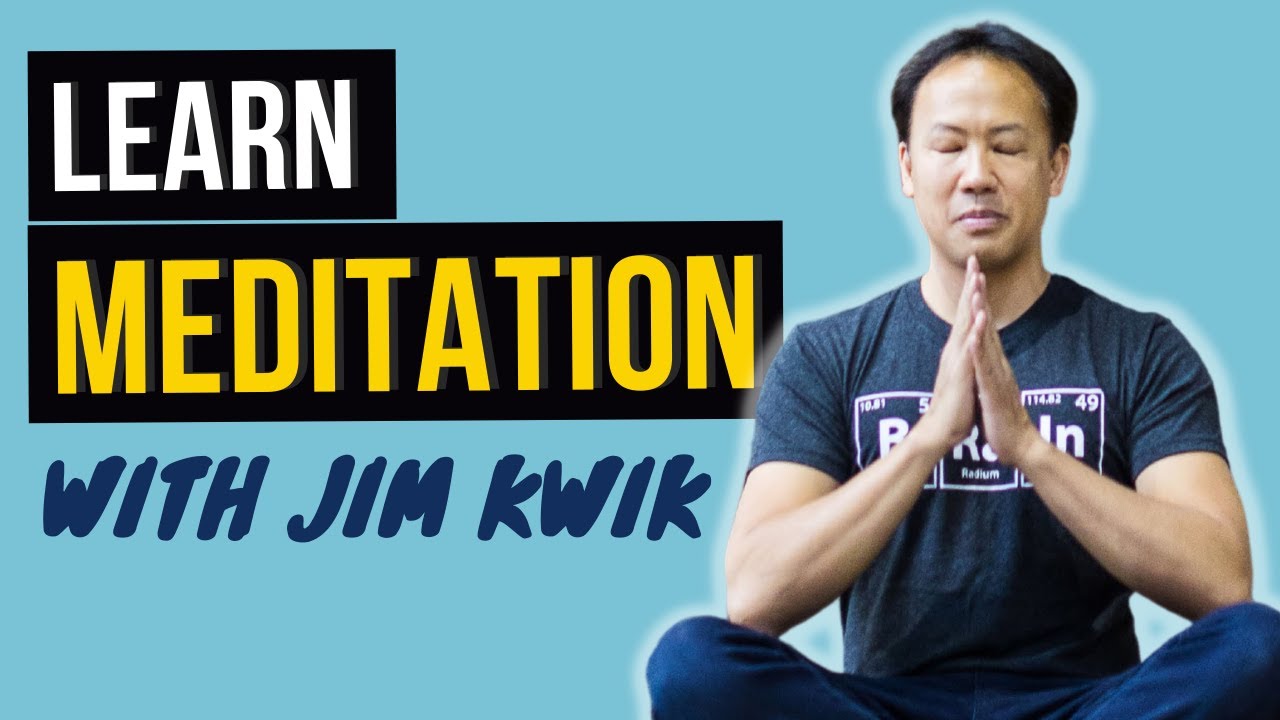
Jim Kwik and meditation teacher Emily Fletcher explain how meditation rewires your brain. Harvard research links stress to 90% of doctor visits. Ziva meditation activates your whole brain, increases hippocampal volume by 17%, and reduces cortisol while boosting dopamine and serotonin.
Chapters
Harvard Medical School has said that stress is responsible for 90% of all doctors' visits.
That's astonishing.
It's astonishing.
9 out of 10.
Yeah, and so the answer that I have found is meditation.
Have you seen meditation positively affect schools and children?
Yeah, you see it in the schools now. There are mindfulness programs.
Stress is being called the black plague of our century. Harvard Medical School has said that stress is responsible for 90% of all doctors' visits.
That's astonishing.
It's astonishing.
9 out of 10.
Yeah, and so the harsh reality is that stress is making us stupid, sick, and slow. And we don't want to be stupid, sick, and slow. We want to be fun and fast and healthy. And so the answer that I have found, the single most effective tool at getting rid of stress, not only from the now, but all the stress that we've been accumulating in our body from the past, is meditation.
I know you— we've talked about some of the research, but maybe you could talk about a couple of things in terms of What happens to your body or your brain when you meditate? What are some of the benefits on the upside? We know what the damaging effects stress has, but what are the positive effects when you get rid of that stress?
Yeah, it's really exciting because we're living in this day and age where neuroscience can prove not only that meditation is good for us, but how different types of meditation impact the brain differently. So in mindfulness, where we're directing our focus, where someone's guiding you through, or you have a free app or something, a small part of the brain lights up but very, very bright, which is different than in Ziva meditation where the whole brain lights up but not as bright. So it's cool because the type of meditation that I teach is very restful. It's kind of lazy. It's kind of surrendered. And so what's happening in the brain looks similar to what— how the practice is.
Right.
And the cool thing there is that when the whole brain lights up, you're increasing neuroplasticity, which is the brain's ability to change itself. And you're also strengthening something called the corpus callosum, which I'm sure your folks are familiar with. It's that thin, thin white strip, the bridge between the past and future and present moment. It's the bridge between your critical and creative mind. It's the bridge between your masculine and your feminine. And so I'm sure your folks No, but the reason why I think you'd want a fat corpus callosum is that it allows you to come up with all those creative problem-solving ideas when it counts.
Have you seen meditation positively affect schools and children?
Yeah, you see it in the schools now. There are, you know, mindfulness programs, there are breathing programs, there's— the David Lynch Foundation has a quiet time program where they do transcendental meditation in the schools. These are all very helpful because what's happened to our kids There's so much trauma with our kids today, and they have what's called adverse childhood experiences. And the more adverse childhood experiences you have literally diminishes your cognitive function. You don't feel safe, you have a lot of trauma, your brain doesn't look much different than a vet coming back from, you know, that has post-traumatic stress. Imagine a young kid in a family that has domestic violence. Over 50% of our kids that go to public schools live in poverty. That's an adverse childhood experience. Their brain stops functioning properly.
Their amygdala doesn't feel safe.
You're in fight or flight. You can't access your prefrontal cortex, your executive functions, which are, as you have taught, working memory, ability to focus and mobilize your attention span, decision-making, like 3 pretty key elements to—
For all of us.
Yeah, but to learn. They're popped right out of that. They're in fight or flight. And what these programs do, social and emotional learning programs and these contemplative practices in the schools and breathing techniques, it teaches them the personal techniques on how to de-escalate themselves, how to get themselves out of fight or flight, which becomes essential to them being able to learn. So to me, it's like this, yeah, you need computers and you need 3D printers and you need all this fancy stuff, That's great, but if you don't start with taking care of the kid, right, and part one of that is getting that brain to function properly.
I know I'm biased, but to me meditation is, like you just said, the ultimate reset, because I can have a million things going on. I have a 2-year-old son, I'm running a company, we're all in the middle of this pandemic, I'm going through a huge life transition, I have a sick family member. So there's no shortage of things to be stressed about. There's no shortage of tabs open in our brains, and there's always a reason to not meditate.
Right.
You can always find, well, I've got 8 more emails to answer. I've got, you know, 6 more grocery things to do. There's always a reason to not meditate. And yet if you do it, if you take that time to reset, to invest in yourself and invest that time, you end up getting a return on that investment. You end up having more time in your day. You end up feeling better. Your sleep is more productive. You feel fresher and like you've actually gone in and closed all those tabs on your brain. So it quite literally, it's not just a mental reset. It actually over time time ends up being a physiological reset.
How do you mean?
Because the meditation in the beginning will create neurochemistry, so it'll get rid of the stress chemistry, which is adrenaline and cortisol, stress hormones, but it'll start to produce dopamine and serotonin, which are bliss hormones. So you start to feel better in the meditation, which is nice, but if the point was just to feel good during the session, you could do any number of drugs, right? So, but the cool thing with meditation is that that bliss chemistry starts to stay with you throughout the rest of your day, so you feel better in your life, not just in the meditation. But here's the really Here's the really cool part. Yes, meditation is gonna be a reset for your day, but over time, as you keep a daily practice, it can become a reset for your whole life and even your whole body, because over time it changes the physiology of your brain and your body. You can increase the size of your hippocampus by up to 17% with meditation.
Wow.
You strengthen something called the corpus callosum, which I'm sure your folks know about. It's the bridge between the right and left hemispheres of the brain, and you're increasing neuroplasticity. So it's like you're not just feeling good. It's not a bubble bath for your brain. changing the structure of your cells. You're healing yourself on a cellular level. So in addition to all the brain changes, this stress that gets stored in our cellular, and now we even know in our epigenetic memory, this stuff can start to come up and out. So you can actually heal not only stuff from your life, but the stuff you've inherited from previous generations.
Everyone has a different process for meditation.
Yeah, I just, I'm really straightforward. I just use Headspace. It's really easy. They've got a sleep pack that I've got, 30 episodes. I'm working my way through that. I do it over and over and over again. In the morning, I have a different routine, but at night, the Headspace pack is easy to do. If I'm traveling, and I'm learning and becoming better at it, that I don't really need it anymore, but that's how I started. And I find that clearing my thoughts, letting go of the day, stopping ruminating thinking, stopping replaying what was going on, creating a barrier between the day and when I want to fall asleep, meditation helps me do that.
It helps you to transition in those brainwave states from beta to those lower brainwaves.
100%. Yeah, you want to go from beta waves down to alpha waves, which is sort of reflection and Contemplation, and then you let that go and you end up down into, ideally, obviously when you're sleeping, beta, delta waves, and then ultimately into deep delta waves. So that's the goal.
Amazing. Now, do you happen, when you're doing your meditation, to fall asleep from there?
Is that your period?
You know, it's really weird, not very often for some reason. Like, I think that I'm trying now through focusing on breath, through focusing on releasing tension from all the different parts of my body, You know, really activating— you can basically feel your vagus nerve come online, right? And you can feel your parasympathetic system take over once you release all of that. That's the scientist overthinking meditation in their sleep routine, but of course you want to let that go. But no, I don't have trouble falling asleep when I'm meditating.
When you have space to think and to meditate and to do different things, I mean, for me it's like the morning. And, you know, we had our friend Emily who I learned meditation from, and so like when I wake up in the morning, Now, I don't put— I put my— I actually have a different phone that only has— it controls my timer, and that's it. So I can't see messages or anything, or Instagram and all that stuff. And I literally, I will go and I meditate for 30 minutes, 30, 40 minutes, and then I'll come in and I'll check my phone. But it's having that 40 minutes or so of silence in the morning, just to myself, that is a really big reset for me. And the Ziva meditation that we were talking about, helps me reset my state in the morning. A lot of times I'll wake up in the morning and I'll have like darker thoughts or I have weird dreams and then it's just like a little bit chaotic in my head. And I think that meditation helps me reset so then I can get into my creative space and get into my creative mode.
Hi, Kwik Brain. It's your brain coach. I want to thank you so much for watching this video. 3 things to do. Number 1, make sure you share this because when you teach something, you get to learn it twice. Update your learning so you can update other people's learning as well. Number 2, make sure you subscribe to this channel so you don't miss a thing. Because if you miss a video, you miss a lot. And finally, make sure you hit that bell so you're notified and you find out when we put out the latest and the greatest. One extra thing, if you want really close attention, then text me. Here is my phone number: 310-299-9362. Did you remember that number? 310- 299-9362. Shoot me a text and we'll stay in touch. Ask me your burning question. And I wish your days be full of lots of life, lots of love, lots of laughter, and always lots of learning. I'll see you in our next video.
Bye.
More from Jim





The Library of Minds: Brain Coach: How to Stay Sharp When AI Does the Thinking | Jim Kwik





