Learn to Love ❤️ | Jim Kwik & Jay Shetty
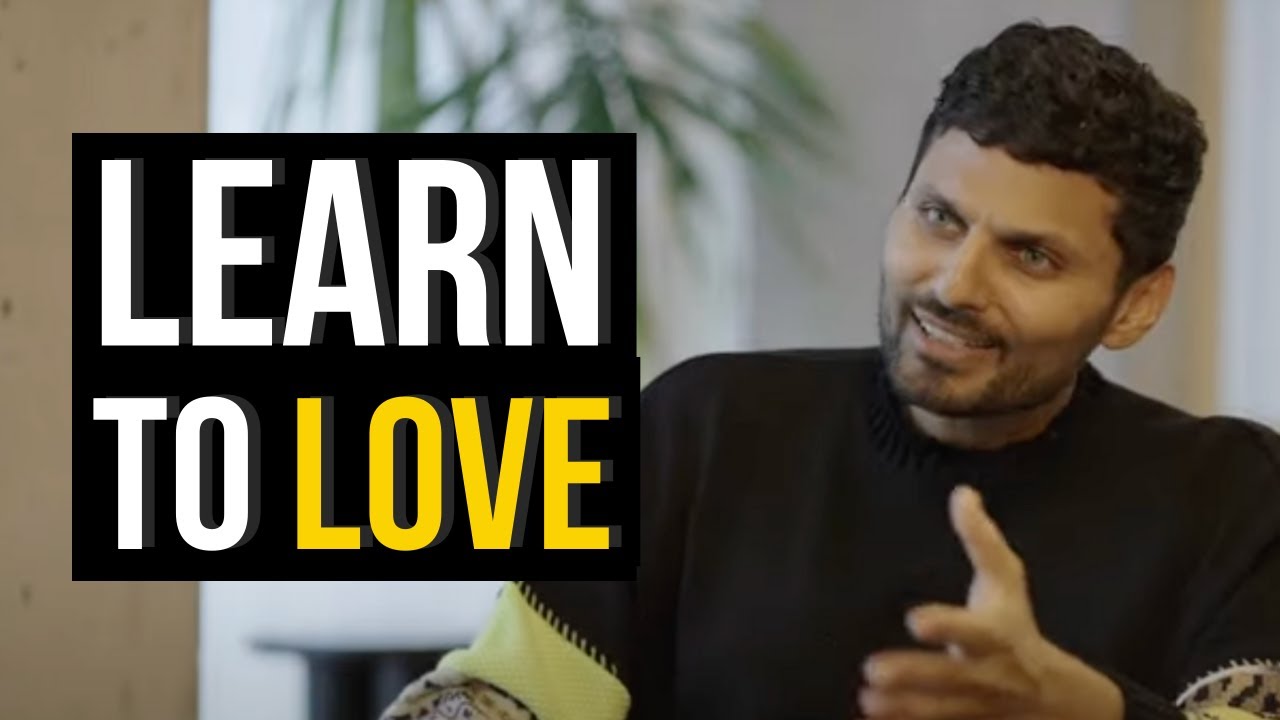
Jay Shetty outlines four stages of learning to love: self-love, loving others, healing from pain, and expanding love to all people. He connects Harvard's happiness research and neuroscience to ancient Vedic wisdom, and explains how relationships reveal blind spots through the parent-child dynamic that sabotages partnerships.
Chapters
Welcome back to the Kwik Brain Podcast, everyone. I'm your brain coach, Jim Kwik, and today we're going to talk about love and the brain and so much more. And I'm honored to have back on the podcast our dear friend, number one New York Times bestselling author, number one podcast of On Purpose, Jay Shetty.
Jim, thank you so much for having me back, man. It's good to be back.
Well, congratulations on, on another book.
Thank you.
And this is The 8 Rules of Love.
Yes.
Now, this is a topic— we've mentioned love and the brain because people might be thinking, hey, this is about the brain, but you're going to talk about the heart. But we know that it's not just your neurological networks in terms of your happiness and your ability to find fulfillment and your performance. It's also your social networks. And I don't know a more important one than the people that you have intimate connections with. First of all, and I recommend everyone think like A Monk, and, and highly recommend that. But you're going from like this thinking to this, this feeling and love. What was the impetus for that?
Yeah, I think I was just speaking to so many people, whether it was reading comment sections online on Instagram or YouTube, or whether I was seeing the feedback we received on videos on TikTok, or whether it was private clients that I was working with. I met so many people who were just fixated, fascinated by, and struggling with finding love.
Mm-hmm.
And there were 3 challenges: finding love, keeping love, and letting it go. There were people who'd been in relationships and things had not worked out, or maybe a partner had been lost or something had gone wrong, and they were struggling to let it go. So I just started to see this energy where people were struggling with this area. And the reason why the area became so important to me is I was meeting people who had incredible careers but they didn't have someone that loved them and they loved.
Right.
I met people who had like a supportive family, they had a good friend network, but they still felt unfulfilled because they didn't have a partner to love. And then I met people who were soaring in their careers and they were really popular and famous, but then they didn't have a partner and then they didn't feel love. And I started to realize that love was that unifying pursuit that we all have, and without it, we end up feeling unfulfilled, incomplete, and unhappy. And I remember reading the 75-year study by Harvard. This is the longest ever study done by anyone on human happiness, and they found that the quality of our relationships was the number one indicator for human happiness. So for me to write a book, to have the opportunity to research, to learn. And I'd love to share some studies with you about the brain and the heart and how they're connected as well. But for me to have the time to do that in my life, at a time when we were all lonely and felt lost, I learned a lot about love through the process too. So it's been a beautiful journey for me in writing and creating and researching this book.
And as you're writing and you're researching and you're coaching clients as well, if somebody is not in a place of where they've found, or not only discovered, but also developed, because it's not only discovering, you know, love. It's also developing it because there's work involved as well. Where do you usually start?
Yeah, so what I discovered is that there are these 4 stages of learning to love. And I think— yeah, learning to love. I think we often talk about you like someone and then you love someone, right? It's almost like you jump from like to love. And I think there's this step in between called learn, right? And it's a step no one wants to do because we're hoping that if you like someone, it just turns into love in a magical way.
And we're not taught, just like with learning, there are no classes on, you know, in our world, like how to learn back in school. But where were the classes on how to love?
Exactly, there were no classes. And so most of our notes on how to love come from movies, which haven't led us in the right way because there's a fairy tale romance. Sometimes they come from music, and most music, there's, you know, millions of songs written about love, but they're usually the pains that come with love. And then You have your family. You saw love in your aunts and uncles, your parents. You saw love between cousins and their parents. And you're looking around going, well, who's in a happy relationship? And I think most people would say they don't know that many, or there's— you can count them on your hand. And so there are these 4 stages I found to the experience in learning to love. Step 1 was learning to love yourself. Learning to love yourself was step one. I think one of the biggest mistakes that people make is that step one is going to find someone, getting on a dating app, hoping that you start messaging someone, get introduced to someone. But it's really learning to love yourself.
As a complete whole.
As a complete whole.
And not looking for somebody necessarily to—
Correct.
Like in the movies where they complete you.
Yeah, I think we live in a world—
They're your better half.
Exactly. All of that language of they complete me, I'm looking for my better half, I'm incomplete. There was also this language of how we've seen loneliness as a weakness. So when you grew up and no one came to your birthday party, you were unpopular.
Mm-hmm.
If you sat alone at the lunch table at school, you were the loner. If you went to a wedding and you didn't have a plus one, it was like, oh, like, you came alone? Like, coming alone and being lonely was always seen as a negative thing. And so I think we've built up this pattern of thought that if I don't have someone standing next to me and standing with me, then there must be something wrong with me. And so learning to recognize that we are already complete is what prepares us to have love with someone else by practicing love with ourself. And when you practice love with yourself, you recognize what you like about love, what kind of love you want, the standard of love that you want to be loved at, what you deserve. You set that standard.
Right.
Most of us let our exes set our standard of how we want to be loved. If someone treated us really badly in our last relationship, if someone does 10% better, we treat them as if they're doing 100% better. So we've let other people decide what we deserve in love, and step one is really deciding what we feel we deserve in love.
Because it's hard to love somebody else any more than we can love ourselves.
Yes.
Also, and I think part of self-love is again looking at that person in the mirror and, uh, and accepting them, loving them through everything they've been through.
Yes.
That makes them still be able to, to be able to be standing.
Yeah, and, and I fully agree with what you said. When you go through the process of learning to love yourself, that's the same process you're going to use for someone else, right? So when you learn to love yourself, you go through all the unforgiveness, you go through all the misunderstanding with yourself, you go through all the connection and disconnection with yourself. And when you go through the entire process and you're like, oh, I can accept myself, you're now gonna have to repeat that for someone else, right? So doing it the other way around, it's a lot harder because you're doing both at the same time.
And you're teaching yourself as you love yourself. You're teaching other people how to love you.
Exactly.
And you're teaching yourself what is required, you know. And maybe we love ourselves so much that we teach other people, you know, how it's done.
Exactly. That's the hopes. That's step 1. Step 2 was learning how to love others. You've learned to love yourself, now learn how to love others. This is a place where you get to practice love with someone else. And when we were monks, we were always taught to understand that, you know, it's hard enough dealing with one mind, but when you go to 2 minds, it gets much more complex.
2 hearts.
2 hearts. And so there's this incredible study that I was reading from Harvard that talks about how when you first meet someone, you're experiencing that chemistry, that spark. And really what you're experiencing is passion and stress at the same time. We often don't know that, but the cortisol levels are increasing in the brain when you're feeling that attraction, that chemical spark with someone. So you're actually feeling passion and stress at the same time. We all know what that feels like. You get attracted to someone, someone gets attracted to you, sparks fly, there's, there's a chemistry. Now what happens is if that love lasts, the study says that Things become more calm. I think we've also experienced that. The honeymoon phase is over, the chemistry's over. And what the study says is what happens is the passion's still there, but the stress drops in the brain. And that often makes us feel like there's no more excitement. That often makes us feel like there's no more positive energy. But what I find is that this is where love really starts to take off, because now you've lost that initial lust, that initial attraction, that initial stress or tension that was there, and now you really get to practice love. So in the book, I talk about all the different methods that come with dealing with conflict, dealing with challenges, dealing with these stresses. But what's beautiful is that the study says that the stress you first felt from the relationship, now the relationship helps you deal with the other stresses in your life. Oh, that's what a healthy, loving relationship is, that in the beginning you felt passion and stress, now the health of that relationship helps you deal with the other stresses in your life.
So is that the third phase of it then?
The third phase is actually really fascinating. Most people would think that the third stage is love, like you got there. And I was thinking about this, and the model that I've broken down for you comes from the Vedas. The Vedas are the scriptures that I studied during my time as a monk. And you know, my passion is always trying to find the synergy between ancient wisdom and modern science. I'm always looking for those. connections, because I really feel that the answers are not old or new, they're together, right? There's this intersection that I find really powerful. And so the Vedas talk about this 3rd stage, and I spent a lot of time researching it to understand it. And what it came out to me is that before the 4th stage, which is the final stage, there's a stage of learning to heal from love. And what I mean by that is that in the process of giving and receiving love, We all experience a lot of pain. You could love someone and not have love back. That causes you pain. You could love someone and overlove someone, and they try to love you back, but they can't reciprocate with your level of pain.
Hmm.
You could love someone and be loyal to someone, but they leave you, or they cheat on you, or they reject you in some way, and that leaves you with pain. Or you could have loved someone your whole life, and they passed away. Something tragic happened. And now you're left with pain.
Right.
So in order to learn to love, we had to learn how to love through pain in some way, because so many people, when they go through pain or rejection, they close off. And that's very normal. It's valid that when you've had love that hasn't been responded to in a positive way, you become cold-hearted, you become hard-hearted, right? We hear those words all the time. And so the third stage was, well, now that you've become hard-hearted or cold-hearted, how do you soften again? How do you still go back to a place to be able to be loving again? The 4th and final stage, which is— I'll let people really understand this in the book, but it was the ability to experience love through everyone and everything. I think one of the biggest challenges we have, just as we believe that we were incomplete if we were single and not worthy of love, the other extreme is we only believe one person is worthy of our love.
Mm.
The idea that there is only one person that we're meant to love. I don't mean that in monogamy or polygamy. I mean that in the sense of I can experience love with you right now if I want to. I can experience love with anyone in this room or anyone that I bump into every single day if that's what I choose to do. That, that was the ultimate expression of love, that I was actually able to engage with each human with a sense of love, with a sense of connection.
Yes.
How beautiful would the world be if we were able to do that? Those are the 4 stages to learn how to love that I discovered in the book. Breaks down each of them into practical exercises, reflections, and ideas.
And that's why I love it. That third stage in terms of healing, it's interesting because a lot of our viewers and listeners, they are lifelong learners, and learning is— learning and growth is one of their top values. Like, for me, it's love, growth, contribution, adventure. You know, those are my true north that I make my decisions on. And it's interesting, in romantic relationships, in that healing area, You grow through books, through mentors, but you also grow maybe as an entrepreneur because that's where the responsibility is on you, in intimate relationships.
Yes.
Because that person, you're vulnerable to that person.
Yes.
That person has what they think, how they behave, how they feel about you affects you more than somebody maybe leaving a comment on Twitter.
Exactly.
Is it like a mirror?
Absolutely. The Vedas believe that the purpose of relationships, i.e., romantic relationships, is education. The idea that that person, like you rightly said, can expose more of your weaknesses to you than anyone in the world. You could hide all your weaknesses from the entire world, and your partner will know what time you woke up in the morning, what time you went to bed, what you ate, what you didn't do. It's a mirror. It's, it's an opportunity to have an honest, transparent view of yourself in a safe space, right? It's not someone who's judging you. It's not someone who's pointing fingers at you. It's not someone who's critiquing you or comparing you to someone else. But that a healthy relationship is a safe space where you can look at your weaknesses, your flaws, your challenges, and work on them.
Right.
And then that person supports you in working on them. So to me, if anyone's thinking about whether they're in love or not, that's the question you want to ask yourself is, Is this person helping me learn about myself?
Right.
And are they helping me grow? All the beautiful things you said. Are they helping me contribute more? Are we going on adventures together where we learn about each other? Like, these are the questions of, am I in love? I think often our questions are like, am I attracted to them? Do they do nice things for me? Are they kind?
Like, sure, these are all good things, but love and lasting love requires much more depth You know, I feel like I want to be able to write a book on 8 rules of learning. But just like in learning, there's personal styles, that it's not how smart you are, it's how are you smart. Some people prefer to learn something in different ways and methods and styles. But there's also styles of communication.
Mm-hmm.
There's styles in terms of preferred ways of love where you might— that person might love you but not communicate in a way that you feel, yeah, though, that, that love. How does that play out usually?
Yeah, I think there's a couple of models here that I have in the book. One of the ones I talk about is the parent-child complex, and it's the idea that often we try to act as a parent to our partners, and when you parent your partners, they start to act like a child, right? This is a psychological principle of like, when— if I talk to you as if I'm your parent, you'll start to mimic the behavior of a child who's throwing a tantrum or not being happy or, you know, leaving their— you know, leaving everything in a mess. And if I deal with you as a child, if I act like a child, then I'm forcing the other person to have to act like a parent.
Mm-hmm.
And really what you're trying to do is get to a partner level. And I think a lot of us do this. Like, if we didn't have a parent who satisfied our needs, we often go into a partnership as a child, subconsciously hoping that our partner becomes our parent. Or if we had to be the older person in a family, maybe you're the eldest sibling, maybe you're an older person in your family, maybe you always had to make sure the peace was kept and things were okay. You walk into a relationship and you naturally have this commanding behavior and you communicate in that way. And I think the healthiest relationships are when you actually walk in as equals, as partners, and we say, okay, there are some things where I feel like a child or I feel like a parent, but we're gonna try our best to actually meet in the middle and communicate as equals. We're gonna communicate as partners. We're gonna solve things together. I'm not gonna act like a child and expect you to be my adult and solve everything.
Right.
Or I'm not gonna pretend to be an adult and control the situation. There was a beautiful poem that was written that talks about how, like, when people get into relationships, the mistake they make is that they're trying to force the other person to move into their house. And what I mean by that is your house is your values. Your house is your beliefs. And when we often get into relationships, we're like, come live over here. I want you to have the same beliefs as me. I want you to have the same values as me. I want you to have the same ideologies as me. And we realize that that's very rare in a relationship. Most people have different ideologies.
Yeah.
Of course, they can't be extremely different, but there's, there's a natural difference or a lack of similarity in values and beliefs and how you were raised. And instead of both people arguing, saying, come live in my house, The poem suggests that the healthier thing to do is take the bricks you love about your home and build a new home together.
Hmm.
So what are the bricks in your home that you can't let go of, and which are the bricks that you can let go of? Leave the bricks behind that don't serve your new relationship, but bring the bricks that do and start building a new home together. And so I think we need to think about love as constructing, building, creating, Not in just finding and having. I think we talk about having a loving relationship, we talk about finding a loving relationship, when love is really about creating it, building it, constructing it, you know, every single day. And I think that's where I'm placing the emphasis.
I love that, because it's not just about discovering love, it's about developing it.
Yes.
You know, and showing up every single day where it's not 50/50, but everybody involved is 100%.
Correct.
And they're all in this— these family dynamics, you also have that in learning also. It's interesting that the hats and the roles that we wear, yeah, in, uh, in family systems, also how we happen to learn as well. Who did you write this book for, and, uh, and what— why should they read it? Yeah, what are they going to get out of it?
I wrote this book for anyone who's single currently and trying to make sense of it. I wrote this book for anyone who's in a relationship and navigating the natural ups and downs. I wrote it for anyone who's just broken up and gone through the pains of whether it's a divorce or whether it's a long or short-term relationship ending. And I wrote it for anyone who's thinking about what love looks like beyond just romantic love. And so those are the 4 types of people that I wrote this book for. And I'd say the biggest thing that someone's going to get in this book is they're going to get ideas, but they're also going to get insights on how to actually have more effective conversations with your partner, how to know if someone is right for you, how to actually know your own values and someone else's and see if they match. So the book guides you through everything from chemistry through to compatibility through to connection, and I try and leave nothing to your imagination in the sense of like, I'm not trying to just let you kind of just deal with all the issues as they come up. I'm trying to really help guide You know, the tiniest, smallest choices that you're making. So hopefully people feel like it's a comforting guide to love.
And just like Think Like a Monk, I love that you're pulling from not only the latest science but also ancient wisdom as well.
Yes, yeah.
We did that with our book as well. We wanted to know like the latest neuroscience to learning, but then also what did the ancient people do to be able to learn and be able to pass on this amazing information?
Absolutely.
That's incredible.
Thanks, Jim.
Jay Shetty, thank you so much.
Thank you.
Where do people get the book?
The book is 8rulesoflove.com, so you can buy it and it will give you all the links wherever you are in the world. It'll give you the links to all the different countries, so 8rulesoflove.com.
Yeah, we'll put it in the show notes at jimkwik.com/notes. I encourage everybody to take a screenshot wherever you're consuming this and tag— post it, please, and tag Jay so he sees it, tag myself as well. I'll repost Some of our favorites as well. And I would say to everyone who's watching this right now, make sure you get your copy. I recommend everyone gets 3 copies for everything. Just like, this is a great book. Get one for yourself and then get 2 to be able to gift out to your friends and family who could really benefit. So, you know, make sure you can follow your heart, but also bring your brain.
Yeah, absolutely.
Thank you everyone for watching. Make sure if you like this, Make sure you subscribe and, uh, be limitless. Thank you.
Thank you.
More from Jim





The Library of Minds: Brain Coach: How to Stay Sharp When AI Does the Thinking | Jim Kwik





