Lifelong Learning: The Key to Health & Success 🚀
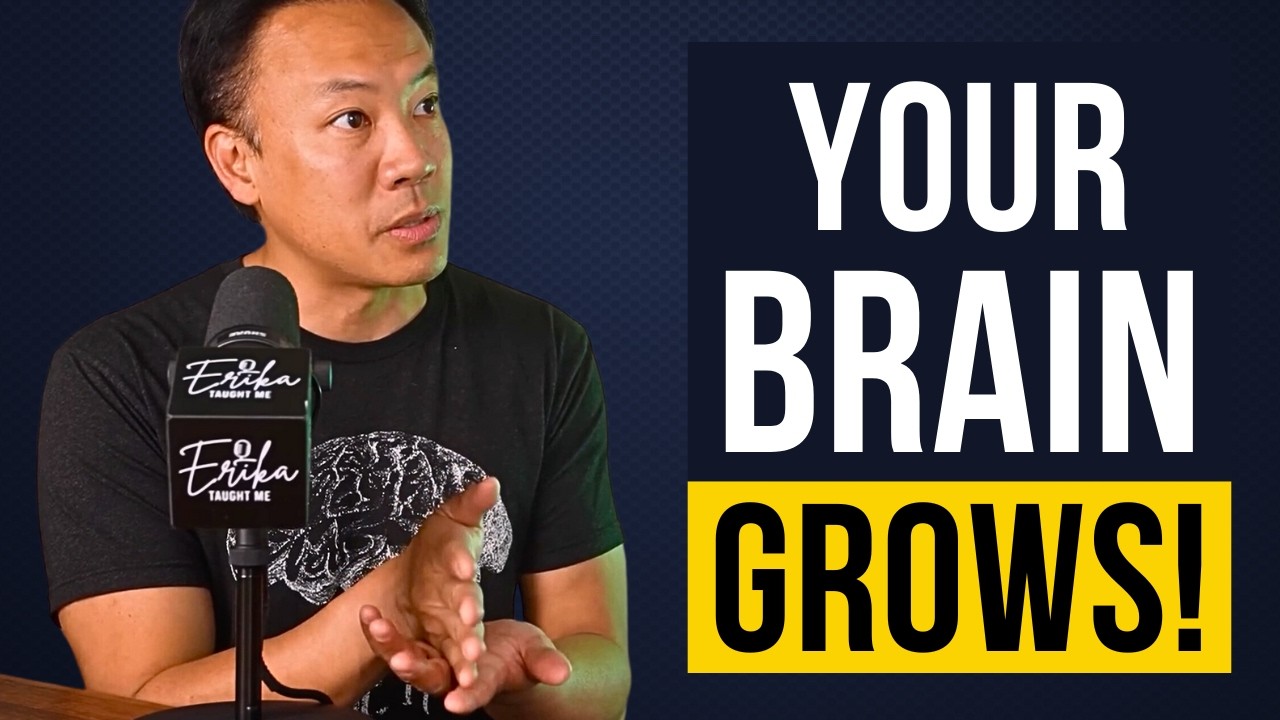
Jim Kwik argues that continuous learning rewires your brain and extends your life. Warren Buffett reads 500 pages daily. A nun study found longevity linked to lifelong learning, and one student read 30 books in 30 days to help her dying mother, who then recovered.
So another thing on your list of 10 things to do for your brain is the new learnings, which is just continuously learning new things. Can you tell me more about that?
Yeah, if people have, if we're connected on social media and they see me with Oprah or Elon or these individuals, people always inherently ask, how did you meet? How did you deepen a relationship? And we did it because we have the shared bond of learning and reading. And I think anyone at that level, like they grow, they're always learning every single day. Even I was at Berkshire Hathaway and I had this unique opportunity through happenstance, not even for any other reason, to play bridge with Warren Buffett at the mall. And it was just wild. But I had to ask him, like, his key to success. And it was like, always learning. I was like, what specifically? I hear that you read a lot. And he was like, yes. He reads 500 pages a day. I mean, how amazing. I mean, think about it. Somebody has decades of experience and they put it into a book. And our listeners here, they could sit down and read that book in a few days. You could download decades of wisdom in the days. I don't know any better quote-unquote hack or advantage you could have in terms of saving time and learning from all, you know, people that are really experts at what they do. You know, listening to this podcast gives you such an incredible advantage because it's— there's this divide. It's not just those who have and those who don't have. There's a divide between those who know things and those who don't know things. And the people that know things, going back to life as the C between B and D, they can make better decisions. They can make better choices, right? And our life is the sum total of all the choices we've made. But the only way to make good choices is to have a good foundation of knowledge and wisdom, skills and abilities. And so constantly upgrading it. Our mind is the ultimate adaptation machine. And the faster you could learn, the faster you could earn. Because knowledge today is not only power, knowledge is profit.
Right.
And so when somebody has more knowledge, they listen to this podcast, they plug into your YouTube, they read Limitless, whatever, then they can make better choices because they're better informed. And ultimately, everything's gonna reflect everything they're being, doing, having, sharing with the world. It's gonna be a reflection of those choices. But going back to new learnings, I mean, we all have a to-do list, but do you have a to-learn list? Like, actually learning more will actually help you to live longer. There was on the COVID of Time magazine, there was a study of nuns and the These nuns were living 80, 90, and above. And the researchers wanted to find out what was the key to their long life, their longevity. And they said half of it was their faith, their gratitude, emotional wellness, but the other half, they were lifelong learners. I mean, they were studying every single day, having deep conversations every day. And because of it, it added years to their life, but also life to their years. The study was called Aging with Grace. What a beautiful name for a study. So if people wanna look it up, but it'll actually help you to live longer. And so your brain grows. There's this term called neuroplasticity, which some of your listeners might be familiar with. It's your brain's ability to adapt to new experiences. Literally, we could grow older, but we can make more connections and learn things, change our beliefs, change our habits just through rewiring through our brains. There's this phrase that neurons that fire together, they wire together. And the key for it is novelty and nutrition. And that's why I focus on these 2 out of the 10. All of them are important. It's just like if you wanna build your physical muscles, you go to the gym, you give it novelty, you work it out, give it some kind of stimulus, and then you feed it proper nutrition, amino acids, fats, and so on. And same thing with your mental muscles. You have to give it novelty, and then you have to give it proper nutrition to be able to grow. And the reason I focus on the brain, like if you're watching this on YouTube, I have a brain on my shirt and I always wear a brain shirt and all the photos always point into my brain because I feel like what you see, you take care of. Like, you see your car, you see your clothes or your skin, your hair, it's in your constant attention. So you know when it's like falling below par. But we don't see the thing that takes care of us, which is our brain. And I just want to remind everyone that's listening that everyone listening, Your brain is your number one wealth-building asset that you have. It's not like it was hundreds of years ago, like in agricultural age or even industrial age where it was brute strength. Today, we're compensated for our brain strength, right? It's no longer our muscle power today, it's our mind power. And again, the faster you could learn, the faster you could earn. I think an individual's ability to learn rapidly and translate that learning into action is the ultimate competitive advantage in business and in life.
Mm.
So going back to new learnings, you know, having a to-learn list, Where are you gonna challenge yourself every single month to learn something new? Because our, again, knowledge, skills, and abilities is what equates to the other treasures in our life. The reason why I'm doing this even 30— I started teaching when I was 18, so I'm turning 51, so about 32 years. When I learned these skills from a mentor, I started, I was like, I have to help everyone else, 'cause I got really upset that there were simple things I could have done Imagine, and I imagine a lot of people still remember the grocery list, but imagine applying that towards the periodic table and everything you had to learn back in school, right? It would have been so much easier. And so I was upset that there were simple things I could have learned that would have made my life easier because I had so much self-doubt, so much low self-esteem. I was phobic of public speaking because it took me, again, 3 years longer to read. I never knew answers, so I never wanted the spotlight. I still get nervous on stage and on videos. But, um, and it's weird because life has a sense of humor. My 2 biggest challenges were public speaking and learning, and life has a sense of humor because all I do is public speak on this thing called learning. Um, but it's just a reminder to everyone that our struggles lead to strength, that with challenge comes change. I don't know one strong person that had an easy life. I just don't, right? Sometimes, you know, it takes difficulty to create a demand for us to You know, to grow stronger. But yeah, going back to this, I started to tutor, and one of my very first students, she was a freshman in college. She read, Erica, 30 books in 30 days. Not skim or scan. She was a freshman. She read 30 books in 30 days. And I wanted to find out not how— I know how, I taught her how. We teach people how to read faster, remember more. I want to know why. I'm insanely curious about why some people know what to do, but they don't do what they know.
Right?
I mean, you get that a little bit like common sense is not often common practice. We all know there's certain things we should do on a regular, but why don't we do it? And I found out from her, she did it because her mother was dying of terminal cancer. Doctors gave her mom just 2 months, 60 days to live. And the books she was reading were books to save her mom's life, books on wellness and alternative medicine and nutrition. And I wish her love, prayers. 6 months goes by and I get a call from this young lady and she's crying profusely. And it just seemed like the last forever. But when she stopped, I found out they're tears of joy that her mother not only survived, but is really getting better. The doctors don't know how or why. The doctors are calling it a miracle. But her mother attributed 100% to the great advice she got from her daughter who learned it from all these books. And in that moment, I realized 2 things. Number one, if knowledge is power, Then learning is our superpower, and it's a superpower we all have regardless of our age or background, career, educational level, financial situation, gender history, IQ. We all have these amazing powers. We just— it's not how smart you are, it's how are you smart. That's why I created that brain assessment to show people how to activate more of their superpowers. But the second thing I realized besides that knowledge, power, and learning is our superpower is I realized my mission. Is to show people how to build better, brighter brains. You know, remember, our mission is no brain left behind. And if we could raise the— even with our podcast, we've done like 400 episodes closing in on like 100 million downloads. And like, what if somebody listening in a village somewhere listens and they listen and learn how to be creative and they solve cancer, you know, or something, right? Our minds are that amazing. So many people out of fear, they're shrinking what's possible to fit their minds. When— what if we expanded our minds if at all that's possible?
What is on your learning to-do list?
Yeah, so, um, I have like physical stuff. I, I tend to do a lot of things physically because I, like many people who are listening, are very— their job is very cognitive, right? So I swim with sharks and I jump out of planes, and, uh, and it's great because my wife is very even more adventurous than I am, and she makes me do like When we're— I was speaking in Sydney and we're on the plane and she was, you know, online and she's like, we should swim with sharks. I'm like, okay, that's not the first thing that I think of. But I was like, fine, with a cage. Well, I'll do that. I always kind of say yes because nothing changes if we say no, right? Say no, nothing changes. But then she sets up this out-of-the-cage kind of swimming experience, which I will never forget. You know, it was a life-changing experience. So for me, my things are things that kind of push me. So I do a lot of martial arts. You know, it's something that I want to evolve in because I feel like there's a mind-body connection, but also body-mind connection, that there's certain physical activities that have been shown to even be good for your brain, like ballroom dancing, Latin dancing, racket sports like pickleball and tennis. It's been shown to be very good for your brain. So as your body moves, your brain grooves. Well, we have a 1-year-old, so a lot of what's on my to-learn list right now is learning how to learn for infants. And I find it so weird. Like, when he was born, I was like, I'm gonna totally, like, brain hack this kid and, you know, get him, like, doing all these things. But you know what I've found is I just— I watch him and I just remember who we are. Like, he's so fast. I'm learning more than I am— I feel like I'm teaching this young human because he's, like, curious and he's excited and he's happy for no reason. And he's very playful. He's not, you know, he's learning. He's walking and he falls, but he gets up. And sometimes as human beings, we make mistakes. And they're like, oh, I'm never doing that again. I don't wanna look bad in front of everybody else. And on that, the first video or first podcast episode I wanted to create and stuff like that. But yeah, I feel like when we're born, we have this infinite limitless, if you will, potentiality. But then through, I don't know if it's schooling or media or marketing, whatever, we like shrink down in terms of like what we think is who we are and what's possible. So a lot of stuff that I'm learning right now has to do with With child development because I'm writing a book on this subject. And then also I'm very curious about the future of education. So besides the physicality of some of the martial arts that I'm doing like JKD and Muay Thai and everything, I'm also interested in the future of how technology is affecting learning like artificial AI and all the— Different platforms that are out there that could enhance. There's a whole chapter in Limitless on AI, and it's the question I wrote it, the prompting question was, how do you use AI to enhance your HI, your human intelligence? And for me, it's not artificial intelligence, it's more augmented intelligence. It's like a partner, it's a tool for us to use, like all tools.
More from Jim





The Library of Minds: Brain Coach: How to Stay Sharp When AI Does the Thinking | Jim Kwik





