Limitless Daily Book: Signed Copies + Live Q&A with Jim Kwik
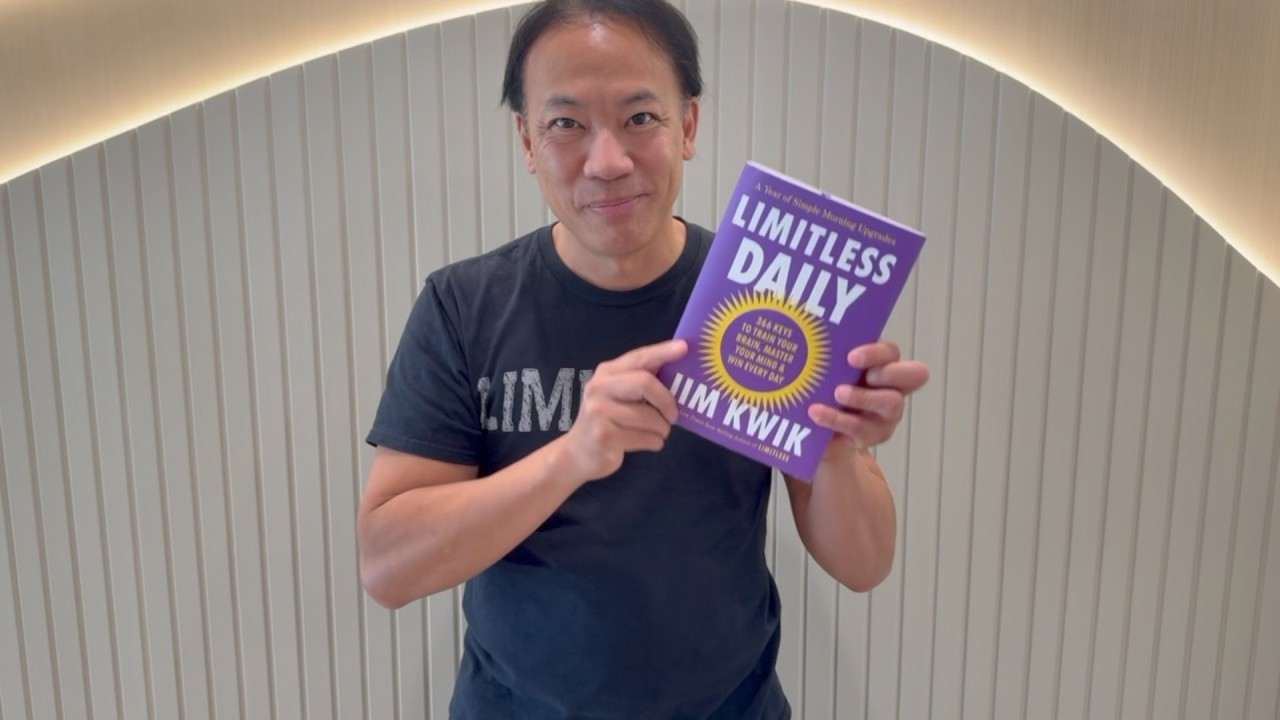
Jim Kwik presents Limitless Daily, a 366-day guide of five-minute brain-training practices based on neuroscience. He shares how a childhood brain injury led him to develop daily micro-practices for focus and memory, and warns against using your sleep-inertia window for phone scrolling instead of intentional mental work.
Chapters
Okay, we're gonna get started. Let me just set up Instagram real quick. Thanks for joining us. You can put in the chat wherever you're watching— on Instagram, on YouTube, on Facebook. Perfect. All right, can we? It's good to see you wherever you are in the world right now. Good morning, good afternoon, good evening. My team, can you message me that we're good and you could watch on platforms? What city are you in? I'm in Los Angeles right now. Where are you tuning in from? Please let us know. St. Louis. Costa Rica, Colombia, Morocco. Amazing. We'll get started in like less than a minute. You might want to take some notes also as well. This is very cool. Talk Shop Live. I can see everybody's comments on Instagram, on YouTube, on Facebook. Toronto, good to see you. Germany, New Jersey, Maryland, Argentina. I love this. All right, let's, let's get started. So I want to thank you for celebrating the upcoming book together. Many of you— let's give you some background and go into some training and some Q&A. also as well. Um, so how many of you want to win every single day? How many of you want to win more every day? Um, some of you— anyone here read Limitless or have a copy of my book, my original book Limitless that came out in 2020? This is kind of, uh, the new, uh, part of the journey if you are, um, part of it. Um, this is, uh, So this is the book we're gonna talk about today. It's called Limitless Daily. And it's 366 keys to train your brain and master your mind and win every day. This is, people, one of the questions we got when Limitless over the years, I mean, we've sold 2 million copies, is how do I, there's so much information, owner's manual for your brain, how to focus, how to read faster, how to improve your memory, the best brain foods, how to, do everything to optimize your sleep and your performance, your productivity, your mindset, reducing negative thinking. But how do we become Limitless Daily? And so Limitless Daily, it's a 5-minute read that you do in the morning. And I'm gonna explain the science behind it. And whether you get the book or not, we have a special here on TalkShopLive. If you're watching this, you could get a signed copy. And I'm gonna be signing a lot of books, I have a feeling. So if you're watching on Facebook, you could comment the word shop, we'll send you a link. If you're watching on Instagram, there should be some red button there, and if you're watching on YouTube, you click the link in the description. So we'll get started now. And so thank you for joining us. I appreciate your time. So whether you're watching us on talkshop.live, Facebook, Instagram, YouTube, I just did a podcast episode here in the studios in Los Angeles, and And I just want you to know something. Like, you are not— this is not like a book event tonight. You're joining from many— when I'm looking at this, this is kind of like a new chapter. And I mean that literally. All right. So Limitless Daily contains 366 science-based keys to help you to be able to master your mind, to unlock your intelligence, to win every single day. And for this broadcast, we're offering signed copies for just the price of the book. So that's gonna be fun. If you already know you want one, you could just tap the book or purchase like now. You do not have to wait until the end. In fact, this book is a great gift, you know, to someone you love. Maybe you have a student in your life, a parent, aspiring leader, a friend that's beginning a new chapter. Consider getting them a signed copy. You know, this is more than information. It's like a personal invitation. But first, let me ask you a question. Have you ever had a day when you knew what to do, but you could not get yourself to do it? Yeah. You had you had a goal, but you didn't have focus. Have you ever had like a pure, you know, intention, but you didn't have the energy? Maybe you had a lot of information, but you weren't getting the transformation you wanted. If this has ever been you, type the word me in the comments. You're like, yes, yes. Yes. David, already ordered 2 copies, one for me, one as a gift. David Kaye, you're the best. Yes. I just wanted to let you know, look how many people here. Super brain, yes. Every day, me, me, me, me. So I want— I ask this question because you're not alone, you know, that you're not— you're not— there's— you are enough. You're not broken like I thought I was, you know, with my learning difficulties and my brain injury. Most people, I don't think they need another giant promise, you know. I feel like if you want to make a new chapter in your life and you're the author of your own book, That you don't have to completely reinvent your life by tomorrow morning. I think that's a lot of pressure. I think you need a small intelligent action that you could repeat daily. I think if you're persistent, you get to achieve it. Like, if you're persistent, like, you can, you can make money, uh, you know, some money that you need, or lose weight. Um, but if you're consistent, you get to keep it. Um, so I encourage you, I'm gonna turn this into a little masterclass, some coaching. I'm gonna do Q&A here. You are my role model. You're very sweet, Adam. Thank you. Because your life is not changed by what you do occasionally. You don't— you can't floss your teeth for 3 hours and then you're done for the year, right? You can't go to the gym 10 hours a day over, you know, for a weekend and be fit for life. You can't have a great conversation, you know, with a new— with a stranger and have a stellar relationship, right? Your life is changed by what you do consistently. And I think— and I'm going to talk about this— the treasure you seek And that future that you seek is hidden in your daily routines. The challenge is Duke University came out with— says that 40% of our behavior, our daily behavior, is unconscious, is habitual. But when did we actually— I think first you create your habits, then your habits create you, right? First you create your habits of eating well, prioritizing your sleep, reading every single day, exercising, studying, whatever it is that will make you great, studying some kind of skill, your music, your art, coding, programming, AI, whatever it happens to be. And then those habits habits make you back. So today I'm going to share with you a number of keys that's from Limitless Daily. And I don't want you to read ahead when you get the signed copy. So I want you to read just one page a day. That's it, 5 minutes. That's the only commitment I'm asking. It's like brushing your teeth, you know, the amount of time it takes you to brush your teeth, you know, a few minutes, brush and floss. And you could use each one of them, you know, even tonight, even some of these things, definitely tomorrow morning. And so you're gonna, what we're gonna do is talk about how to train your focus. And then when you have better focus, your memory's gonna be better. I'm gonna talk about how to organize your habits. We're gonna talk about negative self-talk. I think that's a big one. Maybe even your relationship with AI or technology. And I'll share some of the stories that helped build this book and, you know, into what it is. It comes out very shortly actually. And again, if you're just joining us, you get signed copies here also as well. So I'm totally energized. And I've been on a massive tour. I just got back from Europe. in Nashville and then Scottsdale, and now I'm in LA. I'm flying to San Francisco tonight, but on a mission to build better, brighter brains daily. No brain left behind. So I appreciate you being on this brain marathon with me. So in Limitless Daily, we turn brain science and psychology into 5-minute practices. I think if you want to win the day, you have to win that first 5 or 10 minutes of the day. And I'm going to talk about a process called sleep inertia. And how you're going to get more return on your efforts. And then I'm going to talk about the attentional priming, things I haven't talked about in a podcast or even a book before, before Limitless Daily. So stay with me. By the end, you'll have some like a personal protocol for beginning your next chapter, you know, and you'll be able to do it one day at a time. My promise for you who get a signed copy of Limitless Daily is it won't require more than 5 minutes. You read it, there's a 2-minute exercise, can be done one and done in 5 minutes a day. And if you can't do that, then this is not for you. So it's hard, right? We could all make excuses, but as a coach, I have to call you on your BS, your belief systems. Common sense is not common practice. It's better well done than well said, you know? And we can't be upset by the results we didn't get from the work we didn't do. So. We have people all around the world, and I will answer these questions. Brain aging—is it preventable? How much does genetics play a role? Daniel bought two copies signed. That's amazing. Yes, I'm not. We don't. I've never. We've never done this before. So this is Talk Shop Live is the first time we've offered for the price of the book, you know, a signed copy. So let's look at all the different cities that we're. Posted here on Instagram, on YouTube, on Facebook. You know, this is a, you know, this is a very special Limitless community. And I know I never— I don't take it for granted. You know, we have students in every country with our speed reading memory enhancement programs, student success programs, our podcast. You know, a couple million on YouTube, and podcast has crossed, uh, will cross 100 million downloads this year. I'm very, very proud. Limitless is in dozens of languages. Worldwide. So again, if people are asking about the book, we have some— yeah, so if you're on TalkShop Live or actually watching on the platform, just hit shop and you can get your signed copy. If you're watching on Facebook, there should be— just put the word shop down below and we'll send you a link. If you're on Instagram, just hit the red button on the screen. If you're watching on YouTube, the link is in the description of the YouTube. So I'm gonna answer these questions for sure. Is there— must be a limit as to how many times a human can relearn something. Yes, this is all about relearning, unlearning, learning again. So people ask why this book, all right? I'm gonna give you 60 seconds. Many of you know I had a brain injury when I was 5 years old. I had migraines every day, balance issues, coordination issues. Took me 3 years longer to learn how to read, which really affected my self-esteem, my self-worth, my self-confidence. pivotal morning when I was 9 years old. I was slowing down in class. I was called slow, being teased really bad by the other. My last name really is Kwik, my father's name, my grandfather's name, but I didn't change it. It's like a stage name. Said I was being teased and the teacher came to my defense, said, leave that kid alone. That's the boy with the broken brain. So that label became my limit. You know, I don't know if you've ever said something to yourself. I think about the most important conversation you're gonna have is the one with yourself. Because although the teacher, and I think she had good intentions, she was trying to protect me, Only took five seconds for that for her to say that phrase, broken brain. You know, but goodness, like for ten years I said it to myself. That was the conversation, that story. I feel like we don't rise under pressure to the our level of aspirations or goals under pressure. I feel like we fall to all of our stories and to our standards and also to our self image. So you know, that's why I wrote this book because there are words like coaching for the first few minutes of the day. I'm going to explain how. Precious time that it is, you know, in your, in your, in your process, you know. Because, you know, when I'm saying every single time I did ballet and squat, say, because I had a broken brain— this is— these are your self-talk. Your brain is like this incredible supercomputer, and your self-talk is program it will run. So if you tell yourself, I'm not, you know, that smart, I'm not good at remembering names, you won't remember the name of the next person you meet because you program your supercomputer not to, you know. Your self-talk is like instructions. They're verbal almost verbal hypnosis, right? Self-hypnosis. And, you know, it's one of those things where, you know, maybe you have a label too. Maybe it wasn't broken, you know. Maybe somebody said to you, or you said to yourself, you're slow, you're too old, you're not disciplined, you're, you're not that smart, you know. I'm not a reader, I'm not, I'm not that kind of person, I'm not technical, I'm not creative, I'm a procrastinator, I'm not enough, you know. Um, My question for everybody is, what label are you ready to retire? You know, which one are you ready to kind of put to bed? You don't have to share in, you know, your whole story in the chat, but if there's one word, you know, what do you want to release? You know, what I've discovered is over— this is my 35th year as a coach, you know, I Given over 2,200 trainings and keynotes at companies and corporations and conferences, you know, Facebook, Nike, Google, SpaceX, the US Air Force, you know, like dozens of universities. You know, what I realized is not how smart you are, it's how are you smart. It's not how smart your kids are, it's how are they smart. You know, it's just, we're not taught how to learn, you know, in school. You know, there's no class called focus or memory. You know, like looking at somebody and saying, oh, I gotta, you know, study this stuff for work. That's like going to someone and say, play the ukulele or play the didgeridoo, who's never had any kind of training on how to do that. You know, and I think school taught us what to learn, what to remember, what to think, but not how to learn. I mean, how useful would that have been? How to focus, you know, how to remember, how to think. And especially in a world of AI, I'm gonna talk about AI and how I personally use AI because, I think I really do believe human intelligence is more important than artificial intelligence, that AI could scale and it could magnify things, but it only could scale and magnify what you bring to it. Is that fair? And if you're confused, someone's confused and undisciplined and chaotic, like it's going to amplify that. But if somebody is competent and they're clear and they have character, it will amplify that also as well. You know, and AI today is not a competitive advantage because everybody has access to it. Someone could use AI to make a nice social media post and somebody use AI to build the next billion-dollar venture, right? It's the human that's operating it that's— that I want to be able to be supportive of, you know, because if somebody is distracted or they're forgetful or they have brain fog, you know, they're overloaded or overwhelmed or they have burnout, you know, they're not creative, whatever it is, it's gonna— it's gonna limit them. So that, that's the mission. So let's, uh, Bruce, I appreciate the kind words on Instagram. Thank you. All right, so Limitless Daily is really meant to close the gap of digital distraction, digital overwhelm, something called digital dementia. A lot of us are using technology to remember things for us. And what I coined in 2020, digital deduction, which is cognitive offloading. I mean, think about something simple like GPS. You know how many of you use GPS, right? It tells you when and where to turn, but you don't have to develop your visual spatial intelligence. You know, it's and I'm very pro technology. You know, our team is here on Instagram and YouTube, and it's one of those things where technology is a tool for you to use. But if it's using us, then then then we become the tool, and that's not the goal, right? And so I want to help you with your your your natural intelligence. My fear is that. Natural intelligence will become artificial. Um, but you're— you're— this is— this is a big takeaway. Sorry. So your mind is like a muscle. It's use it or lose it. But if I put my arm in a cast for a year, it wouldn't grow stronger. It wouldn't even stay the same. It would atrophy, right? And that's what I feel like with AI doing the heavy lifting. It's removing the friction. And in order for your body to grow, you need to challenge it. In order for your mind to grow, you have to challenge it also. But it's like when people use AI, most people, the way they're using it, it's like going to the gym. Imagine going to the gym and asking for your friends to lift the weights for you. You would never do that because you get no benefit, you know? And so you can't buy a fit body any more than you could buy, you know, an incredible relationship. And you have to— because you have to do the work. And here's the thing, like, if you want somebody— this is natural laws, right? If you want strength, you have to use your strength. You know, you have to exercise it. If you want, if you want energy, you have to use your energy. If you want focus, you have to exercise your focus. If you want better memory, you have to use the memory that you have, right? And so a daily discipline of upgrading the most important technology— think about how many of you upgrade your— you get new apps, right? You get the new version of Zoom or ChatGPT, or you get the new iPhone. You upgrade technology all the time. But when's the last time you upgraded this technology, you know, your brain? And so that's what Limitless Daily is. Limitless Daily is a 5-minute mental upgrade every single morning, first thing in the morning, to get your mind right. And right now we're offering signed copies. So I'm gonna be— maybe I'll videotape this. I'm gonna sign— you'll be signing hundreds and hundreds of books for you, and you get it for the for the COVID price of the book just to kind of celebrate the release of this. And we, we don't do this. So it's, um, and the book has, uh, 366 entries because change is not a one-time event. You literally go to the date here. And so let's say today is the 17th, you go to August 17th, and there are a lot of daily books. And some daily books, you know, pull on, uh, pull on, uh, Judaism or Buddhism or Christianity or Stoicism, right? This is a one-page entry and it pulls on science, science of the mind, which is psychology, and science of the brain, which is neuroscience. And it gives you one brand new idea to win that day. It tells you the science behind it, why it works. It also gives you the— it's written in an inspiring way, I think. And there's one small implementation strategy you can do in 1, 2 minutes max. Um, to get some momentum. You know, for those who understand dopamine, most people are doom scrolling, they're getting their dopamine, or junk eating, you know, dopamine. They don't have to work for it. And the key for motivation is motivation doesn't precede action. You don't have to wait to be motivated to take action. You take a little bit of an action, right? It gives you the dopamine, which is the molecule of motivation, and then that sustains the, the, the action itself until you get momentum. And that's really the goal. And we talked about that in The original book Limitless, small simple steps. Like, you don't want to read, you know, reading 30 minutes a day, great, open up the book. That's a small simple step, you know. Um, you won't work out an hour a day at the gym. What do they say? The heaviest weight at the gym is the front door. Um, put on your running shoes, you know. We have a 3-year-old that's flossing his teeth and, you know, it's too big of a jump, right? It's a big— get him to floss one tooth. And he does the second one and the third, right? So little by little, a little becomes a lot. 366 days, one a day, you become unrecognizable at the end of it. That's my promise. And I'll tell you, because, you know, I didn't— people ask why Limitless Daily, why is it a daily book? It's, um, I don't think the world needed another book. And I love books. Many of you know, for 4 and a half years, I read a book a day. You know, we teach people how to read faster and improve their comprehension and memory enjoyment. But I don't think people need another book. You know, like, I mean, I mean, certainly I love books. I'm a big advocate for books. You know, books are amazing. Somebody has decades of experience in sales or marketing or fitness or relationships or AI, whatever, and they put it into a book and you could sit down and read that book in a few days and download decades into days. That's the biggest— that's the biggest leverage there is, right? And reading is your mind would exercise your body. Yet there's an Atlantic article. I don't know if you saw this in The Atlantic, said Only you know what percent. Put in the chat. What percent do you think? Oh, it's nice meeting you at Gary Breck's event also yesterday. What percentage of people read every day? Not emails or social media. Would you say read every single day? What percent? Yes, the book is on Amazon, but not the signed copy. Here you can get a signed copy. own TalkShopLive. What percentage of— yeah, it's 16% across age, gender, ethnicity. 16% of people read every single day, like a book. You know, only 51% of— actually, 51% of people don't read one book a year. That's sad. So this was actually You know, one of the secondary, you know, focuses I had is getting people to read first thing in the morning. And after you read every day for a couple of weeks, you see yourself as— it's an identity statement. Remember, you can never outperform the way you see yourself, you know, and that's the challenge. And so that's why this book is a mindset book. It's a mental upgrade. The reason why it's 366 pages, one a day, including leap years, because I don't want to give people an excuse to miss a day. Is it's a daily relationship with yourself. You know, before you talk to your significant other, the kids, people at work, your business partners, your team, you know, coworkers, you talk to yourself. And so I would say, um, every, every entry is designed, you know, to read in 5 minutes. And there's a, and it says there's a new statement on identity here. And I'll, I can even go through like in terms of what was on today. Um, follow your heart but bring your brain too. That's today's entry, August 17th. So it has the, the science behind this, you know, the heart-brain connection, gives you one tip on how to utilize it to have a more limitless day, and then a new identity. So instead of reading a book that takes a few days and put it back on your shelf and become shelf help, not real self-help, this is a— this is not a book, this is a daily practice. It's a journey we take together for one year, everyone around the world. Could go through it, you know. And that's what I'm really excited about, that you don't have to wait till January, right? You get the book, you just— everyone's on the same page. So imagine tens of thousands, hundreds of thousands, millions of people reading the same entry, you know. If you're going this way in your life and you take one step going this way, you know, over the course of a day, you know, you have a totally different destination. You could end up— if it's an airplane, you could end up in a totally different city, you know, or country. And that's really the goal. Right? So you do not have to wait until life calms down perfectly because all you need is 5 minutes. You know, now is a very— you know, life rarely sends you an engraved invitation saying now is the most convenient time to start a business or to start this new project or become, you know, who you are capable of being, right? And so let me tell you about the science here, about how this works. If you're just joining us, I want to welcome you to our Talk Shop Live. We are broadcasting this. If you want to get a signed copy of Limitless, the only place place that we're doing it. Um, you can get it for the price of the book, uh, no additional charge. I am going to be here signing a lot of books. Um, you click shop if you're on TalkShopLive. You could, if you're watching on Facebook, just comment the word shop in the, in the comments and we'll get you a link to get that signed copy. If you're on Instagram, just hit the red button. And if you're on YouTube, click the link in the description. And that's the goal. All right, all right. So the first key I can do is close my eyes. I want to show you how this works. So there's something called sleep inertia, and you can write this down. Sleep inertia is the time when you wake up and certain functions are coming online. It's going from the sleep state to the waking state. And this is where you want to take notes, all right? Because I'm going to go tactical and answer some questions. So what you want to do is— and by the way, who's put in the— if you've already ordered it or are about to order it, put it in the chat wherever you are. Let me know so I could— so we could see that. Sleep inertia is a time when you wake up until like you're getting— you're becoming more awake, right? So you're going from sleep to wakefulness and certain cognitive functions come online. Your alertness, right? You become more alert. Your— Your attention comes online and also your, uh, your, your awareness, right? You become more aware. And so here's the thing, sleep inertia, that window when you wake up, it's about 15 to 45, upwards to about an hour. It varies because of the— depending on the quality of sleep and the stage of sleep you woke up, right? If you woke up in deep sleep, you're gonna be more groggy. Does that make sense? So it's kind of like this. Imagine you wake up. Waking up in the morning is like rebooting your computer. Your computer comes on and it's a little bit slow and it comes online, right? But once it comes online, it's incredibly fast. Why? Because you don't have all these tabs open, right? And you don't have all everything that's taking up energy and attention and memory, right? Because even when you wake up, if you imagine your working memory, which is your short-term memory, It's empty, that cup, because you haven't filled it. But what's most important is your attention is clear when you first wake up. It's like you wake up and it's like, for those of you live in this environment, you know, when you wake up and if you, if you're living in a climate where it snows and you see fresh snow and it's pristine because nobody has driven through it, no one has walked through it, but you know, give it a little time and all of a sudden there are all these tire tracks and there's all these footprints and that's a busy mind. You know, coming from the world, social media, your work, your school, your family, everything that's vying for your attention. So it's like when you wake up, um, what happens in the sleep inertia time is the mental inputs. This is the key here. Why this? Why do I want not just the book? The mental inputs you put in during those, that sleep inertia time, which could be 15 minutes to 45 minutes on average, will have a disproportionate effect on the rest of your day. Like, how— when do you get this? Like, I saw on Facebook, um, Simon Sinek and I, for those who know Start With Why, we have a video, um, has like 38 million views. That's like one of those Facebook memories from 9 years ago. And it's me just saying, don't, you know, amongst other things, don't touch your phone the first 30 minutes a day or last 30 minutes a day. Now we hear that often, but this is why. Because if you fill that sleep inertia time, you're doing something called attentional priming. Write this down: attentional priming. And what intentional priming is, is what you're seeing first thing in the morning is going to affect what you focus on later that day disproportionately. It's also going to affect not just your focus, but how you feel. And not just how you— what you focus on and what you feel, but how you frame situations throughout the day, conversations, conflict, right? So let me give you an example. When you wake up, you're in a sleep inertia. It's like a clean whiteboard. Other people haven't written on it and put all their scribbly scrabble notes on there, right? You could set a clear agenda. But what do most people put in that window? What do most people put in that window? Put it in the comments. Their phone, right? So here's the thing. If the mental inputs you put in during that precious first handful of minutes in the morning has a disproportionate effect on your focus, Right? So what you see is don't doom scrolling. You're gonna see more of that throughout the day. Does that make sense? What you feel, you're gonna you're you're gonna have an undue influence. Let's say you're going through and you're feeling conflict or war or comparison, you know digital depression, whatever it is, you'll get that magnified and more attention. Does that make sense? You'll focus on it more. You'll feel it more, and you'll frame situations at work or at. school or with family more likely than that. And this is perfect. This is an example of— let's, let's— I always compare like your mind to your body. If you woke up in the morning and ate a bunch of donuts and some soda first thing when you woke up, will that affect your focus? Will that affect how you feel? Also being in that bad mood and low energy, right? And the sugar crash and everything else, would that affect how you frame situations? Of course, right? We live in a society that, you know, the people say, like, I was just on a number of podcasts here in LA talking about this book, and, you know, a bunch of health podcasts, Max Lugavere, Shawn Stevenson, all our friends that have spoken at our event. And, you know, like, you know, we often live in a culture that's overfed and undernourished, right? Overfed, lots of calories, undernourished. So it's not nutrient-dense. Think about information. A lot of calories, empty calories with no nutrition. And so here's the challenge. You're scrolling through that sleep inertia time, which you should protect. And what are you wiring your brain to focus on, to feel, to frame? Distraction and reaction. And you wonder why you can't focus in meetings or focus with your kids or focus Somewhere else because you've exercised that muscle during that time and you're intentionally priming and emotionally priming that to see more of it and experience more of that later in the day. Because not only are— if you, if you grab your phone during that time, are you magnifying the influence of distraction, reaction also. Like, have— how many of you in the chat here have ever, um, gotten in a social media comment or a voicemail or WhatsApp or an email friend, family member, whoever, and it just puts you in a mood, like a bad mood for hours, right? Because you primed— you started the day with clean snow, a clean whiteboard, you rebooted your computer, and the first thing you put in there, you're fighting fires, right? You're on the defense. So how do you create a limitless life if you're reacting to other people's agenda for your life, right? And so here's the mantra I want you to write down. You can put it in the chat also. Um, just ordered the book, Kayla. Thank you so much. I'll copy the phone. Is what I would say, mind before media. Write that down. Mind before media. You need to direct your mind until— and not let marketing, media, and everyone around you with an agenda direct your mind. Mind before media. Intention before interruption. Right? Direction before distraction. Doesn't make sense, right? The highest achievers protect their time and attention, right? Like, think about it. You pay attention. Think about there's a currency to the words we use. You're paying attention. Like, if every time you had to go on Facebook or, or go to Instagram or wherever you go, you had to take out your credit card or whatever and had to enter it in because you're paying attention, you would treat it a lot differently, right? Because you would save that attention. You would invest that intention into something worthwhile. And here's the thing, let's be honest here. Not everybody has— not everyone has equal education. Not everyone has equal income. Not everyone has equal connections. But everybody has equal time, 24 hours in a day, God willing, right? And so it's not about time management, it's about mind management. And the most important thing is to keep the most important thing The most important thing. The most important thing is to keep the most important thing the most important thing. I think one of the most important things is to be able to master your mind. In fact, like you know, this really is a book in disguise. You know, this journey to to higher intelligence, and for me, intelligence is defined as this: using your brain, directing your mind to create the life you want. Because somebody could quote all of the wealth books, right? But if their bank account doesn't reflect it, how intelligent are they? That makes sense. Somebody could quote like they listen to every health podcast, read every health book, lectures, whatever, but if they're not healthy, like, you know, how intelligent are they? So I want to show you how to use your HI, your human intelligence, in a world full of AI. And by the way, I think it's the deepest conversation we have as a society. One of the deepest conversations we're leaning into right now is how do you remain deeply human in an age of AI? If AI could compute and process all this, so like, where do we get our value? And there's almost like a barbell economy. You see this, like, where the weights are on both sides, on, on either side, right? Yeah, on one side you have like leadership, you know, which maybe it's not going to take over right away. On the other side you have, um, things that AI might not touch— industries, HVAC, plumbing, massage therapy, hairstylists, right? And then in between, what's really going to be affected is what's happening to radiologists, to coders, to visual designers, right? If technology— and that's going to be an identity crisis. You spend your whole life working on something and studying something, and that— and so many people identify themselves with their job, like, I am a lawyer, I am a graphic designer, I am a coder. But what happens when you can vibe code and have a conversation, create something so easily, effortlessly with We're using AI, but again, it's, it's, it's AI is like a race car and I'm gonna show you how this relates even if you don't care about AI. It's like that multimillion dollar piece of technology, F1 driver, but ultimately it's the driver, it's the human intelligence that will dictate the performance, right? Going back to attention, you wanna protect your attention 'cause why? Attention, the reason why we're training your attention with Limitless Daily and you can again, you can get signed copy here today. While they last. I don't know how many— probably it's the limiting step is how many I could actually sign for you. But the art of memory is the art of attention. The art of life is the art of attention. Like, it's— attention is the gateway to everything that you want: learning, memory, performance, relationships, happiness. You know, you cannot remember what you never paid attention to. You cannot improve a life that you're not present for. But most people begin their day and they give their attention away. Like, nobody here would invite— imagine you woke up tomorrow morning and you invite— who here would invite 200 strangers into your bedroom to talk about whatever the heck they want to talk about? You would never do that, right? But it's kind of like what we do when we pick up our device first thing in the morning. All right, so again, mind before media. Direction before distraction. Set your intention before interruption, you know, and that's the goal. So name of the book is called Limitless Daily. It's coming out shortly on Talk Shop Live here. You could get signed copies for the— for just the investment of a book. So there's no extra, I don't believe. Well, at least for me, I'll be signing all the books for you. If you're interested, you know, I'm going to open this up for questions. If you're on TalkShop Live, like talkshop.live, and you're watching this, click the shop button. That's easy. If you're watching this on Facebook, comment the word shop down below and we'll send you a link to get your signed copy. If you're on Instagram, click the red button. And if you're on YouTube, the link is in our description. All right. And let me know also here if you are If you got the book, I read Big Roller. I read Limitless 2020 that helped me believe in myself and set a goal to study pharmacy. I'm currently living my dream. Thank you, Jim. Well, thank you. It's very sweet. That's on Instagram. Thank you. Okay, so where did I? What was the inspiration for the book? So Limitless, if you read Limitless, I wrote that in less than 2 months because, you know, I've been doing this for 35 years and I just had a lot of stuff I needed to get out of my head. It was like 8 hours, 10 hours a day. It was very therapeutic. Limitless Daily didn't start out as a book. So I just turned 53. We have a 3-and-a-half-year-old and a 1-and-a-half-year-old. a son and a daughter. When my daughter was born, she came a little bit early. We're in the hospital and I saw my wife holding her and my son at the time was 2 years old. And I, just as context, every morning I write, every morning, even 20 years ago, as long as I can remember. And I would write things like my mentor showed me, like, if your mind is empty, you read. If your mind is full, you write. And I would write, It's always full. Um, and so every morning I write gratitude or what my goal is that day. Um, but when I was in the hospital looking at my, my daughter and my 2-year-old son, um, because I'm an older father, you know, my 50s, I was thinking about, um, what if I wasn't there 20 years from now when they're an adult and, uh, and they were having a hard day, right? What would they need to hear? Um, from, from me if I wasn't there. And I started writing like that, and, um, it just came out of me. Like, I just— it— I mean, just— it just— I can't even tell you. And I started writing about, like, fear of failure or other people's opinions or a lot of self-doubt or self-esteem, you know, or not taking that next step. Um, fear of success, procrastination, burnout, imposter syndrome— like, all the big ones. And by the way, I think burnout— this is one of the entries in 366— it's not because often you're doing too much. Sometimes we're burnt out because we're doing too little of the things that make us come alive. And, you know, for me, I really want to focus on those things, right? My filter system, and we talk about this in the book, is, you know, you have opportunities. I don't get a lot of FOMO myself. You know, fear of missing out. Like for me, I have JOMO. I like have the joy of missing out, but I— this is my filter and take it as if it's useful. When something comes up, this is a question I ask: if it doesn't help me grow, glow, or flow, then I say no. If it doesn't help me— if this is not going to help this project, this person, this meeting, whatever— it's not going to help me grow, glow, or flow, and then I, then I say no. But I think that's what priority management is. You're keeping the most important thing the most important thing. And so, um, so I started writing to my kids, not for them when they're kids, for like when they're an adult going through a hard time. And, um, yeah, and I started sharing these notes with some friends and, um, and it always was going through hard times. And, um, and it made a big difference because so much of going through a health challenge or a financial challenge, relationship challenge, a career challenge, whatever it is, it's a mental game. Right. And, and it helped. And so I went back and I remember the main question we get from Limitless, you know, it's got 20,000 ratings on Amazon. It sold millions of copies. It did for a few days. It overtook Obama's book at the time to be the number one nonfiction book on all of Amazon, you know. And but a lot of the questions were like, how do I practice this daily? You know, and I want to create something that was very little time. And so what I asked for people to do is to read this during that sleep inertia window. First thing in the morning, instead of picking up your phone, do yourself give yourself a breath, right? Put in leave your phone in in your bathroom and have this on the side. Now, by the way, if it's not this, like during that sleep inertia time, you know again to repetition, right? This for your rapid review, your quick review. During that when you first wake up, there's something called sleep inertia where your focus, your awareness, your alertness comes online. Your working memory is empty, so you're very— you're focused. It's a clean slate. It's like your computer just booted up, right? So you can really get stuff done. The mental input has disproportionate effect on what you focus on, what you feel, and how you're framing the day. You know, we know your phone is probably not the best thing to magnify throughout the day— comparison, digital depression, conflict, whatever it is, right? You know, doom scrolling, you know, brain rot, all this stuff that does that. Useful things: prayer, gratitude, setting your intention for the day, bonding with a loved one. That would— if you, if you just started the morning counting your blessings, right, you're going to have more blessings throughout the day because you have it. It's called— in science, it's called attentional priming, right? So the first time in the, in the morning, let's say you're not more suggestible, but you are clear on focus, right? You haven't been— the noise hasn't hit you. You're more likely to see those blessings and those gifts later on. the opportunities, right? And so it's, it's, it's, it's, it's very powerful. So I started writing, um, to my kids, and then I— then after my friends started getting results from it, I was like, okay, this could be a book. And I went back to every single entry and added the science to it, you know, the psychology or the neuroscience of what makes this strategy work for you, you know. And so again, where you upgrade your phone or your apps, so the new ChatGPT Claude version, Zoom version, whatever it is, you're buying a new iPhone or Android, whatever you're doing, take time to do a mental upgrade, 5 minutes a day. And that's why I made this a daily book. So it's a practical practice book first thing in the morning, as opposed to something you read for a few days and put it on the shelf and it never gets touched. Somebody else asked, why is it purple? Great question. I could fill every room in this, every, every, every wall in this room With books. I have a lot of books. I have like no purple books. So it's not a branding, it's a becoming. So what happens is, so I talk about getting direct sunlight first thing in the morning. Now I'm an early riser. My son is too. He's only 3 and a half. But in the morning we watch the sun come up together, right? Get some fresh air, do some breathing. And you know, it's free. Nothing crazy. A 3-hour morning routine, just very simple. Takes like 12 minutes. But when the sun comes up, I color matched a photo that I have with this because the sky is like has this hue of purple. And it's interesting going from night to day, you know, in the purple. By the way, purple is often looked at, you know, depending on like the chakra, the crown chakra, right? Higher consciousness. Purple is associated to higher learning. Also, it's kind of interesting. Purple for thousands of years was the most valued color. Because it was the hardest to create. And so thousands in the Mediterranean, for example, they would have to extract it from snail shells, right? And that's why purple is used in royalty, you know, for robes and also such, because it's— and it's so rare. But I also feel like you are rare, right? There's like— there's a world that exists solely because you're in it, and that, that's your power. And so I feel like it's honoring your uniqueness, right? Your story. You are the expert of you. And take the critic that you have in your mind. This is another entry here, is you take the critic and you turn into a coach, right? Since now you're saying to yourself, if you truly understood how powerful your mind is, you would say or think something you didn't want to be true. And that's not to say you have one negative thought and ruins your life any more than eating I'm at a studio, so this is not mine. Any more than eating these cookies will ruin your life. But if you ate those cookies 30 times a day, every single day, that would be a consequence. Same thing with negative thoughts. If you truly understood how powerful your mind was, you wouldn't say or think something you didn't want to be true. So master your mind, right? And so, you know, you've heard Henry Ford. He says like, if you believe you can or believe you can't, either way you're right. And so that's the power of your mind. But you need to protect your attention because everything is coming from that. The other thing with purple, Limitless Daily here, not only is purple so rare and you are rare for watching this, and it's the color that comes up with the sun. If you do color psychology, don't do it right now, but you can do it later. Color psychology for the color purple, sovereignty and wisdom. Sovereignty is reminding you of your own agency, that the power is not outside in the distracting things and other people's opinions and in the marketplace or anything. You know, that everything is figureoutable, right? And those labels don't have to become your limit. So it's sovereignty. And then give me a little wisdom. Now, wisdom doesn't come from information. Wisdom comes from action and reflection, right? And we teach this if you've been with Kwik Learning for a while. We teach the difference between reflective thinking and, and like reflective You know, or, you know, really restorative thinking. So sometimes you have to pause. Like in the morning, I want you to take a pause. Like notice, like when you pause a machine or pause one of these cameras back here or pause your computer, it stops working. Pause the TV, it stops working. You pause a human being, and in a lot of ways you start working. You start recreating. You start restoring. You start recalibrating. Right. And so that pause is very important, you know, especially in a world where it's vying for your attention and your attention is being sold. You know, if it bleeds, it leads, right? By the way, you want to bookend your day. Somebody like— I have a lot of clients, sometimes they'll, they'll talk about how they, they scroll at night. How many of you scroll at night, like, for an embarrassingly long period of time when you're in bed? Right. And they, and they have this like, like this sleep procrastination where they're putting it off because they're— and they say to themselves like, well, I had a really tough day, which absolutely could be true. Absolutely. You know, or, you know, just my time to relax. How many people could relate to this? And, and they'll do it for like 2 or 3 hours. Now, besides the blue light that's fooling the screen, from the screen that fools your mind into thinking it's still daylight, Um, so you don't sleep, so you don't create the melatonin, which is a hormone to help you relax. Besides that, besides the stimulus that it's giving you, um, that's keeping you up depending on what you're watching, I'll give you something else. Here's, here's, it's just another thing just to think about for those who say you don't have 5 minutes in the morning to read this. If you like scroll through social media or on some, on your device for 2 hours or more at night, or even 1 hour more at night, and here's my challenge for you. Would you wake up 2 hours earlier to do that activity? If you're going to spend an extra 2 hours when you could have been resting and relaxing and restoring, um, by being on your device, you know, like, would you wake up? Would you wake up 2 hours earlier to do that? Would you wake up like 4 o'clock to do that? I don't think most people would. And so these are the kind of things when I'm talking about wisdom is is based on that reflect— reflecting on things, right? And having that pause, um, and be able to time to— for yourself, getting your mind right. Like one of the entries here recently— again, if you're just joining us, thank you. I don't know if you're watching this on Facebook or we have a couple million subscribers on YouTube or, you know, Instagram, whatever, or on, on TalkShop Live. We're talking about my new book, Limitless Daily, which is a daily book. It's one page Uh, per, per entry. Um, so you go to the date and, you know, countless of us will be reading the same date. It's a 1-year journey because, do you know, on our podcast we had James Clear on. We have a podcast, it's only 20 minutes, and James Clear wrote Atomic Habits, and he was saying that if you just improve 1% a day over the course of a year, how many times better are you at something? Just 1% a day. I think some people would think, oh yeah, 1%, what Double, twice as good, five times as good, ten times as good. You'll be thirty-seven times better just improving one percent a day compounded over three hundred sixty-five days. So the goal here was to take five minutes in the morning, have a science-based practice, a new idea written in inspiring way with a one or two minute implementation with a new identity statement at down at the bottom. To help you win the day, and the goal is every single day adds up to like I think a lot most people overestimate what they could do in a day, but they grossly underestimate what they could do in a year. And I believe there's a version of yourself. Think about this: there's a version of yourself. Like think about the future. Think about a year from now, like and you you're waking up and you're just you're really happy. Like you're really happy a year from now. What do you hear? Like, what do you feel? Just relax your shoulders. Relax your jaw. You go smile. Like a year from now, let's say you have a life that you desire and deserve, that you really, really deserve it. Who's around you? What are you saying to yourself? What are people saying to you? How do you feel? How's your energy? How does that peace feel? See, I believe that that version of you is patiently waiting a year from now, and the goal is we show up every single day until we get to be introduced. You know, one of the exercises here in Limitless Daily is this exercise about your future self. I teach something called future episodic remembering, where you could set a goal And it's so clear to you, it's as if you're remembering what you had for breakfast this morning. That's how clear. So it feels like it's right there for you, that you're living it. But if you imagine this future version of yourself, how many of you— this is an exercise that I'll give you in one of the days— how many of you have ever been watching a movie or a TV show and you're so into it and you know what the main character needs to do? What he or she needs to say, to feel, to understand, you know what action they need to take. So much so, you're like, or you or someone you know is like screaming at the screen, right? Because you know what the main character needs to do to have everything that they they desire and they deserve. Now here's a thought experiment. Imagine there's been a Camera's on you for maybe your whole life or even the past couple of years. What's the audience screaming at the screen for you to do, for you to understand? And I talk about the science of all these entries here in terms of default mode network and, you know, the, the, the what happens, you know, as we do mental rehearsal. Like, I don't even like visualize the goal. I visualize the habits that make where I could get those reps in that make the goal inevitable, right? Whether it's writing something or anything else. And so my, my goal here is this, as we're at the top of the hour, um, I want to thank everybody who got a copy of the signed copy. This is limited, right? We can't, we can't do this like, uh, because honestly it's just more and more of my time. We're setting aside a handful of hundreds of these books signed, um, for the price of the book. You can get it here at talkshop.live, talkshop.live. Um, and again, if you happen to be watching this on YouTube, then just click the link in the description. If you're watching us on Instagram, hit the red button. If you're watching us on Facebook, just hit the word shop down below and we'll send you it. And after you share, if you're watching it on Talk Shop Live, um, There's a button there, you know, and I'll be signing books actually this week so that way you could have them. But the takeaways here is that regardless, I feel like the things that you want in life don't come from just bursts, periodic bursts of energy. You don't work out for a weekend, you're fit for life, right? You know, you don't brush your teeth for 3 hours and you're done for the year, right? It's what you do every single day. And the biggest thing I think you could do is to win the day, is to win the first 15 minutes of the day. And all I'm asking is for 5 minutes being put into this. Like some people say they can't read. Here's the thing is we teach people to read faster and better and understand. Like they can't read for 30 minutes. And I'm just like, that's 2% of your day. 2% of your day. Like I don't know, I'd rather, honest to God, I would rather go a day without eating than a day without reading. Um, now I do eat, right? I'm not saying, you know, don't eat and don't be— don't like miss out on nourishment. But you don't see people go days without eating just like, oh, I forgot to eat for the past 4 days, right? Because they get that hunger. One of the things that changes with this is reading every single day for 5 minutes will change your life. I, I promise you, the books saved my life. When I, I didn't have like access to this knowledge, I was a very poor reader, right? I never— my, my teachers would have been surprised if I, I read a book, much less dedicate my life to writing books. I mean, it is so interesting how your struggles become your strengths, that with challenge comes change. And in a world of AI, and I'll leave you with this, too many people are using AI to lift the weights for you. And, you know, I always have this phrase that you build before you borrow. Cognitive surrendering is like just— on a plane ride recently, someone next to me was watching Wall-E. Have you seen Wall-E? This dystopian future, these robots, and, you know, people are morbidly obese and they're sitting in these pods that are moving around. One person falls out, they can't get themselves up. You know, they use all these robots to get them back in. There's big screens on these pods and big gulps of soda or whatever it happens to be. The challenge is you're made to be able to grow and you could handle challenge, but the world is optimized for comfort. You know, this is perfect temperature, perfect lighting, perfect everything. You know, you could order something on your phone and get food delivered. It's optimized for comfort. On our podcast, we had the author of The Comfort Crisis on, and deliberate discomfort. Here's the thing. We don't grow unless we're challenged, and you don't want to rob yourself with AI. And I use AI intelligently, but you want to build before you borrow. There was an MIT study that talked about— had 3 groups of students write essays: Group A, B, and C. And this is telling. Group A used ChatGPT to write the essay. Group B used Google. Group C didn't use either. And they scanned their brains to see which one was most cognitively active and engaged. Obviously Group C, right, that didn't use the technology. But when they tested people for the contents of their essays, which one scored the best? Group C, because they put in the reps, right? They didn't go to the gym and ask their friends to lift the weights for them. Group A had the least by far because it's just copy and paste, right? And so you want AI, right, to be con— it is convenient, but you don't want it to be crippling for you. And AI could be a better coach. And I'll get— I'll give you, for those who use it, how many use AI on a regular? Mary, I want to thank you just ordering the book. Thank you so much, I appreciate it. Oh, that's sweet. Thank you for everyone supporting the book. Um, yeah, well donated. Proceeds to some really good causes like we did with Limitless. Um, here's what I do: BUILD before you borrow. So it's an acronym. All right, so if you use AI, the B, brainstorm. Before you go to AI, brainstorm. Have your own ideas, original ideas. Try that. Warm it up. Warm yourself up, right? The U in BUILD is understand, and really understand the problem. Too many people are optimizing for the wrong problem. They're looking for a solution for a problem that is not well defined or it's not really solving the bigger solution. Meaning it was Einstein's credit with this, that if he only had an hour to solve a problem, he spent 55 minutes, whatever, working on defining the problem, right? Because you wanna get really good on the prompts. Oh, hold on one second. Hey, I'm sorry. Sorry. All right, um, I got locked in here just now, so I have to go because we're at the top of the hour anyway. I appreciate all of you. Um, thank you for supporting us, and I, um, I'm gonna end the show. I want to thank you. Um, and just remember, life is difficult for one of two reasons: either you're leaving your comfort zone, life is difficult, or you stay in your comfort zone, life is difficult. I want to thank everyone for Supporting this book, Limitless Daily. You get your signed copy here. If you want to come to our live event, we have a live event called Limitless Live where we're kicking off the book launch, where we spend a year together and the speakers. LimitlessLive.com. Someone put in the comments LimitlessLive.com and thank you. Hi, I'm so sorry. Give me one minute. So thank you very much. LimitlessLive.com is— we have some great speakers there if you want to join. It's for everyone who's getting the book. This is where the journey begins, the expedition begins, and that's where the book comes alive. So we have Steven Kotler talking about flow, which is a big part of the book. We have Dave Asprey talking about brain biohacking, big part of the book. You know, we have Hal Elrod, who's written millions of— sold millions of copies of his Miracle Morning. Which is all about the number one morning routine book in the world. He's coming also, so it's going to be spectacular. And again, limitlesslive.com for those who get the book and want to come together. How do you become limitless in a limited world? We do it together. So thank you very much, everybody. Thanks for taking time. God bless. Thank you. Bye now. I am going to stop this. Thank you, everybody.
More from Jim





The Library of Minds: Brain Coach: How to Stay Sharp When AI Does the Thinking | Jim Kwik





