Menopause: What Every Woman Needs to Know! Tamsen Fadal
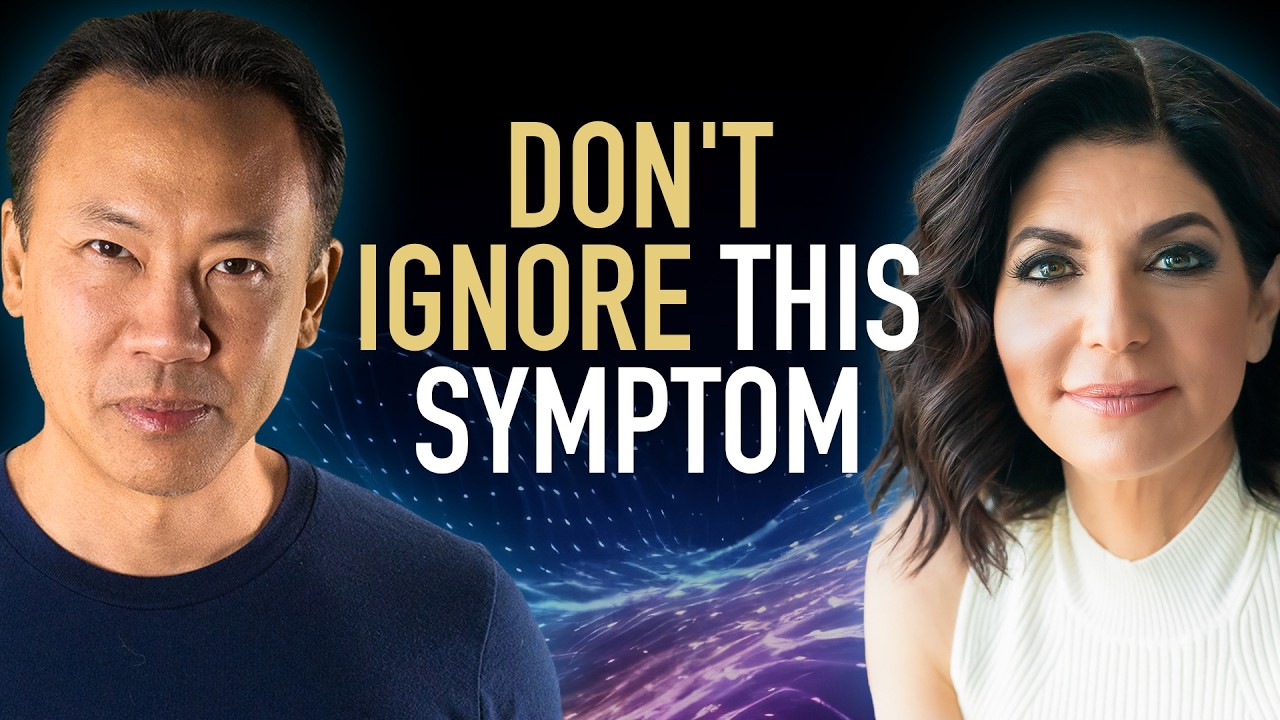
Journalist Tamsen Fadal explains menopause to brain-coach Jim Kwik: 75 million U.S. women are in it, perimenopause lasts 4-10 years with up to 34 symptoms, and brain fog from declining estrogen typically clears 2-6 years after menopause. She walks through finding supportive doctors, workplace strategies, and how community reduces isolation.
Chapters
Every single woman who is blessed to live long enough reaches menopause. 75 million women in the US are perimenopause, menopause, or postmenopause, with 6,000 more women reaching menopause every day. And yet too many feel that they're going through this on their own.
You're not alone in this, knowing that there are solutions, both hormonal or non-hormonal.
Understanding menopause is important, not only for those who experience it, Directly, but also for those who support them, be it as partners, colleagues, or friends.
I need somebody else to explain what I'm going through and listen to what they're going through and share that story.
What's your suggestion about finding the right medical doctor?
If that doctor's not able to talk about those things, you might have to find another doctor.
What would you suggest to help them maintain their performance?
Taking care of yourself early when it comes to perimenopause and menopause helps in 3 different areas.
Welcome back, Kwik Brains. I am your host and your brain coach, Jim Kwik. Today, we will learn about what happens to the brain and body during menopause. Even though millions upon millions of women are experiencing the similar or exact same thing, they may feel lost, alone, confused, less confident, and self-conscious about the fact that they no longer recognize some aspect of themselves, maybe their bodies, some part of themselves, This is happening because partly no one's really talking about women's hormones as they go through midlife, sometimes not even their doctors. And that's why I'm very excited to have a dear friend, Tamsen Fadal. After spending 30-plus years as a journalist chasing stories and hurricanes from the mountains of Afghanistan to the coast of Florida, now most everyone wants to talk with Tamsen about hormones. Menopause. Tamsen is an Emmy Award-winning journalist, author, documentary filmmaker, and social media midlife mentor. She is the creator and executive producer of the PBS documentary, The M Factor: Shredding the Silence on Menopause, which has been viewed, get this, by over 1 million women across 42 countries. And she is the author of this book, How to Menopause. If you're watching this on YouTube where we put the extended version, I'm holding it here. Take charge of your health.
Thank you.
health, reclaim your life, and feel even better than before. So today we'll explore not only how women can navigate this phase with strength and positivity, but also how everyone around them can contribute to making this journey smoother. Welcome to the show, Tamsen.
Thank you so much. Nice to see you.
This question about menopause, it, this topic comes up often.
Yeah.
So maybe we could start with What are the stages of menopause? And, and what are maybe some common myths or issues that women face at each of these stages?
Yeah, it's such a good question, because it can be so confusing. And, you know, you really touched on it at the beginning that oftentimes doctors are not even educated about this in medical school. So they leave medical school, they go in, you're going to see them, and they're equally confused about it. Because there was not a lot of education that was done when it comes to midlife in specifically with women. So when you look at menopause, you have the 3 big stages that I say are perimenopause, menopause, and postmenopause. And menopause is literally 12 months without your period, and everything after that is post. So I just call it menopause in general because that's just easier to understand. Perimenopause is the, is the, is the one that gets very confusing because it can last for several years, anywhere up from 4 to 10 years before menopause. And that's the one where your hormones are all over the place, where you've got rotating hormones, feelings that are different, sleep that's different, weight that's different. And that's what we really talk about when we say, I don't feel like myself anymore. Like, I feel like something is wrong. What is going on? And, you know, there are some big symptoms that come with that, upwards of 34 symptoms. And that's what we struggle with often without realizing what's happening.
What are some of the unknown symptoms, if you will, of menopause that can leave women feeling like there might be a more serious health condition? And obviously, this conversation is not meant to treat or diagnose in any disease. That's kind of the health claimer here. But yeah, are there some more unknown symptoms of menopause that could leave women feeling like they might be in a more serious health condition behind it instead of realizing that it might be menopause?
Yeah. And I think, I think that's the alarming part. And that's what leaves a lot of women feeling so isolated and men in their lives feeling so confused, right? So you go into menopause and perimenopause in particular, you've had all these hormone fluctuations. And we did a lot of research for the documentary, talking to the different doctors, talking to neuroscientist Lisa Mosconi, talking to women who were trying to be treated, saying, I didn't know what was happening. All of a sudden, I lost track of what I was doing. I had no more focus. I couldn't sleep anymore. I was gaining weight in areas that made no sense, even though I was exercising and eating the same. And then they'd have other kind of symptoms that just didn't make a lot of sense. Joint pain that came out of nowhere, hot flashes, night sweats. When we hear menopause, we go, ha ha ha, hot sweat, hot hot flashes. That's it. That's not really it. When you are a woman, and oftentimes these are women at the height of their careers, and they're dealing with brain fog, lack of concentration, not able to complete tasks that they could complete before, not able to remember names in the middle of. Speaking and forgetting what they're talking about, that can really knock your confidence. And that's not what women think of initially. Initially, when that something like that happens, they think, "Oh my goodness! Is this a sign of dementia? Is this something that's wrong? That's much more serious." They're running to the doctor. They're going for different tests, and they wind up oftentimes coming back to: It's perimenopause, and this is normal for all women. Yet we weren't taught about it.
And you mentioned some of these things when it's brain-related. Obviously, our audience has a passion and interest. You have a whole chapter dedicated to what happens to the brain during menopause. Maybe we could examine, is there a difference between brain fog, dementia, and severe conditions and mood so that people know to look for the right solutions? And is it all You know, not so great news for the brain as women age, and how can they support their brain health during this time?
Yeah, it's so important to know that, right? So brain fog, it stems from a loss of estrogen, essentially. There are receptors, estrogen receptors throughout the brain, and when the estrogen declines, so does that cognitive function we're talking about. And, you know, one doctor after another is very aware of that. And so those are some of the first things that they look for, signs like that. When I talked to Dr. Lisa Mosconi, the question I had asked her was, Does your brain rebound? And how do you know if it's something more serious or if it's something pretty normal? For most women, when they go through perimenopause, there is that decline in the cognitive function performance that we're talking about. That's the brain fog, which really— it's funny, she told us in the documentary there wasn't really even a term for it. But essentially, it's that difficulty finding words. It's, you know, the lack of the focus. On average, that rebounds after menopause, maybe 4 to 6 years, which is Great news, right? Sometimes it can be early as as early as two years, but that is a transition that your brain goes through for other women, and that is not for many women. But for other women, there is a deterioration that happens, and that's when we start talking about Alzheimer's prevention. But you know, I think the good news is is that the majority of women are not dealing with something like that. But there are things that you can do to help your brain health, and you you know so many of them. But particularly leading up to this. period, in this transition, it's even more important, which is something I didn't realize. I mean, you and I have talked a long time. I have followed all of your work, everything you talk about, and I did not realize how important it was, especially during this time in life when we're looking at a big transition in a woman's health.
So how do you go about finding— what's your suggestion about finding the right medical doctor to support a woman in this stage and phase? And are there any questions that women should take to their doctor's office when wanting to discuss menopause? You know, you know, what are some of the most effective, like, I don't know if big questions would be hormonal and non-hormonal tools that could support women on this journey, but how do you find a right practitioner and what are the kind of questions our audience should be asking them?
Yeah, I mean, I, you know, I don't know, you know, a lot of the audience probably is saying like, oh gosh, no one ever talked to me about this. My mom didn't talk to me about it. My doctor didn't talk to me about it? I've been seeing the same doctor for all these years. Like, how did they not bring this up? And that's not uncommon. I think what's most important, first and foremost, is knowing you're not alone in this, knowing that there are solutions, both hormonal or non-hormonal. You know, you and I have talked about this in the past. I lost my mother at a young age, and I lost her due to breast cancer. Had she been alive today, she would not be a candidate for hormone therapy, which is something a lot of women can take To help treat these symptoms, so I know that you have to have different options available for women, which is why we're just fighting so hard all the time to get more research because it's the brain is so spectacular that it's really just so important that we know more about it. But if you have a doctor, if you it could be an OB-GYN, it could be a GP, it could be really any doctor, and you're not able to have a conversation with them about one different symptoms you may be dealing with if you're a woman in your late thirties. Early 40s, and you have any of these symptoms, you should be able to bring those up. And perimenopause should be something that the doctor says, "Hey, we should talk about this. What's going on with your menstrual cycle? What's going on with your sleep? How is your libido? Are you forgetting things? You're having difficulty focusing." They should be able to bring those things up. If they don't, you need to be able to know some of these symptoms. And unfortunately, we still put the onus on the woman. To say you've got to go in there and say, "This is what I'm going through. I understand it could be perimenopause. Is that possible?" There's not really a blood test that you can do that says, "Hey, you're in perimenopause." If you know you're in those those age that age range, and you know you're dealing with some of these symptoms because your hormones are fluctuating the way they are, and we did a lot of research for the M Factor documentary and for the book. It's really less about those blood tests because your hormones are going to be all over the place. So one day they'll be up. One day they might be down. So that's not really going to be the deciding factor. Looking at those symptoms is what's going to be able to help you. Then talking to your doctor. Are you comfortable talking about perimenopause or menopause? Some aren't. Are you comfortable talking about the different options that are available out there? Are you willing to talk about hormone therapy, meaning estrogen and progesterone, to help with some of the hormones that you've now lost? And finally, are you able to talk about some of the lifestyle changes that might be helpful? Is sleep going to be a, you know, play a, play a role in all this? What does exercise do? Are there certain type of brain foods that I can eat that are going to help me with this? Is there a way to supplement some of these things? So these are questions that we, we have to go into the doctor with. And I think more importantly, if that doctor's not able to talk about those things, you might have to find another doctor, which I think is the hardest thing to do sometimes, but really, really important because you've got to put yourself. in the driver's seat there, and you've got to put yourself first in terms of taking care of your health as a woman.
And for our listeners who are— maybe they're navigating their careers alongside having these menopausal symptoms, what are your suggestions or kind of go-to strategies or recommendations? What would you suggest to help them maintain their performance, right, and manage the stress at work, all of that?
It's such a big topic right now. We've brought the conversation of menopause into the workplace quite a bit recently. And For me, I read the teleprompter for 30 years. So I would look in front of me and I would see a word, and all of a sudden I couldn't remember the word, even though I knew I knew the word, but it wouldn't come out of my mouth. And those were some of my first signs that I was really struggling. And it really caused a knock on my confidence. I would get on a news desk and that was my whole job, is to read the teleprompter and be able to say those things and communicate. So that was very hard. And I found myself having to use some different methods, using some different ways to memorize things, focus on one task at a time. I could, you know, multitasking does not and did not work. Rereading and rereading, listening to things, audio versus reading, because that's how I could comprehend them better. And writing everything down, making notes. I really had to work on my memory for quite a while. And it took a few years. I saw that cognitive function change and that cognitive, just, just a difference in who I was before. I will say this too. I see so many men that are so incredible about this and actually able to identify, see the symptoms, be supportive, want to know more. And I'm finding that super, super encouraging because men want to know. They want to know how they can help. Because if they're not married to a woman or living with a woman, they're probably working with a woman or have raised, you know, they've been raised by a woman. or related to one. And so all of us are sort of in this together to understand what's going on as we work toward that, that better research. But in the workplace, don't be afraid to, to take those extra steps that you might need to stay on top of your game, because it's what I had to do. I wish I knew about it earlier, though, and had been able to go in and get some help for it instead of struggle.
And how would you recommend that men support the women around them during menopause? And how can society in general shift into a place where women are not seen as more vulnerable or weak because of the way their hormones function, express, or because they experience their periods or menopause. Like, how can men be an ally there and be supportive during this time? None of the ingredients contained in the Kwik Mind product are claimed to treat any disease or health condition. Consult your own physician before commencing a nootropic regimen to ensure that this product is appropriate for you. Do you struggle to stay focused or find that your mind wanders when you need to be sharp? Are you looking for an advantage or an edge that can eliminate sluggishness and elevate your cognitive performance? That's why after decades of research and development, I'm thrilled to bring you Quick Mind. It's more than just a supplement. It's a key to unlocking your cognitive freedom on a day-to-day basis. Just imagine having the clarity of thought, sharp focus, better memory, and being calm under pressure. Every capsule of Kwik Mind is a blend of 5 pristine ingredients, each backed by research and chosen for its ability to support specific cognitive functions. So are you ready to meet the sharpest version of yourself? It's just a click away. We have it all at kwikmind.com, kwikmind.com. Place your order for Kwik Mind today and join a community that's redefining what it means to live a life of mental abundance.
I mean, first of all, what you're doing is opening up this conversation to the community because I think it's— I think that these are brave conversations to have, right? They're not always easy. They're not always comfortable. When you and I met so many years ago, this is the last thing we both thought we were going to be talking about. But I think that this is a normal transition and we have to start We have to start acting and appreciating that that's what it is and that it doesn't last forever. And that's always been my concern, is that I never want women to, to feel less than or feel weaker. And that's why we want to empower them with these tools. I think men open to the discussion, listening to it, paying attention to it, being aware of those things so women don't feel uncomfortable like they have to whisper. I was in Washington at the end of last year and talking to a couple of the female senators that are trying to put forward some different bills. And they said, this is the first time that menopause has been mentioned here in the Capitol. And I was like, what? But they said, most of the time we whisper about it in the bathroom. So we were in a room filled with men, and it was a really incredible thing. So we're seeing more of that. I'm seeing a lot of men come forward in the workplace and taking initiative to implement policies so there's a community for women to talk to. I'm seeing partners that come forward and go, hey, I think my partner or wife is going through this. What does she need to know so she feels better? Because nobody wants to see anybody that they love, care about, or work with suffer. So I'm excited about the conversation because I think that we don't want any other generation to feel confused. And if you've got daughters and your audience has daughters or sisters, they don't want them to feel confused and lost. They want them to go through this like a regular transition that you know what's happening next and here's how to support it. And then we move on from there. And I think, Jim, we're going to get there, but it's going to take conversations like this to make it happen so women don't feel alone. And they know there are solutions out there. And they're more powerful on the other side of it, quite frankly.
And you mentioned community. I always remind people, it's not just about your biological networks, or even your neurological networks. A lot of it is our social networks. So you discussed the importance of community support groups during menopause. How can women leverage these networks to enhance their well-being during this this phase? Because I know you mentioned, like, remembering that you're not alone, right? And there's a lot of, you know, people ask me, how do you become limitless in a limited world? You know, we do it, we do it together.
Yes, it's, it's so true. I don't— I think as I'm 54 now, so I'm like, I always said the word community, but I don't think I ever really understood it until now, which is interesting. It's kind of a big learning curve for me, but I'm really understanding that I am one piece of the whole, you know, and that I need other people in my life and I need somebody else to explain what I'm going through and listen to what they're going through and share that story. It's what I did with the documentary. It's what we've done with, with the book. I think coming together with, with people that can hear you and see you and understand you. I've watched one after another, people come together to watch the film. And it's not the film that has— I mean, the film started the conversation, but then the women stay afterward an hour and a half to 2 hours. Men are in the room, women are in the room. To have those conversations. So I think community does so much during this stage because you feel like you've got somebody else to lean on. And you're right, it can come in all different forms. It could be a community of 5 or 50 or 5,000, but it's people that understand and can see what you're going through and provide solutions too, so you don't feel like you're alone. The worst thing that can happen during this time in our lives is isolation. It is just the worst thing. So I'm always trying to work toward finding larger groups to introduce people to.
Where can people watch the documentary? Is it available online?
Yeah, absolutely. We're having virtual screenings right now, as a matter of fact. Okay. So it's themfactorfilm.com. And we've got an Instagram too, where we're putting community screenings out there. So we've given the documentary out. And that's how it was seen in so many different cities and countries for communities to come together. So we list the different events for that that people can go to in their area. And it's global now. So it's It's, it's super exciting to see that.
Yeah. Community viewing, you would, you would get the support and meet individuals. You never know when you meet somebody, it could, you know, an idea or an individual that completely changes everything. We'll put that always in the show notes, a link to the film, the book. Everyone always goes to jimkwik.com/notes. I've noticed in my life when there's change, I have this because, you know, it's the unknown. Right. And there's always some kind of angst or fear around the unknown and uncertainty. I've trained myself to ask this question, like, you know, what's the gift in this? Have you discovered a gift or gifts of menopause that can help us find beauty and around that person going through it?
Yeah, it's funny. When I wrote the book, I was like, you know, the fears, the facts, and I was trying to think of the next F. And I'm like, I don't have another F. But I have the gifts. And yeah, I wouldn't think it initially. I didn't think it when I was going through perimenopause. I'm very aware of it now. And I think one of the big gifts is I figured out who I was, what I was capable of, and I found a bit of freedom in all of it too. I think it's a combination of age and going through that transition. But I definitely have found the gifts of community, for one, the gift of— I left my career a year plus ago. to do this full time. I had no idea what I was doing or why, but I knew I was really pulled towards the advocacy for women's health, like really pulled toward it because of the stories of women and what they were dealing with and suffering. And I will say this because I know that your audience learns so much about brain and brain health and being limitless, is that the brain in all of this is such an important part. There's the physical symptoms, there's the hot flashes, there's the night sweats, But when our brain takes that hit, that lack of confidence is what we're talking about. So when women get on the other side of this and they start to get that back, I feel like it's triple of what they had before. And I think there's a real gift in all that.
Wow.
I don't know about you, but I'm watching people nowadays in their 50s, 60s, 70s, 40s even, but changing their whole lives because they want to do something different and finding a real passion due to curiosity. So I do find that as one of the big gifts here in all of it. And the fact that we're going to live a long time and we have got to do it the right way. It can't be just, you know, because we want to hit a certain age. We have to live in that healthy way. And taking care of yourself early when it comes to perimenopause and menopause helps in 3 different areas, helps with brain health, bone health, and heart health.
I just got goosebumps. People know I call them truth bumps. For anyone listening who is approaching or currently going through menopause, Besides getting your book, which I highly recommend.
Thank you.
What would your favorite piece of advice be to help them approach this chapter with greater confidence and positivity?
Yeah, I think 2 things. I think one, knowing that you're not alone in this and there are solutions, whether it's hormonal or non-hormonal. And 2, you're going to get on the other side of this. And I promise you're going to be stronger than ever before. But you've got to put your health first. Like, this is your pause to put your health first. It really is. You've done it for everybody else all these years. You've taken care of everybody all these years. You've got to put yourself first. And men, to know that these little tweaks that we're going through right now, it's okay. And this person has not changed forever and that there's a lot you can do to support.
I love it. To end this episode, one of the questions I like to ask our guests, because essentially this show is all about learning. I'm curious, is there one thing that you are currently learning or studying that has you excited about?
Yeah, I'm looking a lot into nutrition and nutritional health and inflammation of the body because I feel like that has taken a different turn during this time. Often a lot of women will say, like, I gained weight or my body shifted. It doesn't feel the same way, and I'm working out the same and eating the same. So I'm just kind of paying attention to some more of that. So I went back to school to get a health coaching degree. And so I'm learning a lot about nutrition and health and wellness, and I love it. I don't know. I found myself the other day reading the different nutrients that are in food. I'm like, oh, that's what's in this kind of sweet potato. And then I went, okay, I need to get a new hobby. But I really am loving that because we know it all goes back to whole foods. I'm Mediterranean, so I know that's a great diet, but I just didn't realize quite how much. So those are new things I'm learning about. that and how to, to make sure that I'm, I'm feeding my body the right way. You know, sometimes we can get sloppy and I've been trying to just pay more attention to it and be a little more respectful of it.
I love it. Tamsen, thank you so much for sharing your invaluable insights and your practical advice on navigating menopause. To everyone listening, whether you're experiencing this directly or you're supporting someone who is, remember that knowledge has the ability to be a lot of power and understanding the intricacies of menopause not only helps in managing it better, but also in fostering empathy and support within our relationships. Don't forget to check out Tamsen's book, How to Menopause, for more detailed guidance. Where can people find the book?
Yeah, absolutely. howtomenopause.com or anywhere you get your books.
Perfect. Let's go out there and support Tamsen on this book. I recommend you get also a copy for a friend or a family member that could benefit from it. You know, remember, your mind is your greatest asset, so continue to learn and grow every day. And they can connect with you on social media as well.
Absolutely. @TamsenFadal. I try to get back to as many messages as I possibly can because I love hearing people's stories.
Outstanding. As always, everyone, you can find more ways to fuel your brain's potential on our YouTube channel where we put the extended version of this conversation. Make sure you hit subscribe and leave a comment. I speed read every single one of them. So make sure you do that under this episode. If you want to take a screenshot of this, tag Tamsen, tag myself, and share a link to her book because I feel like we learned something to be able to share it so it doesn't go to waste, right? So your friends, your family, your followers, your fans could also benefit from some of the insights you got from today. This is your brain coach, Jim Kwik. Until next time, be limitless.
More from Jim





The Library of Minds: Brain Coach: How to Stay Sharp When AI Does the Thinking | Jim Kwik





