Mind Over Body with Shawn Stevenson & Jim Kwik
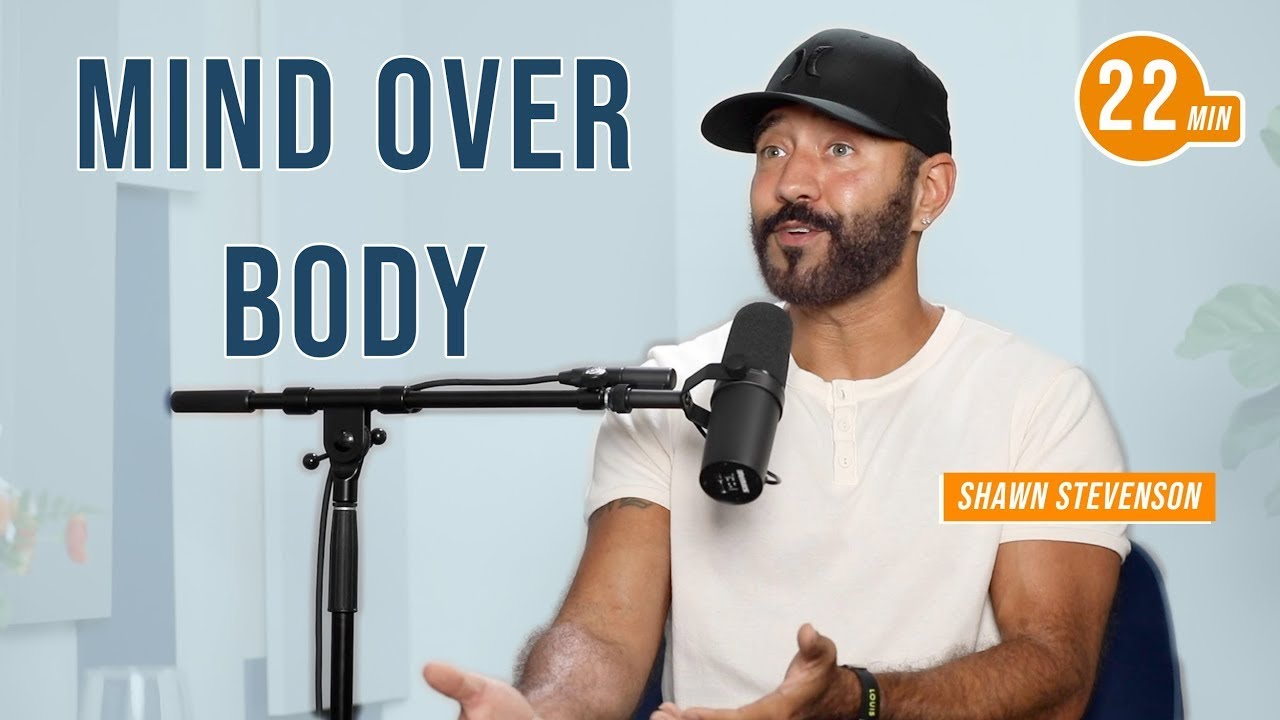
Shawn Stevenson and Jim Kwik explain how your thoughts trigger hormonal responses that affect hunger and fat storage. The Stanford Milkshake Experiment showed that labeling the same shake as "indulgent" or "sensible" caused different ghrelin responses. They discuss how belief and expectation shape physical outcomes, and share practical strategies like mindful eating and positive food labeling.
Chapters
Welcome back, Kwik Brain. Your question for today is, how do you use your mind to change your body? And I think everybody wants a better body. And here we have back on our show, we're very excited to have one of the most comeback guests on our show, probably the amazing author, podcaster, Shawn Stevenson.
Superhero.
Brian of mine. Thanks for being on.
Always an honor.
Yeah, and now we happen to be on your set. We just recorded an episode, another episode for your show.
Yeah, you're our most frequent guest in the 8-year history of the show.
Oh my goodness.
For good reason, yeah, man.
Thank you. I think I could say the same as— our show hasn't been around quite as long as yours has, but our team really enjoys your show, as I mentioned, so thank you. So you and I were geeking out before, and we're talking about the brain, and we've done conversations on previous episodes, them in the show notes on overcoming brain fog, uh, some of the best foods. Uh, we also did exercise, you know, which was a really popular episode. And obviously, you know, with Sleep Smarter, Eat Smart, we covered sleep, you know, many. And you've been, uh, you've been a coach of mine and a mentor of mine, you know, in all these different areas. So how do you use your mind to change your Perfect, perfect question.
Now, this really should be the first thing that we ever talk about, but it's so beyond kind of the normal modality of education today. And this is one of the big things that I love you for and admire you for, is really helping to direct and to hold a space for a new system of education where we're talking about these things, where it becomes a cultural norm. So the first tenet for us to really understand is that your thoughts create chemistry in your body. Instantaneously.
Yeah.
Every single thought that you think creates chemistry. And so, is that thought affirmative? Is it detracting? Is it a thought of stress, joy, anger? You know, when you have an angry thought or an angry series of thoughts, you feel it in your body. You know, you feel the, the burning sensation maybe around your chest. You know, your, your blood boils. You know, there's all these terms, these all— there's all these different terms that we We kind of normalize in society, but we really don't think about like your thoughts are literally creating this change in your biochemistry and the outpicturing of what your immune system's doing. We know about psychoneuroimmunology, which is what we just talked about recently, psychoneuroendocrinology.
Mm-hmm.
And that's what we're gonna be talking about today. And what that really looks at is how your brain, your thoughts affect your endocrine system. And your hormones are really in the driver's seat when it comes to cellular communication and the outpicturing of health. in our bodies, these little— really, I look at them like these little chemical messengers or metabolic DMs.
Right.
So you want to be able to have a healthy, sovereign, unified system of health in your body. You want your cells talking to each other and to be on good terms. And so how your cells stay in communication is through hormones. And these hormones are like little metabolic text messages or or little metabolic emails. And so, now the question is, what happens when an email starts coming in too frequently? It's getting an overabundance of messages sent, it can start to go to spam.
Hmm.
If we look at something like insulin, that button keep getting pushed down so much, that message keeps getting sent because of the inputs that we're bringing in from our abnormal diet, that message starts to go to spam and we start to lose our sensitivity to receive that message, right? So, how do we whitelist insulin again? And so, these are some of the foundational tenets. Number 1, your thoughts create chemistry in your body. Number 2, we wanna optimize these metabolic DMs. And number 3, before we dive into how to do this, we need a real-world example to anchor this in.
Okay.
And so, what I'm gonna share with everybody, the overarching name of it is the Milkshake Experiment. And I'm laughing a little bit because I always think about Kaleese, my milkshake Brings All the Boys to the Dance. Never mind, never mind, Jim. I don't even know if you know that song. Of course you know that song. I hope you know that song. But the milkshake experiment, this was conducted by Dr. Alia Crum and her fellow researchers at Stanford University. And they wanted to find out, can your thoughts affect your metabolism? And so what they did was they blended up a bunch of milkshakes and they measured them out. And they put them into different cups. Now, all the milkshakes were 380 calories. But what they did was they slapped some labels on the different glasses of milkshake. One of the labels said 140-calorie Sensi-Shake or sensible milkshake, even though it was 380 calories. And then for other glasses of the milkshake, they slapped on another label that said 620-calorie indulgent milkshake.
Okay.
Now, again, all of the milkshakes are the exact same amount of calories, 380 calories. And so depending on— some folks got the Sensa Shake, some folks got the indulgent milkshake, and they drank them up, enjoyed themselves. Now, here's what happened with their biochemistry. The folks who drank the indulgent milkshake, believing that this was a High calorie. High calorie consumption that they're taking on in the form of this milkshake, what happened was there was a really dramatic change in something called ghrelin. And, this is going back to these metabolic DMs. Ghrelin is well noted to be this kind of glorified hunger hormone. Alright. So, when ghrelin is active, it's driving us to eat. It's telling us kind of signaling our bodies that we need to get some caloric energy in here, we need some nutrients in. And also, it's another thing about ghrelin that's not often talked about. Ghrelin also turns on the programs that get your body to start using stored fuel, right? The burning fat phenomenon. Ghrelin is also paired with that. And so, when folks actually, when they had the more indulgent milkshake, what happened was their ghrelin levels plummeted as if they had consumed 3 times more than they actually did.
Wow.
All right. So that driving force to get them to eat more was shut off so dramatically. Again, it was as if they consumed 3 times more calories than they actually did. So it's a signal to their entire biochemistry, this tapestry of trillions of cells, that we are deeply satisfied. And we're good. We're probably going to be good for a while because we just got this big influx of nutrition. Even though it was only 380 calories. Now, here's the other part of the story. The folks who consumed the Sensa shake, they barely had a budge in their ghrelin levels at all.
Wow.
It barely moved at all. And in fact, it was statistically insignificant. And to the degree that, again, if the ghrelin's not changing, they just consumed this 380-calorie milkshake, but For their biochemistry, for their cellular intelligence, it's kind of like, well, I really didn't have nothing at all. And so what's going to happen? You're going to be hungry again later, sooner, faster, right? After you have this milkshake, again, 380 calories. So this dramatic change, and if people are doing this constantly throughout their lives, every day, every meal, with their perception about the food that they're eating, what kind of impact is that going to have on the outpicturing of their hormones and what their cells are doing? As far as burning and storing fat as well. And so this leans into the, the real crux of the story, which is the, the dramatic impact that our thoughts are going to have on our overall metabolism. And so now how do we take this and use this to our advantage?
Right, thoughts are things. And people are thinking like, that's crazy, are they going to go around and put labels on their own food? And how should people use this?
Well, this is going to sound a little weird, but you're going to placebo yourself. You're going to placebo yourself.
Placebo yourself.
Yes, you're going to placebo yourself. And, you know what? I need to share one more little piece here because there's something besides the placebo effect. There's also the nocebo effect.
Why don't we define nocebo?
Sure. The placebo effect is essentially when you get a positive injunction that a therapeutic effect is going to happen, Usually coming from an authority figure, somebody who you deem to be knowledgeable in the subject matter. A nocebo effect is when you get a negative injunction that something bad is going to happen when said thing is introduced. So this is a situation where you're told, this is incurable. You're going to be on this medication for the rest of your life. You're never going to walk again.
Some kind of prognosis.
Yes. of a bad, kind of what we deem to be a bad outcome. And so, this is happening all the time, whether we realize it or not. And, Dr. Alia Crum actually did another experiment and her team, and this was really fascinating. It was a skin prick test. And so, they had a histamine reaction from getting the skin prick that led to a little rash developing in people's skin. And then, they had the test subjects, they gave them one of two options or one of two messages. And, one of the messages being, hey, we're about to give you this cream. That's going to help this rash to go away. Other folks were given the message that we're giving you this cream that it's an agonist. It's something that's going to make the rash worse. And, we're going to rub it on your rash.
So, one placebo, one nocebo.
Yes. And now, here's the thing, it's a totally inert cream. It does nothing. But, just receiving that message, sure enough, the vast majority of subjects when they received what they believed to be an antihistamine cream, something that's going to make the rash go away. Within 10 minutes, it went away. The other side, the ones who believe that this is going to make their rash worse, within 10 minutes, it got worse. Totally inert cream, all documented. This is not airy-fairy made-up stuff. This is a real phenomenon that's been known about for centuries.
Yeah.
But now, we have more scientific method to demonstrate how powerful our minds are. Now, here's— this is the biggest part and why I needed to share this story. What made the rash get worse or get better faster was how much the person trusted the physician who was telling them that this cream was going to do fill in the blank. It was the rapport. It was their belief in their level of intelligence, their competency, the rapport that made the information, that nocebo or placebo effect even stronger. All right. So now how do we put this into play for ourselves? Number one, we got to realize that this is happening all the time, whether we realize it or not. If we're telling ourselves, for instance, that we're eating a food that's a bad food, what does that do to your biochemistry? How does that relate? And just on a superficial level, if you're eating a bad food and you equate that to a bad behavior, are you being a bad person? Right? It could start to lead to this series of events. But also from that biochemical level, if you're eating a bad food that's going to have these negative outcomes in your body, and that's what you're believing, that's your strongest belief, your unconscious or subconscious belief, your body's going to have a more complicated time. I'll put it simply, interacting with that food. And you're going to have a much higher likelihood of retaining more of those calories you consume. And storing it as fat. And, this is detailed. I talk about this in my book, Eat Smarter, as well with a study breaking down people eat a meal of processed food versus whole foods. And so, their body's literally retaining more of that caloric energy, kind of creating a hormonal clog when they're eating processed food. But also, part of it is the belief of what you're eating. So, that's number 1. Number 2, this is something I saw in my clinical practice a lot. If somebody's eating what they deem to be healthy, And just be like, I hate this. Or not usually the foods that I would tell them to eat, but just what they believe to be healthy food. And they're eating this meal or this particular food, and they're telling themselves that, you know, this is, yeah, this is blah. You know, I'm just doing this thing. I'm on this new diet, whatever the case might be. When you can placebo yourself and you interact with that food in a new way, especially, but I'm a big proponent of joy. So making sure that the food is actually good. But you're telling yourself that this food that actually happens to be good for you is just the most incredible experience that you've ever had. It's like making love. It's like this deep, seductive, beautiful experience to have this green smoothie or whatever it is. This is just so indulgent. You turn it into this really interactive thing where your mind and your body is interacting with this food that just so happens to be good for you. What's going to happen is, according to the data, your ghrelin levels, that what's driving you to eat, it's going to be suppressed even more because you feel like, hey, this is an indulgence. Even though you're not consuming a lot more calories, you're consuming something that's nutrient-dense. It's telling your biochemistry that I'm deeply satisfied and I'm really enjoying this. And, I'm being a little naughty actually. And, it creates a shift in that biochemistry. So, this is just level 1 with this.
Mm-hmm.
There's other things to unpack, but I think this is a powerful way we can start to placebo ourselves.
So what you, uh, what you eat matters, but it's also how you eat it, the state that you're eating it in. And it's tough sometimes because some people aren't even conscious of what they're eating because they're so distracted, you know, even in the process of eating, that they're on their phones or watching the news, they're doing everything else, and they're not even really even tasting their foods. But I love this idea of placebo, placebo, or ourselves, you know, to be able to change our biochemistry. You know, there's a whole biology to belief that has been talked about. So that's amazing. Is that something you do with the family also as well?
So you actually just brought up another layer of this and how to use this to our advantage, because the phenomenon today is that most of the time we're not even paying attention to what's happening in our minds or eating. We're outsourcing our thoughts, we're outsourcing our minds while we're throwing stuff in there.
Yeah, that doesn't put you in a rest-digest kind of place when you're stressed out with watching everything that's going on.
Exactly. So, what can we do in this instance? This doesn't mean you can't have a meal and watch a show or whatever the case might be. But especially if somebody's in a state of health that they're wanting to change and understanding that the food that you're eating literally becomes you, what you see in the mirror. And you get to make your body out of the things that you're eating. This is a great opportunity for you to really tune in. Like, let's— let me take the time to make my body out of this good stuff and get the most out of it because I'm going to be present with this food, right? So now, we can interact with this food. There's this term of mindful eating today, but we could take that to another level where we are also not just mindful eating, but using some affirmative thoughts here and placeboing our mind as we're doing it.
Yeah.
really enjoying the process. And so, what's happened with me, probably one of the reasons I'm really good at this is that I was probably one of the most unhealthy people on planet Earth. And, this is the thing too, even as I say that, the human body is so resilient.
Yeah.
It's always figuring out ways to keep you alive. And, that's what our diseases really are. Our bodies are finding out creative ways to just do other jobs to keep us around so we can hopefully get our stuff together. And, I was in a place where I'm guzzling down, I go to 7-Eleven, which is not like a gourmet restaurant, and I'm getting this nacho with chili and cheese.
That's a tough image for me to see.
Listen, just an obvious piece here. If you are going up to a machine and pumping your chili out of it, pumping meat out of a metal device, it's probably not good for you. But, I'm eating these things and I'm making my body out of these things. But, what really helped to turn things around was— because also there's a taste thing, right? A lot of people talk about that. Like, I'm very picky. I'm a picky eater. I know about that. Like, if you were to look it up in the dictionary, that was me. Like, my 4-year-old me is going to be there in the dictionary. But, the beautiful thing about the human palate, now there's more really cool data about this, there's actually a change. When we say our palate change, there's a change in the production of proteins. and what we're producing within our own saliva that's interacting with the food. That takes place over time as we're eating and experimenting with new foods. And so, now, I take the time when I'm eating a meal, not all the time, this is not about—
Right.
Perfection, it's about progress. But I really pay attention to the subtle flavors. Food is so beautiful and dynamic and complex. You know, I just took a trip. I just came back from Atlanta, back home here to LA. And while I was in Atlanta, I had these different meal experiences. And I could taste all of these things I really just don't think that I would have tasted, you know, had I not been this person that I am today. And I had such a good experience. I had such a joyful experience I'll never forget. And it was revolving around food, but not in a negative way. This was something very affirmative, you know. So we all have that capacity to be present with our food, to really enjoy it. Because I deeply believe this, and everyone doesn't have to subscribe to this belief, but, you know, there are people who live by the tenet and teach through this tenet of, you know, eat to live, don't live to eat. Now, that's not what I believe. I believe that food tastes good for the sole purpose of us enjoying it and eating it. And I think that it's a big part of our lives as humans. Like, if you look at human evolution, Food has been a centerpiece of so much of our lives, and especially here today, all of our greatest moments, there's food involved. Now, the type of food is debatable, but every culture, long-lived traditions, food is a centerpiece. And I believe that food tastes amazing and it's a joyful experience so that we feel more compelled to eat it. And how do we do this in a healthful way? Get the most out of it, get that modulation with ghrelin and leptin and And insulin being normalized and glucagon and all these things that we really break down and eat smarter. But we can make this a more empowering event, especially when we leverage our own psychology, placebo ourselves, and create a new interaction and relationship with our food.
Amazing. Placebo yourself. I love that, buddy. So food is— it's not— you can not only be nutritious, but it could be delicious. And it's a lot of it is our attitude that we're bringing to the To the table as we're eating it, that we could be mindful. We could also bring the joy. This is the best food ever. It's nourishing my body and my mind, my soul. Some people will do it through like a little blessing or a prayer. You know, they have some kind of ritual around it. But, um, it's definitely what you eat matters, you know, especially for, for your gray matter. You know, as all our listeners are listening or thinking about their, their brain health. How do people find out more about, about eating, eating right, and more about— I love the milkshake effect. I think Yeah, we're not saying milkshakes are brain food, right? But that's amazing knowledge, like always. Where can people find out more? Perfect.
Perfect. Yes. And I actually break down the milkshake experiment more in Eat Smarter. So it's really— and we just shared this when it came out a few months ago, it was the number one release of all books in the United States, which was just amazing at a time when so much craziness is happening in the world for people to stand up and say, hey, health really matters. Food matters. It really just kind of ignited an even stronger fire within me to get this message out and get folks educated and empowered. So, you can pick up Eat Smarter anywhere that books are sold. And, folks can check out my show that we just finished recording. Again, having you on is such a gift. And, it's called the Model Health Show. Very grateful to say we're frequently the number 1 health podcast in the U.S. And, the secret is we care a lot.
Yeah.
And, we're doing masterclasses on subject matters, anything in health that you might have a question about, we've got a masterclass on it. And I guarantee you're going to walk away not just with the big understanding of the ideas and complexities, how it all works, but also what are some things that you can do today to take advantage of this thing and, and be empowered, especially again at a time when we need a lot more empowerment.
Yeah, I encourage everybody also to follow Shawn on social media, @ShawnModel on Instagram. Fantastic. Take a screenshot of this also, as, as we often do. I feel like the best way of, you know, when you learn something, you just gotta— for every hour you spend learning something, I always recommend you gotta spend like an equal hour somewhere over the week to apply those things. And one of the best ways of learning it is to explain it to somebody else, you know, the whole explanation effect, and teach it. And so take a screenshot of this, tag Sean, tag myself, and post it. And what do you want them to put in the post? And I encourage everyone to watch this on YouTube if you haven't too, because this is amazing production here. So we appreciate your team for capturing this. When they're posting, what would you like them to— do you wanna have a question for them or a challenge or something they can post along with it?
Oh, sure, you know what? I would love people to share what is their favorite healthy indulgence.
Ooh, I like that. What is your healthiest favorite indulgence? And because you'll tag us in it, I'll repost some of my favorites and I'll actually gift a copy of Eat Smarter to one person in our community Just as a thank you. But Sean, many thanks for, for your show, for your work, for your books, you know, for, for our friendship. And we're looking forward to having you back soon.
Awesome. Appreciate you.
Hi, Kwik Brain.
It's your brain coach. I want to thank you so much for watching this video. 3 things to do. Number 1, make sure you share this because when you teach something, you get to learn it twice. Update your learning so you can update other people's learning as well. Number 2, make sure you subscribe To this channel, so you don't miss a thing. Because if you miss a video, you miss a lot. And finally, make sure you hit that bell so you're notified and you find out when we put out the latest and the greatest. One extra thing: if you want really close attention, then text me. Here is my phone number: 310-299-9362. Did you remember that number? 310 299-9362. Shoot me a text and we'll stay in touch. Ask me your burning question. And I wish your days be full of lots of life, lots of love, lots of laughter, and always lots of learning. I'll see you in our next video.
Bye.
More from Jim





The Library of Minds: Brain Coach: How to Stay Sharp When AI Does the Thinking | Jim Kwik





