Optimal Flow State with Steven Kotler & Jim Kwik
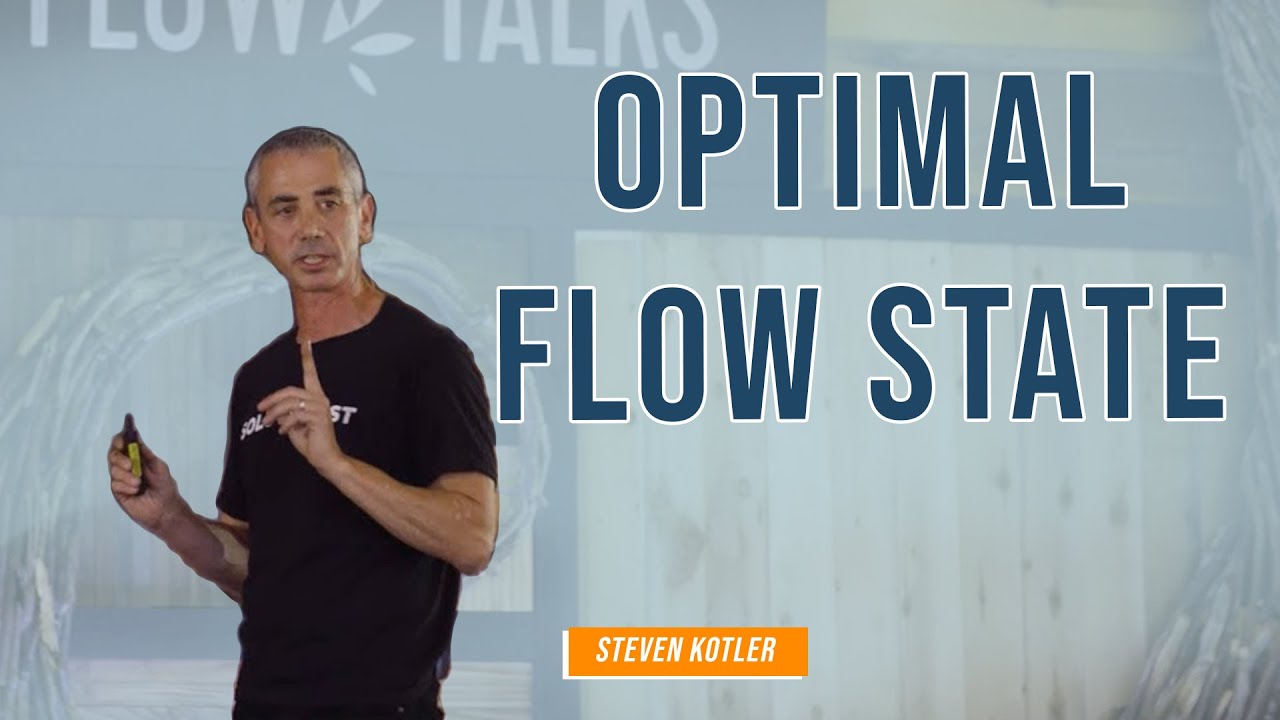
In this 20‑minute interview, Jim Kwik welcomes flow‑researcher Steven Kotler to explain what flow is, how it intertwines with motivation, and how anyone can deliberately enter and sustain it for accelerated learning and performance. Kotler defines flow as an optimal state of consciousness marked by rapt attention, loss of self‑awareness, and heightened performance. He outlines a four‑stage cycle—struggle, release, flow, and recovery—detailing the neurobiology (fight‑or‑flight hormones, five key neurochemicals) and the necessity of moving through each stage. The conversation covers the challenge‑skill balance that triggers flow, the danger of “bliss junkies” who chase flow addictively, and practical tactics for each phase: embracing struggle with high‑challenge tasks, using low‑grade physical activity or creative hobbies for release, timing flow bouts to 90‑120 minute windows, and employing active recovery (saunas, Epsom‑salt baths, yoga, sleep) while avoiding passive recovery like TV or alcohol. Kotler also explains how flow dramatically boosts learning (250‑500 % memory retention) and offers strategies for breaking plateaus by adjusting challenge‑skill ratios, chunking tasks, or lateralizing skills. The interview ends with calls to action for viewers to share, subscribe, and engage with Kwik’s community.
Chapters
I want to introduce our next guest. This man is also extraordinary, and he has graced our stages multiple times. We do a Kwik Learning. Many of you follow us @kwiklearning, which is our company. Not only do we have programs in 195 countries, we publish a podcast I'm extremely proud of called Kwik Brain. I know many of you listen to it. He's been on our show multiple times also as well. He's the New York Times bestselling author of numerous, numerous books. What I want to talk to him today— and we bring him on right now, come on video— Mr. Steven Kotler, are these 2 amazing books, 2 of my favorite books. And so this is actually The Future Is Faster Than You Think, his brand new book with our dear friend Peter Diamandis. And I want to talk about Stealing Fire and Rise of Superman. And we are going to talk to right now the master of flow, Stephen Kotler. Thanks for joining us, buddy.
Hey, Jim, it's good to see you. Hey, everybody.
Thanks for taking some of your time and sharing some of your talent here over the next 20 minutes. We have a lot of love here for your work. I've geeked out over the science of flow. And I want to talk about flow with regards— you— I feature you in our, in our section on— there's 3 sections of the book: mindset, motivation, and methods. And, and flow states, how does that relate to becoming limitless, to learn skill acquisition, to showing up the best version of yourself? Why don't, why don't we define really quickly for people who are watching who are brand new to this concept, uh, some of what flow is actually.
Scientifically, flow is defined as an optimal state of consciousness, one where we feel our best and we perform best. And it refers to any of those moments of rapt attention, total absorption, when you get so focused on whatever it is that you're doing that everything else just seems to disappear. Sense of self gets really quiet. Time passes strangely. And throughout all aspects of performance, both mental and physical, go through the roof. So that's flow in a nutshell. Psychologists define it slightly differently. They, they look at 6 core characteristics. And the work we do at the Flow Research Collective, where we look at the neurobiology and physiology and things like that, the list of like what causes flow and how scientists now define flow is getting very long.
And flow is this, what people call, uh, like the zone, right?
Yeah. The synonyms are sort of, sort of wherever. I always, I always remind people when scientists want to colonize territory, they rename something. So flow has been in the 20th century, it's peak experience, runner's high, the zone, as you pointed out, being unconscious. If you play basketball, it's, The pocket. If you're a beatnik jazz musician, it goes on and on.
Yes.
So how can we apply flow? There's a science to flow and there's a process. If people want— what, in terms of skill acquisition, you know, we're talking about becoming limitless. And limitless for me is perfect. Limitless is about progressing and advancing beyond what people believe is possible currently. And so how does flow state relate to things like motivation? How do the 2 concepts relate, motivation and flow?
At this point, I don't think it's even possible to have a discussion about motivation without talking about flow. Motivation— when psychologists use the term motivation, they actually mean 3 things. And we've talked about this before: drive, grit, and goals. Drive refers to kind of all of your intrinsic motivators— passion, purpose, curiosity. Autonomy, mastery. Those are really big intrinsic drivers. And flow is the biggest of all. And flow is sort of what happens when you get all of your other intrinsic drivers lined up correctly. So when all your motivations are pointing in the same direction, flow is one of the results. And simply because flow follows focus and all of these different intrinsic motivators, whether it's our drive for mastery or drive for autonomy or whatever it is, They just marshal our attention. So when we've got them all lined up, attention is dialed in. It's really focused on the present moment. And that is sort of the gateway into flow.
Hmm. So how would somebody who's watching this right now who wants to be able to utilize this tactically, how would they— I mean, somebody's right now, Gigi is asking, can we stay in a flow state forever?
No, not at all. In fact, Gigi, but once a month somebody comes up to me and says, hey, Stephen, I live in flow. You should study me. And this used to happen and I used to— I would never know what to do. And then I just started telling the truth. So now when people ask me that question, I just tell them the truth. Or when they come up and they say, I live in flow, I'm always in a flow state, I said, you know, we have a word for that. We call that schizophrenia. So no, you don't get to live in flow. It's a 4-stage cycle. You have to move through all stages of the cycle. And stages meaning there's changes in your brain, there's changes in your body in each state, and you have to move through all 4 To get back to flow. Flow is one of the stages on the front end. There's a struggle phase before the flow state, then there's a release phase where you sort of let go of the struggle, then the flow state itself. On the back end, there's a recovery phase, and there's strategies and tactics for each.
Okay, so let's, let's, let's just go— can we go through a summary of that? Let's talk about the struggle phase. So do you need flow? Does it require some kind of challenge?
There's a bunch of different ways to answer it, but the easiest way to think about struggle is to understand that flow shows up once we have like learned a bunch of skills so well that they're automatized, right? We can do them by habit. We don't have to think about them consciously. And flow is when they all come together. We can utilize them all at once and they level up. They go to kind of a next level, next level progression. In struggle, you're loading the brain with information, right? It's skill acquisition. And the better you are at skill acquisition, the better you are at struggle. But it's called struggle for a reason. 2 things are important. First of all, for really complicated reasons, flow almost always starts— we think it always starts with, with the fight response, like as in fight or flight. So there's always going to be this moment of like the challenge is really great and you lean in. Right. And when you actually lean into that challenge, first of all, flow shows up. We have a— when our challenge is really great, right, we're pushing our skills. That requires a lot of focus. So that's very, very useful for flow in the first place. But we are actually always going to feel that moment of like frustration is baked into the process because underneath it, when we feel that and we sort of lean in, you get the fight response. You get a big surge of cortisol, norepinephrine, and testosterone. And that really focuses our attention. And helps drive us in. So there's all— even if it only lasts a second, it always seems to be there.
And that's great because that's demystifying. We talk about in the book these LIES. And a LIE for me is an acronym, stands for a Limited Idea Entertained. And a lot of people actually— I'll see it on social media— people talk about they live in this flow state. They also— they just— they just— everything is just organic and there's no struggle. But you're saying that the struggle is the impetus to—
So yeah, I— so I don't believe anybody's living in a flow state. Um, usually when I have heard that from people, and I don't mean to disparage anybody out there because maybe there are people I don't know about and there's, right, there's always stuff I don't know. But in general, that's mania, like as in manic depression, right? It's a huge dopamine spiral that feels a lot like flow, um, but doesn't actually have the performance benefits or anything else. And, but the really, there's a dangerous idea there, which is the second half of that. We talked about in Stealing Fire, we talked about talk about the trap of bliss junkies. Bliss junkies are people who taste flow. It feels amazing. And they decide that that is how life is supposed to feel all the time. And they don't— they stop wanting to do anything unless it feels that way because they're not— the vibe's wrong and I don't want to do it and that kind of thing. And that is just a really destructive behavior.
So let's say somebody was surfing or something and that, that state that they feel where they're in the zone, it could be addictive then.
The state is incredibly addictive. We know this, that 5 neurochemicals, 5 of the neurochemicals that underpin flow, are all the brain's 5 most potent pleasure drugs. Let me give you a couple of examples to make this clearer. So you get dopamine and norepinephrine plus 3 other cocktails, 3 other chemicals. If I— dopamine, norepinephrine together is the chemical cocktail we call romantic love.
Mm-hmm.
So one of the best feelings on earth, romantic love. I'm falling in love. Oh my God, it's amazing. Plus 3 more pleasure drugs. That's flow. Very, very, very addictive state. Mihaly Csikszentmihalyi, the great godfather of flow psychology, has said, um, that flow— flow is an addiction, but unlike other addictions that sort of lead backwards, Into the past and are negative addictions. Flow is a positive addiction because it's always forcing you to push your skills to the utmost and learn and grow. So it's an addiction that leads towards the future.
Hmm.
So that's the struggle phase. What about, what about the release? What does that look like?
The release phase is struggle. You're going to frustrate yourself. You're going to overload your brain. You're going to actually overload your working memory, which is very limited. Then you have to stop thinking about the problem. You literally have to take your mind off the problem. So any form of low-grade physical exercise tends to work best here. Long walks is sort of my personal favorite. Gardening can work. Building models— there's research that says building model airplanes is fantastic. You know, Lee Slodoff, Lee did that work, right, on building model airplanes in his research.
Yeah.
showed it worked best for the release phase. And it sort of goes on and on. My favorite story about release is Albert Einstein, who famously used to sail a boat into the middle of Lake Geneva for release. That was what he would work all day, get, you know, struggle phase, and then he would sail a boat in the middle of Lake Geneva to chill out. Couple of problems. One, Lake Geneva is prone to crazy freak storms. Two, Einstein couldn't swim and he was a shitty sailor. So they kept, they would have to rescue Einstein from the middle of Lake Geneva, but it was so core to his process, so core to this release phase that he wouldn't give it up.
So when people go through, so the reason I bring this up is because some people avoid that struggle. So it's good that it's part of the process because some people are intimidated by it and they think everything should just start out easy.
I think you see both sides. I think especially among your fans, there are a lot of peak performers in your fan base and peak performers, they're happy with the struggle. They don't want to let go with release. The idea of taking half an hour to go do something like go for a walk or, you know, read to take your mind off the problem, that feels like wasting time.
Right.
And so that— so I think it's both, right? That there's struggle is going to be difficult. And I always say struggle is difficult. on 2 sides. So if you're a little meeker, you're a little shyer, quieter, take your pick, struggle's going to be difficult because you have to push yourself outside your comfort zone. So first rule of peak performance, get comfortable with being uncomfortable. Peak performers, especially Type A peak performers, will take on challenges that are ginormous. They will take on challenges that are so outside that sort of balance point between challenge and skills that they'll blow past that sweet spot. So for peak performers who are really aggressive, and I, I have to watch this in myself a lot, take on— you want the big challenges. And simple, like, science of motivation tells you setting a high, hard goal gives you an 11 to 25% increase on performance and productivity. That's amazing. That means setting a goal, putting a frame around what I'm— if I work 8 hours, if I put the proper goal around what I'm doing, I'm going to get 2 free hours for work or 1 free hour of work a day simply for having the right goal. That's crazy amazing. So you want to set those high, hard goals, but you got to chunk them down so that what you're up against right here, right now, what you're focusing on is right in that sweet spot. Not too much, not too little. And if I were to talk about this emotionally, they talk about in flow, one of flow's triggers is known as the challenge-skills balance. what we're talking about is one of the known triggers for flow. And emotionally we say that balance, it's not on, but it's right near the midpoint between anxiety, too much stimulation, and boredom, not enough stimulation, right? Sort of near that midpoint. But you're definitely going to be outside your comfort zone. And let me make it one step more practical just so people understand what I'm talking about. Every day I start my day by writing my books. Most important thing I got to do all day. It's first thing I do all day. When I start I try to write 500 words a day. 500 words. 350 words I can write in my sleep. 500 words though, I usually have to transition between ideas and I have to know where I'm going next and I have to do a little bit more. It's a little bit, especially at the beginning of a book for me, it's a little bit of work. I'm going to sweat a little, not a lot, just a little. Middle of the book, 750, 850 words a day. End of the book, I'm finishing a book right now and I'm writing on average 1,400 words a day. Because it moves, right? As I get better at the book, I know where I'm going. I know what I'm doing, right? Same, you know, same thing applies no matter what you're doing. Basically figure out, you know, where's your comfort zone, figure out how to push that task just outside of it. And then let go and release.
And then so that, that's interesting because you talked about, you know, challenge and then skill, and then you talked about anxiety and boredom that You know, let's, let's talk about this intersection where there's— if there's too much challenge, not enough skill, you have anxiety. And if you have too little challenge and too much skill, you're bored. And so how does that relate, you know, in terms of the intersecting point of flow?
Well, that's— so they call that intersection the flow channel. So flow states have triggers, preconditions that lead to more flow, about 22 in total. All of them drive attention to the present moment. That's— I mean, they do a bunch of different things neurobiologically, but the result is they drive attention to the present moment, which is what drives flow. It can only show up in the here and now. Most important is this challenge-skills balance. We pay the most attention to the present when the challenge of the task at hand slightly exceeds our skill set. As I said, you want to stretch but not snap. So that's right there. And that's— How do you search for it? Emotionally, you know, right? You know what boredom feels like. You know what anxiety feels like. You want to basically push yourself till you're a little bit anxious, a little bit of anxious. That's norepinephrine predominantly producing that. That's great, especially for your cause, because when you have a little, not a lot, but a little norepinephrine in your brain, it primes it for learning. So not only are you sort of targeting this sweet spot. But you're priming the brain to retain the information later, right? You're pushing on your skills and the brain is noticing. It's saying, oh wow, you're pushing on your skills. Let's remember this for later so you can learn this.
No, that's beautiful. We actually design— many people here are part of our reading programs or our 30-day reading or memory programs. And what we're always doing is we're stretching people, but we don't want them to snap either.
Right.
Them and being there. Now talk about the recovery phase. So we know what—
Yeah, on the back end. It's a great point, Jim. And so 2 things are, 2 things are important about recovery. Let's just say flow is a very neurobiologically, physiologically expensive state to produce. Even though it feels great, and this is part of the— people don't realize you need to recover on the back end sometimes because flow feels so good. You're all fired up. You don't get it. So a couple of things to know. One, anything you learn in flow, if you really want to lock it into memory, of course you need deep delta wave sleep because that's how we move things from short-term memory into long-term memory. I'm sure most of the people listening know, right? So the deep delta wave sleep is key, but so is an active recovery protocol. So passive recovery, that is TV and a beer. And either of those things, by the way, alcohol or television actually block recovery. There's a whole bunch of reasons we don't have to go into the science of it, but they will block recovery. Those are the 2 tools we reach for the most frequently are actually disasters here. Active recovery, you know, infrared saunas, Epsom salt baths, massage, just some stretching, some yoga. You don't want to go crazy, but some yoga, mindfulness. Respiration exercises. Those are all active recovery strategies. And one of the things that we don't have data on this yet, but at The Collective we are poking at this and it's starting to accumulate. It seems, and it's going to be a while before we can prove this for sure, that the combination of if you can access flow on a regular basis, make sure you sleep 7 to 8 hours a night as much as you possibly can, and have an active recovery protocol in place. It's It's very hard to burn out. Miss one of those things and you start having problems, but get them all in place and you're really cooking for a while.
Well, I love it because when you outline this process, it becomes predictable. In terms of timing, is there an approximate time people are, you know, in terms of the challenge and the release, is there a certain amount of time in each phase?
There isn't. Though we know, and we don't— flow, some flow states can last for a couple of days. If you've ever taken part in a startup, right, as you're moving towards launch, right, every time work, it feels like it's an instant group flow state, right, for like the 2 months leading up to launch or something like that. So you can have those experiences, but as general, flow lasts about 90 minutes. This should not surprise anybody. The brain is essentially built around 90 to 110 minute long cycles, right? We always say with flow, it's really important to start your day— complete concentration matters for flow, obviously. And the research shows you should sort of start your day with 90 to 110 minutes of complete concentration because we sleep in 90 minute cycles. That's the REM cycle. Wake cycles are the same, right? So we're built to sort of focus for these periods of time. So you want to at least, if you're going to kind of go through the struggle phase and do that, you want to at least put 90 to 120 minutes in of uninterrupted concentration with a recovery protocol. I think it depends on how deep your flow state is, but I just, I try to do some form of active recovery 4 times a week, 5 times a week. Mostly is sort of how I think about it. I don't really skimp on that. And And I never— I try very hard not to screw up on sleep because it's— it just caught— it just screws— it screws up recovery and it also screws up struggle.
What about when people are doing skill acquisition? Because that's the theme of this conversation that we're having today in today's lessons. When they— in the beginning, describe what relative to flow in the beginning and then when people plateau.
Yeah, I think so. There's a couple of things. So one, Flow is this huge neurochemical dump. How does learning and memory work? The more neurochemicals that show up during experience, the better chance that one experience moves from short-term holding into long-term storage. So flow is a massive spike in learning, 250% to 500%, depending on whose numbers you go by. Very, very big spike. We remember stuff that happens to us in flow. So one, if you're talking about accelerated learning, you have to— flow's got to be part of that conversation because it is How we're wired. Um, I think the other thing that, that you always have to point out with learning, because people forget this so often, including myself, learning— you're bad until you're good, right? You're bad until you're not. And that's just how it is because everything is taking place at an unconscious level. So again, you have to get comfortable with being uncomfortable. And for some people, for example, personally, I don't mind being bad at stuff. I hate being bad at stuff in public, right? School was the biggest block to learning for me because I would go to a class with my peers and I don't want to look stupid in front of people. And like school got in the way of learning because of that. You know what I mean? You got to figure out what conditions work for you. We're all different on that, that front. But the biology is ultimately the same and kind of flows at the center of it.
Amazing. And just the last question, when people do plateau in an area of growth, in, in, let's say they were learning salsa or they want to learn Spanish or they're learning speed reading and they've gotten to a certain level of skill and then they keep on doing the same things, but they're not getting maybe that result. What would you say to that person?
Yeah, plateaus are really interesting. in learning. And what we have found is, and I don't know if this is true across the board, but if you can stay in that sweet spot between challenge and skills, the number we like to put around it, it's a back-of-the-envelope calculation. It's not a real number, but it's helpful to think about, is that when the challenge is 4% greater than your skill set, that's your sweet spot. And what we found is— and we've done research on this, not enough to say this is for sure or anything else. But in our work, people who can target that sweet spot don't seem to plateau. So if you're plateauing, first thing I'd look at is the challenge too hard? Is the challenge too little? Right? Second thing I would look at is if the skills ahead of you are too big and, right, that's what's in the way. You want to chunk them down or lateralize. Lateralization is a great learning technique. It's a really good technique for flow because of this balance between fear and anxiety. I'll give you a simple example that's in Rise of Superman. So we tell this— I tell the story of Ian Walsh, who's the first guy who figured out how to surf waves, paddle into waves that are over 65 feet tall. And what he figured is really tricky. And I won't go into it, but basically he figured out he was going to actually spend a lot of time on the bottom of the ocean along the way. Like, he's going to take horrific falls, waves are going to land on him. And the problem was he couldn't hold his breath for very long. So he lateralized. He went to Freehold breath diving camp for 2 weeks, massively expanded his lung capability, then went back into the waves. The challenge was no longer— anxiety was down, right? It was no longer so scary. He found a way to chunk it by lateralizing, and that will massively amplify it. So if you plateaued, it's probably a challenge skills issue, and one of the two are out of whack. And look at that, and if the next challenge is too great, if it's really standing in your way, figure out how to chunk it down or lateralize. Sorry, I went 2, 3 minutes over my time.
Amazing, amazing. I want everybody, if you got value out of this conversation with Stephen Kotler, you can listen to, you can search my name and Steven Kotler, you'll be able to see the episodes that we've had in the past. I recommend all of Steven's books, you know, including if you want to know more about flow, this— you have Stealing Fire, Rise of Superman, recent books with— you wrote this trilogy of books with our friend Peter Diamandis, Abundance, Bold, and the most recent in the trilogy, Which is amazing here. The future is faster than you think. And so post a screenshot of this, tag Stephen in it, and maybe share the 4 phases again of flow. People were asking, you have the struggle, you have the release, you have flow itself.
Struggle, release, flow, recovery.
Amazing. All right, Stephen, thank you so much for taking some of your time and talent to sharing with Uh, us here and our Limitless team, Team Limitless.
Jim, be good. Congratulations on Limitless, by the way.
Yeah, thank you, my friend.
Good job.
Kwik Brain, it's your brain coach. I want to thank you so much for watching this video. 3 things to do. Number 1, make sure you share this, because when you teach something, you get to learn it twice. Update your learning so you can update other people's learning as well. Number 2, make sure you subscribe To this channel, so you don't miss a thing. Because if you miss a video, you miss a lot. And finally, make sure you hit that bell so you're notified and you find out when we put out the latest and the greatest. One extra thing: if you want really close attention, then text me. Here is my phone number: three one zero two nine nine nine three six two. Did you remember that number? Three 310-299-9362. Shoot me a text and we'll stay in touch. Ask me your burning question. And I wish your days be full of lots of life, lots of love, lots of laughter, and always lots of learning. I'll see you in our next video.
More from Jim





The Library of Minds: Brain Coach: How to Stay Sharp When AI Does the Thinking | Jim Kwik





