Optimize Your Oral Health for Brain Performance | Dr. Dominik Nischwitz & Jim Kwik
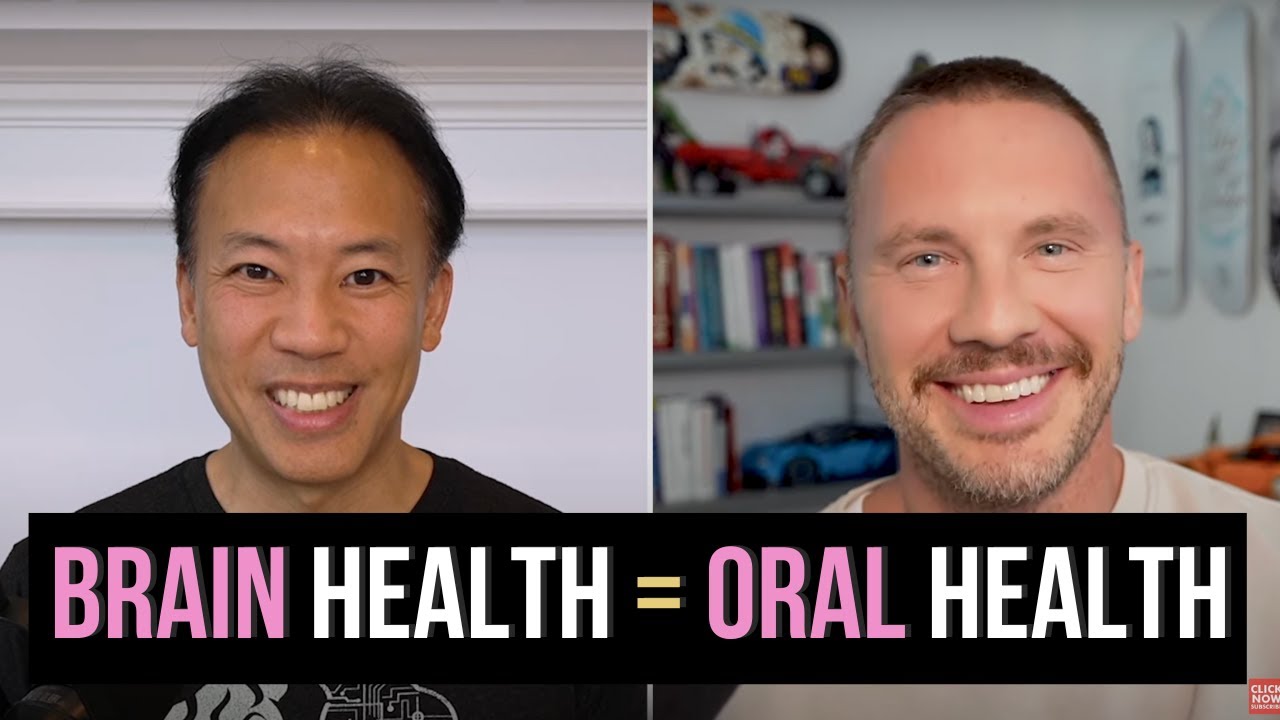
In this Kwik Brain Podcast episode, host Jim Kwik interviews Dr. Dominik Nischwitz, a pioneer of holistic and biological dentistry. Dr. Nischwitz explains how the mouth is an extension of the brain via the trigeminal nerve and argues that oral health is foundational to whole‑body and brain performance. He identifies three major "health killers" in the mouth—mercury‑containing amalgam fillings, root canals (dead teeth), and wisdom‑tooth extractions that can leave cavitations—and describes how toxins from these sources travel retrograde along nerves to the brain, causing chronic inflammation, neuro‑immune stress, and a cascade of systemic diseases. The conversation covers the dangers of mercury vapor, the need for safe, multi‑step removal, and why detoxification must follow source elimination. Nutrition is presented as the cornerstone of healing: testing and optimizing vitamin D3, K2, magnesium, omega‑3s, essential amino acids, and overall protein intake to shift the body from a catabolic to an anabolic state that supports bone and tissue regeneration after dental surgery. Dr. Nischwitz critiques conventional practices such as fluoride toothpaste, chemical mouthwashes, and routine flossing, recommending fluoride‑free, non‑toxic toothpaste, coconut‑oil pulling, copper tongue scraping, and a diet that feeds the oral microbiome. He also links specific teeth to organ systems via meridian theory, illustrating how correcting dental issues can resolve distant ailments like knee pain, eczema, depression, and chronic fatigue. Practical protocols, supplement regimens, and post‑procedure monitoring (e.g., hair mineral analysis, chelation testing) are detailed, emphasizing a holistic, bio‑individual approach to achieve optimal oral and brain health.
Chapters
Biological dentistry takes into account that your teeth are an extension of your brain. Little tiny organs, 32, directly connected to brain nerve number 5, the trigeminal.
Dr. Dominik Nitschwitz, he is a pioneer in the field of holistic dentistry and biological dentistry. He is the current vice president of the International Society for Metal-Free Implantology and the bestselling author of It's All in Your Mouth.
The mouth is usually the most overlooked Underrated bit, and a lot of these so-called health killers, 3 health killers I call them, are lurking in your mouth and you might not even know about it.
Welcome back to the Kwik Brain Podcast. I am your host and your brain coach, Jim Kwik, and as always, I'm here to help you to be able to learn quickly. And your question for today is, how do you optimize your oral and dental health for greater Brain health and performance. This is a subject we haven't yet talked about on our podcast in a few hundred episodes. I encourage you to watch this also on YouTube. Make sure you join and subscribe. Be one of our over 1 million subscribers there. That's where we put the extended version. We always put about 20 minutes of audio, but on the YouTube, we put more of an extended version. And our conversation today is with a a good buddy of mine, Dr. Dominik Nitschwitz, and Dr. Dom for short. He is a pioneer in the field of holistic dentistry and biological dentistry. He is the current vice president of the International Society for Metal-Free Implantology and the bestselling author of this book, It's All in Your Mouth. And if you're watching this on video, you get to see the COVID of this book. It says biological dentistry. and the Surprising Impact of Oral Health on Whole Body Wellness. I got to enjoy this recently, actually just yesterday on the trip back. I met Dr. Dom via our friend Tim Biohacker, our brother there who hosts the Health Optimization Summit in the UK, where we both gave keynotes recently. And I was fascinated by his talk that was titled Beyond Brushing. I love that title. I think we should use it also for this interview as well. He basically believes that all health starts in the mouth, that the mouth is the entrance to the body where digestion starts. I'm also a patient of his. I recently, just literally yesterday, traveled back from his clinic in Germany. We're going to talk about the critical relationship between your mouth and your teeth, your microbiome and nutrition, immunity, and how it relates to brain health and performance. Just like any conversation that we have, this Podcast is not intended to treat or diagnose. This is for educational purposes only. Talk to your healthcare practitioner and welcome to the podcast, Dr. Dom.
Well, thank you so much for having me, Jim. It's going to be epic.
Yes, absolutely. And thank you for taking care of me at your clinic. Your team is absolutely amazing. Yeah, I'm looking forward to having this conversation. You'll notice there's no swelling here. I just had the procedure a few days ago. The surgery, and we could talk about it a little bit, and also everything that I had to do leading up to it, which is, you know, I've been going— I'm 50 years old. I've been going to a dentist, traditional dentist, for a very long time. Never before, even when I had my wisdom teeth pulled, and never before has there been this kind of prep and testing. You know, mostly when you go to the dentist, it's like you drill and you fill. But how do you define biological dentistry?
From my honest opinion, this is the next level of conventional dentistry. And let me explain this one. So, in dental school, we basically learn how to fix bites and smiles. Teeth are seen as biting instruments. And if you have a hole in them or have any tooth pain, we're going to fix this in dentistry with highly skilled mechanical work. And maybe we even take care of your aesthetics and cleaning. But that's about it.
Yeah.
And biological dentistry takes into account that your teeth are an extension of your brain, little tiny organs, 32, directly connected to brain nerve number 5, the trigeminus, and are part of your body, kind of like, yeah, like I said, an extension of your brain, so to speak. Biological dentistry, the way I define it, is the overlap of the high-tech dental work, like the technical things, with functional medicine and health optimization, which I believe obviously starts in the mouth. Therefore, they are to help optimize the whole body wellness.
Now, when we were speaking at Tim's Health Optimization Summit, in the beginning, it was an interesting question. You asked a series of 3 questions you ask in no specific order. Stand up if you have mercury fillings or if you've ever had mercury fillings. Stand up and remain standing. And if you've ever had a root canal, And then remain standing also if anyone here has had their wisdom teeth pulled. And I didn't do an exact count, but it seemed like 95% or more people in the audience of thousands were standing.
Yes. And as a total, I would say 90% at least. And this is in a peer group of only people that are looking for health optimization already. Usually you would think That these, let's say, this folk is more interested in nutrition, lifestyle, biohacking, the overall thing. But still, the mouth is usually the most overlooked or underrated bit. And, a lot of these so-called health killers, 3 health killers I call them, are lurking in your mouth and you might not even know about it. And, this is why I ask these specific questions: metals, root canals, wisdom teeth pulled. And usually, Almost everyone stands up because dental repair is still a big thing.
Now, I have to admit, you know, growing up in kind of traditional, I've had all 3. I've had mercury fillings, which I had later removed about 12 years ago, you know, and had my wisdom teeth pulled, you know, and also had a root canal. And it's amazing the amount of work that you did when I came and actually visited you. But why don't we talk about how do you perceive dental health And its relation to brain health. I was looking at your Instagram and maybe we could show these images on how the nerves that connect each of the teeth are connected to your nervous system, to your brain and different parts of your body.
So, you basically have 12 cranial nerves which are starting in the brainstem. And one is very important. It's the nervus trigeminus. It's number 5. And it takes about 50% of the space of all the 12 cranial nerves. So, it's seems to be very important for your body. And the end of this nerve, so this nerve has 3 branches. One is going lower jaw, one is upper jaw, one is the eye or like the eyebrow here. And the teeth are the end of it. So, if you have anything done on your teeth in terms of repair, everything you do being mercury-containing fillings, like mercury in itself is very toxic, or just bacteria, chronic infections that are lurking in root canals and these cavitations, they can just— be transported by this nerve back into the brain. It's called retrograde axonal transport, back into your brain, into your ganglia, and also into your pituitary, hypothalamus, and therefore cause ongoing chronic silent inflammation and stress in the central nervous system. It is an extension of your brain. Teeth are not just hard things to bite on. They're little tiny, teeny tiny organs with a blood supply, A lymph supply and an autonomic nervous system. And this is not how we treat them.
And, you know, your talk was Beyond Brushing, and I don't think anyone thinks brushing is bad, but maybe we could talk about some of the things that you recommend to our listeners that they could do or stop doing, you know, to be able to optimize their oral health so they could optimize more of their brain health. We could start with, well, you mentioned mercury, right? From dental fillings has been a concern for many years and a discussion, you know, in our community Many of you are part of our app, or we have over 100,000 people in our Facebook group, and people always ask. But maybe you could discuss a little bit about the impact of mercury neurotoxicity and maybe our neurological health.
Yes, definitely. So mercury fillings are these silver fillings, the silver-black amalgam. They're actually called amalgam fillings. They were marketed very heavily in the US under silver fillings, which is completely wrong because it's 50% mercury. containing. And mercury, you might know, is the most toxic non-radioactive element known to man. And personally, I'm also a very aesthetic person. So, back in the day, I could not stand the feeling that I could place a black filling into someone. So, I would initially change those and had to look into, okay, they somewhat seem to be toxic, how can I remove them safely? And the issue is if you had that mercury filling, the mercury is not tightly bound, it is leaching out on a daily basis. It's not a lot, millionths part of a gram, like microns that are leaching out, 2 to 3 roundabout per filling per day. But, sometimes you wear these fillings for 5 years, 10 years, 20, 30, 40 years because they last a lifetime. So, you're chronically intoxicating yourself with the most toxic non-radioactive element known to man. And, this mercury vapor that is coming out of the filling directly goes into your cell. There's not really a protection. And, if it goes, for example, in your brain tissue, there are enzymes called catalases that will reduce it and it will basically stay there forever. The half-life in the nervous tissue, brain tissue is 16 to 32 years.
Wow.
And, if you happen to have some sort of a detoxification issue, it might be there forever. So, this is really something that we need to know, but I don't want to freak you out, guys out there. For me, it's more about giving you this information, but the most critical bit is if you know that there's so much mercury in these fillings, the most critical thing is don't go just to any dentist right now freaking out, I want them out because they're toxic. No, you need to have someone who is skilled to remove mercury fillings safely. And, we use 7 different fold measurements to take them out to not cause more harm. That's really critical because otherwise if you drill them just out, you have a huge load of mercury vapor. And, if you just wear them, it's only a teeny tiny bit. So this is a critical thing to keep in mind. Luckily, that dentist trained to do that.
Now, a few days ago when I had my procedure with you in Germany, you know, it wasn't just me showing up and you doing that. There was this runway beforehand where for weeks, you know, I was on this certain protocol and doing testing. I found out my mercury levels were high, you know, in fact, and part of it might be Potentially diet, maybe some fish. But I mean, I've had those amalgams years and years ago, but even as they were removed, some of it could potentially still be in my system. But I was also doing, on your recommendation, nutritional testing, right? And you had me test for things like vitamin D3 and other things, and we put together a protocol of supplementation leading up to it. Which seems to be almost as important as the actual procedure itself. So it's done in a way where my body is ready to make that transformation. How does nutrition— I mean, it sounds like it plays a pivotal role in your holistic approach, and it can influence our oral health and also our, obviously, brain's overall well-being.
Yeah, definitely. In my opinion, nutrition is the foundation of all health. It's kind of like food is medicine would be the concept. And I'm personally teaching thinking in nutrients. But leading up to your appointment, which was also involving some sort of surgery, I always optimize the body so that it becomes very much anabolic and is able to build bone and teeth. There's a solid science behind it. But one thing we always ask our patients for is their current vitamin D3 level because vitamin D3 is a key hormone in your body that will help with bringing in different minerals, especially calcium, from the bloodstream into your bones and teeth. And for Jim, we obviously had to do some surgery and I want him, let's say, in a surplus of nutrients. I want to make sure that he's healing well. So, you can see him now, 5 days after surgery, no swelling, no pain, nothing. The surgery was more than taking out 4 wisdom teeth and you know how most people look after this. So, it's really critical that you support the body before, so it comes in boosted and not like in the general population in chronic hibernation mode where your body is barely making it being catabolic. So, that's the first bit. And then, obviously, he needs to stay on the protocol because the bone healing phase or tissue healing but also recovering from tooth decay takes 3 to 4 months. Bone healing is super slow. So therefore, nutrition is, in my opinion, you should never do any surgery without being properly supported. This is stuff that I'm doing for 20 years, personally interested in it, and because I had to heal myself first.
Now, you mentioned 2 terms, anabolic and catabolic. Maybe we can define those for our audience. Oh yeah.
Catabolic means your body is in a state where it basically has to destroy tissue all the time to get certain nutrients and you're in a depleted state. So, you're not really able to build new tissue. You kind of ruin your old one or break down old one to build new one. Anabolic means in simple terms you're in a surplus of nutrients and your body is just able to build. Some people have heard anabolic in terms of steroids and muscle tissue, but it's just a simple means of your body is able to build tissue and is able therefore to recover, sleep better, and just be in a surplus of nutrients. Vitamin D3 is actually a hormone, but vitamin D3, vitamin K2, magnesium, omega-3 fatty acids, and especially essential amino acids. Protein, all these critical things play a huge role in the healing capacity and also in not having so much pain because your body is just there to repair.
I hope you're enjoying this interview with Dr. Dom. And speaking of Dr. Dom, I want to invite you to something very special. We have a brand new monthly inner circle called Kwik Success. This is for people who really love to learn and want to level up not only their learning but their life, their life success, and get massive rapid results. And so it's where I come in every single month with you and teach you something brand new. I answer your questions, and also we have a book club as part of that. And so once a month we all read a book together, and I show you how I read it and some memory tricks to remember what, what's in the book. We are going to have Dr. Dom's book is going to be the focus. So if you want to find out more, go to kwiksuccess.com. That's kwiksuccess.com, and you get all the details. And so I'm looking forward to doing this with you, and I hope to see many of you there. And back to our show. Now, transparently, my— some of the procedures, I don't mind talking about it. When I was a teenager, I had 3 wisdom teeth Extracted. More recently in the past few years through impact, I had a root canal. I deadened a nerve there and had a root canal, and I also broke a tooth. So, we were doing a lot of work there. And, it was interesting when we did a 3D scan of sorts so you could actually diagnose what's going on and you could see the inflammation or the infection. And also, there's a whole bunch of things that we did. We did IVs, we did hyperbaric chamber. It's like this pre-procedure and then the procedure and then post. And again, this is not a slight against dentists any more than when I talk about education, it's against teachers, right? A lot of people are very well-intended, doctors, dentists, teachers, but it's a systemic issue that we're just bringing light to. And again, people should get enough education so they can make a good decision. But let's talk about a root canal. How might it act as a source of of chronic bacterial infections, potential link to neurological challenges?
A root canal treatment in conventional dentistry is a necessary treatment. When you guys have extreme pain, or like Jim, the nerve died, we have to be there to help you. And this is where the root canal comes in. It's also a very highly skilled maneuver. So, you have to be really good. So, all the dentists out there doing a great job. However, a root canal leaves you with a dead tooth because you have to look at the tooth structure on a Microscope level. So, a tooth has a big channel in the middle. For example, Jim's was the canine. And, in the middle, there's usually your blood supply and your lymph supply and your nervous system, nervous tissue. So, if bacteria for whatever reason go into there, this tissue gets infected and causes pain. So, as a dentist, you take this out, you scrape it out, you clean it, you use ozone, use all sorts of things to sterilize it. But, this tooth doesn't have just one big— root or source of it. There is, if you see it in a microscope, per square millimeter, you have roundabout 30,000 to 75,000 little, little teeny tiny dentinal tubules. So, if you add up these dentinal tubules in one root, you come up roundabout 1 kilometer, which is maybe 0.6 miles in length where there's now bacteria, anaerobic bacteria harboring in there. So, you can look at this tooth later on because there's no more blood supply, meaning there's no more immune system to control these bacteria. that are now living in there kind of like in a cave. And they eat the food that you eat and they produce their metabolites. And these metabolites are super toxic. Those are highly toxic sulfur-containing toxins. They are called thioether and mercaptanes, which can be in itself toxic to the brain, to various other tissues, put another strain of toxicity on your body, but you can also become allergic to them. On the other hand, like Jim's already said it, if bacteria live in there, you have a chronic infection. Whatever bacteria lives in there, they have identified up until 500 to 700 different species in the mouth. And I think in the root canal, around about 80 different ones. So you never know what's in there. But if you have an immune system, your immune system wants to control it. And it usually does it by making a chronic inflammation around such a tooth. which you can see on a cone beam, which is the 3-dimensional X-ray that we did for Jim. You can see usually on the tip of the root, there's some sort of an ongoing inflammation, basically your immune system protecting itself by building a capsule or a cyst to hold these toxins, bacteria, because the immune system is too big, it can't go in. You can imagine it like the cat and the mouse, the cat being your immune system and the mouse being the little teeny tiny bacteria in your tooth. And it's just a matter of time after root canal until this tooth gets reinfected. So I always say it was never a good idea to leave a dead body part in your body. It just causes problems. Yeah. No medical profession would leave a dead finger or dead toe on your body because it's clear that within a minute, basically through the bloodstream, the toxicity, the infections can spread throughout the system. Same is true for a root canal through the blood supply, the lymph supply, and the nerve that we already touched. So, as a biological dentist, we see it differently. For acute is fine, but it's not a long-term solution. It's more like a temporary solution.
And having that inflammation inside your mouth, inside your head of all places, or, you know, an infection, I would imagine takes energy, it takes resources, it could put you in fight or flight.
Yes.
Which can be a challenge in terms of healing.
Yes, it will ongoingly activate fight and flight syndrome. For some people, if it's getting too long, you can even get toxic vagal syndrome, which means you get too parasympathetic. It's also possible. So, either fight or flight or too parasympathetic. This is one bit. Then, there's obviously an ongoing cytokine storm. So, let's say an ongoing cytokine production of the critical ones, TNF-alpha, et cetera, which are working systemically. So they lead to worse sleep. There's even studies showing that root canals are contributing to bad mood, to depression, even to heart disease, to neurological issues. Like, you name it, you can find it for everything. And I don't say that root canals— I'm not saying that root canals are the root source of all problems or the root to all disease. That would be wrong. But they're a huge contributing factor. If you're already optimizing everything and you have the perfect nutrition and you try to optimize your sleep, you do the hyperbaric, you do all these modalities, but you're still not superhuman, it is time to check your mouth because maybe your brain is in an inflammatory state because your mouth is an extension of your brain or your teeth, so to speak.
And to handle the lead domino, the issue, as opposed to the symptoms. When we go from root canal to the extraction of wisdom teeth, I'll use me as an example. I think the layman term is these cavitations in the jawbone. And, they could also influence our body's systemic health, right? And, obviously affect our nervous system as well.
Yes, it's the same trigger. You have an ongoing chronic inflammation. And, I think it's quite clear that chronic disease is the epidemic of the 21st century and chronic inflammation is at the root of all this. And, what happens when you— so, wisdom teeth in the Western world, I would roughly estimate 80% of all teenagers or growing adults have them removed in the Western world. Why? Because we are growing too narrow. We are actually degenerating. This is a systemic reason. It's an ongoing generational thing. But, we can see that we have no space for our wisdom teeth, whereas our ancestors, let's say 10,000 years ago, even had space for 2 sets of wisdom teeth. So, the issue is in the tissue, but it's a little bit earlier on. But, if you went to your surgeon, to take out the wisdom teeth because of your braces and orthodontics, probably 80% of you listeners, you were not prepared like Jim was prepared for the surgery. There was nobody telling you about nutrition, about your vitamin D3, about the nutritional status. You basically, the consent is we are going to perform the surgery, you get this and this medication, you will have swollen cheeks, you apply cold. That's about it. No one teaches it. And therefore, a lot of times you end up having extreme acute inflammation. Your body's not able to heal. You catch it in hibernation mode. Being in a depleted state and get a dry socket or whatever. And what happens in the long term is the wound in the bone is not really recovering. And over time, there's no bone growth because you are not able to do, not anabolic enough. And then again, caves form. That's why they call it cavitations in layman's terms. Caves form, which are then 5 years, 10 years, 20 years later, chronic inflammation in the jawbone. And the jawbone is not Sponges like it should be, then the disease is a fatty degenerative osteonecrotic jawbone. This is what we call it in medical terms, FDOJ. Other words would be ischemic bone disease. So bone without oxygen leads to these deformations, or NICO for neuralgia-inducing cavitation osteonecrosis. Neuralgia is a term describing massive pain, way more extreme than migraines, in your brain causative of these tissue defects. And we find in this inflammatory tissue, we find mercury, pesticides, glyphosates, and obviously viruses, fungi, anaerobic bacteria, and parasites, which again, this is a part of your brain. It's not just your arm, it's in your brain and gets transported. So people come in having all sorts of chronic health issues, have brain fog, cannot concentrate, are depressed, have irritable bowel syndromes, skin eczema, or chronic fatigue. And, no one finds the solution because this is also nothing you learn in dental school. This is still not considered medically important even though there's tons of studies. The medical world is looking for it, but we're here to tell you that there might be an issue in the tissue.
Hi, this is Jim Kwik, author of New York Times and Wall Street Journal bestseller Limitless. And today, I am thrilled to share with you some exciting news. It is Limitless Expanded. It's an updated and brand new edition of my transformative guide, and now it's enriched with new insights and new tools to help you navigate our post-pandemic world. For a limited time, when you pre-order your copy of Limitless Expanded, you're going to get exclusive free access to my 13-day Quick Start 2.0 training. It's a brain training plus a bunch of amazing bonuses. Just go to limitlessbook.com and pick up a copy for you and pick up a copy for a friend. You mentioned mercury and a number of other things that, that's happening, build up inside your mouth. What role does detoxification play in biological dentistry then?
Well, it plays a huge role The main source of mercury toxicity in your body is not the fish that you eat, it's actually still the mercury filling and the mercury vapor that you breathe in on a daily basis. This is something you need to know before you hop onto any sort of detoxification protocol. You need to remove the source first because otherwise if you start detoxing and still have the source in your mouth, not even considering it, it's like showering and trying to put your clothes on at the same time or rub yourself. but with that tremendous health problems alongside it because it will be redistributed. So, a huge detoxification is what we just did for Jim, taking out a dead tooth, taking out cavitations that contain tons of different toxins, the root canal toxins. This helps your body instantly to recover and the toxic load is gone. So, imagine how long it would take you to chelate all the things out or take binders. if you have to source in. So, it's a big part of the detoxification. But then, as Jim said, he had his mercury fillings removed 12 years ago, but the mercury filling was probably in his mouth for 10, 15, 20 years chronically vapor out of this filling going into his tissues. So, what I would do or what we would do in the clinic is let's say the next time he comes in after 3 to 4 months, then we do a mercury chelation test or we do a hair mineral analysis So, we go really analytical and look, okay, is there still something hanging in the tissue that needs to be dealt with? And then, we usually evaluate a, let's say, a very scientific protocol to help his body with the detoxification. But, what Jim is doing right now in order to heal his body is already optimizing liver phase 1 and 2 detoxification through certain nutrients. So, we're building him up for this endeavor that his body is right now in a super state of detoxification. He's also taking binders and various different B vitamins, minerals. So, this is ongoing detoxification. And then, we check later, is there anything that we need to attack maybe medically with some sort of intravenous nutrition, intravenous chelation, other various chelators? So, to make it clear, a chelator is a substance that is able to grab mercury or any other toxic metal, lead, cadmium, aluminum, tightly and then help it bring it out of the cell into the system. And then, your liver needs to be able to detox it and then it usually goes out to the back door or to the pee, to urine. But, this is all in the timing. And, I see it way too often that people start challenging and heavy metal detoxification without addressing the source of it. So, that's really critical also for your brain health obviously.
And, it's remarkable because I was talking to a couple of your patients while I was in your clinic and The positive benefits of taking care of your oral health, some of the things that I heard, including also in your book, It's All in Your Mouth, there are these surprising to the patients benefits that happened after fixing things properly with their oral health. Like the things that they wouldn't even expect. They didn't change anything else other than work with you. But, there's these ripple effect of benefits as you talked about that each of these teeth are connected to different parts of the body.
This is the fascinating stuff for me still to this day. And, because this is stuff you don't learn in university, there is literally no connection made between your mouth, your teeth, and your other tissues. But, there is meridian, there's a chart that shows the specific connection of any tooth with your autonomic nervous system and Various organs in your body. It's coming from Chinese medicine. It's more meridian-based. For example, these incisors in the middle of your face are connected to your kidney and bladder meridian, to your eyesight, to your neck. So, if you have chronic neck tension, you can't really see straight, or you have hormonal issues, it could be your teeth. Or for you, the canine is directly connected to your liver, gallbladder, anger issues, detoxification issues, tension in your whole system and your body. Shoulder pain, chronic joint issues, knee pain. My patient from today, I think you met him.
Mm-hmm.
He is living in Portugal but originally from South Africa. So, he had knee surgery because his knee is never good, his left knee. You would never think that a left knee could be somewhat correlating or connected to the mouth, right? So, I muscle tested it for him, the connection of the nervous system, and he had a root canal at number 2, which is incisor. which runs over that. So, I just said, okay, we do neurotherapy. So basically, I inject something here, procaine. And, he told me next day before surgery, his knee is 30% better. Then, I did the surgery yesterday. He tells me today, 80% gone. And, what he didn't know is that his chronic neck pain and tense trapezius also gone. And, this is still fascinating for me and the fulfilling bit because obviously I love the fine work and I love to give you a ceramic implant. That's my specialty and aesthetics or whatever. But if you tell me on the next day, oh wow, this happened. I have been seeing 29 different clinics. No one could help me, but now I'm finally in the next level. My depression is gone. My shoulder elbow pain is gone. My eczema goes away. Whatever it is, that's fulfilling. And this is what I want to teach to dentists out there. There is a next level. It's not against conventional dentistry. It's high-tech dentistry where we'll use only biomaterials to repair. We take out all the crap that is foreign body. Foreign material, install biomaterials, and then help the body recover and heal the way it should be naturally. Because let's face it, you didn't come to this planet with mercury fillings or any metal in your mouth or a root canal or removed wisdom teeth. This is just supernatural. It's a chronic ongoing stressor. It will go on your brain. It will change your neurotransmitters somewhat. And, this is the one bit you cannot biohack yourself. It's just not possible. And it's, for me, it's my moral obligation to teach this to the masses because I think so many people are suffering from chronic health issues and we'll be able to change this.
And I want to go through some of the practices that you have for your patients and what you do, your family does in terms of optimizing their oral health. You mentioned detox, but then taking, extracting things out, but then nutrition and supplementation. And I know everybody is bio-individual, people should go to a functional medicine doctor and be, you know, have a nutrient profile done. But are there in general certain supplements that you emphasize being very important or prioritize when it comes to good oral health?
Yes, definitely. So on top of your daily toothbrushing, teeth, you could compare it to a plant. If a plant isn't fed right, it will die. The same for teeth. If you get tooth decay, it's a sign of a nutritional deficiency. Initial tooth decay shows me directly you have an imbalance of your minerals, your pH, there's something going on. So, number one is always testing your current vitamin D3 in the blood. This just is a simple finger prick. We did that for Jim on the chair, chairside. The answer is there within 10, 15 minutes. And, the vitamin D3 is crucial for almost everything in your body, but it also helps bringing in the critical minerals like calcium, magnesium into your teeth. So testing your vitamin D3, if you or your kids suffer from tooth decay, check your vitamin D3 level. It will be low. It should be above the norm. This is what we go for, 30 to 60 nanograms, above 60 lifelong. Then we will ensure proper mineralization. Like the cofactor for vitamin D3, I should say that first, is vitamin K2. And a lot of you guys have vitamin K2 deficiencies. Okay. If you have plaque buildup in the inside, which most people do, usually a sign of K2 deficiency. Vitamin D3 and K2 go hand in hand. We derive it in our company from real natto. Natto is a fermented soy product, which is the highest in a bioavailable K2, but you get it from butter, you get it from animal foods. The third one would be magnesium. It's a mineral needed as a cofactor for more than 500 different enzymatic reactions. So, every functional medicine practitioner will tell you magnesium, zinc, boron, those are critical trace elements. You need omega-3 fatty acids for your tissues, especially for the cells to help also with the detox. And, most importantly is a micronutrient protein and its tiny, teeny, tiny building blocks called amino acids. Not just the essential amino acids, what we also do is besides various different amino acids, Lots of various proteins, mainly animal proteins and collagen peptides. And, I will always give my patients a daily protein goal to hit because the research is quite clear. If we underfeed with protein, for example, a study, Framingham osteoporosis study showed when femur broke in a huge cohort study, eating below 1 gram per kilogram or below 0.5 per pound is probably, you end up sometimes having a 30-day longer hospitalization only because you underfed. So, we go with the recommendation of 1.6 gram to 2 gram per kilogram, which is 0.8 to 1 gram per pound of body weight, ideal body weight. So, if you're 80 kilograms, you maybe go with 160 grams, a little bit less. Then, you ensure that your enzymes work properly. Also, what most people don't know when it comes to brain health or detoxification, protein is needed to detox. Amino acid conjugation is number one nutrients to get these toxins out of your body. So if you have a depletion there, it doesn't work. So protein goal is mandatory. Vitamin D3, K2, minerals like magnesium, zinc, boron, trace minerals, B vitamins, all these critical things. And this is proper science. There's a lot of scientific stuff behind it. I'm a naturopathic doctor too, but this is more just my doing for 20 years. I'm just interested in how to fine-tune the motor or your body. You have a body. You're not your body. We have it, we can build it. A lot of this is bodybuilding, obviously, but it needs to come into medical world.
So, let's talk about some of these everyday oral care practices. You know, most people who are listening, they brush, maybe they floss, maybe they use some kind of mouthwash, which, you know, could be a little concerning depending on the brand or the ingredients of that mouthwash. What are your practices that you recommend to your patients, to your clients, that you yourself use for you and your family that we should be aware of?
Yes, this is a little bit controversial because it's the opposite of what we get taught in dental school. You have to see it like this. Conventional dentistry is focusing on the average person out there. The average person out there unfortunately has tooth decay and bleeding gums. So the bandage we are basically brainwashed to learn to see is we need fluoride Toothpaste. Yeah, we need a chemical mouthwash to kill off the germs and flossing. That's basically it to keep these teeth safe and sound, which makes no sense because 90% of all people still have tooth decay and bleeding gums. So what we do is obviously looking into changing your lifestyle and we take out all the toxic things. So first of all, a toothpaste to brush the teeth, which is still necessary brushing, but it should contain no toxins. Ideally, it should be something you would eat because you put it into your mouth. Why would you eat toxins? And, like I said before, tooth decay is not a chemical deficiency. It's more like a nutrient depletion. So, I recommend is always having fluoride-free toothpaste, maybe on a coconut oil base, without triclosan, without sodium lauryl sulfate, which is a soap, without sugar or sweet stuff, without abrasives. So basically, go as natural as possible. That's maybe number one, what we do. I only brush my teeth once a day. I have no tooth decay. I have a perfect diet. I have no bleeding gums. There is a bubble that I'm coming from. So, you might need to work this up first. But the goal should be your teeth are hard as stone because nature has it built that way. They get soft and weak because you got convenient and ate soft food and therefore need to, I don't know, supplement more. Second, do not use chemical mouthwash. The typical chemical mouthwash, which starts with an L, I don't want to say any brand names, but it was marketed very heavily to clean floor. A floor. Why would you put a floor cleaner in your mouth? Obviously, it wipes out all the bacteria that live in your mouth. Now, for you guys out there, because you think differently, your oral microbiome is the most diversified microbiome in your body. It's the second largest, actually. It's only in the mouth, but it's almost as large as the one in your whole intestine and way more diversified, meaning way more different species. What happens if you kill all the species on a daily basis? You ruin your immune system, your defense, and it causes imbalances or dysbiosis, more viruses, more Candida, which is a fungi, more mold issues, parasites. It's really bad. And also, your oral microbiome and your gum health is directly connected to your brain health. There's even a study that came out in June '23 which shows that if you had gum disease or periodontitis, which is actually disease in the tissue below the gum, the bone, oral pathogens can jump in. It's called leaky gum instead of leaky gut.
Hmm.
And, these pathogens can cause microglial cells in your brain to cause neuroinflammation, which is insane. So, it is so important to keep your gum healthy. Non-bleeding and attached because it's a protective barrier like the skin to the outside. Imagine you have a cut here. Obviously, within a minute, there's red and bleeding and your immune system is protecting it. So, please make sure your gum health is safe and sound, but you don't need chemical mouthwash for this. What you need is, again, lifestyle nutrition. Most importantly is protein, collagen, vitamin C, antioxidants, and a soft brush and no toxins to clean it out.
Yeah.
You also, in my opinion, don't really need flosses. What can we do alternatively to the mouth, to the chemical mouthwash? We use coconut oil pulling. Coconut oil pulling is Ayurvedic strategy. It is soothing to your gums. It kills the bad bacteria. It is detoxing to your mouth. You just have to put extra virgin coconut oil into your mouth, no specific brand, just look for virgin, extra, native, or whatever, organic, teaspoon. And have it in your mouth, swish it around, pull on your gums for about 5 to 15 minutes, and then just spit it out into the bin, not the sink. That's it. Do that daily consistently and you're golden.
And you're doing that, the oil pulling, you're doing that before you brush your teeth?
To be honest, it doesn't really matter what you do until you do it consistently. I personally start every morning with tongue scraping. I'll explain in a second. Then, I do my workouts and when I basically cook my breakfast, I have time to do the coconut oil pulling. So, I do it while cooking the breakfast, 5 to 15 minutes. Then, I eat, I drink a coffee, and I wait for about 30 minutes until I brush my teeth because obviously after eating any sort of acidic things, and coffee is quite acidic, your enamel gets a little bit more soft. So, you don't want to really brush in this 30 minutes. So, brushing for me is the last bit in the morning and it's the only time I do it, but it doesn't really matter. You could also use the coconut oil pulling after food while you're driving. to your office and have 15 extra minutes. Some people even do it 30 minutes because it feels so good, especially in wintertime when you get sick all the time or you get a little cough or a little bit like an itchy throat, sore throat. Use coconut oil pulling and at least 80% of all cases, it will go away because it's killing these bacteria that are not so good for you. So, it's a penny-costing cheap treatment. You cannot do anything wrong with it. But you can do so many good things. But again, consistency is key. If you do that once a week, it doesn't matter. It's better than nothing. But ideally every single day until it's a habit and then you will never forget about it.
Yeah, that's one of the most important habits you could be able to practice. It's similar to my work. I talk about the supervillains, about digital distraction, digital dementia, digital deluge, digital deduction. The things that are causing more strain on our bodies and our brain, which obviously our brain is part of our body. The issues I'm hearing in this conversation are dental repair with all the metals and the materials that are often used, tooth decay, gum disease, if you will. And so, solutions as a quick review, toothpaste without fluoride, instead of mouthwash, chemical mouthwash, oil pulling. Yeah. And, you talk about, what was it, a copper tongue scraping?
Yeah, tongue scraping would be another thing to— coconut oil pulling helps also against bad breath, which I didn't mention, but bad breath is something people suffer from, halitosis. So, a tongue scraper, ideally it should be made of copper because copper in itself is antibacterial. It's just a super simple device, again, Ayurvedic. This is what I use when I wake up. You just basically go into your— in the at the ground of your tongue, like where it's coming out of your throat, and you scrape 5 times, 10 times, and you get this whitey, coaty stuff at the beginning off of your tongue, which is debris from over the night. It's food, it's a lot of bacteria, it's a lot of toxins. They're just out of your system. If you do that ongoingly, I think I can't scrape really anything off it even in the morning because my tongue is just usually very pinkish. There's no fur, no coat on it. But if you have a look now, you probably have If you pull with your fingernail, there is stuff on it. And this is maybe causing bad breath, also containing toxins, changing your microbiome. So it's really important. Yeah, the summary was really good. So the WHO, the WHO says 70% of all chronic disease starts in the mouth. But they're only looking into tooth decay, which is number one chronic disease worldwide, 90% incidence, gum disease, gingivitis, like bleeding gums, and when it goes deeper, periodontitis. Inflammation of your periodontium, really, really critical, directly connected to your brain and everything. So really bad. These 3 are the typical dental diseases, medical diseases. But what we're not talking about, or we just covered here, is dental repair stuff that is old school, like mercury fillings, but also titanium implants is metal, gold fillings, gold metal crowns. Any sort of metal that we use to repair has nothing to do in your mouth, not even these Retainers that you have after your orthodontic treatment. This is a question I get a lot on socials. What about my retainer? I want to have my teeth straight. Still metals, nickel, various things that are leaching out on a daily basis. So no metal. Root canals we touched on. They're good for acute treatment, but they're bad for the long term when it comes to overall health optimization. It's obviously our goal. It's not just absence of disease, therefore they work. Optimal health, you want to see them critically. Replaced with ceramic implants. And the third bit was removed teeth or especially wisdom teeth, cavitations, FDOJ, Nicos, the 3 health killers that might be lurking in your mouth and you don't even know about it. That's the thing.
Awareness is a superpower. And I appreciate you helping our community become more aware and just reminding them that good oral health leads to better brain health and body health in general. And we'll put a link to some of these studies that you mentioned in our show notes as we often do at jimkwik.com. We'll have links to that on jimkwik.com/notes as well as link to your book, It's All in Your Mouth, and also links to people who want to be able to come visit you as well, links to your clinic. Dr. Dumm, how do people stay in touch with you? What's the best way?
I think that really the easiest way right now is with Instagram. You find everything because there's a link in the bio called a tap bio. You find the link to my clinic, the website, YouTube is good. A good channel is also on there. And yeah, this is probably the most easiest bit. A lot of information on both channels. And I try to be consistent on social media, bring out a post every single day, which is directed to you guys. I want to teach you to understand how important optimal oral health and overall health are and therefore be able to change something because we can. We are all on the same mission. Jim and me, we are big fans of superheroes, obviously. And yeah, the villains in dentistry are maybe just maybe the fluoride and various different things. But the major villains are things you don't even know about. Root canals, cavitations, just a reminder, metals in your mouth. No particular order. All of them might be causing issues and you don't even know about it. So that's the awareness bit. Thanks, Jim.
Yeah.
It's really a pleasure.
Dr. Damm, thank you so much for being on our show. And thank you for taking, you and your team for taking such great care of me. And for your daily quick tips on how you can optimize your oral health for better overall health, make sure you follow Dr. Dom on YouTube, Instagram. I'll put the links also in our show notes to be able to find him. If you want, take a screenshot of whatever platform you're consuming this right now and tag Dr. Dom, tag myself, and maybe share one thing that you learned here with your fans, your followers, your family, your friends, so that way we could help make little changes that make a big difference in our lives. I really do believe together is better. So thank you for being a health superhero in my life and so many other people and being on our show. I want to just say to everybody who's listening right now, thank you for listening to this episode. If you got value out of it, best thing you could do is subscribe for more episodes. And make sure you connect with Dr. Dom for, for more insights and empowerment. And until our next episode, be limitless, everybody. Thanks, Dom.
Thanks, Jim, for having me. It was a pleasure.
More from Jim





The Library of Minds: Brain Coach: How to Stay Sharp When AI Does the Thinking | Jim Kwik





