Optimizing Your Genius Eating Environment with Max Lugavere & Jim Kwik
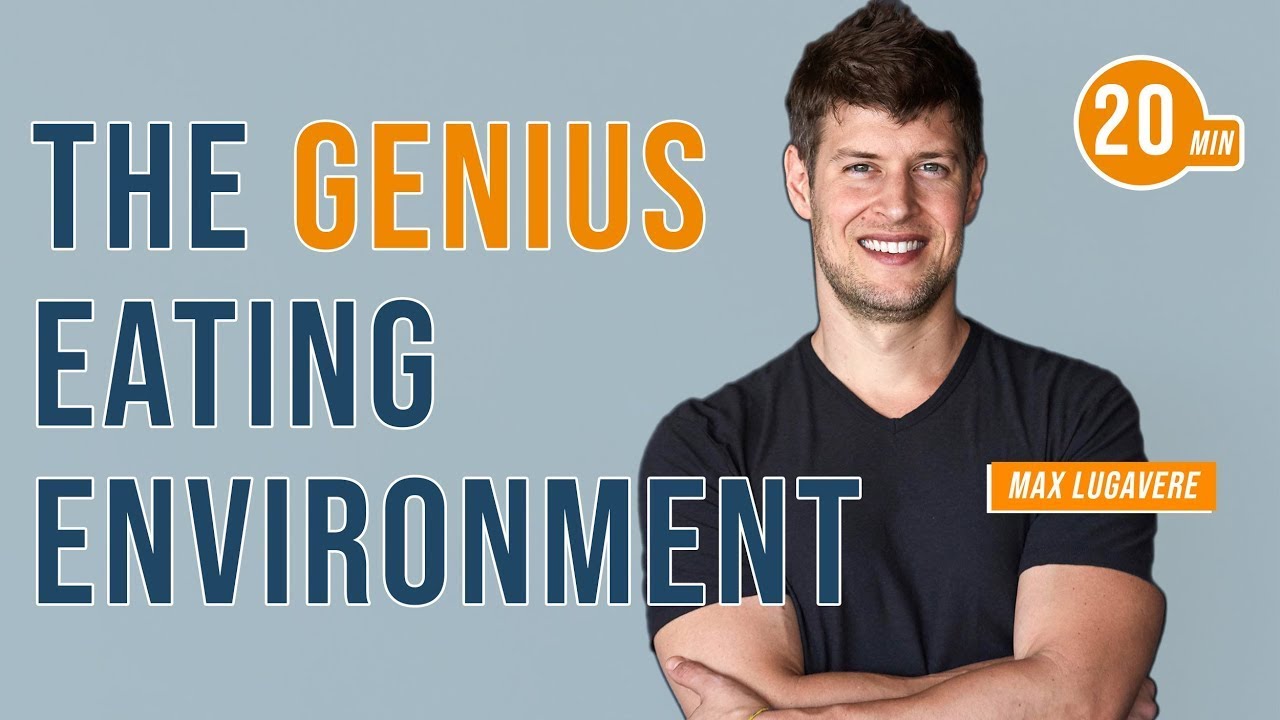
Max Lugavere and Jim Kwik explain how to eat for brain health and metabolism. Cook at home to cut hidden calories and oils. Shop the perimeter for whole foods, avoid ultra-processed items that add roughly 500 calories daily. Prioritize protein like wild salmon and grass-fed beef, and eat slowly in a relaxed state to activate digestion.
Chapters
Welcome back, Kwik Brain. Your question for today, how do you set up your food environment for optimal brain performance and power? And back on the podcast, we have our buddy Max Lugavere, science journalist, bestselling author, Genius Life, Genius Foods. And we are in your Genius Life podcast studio. We just did an episode for your show.
So good.
That was fun.
So good.
It's always, it's always so great having you here. I learn from you. It's always a mind jam. And I feel like new ideas emerge from the, synthesis of everything that you've, you know, gone deep within your life to learn and to teach about. And, and me, what I bring, you know, so it's just, it's always great.
It's— we could talk for hours and hours. And we were jamming and wanted to— I wanted to have you back on the show since it's been a little bit. It's been a minute.
Thank you.
How you doing?
It's been a pandemic.
It has been a pandemic for sure. And it's been—
yeah, things have been, you know, just learning, continuing to learn a lot with the podcast and talking to people about— because I think what's so crucial these days because we're spending so much more time at home, right?
Very much so.
It becomes ever more important to know how to curate your food environment to set you up for optimal success, optimal metabolic health, which ultimately is going to pave the way to optimal brain power as well. So I think it's really important. I mean, obviously a lot of us, you know, we have the decision every— with every meal whether or not to eat at home or to eat out. And I think it's always better to eat at home. Our food tends to be less caloric in value. You can take the same meal cooked at home versus prepared in a It's going to have fewer calories because there's going to be fewer, you know, unhealthy— generally, you know, very likely unhealthy oils used in the food production, a lot less sodium, and higher quality ingredients to boot. So cooking at home right there, that's like number one, the number one thing that you can do.
I love this. And just as context for this conversation, it's for when I work with somebody, I'm always looking at the 5 W's and the H, right? You know, it's not just what you learn, it's how you learn. It's when you're learning it, right? It's where you're learning it, your optimal learning environment. So this is really good 'cause you could, as you're feeding your brain, like let's say through reading as we teach, you're also feeding your body. So it's not just what you eat, it's how you're eating and when you're eating.
Yeah.
Right? And also in the environment where you're eating it.
Where you're eating it. Where you're eating it totally matters. I mean, there have been studies that show that we tend to eat more when, you know, when we eat our food on bigger plates versus smaller plates. Yeah. Portion control is super important, but there are all these, We think that we're operating under the guise of free will, but there are all these external forces that dictate how much we eat. And for so many people, I mean, that is the central problem, right? Like people tend to eat too much today. That's why you see obesity statistics. 2/3 of adults in this country are either overweight or obese, and we are on trend by the year 2030 to have half of the adult population obese.
Hmm.
And this is not just a cosmetic issue. This is actually a systemic metabolic problem that affects how our brains work. There have been correlational studies that show that the wider our waist, wastes, the smaller our total brain volume.
That's right.
And we know that one of the primary issues to come from overindulging, especially on sugary refined grain flour products and unhealthy oils, is we tend to promote a condition in the body called insulin resistance. And we know that the brain thrives in a state of metabolic health, and insulin resistance is the opposite of metabolic health. So we want to get our bodies in a state of optimal metabolic functioning, so that our brains work as best, not only as best as they can, but they have a better chance of warding off conditions like Alzheimer's disease, which you know that both you and I have suffered from, you know, in our lineages. So I think that that's rule number one, is to cook at home more.
Yeah.
It doesn't have to be every meal, you know, definitely partake in the conveniences of the modern world, especially now as more and more of the world begins opening up. But the more that we can cook at home, the better. Secondly, when it comes to shopping around the supermarket, you want to make sure that you're shopping around the perimeter of the supermarket.
Good tip.
As opposed to the aisles of the supermarket. The perimeter of the supermarket is where all the whole, minimally processed foods tend to lie. Most people don't realize this, actually, but all supermarkets are designed the same way. All the perishable fresh food tends to be around the perimeter because that's where they put the refrigeration, which is like massive machinery. It's the aisles where you have all the ultra-processed, shelf-stable packaged convenience foods, and then you have the frozen foods, obviously. And we can talk about frozen versus fresh. There are, you know, actually frozen is a great option for many people. It's economic, economical, and most of the time equally as, as nutritious. But today we live in a time where 60% of the calories that adults consume come from what are called ultra-processed foods. These are the foods that hang out in the aisles. They usually have ingredients lists that are pages long, it feels like. And the problem is that when we, when we, when our diets are comprised of those kinds of foods, Those those kinds of foods promote their own overconsumption. So again, going back to this idea of free will, we tend to think that we're operating of our own accord, of our own agency. But these ultra-processed foods, they drive their own overconsumption to the tune of about 500 additional calories a day. They've done studies funded by the National Institutes of Health where they put volunteers in these controlled living environments where they feed them what's called ad libitum meals, meaning you can basically eat as much as you want. And they've done studies. One of the most pivotal. was performed and published in 2018, where when given access to ultra-processed foods and allowed to eat to satiety, people tend to eat to a point of fullness, at which point they've already overconsumed their calorie budget for the day by about 500 calories.
Hmm.
You do that every single day over the course of a week, that's a pound of fat gain. Whereas when they switched over in the crossover trial to a diet that was focused primarily around minimally processed foods, these are the foods that you, basically you buy the ingredients and then you cook them at home, they came in at an effortless calorie deficit.
Hmm.
So the drive-home point here is that what you eat influences how much you eat. So a lot of people try to control how much they eat without, without looking to what it is that they're actually eating. And that's putting the cart before the horse. The minute you make that shift in your diet and upgrade the quality of your food— food quality, this is so crucial— then that tends to control with minimal effort the amount that you're eating. And one of the greatest tools that I, that I like to offer people is to focus on protein, dietary protein. So we know the 3 macronutrients, carbs, fat, and protein, carbohydrates and fat. And especially when, when blended together into the slurry that we call, you know, these packaged convenience foods, which tend to be primarily carbohydrate and fat-based, protein is the most satiating of the macronutrients. So if you're hungry, focus on protein. Protein is not only essential, but It breaks down to the amino acids that support brain function, right? Amino acids provide the backbones to our neurotransmitters like serotonin, dopamine, even melatonin. So protein is essential. It preserves your muscle mass, which is crucial as you age to allow you to stay mobile so that you can continue to exercise, which we know is one of the most important ways to support your brain health and brain function is via exercise. And protein directly supports that.
Hmm.
And again, it's the most satiating macronutrient. So it really is a really important tool. And we're told over and over again by certain people in the online nutrition space that eating lots of protein isn't good for us, it's bad for our kidneys, which is something that has been thoroughly debunked in the scientific literature. For people with healthy kidneys, you know, you can basically eat all the protein that you want. And it's really hard to overconsume protein in the end anyway because it is so satiating. So Focus on protein. My favorite proteins, wild salmon. We know wild salmon is rich in DHA fat and a potent marine carotenoid called astaxanthin, which is one of the most powerful protectors of the fatty structure that we know and love and refer to as the brain. Also a great, you know, great source of vitamin E and other really important micronutrients. Grass-fed beef, I'm a big fan of. Beef is a bit, it can be a bit controversial, but not to me. You know, researchers speculate that it was not just access to the meat of ruminant animals, but the very act of cooking it that helped release all of the nutrients in that kind of meat, which supported the growth of our brains, you know, at the time in which humans were evolving. And yeah, other types of seafood I think are also great. You know, bivalves, wonderful source of vitamin B12, zinc, which we know is important for good mental health as well as supporting the immune system, which has become really important these days. So yeah, those I think are, if you do any, you know, if you do any of those 3 things, it's gonna make a marked difference in your health and the way that you feel and the way that your brain functions. But if you do all 3, Right. Man, that's a home run.
And it's not necessarily, we talk about in our show that a lot of it has to do with habits. And if you could set up your environment to win, where if you can make what's good for you easy, and if you can make what's not so good for you More, more difficult.
Yeah.
And we'll definitely link back 'cause we've had you on the show multiple times. So we'll link back in the show notes 'cause you talk a lot about genius foods, about what to eat. And also we did an episode about when to eat specifically. So we'll link back to that also as well. Anything else for the environment? You know, when we're talking about your kitchen, we're talking about the perimeter of your, the grocery store.
Yeah. You know, I, I tend to think it's really one mindset hack is to, is to just visualize what you put in your shopping cart. as being something that you are inevitably going to be putting into your stomach. And if you're putting trigger foods into your shopping cart, foods that you know are really difficult for you to moderate your consumption of, then you're already setting yourself up for failure. You know, I'm just like anybody else. When I crack open a pint of ice cream or a bag of chips, it takes real mental muscle for me to moderate my consumption of those foods.
Mm-hmm.
Portion control. You know, junk food companies love to say, just eat less, move more. more. But what they don't acknowledge is that their foods are explicitly designed to drive overconsumption. They pay food scientists millions and millions and millions of dollars to do focus groups and to make their food impossibly delicious. The actual scientific term is hyperpalatable. Hyperpalatable. You won't find foods in nature that are as delicious as a Cool Ranch Dorito chip, and they know that. And that's why those foods, you know, are— those— that food and foods like it underlie the obesity epidemic. And when we are unable to stop our consumption of those foods or to moderate our consumption of those foods, we tend to, we tend to experience a bit of moral failure. We think that we're not good enough. Maybe we don't deserve, you know, the body of our dreams or the metabolic health of our dreams. But that's not the case. You're human. You know, you're programmed after eons of evolution to seek out foods that are very energy dense, calorie dense, because calories were something that we couldn't always count on for the majority of our evolution, for the majority of our time spent as hunter-gatherers. We had to go out and procure our food ourselves. There wasn't a Trader Joe's or a Whole Foods on every block. So our dopamine, you know, reward centers in the brain, it's like the 4th of July fireworks every time you crack open like the pint of ice cream, which combine carbs and fat generally. I mean, these foods, going back to protein, I mentioned that protein is the most satiating macronutrient. What's one characteristic that all ultra-processed packaged foods, the kinds of foods that your grandmother would look at and say, oh, those foods are fattening. What's one? They have multiple characteristics in common, but what's one? Well, they're all diluted in their protein content.
Mm-hmm.
They're all low in protein. They're very high in carbs and fat, and those kinds of foods underlie the obesity epidemic and and the epidemic of what's being called diabetes. So the the concurrent presentation of type two diabetes and other related illnesses along with the obesity crisis. And I think that it's so important for people to know how food affects their behavior because this way they can jump off of that sort of moving treadmill. of just disappointment and depression and failure to realize and to, and to, and to embrace the sense of agency that they have to be able to look at certain foods and identify those foods for what they are— foods that are designed to promote their overconsumption, foods that are designed to create repeat customers.
So we talked about the environment where people are getting the food, right? The supermarkets. And then the environment, the kitchen where they're preparing the food. Yeah. What about the environment where they're actually eating the food? You know, a lot of people, you know, they eat and they're not actually in that rest-digest. They're still like working or they're doing other things. Does the state that you're eating it in make a difference in terms of how you're—
Absolutely. I mean, at the very least, when you're stressed out, you're not digesting your food as well. You're not extracting all of the nutritional value of your food. And also, you know, that can create digestive disturbances. So I mean, if you, I don't know how deep you wanna get into this topic on your podcast, which I know is all about the brain, but at the other end, You know, if you look at your stool, most of the time, you know, people who are eating meals when they're stressed out, they're not digesting their food fully. And what you'll end up seeing as a result is undigested food matter in the toilet the next day, which is not good. I mean, your body is supposed to— your body, you have one of the most elegant nutrition extraction machines in the known universe that you are heir to. And when we're eating on the run, it just doesn't work as well. I mean, for one, blood actually leaves the digestive tract.
Hmm.
There's a great book Robert Sapolsky wrote, Why Zebras Get Ulcers. And this is the first time I, heard of this concept, but they've actually done studies where they've, they've actually looked at the, the GI tracts of people, um, experiencing a stress stimuli, and it, it actually like blanches itself. There's like blood actually just like leaves the, leaves the area. And it makes total sense because when you're in a stressed-out state, stress for the majority of our evolution would have come from something that would have presented a physical danger, like a physical risk, right?
Mm-hmm.
Today, that's so rarely the case. We experience stress when we don't get a response, you know, quick enough.
Right.
From, uh, from our significant others, or when we get, you know, when we have an inbox that's, you know, building up and we can't respond to all the emails in time. Um, but the same thing, the basically the same physiologic processes occur where blood leaves the GI tract and other sort of non-essential areas of our body and instead flood our vital organs and our muscles, right? Because that would have actually served us really well to support us, you know, fleeing the source of danger. So I think that's really important. That's, that's a key take-home is to make sure that you're sitting, take a deep breath, which we know activates our parasympathetic rest and digest autonomic nervous system. And then also, I would say just be really present with your food. I mean, we talked about this on my podcast, but they've done studies where they've shown that people who are eating while distracted—
Like watching television or something.
Watching TV, sitting with their phones. I mean, look, I'm guilty of this too. So I think this is just like This is just so that you have the knowledge so that you can try to like make incremental improvements in your life. I eat while I'm on my phone, just like every other human being today in the year 2021, right? But research has shown us that when you do that, you tend to overconsume calories by about 15%.
Because we're not mindful.
'Cause we're not being mindful of our food. And I think that's something that's really important for people that are struggling with issues related to their weight. They tend to think that it's a— they have a moral failure, that they can't achieve their goal weights, that they keep, you know, that they're— that they're— they just keep throwing themselves against the wall over and over and over again. But I think it's these insights that have been published in our most respected peer-reviewed medical journals that really shine a light on how this isn't all about free will. It's about— it's about looking for the triggers and being present, being mindful, and realizing that there are forces outside of your control that dictate your behavior. And usually those forces are, are in place thanks to, you know, billions and billions and billions of dollars worth of, of corporate interest. You know, we want to make sure that you're glued to the TV screen. We want to make sure that you're glued to the, to the nightly news. We use the it bleeds, it leads mentality to make sure that you are going to be hypervigilant over the course of the next— hour, you know, half an hour long news broadcast. And of course, those tend to air around mealtime, right? So it's just like this cycle. And I could just go on and on. But like, what are the ads that you tend to see mostly on the nightly news, right? They're ads for pharmaceuticals. They're ads for like heartburn medication. They're ads for like— so there's, there's, there are all these forces. But I think putting the power back into the hands of you, the person listening to this. And you, Jim. Um, it's just to be more mindful.
Mm-hmm.
Um, of all, of all this stuff.
And mindfulness, it's interesting cuz mindfulness, when people think about it, they think about meditation, but people could be mindful in all activities when they're, you know, when they're sitting with their, their significant other, when they're with their children, when they're brushing your teeth, right? They could practice mindfulness. So eating, the state that you eat in is as important as the food you're actually eating, that your external environment greatly infects, affects your internal environment. You know, in terms of how the food is actually processed and digested. And I could see if somebody is distracted how they could overeat because their focus is somewhere else.
Yeah, your show will wait. Just be with your food for 5 minutes, you know? And take—
A lot of people don't even taste their food.
Yeah, they just, they literally inhale it. I mean, there are so many reasons to slow down when you eat. I mean, there have been studies that have shown that, so we have what's called the thermic effect of feeding. You actually burn calories via the mastication, the chewing and digestion of food alone. And there have been studies. There was one study that was— that came out of Japan. It was, it was all females in the cohort, but they, they showed that actually we can boost our metabolisms. A lot of people are like, but my metabolism is so slow, or, you know, their metabolism— that there's this misconception that metabolism tends to decline with age. Right. But we can actually boost our metabolisms merely By slowing down while we're eating.
So crucially important. So many takeaways. What you eat matters, especially for, you know, affects your gray matter for sure. And it's not just what you eat, it's how you eat. And it's also where you eat also as well. We'll put all of it in the show notes at jimkwik.com/notes. How can people stay in touch with you besides your awesome books?
Oh, thank you. Yeah, definitely pick up either Genius Foods or The Genius Life. They're both great. I wrote Genius Foods first and Genius Life I've thought of as sort of like the sequel. So If you're new to my work, definitely grab Genius Foods. Find me on Instagram @maxlugavere, L-U-G-A-V-E-R-E, and then listen to my podcast. It's called The Genius Life, wherever you get your podcasts.
Amazing. Everyone take a screenshot as you often do and tag Max, tag myself so we get to see it. And what's one question you want to ask them to put in the post? You know, what's one thing?
Oh man. What's the last gift that you've given yourself?
Oh, I like that.
Yeah. You know what? Maybe it was like a good workout. Maybe it was like a big salad. Maybe it was a massage. Yeah. Like, you know, I think we've talked about care, self-care, how important that is. So what was the last— what was the last thing that you've done in the name of self-care? The last gift that you've given to yourself? I'm curious to know.
Make sure you post it. I'll repost some of our favorites also as well. And Max, thanks for being back on the show, buddy.
Thanks for having me.
Hi, Kwik Brain.
It's your brain coach. I want to thank you so much for watching this video. 3 things to do. Number 1, make sure you share this because when you teach something, you get to learn it twice. Update your learning so you can update other people's learning as well. Number 2, make sure you subscribe to this channel so you don't miss a thing because if you miss a video, you miss a lot. And finally, make sure you hit that bell so you're notified and you find out when we put out the latest and the greatest. One extra thing, if you want really close attention, then text me. Here is my phone number, 310-299-9362. Did you remember that number? 310-299-9362. Shoot me a text and we'll stay in touch. Ask me your burning question. And I wish your days be full of lots of life, lots of love, lots of laughter, and always lots of learning. I'll see you in our next video.
Bye.
More from Jim





The Library of Minds: Brain Coach: How to Stay Sharp When AI Does the Thinking | Jim Kwik





