Reduce STRESS with these breathing techniques | Jim Kwik & Chuck McGee III
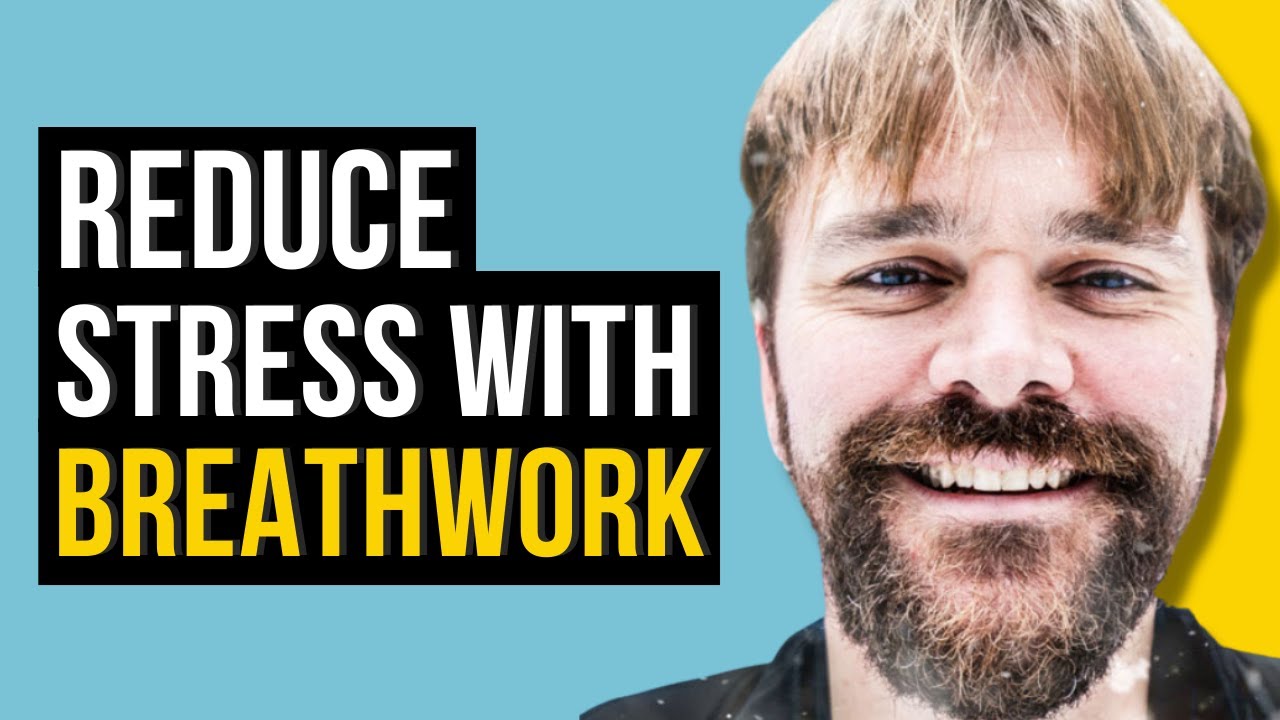
Breathwork instructor Chuck McGee III explains how stress can reduce mental performance by up to one-third, and shares a simple fix: a 4-second inhale, 6-second exhale diaphragmatic breath done for five cycles. The technique takes 90 seconds and works in real-time situations like meetings or traffic.
Chapters
Welcome back, Kwik Brain. Your question for today is, how do you breathe during stressful time? I mean, in real time. We've all heard that breathing helps with things like reducing chronic pain and stress and anxiety and different forms of depression, but how do you do it in real-life scenarios? And so I want to introduce you to our guest today. This is Chuck McGee III.
Hi.
And hello, Chuck.
Hello.
And we met actually through a previous guest of a past guest of ours, Jon Levy. And I had met you in New York City and he was hosting a little gathering and we did some breathing exercises, which was absolutely mind-blowing. And then we did some cold plunging also as well. So it was a very invigorating It's a good day.
I love those days.
It's a very, very, very good day. And so, let's go into this. Chuck is a— he's an instructor. He's a breathwork instructor. And, he's also since helped our team. We have our monthly all-hands meetings and he came to one of our meetings and guided all our team through some breathing exercises that were absolutely profound. To help us with our productivity, our performance, and even our peace of mind. And so that's the discussion we're gonna have today. Chuck, if people are watching this on video, they, they see us. Um, I wanna make this a little bit interactive also as well.
Mm-hmm.
And so maybe we could take people through, through an exercise and, you know, obviously everyone use their common sense as we have this conversation, you know, consult a health practitioner, probably not the best thing to do if you're in an ice tub at this time watching this, or if you're driving. Let's first talk about the show, Chuck. I know you listen to it. This show is about brain performance and mental fitness and living our limitless life and being better learners. What is happening right now with people and their breathing, and how is that affecting our cognitive ability?
Well, when we're under stress, we lose about 1/3 of our mental acuity. And like you, I've had a head injury, and I just can't afford to give that away in a stressful situation. I need to be all there and ready to make the best decision even in the most stressful times. So doing something like practicing active breathwork, or, you know, sitting in a cold plunge for a couple minutes a day can help you practice with stress safely and learn how to, you know, modulate your breath for the situation you're in.
Very, very important. You have this, and we've had— we've talked about breath. We've had James Nestor talk on the show. And, you know, you have this quote that I, that I'll always remember that you shared with us when we first met. And it was, you are your body's pilot, right? Not its passenger. That's correct. I just feel like that's so deep. What does that mean?
So much of what we do is reactionary. And a lot of people say, you know, practice makes perfect, but that's not true. Practice makes permanent. And if you're practicing and you're unaware of something, you find you're breathing through your mouth. We take 18,000 to 25,000 breaths a day. Over 10 days, that's up to a quarter million muscle movements. The more we make a choice, the more the brain wants to make the choice. So stepping into the pilot's seat and consciously moving the levers and gears that is your breath can allow you to really step in and pilot your way through the stress rather than just be buffeted around and end up where it And it's one of the fastest ways to reset, right?
I mean, we're talking about breathing and people think that they're doing it mostly unconsciously without any mindfulness. And it's like, why do I need to learn how to breathe? I've gotten this far in my life. But our physiology is definitely affecting our psychology and its performance.
Well, absolutely. So, if you're having a stressful day, you need to go into a meeting and you catch yourself breathing through your mouth, You're telling your body even before you think about it, that we are in a stressful situation and we might be in a little bit of danger. Our body can't separate the modern world from the past we evolved from. So it thinks we're in danger. So it's like, okay, heart rate goes up. If you're breathing through your mouth, your veins and arteries are constricting, your blood pressure's going up. None of those things help you perform. Those are all going to be a detriment. That's just front-loaded stress even before you get into that situation. So if this is where you're sitting, And then stress hits you, it's like a highway that's supposed to have 4 lanes open, but now suddenly has 2. It's just not as efficient as it could be. And, you know, people say, why do I need to learn how to breathe? The same reason someone needs to teach you how to eat correctly, how to have a proper mental monologue for yourself, how to do self-speech properly, because sometimes we just need a little help.
How to remember things, how to focus.
How to read faster.
And so you mentioned mouth breathing and I have this ritual at night where I do mouth taping to encourage nasal breathing. Why is it so important that we breathe through our nose?
That's what the nose is for, quite honestly. The nose is meant to breathe. It filters, it humidifies the air. As you breathe in, you get nitric oxide introduced to the air and the bloodstream. Nitric oxide is antifungal, antiviral, antibacterial. It's also a vasodilator. So it helps your veins and arteries, you know, open just a little bit more. It helps your blood pressure drop, your heart rate drop. So if stress is to hit you at then, instead of being a 4-lane highway, you're at 6. You can take that little bit of stress and still perform. And it's free training. If I can train while I'm asleep, let's do that. I'm, I'm a big fan of that. And it's, it's carbon dioxide. It's this gas that people say, oh, we should, we should not be having CO2. Well, CO2 is a good gas to have. It's what tells the oxygen to release from the hemoglobin and go into the bloodstream. If you have a good relationship with CO2, you're getting better blood flow to your brain. So, if I don't want to lose 1/3 of my mental acuity in a stressful situation, I have to make myself aware of the fact that I may be giving it away even before that stimulus hits me simply by breathing in a manner that stresses me out. So, if you're breathing in a stressed-out manner, You're sitting in a stressed-out manner, and then stress hits you. You've just harmonized with a really unfortunate event.
Even when people are online and people are suffering from screen fatigue or they're reading, Chuck, people will say— it's come to me— they say that, Jim, I want to practice your speed reading techniques, but I'm so tired. Reading puts me to sleep. And I look at their physiology, I look at their posture, I look at their breathing, Somebody told me once that the lower 1/3 of our lungs absorbs more of the oxygen into our bloodstream, but people are definitely not tapping into that. And so, a lot of times people are tired just because they're not getting enough oxygen maybe to their brain.
And, it's exhausting to be under low-grade stress all day long. If you're breathing through your mouth and you're sitting inappropriately and you're You're stressing out over the news, or I can't do what I want to do, you're exhausting yourself. But I think the exercise that we could do that would help everybody is, is just take that moment of awareness, check in with your posture, sit up straight, make sure your eyes are parallel with the ground, and then close your mouth. And one of my favorite exercises is smile big. Eyebrows up and swallow. Your tongue goes to the roof of your mouth where it should be. And in that spot, we take a nice, slow, deep breath in for 4 seconds. In, 2, 3, 4. And we exhale nice and slow for 6. Out, 2, 3, 4, 5, 6. Shoulders back. We don't want to wear them as earrings. In, 2, 3, 4. Out, 2, 3, 4, 5, 6. At the top of the last one, we're gonna stretch. In, 2, 3, 4, and stretch at the top. And as you exhale, let your whole body relax. Out, 2, 3, 4, 5, 6. 1, 2, 3, 4, 5, 6. 5, 6. That takes less than a minute.
It does. And I think people who are listening, they feel more consciously aware of their breathing, just like when we talked about their posture or maybe their facial expressions. When I was doing that also, it's a great reset for our nervous system. Now, do you recommend people do that throughout the day? You know, we want to make this as simple for individuals as possible. And We talk a lot about, we've had Dr. BJ Fogg and James Clear, a lot of experts on habits. How would you recommend people start this habit? And I want to do another exercise with you. I also have another question because my mind is going really fast. When you are exhaling, do you exhale out of your mouth or are you exhaling out of your nose or does it matter?
Only the nose. Well, if I'm talking and guiding people through, I have to exhale through my mouth. But Throughout the day, we should only be inhaling and exhaling through the nose unless, of course, you're like an MMA fighter or you're consciously using your mouth for a breathing exercise, then that's fine. But throughout the rest of your day, it should be nasal inhales and exhales.
And then, for the exercise, I mean, people could be more mindful and they're never going to get perfect at it. They're going to do it whenever they can and whenever they have some kind of prompt. Do you make this or when you're working as an instructor with clients, And students, do you set like time, hey, sometime in the morning, do this specific exercise? I know, I know on, on certain days you have a weekly check-in and you do breathwork with people. By the way, let's, let's mention that now also, how you do some guided breathwork online.
Every Sunday and Monday, 11:00 AM Pacific on Sundays and 9:00 PM Pacific on Mondays over Zoom. It's not free. It doesn't cost anything to show up but your time and attention. But I think those are your most valuable resources you possess. So if you're willing to share a little bit of your time and attention with me, I'll share a little bit of mine with you.
Hmm. No, it's interesting because knowledge and wisdom and skills, it's, it's not free because you have to pay attention and invest some of your time. So that's very generous. Thank you. Where do people go to find out more about that?
So my, my Instagram page has a permanent link to the, to the Zoom.
call.
That's @icedvikingbreathworks. That's pretty much one of the best ways to find it. And it's every week, even if I don't post, hey, it's happening this week, it's happening that week. And if for whatever reason I'm on a plane or I'm traveling, there'll be a note that says, hey, not this week. But I've missed very few in 4 years. @icedvikingbreathworks.
We'll put this link in the, in the show notes. Thank you for that. So do you want to walk people through a little exercise or a little practice? Sure.
What do you think would be most beneficial for your group? If we're talking about stress in real time and you don't want to give up that 1/3 of your mental acuity that you just shuffle off for that high emotion, one of the best things you can do is bring awareness to it. And that exercise we just did, but making it 5 breaths.
Mm-hmm.
And the prompt I use is standing up and moving. Set an alarm on your phone 5 times a day that reminds you to check in. It sounds a bit Pavlovian, but it works. Our phones are usually near us. It doesn't have to be a chime. It can just vibrate. And when your phone vibrates, you can check in with your posture, give yourself a stretch.
Mm-hmm.
And even in stressful situations, the more you practice this, the more you become familiar with it, the more likely you are to fall into it when you absolutely need it. So, the more we can practice this, when we're not super stressed out or when we just have a little bit of low-grade stress. So, it's actually okay to practice this exercise while driving. If someone cuts you off, practice this exercise.
Perfect.
If you're at a store and someone is talking to the clerk in front of you, practice this exercise. If you're at a meeting and someone is asking a very frustrating question that just is going to waste time, Practice this exercise.
I've actually done some breathwork with podcast guests. Sometimes it happens more than you think. Somebody's coming on, they get a little nervous or have a little bit of angst or anxiety before they get on stage or before they get onto a podcast like this, or even actors. Many of them deal with stage fright, but they have a love for the art. And so this is a great exercise to take people through. So let's imagine right now that our listener is going through— they start feeling the sensation of stress. Maybe they were cut off when they're driving. Maybe they have a big deadline at work. Maybe they have to prepare for an exam, or they're stressed about a quiz that they have to take, or some kind of external difficulty where they feel a little bit of threat. And we want people to get into maybe that parasympathetic, you know, more rest and digest, not whether in the fight or flight where their survival brain is holding them hostage away from their executive function and all that mental acuity and brainpower that they want to access. How long does this exercise take approximately?
Roughly a minute and a half.
Perfect. I want everyone to do this. If you feel safe, you're in a place where you could do this exercise, which is the point of it. Let's do this.
All right, so the first thing you're going to want to notice is where are your shoulders. If you're wearing them as earrings, you want to relax. And the easiest way to put your shoulders in the right place is just face your palms forward with your arms relaxed. You'll notice your shoulders drop back. We're going to try and take a nice, slow, deep breath in and out through the nose. We're going to be taking 5 breaths, in for 4, out for 6, and we're going to hold for 1 second in between. And we want these breaths to be deep diaphragmatic breaths. So you want that lateral expansion of your lower ribs just to make sure you're using And I want to clarify, because a lot of people are told when they—
maybe they watch YouTube videos or something— it's like belly breathing and they're blowing, you know, pushing their belly out. But you're, you're talking about this lateral expansion. What's, what's the difference?
So imagine an umbrella is upside down in your body, and when you take that breath in, you want that umbrella to open and expand that whole cylinder in a 360-degree circle. It's not just the belly and the chest, it's the ribs, it's the, the back, and it's that whole cylinder from the bottom of the belly up to your your collarbone. Take that nice big breath in. We don't want our chest to rise. We want our chest to open laterally as well. So, tongue to the roof of the mouth, eyes parallel with the ground. You can even wiggle your fingers by your eyes to open your peripheral vision if you'd like. That'll help relax you just a little bit more.
Oh, I like this.
Yep. So, relax your arms. And so, you're sitting here and then you rotate your palms forward so that your shoulders go back, And we're just going to breathe five breaths. So fully in, two, three, four, and out, two, three, four, five, six.
Hold.
In, two, three, four. Out, two, three. 4, 5, 6, hold. In, 2, 3, 4. Out, 2, 3, 4, 5, 6, hold. In, 2, 3, 4. Out, 2, 3, 4, 5, 6. Hold. Last one. In, 2, 3, 4. And hold it at the top and stretch real big. Loosen those muscles up. And on the exhale, nice and slow, 2, 3, 4, 5, 6. And just check in with your body. Where is your mind at now? How does your body feel? If this is something you'd like, this is where you become the pilot. And 5 times a day, step into this place, check your posture, check your vision, slow the body down. We've nicknamed this exercise stress venting because we don't need to backpack it with us all day long. We can take the opportunity to check in with ourselves, to let that little bit of stress go and retain The best functioning ability of our mind throughout the day.
I love that. Thank you, Chuck. That's a real gift. I want to get feedback from everybody who's listening to this, or if you're watching it on YouTube, I'd love for everybody to take a screenshot of this episode and you could tag Chuck, you could tag myself on social media so we get to see it. And how has your experience been? How has your experience been with this? I'll repost Some of, some of our favorites. And, you know, as always, we gift out a copy of Limitless every single week to our community. And this is just another example, a very simple tool that you could use. Chuck, final question, is the ratio important? We hear, I know you did inhale for 4 and then exhale for 6. Past guests have talked about box breathing, doing something like 4 in, you know, inhale for 4, hold for 4, exhale for 4, hold for 4. You know, Wim Hof has been on the show and his breathing exercises before he does his cold therapy. Some of our experts have talked about going to bed and doing 4-7-8.
That's a great one too.
Why the differentiation? And is it important or is it more important that you're just present and you're breathing through your nose and your physiology, your shoulders?
The ratio I like is to attain a parasympathetic breath, Your exhale needs to be 1.5 times longer than your inhale. So that's the ratio I use, 4:6. I mean, you can even do 6:9 if you'd like. You can play with that ratio and find that number that's right for you. There is no dogma here. This is a tool. This is a nice tool to help you kind of enter the parasympathetic, or not even enter, just influence the body to push the needle a little bit further in that direction. And, and it's, it's nice. You can do it anywhere, like the anxiety breath, 4-7-8. Well, anti-anxiety. It's not one that brings it. It's one that helps get rid of it. That's great. If that tool works for you, use that tool. Box breathing, box breathing can bring you up or bring you down depending on the intention you put behind the breath. So people can use it to put themselves to sleep, or they can use it to really motivate themselves. And that's where you are the pilot. That's where the intention is so vital. And the opposite of that's true. If you want to give yourself a little energy, open your mouth and take a couple breaths with your mouth and see what that does to your body. The only way to become the pilot is to know what the knobs and levers and switches do. And the only way to do that is to play.
We talk about in our work that your brain is incredible technology. It could do wondrous things, and yet it doesn't come with an owner's manual. And I would say that That also includes the rest of the body as your brain is part of your body. It doesn't come with that owner's manual. So I want to thank you for, for giving us those pages today. And thank you for being on our show.
My absolute pleasure. Thank you for having me.
You want to give out that website again for people to find out more, or should they just get it on your Instagram?
Sure. My website is the same as my Instagram, icedvikingbreathworks.com. If you want to know the story behind it someday, I'll tell you. But it just happened to be the name that worked for me. So yeah, Instagram is at Iced Viking Breathworks, and my website is Iced Viking Breathworks. And if that's too big, just put in IVBW, and it'll take you right there.
I want to thank you for your time and your talent. As always, to all our listeners, I want to thank you for listening to this and being on this path. I believe that we're all on this journey to realize and reveal our fullest potential, that there is a version of ourselves that's patiently waiting. And the goal is exactly what we're doing. We show up every single day, we're learning, we're doing the work, and one day we'll get to meet that individual, you know, that we are the superhero that we've been waiting for. If you're watching this on video, you see my shirt where I get to work with— I love training superheroes. And Chuck, you know, thank you for unlocking our powers. Thank you for the cape that you wear. As always, all the show notes will be at jimkwik.com/notes. Make sure you subscribe. And if you got out of this conversation, make sure you follow Chuck and join him for his, his weekly breathwork. And also make sure you leave a review. That's a way of thanking us and be able to share because your stories will influence other people to claim their limitless life. Chuck, thank you so much.
Thank you.
Hi, Kwik Brain. It's your brain coach. I want to thank you so much for watching this video. 3 things to do. Number 1, make Make sure you share this because when you teach something, you get to learn it twice. Update your learning so you can update other people's learning as well. Number 2, make sure you subscribe to this channel so you don't miss a thing because if you miss a video, you miss a lot. And finally, make sure you hit that bell so you're notified and you find out when we put out the latest and the greatest. One extra thing, if you want really close attention, then text me. Here is my phone number.
310-299-9362.
Did you remember that number? 310-299-9362. Shoot me a text and we'll stay in touch. Ask me your burning question. And I wish your days be full of lots of life, lots of love, lots of laughter, and always lots of learning. I'll see you in our next video.
More from Jim





The Library of Minds: Brain Coach: How to Stay Sharp When AI Does the Thinking | Jim Kwik





