Sleep, Eat, Move & Think Better with Dr. Greg Wells
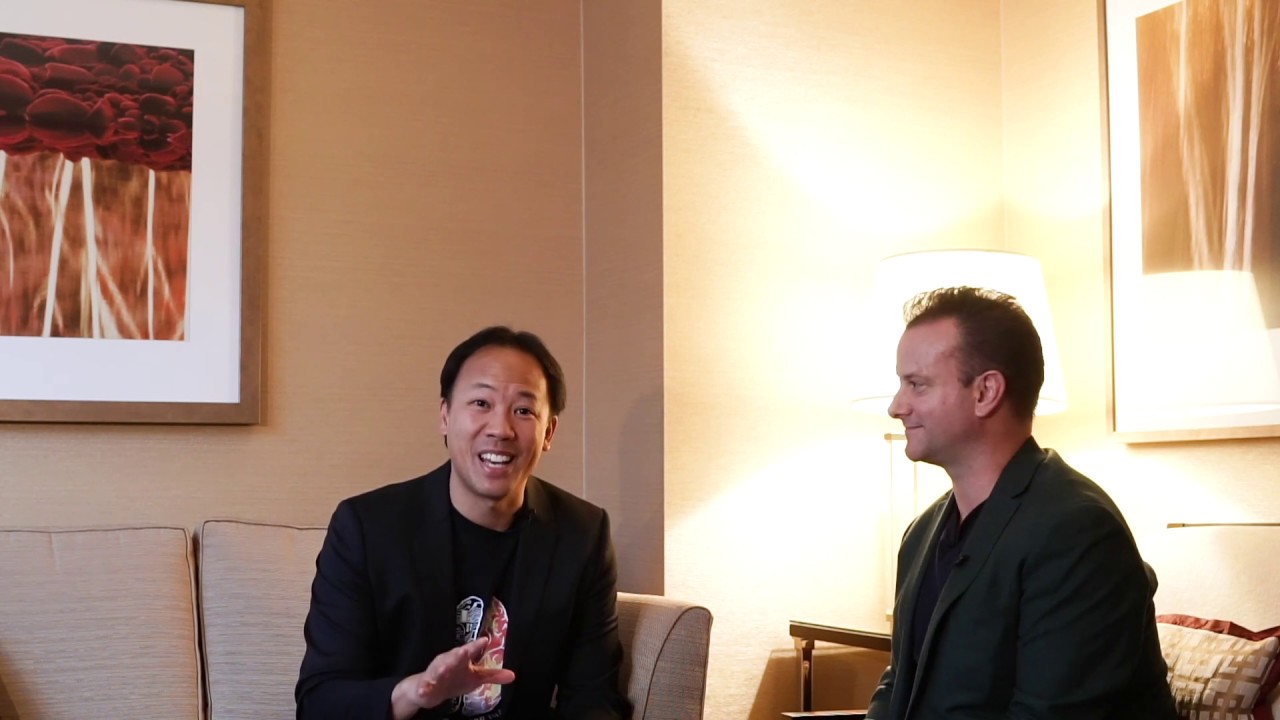
Dr. Greg Wells describes the Ripple Effect, a four-pillar framework linking sleep, nutrition, exercise, and thinking. He details a nightly routine: hot bath, cold shower, magnesium, meditation, and fiction reading. Even 20 minutes of movement boosts mental function for hours.
Chapters
Welcome back, Kwik Brain. So here's your question for today: how do you create a ripple effect to learn better and live better? I mean, who doesn't want that at all, right? And I'm really excited to have today Dr. Greg Wells here. Thanks for being here.
Hey guys.
Thanks for being here, buddy.
Thanks, buddy. Appreciate it.
Now, Greg is the author of this new book, The Ripple Effect. I highly recommend everyone pick up this book.
He also wrote a book previous, Yeah, it was called Super Bodies, and that one was all about high-performance sport, and then this one is all about how we can optimize our lives.
And that's really your expertise, is in performance. Yeah, absolutely.
Trying to take the research from the extremes of human sports performance and medicine and make that what all of us can use to optimize our lives.
And that's really our audience of Kwik Brains, that's what they're all about. They want to be faster, smarter, better.
Got it.
And what we're doing is providing people really with an owner's manual for that. Now, we happened to be at an event speaking together. We were doing keynotes. Together at this event about really about elite mental performance. So I'm really excited to go into this. Now, how did this all start with the ripple effect, and what is a ripple effect?
So it all started about 6 years ago. I was young family, super busy moving houses, getting ready to go commentate the Olympics, and my daughter got a cold at daycare. I got the cold, and I was so run down it went straight into my heart. I ended up in the cardiac ward at Toronto General Hospital where I work, which is awesome. Awesome, checking yourself in your own hospital. And while I was in the cardiac ward, I noticed that the alarms were going off and there's lights everywhere and no one's sleeping. And then they bring us food, and the food is exactly the type of food that causes heart disease. Like, they're literally killing us as we are— giving us heart disease while you're in the cardiac ward. And I started doing research on my iPad while I was in the cardiac ward, so I could log into the hospital network. I was like, how do I make sure I never, ever, ever come back here? I started to read about sleep and cancer, sleep and heart disease, sleep and depression, and the links between food and how you can use food as treatment for physical diseases. Now there's even nutritional psychiatry that's coming out where you can use food to treat mental health disorders, and how you can use exercise to heal the body. Then obviously I learned about meditation and how meditation reduces inflammation. I realized that actually you have to have this holistic approach to getting out and never, ever, ever coming back. I called ripple effect, and that was the start of a crazy journey.
It's not just one thing at all. Everyone always wants to know what the one thing they could do to just have the best brain of their life, to be able to think clearly, to be able to perform and have unlimited energy.
100%. You know what? It's fine. One thing will help you, but what I think we miss sometimes is that it's a holistic approach. It's a lifestyle. I don't think that you have a great lifestyle or success comes from a great lifestyle, right? Instead of success, often people think, I'm gonna get rich, then I'm gonna start living properly. It's actually the other way around. You live properly, then you have success. And so, if you sleep better, for example, you're gonna be able to eat better, because sleep regulates leptin and ghrelin, 2 hormones that control your appetite and how full you feel. Then if you eat healthier, because you're able to make better decisions 'cause you slept well, you're gonna have more energy. If you have more energy, you're gonna be able to exercise. If you exercise, you're gonna be able to sleep better. And all of that is the foundation for being able to be mentally healthy in this era where 20% of our population has depression, anxiety, and other mental health challenges, I actually think we radically need a new approach to how we're doing things.
I know our community can really appreciate this message. This is about synergy. It's about momentum. Is that what the ripple effect is?
100%. When you get this momentum, when you start making little micro wins on a daily basis, 1% gains, which is 15 minutes of your day, that's 20 calories, 15 minutes more sleep, Everything exponentially gets better in your life, and it enables you to do things you never imagined you could do before. Like, if you sleep well, when you sleep is when you encode information from the day. That's when you learn, in the first 4.5 hours of sleep, the first 3 sleep cycles when you're in deep sleep. That's when the neurons grow. That's when new connections are made between neurons inside the brain. When you eat properly, when you have healthy foods, fresh, whole foods, I believe in organic, as real as you can, no processed foods, minimal sugars. When you eat that way, your brain actually creates the neurotransmitters that help you to concentrate and to focus. When you exercise, you activate the centers of your brain that you use to learn, to be creative, to problem solve. We now know that walking leads to creativity.
Hmm.
Walking in nature improves problem solving. One single exercise, about 20 minutes, improves mental function for 15 hours. Like, why are we not starting every single school day with kids getting physically active? Imagine what we could do. Then all of those things compound to help us prevent, treat, reduce mental health challenges, mild mental health challenges like depression and anxiety. More severe mental health challenges like personality disorders and schizophrenia require a very different approach, but for the mild to moderate mental health issues, this is how we have to approach it.
Okay, so let's break this down and deconstruct this. How many elements are here? 4.
Eat, sleep, move, think.
And then where would people start? You know, Kwik Brain really is about those things. You know, it's, it's about cognitive performance, which this conversation is all about, because this is what controls everything. It's about, it's about being quick because people are so busy nowadays. They want things in bite size. And then also practical. So, and I know you, you, you know, as a practitioner, you want to, you know, where the rubber meets the road for those 4 areas. Where can someone start? What do you recommend?
I truly believe that sleep is the foundation for everything. So first and foremost, I want people to think about sleeping, and I think the single fastest hack to improve sleeping is defend your last hour. Please, please, please, for 1 hour before you go to sleep at night, create a sleep routine that enables you to downshift, to relax, get away from your devices, calm down, take a hot bath, meditate. The hot bath, cold shower combo is awesome for triggering the release of melatonin. Start with sleep.
I love that. Wait, let's walk through your last hour of the day. So, because everyone has their— we talk a lot about morning routines, you know, the first hour of your day. So what's the last hour of your day look like?
3 components when I do this right. The first one is hot bath, cold shower, because I want to relax. I want to get into an environment where I'm not tempted to look at my phone because I'll electrocute myself. And the hot bath enables you to relax, and the cold shower decreases your body temperature, triggers the release of Now, do you put anything in your bath? Epsom salts, absolutely, especially if I've worked out. I do a lot of Epsom salts.
And the magnesium is good for—
Absolutely. Magnesium is great for helping you to sleep. And I also had my blood work done, comprehensive blood work. I found out that I was low in magnesium, so it's actually one of the mechanisms through which I increase my magnesium intake.
And it's good absorption transdermally, like through your skin.
Yeah. You know what's amazing is a lot of people don't realize we actually can absorb a and release a huge amount of toxic minerals and vitamins and you move an enormous amount of material through your skin. It's a huge organ. It's not necessarily just through your stomach that you take in nutrients.
Yeah, but people put patches all the time, nicotine patches and everything, but imagine what people are putting on their— all the chemicals. I read somewhere women put on over 100 chemicals or something a day. Just on personal care products. It's interesting. How long is it, a certain amount of time in a bath?
I like about 10 minutes. And so if the 10 minutes followed by the cool shower to cool you off, stop sweating, the decrease in body temperature triggers the release of melatonin. Melatonin is the hormone that controls sleep-wake cycles. So naturally increasing melatonin production, I think, is a really good strategy for people.
Okay. So you have your hot bath with the Epsom salt, you take a cold shower. Yeah, for the contrast. And then after that?
Meditation, 20 minutes.
Really? Okay.
Yeah, so I love to—
Everyone has a different process for meditation.
Yeah, I just, I'm really straightforward. I just use Headspace. It's really easy. They've got a sleep pack that I've got, 30 episodes. I'm working my way through that. I do it over and over and over again. In the morning, I have a different routine, but at night, the Headspace pack is easy to do. If I'm traveling, and I'm learning and becoming better at it, that I don't really need it anymore. But that's how I started, and I find that clearing my thoughts, letting go of the day, stopping ruminating thinking, stopping replaying what was going on, creating a barrier between the day and when I want to fall asleep, meditation helps me do that.
It helps you to transition in those brainwave states from beta to those lower brainwave states.
100%, yeah. You want to go from beta waves down to alpha waves, which is sort of reflection and contemplation, and then you let that go and you end up down into, ideally, obviously when you're sleeping, delta waves, and then ultimately into deep delta waves. That's the goal.
Amazing. Now, do you happen, when you're doing your meditation, to fall asleep from there? Is that your intention?
You know, it's really weird, not very often for some reason. I think that I'm trying now through focusing on breath, through focusing on releasing tension from all the different parts of my body, really activating— you can basically feel your vagus nerve come online, right? You can feel your parasympathetic system take over once you release all of that That's the scientist overthinking meditation in the sleep routine, but of course you want to try to let that go. But no, I don't have trouble falling asleep when I'm meditating. The next thing I do is I read fiction.
Okay.
And whenever I read fiction, then it's either a minute and I'm asleep, or it's about 20 minutes and I'm asleep, but that's the next step. Nothing industry-related. I don't like reading anything that's a learning opportunity at that point in time. I like to read something that creates almost like a dream state in my brain. Which then makes it very easy to fall asleep quickly and deeply.
Very nice, very nice. Now, by the way, just because I want to spend extra time on sleep since it's like the paramount, the lead domino, if you will, of the ripple effect.
Yeah, absolutely.
Your environment. Tell me about yours. Do you have like a sleep sanctuary? Is there certain things?
Yeah, we call it the sleep cave.
Sleep cave.
It's taken a lot of work.
Okay.
So blackout blinds. We invested in blackout blinds for the entire top 2 floors of our house.
People don't realize the effect light has.
Like, even a tiny bit of light filtering into your room through a crack in the blinds, through an alarm clock on your bed, all of that has an effect.
There was a study where they put a little red light behind somebody's kneecap, and you have these photoreceptors on your body that kept somebody up.
Yeah. As soon as the photoreceptors are activated, you literally stop the production of melatonin, which makes it almost impossible to fall asleep quickly and deeply. Another hack for people, by the way, is to set a bedtime alarm, not a morning alarm. You need to actually set an alarm to get yourself going to sleep at a consistent time every single night so your body knows when to release the hormones that enable you to fall asleep.
So even on weekends, you recommend people to stay on that schedule because so many people want to sleep in in the morning or go to bed—
Yeah, absolutely. The more we stay consistent with it in my home, the better everybody is. It's a really important factor.
Now, we probably just, as people are listening to this, They have young kids, they have the work. Now this is ideal situation, obviously.
It is, but I've got 2 little kids. I've got a 4-year-old and an 8-year-old, and we only started doing this in my house when my daughter Ingrid, about 3 or 4 years ago, got really sick. She got viral encephalitis. She was hospitalized. She nearly died. She had seizures. There were some severe challenges with the way that her brain was working, and so we instituted all of this about 4 years ago, and that was the foundation of our entire family starting to do it better. We did it under the worst circumstances, young kids, Early in our careers, my wife's a chiropractor, acupuncture, massage therapy, athletic therapist. Her career was launching. Mine was exploding. It was the worst time ever to start working on sleep, and that's when we had to do it, and it's completely revolutionized our lives.
That's interesting, because when things are like that is when you really have to ground and invest in self-care.
Absolutely, yeah.
For that. People say, oh, I'm too busy to meditate for 20 minutes. That person's got to meditate for an hour. That person really just needs it more than anybody.
As soon as someone tells you they don't have time to meditate, that's the exact I'm a person who needs to meditate, like, way more. It's so important.
And no screens?
No screens for an hour at least before you go to sleep. And I don't think we make great decisions late at night anyway. I don't think you're being hyperproductive unless you're a night owl, and some people are. But I actually don't think that it's a great way for you to be spending your time. A good analogy is I used to work in sport, in Olympic sport, and the '80s and '90s, it was a high-volume training philosophy. You just get— who could do the most training for the longest made the Olympics.
Mm-hmm.
And it was basically whoever didn't get injured was the one that, you know, ended up on the podium. And now it's completely different. And back then, you only were able to perform at a world-class level maybe once a year, maybe twice, and really only every 4 years at the Olympic Games. It's completely different now. It's all about recovery and regeneration. And as a result, athletes are setting world records repeatedly throughout the course of the year. Their careers are almost twice as long as they used to be.
That's amazing.
People aren't getting injured. They're having completely different lives as a result. And I think that's a good metaphor for us to adopt Especially in the entrepreneurial world where we're, you know, the culture right now is go, go, go, go, go, hustle, hustle, hustle, work, work, work, work, work, which is fine. You got to work hard, but I think there's a way of working smart, and there's a way of working really, really hard. And I think that you have to work smart if you want to win. It's a marathon. If you want to win the marathon, you've got to work smart, not hard.
Mm-hmm. That's like, that's like our mantra with the show.
Oh, really?
Perfect.
I didn't know that.
So now that you have sleep, what would be the The next phase from there?
Next step is eating well.
Okay.
It's just so important.
Because what you eat matters.
It's the fuel. Like, I've got this huge nutrition textbook at my house from university, and the very first line in it is, nutrition is the foundation for human health and performance. And I work in exercise medicine, and we are discovering that you can use foods to prevent and treat chronic illnesses. You can use foods to prevent and treat mental illnesses. Like, it's just revolutionizing our world right now, and the whole system is set up to try to feed us really awful food in order for people to make, or companies to make a lot of money, and I think we need to fight back and do things very, very differently.
So what are some of the things that people should be aware of, like the high-return things that they can do for them and their families?
Super simple, I think. Eat real food that you recognize as food. Like, literally, it's that basic.
You mean the processed food where you can't pronounce half the ingredients?
If it's in a box, It's not food. If you showed that to— actually, try it. Show processed food to an animal and they won't eat it. If you can't recognize it as an actual food, you really shouldn't be eating it.
If you actually look at the production, the box or the bag probably costs more than the actual food inside.
If it can survive for a year on the shelf, you probably shouldn't be eating it. It just makes really basic sense, right? Eat real food that you recognize as food. I would recommend that people invest in actually making it themselves, and I know that that's hard because people are super busy, but we've done it in such a way that we block it. We do Tuesday night, Thursday night are food prep nights. So we chop all of our vegetables, we cook all of our protein, we put it in Tupperware, we make the lunches and dinners. Sunday nights we do breakfasts for 4 days in a row. Like, we prep all the smoothies, we do the overnight oats, and that way it just makes it super simple, super fast, because you have to control your environment, because when you're tired you don't make good decisions.
Yeah.
And so if it's in your house, you or someone that you love will eventually eat it. A little idea from Dr. John Berardi and Precision Nutrition. So your house has to be a sanctuary of healthy food for you.
Yeah.
I truly believe that.
I mean, just like with your sleep sanctuary, you have your cave there and also the kitchen, and you set up the environment to be able to promote good habits.
Excellence is not an accident. Excellence is an outcome of environment, practice, consistency, and you want to just make that environment Like, as perfect as you can. Control your environment and excellence is inevitable.
Right. So people wonder why they have— if they have the candy and the Cheetos, everything there, they're gonna eat it eventually. And then you have to— you also have to use willpower every single time. It's kind of like when people bring out— let's say you don't eat bread or something, and they bring it out to the table and they just— it just sits there and you have to like say no 30 times as opposed to saying no once.
Absolutely.
No bread. Yeah.
And every once in a while have a treat. Like, I'm not saying you have to be perfect 100% of the time. If 90% of the time you're doing The right thing, you're ultimately going to win over time. But I believe in your workplace being the optimized environment and your home being the optimized environment. And if you want to do something special, then you know what? Go out for dinner, have an incredible dinner, have a glass of wine, have dessert on birthdays, right? Like, don't stress out about that. It's a normal part of life. That's totally fine.
And that stress makes sense too because there's so many people who are so obsessed about their diet and that, that Counteracts any benefit they're going to get.
Exactly, because it dumps adrenaline and cortisol into your system, which instantaneously makes you make bad decisions about food because you're in a survival mode. And in survival mode, you need energy in order to run or fight from an evolutionary perspective. So you cannot make good decisions if you're operating like that.
And just another commentary on just the ripple effect, how everything is connected.
Absolutely. And we don't often make the connection between food and the brain, but I would love everyone just to contemplate, like, in your afternoon, if you have a time of day that you struggle with, I want you to deconstruct what you ate a couple hours before. So if every afternoon, 2 o'clock in the afternoon, you have brain fog or you're struggling, okay, well, what are you eating for lunch? Because that's probably influencing how you feel an hour or 2 later. Change that and biohack your way into feeling amazing all the time. You should have great energy all the time.
Right.
Like, we're not designed to be tired. We're not supposed to be tired during the day. You're not supposed to feel sluggish. You're not supposed to feel sore. You're not supposed to— you're supposed to have energy. You're supposed to have clarity. You're supposed to have the ability to think and be creative. That is a normal state for humans. So if you're struggling with that, just reverse engineer what you want and find the foods that give you great energy for long periods of time and also that make your body better. So it's not just energy because blasting yourself with some energy drink could do that, but if If you have great energy and you feel healthier and your body composition is optimizing and you have no aches and pains and you pay attention to you as a complete human, and that will really guide you on the right decisions to make.
So we got sleep, we have food, what's next?
Exercise.
Okay.
And that's the one no one likes to talk about, but it's the probably—
You had everyone up to this point, right?
Yeah, now everyone's like, ah.
Like, I love this guy, now I have to move.
Keep listening, it's gonna— it's really, really cool. So basically—
You got sleep and you ate the right food, and now this food gives you energy.
Absolutely, yeah. And so you're sleeping well, your body's healing, you've got growth hormone flowing through your system, your body's healing, you're recovering, regenerating, eating healthy, you've got lots of energy, your health is improving. The next thing we need to do is optimize our body and mind. And I know your audience is really interested in learning and creativity and mental optimization. I think people make the error of thinking that Mind and body are separate. Brain and body are separate. And if you look at an MRI scan of the brain, there's the higher-level thinking centers. You've got your emotional center, the medulla, which is breathing and heart rate, the movement center at the back of the brain in the cerebellum. And they're all connected to the body through the through the nervous system. Like the immune system is connected to the brain. Your muscles are connected to the brain. Your circulatory system is connected to the brain. Like everything is connected to the brain. It's the one and the same thing. So if you move. Your brain functions better. I've got this incredible video that I found from Nature, the journal Nature. It's an incredible journal, and they did a—they were able to image the brain of a zebrafish when it was still and it's dark, and then it starts to swim and electricity shoots through the entire brain. Then it stops swimming, the brain shuts off again, and you start swimming and the brain lights up. And that relationship is true for. Every single species on the planet, including humans.
With meditation, it's great mindfulness practice because focus is a— it's an exercise. It's a muscle.
Absolutely.
And most people are training their distraction muscles. You know, you and I have had this conversation about people, this myth of multitasking. People think they're doing 3 or 4 things at once, and they're task switching.
Yeah, they're task switching, which is incredibly— it's exhausting physiologically. Activating one part of the brain, shutting it down, activating a different part of the brain. You have to shift blood flow, you have to shift fuel. Our brain uses oxygen and sugar to work, so you've got to move that around. And as we do more task switching, we become more fatigued.
Yeah.
So I strongly believe in single-tasking. One of the other really interesting things I learned recently around that is from Dr. Brynn Weingart, and she mentioned that whatever you are doing during the day is changing your brain. You are— your neurogenesis and rewiring of the brain is happening all day long regardless of what you're doing. So if you do good things, if you focus, if you concentrate, if you learn, if you read, if you study, if you practice, then your brain is wiring yourself in a certain way. If you binge-watch Netflix, your brain is wiring itself in a certain way.
Mm-hmm.
So whatever you are doing is changing your brain. So the more good habits, the more good rituals that you can create— we learned this weekend, I think the term is is rituals, not necessarily routines, which I really like because it's more intentional. We can literally rewire the way our brains work at any time of our lives, regardless of our history, regardless of our past, regardless of the things that have happened to us, regardless of our current health status. You can always improve and change and grow.
We always have that power, and you transform your brain, you transform your life.
It's— imagine what is possible if you Read a biography every day for 20 minutes of all of the greatest people in history and what your life would look like in a year versus if you spent 20 minutes mindlessly scrolling through cat videos, which can be hilarious from time to time. But how would your life look in a year if you adopted that simple practice of learning from the masters for 20 minutes a day? You wouldn't recognize yourself.
Because little things done consistently add to big things. Consistency compounds.
Yeah, and what did John Maxwell say? Consistency compounds. Exactly what you just said. That's just why it triggered in my brain. We heard that yesterday from one of the leadership gurus from the last—
And the commonality with John Maxwell, they just prioritize learning and that transformation, and they don't expect just to consume it. You know, knowledge is not power. It has the potential to be power, but until we apply it— and what I love about this conversation so much, Craig, is that There's a science to it. There's a science to sleep. There's a science to the food that we eat. There's a science to exercise and exercise physiology. There's a science to thinking and neurogenesis, plasticity, but there's also an art. Yeah, you know, when we're talking about that joy, there's a science to success, but there's an art to this happiness also as well, because you can personalize it, because not everything is for everybody, but you can make it your own too.
Yeah, totally. I love the intersection between art and science because You know, the art is the practice of how do you actually do it, but the science is the rationale behind, you know, why does it work, what do you actually choose to do. And I read Leonardo da Vinci's biography by Walter Isaacson recently, and one of the things I took from that— and the only thing I got an A in my undergrad was art history, so I'm kind of into this stuff— was that he was an artist, but he was also an architect, he was also into physics, he was also into digging up bodies and dissecting them to learn anatomy.
Hmm.
And it was the fact that he was a polymath, he was constantly learning. Like, the Mona Lisa was in his bedroom unfinished. He was still working on it, and that's the game. That's how you craft a masterful life, and it's the art and science and never giving up and constantly learning and never stop improving.
I think that's the message for everyone watching today, is make life your masterpiece. It all starts up here. How do people find out? How can they stay in touch with you? I highly recommend both your books.
Right on. Thank you very much. The website is drgregwells.com, and all my social media are @DrGregWells.
Perfect. What I would challenge everyone to do here is, because nothing's gonna happen if you just listen to this or watch this video and nothing, nothing changes, I would encourage everybody to take a screenshot of this podcast episode or of this video, post it on social media. And the reason why is because when we share something, we learn it better. And I would encourage everyone in the description of your post to post your big aha.
Mm-hmm.
Out of these 4 things, what was the area that you're neglecting maybe the most, and what's one action you're gonna take Inspire other people to do the same. And as always, you know, tag both of us there. I will share my very favorite and repost them as well.
Right on. Thanks, guys. Really appreciate it. Great to see everyone.
Thanks, buddy.
Thanks, buddy.
More from Jim





The Library of Minds: Brain Coach: How to Stay Sharp When AI Does the Thinking | Jim Kwik





