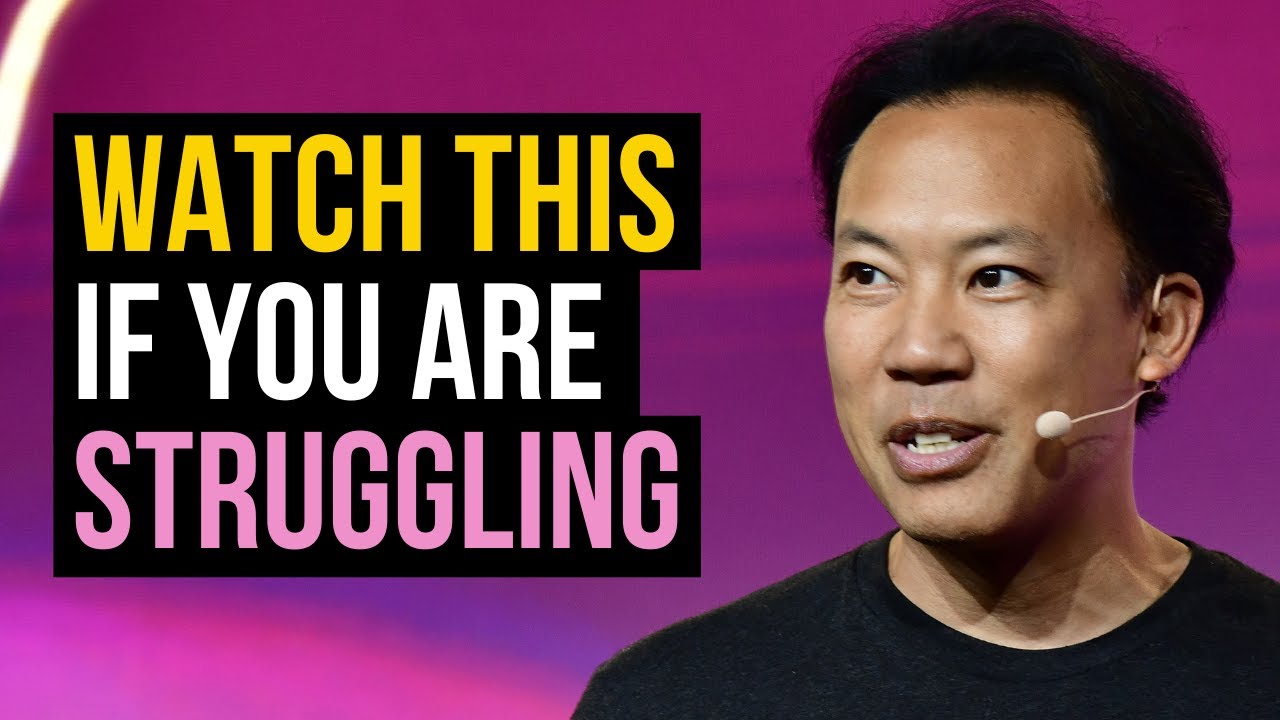
In this live keynote, Jim Kwik opens by energizing the audience and prompting them to pair up with strangers. He shares a formative childhood brain injury that left him “broken” – poor focus, memory, and self‑esteem – and describes how that label shaped his limits for 13 years. Using the Japanese art of kintsugi as a metaphor, Kwik argues that adversity can become strength through “post‑traumatic growth.” He introduces his practical self‑care framework MEDS (Meditation, Exercise, Diet, Sleep) and extends it with MEDS Rx (Relationships, Extra). Kwik then launches a 20‑question “My Brain Animal” quiz that prescribes personalized brain‑boosting actions. To embody the kintsugi theme, he leads an interactive rock‑paper‑scissors game where losers raise their hands, winners “pour gold” (Gratitude, Optimism, Love, Determination) into them, and the most resilient participant receives a copy of his book Limitless. The session closes with an egg metaphor: an egg broken from the inside signals new life, emphasizing inner greatness. Throughout, Kwik blends personal storytelling, actionable habits, audience participation, and motivational calls to action.
Chapters
The one, the only, the great Mr. Jim Kwik.
Woo!
All right, can you stand up, please? You're like, oh, he's one of those guys. How many of you have seen me present on this stage before? Amazing. What I'd like everybody to do is to grab a partner that you do not yet know. Introduce yourself, grab a partner you do not yet know. Introduce yourself.
Move around. You need a partner. Raise your hand if you need a partner. Raise your hand and find somebody else. Raise your hand if you need a partner.
In the back also.
Repeat after me.
Shh.
Repeat after me.
Shh.
All right. It's been a few years since I had an opportunity to be here with all of you. How many people, life has changed over the past few years? Yes?
Yeah.
And I love this theme. For me, I published a book called Limitless. I also had a baby a few months ago.
Also, thank you.
All right, I'm done, thank you. But what I wanted to talk about is this question that Roman had for us last night. Do you remember a time where you felt really broken? You know, where your heart or your mind, you felt shattered? And, you know, I don't want to turn this into a therapy session, but for me, it was 1978. I was 5 years old. I was in kindergarten class, and there were these sirens outside of these fire trucks. And as a curious kid, or kids, we all grabbed our chairs to look outside the window, 'cause we were very tiny. And I had an unfortunate accident where I went headfirst into an iron grate radiator. There was a lot of blood and rushed to the emergency room, and I don't recall a lot of it, but my parents said I was never the same afterwards. Where I was very playful, very creative, very curious, I became very shut down. In school, I had poor focus, poor memory. I had processing issues where teachers would repeat themselves 2, 3, 4 times, and I would learn to pretend to understand to get by, but I didn't really understand. When I was 9 years old, a teacher came to my defense because I was being teased pretty harshly one day, and she pointed to me in front of the whole class and said, leave that kid alone. That's the boy with the broken brain. And so, you know, those labels become often our limits. And good intentions— people could be very sincere, but also be sincerely wrong. But I know what it feels like to be broken. So I struggled for the next 13 years with learning. I would work harder than everybody else for very little results. And it was extremely frustrating. And when we're talking about— it's interesting when it comes to, like, physical pain or physical injury, we often think it's more dramatic than mental or emotional pain. It's easier sometimes to say, I hurt my knee, than it is to say, my spirit is broken, right? Or, my mind feels shattered. And so, having had that experience, I also know that when you're thinking about the theme here, kintsugi, it's one of those things where it's like, how many people believe with challenge comes change? Raise your hand. That through struggle, you get strength, right? That adversity could be an advantage. I don't know many, many strong people that had an easy life. You know, we hear a lot about post-traumatic stress. We don't hear a lot about post-traumatic growth. You know, how many of you have had adversity, something you wouldn't wish upon anybody, but you found something inside from that? You know, you found a strength or a trait or a mission, right? And it's interesting, you know, my biggest 2 challenges were learning and public speaking, 'cause I never had the answer. And the universe has a sense of humor, right? 'Cause all I do is like public speak on this thing called learning. So I wanna share you— I wanna share with you a couple of things that I learned in this journey. And part of it is just giving yourself opportunity to give yourself your medicine, right? Your meds, M-E-D-S. Your brain controls everything, right? And I believe if knowledge is power, learning is your superpower. So MEDS, how many people know this acronym? So the M is meditation, right? To be able to heal your brain, meditation. I see Emily. So my meditation coach, Ziva. So that's the M, that's my go-to. The E in MEDS is exercise. You know, some of you doing that with Jules, you know what I'm saying, with Kenergy. As your body moves, your brain grooves. I'm gonna get you to move your body a little bit here today. The D is diet. How many of you have Learn my favorite brain foods. Remember, avocados and blueberries, and you learn how to be able to memorize that list. And then the S is sleep, right? And these are things that you could do that is free, that you could do to mostly heal yourself. And it's interesting, 'cause if you do MEDS Rx, the R is relationships, and that's what we're doing here. 'Cause how do you become limitless in a limited world? We do it together. And the X is the extra. So, I actually built, I created a gift for all of you. I just launched it. It's a brain code quiz. It will take your brain, and you'll take this 20-second, 20-question quiz, and give you a prescriptive in terms of how you could bounce back, literally adding gold to the areas where you feel weak. And that's at My Brain Animal. It's kind of like you choose your own adventure, like your favorite Game of Thrones character, right? So, it's My Brain Animal. But what we're gonna do right now is a quick exercise. In this, we're going to play a game that you've all played before, and it's going to be a metaphor and a symbol for damage, and healing through damage, and adding gold, and making it beautiful, and where your scars are a symbol of that you survived, right? And so what I want you to do— how many of you are familiar with this? It's rock, paper, what?
Scissors.
Scissors. So you're going to play rock, paper, scissors, but we're going to do something different if you've done this with me before. What you're going to do with your partners, you're going to go 1, 2, 3, and you're either going to do rock, and rock beats what?
Scissors.
Scissors. Scissors beats what?
Paper.
Paper.
And paper beats what?
Rock.
And this is— it's interesting because sometimes when you're talking about pottery, we get damaged through, you know, rock could smash. We feel smashed sometimes, right? You know, scissors can cut, and we feel like we're cut or we're sliced. And paper suffocates, right? And so it's a metaphor for that. What we're going to do is when you go 1, 2, 3, you're going to go, and whoever wins— well, let's go back. Whoever loses is going to raise their hand, because they were damaged, and they're going to find somebody else who's raising their hand, and they're going to battle that person, okay? Now, the person who won, they have the responsibility of pouring gold into the loser. Does that make sense? The person who was damaged in the process, they're going to provide gold, and they're going to do it in the form of cheering. So what's the sound you make when you cheer somebody on?
Woo! All right.
And so GOLD is— the G is gratitude, right? You know, the O is a sense of optimism and encouragement. The L is you're going to pour love into them, and the D is you're going to give them some determination, some encouragement, and you're going to be loud. And then you're going to find somebody if you've lost, whoever finds somebody else raising their hand, and then battle, and everybody starts cheering those people on. Does that make sense? At the end, we'll have 2 people going, and then everybody's cheering for everybody, all right? And then the winner, we're going to give them a copy of Limitless, all right? So, ready?
Go!
Raise your hand. Go, go, go! Move around, move around! Raise your hand. Find somebody else raising their hand. Go loud, go loud. The loser raises their hand. Keep going. Go ahead, move around, find somebody else raising their hand, go! Who needs the love? Go, go, go, move around, raise your hand. If you lost, raise your hand. Pour that gold into them, pour that gold into them. Let me hear it, let me hear it. Who's still— who's still in it? Raise your hand. One over here, one over here, one over here. 1, 2, 3, go!
Anybody else left?
1, 2, 3, go! Let's hear it, let's hear it! One more here. These are the last 2? All right, our last 2, let's give it up, let's give it up! No, 2? 3!
Go, go!
Who's still in it? Raise your hand, raise your hand. Do we have a winner? These 2.
All right.
What's your name?
Emily.
Emily? Let's give a hand for Emily. Emily, do you want to grab your book? So, the idea here is this. Emily took the most damage, if you will, from You came from rocks and papers and scissors, and we poured a lot of gold into you.
Thank you so much.
I appreciate it.
Remember this, everybody.
Shh.
As you go through the next few days, as you go through the next few days, remember this, that your life is like an egg.
Think about it.
Your life is like an egg.
Shh.
If an egg is broken by an outside force, life ends. But if an egg is broken by an inside force, life begins. And you have greatness inside of you, and what's inside of you is so much stronger than what's on the outside. My name is Jim Kwik. Thank you very much.