The Best Nootropics to Boost Brain Power 🧠
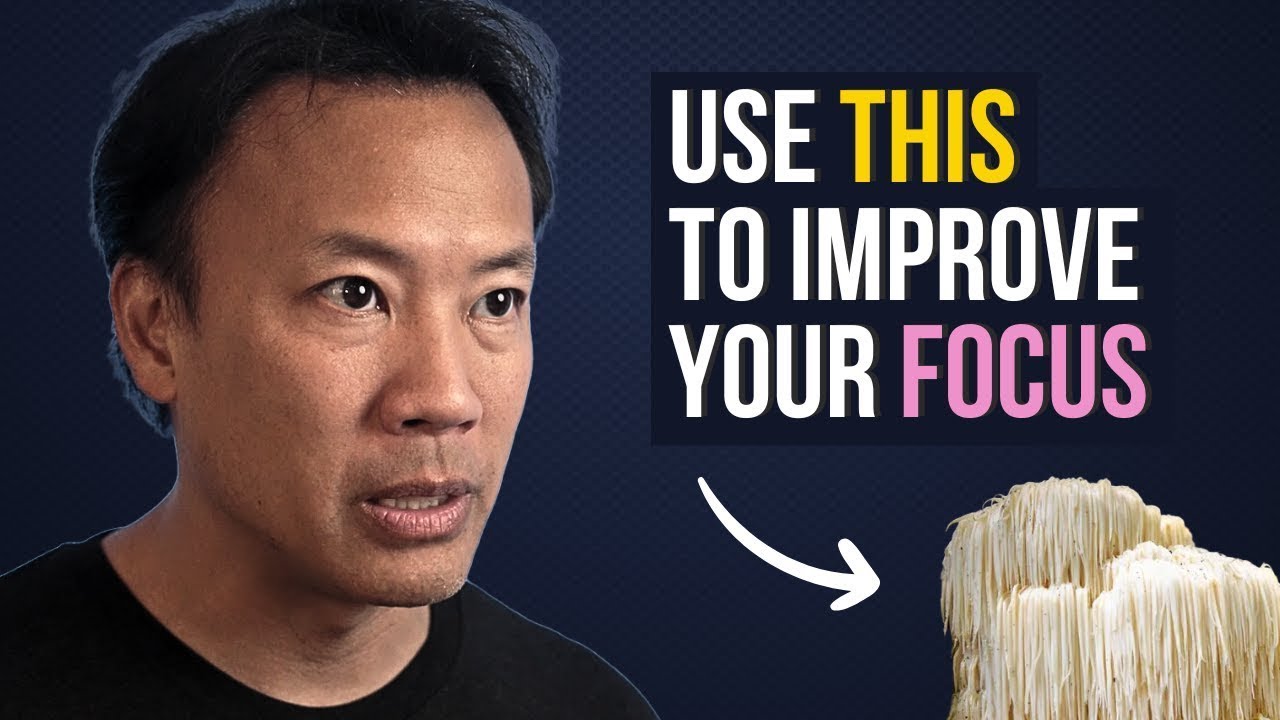
Dave Asprey and Jim Kwik name their favorite nootropics: L-theanine for focus, Bacopa for memory, Rhodiola for stress, and creatine for energy. They warn that low-quality broccoli sprout extracts can accumulate thallium, and that high-dose ashwagandha affects sexual function. Sleep and lifestyle matter more than any single supplement.
Chapters
Now, you wrote Limitless actually a while ago, and it was like all the soft techniques. And your new expanded edition, the reason I wanted to have you back on the show, is that you're talking about some things like nootropics and, and the other hardware things that have become more a part of, of what you're thinking about, which I, I, I love. I want to know straight favorite nootropics. Like, what are Jim Kwik's top 5 nootropics?
So, um, you know, and I know just familiar with your work, You talk about modafinil and nicotine. And so I'll go into other areas in no particular order. And then just, I know you're the expert at this and you're one of the people I talked to before publishing this. And let's see, L-theanine. It's an amino acid often found. For me, it's an alert kind of relaxed. I don't feel so jittery. So to improve focus, reduce stress, it's kind of like this alert calm. Bacopa, is this something you use? An Ayurvedic herb traditionally used to enhance memory and learning and concentration.
I like bacopa. It's also got dopamine effects, I think. And for my brain, I like dopamine in all of its various forms and the ones I haven't figured out yet. So if you're a neuro person, you're laughing at what I'm saying because I'm kind of making fun of myself. But yeah, for a lot of people, bacopa can Really helpful.
There's an adaptogenic herb, rhodiola.
Yeah.
Potentially enhance mental and physical performance, especially when you're under stress, support the brain's resilience to stress, to mental fatigue, potentially could help improve mood. I've been working out more this year than usual. Part of it is dialing in my sleep. And I know, you know, that's been an issue with my obstructive sleep apnea. But I started taking creatine and then I started feeling just even mentally more energized. I don't know if that's something—
From creatine?
Yeah.
Oh, absolutely. So, people who follow my recommendations, even going back to the Bulletproof Diet, they're red meat-centric, which means you can get enough creatine if you're eating enough red meat. If not, supplement. I do both. So, I take, oh, I think 5 grams, 4 grams. I'd have to look at the little packets I use. And yeah, because of At a minimum, because of cell hydration, it's going to make your brain work better. That's the worst case. But it probably also increases mitochondrial function. There's enough studies too.
And then when I was also sleep deprived also, because I could, you know, I have the kind of lifestyle where we could be on multiple continents in one week. And so there's jet lag and sleeping, you know, outside of your normal, you know, normal bedroom and time zones. I felt that also helped support it when I was lack of sleep. I don't think anything is truly as good as getting good quality deep and REM sleep, but the creatine definitely helped with that for sure. What about alpha-GPC? It's something we talked about also in terms of increasing choline levels, which is synthesis of acetylcholine, the neurotransmitter for learning and cognitive functions.
I like things that increase acetylcholine for brains that need acetylcholine, right? So a little bit of alpha-GPC is all right. I also like CDP-choline, which I think has a better effect on cell membranes. It's relatively nuanced, but there is an argument for both or for being more CDP choline heavy. The thing is though, if you're young, like I became a voracious learner about how to learn because I realized I sucked at it. This is when I failed my first semester of college and was like, I thought school was easy 'cause I went to a crap high school.
Really?
I'm like, uh-oh. You know, I was top of my class even though I slept all the time. Maybe that you can't do that in college. So I got really, really into, into all these, all these different things I could do back then. There's a book called Where There's a Will, There's an A, which was probably one of those— it's one of those like very, very early I wish I could be Jim Kwik books. And do you know the book? Have you even heard of it?
Yeah, I have. It's very, very early.
Yeah, it was very, very early, but this helped me. It's like, oh my God, there's like a technique to learning and, and to study and just to take tests. And it really made a difference for me. And so you fast forward. But if I put my hat on and said, okay, talking to myself when I was, you know, 17 or 18 or whatever it was back then, and I had just listened to this episode, I would first buy Limitless, the book, and learn all the soft stuff. But you probably don't need to go heavy on acetylcholine. You could try it.
Yeah.
But what happens to young brains if they're taking alpha-GPC and they're taking too much of it? They will get jaw tension. They'll grind their teeth. They get, like, tension. I know because I started taking it heavy doses in my 20s, and I would get the jaw tension. I didn't know why until Steve Fowkes, who is one of my mentors, who's been on the show a few times and wrote the Smart Drugs newsletters on paper in the 80s. Like, the guy's just old school. He taught me about them. Oh, you mean as you age, you need more acetylcholine? So you might take, you know, one capsule in your 20s and you're like, I'm rocking it. But then when you're in your 30s, you might need 2.
Right.
So it evolves over time, but generally yes for alpha-GPC. But if you're like muscle tensioned out, maybe not.
What about sulforaphane?
I don't consider sulforaphane as a cognitive enhancer, but it's a longevity substance with an upside and a downside. Are you a fan of it for the brain?
For brain health, not necessarily as a nootropic. I wouldn't qualify it as— but to potentially reduce oxidative stress, inflammation.
Sulforaphane is something that I've— I wrote about in my longevity book, but not in my brain book, right? And so keeping your brain functioning and young is really important.
Right.
But for brain health, I like it. I did notice though, I was taking a broccoli sprout extract where you find a lot of sulforaphane, and my thallium levels went up meaningfully. Thallium is a toxic heavy metal that is tied Mostly to kale. That's the member of that plant family that soaks it up the most, but it's present in all of the brassicas. So my theory is that it was accumulating in the extract of broccoli sprouts. And when I stopped taking them, I just had a test actually yesterday and my thallium levels are back down to zero because I don't eat kale. And I try not to eat things that ate kale. I'm kidding. But I think as long as it's a quality extract—
Right.
That's properly tested, I think it's probably good for you. I did not test the one I was taking. This was years ago.
Are you a fan of mushrooms like lion's mane?
Yeah. I wrote about all the science. I was so excited about lion's mane at the very beginning of the biohacking movement because of all this BDNF, BDNF, right? And there are great studies, but most of the supplements I was taking didn't work. And I even put lion's mane in Bulletproof Coffee at the Bulletproof Cafe on Main Street in Santa Monica in the first year. And there's a well-known company that might have come in and sampled that and launched a, you know, lion's mane coffee thing. To this day, I stand by the fact that your mushroom extracts should be taken separate from your coffee because they make the coffee taste like mushrooms instead of coffee. And I like coffee. Like, take it in a pill. It's just easier, right? Or better yet, a dual extract of alcohol and hot water. will work better because a lot of the time you're just getting basically mushroom sawdust. It's not beneficial. So yes to lion's mane, but it better be good lion's mane.
Right. And these are supplements that don't necessarily fall into nootropics, but, you know, for the BDNF, for the nerve growth factor, I mean, just even the foundational things like their omega, just doing nutrient profile tests and making sure you have your omega-3s, your DHAs, your magnesium, because that's part of like hundreds of physiological processes. I don't know, curcumin, is that something that you would add? Not necessarily as a nootropic, but for reducing inflammation, oxidative stress.
Turning down brain inflammation, improving blood flow in the brain, really, really good stuff. And I like it that you said curcumin, not turmeric, because at various times before I got more and more dialed in on some of the plant toxins, it's tempting to just go buy a bunch of turmeric. the fresh herb, and then you just throw it in everything. You can do it, but it's not quite as strong as spinach and kale, but it's got enough oxalate that if you do that a lot, you'll bump your levels up, and that's bad for longevity. So I think this is one of the major things that we are not talking about in the world of aging is plant toxins. So I'm kind of doubling down on that. So curcumin, yes. Turmeric, occasional spice, but don't, you know, add a pound of it to your smoothie every day. You probably won't like what happens to your kidneys afterwards.
What about ashwagandha, adaptogenic herb?
Yes, for most people, but not all the time. This will sound funny. Ashwagandha kind of levels things out, but what this can do is it can make it harder to reach orgasm. And maybe for some people that's a good thing.
I did not see that coming.
Hey, did you really just say, I did not see that coming? Was that an intentional joke, Jim? It was. God, look how fast he is. But it really does do that. So ashwagandha, I like. I was taking a high dose of it and I actually noticed that effect. And now people are, people are laughing about this. Yeah, I'll just say that sometimes, like, the inability to experience pleasure, too much ashwagandha. So a reasonable dose for most people, I like it.
Yeah.
Excessive dosing, I don't. So if it's in 5 of the things you're taking, You got, you got an issue here.
What about for blood flow, like ginkgo? Love it.
It's one of the most studied brain things. I take ginkgo every day. I love it that you're recommending that. And you put that in your brain tea. What's in your brain tea recipe from the book?
That's just changed over time. Sometimes I'll even put some, some, some, some of your coffee in there also. The Danger Coffee? Nice. Yeah. Yeah, this is our family. That's kind of a one of, one of our go-tos. The good to know about lion's mane, mixing it for, for that. But the—
You can put it in your smoothie or in the tea. It's just like if you wanted to have a clean tasting cup of really good coffee, there's no reason to throw it in the coffee and do it that way. Just take a pill or do a tincture and then you enjoy the coffee. I only want to put things that enhance the flavor of my coffee and enhance the functionality at the same time. If it enhances functionality, take it separate from the coffee.
Yeah, I'm a fan of ginkgo. Yeah, it's always, always for, for a long time. It's just kind of in the—
this—
my family's used that and then, you know, different forms, but for memory, for cognitive function, for increasing blood flow, different parts of your anatomy also, also as well. But yeah, this is, this is something interesting because I've never really talked about, you know, I've been— I've learned so much at your events and through your work. But I've kind of avoided this, but we put, we put all of these in one of the chapters because people ask about nootropics, brain nutrition. Your brain is only 2% of your body mass but requires 20% nutrients, and some of those nutrients are a little bit different than the rest of your body. But, but yeah, for people looking for an edge and, you know, or maybe some kind of advantage, that's definitely something people could look into. I also think don't think everything's for everybody. So people I'm not a nutritionist. People could, you know, go to their expert, and Dave's one of those, those individuals that imparts good knowledge. So absolutely.
More from Jim





The Library of Minds: Brain Coach: How to Stay Sharp When AI Does the Thinking | Jim Kwik





