The COURAGE Mindset that Leads to Success | Dean Graziosi
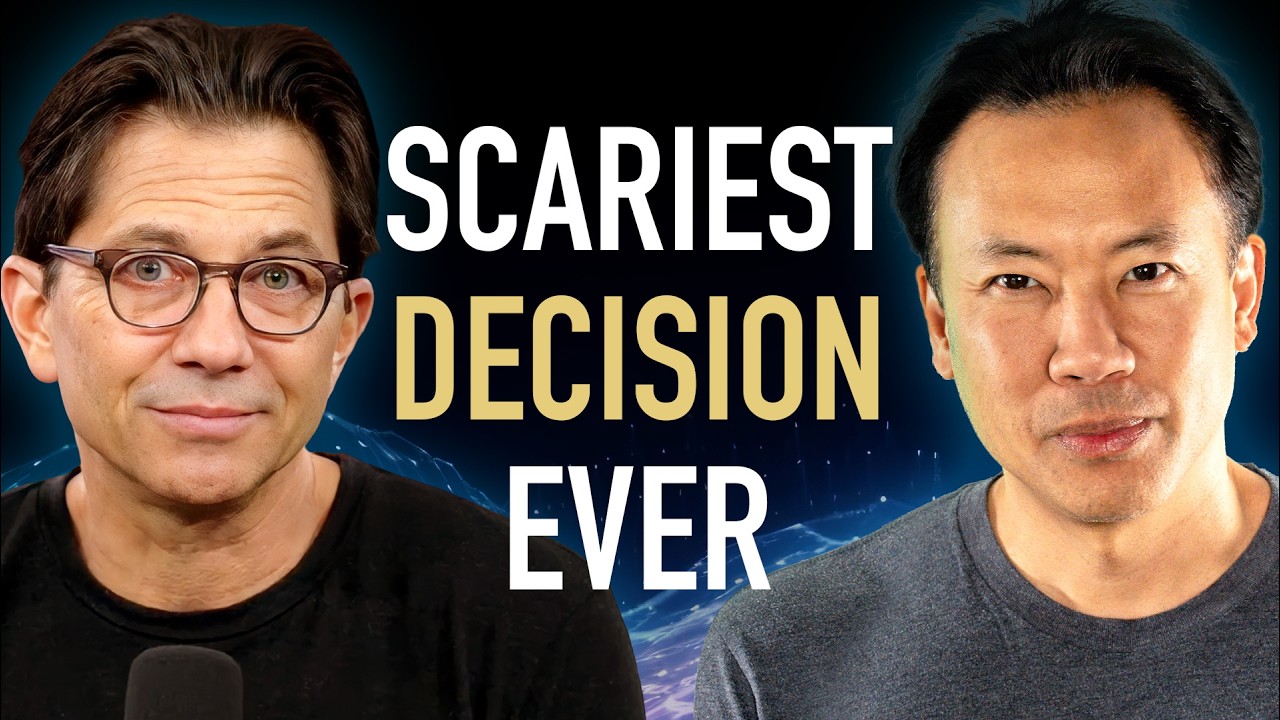
Dean Graziosi tells Jim Kwik that courage is moving forward when terrified, not fearlessness. He built a real-estate empire after a dyslexic childhood and a theft that nearly destroyed him. The brain rewards courageous action with dopamine, and courage strengthens like a muscle through small, consistent steps.
Chapters
Where do you need more courage in your life?
If that's a fear that stopped them, that can't be a fear that stops me.
When you face a fear and act on it anyway, your brain rewards you.
And if you can find the courage to move forward, to boldly move ahead in times like this, I think it's quite the unfair advantage.
What does your heart want to say if you weren't afraid?
Don't wait till next year. Don't wait till next week. Get done watching this today and make a bold, courageous action forward.
Have you heard the saying, like, it's all in your head? But what if the mind is actually more of an afterthought?
I've never shared this story publicly. When I made that decision, it was the scariest thing in my life because part of me is like, you're throwing away everything.
As much as I'm a firm believer in the limitless power of your mind, what I've discovered is that it can't reach its, its true, its full potential without a really crucial piece which comes from your heart.
If I would have listened to the voice that said, seemed more reasonable, I'd still be in that town. That wasn't meant for me.
In the topic of today's conversation, I wanna, I wanna use that, the word courage. All right? And it means something different to every single person.
Courage isn't moving forward in the absence of fear. Courage is moving forward when you're scared to death, but you have such a compelling reason that you do it anyway.
So we have my friend Dean Graziosi here. He's one of those people who consistently demonstrates learning, leading, living from the heart. And in this episode, you will see how your heart can partner with your mind to thrive in ever-changing and challenging times. Welcome back, Kwik Brains. I am your host and your brain coach, Jim Kwik. So I was at a mastermind recently with some very sharp top entrepreneurs and founders. And it was interesting. I started to notice something that, that you don't see all the time everywhere. I, I wish we would. I saw many of the business conversations were shifting more and more to, to heart-driven conversations. Words like purpose, impact, service. And what if what's going to take you to the next level is not necessarily The perfect strategy or the perfect mental plan, but connecting more deeply with more of your why, right? Clear, compelling purpose. For me, it's always given me the courage that really fuels you. It fuels you forward, especially in hard times, because it's a limitless, unlimited energy source. And to explore this topic, I asked the founder of this mastermind, Dean Graziosi, for over 25 years, we've had him on the podcast. Dean has helped millions break out of the traditional system and design a life of fulfillment, of greater success on your own terms. Many of you know he's a very accomplished bestselling author, investor, entrepreneur. What stands out, the time I spend with with him and his family is, I believe the life you live are the lessons you teach. And he's, he's someone who practices what, what he posts. He does this. He also partnered with Tony Robbins to creating, really creating this massive global impact through their shared passion of serving, empowering more people to, to share their knowledge, their wisdom, and more of their purpose. So What you'll discover in this conversation is really what it takes to unleash more of your courage, to tap into more of your potential in the areas that you really desire and deserve the most. Welcome back to the show, Dean.
Hi, Jim. It's always great to be with you, and thanks for that beautiful open. So great.
We've had you on the show before. You're so prolific. I, we could talk to you for, for hours on any topic. My business partner of 18 years, who's our CEO, Alexis, and I had such an amazing, unforgettable time at your Zenith Mastermind. So I want to thank you.
So glad you came. It was great to have you there.
So wonderful. I mean, not just the facilitators, but your team, you know, and the other members. And what I was saying in the intro was the conversations weren't what I've seen speaking at other events. Not that anything's better, but just different, right? And, you know, Your partner says success leaves clues and looking at these patterns. And I just wanted to ask you to come on and talk about, you know, have this conversation, something you maybe don't talk about all the time. Maybe you could— can you take me back to a moment where something was uncertain in your life, where you almost walked away, but you leaned in to this thing called Called Courage.
First off, I want to say it's a pleasure to be with you and the amazing group of humans that you help take their brain to the next level. I learn from you every time I watch you. You presented at that mastermind and you could have heard a pin drop the entire time you were sharing. So I just want to say thank you for your service and everything you do. And I really enjoy our friendship. It's gotten deeper and deeper over the years and I truly enjoy it. You know, courage is one of those, those things that sometimes you wonder, are people born with courage? Um, does it— is it manufactured? I love what you wrote, purpose equals courage. Maybe we'll, we'll, we'll touch on that a little later. And I don't want to digress too much, but I do want to say, I think it's a great topic for today. And why I think it's such a great topic is because, Jim, you and I have been in this industry, and my partner Tony, Longer than most anyone. I mean, I never get the chance to sit around someone who's been in almost 3 decades, right? And that's why I really enjoy learning with you. But what a perfect topic, because I believe when there are insecurities, when there are things a little off, maybe when your head and your heart aren't connected, or you have a desire for more, but you're a little uncertain, I believe— I don't believe. I think we all can agree that when the outside world gets a little chaotic, It amplifies the inner emotion to stop. I think it's why so many people sit on their hands in times like these, because they just want to see what's going to happen. And if you can find the courage to move forward, to boldly move ahead in times like this, I think it's quite the unfair advantage. I think you can, you know, I think someone said, I think my partner Tony said, if you Google, and I did, the top Fortune 500 companies, the majority were started in a down economy. And I think it's because they found the courage when everybody was waiting and hesitating. They found the courage to move forward. But you asked me a question about a time in my past, and there's a lot of them. But I remember when I decided to go into this industry, into the self-education industry, the knowledge industry, to share what I know. And I already had a bunch of doubts. I had dyslexia in school, so high school was really difficult for me. Um, by 11th grade, I was getting out at 12 o'clock and going to work, and I started fixing cars. I started a little collision shop. So school wasn't my thing. So I already felt I had a little bit of an unfair advantage. It hadn't turned into an advantage yet that I wasn't— I didn't feel smart. I had dyslexia, but I got a course from Tony Robbins off an infomercial, and it inspired me to say, hey, I was a broke kid. You know, in my early 20s, I was in my— I was a broke kid who started with cars, then I went to real estate and I started having some real momentum in my life, Jim. So I was like, hey, I'm gonna, I wanna do what Tony Robbins does. I wanna take how I made a lot, you know, went from a broke kid to doing pretty darn well in real estate. I wanna teach people how to do it. You know, and, and of course all the doubts come in. You're not that smart. You're not a teacher. You didn't even go to college. You, you know, you speak with a 7th grade vocabulary, but you know, you know, when you're fired up about something, I'm like, I don't care. I don't care that 50% of businesses fail. They didn't have what I have. And you know, I'm just going forward, going forward, going forward. And of course, I doubted myself 100 times. And I remember taking a long walk one day, and it was by my grandmother's house. I still remember. It was like, it felt like a fork in the road. Like, you can do this. You can do anything you put your mind to. You can help people. You create a real business out of this. You could help people all over the world. And the other voice was like, are you silly? You're not Tony Robbins. You're not 6'7. You're 5'7 on a good day. No one knows your name. You don't have that dynamic voice. You don't have any money. You're an idiot. Right? So I had both of those voices. But I'm going to go past that one as not the scariest time. I'm going to go a little bit further to where I ignored all the negative voices. I ignored my family who told me I was crazy, especially my sister. I borrowed money to do it because it wasn't like jumping on the internet in those days. We had to build an infomercial and direct mail, which you remember those days. So I go all in. And as I'm pushing forward, Jim, there was a day that I finally hired some people to help me, and I'm spending money on an infomercial, and I'm getting momentum, and I have no idea what I'm doing. Like, I am just trying to survive. I'm con— now I'm commuting between Arizona and New York. So think of the business, it's, it's, it's starting to get momentum. I'm funding my knowledge business with selling cars and selling real estate, and every time I take a dollar, I drop it into this bucket, and in 45 days it's evaporated. I got to make more money, and I'm funding this thing, and I'm commuting between New York And Phoenix. Phoenix is like my white-collar knowledge business world with some employees. And then back in— and I'll try not to make this story too long— back in New York, I still had a collision shop. It was called Dean Collision Center. I was still selling cars. I had apartments, living 2 completely different lives. All the things we do in the invisible, right, Jim? That, that I don't even think I've ever shared that before publicly. So I'm not stressed, but it's a busy time going back and forth, relationships, family, trying to get everything going. Well, I built a team out here to start my knowledge industry, and I hired someone. And one day, I'll make the long story short, I find out because I was gone every 2 weeks, I just made a bad decision. I was brand new to this world. I believed in someone. Someone had taken all my money. And it was a time when I just didn't have a lot, Jim. I was already using every dollar I'd make, every house that I'd sell, the profit would go into running infomercials that are insanely expensive. The cost, the media, the fulfillment. I had to put books in warehouses, and I found out there was zero in my account. Zero. And I remember to this day because I threw my cordless phone at the time. It was a big cordless phone with a big antenna. I threw it against the wall and it shattered. It left a hole in the wall, and I went outside and just cried. And I have to tell you, I've never shared this story publicly, Jim. I went out. I know exactly where I was sitting. My hands were on my head, and I'm not saying a little bit of tears. I was weeping. If someone recorded it, it's that howling weep. And in that moment, everything came back. My sister was right. I don't have a college degree. I don't know who to hire. It's my fault that I hired the wrong person. I don't know business. I'm a car guy. I should have just stuck with cars. I should have been satisfied in my little town. I mean, all the stuff that you could do to beat yourself up, I did. And then something happened. I don't know if it was a day, a week, or 3 weeks, Jim. I just remember thinking to myself, when I get to the end of my life— and now I realize these are tools to help leverage. But I remember thinking, because I've thought about it every probably month since then, I remember thinking, at the end of my life, am I going to be happy if I run back and say, everybody, you were right, I was wrong, I'm not that smart enough, let me pick up the screwdriver and start fixing cars again? Or do I want to go down in flames and go, I don't care. I, I have to go for this. It's this burning desire in me. I know I'm meant for more. I got to do it. And I don't know, it's, it's 20-something years ago, so I don't know how long it took. I remember taking walks and trying incantations because I remember Tony teaching, if I can do this, I can get through anything. And I was trying everything possible. And there was a moment that just switched and it went from, oh my God, this person robbed my money. I made bad decisions. I'm not that smart. I'm not going to make it to Because that guy stole my money, because I wasn't that smart, I am going to create the biggest freaking comeback anyone's ever got. I have goosebumps telling you right now. I remember just— and I remember thinking, I'm going to be the freaking comeback kid. Screw that. The heck with that. I'm going to do it. I'm going to go forward. And that— what I realized in that moment is that all the pieces were still the same, Jim. I still did make a bad decision. I hired the wrong person. I had zero money. I was living on the opposite side of 2 coasts. I was commuting back and forth. I didn't know much about the infomercial business. All that was the same. But one thought— and you could help me with distinction on this in the brain— but one thought was, that's the end of you. You see, you should have never tried. But as soon as I said, that's the start of me, this is where I get the comeback, this is where I get the ugly out of the way, nothing changed except the thought I had around it. And I went from tears, sad, stressed, and then one day I went from pull off the shirt because I got the S on underneath and I'm going to do this.
Yeah, you guys got the goosebumps, and I'm sure a lot of listeners felt the same way. And when you're going through that and you're thinking about the struggles, you and Tony talk about fear and how it can limit us. I think I saw Tony say it's an acronym, false evidence appearing real. I'm curious when people are fear of failure, fear of looking bad, or fear of letting people down. Do you have a way, like, how did you filter or reconcile or even tell the difference between the fear that's protecting you and the fear that's limiting you? You know what I mean?
Really great question.
Is there a signal or something that you've learned to listen for?
I'm going to give you an answer that's pretty simple. It's the first one that pops into my head. If it was a fear, and I love my parents, so please, this is not judgment, but if it was a fear that stopped my parents, I'd be like, that's a false fear. That's why they don't have money. It's why I'm supporting them. That's why they've struggled most of their lives. So when I look through the lens of, well, people like us don't make it, the economy's wrong, it's the wrong president, uh, it's the Republicans' fault, it's the Democrats' fault. It's like, if I looked through those fears that bothered most people in my family, I was lucky enough to have a filter going, wow, if that's a fear that stopped them, that can't be a fear that stops me. There is fears that should stop you, but not the ones that just stop your energy, stop your emotions. I love how Og Mandino in the book The World's Greatest Salesman said, it's old school personal development, right? He said, instead of letting your emotions dictate your actions, let your actions dictate your emotions. And I remember when there was certain fears, I was like, If I just act upon it, I bet you that fear will go away.
There's a lot of power when your head and your heart and your hands are in alignment, right? You definitely become more, more, more and more unstoppable. You could thrive in difficult times. So, you know, we, we talk about in our work, you know, the power of choices like, like you do, and that our lives are the sum total of all the choices that we've made up to this point and making decisions. Is there— has there been a decision Maybe people could see themselves in your stories because you're an amazing storyteller. Is— has there been a decision that you were scared the heck out of? It really scared the heck out of you, but changed everything. And maybe there's a lesson in there, some insight for people, because I'm sure people right now, or many people are facing a difficulty and adversity, you know, some kind of challenge right now.
If I go back, I mean, there's been 100 of them, maybe 1,000 in the evolution. But probably the biggest decision I ever made is, you understand, I did— I'm going to use the same because you have the foundation of the story. I grew up in a town of 5,000 people. I went to high school with 85 kids, and most of them stayed in that town. And I'm still friends with some of them when I go back there. My father worked in a collision shop. My mom cleaned houses and cut hair just to barely get by. We were divorced. They were divorced when I was 3. I lived in a trailer park with my mom for a while until we couldn't afford it anymore and we moved in with Grandma. Right? So you got to imagine that's what I came from. Decided not to go to college, and I got momentum, Jim. Just so you know, in this little town, it wasn't— I mean, by the time I was 25, I owned Dean Collision Center. Dean Towing, Dean Auto Sales. I had 25 apartments and I was buying land, fixing houses, and flipping them all by 25 years old, right? I had got momentum. I, I had retired my parents at that age. I had built the most expensive house in my little town that anyone had ever built. I moved from a 400-square-foot apartment to the first house in my town that sold. When I sold it for $700,000, nothing had ever sold for that, right? I, in, in all view, in all eyes around me, I was doing unbelievable. No one in my family had ever done anything I'd ever— anything like that, Jim. And I, I, I'm, I'm beyond grateful for it. But then I decided to go into an industry on selling what I know, selling my experience. And I found people who knew what they were doing out here in Arizona. So the, the scare— one of the, the first big scary thing was My sister sat me down to reinforce the story I told you. She said, Dean, stop it. We are so proud of you. You did more than anybody in our family did. I'm so grateful you take care of mom and dad. You've retired them, but stop dreaming. This is not your line of— you're going to lose everything. You're going to go broke. And I have to say, I know she did it out of love, but I already had those voices in me, Jim. So it was just compounding. It was this fight of Both. And when I made the decision to do it, when I made that decision, it was the scariest thing in my life because part of me is like, you're throwing away everything. But I realized I knew in my soul that I was meant for something more. I was meant for something different. I guarantee everybody listening, we might from different backgrounds, different religions, different demographics, but I guarantee the thing we have in common, you know, you're listening to Jim, And us right now, because you know there's another level inside of you. There's something waiting to be called upon, something that stretches you, something that scares you. And does it always work out perfectly at first? No, but it doesn't work at all unless you take that first step. So when I look back at that decision to go into this industry, I get to be here with you, Jim, built a friendship with you and so many amazing people, partners with the guy that shifted my life through a course, Tony Robbins. If I would have listened to the voice that seemed more reasonable, I'd still be in that town. I'd probably have 100 apartments, but I'd be in that town. And I— that wasn't meant for me. It's not. And, and I hope my friends that stayed, it's meant for them, right? So I— it's those, it's those decisions. It's those tiny little decisions when you're scared, when you feel uneasy, where you have to find leverage We could talk about how I find it, but how to find the courage, right? Tony says, and we reference Tony a bunch of times, but I like to give people credit where it's due. It always sticks in my head. Courage isn't moving forward in the absence of fear. Courage is moving forward when you're scared to death, but you have such a compelling reason that you do it anyway.
And would you say that courage is— I think I know your answer for this, but someone listening or seeing you or seeing Tony or other individuals, they feel like, oh, that person was just born with whatever. Like, people think I was just born with, you know, be able to learn and read and remember, like, the things that I do. Would you say courage is born, or is it more built by doing those?
I truly believe it's manufactured, only because I've watched it in so many people now, being in this industry for so long, who didn't think they had it. When they find it, they're unstoppable. I've watched it in myself. So if you don't mind, I want to share a little story, and then you can Reel me in if it gets too long, but this one, this one really made an impact on me. I talked earlier before about, I don't want to get to the end of my life and feel like I missed it. Let's take that a little further with those of you watching. Let's bring you into this story. It's not me anymore. It's you. And you get to the end of your life and you get the chance to meet your maker, whatever your beliefs are. You sit down next to your maker and they play you a video of the man or the woman you could have been. Where you took bold action. When you were scared, you went for it anyway. And you got to see the lessons, the ups, the downs, the living into the full potential. You knew you were meant for more, but you did it. But something held you back. Family, friends, not wanting to look silly, not wanting to fail, what they call imposter syndrome in today's world, or the economy, or the current political environment. I think at the end of your life, if you looked at it and it was over and you saw that, I think the only thing you would think of is, oh my gosh, why the heck did I let that story stop me? I let my sister who thought I was a little crazy stop me. I let my spouse not let me be who I was meant to be. I think the only wish, and this is what literally I did this to myself, Jim, but this is for you listening right now. I literally believe the only wish you would have if you had the chance to sit next to your maker is, Could I go back? Right? Could I go back? Could I make different choices? And what I like to think about is wish granted here today, right now. Today is the day you could say, I'm going to be bold. I'm going to be brave. I'm going to be courageous. I'm not going to let that old story— I don't care that I failed before, I procrastinated before, or people in my life think this is different. That's not their vision. It's mine. It's like a pair of glasses. These are my prescription. I see clear the man I could be. I see clear the woman I could be. Like, what if you were— if you literally— and when I do this, I don't just— I literally picture I'm sitting there and going, I wish I could go back. It's like you're teleported. You're here right now. You have 50, 40, 30, 20 amazing years left. Don't wait till next year. Don't wait till next week. Get done watching this today and make a bold, courageous action forward. Say no to something today. Say yes to something today. Book a meeting today, read the book today, register today, whatever it takes, start the momentum.
I love it. That's like a mic drop. I mean, so for everyone listening, courage is a muscle. It gets stronger with use, right? It's use it or lose it. And it's built by doing those small little things that Dean is talking about, not when it's easy, but especially when it's not. And, you know, science proves this. You know, when you face a fear and act on it anyway, your brain rewards you, right? You get a release of dopamine, which is your motivation reward chemical, not just when you win, but when you try. That means every step you're taking in being more courageous, your brain rewards you. It's literally wired, wiring yourself for more bravery, right? Now, you have an amazing team, which I was just at the mastermind. You have the most— it takes a village, right?
For sure.
When you're leading your team on this, these, all these global initiatives to have the mission that you have, and there are uncertain times, right? There was a pandemic. There's now there's AI. I mean, like people's not sure about their jobs, you know, that people that you're serving, you know, maybe they're looking for a change. And I want to invite people to something special that you're doing live. In a moment. But how do you project courage as a leader? Is it you fake it till you make it? Is it you face it till you make it? How do you balance being vulnerable and still being courageous and strong?
Such a great question. So first off, I believe my certainty has to be so strong that the team can borrow from mine if they can't find their own. Right.
A good coach does that for someone, too.
Yeah. I mean, that's my job, is I have to be so certain in where we're going. I have to sell it in such a way that if they can't see it themselves, they get to borrow my prescription, right? They get to borrow my glasses, if that's the way to put it. Then therefore, I have to find that certainty. At that mastermind, Jordan Peterson was there. Right? And he said something that I thought was pretty profound. He said, we have to be brave enough to be optimistic. So I don't know if you remember him saying that. That was the note I took down, right? I was interviewing him and I took that. I took several notes, but that one was brave enough to be optimistic. Because you can decide how to interpret all the things that are going on, right? You could say, You know, oil used to be the greasy stuff on the bottom of hooves until somebody innovated a way to make it to run, bring the world to where it is in the Industrial Revolution. Yeah, we need to evolve past it now. So what'll fix it? Innovation. What'll fix a crazy economy? Innovation, creativity. Now, whether that's true or not, if I choose to believe that, if I choose to believe that AI will be an accelerator, it'll help people get healthy, it'll help people go faster, It won't ruin the world. Some people might say that's naive, but if I get the opportunity to think through that lens, Jim, then I can find the certainty to drive my team, to drive my decisions, to drive my efforts. You and I both have known and had the experience with Wayne Dyer. And I remember listening to Wayne. He did a live recording. I've listened to so much of Wayne Dyer's stuff throughout the years. He's just like, He's like a blanket for the soul sometimes. But I remember Wayne Dyer said one day when he found out he had leukemia, and you may have heard this, he said at first he was like, why the heck do I have leukemia? Is it because I drank when I was younger, or I did this thing, or I didn't take care of myself, or I worked too much, or I didn't sleep enough? And he said he went through agony for weeks. And then one day he said, wait a minute, what if I'm the guy that beats leukemia? What if I kick leukemia's butt? And what if I'm the guy that everybody looks to and goes, wow, if he could do it, I can do it. And he said, in one day, I was like, hey, leukemia, thanks for the wake-up call. You're not winning. Watch how I can fix this. And it always just got to me that the leukemia thing diagnosis didn't change. His perception of it did. And therefore everything shifted. And as leaders in our own lives with our family, our kids, our spouses, or a team that we create, or even the person in the mirror. If we can be boldly optimistic and change the perspective of what's going on, then that's how we will feel. I know it sounds, you know, for some people might go, let's be a realist. My son will say that to me sometimes. I have a 16-year-old boy. It's so fun. Uh, you know, prophet's not welcome in their hometown. So I really got to convince my 16-year-old and, uh, And I give him little stories like that, and he's like, wow, you're right. I guess perspective is reality. And the last time he said that to me, I was like, it's finally sinking in with him. And I think we all get the opportunity to do that. It's not easy. You do have to be bold. You do have to be brave. In fact, you probably have to go against most of your friends. You have to go against the media, everybody telling you what's wrong. What if you were brave enough to see what's right?
Yeah, I always think life is difficult for one of two reasons. Either we're leaving our comfort zone, you know, we tap into more of that courage and that purpose, that fuel, or life is difficult because we stay in our comfort zone. You know, people that are fearful of what's outside, you know, even applying that same fear towards what if things stay the same, right? You know, how good would people feel? Because while change can be scary and growth can be hard, I really believe nothing is as scary and hard as being stuck somewhere that you don't belong.
So true.
That's one of the reasons I'm excited for what you have coming up. Maybe we could— I have a couple more questions still, but I would love— we are inviting people who are listening to be able to join something really life-changing. And as being a student of your work also as well, I highly encourage people look into this. Maybe you could just give a minute On, on what's happening and how people could tap into this, this amazing resource and community. Do you want to be able to remember confidently the information that you hear on this podcast? Do you want to improve your memory to easily and confidently be able to remember names and faces, client information, give a speech without notes, learn another language, remember what you read, and so much more? There's a solution, and I call it Your quick recall in just 15 minutes a day for 30 days. I've designed the ultimate course, How to Unlock Your Quick Recall. Just go to kwikbrain.com/recall. Enter podcast15 for your immediate discount as a thank you for listening to our show.
Absolutely. Love to invite you as our free guest. Um, write this down, thrive800.com, thrive800.com. You have the opportunity to get a ticket for free. It's May 15th through the 17th. It's myself and Tony Robbins. We got some fun guests coming like Matthew McConaughey and Jay Shetty and some other great guests. Lisa Nichols, um, you, I love when you're a speaker about every other year. You're a speaker with us, Jim, which we love as well. Um, and over 3 days, if you, if you like what we talked about today, we want to expand your, your intellectual curiosity. I want you to see what's possible in a realm of taking your life experience and turning it into a product, whether that's building a community or a course or a coaching program, or you become a consultant or write a book. But Tony and I have been doing this for 76 years, and we decided about 7 years ago to pull back the curtain and show people the life that we get to live. And we feel we were saved by self-education, by the knowledge industry. But when we started, like I said earlier, it was an infomercial and lots of money, and those days are gone. The barriers to entry, the opportunity to use AI, to use tools. You could start a real thriving business with such a low barrier to entry. You just need to know how to do it. And over 3 days, about 3 hours a day, we pull back the curtain and we've done this now. This is our 7th year. We only do it one time a year, the only time it's free. But this year will be unlike any year we've ever done. Things have changed so much in a good way. Tony and I are— I'm literally jumping on a plane tomorrow to go spend the weekend with Tony to talk through everything about the event. Because it is brand new, it is different. This is truly a time for people to get ahead if they have the right tools, and that's what we're going to deliver.
Amazing. So people go to thrive800.com and they can lock in their spot. And I encourage everyone to do that. Share, text, text your friends, your family members, you know, post it on social media so that way people could do it together. Highly, highly, highly recommend it. You know, my life changed when I decided to to take that path, you know, to turn my mess into my message, you know. And you mentioned Wayne Dyer, and he was a role model for me. And as you said, he wanted the life you live are the lessons you teach, and he wanted to be a role model for others. Did you have anyone like younger Dean? Did he have anyone that modeled courage for you early on? Or did you become that model for yourself? Like, was there a first time you saw— like, for me, my parents immigrated here. We lived in the back of a laundromat that my mom worked at. I didn't know, you know, didn't have the education or the money or the connections or anything. So I looked to books to be able to provide a role model or a friend of my mind.
Yeah.
But did you have any early Role models that model courage for you?
No one's ever asked me that, Jim. So I love a question I've never been asked. And what comes to my mind is my grandmother. When my parents split when I was 3, I lived the majority of my childhood at my grandmother's, and she was such a great role model. But how she represented courage, I knew at a young age when she had 5 siblings. And her parents came from Italy as immigrants, barely spoke English. They came with nothing in their pocket and were waiters and busboys. And eventually my great-grandfather started a restaurant. And my grandmother used to work at that restaurant when she was 9, 10, 11 years old. There's a little pasta restaurant, Tony's Pasta House. She told me all about it. I spent— my grandmother probably was the person I loved the most, most of my life. Um, now that I have kids and a wife, you know, things change. But I knew the story from really young, Jim. When my grandmother was in 7th grade, her mother died. She had a heart issue back then. They didn't identify it. And her mother died in her arms when she was in 7th grade. When she was in 8th grade in this little town where I grew up, he was, my great-grandfather was a volunteer fireman as well. Besides the pasta shop, he was a volunteer fireman on a way to a fire. The truck flipped over and killed her dad in 8th grade. So she quit 8th grade and raised 5 siblings and found a way to make the money, found a way to raise them. And I just remember being in 8th grade going, this is the age you became a mom, basically, and raised everyone. And I just remember being— and, oh, the reason, and I'll end it here, but why it was so important is you never would hear her complain. She raised 5 siblings, then she got married and had my mom. And then when I was 3, we moved in. She was raising kids since she was in 7th grade. When her mom passed away. And never would you hear this woman say, oh, more kids. She was just— she found a way to make light of everything. I'd fail a test. She'd say, hmm, you failed a test. Can you get your teacher to do it over? I said, no. She'd say, okay, then let's study together really hard and get 100 on the next one. It'll balance out. What would you like for dinner? Like, that was just— she had this simple wisdom, but she was so courageous in a simple way. That I think it gave me a light. And she told me every day of my life, she told me I was beautiful and I'm going to do something different than anyone in my family has ever done. She told me that all the time. So thank you for making me think about her. I haven't thought about her in a while. So thank you for that question.
No, thank you for this. Going back in time, is there something that you would— everything that you've learned up to this point, which could fill up libraries about success and fulfillment, about courage. Like, if you could, if you could bottle that up and hand it to that, that younger Dean again, you know, that was going through all that, what would, what would you, what would you say to him? You know, what, what, what truth about fear would you want them to know? Or, or your kids, you know, or—
Yeah. Great question. In fact, I'm gonna have 'em, I'm gonna make sure my kids watch this episode. Thank you, Jim. This was, It's one of my favorite interviews I've ever done, and I mean that with all my heart. So thank you. You're such a thoughtful interviewer, and you know how to ask questions in such a great way. I would say to be, and not to oversimplify it, but there are things in our lives that we do every day that rob our courage. If it could be as simple as watching the news and go, Why would I try anything when the world is falling apart? It could be the family member that loves you dearly, like my sister. But every time I was with her, I was meant to feel like I was a dreamer and I had to get real. There's surfing online and comparing yourself to others. I don't know what it is for you, but if I think about in my life, I found the things that robbed my courage, Jim, and did less of them. I went a decade without watching the news once, not one ounce of it. Wouldn't even let somebody I was friends with talk about it. 10 years, not one bit of news. Probably the best 10 years of my life. Biggest growth in my business. Went through a recession, didn't know really, I didn't know all the details, right? Because I focused on me. So the simple message would be identify the things that rob your courage, the actions, the people, the things you read or look at. And this is the brilliant part. I'm just kidding. Do less of it or eliminate it, and then find the things that enhance your courage. Being in events, reading books, listening to Jim Kwik, working with Tony and I. Whatever you do that makes you feel bold, I can do anything, I'm unstoppable, do more of it. So now that you asked what I'm going to tell my kids, be an investigator. Investigate what robs your courage and stop it. Investigate what builds your courage up and do more of it.
I love it. It's so simple, you know, and I think my mantra for 2025 really has been like simplify to amplify. Sometimes when you subtract, you actually multiply.
Absolutely.
And I love that. And I want to thank you for the amazing, like, your friendship, the work, how you show up for people, your time and your talent. My question I ask friends on the show is the show primarily is about learning. And I'm just curious, what's— is there anything that you're currently learning or studying right now that's kind of lighting up your brain?
Maybe because you and I are on similar paths, we're similar in age, even though you look like you're still in your 20s. I got to get some of those secrets from you. Maybe that because what you said, amplify through— what'd you say? Simplify so you can amplify.
Yeah.
I've really been obsessing on that in this year, in 2025, as I realized that myself, even my teams, my family members, sometimes we get too many goals, too many things we want to work on. And then I started looking through the lens, Jim, of every time you have a goal, there are constraints holding you back from that goal. True. I want to double my business. What are the constraints? I got to hire more people. I need more clients. I have to sell more books. Maybe I got to write another book.
Right?
I gotta diversify. I gotta do better on social media. So for every goal, can we agree that there's multiple constraints that you have to solve?
For sure.
Right? And, and this is for everybody at home. I know you're getting this immediately, but for me, what I've been doing is simplifying even my team, my family, my wife at home is, but what's the main goal? Like, if we can narrow down our focus, if we can amplify through subtraction and we narrow it down to the one goal that would move us, move our lives, move our health, move our income, The most. Then if we have one big goal, then we just get to focus on the constraints of that one thing. So so that's what I've been focusing on. What is the goal? No, not the five. No, not the three. What is the main goal? What are the constraints stopping me from reaching that goal? How do I work on those constraints one at a time? And then what's a deadline that I'm going to achieve that? That is that has been my simple little thought process in this year, and I'm. I'm absolutely loving it and I'm enjoying it. I'm building workflows for my team to think through that lens. Um, so that's what I'm, that's where my brain's at.
And it's amazing how generous you are with you and Tony and the team put together a, like a, a map, a blueprint, if, if you will, for people to thrive in 2025. So I encourage everyone to show up for this, this 3-day virtual event. You can get your spot free. Who, who is it? Who's it for? You know, and why should our, our, our Kwik community check it out?
If you liked anything that we talked about today and you're still listening, you have to go. That's for sure. Number 2, it's anybody that might be your current career or business. Maybe it's okay, but it's not fulfilling you. It's not giving you the opportunity to serve others or find purpose and passion. And maybe there's a ceiling on it and you'd like something that doesn't have a glass ceiling. If you'd like to realize that you are enough, you know enough, And with the right blueprint and plan, you can accomplish anything between Tony, myself, and the group that's going to be there. I really mean this. If you're ready to do something different, you must be there. If you're just a little unfulfilled, you must be there. Or if you just want to get in a state of mind where you feel unstoppable at the end of 3 days, about 3 hours a day, then you absolutely have to be there. And please don't discredit it because it's free. Sometimes when you don't pay, it's Tony Robbins, it's myself, it's some amazing guests. In any other world, you'd pay to be there. So pretend you cut a check for it, put it in your calendar, and I promise you'll have the time of your life.
I, I, I back that. Um, Dean, thanks for coming so much for coming back on the show. I wanna encourage everybody to go to thrive800.com to, uh, secure your spot. Make sure you share that site with your friends, your family, your fans, your followers. Post it, tag, tag me in it. Uh, I'll repost some of 'em also as well. And because it's how do we become limitless in a limited world, we have to do it together, you know, especially now. For me, courage is heart plus purpose in action. And when your heart knows what matters and your purpose is fueling that action, even in the face of uncertainty and fear, you know, we were born with this incredible potential. So just remember everyone that courage every day, like life is choice. Every day you have a chance because you have a choice, you know, whatever we choose to do in this moment. So I would recommend share this episode with a friend or family member. Definitely go to thrive800.com. I'll be there for sure for those 3 days also as well, learning with all of you. And be sure to check out the event with Dean. Follow Dean on social media. I'll put always the links in the show notes at jimkwik.com/thrive. Awesome. Notes. We put the extended version of this podcast on YouTube. So we limit 20 minutes on the audio, but join our 1.8 million subscribers. You could hear the extended conversation with Dean. You can see the shirt I'm wearing. It's a brain and a heart overlapped. Please hit the subscribe, put a comment, let us know what you thought of the episode. I speed read. I read every single one. And, uh, yeah, I look forward to seeing everyone next episode. Dean, thank you so much. Be limitless, everybody.
More from Jim





The Library of Minds: Brain Coach: How to Stay Sharp When AI Does the Thinking | Jim Kwik





