The Power of Meditation to Find Calm Amidst the Chaos | Jim Kwik
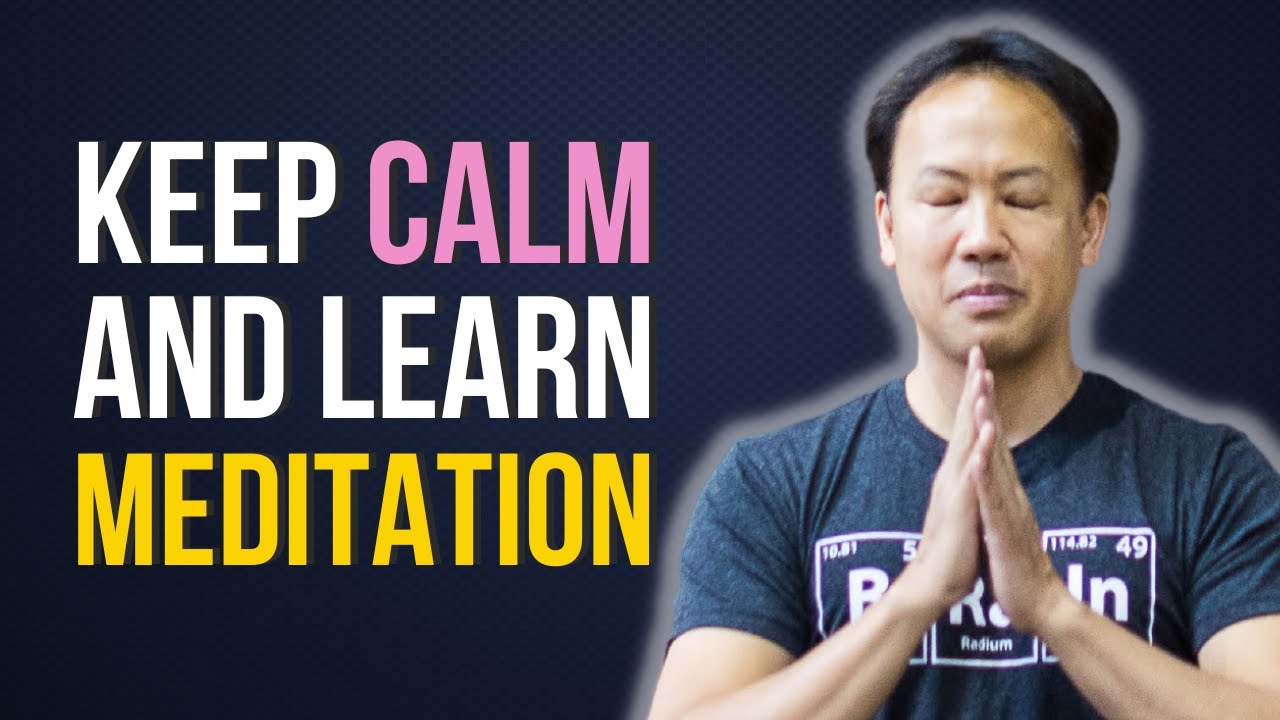
In this interview‑style podcast, Jim Kwik, meditation expert Emily Fletcher, and additional speakers discuss what meditation truly is, how it differs from mindfulness, and why it matters in today’s chaotic world. They define meditation as a training practice that cultivates healthier mind states, while mindfulness is the day‑to‑day application of that training. The conversation cites scientific research—Harvard’s Dr. Sara Lazar on pre‑frontal cortex thickening, UCLA neuroimaging on gray‑matter growth, and Dr. Eileen Lutters on brains appearing up to 7.5 years younger after five years of practice—to illustrate structural brain changes. They also explain neurochemical shifts (reduced cortisol and adrenaline, increased dopamine and serotonin) and emerging epigenetic evidence that meditation can influence cellular health across generations. Practical guidance is provided: a step‑by‑step breath‑focused meditation (counting breaths, gently returning attention when the mind wanders), tips for integrating short sessions into daily routines, and supportive tools such as breath pacing, aromatherapy, guided‑meditation apps, and the Muse neurofeedback headband. The speakers stress habit formation—treating meditation like brushing teeth, using triggers, and gradually extending session length. Finally, they discuss broader impacts, noting that regular practice not only benefits the individual’s mental and physiological health but also ripples to family, friends, and even collective consciousness. The episode ends with a brief promotion of Kwik’s QuickBrain learning program.
Chapters
So meditation, most people think, is just letting your mind go blank, or it's this weird woo-woo thing, but it is not. Meditation, as it's simply defined, is a practice or a training that leads to healthy and positive mind states.
I mean, I know I'm biased, but to me meditation is, like you just said, the ultimate reset, because I can have a million things going on. I have a 2-year-old son, I'm running a company, so there's no shortage of things to be stressed about. There's no shortage of tabs open in our brains, And yet, if you do it, if you take that time to reset, to invest in yourself and invest that time, you end up getting a return on that investment.
Within your brain, meditation actually seems to be making real structural change, and this is so cool. So in a study by Dr. Sara Lazar at Harvard, she demonstrated that long-term meditators have an increased prefrontal cortex thickness.
Peace and quiet, It's really a precious and rare commodity nowadays. Finding calmness in a world full of conflict and a world full of chaos sometimes can be a challenge. And in a way, our brains are like supercomputers. They're installed with this operating system, and it is this overwhelm, and it is this distraction. And to create a peaceful mind, we need to reinstall what's more in our nature— calm. Harmony, balance. Why? Because your brain, we talked about it, is not designed to be running full throttle 24/7. And if you don't wanna burn out, you must take time to quiet your mind. And here's the secret. A sense of calm, peace of mind is not something you have. It's something you do. It's something that you can create. Just like we've discussed in past episodes, the ones on memory, you don't have memories. You create memories. You do them. On the show on creativity, we talked about you don't have creativity, it's something you do. You don't have focus, you do focus. So there's a process. And just like there's a process for motivation, there's a process for having energy, there's also a process for peace and calmness. It's exactly the same. So amidst a busy day full of distractions and demands, How do you do it? And I want you to remember the word quiet. The T in quiet stands for transcendental meditation. Now, it doesn't have to be that form of meditation. Obviously, I'm using it because it stands with a T. Many of you are familiar with TM. It's one of the most widely practiced and researched meditation techniques. Transcendental meditation movement is a non-religious method of relaxation, stress reduction, and self-development. Meditation, many of you practice mindfulness. We've surveyed a lot of our social media, a lot of our community. It's really identified and defined as a practice where an individual uses a technique such as focusing their mind on a particular object or a thought, a mantra, or activity to achieve mental clear and emotionally calm state. And that's really what this podcast episode is all about. When your brain is scattered, You could slow it down in seconds if you make those seconds count. So slow the pace of your breathing to ensure your exhalations are longer than your inhalations. This technique activates your parasympathetic nervous system, and it really, basically it tells your brain, hey, everything's gonna be okay. You could rest right now. You could recover right now. You could take a break right now. And built into this, if you want, while you're doing your meditation, Leverage your olfactory. Use aromatherapy, for example. Take a whiff of something relaxing like lavender oil, and you might be able to see even better results. Now, if you have that kind of really stubborn mind, that monkey mind, and you feel uncomfortable sitting in silence, there's another tool that could help to be able to slow down your racing thoughts, and that is guided meditations. That works really well for some people because you don't have to actively try to quiet your mind. Because there is an app, there is a person. I'm a fan specifically of the Muse headband very much. Muse, M-U-S-E. We'll put a link in the show notes for that. This is a headband with neurofeedback that makes meditation very easy. Another benefit of meditation, by the way, according to the UCLA Laboratory of Neuroimaging, suggests that people who meditate show more gray matter in certain regions of the brain. They show stronger connections between brain regions and show less age-related brain atrophy. In other words, meditation could make your brain bigger, faster, and also younger. For everyone who's watching this right now, they hear meditation is good for them, but what is it and how do you do it?
So meditation, most people think, is just letting your mind go blank, or it's this weird woo-woo thing, but it is not. Meditation, as it's simply defined, is a practice or a training that leads to healthy and positive mind states. So some examples of kinds of meditation you might have heard of are Zen, Transcendental, Focused Attention. What all these have in common is it's simply a practice or training that's meant to make your mind better.
That's fantastic. And then, so, is there a difference between meditation and mindfulness?
Yes. So meditation is the training, and then mindfulness is the practice that you actually do in your daily life. So the definition of mindfulness is being mindfully aware, intentionally aware of the moment-to-moment experiences of your thoughts, feelings, sensations, and your environment. So during meditation, you are training your ability to be aware in the present moment, and then as you go through your daily life, you're practicing that skill which we call mindfulness.
So where would somebody start? You know, because for a lot of people, do they have to be on a mountaintop somewhere, sitting on a yoga mat?
You can do meditation anywhere, anytime. There's not a magic to it, it's actually just a simple practice. Do you want to learn a simple meditation today?
Yeah, I think that— can we make it interactive for people?
Sure. So today we're going to learn a basic focused attention on the breath meditation. It's the simplest form, and the simple instructions are you're going to focus your attention on your breath. When your mind wanders, you notice your mind wanders, and then you bring it back to your breath.
Okay, let's do that.
All right, so close your eyes. Everyone in radio land, you can close your eyes.
As long as you're not like driving.
Right.
Or on a treadmill. People listen to podcasts like sometimes in the shower and different places.
You can close your eyes even in the shower. It's great to meditate in the shower. So close your eyes, take a deep breath, and just let the tension go from your body. Now you're gonna focus your attention on your breath, and the easiest way to do that is to count your breaths. So breathe in. In 1, out 2. In 1, out 2. In 1, out 2. Now, at some point in this process, your mind is gonna wander, which is totally okay. Once it wanders away from your breath into another thought, you just simply say, nope, come on back to the breath, and you keep focusing your attention on the breath. You just keep counting.
And that's part of the process, right? I think what keeps people from doing a lot of things is they feel like they have to be perfect. You know what I mean? It's like people think that when someone's meditating for 20 minutes, it's like their mind is completely empty.
Yeah, not at all. That's just a myth. When you meditate, your mind wanders all the time. In a focused attention meditation, it's just your job to bring it back to your breath. Then it wanders again, and you bring it back to your breath. And you do it without judgment, without story. It doesn't matter why it wandered. Nobody cares. It just did. Fine, bring it back.
And is it the practice of actually bringing it back that you build those metaphorical, like, mindful, like, muscles?
You got it. So in the act of noticing that your mind has wandered and then bringing it back, you're exerting a really important skill. You're actually learning to observe your thinking. You're now not caught up in your thoughts, but you're in a process where you're able to observe the fact that you are thinking. And then when that happens, you recognize, That you are not your thoughts.
So when would you recommend people meditate?
So the right time to meditate is the time when it fits in your day.
I like that.
Yeah. So the idea with meditation is you want to establish a practice and try to do it regularly. Just like brushing your teeth is something that you do every single morning and you wouldn't think not to do it, you want to make meditation just like that. And the way to do that is to make it as easy as possible. Choose the smallest amount of time that feels comfortable for you, and do that at the same time every day. So if it's like, after I brush my teeth, I'm gonna do 3 minutes of meditation, hallelujah, if you can do that every day, you're now meditating.
I think things happen also when you have that trigger, like right after you brush your teeth, or you schedule something, because if it's not in your calendar, then you don't do it, like working out or something. We could talk about it all the time, but if, unless you see it scheduled, along with like your client meetings and the other things that you need to do, then it could escape you sometimes.
Absolutely, so choose a time to schedule it and commit to it. And it doesn't have to be big, it doesn't have to be huge, it can start with just 3 minutes. And just spend 3 minutes focusing on your breath, when you notice your mind wanders, you bring it back. Once you get comfortable at doing 3 minutes, you're like, hey, I think I can do 5, move it up. Once you can do that, maybe I can do 10, and move it up, till eventually you have a regular practice.
Mm.
And once you have that regular practice, you have built a skill that you can use at Any time in the day. So the magic of meditation is you practice it once a day, but it serves you for the rest of time.
And especially when you need to be able to compose yourself, you need to be able to clear your mind, you're about to go for an interview, or you're about to take that test, or give that book report, and you have that anxiety, and this is something you could do to prepare. This is a special message and invitation for our students. I want to tell you about A revolutionary, unique, powerful, and proven course to be able to upgrade your learning and your life. So not only can you get better grades, but you could do it in a fraction of the time. For only 15 or 20 minutes a day for 30 days, I guarantee you, you will be equipped with the best tools, tactics, resources, and strategies to level up your learning. Go to quickbrain.com. Use the code PODCAST15 and you'll get instant enrollment as a thank you for listening to our show. Is it true that those who have a long-term meditation process, talking about, you know, our lives, their brain is actually younger?
Yes. So there's an amazing study from Dr. Eileen Lutters that demonstrates that people who have a long-term meditation practice, and this is defined as 5 years or more, have brains that look on average 7.5 years younger. So if you're like, oh, I don't have the time to meditate, you know, that's a great investment to make. 5 years of meditation, a brain that's 7.5 years younger. And that's just a short daily practice.
So what's actually happening inside the brain during meditation, if whether people have a certain practice or they're using a device like, like Muse?
So within your brain, meditation actually seems to be making real structural change. And this is so cool. So in a study by Dr. Sara Lazar at Harvard, She demonstrated that long-term meditators have an increased prefrontal cortex thickness. So bad news, as you age, your prefrontal cortex thins. Good news, if you're able to maintain a long-term meditation practice, you can maintain the thickness of your prefrontal cortex even as you age. So your prefrontal cortex is the part of your brain that governs your higher-order processing. It is your planning, your organization, your decision-making, you know, the thing that really sets us apart as humans. So meditation has been demonstrated not just to thicken your prefrontal cortex but also downregulate your amygdala, which we'll talk about in a minute, increase the connections between your corpus callosum, which is your left and right hemisphere, and has even been shown to maintain or increase the size of your hippocampus, which is the area of your brain associated with learning and memory. And even a short meditation intervention of 8 weeks has been demonstrated to increase the volume of your gray matter. So the number of connections that you actually have in your brain. So that's all the cool stuff that meditation does to the brain. Now, why does it seem to do this? Well, there's 2 areas of your brain that I talked about. There was the prefrontal cortex at the front and the amygdala. So as many of you probably know, the amygdala is that part of the brain that is always scanning for danger. It's always looking for things that might be wrong. The prefrontal cortex is kind of like the parent, the part of your brain that's able to look around and say, hey, I think everything's fine. Just calm down. You know, little kid, you're just scared of the shadow in the wall. Little amygdala, calm down. It's fine. So when we do a long-term meditation practice, what we're doing is we are strengthening our prefrontal cortex, our ability to actually rise above a situation. It's called metacognition. It's something that you practice in meditation to look around, to make a better decision, and to actually downregulate your amygdala. And there's research that demonstrates that people with meditation practices long-term actually have an increased number of projections from their prefrontal cortex to their amygdala. So their prefrontal cortex is better able to regulate it, better able to downregulate that amygdala and have it calm down, which is why when you practice a long-term meditation practice, you feel feelings of calm. You're not as flustered. You're not in fight or flight. You're not anxious. You're better able to make decisions not impacted by the emotions that you have at that moment. that moment, and you're better able to sort of rise above a scenario, gain perspective, see what's going on, and make a better move in your life.
To me, I mean, I know I'm biased, but to me meditation is, like you just said, the ultimate reset. Because I can have a million things going on. I have a 2-year-old son, I'm running a company, I'm going through a huge life transition, I have a sick family member. So there's no shortage of things to be stressed about. There's no shortage of tabs open in our brains, and there's always a reason to not meditate, right? You can always find, well, I've got 8 more emails to answer, I've got, you know, 6 more grocery things to do. There's always a reason to not meditate. And yet if you do it, if you take that time to reset, to invest in yourself and invest that time, you end up getting a return on that investment.
No doubt.
You end up having more time in your day, you end up feeling better, your sleep is more productive, you feel fresher and like you've actually gone in and closed all those tabs on your brain. So it quite literally— it's not just a mental reset, it actually over time ends up being a physiological reset.
How do you mean?
Because the meditation in the beginning will create neurochemistry, so it'll get rid of the stress chemistry, which is adrenaline and cortisol, stress hormones, but it'll start to produce dopamine and serotonin, which are bliss hormones. So you start to feel better in the meditation, which is nice, But if the point was just to feel good during the session, you could do any number of drugs, right? So, but the cool thing with meditation is that that bliss chemistry starts to stay with you throughout the rest of your day. So you feel better in your life, not just in the meditation. But here's the really cool part. Yes, meditation is gonna be a reset for your day, but over time, as you keep a daily practice, it can become a reset for your whole life and even your whole body, because over time it changes the physiology of your brain and your body. You can increase the size of your hippocampus by up to 17% with meditation. You strengthen something called the corpus callosum, which I'm sure your folks know about. It's the bridge between the right and left hemispheres of the brain, and you're increasing neuroplasticity. So it's, it's like you're not just feeling good. It's not a bubble bath for your brain. You're changing the structure of your cells. You're healing yourself on a cellular level. So in addition to all the brain changes, This stress that gets stored in our cellular, and now we even know in our epigenetic memory, this stuff can start to come up and out. So you can actually heal not only stuff from your life, but the stuff you've inherited from previous generations.
Like, like a retro reset, kind of? Not even in the moment, but historical?
Yes. So, and this has been proven on animals up to 7 generations. It's been studied on humans only up to 2 generations of trauma. But, you know, we know that when we're in utero, Everything that happens to our mother is making— it's like a postcard from the outside to the baby. And so if mothers are under extreme stress, that can impact the baby. It's like you're setting the blueprint for that human's health.
Mm-hmm.
Now the good news here is that it's just a blueprint. It doesn't mean that it's set in stone because epigenetics are mutable. They're changeable. Every time we meditate, exercise, read a book, go outside, eat nourishing foods, you know, all the things you're talking about in this whole program, we're flipping on these epigenetic markers. It's like we're— epigenetics are the on and off switch to our genetic code. And so every time we take a healthy action, it's turning on the healthy gene expressions. Every time we take an unhealthy action, it's turning on the unhealthy gene expressions. So this is good news because no matter what blueprint we inherited from our parents or our parents' parents, it means that we can get our hands on the wheel of our life. And now we've collectively gone through a lot of trauma Trauma as a species this year, a lot of changes of expectation. And so I think that we have an opportunity right now to really take on more trauma, build the armor stronger, build the calluses around our heart deeper. Or we can use this as a time to truly reset, to get still, to go inside, to feel the feelings that are coming up, and use this as an opportunity to take off the armor around our heart, to take off the calluses. To make ourselves more vulnerable, to feel all these feelings so that we can heal them.
It sounds like also just for your spirit, you know, people feel heavy, like they're carrying a lot of weight in their mind.
Yeah.
And sometimes that weight is not all— it's not for all of us, you know, to carry.
And sometimes it's not even ours. Like, sometimes we might be feeling good, but we might be responding to the collective stress that's happening. And so sometimes we just need to release other people's stuff. Oftentimes when I'm meditating— I've been meditating now every day, twice a day, for 12 years, and I, I feel pretty good most days, but sometimes I see my meditation not even as something selfish for me, but as an act of service, that I'm just helping to launder the collective consciousness. And so if you're like, oh, I'm good, meditate anyway, right? There's plenty of stress out there that we can help to eradicate.
And you were saying also, with our social networks, the people that we're spending time with, they, they notice the difference also.
Yes.
You know, your kids feel a difference, your friends feel a difference, your family, people you're spending time with, and giving them that permission also.
Yeah, and kids especially. So I've been working for the past 2 years on something that I'm really excited about. It's, um, it's— I hope it's gonna be the kid— the best kids meditation training on the planet, and it's called Ziva Kids. But it's the thing I really want parents to know is that if they are stressed, their kids will feel that. There was a study out of Yale That had kids that were dealing with trauma and they actually didn't even treat the kids. They only treated the parents. The parents went to therapy and the children's stress level decreased precipitously and they didn't even treat the child. They only treated the parent. So, you know, sometimes we think that we could be stressed in a vacuum that, oh, well, I'll just be the martyr. I'll just suffer alone. But there's no way that your stress is not negatively impacting the people around you. And so it might feel And even though it feels selfish to take a few minutes to yourself to do this rant and this dance party, or to take, you know, 15, 20 minutes and do the whole Ziva meditation practice, it is the least selfish thing that you could do. Because again, as you heal yourself, you heal the collective. But also, your kids want you happy, your partner wants you happy, your coworkers want you smart. Nobody wants you suffering in silence, right? Because they can feel it. It costs them something.
More from Jim





The Library of Minds: Brain Coach: How to Stay Sharp When AI Does the Thinking | Jim Kwik





