The Science of Exercise for a Sharper Mind 🧠
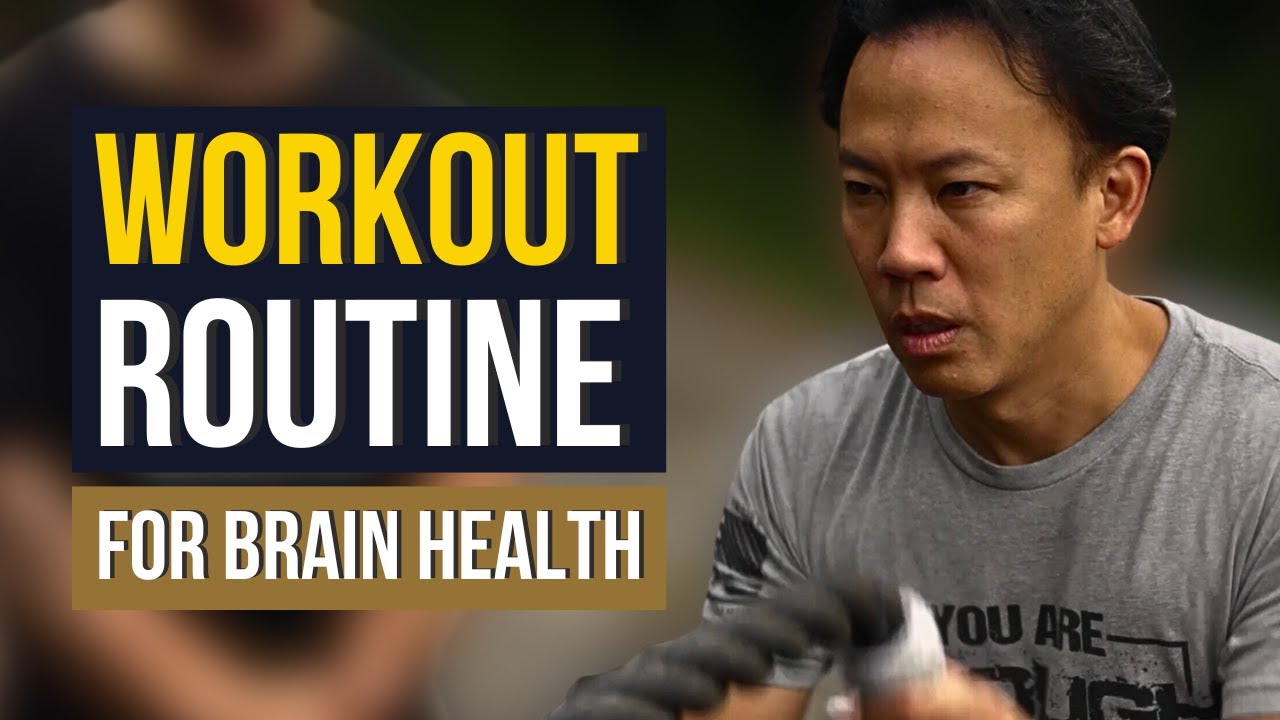
Jim Kwik explains how exercise sharpens your brain through increased blood flow, neurotransmitter release, and BDNF production. Studies from Harvard and University of British Columbia show cardio and resistance training improve memory, attention, and mood. Start with small daily movements you actually enjoy, like dancing or hiking.
Chapters
Welcome back to the Kwik Brain Podcast, where we explore practical techniques and strategies to unlock your brain's full potential. I'm your host and your brain coach, Jim Kwik of Kwik Learning. And as always, we're here to help you to learn quickly. Today we have a special episode dedicated to the topic that's often overlooked, but incredibly important, the profound connection between physical exercise and our mental fitness, our mental well-being. Now, as a cognitive performance coach, I'm frequently asked about the secrets to improving brainpower. And one of the most effective strategies I've discovered is incorporating regular exercise into our routines. Physical exercise doesn't just impact our physical health, it has a direct and profound influence on our mental health and our brain function. Now, before we dive in, I want to make sure all of you have taken our brain animal quiz. So if you haven't yet, go to mybrainanimal.com. It only takes 4 minutes, but once you discover your cognitive type, whether you're a cheetah, an owl, dolphin, or an elephant, it changes the game. And tens of thousands of you have gone through this quiz. And when you do, you get a prescribed personalized methodology for learning, for leading, for working in teams, for your productivity, your performance. And that could also inform how you exercise as well. So make sure you do that, mybrainanimal.com. And if you want to get extra points for yourself, for your learning in your life, share it with your family, share it with your team. It is, it is so enlightening. It is so informative. And that insight, knowing yourself makes the biggest difference and then having the courage to be yourself. So let's dive in behind the science of working out and how it affects your brain. When we engage in physical activity, whether it's aerobic exercises like running or When we engage in aerobic exercise, such as running, cycling, or strength training exercises like weightlifting, several remarkable things happen inside our brains. First and foremost, exercise increases blood flow to the brain, right, which delivers vital oxygen and nutrients that support cognitive function. Additionally, exercise triggers the release of chemicals in our brains known as neurotransmitters. These neurotransmitters, such as dopamine, serotonin, and norepinephrine, play essential roles in regulating our mood, reducing stress and anxiety, and improving our overall sense of well-being. Well-being. You know when you work out how you feel afterwards. I don't think anyone's ever worked out and just regretted that they did that exercise, right? In fact, exercise has been shown to be just as effective as medication in treating mild to moderate depression and anxiety. Regular physical exercise also promotes the growth and development of new neurons, a process known as neurogenesis, particularly in the hippocampus, an area of your brain critical for learning and for memory. By engaging in exercise, we're Literally enhancing our brain's capacity to learn, to process information, and retain memories. But the benefits don't stop there. Exercise also stimulates the release of brain-derived neurotrophic factors , often referred to as the fertilizer for the brain. BDNF promotes the growth of new connections between brain cells, enhances our brain's plasticity, and facilitates learning. Problem solving and creativity. And working out is, is free, right? And so I want to encourage everyone, not just the few times a week doing your CrossFit or your Pilates, to move every single day. Most of us are behind screens and we're sitting behind screens, and they say sitting is the new smoking. So my personal routine, it contributes to my mental health. It contributes to my brain health. Every morning, I prioritize exercise as part of my personal morning routine, my daily routine, and it kickstarts my day with an incredible surge of energy. It elevates my mood, and what generally is good for your mood is good for your mind. It enhances my cognitive performance all throughout the day. Now, I'm fortunate that I have a personal trainer. I'm a big believer in coaching, right? If you want to achieve anything in life, it helps to have a mentor, a coach, to be able to guide you, to be able to push you, you know, just as I am a brain coach and help with your focus, your memory, your ability to read faster, your mindset. I think it's important to have coaches in any area of your life that is important to you. Some people have a relationship coach. Some people, if you're in performance, you have maybe a voice coach or a financial coach. My personal trainer I've had for well over 15 years, his name is Flo. He's good for my body, but also good for my mindset. He's incredibly positive. And you wanna find somebody that really resonates with you, somebody that you trust both their competence and also their character. And I initially just started one day a week, you know, eventually moved up to 2 days a week and 3 days a week. And now I really crave that time. I don't always enjoy seeing him show up first thing in the morning, but I never regret it afterwards. So remember your workout routine, it doesn't have to mirror mine. It just serves as inspiration. People ask a lot in terms of different things that I do to activate my mind. The key is finding activities that you really enjoy. because if you enjoy it, it's going to more likely work for you because you're going to do it more often. It could be dancing, ballroom dancing, so good for your brain. Tennis. Some people play pickleball, table tennis, very good for the brain. We've talked about that with— in previous episodes with Dr. Daniel Amen. Swimming, wonderful for the brain. My family and I, we like to go hiking with our dogs, you know, especially long hikes over the weekend. It's a nice time to disconnect, to be able to reconnect. Some people even considered Some pretty hardcore gardening, right? You're moving, you have to build that farmer's strength, if you will. But the important thing is to move your body regularly and to make exercise a real priority in your life. Hi, this is Jim Kwik, author of the New York Times and Wall Street Journal bestseller Limitless. And today I am thrilled to share with you some exciting news. It is Limitless Expanded. It's an updated and brand new edition of my transformative guide And now it's enriched with new insights and new tools to help you navigate our post-pandemic world. For a limited time, when you preorder your copy of Limitless Expanded, you're going to get exclusive free access to my 13-day Quick Start 2.0 training. It's a brain training plus a bunch of amazing bonuses. Just go to limitlessbook.com/expanded. And pick up a copy for you and pick up a copy for a friend. And so there's been so much research that talks about the benefits of it. I'm going to list it as we always do at jimkwik.com/notes. I'll reference a lot of the studies there. And if you're— if you like to geek out over the science, then definitely go do a deep dive there and, and see the summary notes as well at jimkwik.com/notes. I also have a number of resources For those of you who want to invest in certain equipment that allows you to get greater gains in your life, greater levels of endurance, greater levels of strength, greater levels of flexibility. Just like I am a brain coach, I want your thinking to be flexible. I want your memory to be sharper and stronger. I want you to have greater brain endurance and brain energy, if you will. It's all about nurturing your brains and enhancing our mental fitness, right? And our mental well-being. And you can incorporate these exercises into your daily routine and immediately almost experience greater focus, improved memory, reduce stress, right? They say as your waistline expands, your brain actually shrinks. So how can we combat that, right? And overall uplift our mood. And so some of the research that we talk about is research on cardio, right? And cardio fitness. There was a study done at Harvard Medical School, which we'll link in the show notes, discussing how cardio exercise actually improves brain health by increasing blood flow, stimulates the release of these growth factors, and actually reduces inflammation. And we'll put that link to the Harvard study in the notes. There was a study conducted at the University of British Columbia that discovered regular aerobic exercise, regular, such as running or swimming, can improve cognitive function and may even help reverse the volume loss of your hippocampus typically seen in older adults. And we'll put that NCBI study also there in the show notes. One study published in the Proceedings Of the National Academy of Sciences found that regular aerobic exercise increases the size of the hippocampus, a brain region associated with learning and memory. And what about studies on strength training? Researchers from the University of Sydney conducted a study and found that individuals who engaged in resistance training demonstrated improved attention, improved memory, and improved ability to task switch, right? We talk about the difference between multitasking and task switching. We'll put that study also in the show notes. Harvard Health Publishing provides information on the benefits of strength training for brain health, includes its positive effects on cognitive function and mood regulation. So there's so much research on the power of exercise for your brain. And if you want to do a deep dive, I think that with these reasons, you get results. Knowing the reasons for something has to go from your head to your heart to your hands. But if you don't feel it, you're not likely to do it. And so I want to remind you, you don't have to do everything. But just start somewhere, anywhere, where we talk about S3 in our work, small, simple steps. Maybe working out an hour a day might be new for you and it could be a little confusing. And so one of the best ways to overcome confusion, right? A confused mind doesn't do anything, is to take a small, simple step. So maybe don't think about working out for an hour. Maybe work on putting on your running shoes, going for that walk, right? Maybe it's getting to the gym. Because when you get to the gym, that's usually the hard part. Because once you're there, you get into state, right? And you're more likely to be able to follow through. So the thing is, is really just find something that's enjoyable that you could be consistent. Because if you're persistent, you could reach those goals. But if you're consistent, you get to achieve them. And so I'm not a fitness expert, right? I'm not a fitness guru. I've never been like totally jacked. But one of the things I want to do though, because my work is very cognitive, like many of you. Is to be able to balance that mental activity with physical activity, right? You reach and then you restore, you replenish, and then you rest, right? Same thing with building your physical muscles. It's the same thing it takes to build your mental muscles. You have to give it novelty, some kind of stimulus, right? Some kind of a hormetic response, right? Positive stress. And then you have to feed it the proper nutrition. And in a new book that we have coming out, we're going to talk about the power of nootropics and brain nutrition. So, look for that as well. So, I want to thank you for watching this episode. And tell me, what's one new exercise or one new commitment you're going to make that's good for your body? Remember, as your body moves, your brain grooves. And I encourage you to watch this on YouTube. Join our over 1 million subscribers there, and you can actually see some of the exercises that I do with my trainer each and every day. Again, we don't stick to a specific schedule. For me, I enjoy sparring. I enjoy boxing. For me, the martial arts is about taking our mind And putting into our muscle as well. So you could pull from these ancient traditions or the latest neuroscience and physical biological sciences on how to improve your muscle mass, your flexibility, your learning, your agility, both learning agility and your life agility, to be able to move in the body. Remember, the primary reason you have a brain is to control your movement. And again, as your body moves, your brain grooves. So Reading is to your mind what exercise is to your body. You saw that video I did with Will Smith in his trailer for one of the movies. I said, what are the two things you do to keep mentally sharp? He's like, Jim, I do two things. I run every day and I read every day. I run and I read. I have to do something physical every day and something mental every single day. And I would challenge you to do the same, right? With struggle comes strength. With challenge comes change. And by putting that load on yourself, That physical demand also affects your psychology, right? You become more antifragile. You get to be more resilient. And that's a superpower in today's day and age. I want to thank you so much for watching this episode. My name is Jim Kwik. I'm your brain coach. If you enjoyed this episode, the best thing you could do, subscribe. Subscribe on Spotify, Pandora, iTunes. Join our subscription there on YouTube. Because if you miss an episode, you miss a lot. All right, so I'll see you on the next episode. Until then, be limitless. Limitless.
More from Jim





The Library of Minds: Brain Coach: How to Stay Sharp When AI Does the Thinking | Jim Kwik





