The Secret to Emotional Health with @mindbodygreen
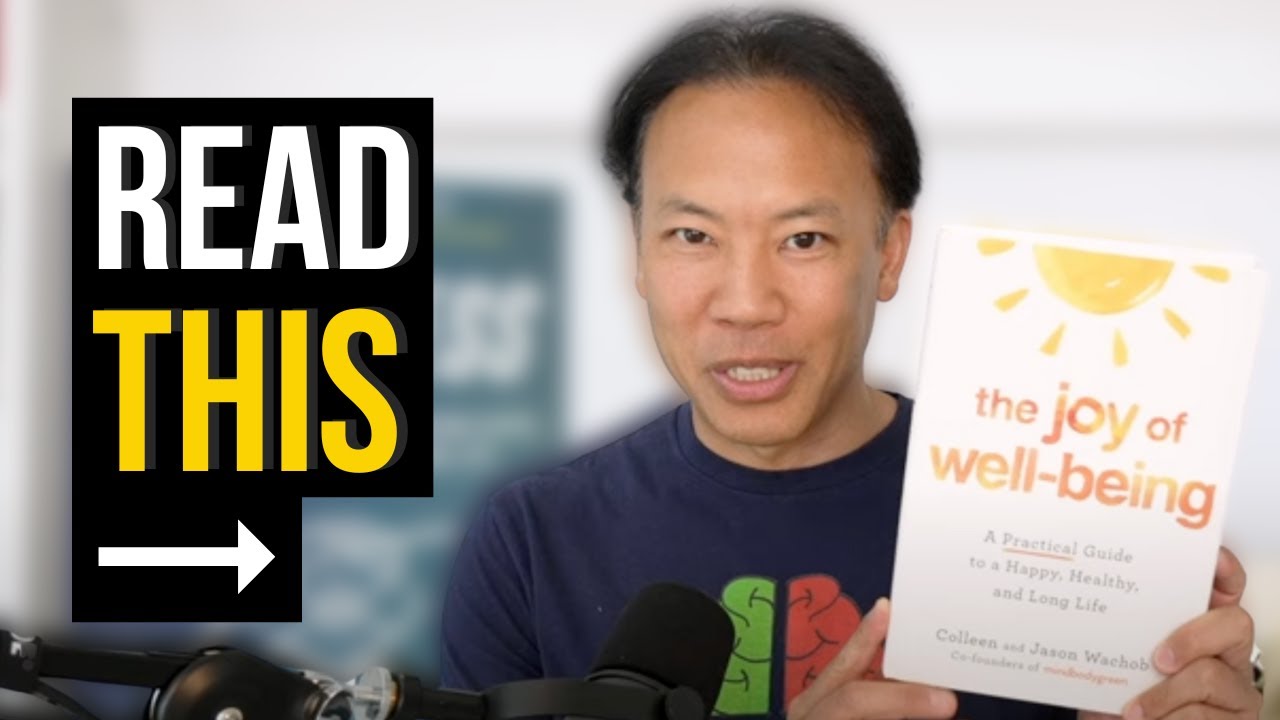
In this episode of the Kwik Brain Podcast, host Jim Kwik talks with Mindbodygreen co‑CEOs Colleen and Jason Wachob about the profound influence of real‑world social connections on brain health, longevity, and overall well‑being. The conversation begins with a discussion of how digital algorithms reward anger‑inducing content, citing a Wharton study that found anger boosts virality by 34% and that anxiety, awe, and anger dominate the most‑shared New York Times articles. The hosts then shift to the health implications of social isolation, referencing a 2019 Cigna survey that only half of Americans report meaningful daily face‑to‑face interactions and a study equating loneliness to smoking 15 cigarettes a day. The historic Roseto study is highlighted to illustrate how strong, multigenerational social ties dramatically reduced heart disease, underscoring the heart‑brain connection. Colleen and Jason stress that building social connection requires the same intentionality as business KPIs: schedule outreach, use simple prompts (e.g., “Been thinking of you”), and develop a personal mission statement to identify what brings joy. Practical habits are offered—regular walks (a UK study of 78,000 adults linked 10,000 daily steps to a 51% lower dementia risk), walking with a friend, and treating food as a pleasurable “treat” rather than a “cheat” to foster a healthier mindset. They differentiate digital interaction from in‑person contact, noting that physical hugs trigger oxytocin responses that texts cannot replicate, while still recognizing the utility of tools like FaceTime for distant family. The dialogue introduces the concept of “joyspan,” an evolution beyond longevity and healthspan that emphasizes purpose, joy, and meaningful relationships as the ultimate goal of a long life. Purpose is framed as the final chapter of their book, essential for sustaining all other health practices. The hosts conclude with actionable takeaways: be rigidly flexible, prioritize intentional connection, and adopt a purpose‑driven approach to well‑being. Listeners are encouraged to read the book “The Joy of Well‑Being,” visit thejoyofwellbeing.com, and share what brings them joy on social media for a chance to win a copy.
Chapters
Number 1 was anger. Anger increased virality by 34%. In other words, if someone were to read an article in the New York Times and that article caused that person to be angry, it was more likely to be read, watched, shared, commented on, widely distributed. So anger equals clicks and revenue.
I think it requires the same amount of intentionality that you may apply to your business KPIs, that you may apply to your business objectives in the same way that you would write them out and calendar them in. If this is a new muscle for you, you actually have to do that with your social connections as well.
Welcome back, Kwik Brains. I am your host of the Kwik Brain Podcast and your brain coach, Jim Kwik. And what we're gonna talk about today, your question for today is how does in real life connection influence our brain health and our longevity. And with us today, we have 2 guests, Colleen and Jason Wahlgren. They are the founders of, and many of you know this brand, and co-CEOs of Mindbodygreen, which is the leading independent media brand dedicated to wellbeing with 15 million, that's right, 15 million monthly unique visitors. And they're also the hosts of the popular Mindbodygreen podcast and author of a brand new book, which I really enjoyed reading. And we know Readers Are Leaders. And this is The Joy of Well-Being: A Practical Guide to a Happy, Healthy, and a Long Life. Thank you both for joining us on the show.
Oh, thanks so much for having us, Jim. We're big fans, so it's an honor to be with you.
Thank you so much for having us.
Thank you. Thank you both. You know, our team really, we enjoyed reading the book and, you know, we were having discussions about it on our recent call. And what I wanted to focus on, not only on in real life connection, But there's part of it that I think our audience is going to get a lot of value out of and something that they really feel, which is you talk about the rise of algorithms and their impact on our health and on our nutrition, our brain health, our mental health, and how we could foster a more balanced and less kind of polarizing environment for shared health information online because a confused mind doesn't do anything. And like, you know, who do you trust and how do you filter this information? And with algorithms, you know, we talk about it in Limitless. We talk about 4 Ds, if you will, of the horsemen of the mental apocalypse: digital distraction, digital deluge, which is the overload, digital dementia, which is where we're outsourcing our memory to our smart devices. And, you know, I know we're gonna talk about this when I'm a guest on your show, so I encourage everyone to follow your podcast. And of course, we'll put links in the show notes at jimkwik.com/notes. But the 4th one I termed digital deduction, which is the high reliance on technology. It's even doing the thinking for us nowadays. And so what's your general take or perception when we're addressing technology in real life and algorithms? Paint us a picture.
I'm so glad you asked this question because it's a big why of why we wrote this book. You know, unfortunately the world we live in, it, there is information overload. There, there's so much information in health and wellness, and there are so many great experts and influencers, but it, but it's too much. And unfortunately the way to stand out is to have an extreme point of view. And I think the study that really hit home for us was one that came out of the Wharton School, the University of Pennsylvania, where they analyzed the most viral articles in the New York Times. This is the New York Times, one of the most widely read papers in the world. And they looked at the most emailed list. This is the list you wanna be on if you're, If you're a writer at the New York Times. And they classified the articles by emotion to see if there were any patterns. And there were. And the top 3 emotions were anxiety, awe, and anger.
Wow.
Yeah. Number 1 was anger. Anger increased virality by 34%. In other words, if someone were to read an article in the New York Times and that article caused that person to be angry, it was more likely to be read, watched, shared, commented on, widely distributed. So anger equals clicks and revenue. And I don't think this is exclusive to the New York Times. Unfortunately, this is the way the algorithms work in social media. And that doesn't really reward having a balanced, reasonable, point of view. It rewards extreme points of view that incite anger. And we see that all the time in health and wellness. And that was a big why behind our book.
And I could appreciate them.
What do you—
the two of you— so then what would you suppose the role— what role do you think social media platforms and the creators, the content creators, what role should they play in promoting health and evidence-based information rather than if the goal is to get clicks and the goal is to get likes and engagement. There's this, you know, great power comes great responsibility. What does that role look like then?
100% agree. I think that role is a very difficult one for creators. And I think there are very few experts and influencers, you're one of them, who's able to put out information that is trustworthy, which is science-driven and inspiring. Because quite frankly, it's more difficult to do. It's a lot easier to put out content that is divisive and incites anger, and it has an extreme point of view. A whole different ballgame when you're really putting out stuff that's content that's inspiring and driven by science. You're one of the few people who do it. It's a lot more difficult.
And there has to be a value system That is the underpinning of all of the social media engagement and discourse. Because sure, you have to be a little punchy to get people's attention, but you can't do it at a fault of the underlying value system of which your brand or your belief system is based. And I think that's where people run afoul.
You know, we talk about a lot in our podcast mental health and really starting a lot with also brain health. And your book also talks about Social connections. And so it's not just our biological network, you know, our neurological networks in terms of what affects our performance and our productivity, even our peace of mind. But how do our social networks contribute to greater brain health, particularly in terms of, you know, cognitive function, mental wellness, and well-being?
Well, you know, I think in the context of longevity, we spend a lot of time talking about cardiovascular disease and That's number one killer. But every doctor, every expert in the space knows what is good for the heart is good for the brain, and they go hand in hand. And I think in the conversation around longevity, you don't necessarily want to be fit and healthy, but be really suffering with cognitive decline. I don't think anyone wants that.
Yeah.
Or vice versa. And coming back to connection, I think In our space, nutrition and exercise are foundational. They're paramount, but they're, but they're pretty easy to get an understanding of. You know, I, I kind of know if I'm eating well, I know if I'm working out enough, but when it comes to connection with our emotional wellbeing, the questions might be a little bit more difficult. You know, you answer, you ask yourself, it's the middle of the night and there's a crisis. Who are the people I call? And, and maybe no one's on that list.
Mm-hmm.
And maybe that requires a lot of a lot of work internally and beginning a process of asking questions you don't necessarily want to answer. And I think coming out of COVID it's just been clear with the mental health crisis and the decline in how long we live here in America, that connection is paramount. There was a 2019 study out of Cigna that said only half of Americans say they had meaningful day-to-day face-to-face social interactions. This is 2019. Can you imagine? How terrible that statistic is today. You know, a study that's making the rounds right now, uh, essentially saying that smoking, uh, and loneliness, uh, you know, comparing the two where being lonely is, is just like smoking 15 cigarettes a day. And, and that's horrifying. You know, there, there's one study that, that I particularly love, which really hit home for me because I can easily get caught up in nutrition and exercise and, and all the testing. is a study called the Roseto Study. And Roseto was this small town in rural Pennsylvania in the 1950s. And this is when heart disease arrives in America, except in Roseto. In Roseto, the rate of heart attacks for those under 65 was half that of the nation.
Wow.
Men under 55, no, no cases, nonexistent. And so they took a look, what are they doing at Roseto? What's the secret? Well, they were smoking, they were drinking, they were eating lots of pasta and meatballs. This makes absolutely no sense. And so they, they, they took a deeper look and these people had unbelievably strong social connections. Multigenerational living was paramount. There were lots of parades, parties. They were enjoying the wine and food with family and friends. And then the 1960s community starts to break up. People move away. Guess what? Heart disease arrives and catches up with the national average. And to me, this just speaks to the power and the magic of social connections and how we need to be stimulated. around people we love, around conversation, because if we don't, we suffer.
I would say it's interesting because when you flip through social media or some podcasts, most of them focus on those, on diet, you know, and exercise. And it's incredible in terms of when it's weighted in terms of what really moves the needle for both happiness and health. So, are there specific activities that the two of you like certain practices that an individual who's listening right now can incorporate into their daily lives with their team, with their family to promote brain health, particularly in the context of social connections and emotional well-being? We'll put a link also to that recent study on loneliness and cigarette smoking, that comparative. But in terms of solid connections and emotional well-being, what are some— how do people do that if they're Working from home, and does it matter if it's in person or if it's, you know, on FaceTime or Zoom?
Yeah, in 2023, I think social connection is the most underrated drug out there in terms of its impact on your own health and well-being. There is an intentionality to it that you need to have in order to incorporate it into your life. And as new residents of Miami, a place where we didn't really have a ton of friends and community here, we had to intentionally incorporate community and friendship into our lives. And what that And I found myself being the first person to text and asking another woman out on a date so that we could hang out and build community. I think it requires the same amount of intentionality that you may apply to your business KPIs, that you may apply to your business objectives in the same way that you would write them out and calendar them in. If this is a new muscle for you, you actually have to do that with your social connections as well to ensure that it happens because it is a new muscle for many of us. And I think that's a great point. And then there's also keeping in touch with old acquaintances. And Esther Perel, you know, a phenomenal relationships expert who Jason's had on the podcast, has just given us an easy prompt of how to do that when you have fallen out of touch with people. Hey, been thinking of you. Would love to reconnect. I think it's, you know, a few steps that are really intentional that you have to make. And if you're totally unclear of where to start, influencer Arthur Brooks, a phenomenal journalist, has the concept of a personal mission statement. And one of the questions that we ask in the, in the Joy of Well-Being is what brings you joy? And if you can't answer that, I think there's probably some introspection that needs to happen. But it's oftentimes in those moments where you are experiencing joy, where you're in your own groove, that you're likely going to meet other people who have like-minded interests. And it's a first place to start building community. I don't think you necessarily just need to look at your work as your community, but really look at the entire world as your ecosystem of a place to help build and forge those relationships.
And if you don't know where to start, go for a walk. Walking is one of the most underrated practices. There was a great study out of the UK, 78,000 adults. They found that clocking around 10,000 steps a day was correlated with a 51% risk reduction in dementia.
Wow.
So kill two birds with one stone. Go walk with a friend. There's someone that you haven't, you don't have to go out for a dinner date or coffee. Hey, let's just go for a walk and see what happens.
Do you have too much to read but too little time? Are your shelves full of books that you haven't read yet and become shelf help, not self-help? And that's why I created the Kwik Reading Course. 15 minutes a day, 21 days will absolutely transform your life. Just go to kwikbrain.com/reading, use the code PODCAST15, and you'll get instant access. And are digital interactions a substitute for face-to-face interactions? I mean, is there a difference between FaceTiming somebody or being on the phone with someone as you go for a walk or actually being shoulder to shoulder with somebody?
There is a distinction, and I don't want to completely ignore the value of digital interactions because FaceTime, for instance, is a wonderful tool for my daughters to connect with their grandparents who live on a completely opposite coast. But I also don't want it to be a substitute for when someone's, you know, really going through it, really in need of emotional response. Because there are studies that show that when someone gets a text message from someone that's saying, I'm thinking about you, is everything okay, it doesn't have the same impact as when a parent is giving them a hug and leaning in and asking how they're doing. It doesn't create the same oxytocin response in the body. And not all connection is created equal. So I think we need to leverage technology where it makes sense, but also be mindful that it's not a replacement for human interaction.
It's interesting in terms of having that intentionality and just being conscious. Even if people just set a goal for themselves to meet or connect with one person a day and take small, simple steps, I find that taking one step in another direction could completely change someone's destination. But that intentionality presupposes somebody has also some level of purpose. And so have you looked into how having a sense of purpose and community helps to maintain or even improve our brain health at various ages and stages?
Yeah, look, I think purpose is a big one. And in many ways, look, it's the last chapter of our book. And that's because if you don't have purpose, I think it kind of negates all the good work you're doing in the rest of your life with regards to exercise, nutrition, breath, sleep, all the, the whole kit and caboodle. Because if you don't know why you're getting out of the bed, out of bed in the morning, if you don't think you have a, a higher calling, if you're not feeling useful and relevant, if you're not, you know, devoting any part of your life to caring for others, if you're not thinking about how I can contribute to the world, I don't think you're gonna be happy. I don't think you hear anecdotally, you hear this all the time about, about someone who loses their, their purpose. They are married to their work and the work goes away and they deteriorate rapidly. And I, I think it's for all those reasons. I think you need to really, you know, going back to the why of the book, you know, I think a lot of the conversation on longevity is just like, let's get you to live a long life and be healthy. But I think you need to have the why. What's the intention behind it? What do you want to be doing? How do you want to be spending your time? Who do you want to be spending it with? What do you want to be physically able to do? What cognitively do you want to be able to do? And I think that's part of the conversation we don't spend enough time because if you can't answer all the questions I just went through, I think you're going to be pretty miserable.
You have a lot of these questions also in the book because I was highlighting them, things like why do you get out of bed in the morning? You know, is it about achieving or is it about, you know, finding fulfillment and joy, the joy of even helping others, having a calling? And sometimes, for me, passion is kind of what lights somebody up. Like learning is a passion of mine. We can have many different passions. For purpose, it's like, how do you use your passion to light somebody else up? So I, you know, teach people how to learn and then it helps to light them up, which I feel like it's important. There's a phrase About, um, you prefer to treat instead of cheat. Was that it?
Yeah. Oh, that's a big one, Jim. I'm glad you brought that up. And I think, look, there are many objections to what we do, you know, in terms of being healthy and fit. Uh, one of them is time. One of them is resources. And we felt like pretty good that we can address those objections. So no matter your time limits or resources, to some degree, assuming you're able-bodied, like we can get you to 80% of your wellbeing. And the other big objection is many people think we're exclusionary, we being the health and wellness category, not Collin and Jason, my buddy.
Right.
And, and look, I, I get it cuz I think quickly you can go to a place in the, in the age of Instagram and TikTok and glorification where you're not good enough and there's guilt or shame if you're not perfect. And just this idea, no matter, you know, any kind of diet or, or nutrition protocol you're following usually allows for some sort of dessert, whether it's a, a specific meal or a day. And just from a mindset perspective, people tend to use the word cheat. We don't like that at all. We believe in treat. This is something you should enjoy. We think from a mindset perspective, it just sends completely the wrong message. If you're gonna have a, usually this is, you know, something with sugar and carbs, uh, you should really enjoy it. And, and have it be a treat and not be something that you're ashamed of. I think from a mindset perspective, it just really sets people up for fail.
And only you can determine what your well-lived life looks like. And as you go on that journey of mapping it out, it's important that you cultivate these joyful experiences, whether it's food as ritual or whatever it may be, and indulge and enjoy and, and get rid of the guilt.
If you're going to have a donut, have an incredible donut. Don't have a crappy donut. Enjoy it. Just don't do it every day.
And it's not— so it's not just what you eat that matters, it's actually how you do it, you know, in the state that you're doing it and in the mindset around that, your attitudes and assumptions about it. You know, instead of lifespan, you have this term in there talking about joy span.
Yeah, and I think, you know, the conversation, the 1.0 was longevity. Let's get you to 100 years old. The 2.0 is healthspan because you want to be healthy and mobile and active. So let's say, let's be healthy and mobile and active for 99 years, 11 months, 30 days, and then rapidly decline over the last year, maybe, you know, die in your sleep.
Yeah.
And then what we like is the 3.0 of joyspan. You know, what's the point if you're, if you're healthy and fit, but, you know, maybe you're cognitively not all there or you're miserable and you're Family won't talk to you and you have no friends. You know, what, what's your why? And I think that's just more critical, getting to the why. What is your intention behind longevity? Living a long life for the sake of accumulating years, in our view, is just pointless.
Yeah. I love that you were— use the word joy because this is a conversation that is, is very timely and it's also very timeless. Where do people get the book, by the way?
So you could go to thejoyofwellbeing.com or Amazon or any of your favorite book retailers.
Amazing. And then, so I would love for each of you, if there was one takeaway, and it's hard, you know, to consolidate, that's why people need to get the book. If there was one takeaway, each of you, in terms of our listeners or people who are watching on YouTube, what would each of you kind of recommend? Just kind of one thing that people could put into a new insight or instruction, an idea into the minds and hearts of of our community?
I think for me, I would say what I've learned in being in this space for 14 years and seeing a lot of trends and fads and seeing how I've changed, you know, my 20s through now being 48, I would say be flexible and be rigid about being flexible. I feel like the word—
Rigid about being flexible.
Rigid, like really force yourself to be flexible and be open to different points of view because odds are things are going to change and As you, as you grow. And our goal with the book is to give you the right information so that you can truly become the CEO of your own health and make the right decisions for you. And we're confident we can get you 80% there with minimal time and effort.
Wow. That's a really good return.
I hope that people listen to the whispers in their body so that they know that when something in their life, whether it's physical, whether it's mental health, emotional health, is outta balance, they don't have to wait. until something really catastrophic happens to make changes to their life. I think every day we can be asking ourselves, you know, is this the life I wanna be living and how do I get closer to there? What do I want it to look like? And what are the questions I need to be asking myself on a daily, weekly, quarterly basis to ensure that I'm living my version of a well-lived life?
Because it's different for everybody.
Totally. That's the hard part.
Yeah. So there's really, there's a science, but then there's also, there's an art to it. For sure. Colleen and Jason, I want to thank you so much for being on our show. All our listeners, I encourage everyone to get multiple copies. You know, one of the reasons why we always talk about, you know, you read to succeed. If somebody has decades of experience and they put that knowledge, those insights and inspiration into a book and you can read that book in a few days, especially our community as quick readers, then you can download decades into days. And what more important topic of conversation or prioritizing You know, is more important than our joy, you know, in terms of our— I love this. I'm gonna start using this term joy span, you know, a lot. And I appreciate how words could affect the way we perceive the world. And, you know, and how can we bring more joy? So not only just add more years to our life, but more life to our years. So I recommend everyone get 3 copies, you know, 1 for yourself and 2 to be able to gift to friends and family members. Because I feel like that's the greatest gift ever. But Colleen and Jason, thank you so much for being on our show.
Thanks so much, Jim.
Thank you so much. Be well.
Yeah, thank you, everybody. I want to thank you very much for listening. Make sure you subscribe. We always recommend people join our YouTube. We put the extended version beyond 20 minutes on our YouTube channel. Join over 1.1 million subscribers there. And a quick giveaway. I have quite a few copies of this book. So what I would love to do is if People would do this, take a screenshot of this podcast in whatever medium you're consuming it right now and post it and tag me and tag—
Mindbodygreen.
@mindbodygreen. Perfect. So we get to see it. And what do you want them to share? Maybe we could ask them to make the post and share one thing. What do you want them to share? Maybe a question that they're answering?
Or something that brings them joy.
Yeah. What's one thing or one person or situation or anything that brings you joy? I'll repost some of my favorites because you'll tag us both and so we get to see it. And I'll actually gift a copy of the book to one of our listeners just as a thank you. So help us spread the joy, you know, around the world. It's kind of like that butterfly effect, right?
Love it.
Butterfly flapping its wings somewhere, you know, it changes the cosmos, you know, with that ripple effect. So, you know, it's— this is such an important thing to be able to value now in a time of turbulence and change. And if it bleeds, it leads. And, you know, it's amazing. In terms of— I'm glad things that are awe-inspiring goes viral, but things that are driving anxiety and anger, not so good. So maybe everyone here could step up and be that source of light in a dim world.
More from Jim





The Library of Minds: Brain Coach: How to Stay Sharp When AI Does the Thinking | Jim Kwik





