Turning Emotional And Mental Pain Into Motivation with Jay Glazer & Jim Kwik
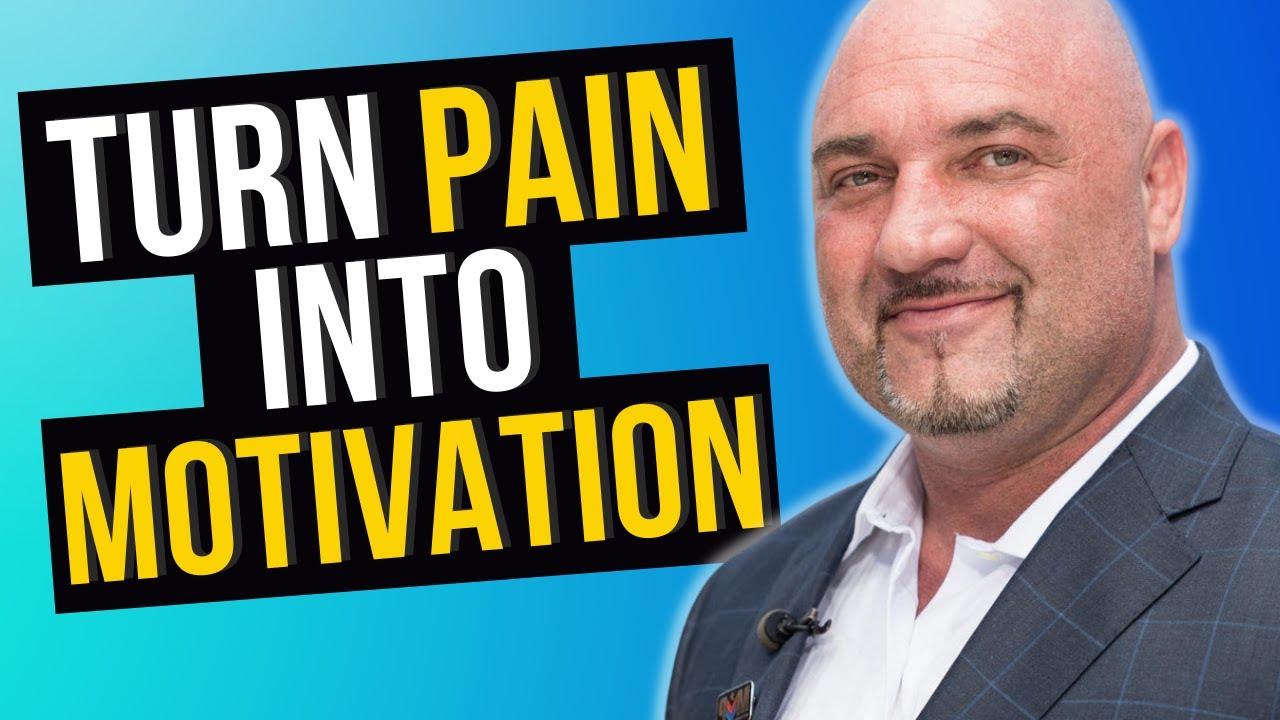
In this Kwik Brains episode, host Jim Kwik interviews NFL insider and mental‑health advocate Jay Glazer about his journey from chronic depression and anxiety—what he calls "the gray"—to becoming the author of the bestseller Unbreakable: Lessons for Living from a Mental Health Warrior. Glazer shares raw personal stories from his childhood, his career in sports, and his battles with physical injuries, illustrating how he turned mental anguish into motivation. He explains key concepts from his book: the three pillars for dealing with the gray, the importance of laughter, relentless work ethic, service, and a supportive team. Practical coping tactics are discussed, such as making a conscious decision to get out of bed, calling a trusted teammate, and using vulnerability to break stigma. The conversation also covers the idea that adversity is a gift, the unbreakable mindset (relentlessness, embracing imperfection, outworking the world), and the power of community and loyalty. Throughout, Glazer emphasizes that sharing one’s story can inspire others, and both hosts repeatedly encourage listeners to read the book, share the episode, and connect on social media.
Chapters
Welcome back, Kwik Brains. Your question for today is, how do you go from broken to unbreakable? We're going to talk about turning fear and depression, anxiety, the things that many of us have been dealing with, especially the past couple years, into motivation, into power. And our special guest today is Jay Glazer. Some of you know him from NFL Insider. He is a mental health advocate, which obviously is a huge shared purpose for us. And he's also author of The Brand new book called Unbreakable: Lessons for Living from a Mental Health Warrior. Basically how he turned his depression, anxiety into motivation, and you can too. Welcome to the show, Jay.
Thank you, brother. Appreciate you having me. I'm excited for this.
So I'm seeing this book everywhere and our buddy Dwayne had you on an Instagram Live, and I know he wrote the foreword and he was touting it, how important this book is now. And so I wanted to connect with you and just, first of all, thank you for writing a stellar book.
Thank you, I appreciate that. That means a lot. And we've been friends for a while, and I was in ballers with him, but we lean on each other a lot for mental health. And he said, you're going to be the voice for the gray. So instead of just writing a blurb, he wanted to do the foreword. He said, you're going to be the voice. And look, we all talk about mental health, but who describes it, right? So I want to be the one to really describe it for everybody out there so they can start talking to their loved ones about how— and what I say by the gray I call the gray the world, the view, my lens. And that's depression and anxiety together. And it's a constant thing for me. It's— I'm never not in the gray. But the more I can give people words of how to deal with the gray, the more they can have that conversation. They don't have to suffer in silence, or they can connect with their husband or wife or, or mom or daughter or son or, you know, grandkids. It's, it's really been overwhelming.
Now, it's interesting. Some people who watch you on TV, they might be used to you laughing and joking. And so you Talking about living in this gray and you just described what is the gray. I think a lot of listeners might be surprised.
You know, yeah. Let's just keep looking. You go, how could you live in the gray? You got this great life. You talk about football and fighting and ballers. And I do have a great life. Like, don't get me wrong. I have a phenomenal life, but in between my ears sucks. So in my wallet, it's not an antidepressant. So for me, what the gray is, it's something I wake up with every single day. And I don't know which version of me I'm going to wake up with. Usually I wake up thinking the sky is falling, thinking my universe is coming crashing down around me, thinking the world hates me, when logically it doesn't make any sense. But that's just the way I feel behind my rib cage. So every day I have to do things to get myself out of bed. Getting myself out of bed every day is a daily battle. It is a daily battle. It— this level of gray that I have, which is from my earliest childhood memory, So I don't know anything else besides the gray. And I didn't sign up for this. I didn't ask for it when I was born. Hey, give me depression, anxiety. I didn't ask for that. The only thing I could do is figure out how to beat it back every single day. And God blessed me with the ability to communicate. So I'm going to use that to communicate it to others and to coach people through. But you said something real interesting, like everybody sees me on TV laughing and Have this big personality and I kind of call it my depression complex. I'm a short guy. I don't have the Napoleon complex. I got the depression complex. Like I have to do big, big things and make— it's a mask to mask the pain. But also the quicker I can get a laugh out of you or even me, the gray hates laughter. So it slices through the gray to see some blue.
I know you talk about in the book laughter and the importance of having a team and service. I just, what I want to talk about also is just how raw you are, even on social media. It's interesting because a lot of people will see images of people on social media, and usually it's this highlight trailer of this beautiful life. But a lot of us, a lot of people are— you could walk past somebody and they can be fighting the battle of their life and you won't even know it. And what I like on Instagram, I know we're connected there, you do these mental health check-ins that are extremely raw, extremely real. I mean, what's the response been On that, you know, when you started posting, what was the impetus for, for starting sharing something so raw?
When I sent the book in, the people at HarperCollins and Dave Street and The 8th, they're like, oh my God, you're going to change the world. And when I sent it to Dwayne and some friends, like, you're going to change the world. Well, the book wasn't coming out for a while. Well, one of the things I used to get through the gray, which I talk about a lot in the book, is being of service. And like, I'm authentic, you know. I don't use— and you're right, you just talked about our big problem we have in our world right now. There's a lot of people are comparing themselves to everybody else's filtered fraction of a second here. So also we think our lives suck when they don't, but we feel left out. So I wanted to go the other way. I didn't want to wait for the book to come out. I wanted to start helping people as quickly as I could. and just be raw and real and vulnerable from somebody they see every day in a different light. And it's been— it's really been uplifting. It's me being of service to the world, but all of a sudden I'm connecting teammates.
Yeah.
And that's another thing. I wrote this book because one of my other pillars is, is like, I need a team. And the more teammates I can get out there who understand what goes on between my ears, the more of us we can walk this walk together. So I wrote this book For everyone out there. So you all have teammates, but I wrote it to lift me up as well. Like, I'm, I'm a flawed human being that's still working on himself, that still doesn't know how to feel worthy of being loved and doesn't know how to get any love from the inside out. The title is How I Turned My Depression and Anxiety into Motivation, and You Can Too. Because I don't know how to love myself from the inside out, it actually motivated me to go to do all these great things to get some love from the outside in. And that's the only love I'm able to receive. That's what I'm capable, capable, or what I know how to do, but I'm working on myself from the inside out. So I'm hoping at one point they meet in the middle and I can live a life either in a different shade of gray or actually some blues, blue one day.
Well, I appreciate the real and the rawness because it gives people at home permission that they don't have to be perfect at all, that everyone is going through things. We all are. And that part of Part of this, to be unbreakable, is just working daily, being in love with that person in the mirror who's been through so much but is still standing, you know? Like, what if we started—
Yeah, like those 15 minutes I lay my head on my pillow at night, man, that's the worst time of my day. I'm laying there alone with someone I don't know how to like or love or feel. And here, all I want is love in my life. That's all I want. My soul, I don't want it. Yet when you don't feel worthy of it, I'm stuck in this one big contradiction. I want it so bad, yet I don't feel worthy of it. And then it gets the loneliness and the bleakness gets a little darker here, but I know how to get others out of their own rut, if you will. And that does lift me up.
You know, when I was reading your book, I have to be honest, like some of that, it gets a little misty going through. And that's why I wanted you on the show to share with, with our listeners that it's okay not to be okay. Some people view emotional and mental pain less traumatic than physical pain. And I know, you know what it's like to be in physical pain, being an MMA fighter, a trainer, an athlete. Emotional and mental pain is actually more common than, than physical pain, and it's a lot harder to bear. It's a lot easier to say, oh, my knee hurts, than it is to say my heart or my spirit is broken.
I used to say that to these athletes all the time. When we hurt our elbow, we run to the trainer's table and we go run into treatment every day, so we're back stronger than ever. Well, why don't we do that when the biggest muscle in our body hurts? Why aren't we doing that immediately? And by the way, when things are going well, like when you're the heavyweight champ of the world, you don't stop practicing.
Yeah.
You keep practicing, you keep getting better. Should be the same thing we do with therapy and working on ourselves. So, you know, when my version of the gray hits, it is a visceral physical reaction. So my depression, anxiety are bad, I feel it behind my rib cage. on the left side of my gut. It's not the right side.
Interesting.
And we hear, right, gut punch, or, you know, feeling in your gut. So I feel on the left side of my gut, and then my joints ache like I was just in a 50-round fight. It's, it's, um, funny because I have all these other injuries from fighting, and I'm so proud. When I walk in a room, I look at everybody in there, I like the rest of you, because I've stepped in the cage with Randy Couture and Chuck Liddell and got Punched and kicked the baddest dudes on the planet. I've trained over 1,000 NFL players, wrestled them all. And I'm proud that I'm missing my L4, L5. I'm proud that there's my L1, L2, just a little piece left. I'm proud that I've herniated C2, 3, 4, 5, that I've dislocated that, tore my labrum here, tore my rotator cuff here, broke my ankle twice, broke that 7 times. Proud of it. But now I want to be proud of my mental scars. So I'm proud of my physical scars. Now I want to be proud of my mental scars. So Another reason for this book, I'm able to open up and be like, there's no shame in this. I'm proud of this. These are the things I've overcome. Right? So I went through this deep, dark tunnel and it couldn't break me. And I got through the other side. So I'm proud of that. And I want— I really am trying to get us all to see if we can switch the narrative of, you know, I don't want to be victimized. It's you overcame this. Whatever it was, you overcame it. It didn't break you. You came through the other side of that tunnel.
But it's a reminder to everyone who's listening that our scars are— they're proof that, that you were stronger than whatever you were facing at that time. Now, when you're going and you're ruminating and you're by yourself at night, right, the cameras aren't on you and all, you know, your fans and just the people, and you have those thoughts, and— or even when you wake up, you know, first thing in the morning and you're in that, you know, deep, dark, or gray place, what's the first thing you do to get Get yourself in moving, right?
Why make the decision to get out of bed? I was— I just did an appearance for a company and I was talking about this, and a 75-year-old man raised his hand. He said, Jay, it's hard for me to get out of bed. It was hard for me to get out of bed to come here today. But you talk about being relentless. I'm like, I do go after life relentlessly because I'm trying to do all these great things on the outside to get that outside love. He said, but how do you get out of bed? If that— you have the same feeling? I said, the moment I make the decision to get out of bed, like, that's the first thing. No matter how bad I am, I make that decision. If I'm really bad, I will call someone. Nowadays I call someone and say, hey man, I'm in a bad place, I need some help. Usually I'll call a training partner, come on over and let's train and let's spar. Like, give me, give me more CTE, that'll make me feel good. But I'll now call someone and say, man, I'm having a hard one today. Once I make that decision to get out of bed, I go after life relentlessly. That's my choice. And, and by the way, that man, I said to him, is this the first time you've— you're in front of your whole company here. Have you ever told them that you suffer from this anxiety? He said, no, I haven't. I said, think how brave that is, that what you just did. And the whole place got up and gave him a standing ovation.
Wow.
So everybody at 75 years, never talked about it. So everybody out there A standing ovation is waiting for you in some form or another by you opening up to somebody, by you telling somebody. Your friends are not going to laugh at you. No one's going to tell you to suck it up. No one's going to call you a wuss. And that took me some getting used to. It's kind of weird too, like who I opened up to and who I didn't. This thing plays by its own set of rules, but there is no shame in it. No shame. We got to start being proud of it. Open up to people and—
Yeah.
Ready to receive you.
It's interesting how vulnerability can make you more invulnerable when you're willing to, to go through and be yourself and be authentic and be transparent. And it's amazing how many people are potential teammates around us that we, we might not even know.
You know, here's the craziest thing. My best friend since day one in this business is Michael Strahan. Oh, my baby sister. He is— we met in 1993, best friends. We helped each other in so many ways along the year, so many ways along the He's yours. About 2 months ago, we were supposed to go out to dinner, and man, the beast just got out of the box. It just got— it just whipped my butt that day. And I called him, and normally in the past, I just sucked it up, gone out, probably had some manic moments, would have done some dumb stuff, and just hidden it and covered it up, and then felt shame from doing that. This time I said to him, hey man, I can't go to dinner. He said, why not? I said, Man, Beast just got out of the box and just, it's just kicked my butt, woke me up, which it normally doesn't do. It just got me. And again, I just felt, felt it in my joints. And he said, you want me to come over? And I said, no, I'm all right. He said, do you want to talk about it? I said, I do, not tonight. I just want to go to bed tonight and start fresh tomorrow. And then he said, why have you never talked to me about it? I've known you for 30 years. Why have you never told me about this? I said, man, I don't make up the rules of this thing. For some reason with you, I had shame. I felt ashamed. But if I had this conversation with him 30 years ago, look what his reaction was. His reaction was, can I come over? Do you want to talk about it?
Yeah.
I got my best friend to walk this walk with me for 30 years that I could have turned to for help and That's what I want people to understand. Whether you have my level of the gray or we've all been, we all have something. We just went through a pandemic. We were told to socially isolate, right? So we all have some form of gray or we know somebody who has it and you want the words to connect with. This book gives you those words to connect, but connect with those people.
And you talk about in the book also the importance. I mean, you talk about the gray, you talk about outworking the world. You also talk about teammates and loyalty.
Yes, loyalty is a dying art. You know, people nowadays want to climb up so much and climb the ladder so fast. Not for me. You know, when I walked in that Giant locker room in 1993, after 4 years of having no pay and then covering the Giants for $9,700 a year for 10 years, something stupid like that, I walked in, I said, how could I be different from everybody else? Like, and A, I was going to start relationships and not use my pen as a weapon, which the other reporters, the older reporters were doing at that time.
Yeah.
B, I made that decision of I'm not gonna outwork them by a little, I'm gonna outwork them by a lot. If they're working 40 hours a week, I'm gonna work 100 hours a week, not 42 hours a week. I'm gonna outwork them by a lot. I will be the last dude standing. And I was also willing to be rejected over and over and over, which for somebody like me with such mental health issues and self-esteem issues, you only get rejected, that's hard. But that's where if you want your dreams to come true You know, my dad told me at an early age, be the most loyal person in the room and outwork the world and your dreams will come true. Now, my overnight success was 11 years. That big break took 11 years. Like, it doesn't— that's just in the movies. It's, you know, how much we keep battling and battling and battling, and it's exhausting. Listen, being great is lonely. It's putting in hours when no one else is watching.
I heard this recently. I don't know who to attribute it to, but if you don't, you know, sacrifice for what you want, what you want is what you're gonna sacrifice. You know, and it's one of those things you talk about in the book, adversity. And I know our listeners, we all have challenges. And I believe my 2 biggest challenges were learning. I had 3 traumatic brain injuries when I was a child. So I had severe learning challenges. I couldn't read, I couldn't write, I couldn't do simple things that kids could do. And, but those struggles became strengths. And you talk about in the book, you know, and I know we have listeners that are going through challenging times, they're going through adversity. What's your perspective on adversity?
Adversity is a gift.
Is a gift.
Wow. Is a gift. If you— if somebody asked me years ago, what's the one thing you would give to your kid, I'd say adversity. Let him get through something. That's how you learn. Like, again, I was, I was rejected 50 times a week, every week, but it gave me this work ethic. And also, when I finally— like, I made that decision. You find out, you find out about yourself a couple times in your life, and I made that decision to never quit or give up. That's the easiest option in the world. It sits on your shoulder. It barks at you every second of every day. I made that decision a long time ago, man. I'll be the last dude standing. I wouldn't give up. That's a lot of adversity to get through. But when I got through the other side and I got my first full-time job for $50 grand, I didn't even ask how much it's for. It was just full-time. And I said, I'll take it. I was like Kramer from Seinfeld with the cafe latte. I'll take it. And because for me it was more than money. It was like I validated myself that I said, I will go through more adversity And get knocked down more than anybody else, and I would be the last dude standing. And that's exactly what happened. That was my moment. So it wasn't as I got more and more successful. My moment was that first moment that I was able to prove to myself that I was able to get through all the adversity that was sent my way. Then I was able to use that to fill up my cup moving forward, knowing anything that I was facing after that, hey, I could do. I've already done that. I went through that adversity. That didn't break me. Hence the name of the book, Unbreakable. That didn't break me, right? So it is cliché, whatever doesn't break you makes you stronger. But yes, I came through that other side of that tunnel. It did not break me. That allows me to walk into any room I want now and go, okay, I'm different. I can handle things differently than everybody else.
And that gives somebody a sense of pride, right? When you fall and you, and you get back up, when you get back up, that's where we develop our strength. Because while everybody wants to be that butterfly and soar new heights and it's all beautiful, the growth happens in the cocoon. It's through the struggle that that creature, to be able to get out of that cocoon, it develops its strength. You know, the comfort zone's a nice place, but not much grows there. And I admire you because you're another example of, you know, I don't know anybody personally that— I don't know any strong person that had an easy past, an easy life. I don't know one.
You talk about The Rock, the dude had $7 in his pocket when he started and he's still petrified. in between his ears that he's gonna have $7 next week. Like, that fear doesn't go away. And that's why I said, like, our wallets are not antidepressants. Doesn't work like that. So it's— anybody extremely successful are people who've overcome more than everybody else. People have been knocked down more than everybody else. People have been more relentless than everybody else. And look, that's not for everybody. Right? But if you want that level, that's where you got to go. But one thing I did learn also is I try to get my life not to be goal-oriented. As far as what I realized early on, I read it in a prayer book and something that said, appreciate the toil of the climb.
Hmm.
So the pot of gold at the end of the rainbow is the journey itself. I never knew I'd be Jay Glazer, Fox and Ebba Elsunder, and the Television Hall of Fame, or on Ballers, or First MMA host in America or any of this stuff. Never knew.
And now a bestselling author.
I never knew. Thank you. Yeah, I never knew. And by the way, remedial English student right here too. So that kind of blows my mind. That's in the book too. I write about my ADD. My ADD was so bad, I skipped the comprehension part of the SATs. Like, I just, man, I was remedial English. So for me to write a book, that one is kind of like, wow, because it's so painful for me because of the ADD.
And you own that though, but you could recognize that, like, you know, maybe your teachers, mine too, certainly would have been surprised if we read a book, much less wrote a book.
When I first got diagnosed in 1989, wow, I used to have to tell these teachers. And me, I was, you know, I had a loud personality. They thought I was running some scam. I was like, hey, I need to be able to take a break and walk out the door. And I was taking medicine. You know, they put me on Ritalin in 1989, which has messed with my brain since. But like, I had to go and tell them I had to go outside, take a breath. Take this pill. And they kind of looked at me like, what do you got going? Because we don't know about this ADD, you know. And even like, look, I got my first anxiety attack was on TV in 2005, and I have them every week.
Wow.
It was in an empty Raiders stadium. I was doing a stand-up bit, and all of a sudden, oh my God, the wall started caving in, and poof, my heart started going, and I started sweating, and my eyes started darting back and forth. my hands, and I'm like, what is this? We weren't talking about mental health back then.
Yeah.
We weren't talking anxiety attacks, so I thought I was having a heart attack. So for years I was going to get my heart checked as they happened all the time. I didn't know what was going on. It wasn't until a few years ago we started talking about this, and I'm like, oh, that's what it is. So I had a— I had to fight that alone in silence for a long time. And to this day, when I'm on the air having one And actually, we talked about The Rock. He noticed 2 weeks ago. He actually called me, said, what's wrong? So what do you mean? Yeah, I just saw you on Good Morning America. You weren't you. And I was having some other stuff go down, some family stuff, and I was having an anxiety attack on air, and he noticed. But I was able to share with somebody and not suffer in silence and not fight alone. We're able to share that, which was, you know, again, no one's— no one looked— he didn't look at me like I was weak for having it. He wanted to share and help me with it, but it was pretty cool too that, okay, he saw that in me. He's always— and, and that helped a lot. See, my ADD just got me. I just went all— I started one place, went to another. So I'm sorry about that.
Yeah, I know, I don't even—
I got beyond ADD, I got elemental P. It's so bad.
Yeah, well, I'm happy to— happy to be supportive in that, in that, in that area, buddy. But, you know, that's a, that's a testament When you're talking about Dwayne showing up for you, the power of teammates, the power of community, the power of loyalty. And we've talked about a lot in this episode, everything from laughter to service, you know, getting over hopelessness and shame. Now, I just wanna finish. I want everyone to get a copy of Unbreakable. This is a, this is a must-read for anyone who's struggling in those areas that you'll learn. We do hear about post-traumatic stress, but we don't hear about post-traumatic growth.
Nope.
And it's not, it doesn't have to be flowers and rainbows all the time. You know, that's absolutely not true. These emotions, they serve a purpose. And so you have something in the book talking about the unbreakable mindset, and there's different— there's like 5 different things that I remember there. But I want people to buy the book because it's very practical, and that's what I want to stress. You have some amazing stories, one-of-a-kind stories that I think a lot of people can identify with or might not know. But what's one aspect to the unbreakable mindset? What's a shared characteristic that you've learned for yourself and others who you would categorize as unbreakable?
So there's a couple things in here. I have 3 pillars in how to deal with the gray, the mental health, the anxiety, the depression. So everything's prescriptive in this book. But then I also want to show people the unbreakable mindset. What we use to train our football players and fighters is actually the same thing I use in business. It's actually the same thing I use to start, to start charities I've started. It is this relentlessness. It's this decision, you know, if If you want to be great, find out who the best is and do more than them. It's really not that hard. Find out who the best is and do more than them. Most people aren't willing to put that time in. The other thing I talk about, it's, it's my honor to fight hurt. So things are never going to be perfect. I think a lot of times people wait for things to be perfect before they make a move on something. Things are never going to be perfect. In fact, I kind of look at it and go, man, my ankle is sprained today, I get to train against this dude, spar this guy. I'm at 50%, that makes me more of a gangster. Like, it doesn't have to be perfect. Even though I could just hang with him, I don't even care about the win or the loss. I just want to make it a bad afternoon for him. I'm gonna go, man, I suck going against Jay Glazer today. And if I know I'm hurt, that makes me feel like— that lifts me up from the inside out. We, you know, I am relentless in everything I do. Like, relentless, relentless. When we fight, Again, it's myself and Randy Couture, and I got it from Randy. We just keep coming, keep coming, keep coming, keep coming. And I do the same thing in business until you finally say, oh my God, get them off me. Like, I didn't sign up for this. Get them off me. And then it's interesting, in business and fighting and football, I teach something that's complete opposite of how I want us to live our lives. So I want us in our lives to open up about everything, show it all, be vulnerable. Vulnerability is true strength. But when I'm in that cage where I teach these players on that field, we're in business, I'll never show it. I'll never show them hurt. I don't ever show them tired. And I can nonverbally wear you out again by being relentless and just keep coming, keep coming, keep coming for you to go, why is Jay Glazer not taking a stool? Why is he not tired? Why is he not getting hurt? So I could actually kind of start breaking you from the inside out. And once I see that, that's when I really sharpen my weapons. And then I start getting excited about that and I ramp that relentlessness up even more on them.
You know, everybody has an arena, whether it's in the ring, it's on the field, or it's in the office or in their home. And knowing when to switch back and forth is a very, very useful part of that mindset.
I just—
this just occurred to me in terms of questions. You know, I'm the memory guy. People come to me because they want to remember things better so they could Go in the future stronger. How would you like to be remembered? Let's fast forward 100 years from now. Have you given any thought to that?
Yeah, as the guy that gave people words to live in the gray. Somebody who gave words to mental health so we don't have to suffer, we don't have to struggle, we don't have to suffer in silence. I was with somebody the other night, lovely couple, and the wife— I said, man, this is— Miss USA just killed herself. Think about that. Most beautiful woman in the world felt that lonely. My wife said to me, that's me. I said, well, talk to him about it. She said, he won't understand it. I said, show him chapter 3.
Yeah.
And somebody else was talking. I said, show him chapter 3. The words are in there. And she started crying. And I have this saying I got from one of my therapists, the universe conspires to help us. It is not against us, even though between my ears will tell me it's against me. It's really not. They're to help us. She said that quote about the universe. I think the universe put, put me here with you tonight because she was close, from what I gathered. And she said, all right. I said, you deserve— you have somebody right there. You deserve to talk to him about this, telling you how you feel. Well, now you have words that you can go let him know how you feel and He immediately received it and it was beautiful. So I, you know, I've gotten hit up by 80-year-old grandmothers. If I said this earlier, but first time in 80 years I could have this conversation with my husband and my kids and my grandkids about what this has felt like for me. My own mom couldn't grasp it until she read the book.
Wow.
And said, I'm so sorry, I didn't realize how much pain you were in. It's got to be exhausting and it's going to allow us to heal. A lot more. But, you know, for people to— I want to be that, that person. That's why Dwayne did the fork. He said, you're going to be the voice for the gray, for all of us to kick the gray's butt back. And way more of us live in the gray than don't live in the gray.
Yeah.
And if you don't live in the gray, you know someone who does. So I want to be remembered as that person who rounded us all up together to walk this walk together, fight back, and change the narrative for all of us because we deserve it.
Yeah. I wanna, I wanna thank you for the work that you do, sharing your story. Also, you give people real, uh, real hope and real help, even, even more important than that, that they're not alone, that they don't have to feel like they're alone in this battle or this journey. And certainly that there's no shame around this at all, that the strongest, most successful individual, the smartest, it happens to every single one of us, regardless of the age or stage we have in life. So if this resonates with anybody and you find yourself in the gray inside your own mind, I encourage everybody to get your copy. Make sure you get your copy of Unbreakable. They can get it, Jay, anywhere?
Anywhere. Yes, anywhere and where books are sold. And listen, we dive into the hard stuff, but I'm going to make you laugh a lot along the way too. Our laughter slides through the gray, right? And gets us to be able to handle the tougher stuff.
Yeah. Laughter, certainly you talk about in the book, is one of the antidotes to that. So I encourage everybody, I would challenge everyone actually, take a screenshot of wherever you're consuming this, iTunes, Spotify, YouTube and tag Jay, follow him on social media, tag myself so we get to see it. And I'll actually gift out 3 copies. I bought multiple copies. I pre-ordered, I pre-ordered a ton just because I knew that this book would be great. And I encourage everyone to do the same. Get 2 copies, one for yourself and one to gift to somebody else.
What a beautiful thing.
Because you never know, you never know the battles people are facing. And that's the big thing. So Jay, you're an inspiring force of nature. An unbreakable force for good. So thank, thank you for that. Thanks for coming on our show. Your social media that people could connect with you on is, is what?
@jglazer. Yep, for everything I do. And yeah, you know, I really appreciate you having me on, and I, I, you know, I want to learn from you also. So I'm excited for you and I to kind of connect offline here also. There's— man, my brain has been through a lot, so I know I can learn a lot from you.
I, you know, I always tell people, you know, mental health— a big part of mental health is good brain health also as well. So we'll definitely have that conversation.
I don't know what that's like, so I want to learn. And that's the thing too, like, I'm willing to learn from anybody. Yeah, I train a lot of people, but I learned from a white belt. Yeah, I learned from a world champ. I learned from a 6-year-old kid. I learned from an 86-year-old person. It doesn't matter. But you, for me to kind of have sitting here right when you and I were talking and you talking about brain health, I had a— finally I could, I could learn from somebody because I've just been stuck there.
Well, you're— and I appreciate you because you're pouring into everybody else. And I think part of it is self-care, that self-care and self-love is not selfish. And having that humility and curiosity, that's what got me through and continues to get me through my challenges is knowing that I don't know everything. And the more that I know, the more I realize I don't know. And having the humility and the curiosity to ask questions, that everyone can be our teacher because they've all had different life experiences. experiences. So I wanna thank you again for putting all those stories and that wisdom into this book. Everyone get your copy of Unbreakable, this bestselling book. Make sure you post it when you get a copy of it and tag Jay, tag myself also as well. And my book's called Limitless. People ask, how do you become limitless? You're talking about limitless in a limited world. And I always say, we do it, we do it together. And so I'm there, you know, I wanna be a teammate for everybody in this community. And so thank you for having our back and we have your brain also as well.
I appreciate you walking this walk with me. I appreciate you being my teammate.
All right, fantastic. Everyone, thank you for listening. Make sure you share this episode. You never know who's listening, who needs to hear this conversation that will give them permission and the ability to be able to step out and be able to acknowledge and know that there's nothing wrong with them. They're just going through this process. And we don't want to shrink our light because it's shining in somebody else's eyes. Now's the time to do the best that we can for each other. So thank you, Jay. Thank you everyone for listening. And We'll see you in our next episode. Hi, Kwik Brain.
It's your brain coach. I want to thank you so much for watching this video. 3 things to do. Number 1, make sure you share this because when you teach something, you get to learn it twice. Update your learning so you can update other people's learning as well. Number 2, make sure you subscribe to this channel so you don't miss a thing because if you miss a video, you miss a lot. And finally, make sure you hit that bell so you're notified and you find out We put out the latest and the greatest.
One extra thing: if you want really close attention, then text me.
Here is my phone number: 310-299-9362. Did you remember that number? 310-299-9362. Shoot me a text and. We'll stay in touch. Ask me your burning question, and I wish your days be full of lots of life, lots of love, lots of laughter, and always lots of learning. I'll see you in our next video.
More from Jim





The Library of Minds: Brain Coach: How to Stay Sharp When AI Does the Thinking | Jim Kwik





