Use your Microbiome for Better Mood, Memory & Dreams | Dr. Jeffrey Bland
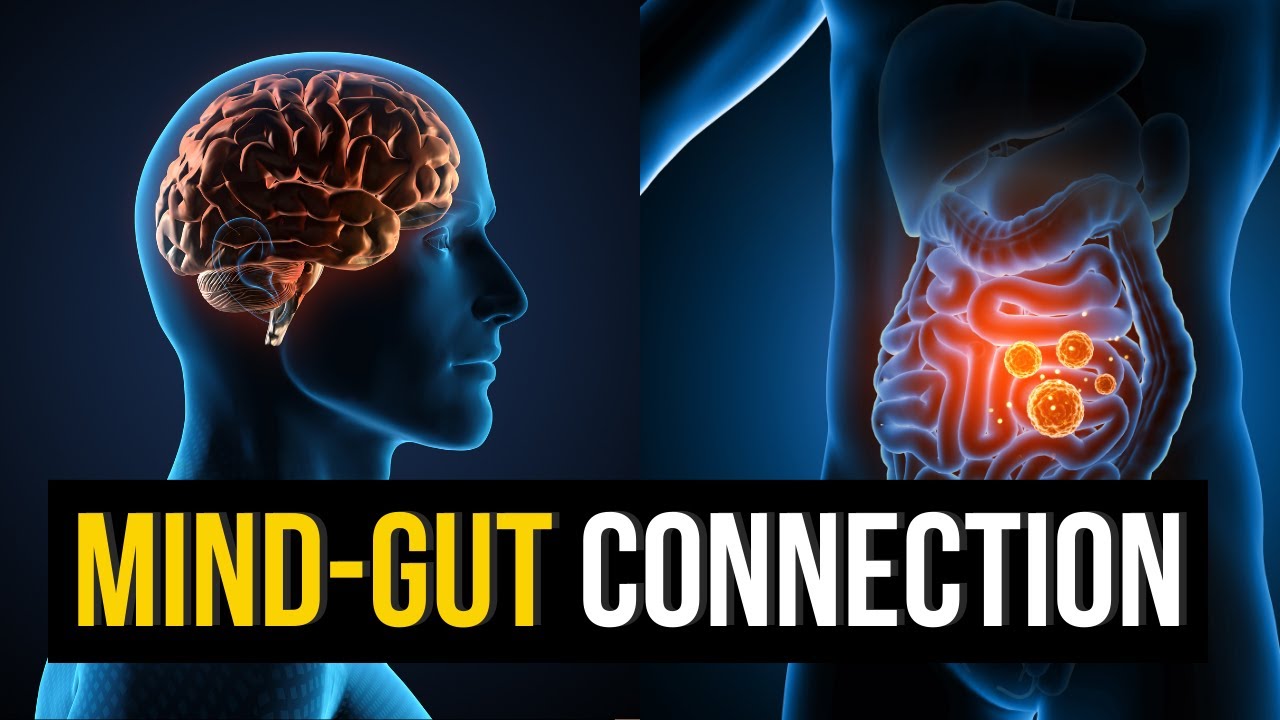
Dr. Jeffrey Bland explains how a dysbiotic microbiome triggers brain inflammation that damages mood, memory, and sleep. A leaky gut allows endotoxins to activate immune cells in the brain. He recommends time-restricted eating, polyphenol-rich foods like Himalayan Tartary buckwheat, and immunorejuvenation to restore immune balance and improve dream quality.
Chapters
Welcome back to the Kwik Brain Podcast. I'm your host and your brain coach, Jim Kwik of Kwik Learning. And here, as always, we're helping you to learn more things quickly. And the question we have for you today is we're gonna talk about the role that our microbiome plays in shaping our moods, in shaping our memory, and also our dreams. And this is gonna be a very interesting conversation that's gonna be very, very practical. And I'm very honored to have a very special guest on.
Thank you.
show today, uh, Dr. Jeffrey Bland. He's the founder of Big Bold Health, which is a company on a mission to transform the way people think about one of nature's greatest innovations, which is the human immune system. Now, I met Jeff back in, uh, 2018 at, uh, Consumer Health Summit run by our friend, uh, Michael Fishman. We were both faculty at that event. Jeff is the author of The Disease Delusion.
Yeah.
Conquering the Causes of Chronic Illness for a Healthier, Longer, and Happier Life, as well as many additional books. Thanks for being on the show, Jeff.
Well, Jim, I can't tell you what a pleasure this is. And of course, quickness is the nature of our life right now. Everything is time compressed. So you've captured light in a bottle. It's really a pleasure to be with you.
Thank you. Now, when we met at this event, we were actually introduced by a mutual friend, Dr. Mark Hyman, and he referred to you when he introduced you as like the godfather of functional medicine. Mark had written, been on our podcast. So our listeners are familiar with his work and also wrote the foreword for my book Limitless, which is all on brain health. But maybe we could start before we go into the role that your microbiome has on your mood, on memories, on things like our dreams. Maybe we could start with functional medicine and we could just give a definition for that and then we'll go into immune health.
Yeah. This major accomplishment, I believe, for the changing in kind of medical thinking over the last 30 years since we came up with this term functional medicine. Functional medicine is designed to not look downstream at what a person has, but look upstream as to where it came from. It looks for the origin and causes of downstream related health problems. So it's really an upstream focused model that uses what we call systems biology, which is an emerging new kind of way of looking at systems, how things are networked together. So you don't look at one organ at a time. You look at how the body's interfacing with the outside environment and what signals are being picked up by the body and converted through the process of cellular function into their function. And their function is physical function, metabolic function, cognitive or mental function, and behavioral function. Those 4 functions wrap together to give what we call our health, and that's the focus of the functional medicine model.
And what would be an example of that if somebody is, let's say, diagnosed with something like Alzheimer's or something?
You know, what's the difference between symptoms of something and some getting something at more of the root upstream Yeah, you know, I think Alzheimer's is actually a very good example because as we recognize, the pharmaceutical industry has spent literally billions of dollars trying to find the pill to treat Alzheimer's, and it's done so unsuccessfully. And we believe that the reason it's been unsuccessful isn't a consequence of the fact that science they did was wrong, it's the model they're using is wrong. Alzheimer's is a multifactorial condition that's associated with the interface between a person's lifestyle and their genes to give rise to a complex effect that's seen in terms of the hippocampal function of their brain that leads to what we call Alzheimer's disease. It's multivariate, multifactorial. In order to really understand how to manage it, both prevention and early-stage treatment, you need not to look at the downstream effects, but you need to look at the upstream uniqueness that that person has in their lifestyle, how they're treating their genes to create the signals that lead to brain health. And when you start asking those questions, you find out that there are more than 30 variables that really relate to what might ultimately downstream be seen as Alzheimer's disease. The nice news, or the good news, is that all of these 30s are variables that can be modified by a person's lifestyle and dietary intervention, exercise, sleep management, stress reduction, and so forth. So it's really looking at the cause and not just the effect. And I think that that is a whole new model and early-stage research that's being done on that model. is looking very optimistic, turning back early-stage Alzheimer's, improving memory, improving recognition, improving general brain function. So I think that we're in the thresholds of a whole new revolution that is focused on function, not just on downstream pathology.
And what would you say is the role— you mentioned genetics— what role does epigenetics play in brain, or even the topic of this conversation, this episode, immune health?
Yeah, so let's just refer to what epigenetics means, because a lot of people, this is a little bit of a mystery term. So our genes are encoded in 23 chapters, which we call— I call our book of life. Those 23 pairs of chromosomes are 23 chapters, half of which is written by our biological mother, the half by our biological father. Don't tell us who we are or what we'll be, but tell us what we can be. They are not all expressed, though. All the stories in our book of life are not expressed simultaneously, or we'd be a mess. So the question is, what is the story that's read in our book of life that creates what we call how we look, act, and feel? Yeah. And that to me is controlled by things that regulate how our genes are actually functioning. And those are things above the genes. The word epi refers above the genes. These are things that are put on the genes, marks that actually regulate how our genes are expressed. And the exciting news is that our lifestyle, our diet, the way we live in the world, the things we're exposed to actually are things that regulate how our genes are expressed. So now we have what I call the science of hope. The science of hope is that not— this is not just a one-way street that we get damaged because of our genes. We didn't fill out an application card, we just got the luck of the draw. And so people think, woe is me if I got bad genes. But now we recognize with epigenetics that actually we can modify how our genes are being expressed. It's a two-way street. So that which we don't really like, we can actually improve function by putting the right kind of marks on our genes that create bliss and create a sense of joy and wellness. High-level function. That is the future of what I call the science of hope, which we are really exploring with many, many other people as to how to maximize that in person's 100 years of high-level living.
I like that science of hope. And so genetics doesn't predetermine our destination or our destiny, if you will. There's certain factors like lifestyle. And so what are some of those things that we could do? Let's talk about the role lifestyle and how it impacts our microbiome, and how does our microbiome play a role in things like our mood or our memory?
Yeah, so I think that that question of how our brain works and how it's connected to the rest of the body, it's not cut off at the neck. You know, when I was in medical school, each of the organs were kind of isolated one to their own with different medical specialties. So we think of the brain as being the, you know, owned by the neurologist. But now we start recognizing that actually the brain is connected to all the other organs of the body. And one of the most important systems of the body that the brain is connected to happens to be the immune system. And the immune system is connected to the microbiome. So now we're starting to learn that there is this interesting intervention that we can improve brain function through improving immunity, which has to do with improving and stabilizing the health of our microbiome, which lives in our intestinal tract. This is a kind of major breakthrough in thinking recently in medicine, but it actually goes back several centuries. If you even go back to Hippocrates, Hippocrates said all health starts in the gut. And so, you know, we're relearning old things in much new ways, much more scientific ways to define these older principles. So what we started to recognize early on, this for me was probably within the last 5 years where I recognized that if we wanted a gateway of entry into improving brain function, improving mood, improving sleep, and decreasing risk to headaches, things of this nature, that we didn't look at the brain in and of itself. We had to connect the brain into our immune system. And what we started to recognize is the brain has its own immune system. It's called the microglia. It's special cells that are in the brain that were derived from our body's immune system. So our brain's immune system is talking to our systemic immune system, which is talking to where the principal component of our immune system is located, which happens to be around our intestinal tract, which is speaking to our microbiome. So it's one super system. So let me give you an example of that. We know that a person who has got a deranged microbiome has what is called endotoxemia. They have a toxic problem going on within their intestinal tract. Endotoxemia then produces into our blood an activity of our immune system that then travels to the brain. The brain has these alarmed immune cells that are picked up from the endotoxemia of our intestinal tract, and it communicates it across the blood-brain barrier to the brain's immune system, which is called the microglia. And so what we end up getting is an alarmed brain, inflammation brain. This is called neuroinflammation. Neuroinflammation produces itself in all sorts of ways, increasing risk to dementia, changing mood, Changing sleep patterns, changing dream states. And so what we're starting to recognize is the gut connection of the microbiome is interconnected through our immune system to our brain function. That's why we really started to focus our energy and attention through Big Bold Health, the company we founded a few years ago, really to focus on this way that a person can own their immune system, not become a victim of their immune system and the effect it can have on their mood, mind, and memory.
We're referring to this inflammation, and there's certain things that were in our lifestyle that could be contributing to that inflammation, whether it happens to be stress or toxins in the air or foods that we're eating. And you talk about, is it strengthening the immune system or is it more balancing it?
Well, that's another really important point. You know, a lot of people say that I wanna boost my immune system to try to gimme more defense against foreigners or infections or injury. Boosting the immune system is not a good idea because if you have an imbalanced immune system, by boosting it, you might enhance the imbalance. You might increase the risk to concern. What you wanna do is you want to find the ability of the immune system to find its resting place, to find its ability to function, which is natively in our genes. The immune system will find its place if we give it the right materials. And therefore, what we are talking about is not boosting immune systems, but rejuvenating immune systems. Now, this term was a kind of a new term to introduce within immunology just within the last 10 years. Because it was discovered through some extraordinary discoveries in basic science of the immune system that the immune system has the capability of rejuvenating itself. It does through a process called epigenetics and autophagy. Autophagy is kind of collecting the damaged cells, getting rid of them and replacing them, allowing them to be replaced with new juvenile cells. Most people do not understand that we make about 80 new immune systems every second. Let me say it again.
Wow.
An average person makes about 80,000 new immune cells every second. Now, the question is, will those immune cells be the same as those they're replacing? Will they be better than or worse than? And what we started to recognize is the process of immunorejuvenation allows the immune system to cleanse these old damaged cells that have bad memories and, and are involved with inflammation. and replace them then with cells that have much more ability to respond with balance and not with age. In fact, some of these aged immune cells have names like zombie cells. That's a pretty descriptive name when we talk about a cell that carries a bad image into the body's function. So we want to get rid of those kinds of aged, damaged, senescent cells in our immune system and replace them with more robust, resilient cells, that has to do with the process of immunorejuvenation. And now we're learning how to do that. And the effect that that has then on brain function is truly remarkable with improved sleep, improved clarity, lowered brain fog, better dream states, and lower depression. All of those things are interconnected to this process of immunorejuvenation.
For your readers or for your clients, patients, where do you recommend that they start When we were speaking in conversation with Dr. Hyman, he credits you as sharing with him this wisdom that food is information, that food is indeed a medicine. So what role does food play, and the soil, in the future of healthcare, in the future health of our immune system and our mood, memory, and more?
Well, that's, again, a really, really important question because it's kind of the tip of the spear. We've asked ourselves in Big Bold Health, you know, what are the things that all people share in common? And there are some principles, one of which is we breathe air, hopefully. Secondly, we drink water. That's important. Third, we all eat sometime, some things. And so the question is, how do those things that I've just described, breathing, fluid intake, and food influence the function of our immune system? And that's really been the breakthrough kind of understanding is that there are specific ways that we do those 3 things that can actually improve this immunorejuvenation process and get rid of these damaged cells that carry bad memories. And the way we do that is obviously how we eat, the timing of our eating. We kind of believe now in this time-sequence eating or time-restricted eating, where we try to get at least 12 to 14 hours between the last meal of the day and the first meal of the morning. We try to make sure a person is getting plenty of fluids, that would be water. For most people, this is more fluid than they're used to consuming, because this water is very important for the machinery of our body, our immune system being one, and getting rid of these waste products that the body is recycling. And then third, food. We want to stay away from things that are injurious to our immune system, and a lot of food additives, food colorings, synthetic ingredients, oxidized lipids, you know, fats, All these things become injurious to our immune system, and we want to replace them by things that were close to the soil, growing in organic types of media without carrying a bunch of bad memories. And because those plants that are grown organically actually are found to have higher levels of immune-strengthening nutrients than those that are grown under high ag tech kind of food technology, pesticides, herbicides, fertilizers, biocides. And the reason for that is that When a plant is in a natural environment and it's grown in soil that is rich with what are called the rhizomes, the rhizosphere, which is its own microbiome in the soil with bacteria and fungi that are healthy for that plant, the roots of the plant then pick up that message from a healthy soil and transmit that into the growing plant so that the genes of that plant then produce a series of these immune protective nutrients. These are called phytochemicals or things like flavonoids and polyphenols. That's the nature of what we would call them as nutrients. These particular plant-derived nutrients that are found from foods that are grown in healthy soil, then when consumed by the human, have extraordinary value in immunorejuvenation through both the effect they have on the gut microbiome and through the effect they have directly on the immune cell health. And I think this emerging understanding, which has been the frontier of immune science over the past few years, is giving a new entree into our ability to turn back the clock on our immune system, which is aging, and improve its function so that not only are we more able to resist infection from viruses and bacteria, but most importantly, be able to modulate and modify the function of every cell of the body that is speaking to our immune system, either as a friend or as a foe. And what we wanna do is we wanna make our immune system our friend and not our foe. And so this process that I've been describing, which is a lifestyle principle process personalized to the individual need, we call it the Immunity Plus Program, is really a new way of approaching getting the most out of our genetic potential.
And who doesn't want that, right? When you were describing it, I saw like the microbiome is, and you were saying like roots is what you nourish flourishes. And I kind of see the, The microbiome is the roots and the brain is kind of the fruits there. And what you eat matters, especially for your gray matter. Some people will be thinking when you're talking and they could think, okay, I do whole foods or organic, low on the additives, the color preservatives, the pesticides. Is there such a thing as a perfect diet or is it more bio-individual? Do you recommend people test themselves, do a microbiome test, or where, where do you start there?
Well, I think first of all, if there's anything we've learned since the deciphering of the human genome back in the turn of the last century, you know, the 2000 presentation of the book of our life, the genomic sequencing, is that we are very different one from the other at the genetic level, much more genetically different than we thought, thanks to these understanding of these so-called letter alphabet changes in our genes, the so-called SNPs, single nucleotide polymorphisms, or SNPs. So we may only have 20,000 or 30,000 genes that code for our body's function, but we have literally millions of these letter changes in the alphabet of our genetic code, these so-called SNPs. So we're varied much more than we previously understood. And therefore personalization to me is very, very important. However, there are certain general principles that virtually all people might benefit from, certain principles of Eating a variety of foods, eat the rainbow with natural vegetable products of different colors, cuz they carry different information to our body. Staying away from highly processed shelf-stable foods, stay away from high sugar, high glycemic index foods, eating foods that are higher in a variety of prebiotic fibers. These are all things that are, I think, are general principles that we talk about with Big Bold Health. But what we have really started to understand, and I think this is the aha for me over the last few years, is that there are specific nutrients within this phytochemical family that seem to have a very strong, uh, positive effect on the immune system through the relationship they have with our microbiome. Um, these are the, uh, members of what we call the polyphenol or flavonoid family that are found in foods like apples and onions and various kind of green leafy vegetables. And, uh, they, they really cut across the fruit and vegetable family. And there are certain members of those families of which, by the way, there are more than 5,000 different members of these families. There are certain members that seem to have a really strong impact upon the relationship between our microbiome and our immune system and our brain function. And these have names like rutin and quercetin, luteolin, hesperidin, diosmin. There are specific members of the family that seem to work together as buddies, as a team. And so it's like a concert where you have multiple members of your orchestra all playing together for a symphony. And it's really, I think, important to recognize that the way the body works best is not just by having a really great first violinist and nobody else in the orchestra, but by having all the orchestra members present that work synergistically to produce the symphony of life. And so what we have learned is that these polyphenols have really important rejuvenating capabilities for both the gut microbiome and our immune system and the subsequent connection it has to brain function. Now, where do you find these in foods at high level? These are the foods that have high kind of nutrient density of these immune-strengthening phytochemicals. And that led me into a discovery that was serendipitous, I believe. I, I wasn't actually searching it. It came kind of just happenstance in my life through 3 observations that came together that there was this ancient food, actually a 2,500-year-old food, that had been lost in America about 200 years ago called Himalayan Tartary buckwheat. And the reason the name Tartary is in there, it comes from the Tartan district of China on the foothills of the Himalayas. And this has been a food that's been consumed in Asian cultures for, as I said, 2,500 years. It got then taken on the spice trail into Europe and was used principally in Eastern Europe as a major food. And it actually was brought to colonial America on our original colonial ancestors because it's so hardy. It doesn't require require pesticides, herbicides, fertilizer, and it doesn't require irrigation. It's so high in these plant-derived phytochemicals that are immune strengthening that bugs don't even like it. And so it, it's a very, very hardy plant and it has between 50 and 100 times the level of these immune strengthening phytochemicals, these polyphenols and flavonoids than any other food that has been studied. So we got very interested and we recognized that somehow about 200 years ago, This food, this crop, was lost in America, probably a variety of reasons why so. And we decided we would kind of get it back on track. And so we now have a group of organic farmers that are part of our cooperative, our Himalayan Tartary Buckwheat Cooperative, that are growing this. We have got a special artisanal miller in Trumansburg, New York, that actually has developed the milling technique to preserve the integrity of these nutrients. And we're the first group now actually both doing clinical research. We have a clinical research trial that's just finishing up with clinical intervention trials. And we're doing ag research looking at how we actually inoculate the soil with friendly bacteria and fungi to maximize the level of these phytochemicals in Himalayan tartary buckwheat. And we're producing then for the first time organic Himalayan tartary buckwheat flour and other products that contain Himalayan tartary buckwheat as an immune-strengthening nutrient. So we've kind of gone full circle from the theory now to the practice of how do you actually introduce a food into your diet or ingredients that would actually enhance your immunorejuvenation. And that's really been kind of the principal focus of our, of our development research at Big Bold Health over the past couple of years.
And where can people get that, that nutrient? They can, they order it online or?
Presently, they can either come to our website, which is bigboldhealth.com, or they can go to Amazon and look us up under bigboldhealth.com. Our website is rich in recipes. We have a food lab that's, we've got people making recipes that use it in multiple different foods and different delivery systems. We have all sorts of information about its immune-strengthening capabilities. And for those people that want to dig a little more deep into the history and the science, there are literally hundreds of papers now, clinical studies and other basic science studies on Himalayan tartary buckwheat. So we're bringing this back to life here, and probably at the right time, given that we're having significant challenges on our immune system right now, as we all recognize. And we are having significant problems as it relates to mental health and things like depression, all of which connects into the function of a healthy immune system and a healthy microbiome.
Everything's connected. We'll put links to everything that Dr. Bland mentioned in the show notes, as we always do, at jimkwik.com/notes. So make sure you go there. I have to ask this question. We talked about how microbiome affects mood and memory, and people know that, that the foods that they eat affect how they feel and their level of focus, their ability to recall information, how they manage stress. How does that relate to dreams though?
Oh yeah, thank you. So, you know, if we think of dreams as kind of our subconscious mind having a chance to explore degrees of freedom to express its art, express its view of the universe at a subconscious level. So dreams are really provocative and profound as it relates to memories that have been encoded throughout the day, things that are experiences, things that maybe we're not even wanting to deal with in our cognitive state that get processed in the dream state. So if your neuronal function is suffering from neuroinflammation as a consequence of an activated brain immune system, the microglia, then it's going to affect your dream state. It's going to— I don't want to necessarily say create bad dreams, but it's going to create complex dreams that are not reflective of when your brain's immune system is at rest and at peace. It's going to be a disturbed set. It may even be blocking out certain things that you really want to deal with by superposing other things on top of it. And so what we have found is the feeling state of people that get their immune system aligned and get it rebalanced and rejuvenated is that they— not only did their sleep quality improve, but their sleep dream state joy improves. They actually have better feeling state of waking both refreshed, remembering dreams often vividly that are good dreams, part of their reflective process of processing. So I think this, once again, as you said, Jim, is so profound a message as to how we're interconnected, that our body is a system. It's not just the brain working in isolation any more than any one organ works in isolation, and that we can actually improve joy, we can improve rest, we can improve the sense of clarity, we can even improve our creativity by a brain that is not neuroinflamed, that the immune system is working as our friend and not as our enemy. And that's one of the important things that we were starting to learn from the clinical studies that we're doing with Himalayan tartary buckwheat is that we're getting these, not only are people's things like their eczema as a sign of an imbalanced immune system going away, but their dream states are improving. And they're saying, you know, I feel like higher energy. I feel more clear. I feel like less foggy brain, but also this eczema I've had on my hands for the last 20 years has gone away because all of these are interconnected to the patency and activity of a balanced immune system.
I wanna remind everyone who's listening to this episode that this advice is not meant to at all be able to diagnose or treat. Make sure you talk to your qualified health practitioner. And we know with the brain, you know, your heart's pumping blood to your brain, it's bringing oxygen to the brain, our liver's cleaning that blood out. So everything is connected. And it's so wonderful that you're bringing this information out, you know, to our audience. And we appreciate connecting with you also. How can people stay connected with you and your work?
Well, thank you. Yeah, I'm very fortunate to have a group of people that have hung with me through, throughout many years. And, and that's our Big Bold Health team. And it's also connected into our Personal Lifestyle Medicine Institute team, both of which we're actively involved with. And we can provide lots of information to people that are interested on our 2 sites. And that's either the bigboldhealth.com site or our jeffreybland.com site. That's J-E-F-F-R-E-Y Bland. You'll find a treasure trove of information there that probably you can dig as deep and bury yourself in this as deeply as you might. I've been very fortunate to have the interaction with world leaders and all sorts of these discoveries, and so we can introduce you to some of their thoughts through these 2 sites.
And this is just the tip of the iceberg, so I recommend, as everyone's listening, to visit and stay connected with Dr. Bland and his team. Again, we'll put all the links to his social media, his website, his books, at jimkwik.com/notes. Dr. Bland, thank you so much for joining us again for this show.
Oh, Jim, thank you. And what you're doing in spreading information and news that people can really use to perform at high level is extraordinarily valuable. I can't tell you how much I appreciate all of your efforts.
And thank you everybody for listening. And we'll see you in our next episode. If you enjoyed this one, make sure you take a screenshot and you share it. You could tag Jeff, tag myself so we get to see it. Make sure you subscribe to our YouTube, iTunes, Spotify, And leave a review. And until then, everyone be limitless.
More from Jim





The Library of Minds: Brain Coach: How to Stay Sharp When AI Does the Thinking | Jim Kwik





