Why LAZINESS can SAVE you | Jim Kwik & Dave Asprey
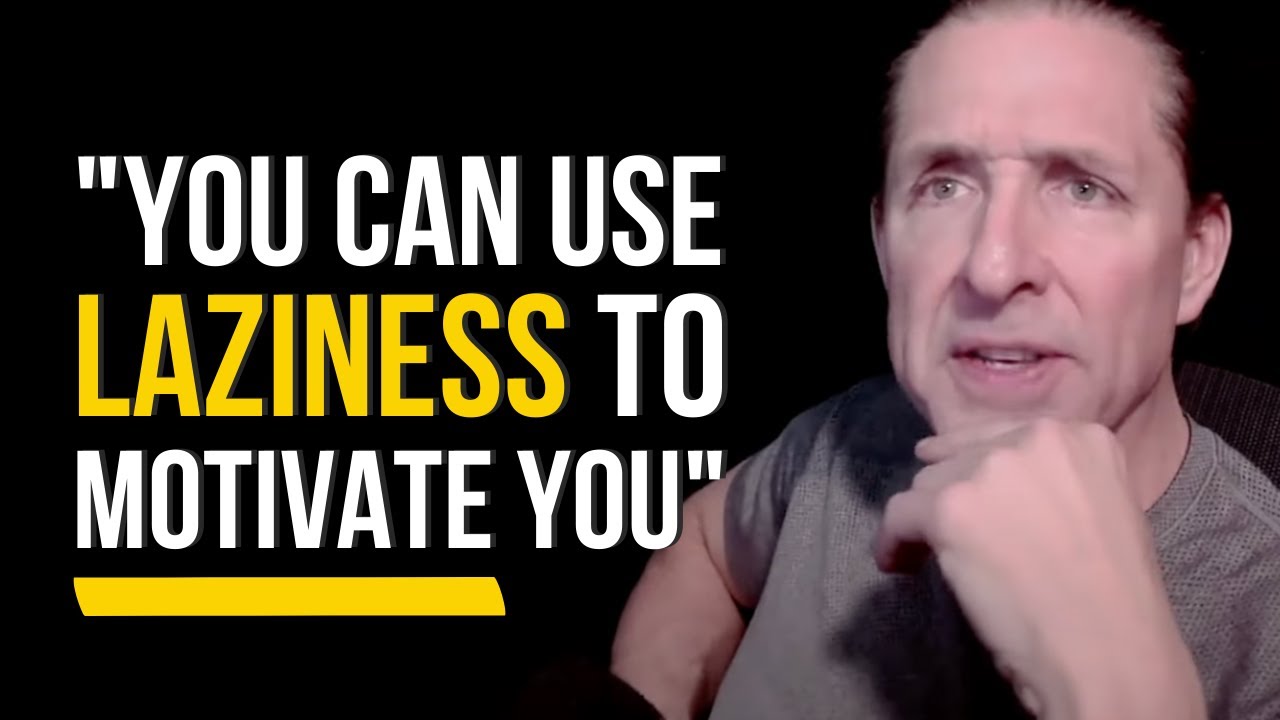
Dave Asprey explains the "laziness principle": your brain has a 0.25-second lag deciding between effort and rest, and you can exploit it to get fit with minimal work. Ultra-short cardio bursts, neurofeedback, and temperature therapy all work with your body's energy-conservation drive instead of against it.
Chapters
It's not a concept that you're going to hear about. It's a new addition to the way we think about neuroscience and all. And use the laziness principle to say, I did the 5-minute cardio thing that Dave talked about without any sweating, without changing clothes. It works 6 times better. But what we used to think was that working hard for a long period of time, that that's what makes things change. So I'm gonna just lift 5 more sets. I'm just gonna push, or I'm gonna do a marathon. Wasn't enough. I'll do a double marathon. I'm just gonna do something to make myself stronger. Well, your meat Your operating system is dumb. It doesn't know why you're doing that. So it assumes that something's hunting you. And what works really well is to turn on a stressor really quickly and to go from like, I'm walking in the forest, I'm so tired, to, oh my God, there's a tiger, and you run as fast as you can.
Welcome back to the Kwik Brain Podcast. I am your host and your brain coach, Jim Kwik of Kwik Learning. And always, we're here to help you to learn quickly. We want to have this incredible conversation. I encourage everyone to take some notes. We have back on the show our very first guest Our topic for today is going to be on brain hacking, specifically how do you tap the power of laziness to improve neurofitness. And our guest today is none other than the father of biohacking, Dave Asprey. And for those of you who don't know, he's been on the show many times, probably more than almost anybody else. He's the founder of Bulletproof Coffee, the Bulletproof Diet. He's a podcast host. I've had the opportunity and the honor to be on his show. Thanks for having me. And, he also is a proprietary, the founder of many of the places I go to biohack my brain from Upgrade Labs to 40 Years of Zen to the Biohacking Conference, which I've had the opportunity to keynote many times. Make sure you join us for this year as well. And, he's a New York Times bestselling author. His newest book is called Smarter, Not Harder. I'm showing it on video if you're watching this, if you're one of our million subscribers on YouTube. This is The Biohacker's Guide to Getting the Body and Mind That You Want. Welcome back on the show, buddy.
Jim, I am so happy I'm going to get to see you at the conference this year. It's always fun to hang out. And I mean, you're always very humble, but guys, Jim is a massively powerful brain coach. So, I always appreciate your work and your help for me.
I appreciate you so much. So, this book which I've read, I was fortunate enough to get an advanced copy, it's a system for targeting Biohacks aimed at upgrading your metabolism, your epigenetics, your neurological systems. Now, this is the title of this episode. We mentioned laziness and I want to talk about the laziness principle, which is the first section or the first chapter of this book. What is it? And this is a new concept that you're introducing to this field.
It's not a concept that you're going to hear about. It's a new addition to the way we think about neuroscience and all. We know that your body evolved, all animals' bodies evolved to save energy, because that's one of the ways you avoid starving to death is by not just wasting energy running around doing all sorts of stuff. And that's built into your hardware. It's built into the meat of your body. It turns out there's a third of a second lag time between when something happens in the world around you and when your brain gets the first signal that something happened. So during that third of a second, Your operating system is in charge, not you. And it gets to look at the choice between the couch with the pizza or the gym.
Yeah.
And it makes the gym look really unattractive and it makes the couch look really attractive. And then we feel guilty about that. How is it that I would want the couch when I know that wanting the gym is better? You can stop feeling guilty about lazy impulses. Those are designed to keep your meat alive and they're natural and they're healthy. The good news about laziness, it has fueled all human progress. We got tired of walking, so we figured out we could ride horses. We got tired of feeding horses, so we built cars. Like, progress happens because we don't want to do work. It's actually noble to only do work that matters, and wasted effort is wasted. So it's okay. Just acknowledge you're lazy and that that motivates you, even though you've been taught since you were a child that anyone who's even slightly lazy is a bad person and is certainly going to hell. So you kind of dump that program and you say, all right, I am going to be very selective about the work I do so I can do the things that matter. And recognizing at the same time that your body doesn't want you to do that. So you feed the body what it wants, which is laziness coupons. Jim, have you ever gone out and bought something nice that was $100 off and you come back and you say, I saved $100?
Yeah, absolutely.
Have you ever come back and said, yay, I spent $300? And I save time. No. Why do we focus so much on the discount? Because our operating system is lazy and it likes to save energy and time and money. And marketers have figured out that a discount or something free, it feels 10 times bigger than it actually is because of our operating system. They are hacking us. What I want you to do is read Smarter, Not Harder and use the laziness principle to say, I did the 5-minute cardio thing that Dave talked about without any sweating, without changing clothes. It works 6 times better than going to the gym and getting all sweaty. I'm going to celebrate the fact that I just saved 50 minutes of sweat. And instead of telling yourself, I'm going to go do something mildly hard, you say, I'm going to go save a bunch, and your body will make it look attractive to save. So you can use your own desire for laziness to motivate you to exercise, to do your brain training exercises, to do anything you want. You just focus on how much you save instead of how much you do. And the body's dumb. It's very fast, but it's dumb. It'll listen. And understanding there is someone else inside you making couches and pizza look attractive, that's natural, it's normal, it's okay.
This is a great lens to look at the things through. We talk a lot about in our work the power of mindset. So, it's not necessarily about doing more, it's about potentially doing less. So, how can you achieve peak brain performance and wellness by doing less? There's a chapter in here and I'll reference and Chapter 9, Hack Target Brain and Neurofitness. And you actually open up with a gorilla in the wild who has never seen a mirror before. This is interesting.
There are YouTube videos of this. They'll hang a mirror up in the jungle and the first time a gorilla comes by, it'll smash the mirror. It thinks it's another gorilla. But then after a little while, it goes, oh wait, that's me. And it gets a sense of self and then it starts looking at itself in the mirror like, oh look, that's what I look like, because you don't know what you look like. And then it'll smile and it'll find spinach or whatever they eat in their teeth. And then it'll actually scrape its teeth because it never knew that they existed. Your mind is like that ape. It doesn't have nerves inside itself. It doesn't know what it's doing. All it cares about is solving the world around you. And it works in concert with your body to sort out all sorts of things that it's not going to show you. And then it lets you see a super tiny slice of what's actually out there. And that's sort of like your user interface on reality. But your meat operating system, it's programmed to get alerted. Like your phone gets these dumb alerts that just go off all the time and interrupt you. Your mind is getting disrupted by these various things. So one of the techniques that works really well is neurofeedback. And you can do the 40 Years of Zen neurofeedback, which is an expensive superhero brain kind of thing.
Yeah.
My new franchise that's opening across the country, dozens of locations right now, is called Upgrade Labs, and we're doing neurofeedback there. So since you got your cardio, you got 6 times better results than the spin class, let's take the next 25 minutes, let's do some neurofeedback and train your brain. Let's hold up the mirror like we did to the apes so your brain can actually rewire itself so that you feel better, you actually perform cognitively better. And Jim, I know you've done neurofeedback. It works. It's not available. Very well at home. There's consumer-grade devices, but we're talking about the big guns, and we're opening dozens of locations to do it. You don't have to go to my location though. I just want you to know it's possible because there are many other technologies in Smarter, Not Harder to give you more control of your brain in less time. Once you have that control, you have that focus. In fact, one of the things is called Mendi. It's a device that trains you. It's a couple hundred bucks. It trains you to focus better. Once you can focus better, then you do any one of your speed reading programs, and all of a sudden you can focus on the program. I'm going to be a little vulnerable, Jim. When I first got one of your programs years ago on speed reading, I would read one paragraph of it and then I would get distracted because my body's like, just don't do that. It was really hard for me to read your speed reading. I read like crazy, but some part of me is like, don't do it. Don't do it. I had an inner aversion to it. But when you've trained your brain to focus better, it's effortless to focus. Then you can do a reading program and it just— It doesn't feel as hard as it once did. So the tools to do that are in the book as well.
A couple other things in that section that would help also when people are reading, and many of our people are avid readers, and I'm sure they're going to go get a copy of your book. I always recommend people get at least 2 copies so they could gift one also. Sleep. People complain about falling asleep when they read because they're just tired. And also something you address in the book, which is lighting, because lighting could create stress depending on what kind of lighting you have in your home or your office or in your school. So maybe we could talk about those 2 things.
Oh, this is lovely. One of the things I want you to do is not waste electricity in your body because you could use that to do something that matters or you could use it for something not useful. You probably don't recognize this, but when you're underneath those really bright fluorescent or even worse LED lights, there seems like they're everywhere, they're flickering at a rate that you can't see, but your meat operating system can see. And it creates stress and it gives you sometimes sugar cravings. It gives you eye strain. It makes you sleepy. It gives you headaches and you just kind of feel slow. And you are slow because your body's taking a lot of its electrical resources to deal with this blinky lights that you and I can't see that are actually blinking. One of the things that's absolutely changed things for me is the right color glasses, like the TrueDark glasses. And I mentioned those around sleep and around brain stress. And Jim, I got to tell you this, you're the first person on Earth I've told this to outside the company. We have a study that's coming out in a neuroscience journal in probably the next 2 months. And we found that 15 minutes of wearing TrueDark glasses puts your brain in the same state as meditation. Just wearing the glasses and doing whatever you do changes your brain state. That's easier. And plus, if you do that and meditate, it works even better. So now we've got actual EEG data from brainwaves showing put on TrueDark glasses that control multiple colors of light and angles and all this other stuff, and magically your brain got the benefits of meditation. And then you could do that, and then you could do any of the audio programs that you have. But, the idea is it was free energy just by filtering out bad light.
It's a great example of working smart versus working hard. These are the kind of things that people should maybe have learned back in school, maybe that their teams or their company educates them as well. Now, are they wearing the TrueDark or these glasses throughout the day or are they doing it at certain times a day?
In this study, these are called the sunset glasses. And, these are for evening use or during the day when you need a break. They're kind of like noise-canceling headphones for your eyes. You put them on, your whole brain goes, ah. And, if you look at the brainwaves, they're doing the same thing. So, if in the middle of the day you're just all tweaked, you might wear these for 10 or 15 minutes even at your computer and just realize that you got calmness back. And then, you could take them off, but I wear them an hour before bed and I sleep so much better.
Okay. So, we talked about the power of neurofeedback. We talked about lighting in our environment and things that they could do to support greater clarity without the energy expenditure. And, going back to sleep because that's an issue for so many people, what are some of the things that you do in terms of optimizing your sleep so that you have the mental energy? You talk a lot about in Head Strong mitochondria. What can we be doing to enhance our sleep so we can have greater cognitive performance?
Smarter, Not Harder is organized in these 5 big sections. And, it's what do you do first? One of them is I want more muscle, one of them is I want more cardio, Another one is, I want my brain to work better, the whole chapter on neurohacks you just talked about. And then, there's one on resilience, I want to handle stress better. And then, there's a 5th one, which is, I want my energy back. I feel drained all the time. I want to get that back, or I want to lose weight. Those are the same thing. So, you'll notice I didn't say sleep and I didn't say sex, but there are other additional chapters because it turns out sleep supports all of those goals. I can't put it in one of those goals. It's so foundational. And some people, their health goal actually is that they want actually to get their sex drive back. And again, all of those things support that. So those didn't fit into the 5 big buckets because sleep is so foundational. What I do for sleep is a lot of things. In fact, if I wanted to summarize it for you, go to sleepwithdave.com. It is totally free. This is everything I know about getting more sleep in less time. And it's just a gift. Because I don't know how to teach it in the time we've got. I will tell you the TrueDark glasses are important. Having a room that is absolutely dark at night is important. Dimming the lights or wearing the glasses for a couple hours before bed, it matters. And not eating after the sun goes down, that also helps greatly. Cooling your room. So there's now a set of steps that we've figured out over the last maybe 15 years that is really, really powerful. And it just lets you go to bed. It takes 3 minutes or less for me to fall asleep every single night. And then, I stay asleep and I wake up feeling great. And, I've got an hour and a half or 2 hours of deep sleep and REM sleep even if I sleep 6 hours. I could not do this 15 years ago. I was a 5 minutes of deep sleep, 5 minutes of REM sleep if I was lucky kind of guy. I had terrible sleep. I fixed it.
And now, for people that haven't listened to previous episodes or not familiar with your work, you came through Silicon Valley, you were doing all the hacking, I'm a computer hacker by training, a 300-pound computer hacker, like the guy from Jurassic Park, but not bad. Now, I just wanted— you mentioned a couple times meat OS, right? And so, maybe you can explain what that is.
Sure. Your meat operating system is what runs everything before you get a chance to do anything about it. We can measure your brain speed. It's called P300D in neuroscience. And, what it is is the gap between when I snap my fingers And when your brain first gets an electrical signal that a sound happened, and you would think, well, as soon as the speed of sound gets there, then the brain got the signal. The brain doesn't. There's a third of a second where your body is manipulating stuff, holding onto the signal, deciding whether it should show it to you, and then it shows it to you. And you can't see the gap. I can't see the gap, but we can measure it. Like at a 40 Years of Zen style lab where you have electrodes on the head and go, oh, that's where the sound happened. And then there's this gap. And there's another person or another consciousness in there deciding things without you being able to see it. It's actually really creepy. So that meat operating system, it has a lag time, and I mentioned a third of a second. If you're over 30, it's probably about there. It gets a little bit longer with age. And if you're 18 or you have an unusual brain, it might be a quarter second or 250 milliseconds. All the brain hacking stuff that I've done, Jim, I still have an 18-year-old's response time, which means I get the signal from reality about a quarter second after it happens, and an average person our age is going to get it about a third of a second after reality. That's when you see Bruce Lee playing ping pong. I'm not Bruce Lee at ping pong, but my brain at least notices reality more quickly than is normal by a long shot. I still haven't trained my body to hit the ping pong paddle like he does, but my ability to do that, that's by virtue of brain training, by the stuff that you teach, by the stuff that I teach. by having more energy in the brain, by increasing neuroplasticity. And that's why, I mean, we've been friends for 10+ years and why your practices are so important and why the energetic practices about eating the right stuff and having a brain that works, they're so important because you actually can see reality faster than people around you. That's a gift. It's a superpower actually.
It is. Bruce Lee, he's talked about hacking away at the inessentials, right? The thing, the non-essentials, if you will, and that when you subtract, Those habits that take away or the people that are kind of like energy vampires, sometimes when you subtract, you could actually multiply. You mentioned resilience and recovery is a big thing too.
It's a new principle in the book and it's not a very good name. It's called slope of the curve biology. But, what we used to think was that working hard for a long period of time, that that's what makes things change. So, I'm going to just lift 5 more sets, I'm just going to push or I'm going to do— a marathon wasn't enough, I'll do a double marathon. I'm just going to do something to make myself stronger. Well, your immune operating system is dumb. It doesn't know why you're doing that, so it assumes that something's hunting you. And what works really well is to turn on a stressor really quickly and to go from like, I'm walking in the forest, I'm so tired, to, oh my God, there's a tiger, and you run as fast as you can. And then if you just calm down really, really quickly and you have enough nutrients in your body, the body says, oh, I got away, I'm safe, let me fix that. And then it improves your performance. But if you do what most of us do, because we're good people and we believe in working hard, is we don't tell the body it's safe after that first big sprint. We just run at half speed for the next half hour. What the body thinks is, oh, something must be hunting me. I got away at first, but I keep running. Like, why would I keep running? I don't wanna run. I wanna lay on the couch and eat pizza. Since the driver, you, is making the body do that, the body just decides, I'm gonna allocate resources to stress management, not to improvement. I teach you in Smarter Not Harder is how do I get a signal in quickly and how do I return to baseline as fast as possible? And you do that, you can get 6 times better results in a tiny fraction of the time. And you can do this for muscle. We've got 3 to 5 times faster muscle. We've got, actually it's 12 times faster per minute on the cardio improvements. And we've got the same thing for brains. We've got the same thing for stress management. It's just teaching the body, You almost failed and now you're safe. And, if you can do both of those very quickly, the body's like, oh, I got this, let me transform. So, we're taking the 10,000-hour rule and we're saying, no, maybe it's closer to a 500-hour rule, but those 500 hours had to be followed by amazing recovery.
And, I'm familiar with having gone to your Upgraded Labs and having read the book using a cycle in a certain way or a cheat machine. For recovery, how about temperature? Heat and cold.
So, with temperature, same thing, you jump into a hot sauna and the body very quickly heats up way more than it would laying in the sun and you're like, oh, man. Okay, the cells create a cell danger response. They start making molecules similar to exercise molecules. And, if you jump in really, really cold water thereafter, what you're doing is you're changing the slope of the curve. So, suddenly it got really hot or really cold way faster than it ever would unless you were going to die. Like someone put you in an oven or you fell through the ice. That's the only time you'd ever be that cold or that hot. So the body starts getting ready for it, but before you reach the point of damage, you come out and you switch it to something else, or you just recover and go about your day. And now the body says, okay, I got a signal to change. I recognize that might happen again. I have enough capacity right now because I'm calm. But if instead you did cold, hot, cold, hot, cold, hot, and then you ran a marathon while eating only kale, The body would just say, something's trying to kill me. I don't know what's going on here, but I am not putting one ounce of energy to improving myself. I'm just going to get ready for the next torturous challenge so I can keep my meat alive. What we have here is under-recover, overtrained people, and I was one of those. My reason for writing Smarter Not Harder— when I weighed 300 pounds, I went to the gym for 702 hours. I did half weights, half cardio, 90 minutes a day for 18 months straight on a low-fat, low-calorie diet. And at the end of all that, I did not look like this. I still weighed 300 pounds. I had a 46-inch waist and I could max out all but 2 of the machines. And I fell prey to this. Working harder is what gets you results. No, I put all my willpower into something that didn't work. I could have done it in a tiny fraction of the time and taken the rest of the time to maybe gain some social skills.
I had to do that later. Well, and it's positive proof. We all have evidence in the world where people, we all know people work hard. Right. But not necessarily getting the results that they desire or they maybe deserve. I wanted to talk about a concept that you mentioned a little while ago about self-awareness. You know, there's a part in The Matrix where Neo meets the Oracle for the first time and there's a sign in Latin, know yourself, right? How important is that self-awareness if you want your brain to work better? If you want anything to work better and smarter, how important is this self-awareness? Is that where the neurofeedback and that comes into play?
Neurofeedback is a path to self-awareness, but it doesn't have to be. It can be a path to better movement in your body. It can be a path to better self-regulation. But if you want to do the awareness work, it's actually a spiritual practice.
Hmm.
But the neurofeedback style that you've experienced at 40 Years of Zen, it is a spiritual practice similar to a plant medicine journey. So going within is what we're doing when we look at self-awareness. And neurofeedback can help you go within, but it doesn't have to. It can also help you go without. It can help you do all sorts of things depending on the settings of the machine. And for me to do it But as a spiritual training, in addition to a performance training, we have 7 patents in neuroscience in order to do this because we're doing stuff that isn't about fixing a broken brain. It's about taking a brain that may have strengths and weaknesses and superpowering it. And, that is totally spiritual. And, there aren't words to describe this other than my favorite word, which is ineffable. It's a word that means there aren't words for it.
Okay.
I'm trying to explain things. You're trying to explain things that we've experienced, but there isn't a word for that kind of experience that we can use. When you say going within, it's great language, or self-awareness. What it is, is it's noticing what your meat operating system is doing so that it can't trick you. And it turns out your body lies to you about things all the time. It tells you what other people are thinking about you. You actually don't know what they're thinking about you unless you are empathic or intuitive. In which case, the way you know that is very different than what that mean voice in your head says. And just recognizing, well, what's real? Which of this is coming from me and which of this is coming from a misinterpretation of reality? The misinterpretation of reality is caused by your meat operating system, and it's doing that to try to keep you alive because your body doesn't even like it that you're in there. It wants to be in charge of itself. It hates it that you're in charge of it. And so there's a constant struggle, or at least dance, between you being in charge and your body being in charge. You want your body to be in charge of pumping blood and breathing. That's good. You want it to be in charge of jumping when there might be a tiger, but you don't want it in charge of jumping when it's your mother-in-law instead of the tiger. And that's what self-awareness is. That's why turning off notifications is so important, because that's the things that make you jump when there is no tiger. That's the The stress response and the spiritual chapter in Smarter, Not Harder is how do we do that most effectively? Because who wants to be jumping at non-tigers? It's a waste of time.
Yeah. And energy and everything else that's important to us. What's something that people could do right now as they finish this episode that you would recommend that would move the needle and help them become to work smarter versus harder?
You could see if there's an Upgrade Labs in your neighborhood. You can go to upgradelabs.com or You could go to ownanupgradelabs.com and you could open a biohacking center in your town that has neurofeedback like we just described and all of the technologies that give people all their time and energy back.
Who'd you write Smarter, Not Harder for just as people are considering this right now and we'll tell them where to go?
I wrote it to tell myself the things I wish someone had told me when I was 19. If I'd have just known this stuff, I could have solved the problems I spent 20 years working on solving and a couple million bucks. I could have solved them in less than a year. I would've had the body and the mind that I wanted. I would've got my energy back and I would've realized, oh, this is all within my control. I would've taken all the energy that went into solving those problems and just being frustrated and struggling and being tired all the time. And I would've put it into something else.
Mm-hmm.
Like maybe personal development or maybe my career. My career's awesome. I've had a great career, but man, I suffered a lot before I fixed my brain. And I just don't want anyone to struggle the way I did, cuz it's not, it's not necessary. It's not worth it. All this knowledge should have been available for me then, and it wasn't. So now it's available for anyone who wants it.
Highly recommend anyone who wants to work smarter, not harder, is top of my list is to read. Dave has 2 decades plus, north of 2 decades of doing this, and he puts it into a book. And you could read that book in a couple of days, right? Many of you can. I know that for a fact because I've trained with you. You could download decades into days. And that for me, that's working smart versus working hard. Dave, where do people get their copy so they could start getting their guide to getting the body and the mind that they want?
Go to a local indie bookstore and pay in cash if you really want to do the most for the owners of the bookstore. But you can buy Smarter, Not Harder anywhere you like to buy books. And I did record my own audiobook for it in my voice. So if you listen to my show, then I'll be the one reading it. And truly, this book, of all the books I've written, this is going to give you the most time and energy back. Because that's what it's about. There's stuff you feel like you're supposed to do. You're probably not doing it. That's okay. I don't do it all the time either, but when I do it, it counts so much. I get the results. I'm 8% body fat. I'm never hungry. And I spend 15 minutes a week doing Upgrade Lab style workouts. The stuff works.
And there are not many investments we get that, you know, that give you that kind of return. We get that for a lot of our work that, wow, this didn't take time or take energy. It actually, it actually made time for them. You know, it actually created more energy for them. So, so thank you for, for putting all that knowledge and that wisdom and very, very practical, very, very, very proven. Everyone get their copy of Smarter, Not Harder at their favorite indie bookstore or get it online as well. And if you've enjoyed this episode, make sure you take a screenshot of this and tag— post it online, tag Dave, or make sure you tag me so we get to see it and share one thing you got out of this episode that you want your fans, your followers, your friends to be able to see because then you get to be able to pay it forward. Dave Asprey, thank you so much for being back on our show and congratulations again on the new book.
Thanks, Jim. I always appreciate you.
All right, everyone, make sure you leave a review, uh, subscribe to YouTube, uh, join our almost, uh, 1 million YouTube subscribers. Leave a review, uh, share it as you will. And, uh, until our next episode, be limitless, everyone. All right, take care.
More from Jim





The Library of Minds: Brain Coach: How to Stay Sharp When AI Does the Thinking | Jim Kwik





