Why You Delay Tasks & What to Do About It
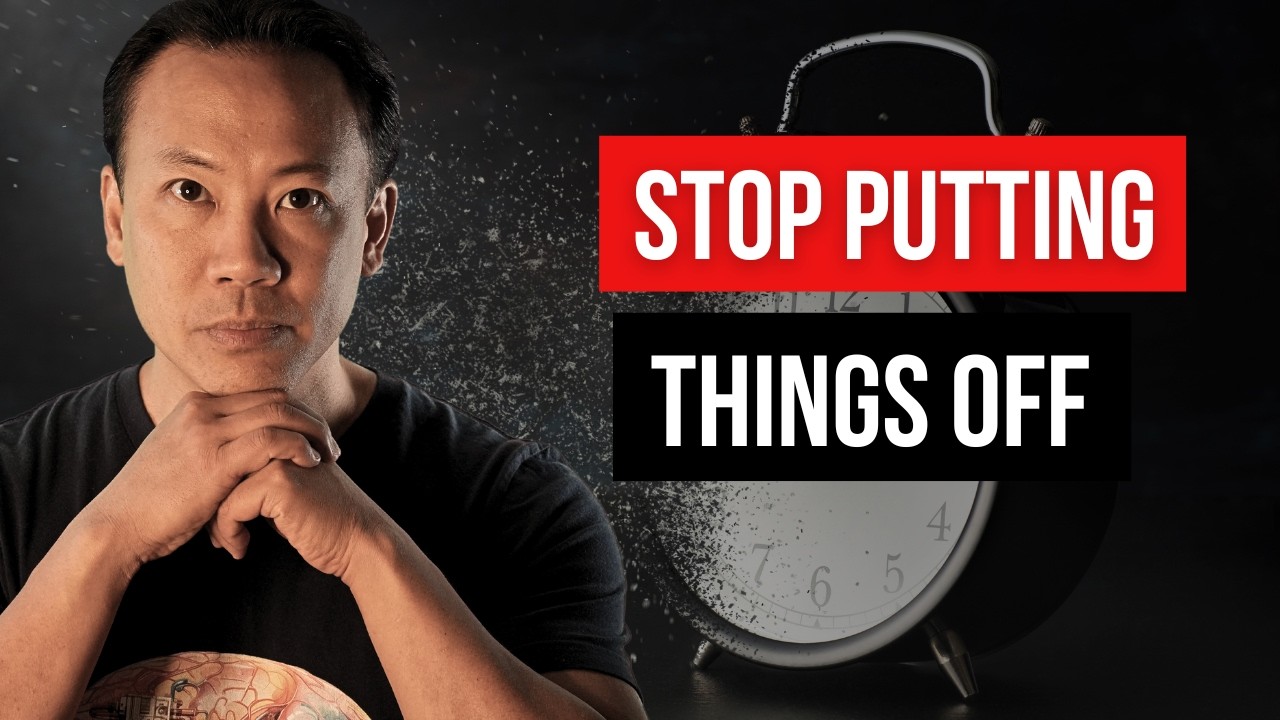
Jim Kwik breaks down procrastination as an energy and emotion problem, not laziness. He shares fifteen tactics including the 2-minute rule, Pomodoro, visualization, and the 5-second rule, each designed to reduce mental clutter or boost dopamine. Small experiments compound into lasting momentum.
Chapters
A lot of people struggle with procrastination, which can sabotage their productivity. What productivity hacks or brain hacks have you found most helpful? I wanted to do this quick episode to share with you some quick tips on how to approach procrastination and how to have more limitless motivation. So procrastination, I think we could all agree, can be one of the biggest barriers to your performance, to your productivity, to the results you have in life. But the good news is that it's not always about laziness. It's more about how we manage our energy, our focus, and our emotions. Over the years, I've found that there are certain things you could do, productivity strategies, mental strategies that are incredibly effective for overcoming procrastination and helping you to create momentum. Now, if you want to go deeper in this, we do a whole section of Limitless is on limitless motivation. So I'd highly recommend that you look at the Master Formula, P times E times S3, and the Limitless Model in the context. But these are quick tips. They don't take a lot of time, and, but they're not a training in terms of a real skill acquisition. It becomes a new habit. If you like that, go to kwiklearning.com. Check out our Limitless Mind program and our Kwik Productivity program, and that will serve you to make these strategies a real habit. Number 1, Use the 2-minute rule. If a task will take 2 minutes or less, do it immediately. Why does it work? It prevents small tasks from piling up and reduces mental clutter. Plus, starting a tiny task often creates momentum for bigger tasks, for larger tasks. Number 2, break tasks into tiny steps, small, simple steps. Instead of focusing on the overwhelming end goal, Break it into microtasks. For example, if you need to write a report, start with open the document or write the first sentence. Now, why does it work? Your brain loves progress. Small wins release dopamine, which is the molecule of motivation. It helps to motivate you to keep going. Number 3, leverage the Pomodoro technique. We've talked about this in other podcasts. Work in 25-minute focus intervals. It's like a sprint followed by a 5-minute brain break to recover. After you do 3 or 4 sessions, you could take a longer 15, 20-minute brain break. Why does this work? It helps to combat your brain's natural tendency to wander by creating a sense of urgency, right? You have a constraint while the brain breaks keep you refreshed, helps you recover to prevent any kind of burnout. The 4th brain tip is to visualize and imagine the future. It might be in a reward that you're giving yourself. Close your eyes and vividly imagine the positive outcome of completing the task. How will it feel? How will it look? How will it benefit you? Right? The brain thrives on motivation that's linked to purpose. And when you connect tasks to future rewards, they just feel more meaningful and more engaging. Number 5 is from our friend and our podcast guest, Mel Robbins, the 5-second rule. Countdown from 5, 4, 3, 2, 1, and then take immediate action. No questions asked. You just, if you want to use this to get out of bed, say 5, 4, 3, 2, 1, like you're launching a rocket and you just get out of bed. And this is especially good for actions on a task you've been avoiding. And why does it work? It's a pattern interrupt. This disrupts procrastination by overriding your brain's habit loop and giving you a small Activation energy boost. And if you want more, go listen to our podcast with Mel Robbins or check out her books. Number 6 quick tip is create a procrastination power hour. What does that mean? Can you dedicate one focused hour to the tasks you've been avoiding? Make it fun by setting a timer and treating it like a challenge. Why it works? By labeling it as a power hour, you reframe procrastination as something that's more manageable and something that's more time-bound. 7th quick tip, you could use something called temptation bundling. Pair something you need to do with something that you enjoy or that you love. For instance, you can listen to your favorite podcast while you're cleaning or treat yourself to a fancy coffee shop for focused work. Now, why does this work? You're more likely to stick with tasks when you associate them with enjoyable activities.
Are you tired of constantly feeling overwhelmed by your never-ending to-do list? Do you struggle to find enough hours in the day to accomplish everything you need? But what if I told you there's a solution that could help you take back control of your time, your focus, your productivity? I'd like to introduce you to Kwik Productivity. This 10-day course is designed to provide you with the proven strategies you need to get more done in less time without Burning out. So if you're ready to learn to get the most out of your time, your tasks, and your life, then don't wait any longer. Click the link below to learn more and secure your spot and your access right now.
Quick tip number 8, declutter your work environment. Remove distractions, especially your phone, and create a clean, manageable, inspiring workplace. You know, as best you can, use tools, whether it's noise-canceling headphones or productivity apps to block distractions. And why does it work? Of course, a cluttered environment creates mental chaos for a lot of people, while a focused space signals to your brain it's time to learn, it's time to work. 9th quick tip to overcome procrastination: shift your language. Become aware of your self-talk, and maybe you shift from something like have to to get to. Often when we're procrastinating, we're just like, I have to do this. I gotta pick up the kids. I gotta read. I gotta exercise. But what if you change that got to get? Change that O to an E. Reframe your mindset by changing I got to into I get to. I get to pick up the kids. I get to learn and read today. I get to move my body today. So for example, instead of saying I got to write this report, say I get to share my ideas. And you can see why it works. It reduces resistance. It reduces friction by shifting your focus from obligation to opportunity. And it makes tasks feel less burdensome. 10th quick tip, apply the Eat the Frog method. Do your most challenging or important task, your frog, first thing in the day. Why does it work? Tackling the hardest task Early gives you a sense of accomplishment, a big sense of accomplishment, and frees up your mental energy for the rest of the day. 11th quick tip: set time limits instead of deadlines. Instead of saying, I'll finish this by the end of the day, give yourself a specific block of time like, I'll spend 30 minutes on this task right now. Deadlines often lead to procrastination because we feel like we have plenty of time. Time limits force immediate action. Constraints. Having a constraint forces commitment, creativity. It forces concentration. 12th quick tip, create some kind of accountability. If you're really struggling with procrastination, maybe you share your goal with someone who you trust or join a group where you can be held accountable. There are tools online that could help you with regular check-ins, or maybe you have a check-in with a friend that can help. External accountability creates social pressure and motivation to follow through. 13th quick tip, you could prioritize using the Eisenhower Matrix. We've covered this in programs. You could sort your tasks into 4 quadrants. Urgent, important, you do now. Not urgent and important, you can defer it, right? Schedule it for another time. Urgent, not important, you delegate it. Not urgent, Not important, you delete it. Why does it work? It clarifies your priorities. It ensures you focus on what truly matters. Number 14, the quick tip: celebrate your progress, not perfection. At the end of each day, list 3 things you accomplished, no matter how small, and just acknowledge it. Focusing on progress instead of perfection, it reduces overwhelm and it can boost your motivation. 15th quick tip: Address the root of procrastination. Maybe do some introspection. Ask yourself, why are you procrastinating? Is it fear of failure? Fear of success? Lack of clarity? Feeling unprepared? You don't feel like you deserve it? Once you identify the cause, let's take one small step to address it. Understanding the root helps you tackle the real issue, not just the symptoms.
Final thought.
Procrastination is less about time management and more about managing your mind, managing your emotions, managing your focus, managing your energy. Start small. Experiment with these tips and find what works best for you. Remember, small steps compound into big results. Little by little, a little becomes a lot. The key is to begin. Start before you're ready, even imperfectly. Momentum will take care of the rest. Until I see you again, this is your brain coach, Jim Kwik. Be limitless.
More from Jim





The Library of Minds: Brain Coach: How to Stay Sharp When AI Does the Thinking | Jim Kwik





