Jim Murphy | Unlock Your True Potential with Inner Excellence
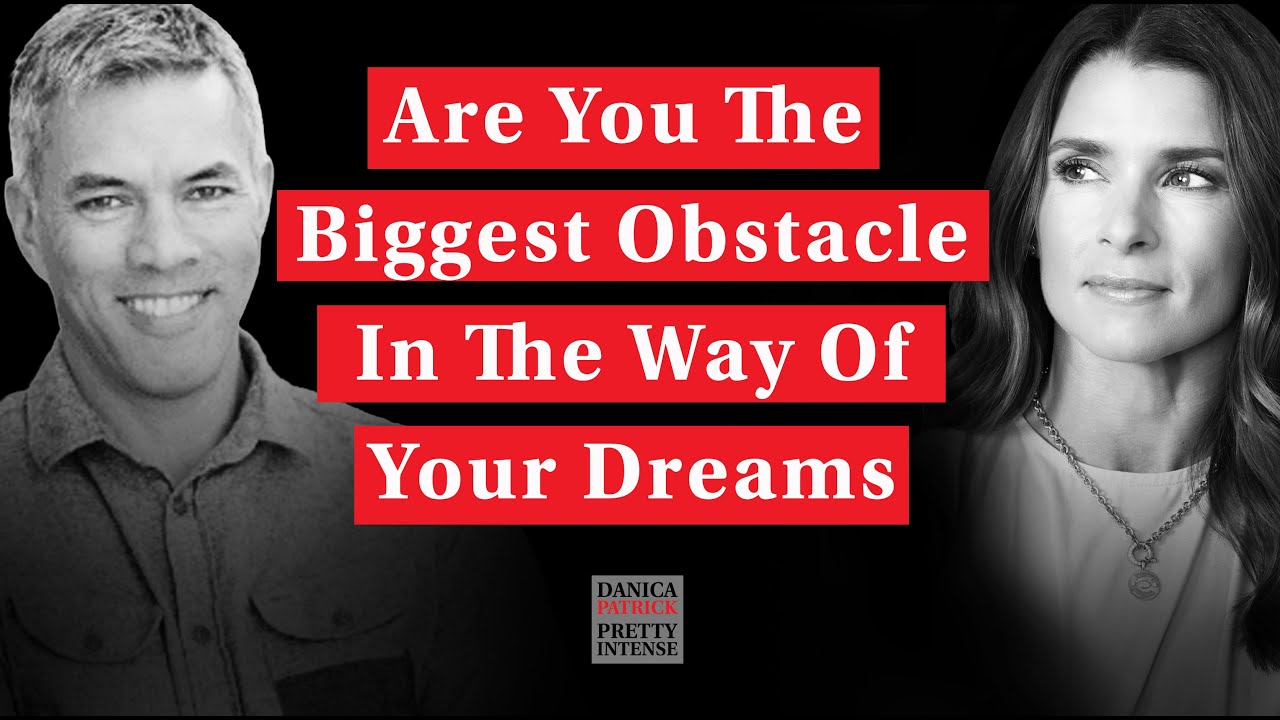
Jim Murphy and Danica Patrick discuss high performance through self-awareness and ego removal. Patrick's personality test shows extreme industriousness but very low compassion. They explore anxiety's link to social media clutter and a medical treatment called stellate ganglion block that can reduce it.
Chapters
When I lost my pro baseball career, I felt like I lost everything. My identity was completely tied up in my role as a pro athlete, and when it was over, I was so lost.
I think a lot of people are just sort of failure to launch. They don't know what the hell they're meant to do. The easiest way that you can really learn who you are is to—
Perfectionism can push you to be great and do great things, but it also can limit your freedom. I think of myself as a recovering perfectionist. If you haven't dealt with pain from childhood, then likely there's a mental block or something that's limiting your potential. And so we're going to develop habits of thought and action every day, these routines around how you do want to feel. And then how you don't want to feel, we're going to go back in your life and rewire painful memories. I think of the 3 big obstacles to performance, and those 3 big obstacles all come from thinking about yourself and getting in your own way. Self-protection is one of the biggest things that limits us. Mastering the part of your mind that's always threatened, always comparing, never satisfied.
When I think of mastering that part of your mind, I think of When you have an NFL player reading your book on the sidelines, I guess that sort of invites you into a lot of sports speaking. Was that like the main impetus for it? Was it AJ Brown that was doing that? I mean, he's a really good player too.
Definitely. Yeah, my life changed a lot since January 12th when AJ Brown was first filmed with the book.
Was that last year?
This year.
Did he— did you guys talk about it? Like, how did he get a hold of the book? Or who told him about the book? How did that even happen?
So he got the book from Moro Ojomo, his teammate, and his teammate went to the University of Texas and he got it from DJ Jarrettelli, who was the Athletes in Action rep at Texas. So DJ is a friend of mine. I met him 2023. And so about a year and a half later is when AJ Brown got the book. And so it worked out amazing. When I saw him with the book, I found out for the first time, just like everyone else. Well, one thing I found out was that he was bringing it to every game and reading it after every drive. I had no idea. What was really interesting was he said when he was young, he was labeled a coward. And, you know, his job now is obviously you got to be pretty fearless to go over across the middle in the NFL, kind of like being a race car driver. The parts of the book that he really liked in the first chapter, just really about getting centered and having a clear mind and unburdened heart. I always dreamed I was destined for something great. And, and thinking about this interview with you, I want to know How did you— did you believe that you're going to do this when you were a kid?
Yeah.
So many questions for you, but—
Yeah, I did.
You did? Like, how can you get that belief?
Like, I don't know. It's a very fascinating question. And I, I love to philosophize and I love to, you know, get curious about the nature of our reality and whether or not, you know, is there a pathway laid out for all of us? Did I tap into the timeline and know what was coming? Is it because I believed so much that it happened? Or is it because it's going to happen that I believe it will? Like, I don't know. Because there are obviously, you know, people that dream up crazy things and have faith and belief in crazy things. And then so many times it happens. I think it's fascinating. I don't know. What do you think?
There's this energy that I think you were able to tap into that I think the best performers can tap into, where they're completely selfless and therefore fearless. No concern for self. You know, I think as a race car driver, there has to be some element of that, I imagine. At least to be a superstar. I also wanted to know about leading 19 laps at the— for the Indy 500 and being pole position at the Daytona 500. Like, what were you thinking and feeling?
Oh, this is my interview. No, I'm flattered. I mean, it's all valuable, I guess, you know?
You—
I mean, in those spaces and states, you have to expect those things. Those have to be the expectation level.
Mm-hmm.
You know, they have to be— you have to believe they're possible. So, you know, leading felt like justified for the speed of the car and where it should be. Qualifying quickest at Daytona was the car that should— it was fast enough to do that. That's what needs to happen. When I finally won in Japan, I was relieved because that should be happening. So it's like, I'm all about setting your expectation, your goals so far out there that if you fall short, it's still fantastic.
One of the things that I write about in the book is that a basketball player, uh, say they have a one-on-one with 1 second left, down by 1. You got to make the first one to make this, to have a second shot. Is there's nervousness, but then there's nervousness that it's you that could miss. Nervousness is one thing, and nervousness I think is important for high performance. But the part that it's me that's going to miss, that's what holds most people back. And it sounds like that wasn't something that really held you back.
I mean, I didn't want to let the potential of the car down. So I knew it was fast enough and I didn't want to screw that up. Perhaps that was some of the fear because if someone were to ask me like, what, what do you, what, what are you scared of? I'd be like, failing. And people can work out all kinds of different, through different mechanisms. But for me, I was afraid to fail. I didn't, I didn't want to, didn't want to do that. I have to ask about the 2 and a half years in the desert. That's wild. Like, what did that really mean? What did that really look like? You knew you were destined for something more, and wherever you were at wasn't going to put you there. Is that the case? Or was it, or was it that you didn't know what exactly it was that you were destined for yet?
You know, I was a professional baseball player, and I got injured. I played for 5 years. And when I lost my pro baseball career, I felt like I lost everything. My identity was completely tied up in my role as a pro athlete. And when it was over, I was so lost. And then driving a truck for FedEx downtown Seattle.
After baseball?
Yeah, yeah.
Oh, that was humbling, I'm sure.
It was, yeah. It was hard. And then just trying to figure out what to do with my life. And then one day, my girlfriend was just like, what are you doing with your life? And I was in my 30s, and I was like, yeah, I just really felt like I was spinning my wheels. And like, I always thought I was destined to just do something great. I get a call from a teammate in pro baseball, Ricky Scruggs, and said, can you come down to Tucson and help me launch this baseball academy? The timing was just perfect. I felt like— Okay, I'm gonna go to the desert and give away over half my possessions. I'm gonna live a life of solitude until I figure out what to do with my life. And, and if I stay behind in Vancouver, BC, where I was living, everybody knows me as my past. And I, and I'm sure I felt like they would say, why would you change anything? Your life's great. And it was, it was, I mean, it was, it was a good life. I was a personal trainer, I enjoyed it. But, but I also felt like I was destined for more. And so I didn't want anyone to think of me as my past. That's why I had to go be alone. And so, and I had this, this screensaver Back in the days when screens needed saving. It said, those destined for greatness must first walk alone in the desert. And so that was in my mind every single day.
And you pictured that, you pictured that right into reality. So when you say you're out in the desert, were you just in Arizona? Because that's where I live.
Yes. Yes.
Were you like, out in the desert by yourself?
Like, I was in Tucson.
Like, okay.
All right.
It wasn't like everything behind Essentially.
Right. I gave away over half my possessions and went to live this life of solitude. But I was in town. Like, I spent a few months in the baseball academy living there with no— there's no shower. So I'd shower at the gym. But the most memorable part about that, what my life was like, was New Year's Eve. It was either my first or second New Year's Eve when I hear a noise. I'm in an empty house by myself. And I hear a noise. And I go outside. And I see fireworks. And then that's when I found out it was New Year's Eve. That's, that's what my life is like.
I have often said that, you know, I feel like half the battle in life is figuring out what you want to do a lot of times. For most people, I can't completely relate because I'm a dreamer, so I always have ideas. But I think a lot of people are just sort of failure to launch. They don't know what the hell they're meant to do. They don't even know what they like. And I say quite simply that the easiest and best and fastest way that you can really learn who you are Is to be alone. It's when you're alone that you, you're like, wow, I can eat whatever I want, whenever I want. I can pass the time doing anything I want. What are those things? And when you do that, you start to go, oh, I really like this. I don't do that. So what were those things that you learned about yourself being on your own?
Well, you know, I've done over 200 interviews since January 12th, and so I've learned a lot in the last year.
Oh my God, you've been busy.
Including the desert. And part of it is that I've been a perfectionist, kind of have an obsessive personality, maybe more than most people. And I've realized lately that that has held me back. Perfectionism can push you to be great and do great things, but also can limit your freedom. I'm— I think of myself as a recovering perfectionist. I still want to live the best possible life. And in fact, I just wrote a book about that, The Best Possible Life, meaning a life with extraordinary experiences and deep enriching relationships where I'm learning and growing and making a difference in the world. That's the life that I want to share with the world. And that's what Inner Excellence is.
But Inner Excellence was written a long time ago though, right? Originally?
Yeah, the first version came out in 2009. And then, so it's been, what, 16 years or so?
What's the difference between the first version and the latest version?
Well, the first version, one, I didn't have a lot of confidence in myself. In fact, it took 5 years of full-time writing and reading. I would say a couple of those years were just fear of publishing. Because when you're, when you're writing full-time, time, it's kind of a cool thing to tell people. And but as soon as that you get towards the end, what are people going to say? They're going to say, well, how's it doing? And I was afraid. I was really afraid of maybe my mom's the only person that would read it.
What are you afraid will happen if you fail? What if— what are you afraid will happen if people don't like it?
Yeah, I, um, when I was young, um, I had, I think, a fairly unique experience because I was I was a leader in my grade and yet I was bullied. And so, um, I think that had a huge impact on my life, this fear of failure and fear of what people think about me. Initially, I wrote a book about— it was the plan was to how can you have the most peace and confidence under the most pressure? So I wanted to write the best book ever written on mental toughness. That's what any excellence is. It's realizing that if you want to be the best at anything, it doesn't matter what it is, then it takes a wholehearted person that brings their, their whole self to each moment.
This parallel, obviously, you said, between sort of your inner excellence and outer excellence. And I want to ask about that. But before we get there, is inner child work something that you think that people should all do? And is that something that you have actively done or you've realized you've sort of passively done? Because what I feel like I hear is a lot of reparenting almost of yourself. And the way that you saw the world when you were a kid has been holding you back based on your surroundings and your situation, whether it was school with the bully or perhaps what your parents did. I've found value in that myself. Like, some of it can be motivating, sure. Like, the inner child in me never got to be a kid. Like, the inner child in me never had a voice to be playful or joke or not serious or not focused. Like, it— and, and, and so, like, I've had to, like—
England at 16.
Right, exactly. Like, I've had to, you know, I had to, like, make a relationship with my inner child and the that, you know, my dad was hard on me, like way, way, way too hard for a 10, 11, 12-year-old girl growing up, getting the things said to her that she was. And, you know, I wonder how much, uh, inner— if the inner child work has come into your field, or if you've realized that's what's happened, or if you even, you know, if you think that everyone should do it.
Inner excellence, I think of— a lot of people think of it as similar to sports psychology. And for me, it's different on 2 main levels. One is that Inner Excellence, the belief is that your heart is the key to your life, your spirit, your will. I use those 3 words interchangeably. And we need to get much farther than your mind. We need to get into your heart and soul and your subconscious mind if you want to have the biggest impact on anyone, including yourself. I need to know what your greatest fears are and your greatest dreams are and what's in your heart. And you know what's in your heart when you're squeezed. And so when you're under pressure, what comes out is what's in there. And obviously inner excellence is to try and every day make sure what comes out is inner peace and inner strength. Your childhood, all of our childhoods has a huge impact on our development, as we all know. And we have a subconscious mind that's meant to protect us. So I think of the subconscious as the part of our mind that's running our lives with our heart. And it's got 2 main roles. And the 2 roles are to protect you.
Yeah.
and to line up your results and circumstances with what you believe. And the protection part, a lot of it comes from childhood. And so if you haven't dealt with pain from childhood, then likely there's a mental block or something that's limiting your potential. I'm saying this for all of us.
Are you someone— because I feel like there's, um, kind of 2 camps of people with developed self-development and awareness and healing, and that's like There's one idea that you, you know, you go into the pain, you remember it, you either reprogram it or you make peace with it, or you start to understand how the pattern unravels in your life. And you really, the only way to the other side is through. That's kind of like the way to look at it or think about it. And then the other being that you need to be above the old feeling. Like you need to elevate your emotions and change the way you think to be beyond that state. Like you just need to go and be in a different state. What do you think?
If you think of someone having a phobia and say maybe they have a phobia of snakes, and so then say a snake runs over, crawls over their toe, and it happens 10 times, how many times out of 10 would they be afraid and panic? Would it be 5 out of 10? Like, what happened to the other 5? Oh, I forgot. That doesn't happen, right? It's 10 out of 10 every single time, and there's no, no conscious thinking about it. It's a subconscious reaction. And that's what we got to get to. We can't just use the conscious mind to think more positive or on a higher level, especially if it's a deep— something that was really painful, because the subconscious will lock it in. If you're 10 years old and something traumatic happened, or you got really scared, it doesn't matter what happened. It matters how you felt. And if you felt really afraid or embarrassed in that moment, your subconscious is going to lock it in. And then you'll need to do subconscious work to really rewire it so it never comes back. Which is possible. I think a lot of people don't know that's possible.
Yeah. What does that look like?
Well, I, I, what I learned is, um, you're probably familiar with Tony Robbins. So Tony Robbins got his start with neuro-linguistic programming, NLP, and that's what I studied. And so it really starts with clarifying how you want to feel and how you don't want to feel. So this is something I do with every client when we first start. And so we're going to develop habits of thought and action every day, these routines around how you do want to feel and then how you don't want to feel. We're going to go back in your life and rewire Painful memories.
The rewiring of the painful memories, what's that process like for you?
Yeah, so I would ask you, how don't you want to feel? And so say you say afraid and stressed and lost and anxious. And then I would say, you know, when's the last time you felt that? And maybe you say a month ago. And then, then I would ask you to focus on the feeling. Where do you feel it? And what do you feel? And then ask your subconscious to remind you of another time you felt that. We go through your entire life.
Yeah.
And it might take an hour, hour and a half to go through your whole life. And we're looking for the strongest negative feelings you've had around anything like that, where you've ever felt lost, anxious, afraid, stressed, overwhelmed. And then, then we rewire it. So we, we first— the first part of the rewiring is to put yourself in a different point of view. So anytime there's trauma, what happens is we play this tape in our mind, this from the same vantage point every single time. We see the person who, if there is an abuser or if there is some, some other people that are involved in the trauma, we see them from the same angle from our eyes. So the first thing we do is we see it from, from a different vantage point, we kind of get that ingrained a little bit more. So now we're taking the emotion out of it. And then we bring in good feelings, we wire in good feelings. And it's not something that we're just, we're going by, we're not guessing. I'm asking you when you, when you first start to say, what's the feeling out of 10? When you think about that memory right now, put yourself in your shoes when you're 10 years old, and you're in your first go-kart race, and you slammed into the wall at 40 kilometers an hour. Is it scary right now? And, uh, um, then you— then I say, tell me out of 10, what does it feel like? 10 is the worst. And if you said a 10 out of 10, then obviously that's something that we're going to want to rewire. And then we work on it, and then I'm going to ask you, how's it feel now? And so we want to get it down to 0, 1, or 2.
Is neurolinguistic training incorporated into EMDR? Because this sounds so much like what I did with EMDR.
Yeah, EMDR has a lot of similarities.
And I love it. I tell everyone I love it. I think it's like time travel. So the one thing that I've heard too from different— because I've gone down the spiritual for a while now, for like, you know, a decade. You know, along the way, I remember hearing somebody say first and worst, like go back to the first and worst, like what was the first and worst time? I would imagine that might be hard for some people to even access because it was so bad that they block it out.
That's right. Yes. And so a lot of times people won't remember, you know, trauma because they tried to block it out. And that's why we have to go through the process of tell me how you don't want to feel. We're going to go back through your life and they need to trust me. So obviously I have to get rapport with them. And, and then, uh, um, even though they don't need to explain what happened, I don't need to know the details, but obviously there still has to be a lot of level of trust.
What are some characteristics that you've found that are consistent across the board with, um, I guess let's just stick with athletes right now. Like what do you see within them that makes them, that makes them great?
Yeah, I think one of the biggest ones is courage. So the 3 pillars of inner excellence is love, wisdom, and courage. I think the 3 most powerful things in the universe. And the thing that I found most common with the greatest performers is courage. And what I mean by courage is the willingness to fail, the willingness to be embarrassed, the willingness to just keep going and to look foolish. What doesn't matter? They have this resilience because they're willing to feel any feeling, especially.
Okay, we're going back to the desert. We're going back because I feel like you've got— there had to have been some serious revelations. And we're going to talk about how you realized that that inner excellence was the same and paralleled your outer presumed excellence on the outside. So what would you learn is the question, but maybe unlearn too. I think sometimes in our reality, we have been perpetuated by so many ideas And ways that, you know, people should live their life, and what great means, and success, and, you know, all the happiness. But when you peel it all away, what is it that you've peeled away that you didn't ever let back in again?
So, my life for the last 15, 20 years, I'm a performance coach. I get paid to help some of the best athletes in the world perform better. And so, this is not a normal thing to say or think for a superstar athlete that self-centeredness is my biggest challenge. And so, It's a very countercultural way of thinking, but I think the most powerful system in the world. And it's really the understanding that the biggest challenge that you face, and like I was asking you earlier, is yourself. It's your own. I think of the 3 big obstacles to performance, and the 3 are overthinking and negative thinking or judgmental thinking and self-consciousness, concern for what other people think.
Wow.
And those 3 Those 3 big obstacles are, um, all come from thinking about yourself and getting in your own way.
It's so interesting that self-consciousness is like you in your own way, because it's like you're worried about what they think, but in some way it's kind of, it's your selfish self-sabotage.
Oh yeah. Yeah, for sure. And, and just think about like when you're at your best and one of your 250 or so races, um, in NASCAR and, and IndyCar. Were you concerned about yourself, or what were you thinking about? I mean, I've never even been in a race car.
No, it's a very flow state, you know? It's very, um, you know, as a Buddhist monk told me one time, it's like my moving meditation, 'cause you're super present with stuff. And I felt like when I got in the car, I disappeared. So I felt nobody could see me. So, like, one time I remember getting out of the car, and I was super pissed off, and I, like, kicked this barrel that I thought was full of water, and it was empty. And I was like, oh, shit. And I went and picked it up and stood it back up. But you kind of, like, somehow feel invisible out there amongst to see of other people.
That's why I think it's powerful. That's the whole selfless is fearless idea, is if you can completely get out of your concern for yourself, if there's no self-protection, no self-concern— which is kind of a weird thing to say, self-protection, to a race car driver— but, um, self-protection is one of the biggest things that limits us, is I've gotta, I've gotta, uh, protect, I gotta be careful what I say and do, and, and people are gonna judge me.
So then what's the role of the ego? Because that feels a lot of, a lot, a lot of ego in the way. You know, there's also a way to work with it, and And I believe that essentially at a really fucked up fundamental level, it— like, the ego is trying to protect you. It's just trying to protect you against the first and worst, right? All of those original rooted traumas that happen that hurt you deeply and that you are patterned to be protected against. So what is the role of the ego and how do you work with it?
So it definitely depends on how you define ego. So I define ego as the part of your mind that's always threatened, always comparing, and never satisfied. And so we all have a part of our mind that that is like that because our greatest need is for love, and our greatest fear is rejection. And so the ego says, you know, if you win this race, if you do really well with the car you're given, then you're going to get that love that you want. But if you don't do really well with the car you're given, then you're going to get the opposite of what you want, which is rejection. And it's the same for all of us. And so there's this real fear that I'm going to miss out on what I want most, even though it's not a conscious thought, which is it was to be loved and accepted. And I'm going to get it if I'm successful, which I talk about in the books as the acronym PALMS— possessions, achievements, looks, money, and status. If I get those things, then I've got a real chance to be loved. But if I don't, then I'm going to get rejected.
I put a real positive spin on the ego right there, but it's never going away, right? Or do you believe that you can eliminate the ego?
Well, the way I think about it, Danica, is, is when I think of inner excellence, I think about self-mastery. And when I think about self-mastery, I think about mastering the ego. Or I can say, like, even if we don't use that word because people have different definitions for it, mastering the part of your mind that's always threatened, always comparing, never satisfied. When I think of mastering that part of your mind, I think of 3 things: being unembarrassable and unoffendable and unirritable. And so that's how I think about the ego.
I have never really given a shit what anyone thinks. Like, I feel like that's been a gift. I have no idea why. I guess, you know, my upbringing for sure, you know, maybe to some degree. But let's face it, like, I was a girl in a guy's sport, dude, you know what I mean? Like, there would have been a million reasons and, and, and, and fairly justified why I could feel like I cared what people thought because I was so different.
Well, you're also a cheerleader, and so that's a very popular thing to do.
Right, right. How— why do people end up in one or the other of like not caring what people think? Because I really, really, for the most part, don't on a— I do on a human level, sure. But most of the time that is wrapped around my effort. And so I've always said that if you just put in the right amount of effort and you just try. Nothing that anyone could say can hurt your feelings because then you just say you hate yourself. Like, nobody really hates themselves. They, they, they hate all the interference that happens, whether— and I always thought it was because if you didn't try hard enough then and somebody said something, then yeah, it's gonna hurt because you kind of know you did it. You did it to yourself. But if you've tried hard, that's why I always say like, just put in the full effort and that way nobody— what anyone says It just rolls off because you're not gonna hate yourself. You're gonna go, I did everything I could. So that's my— that was my experience. But why do people not care what anyone thinks? And why are there people that do care what people think?
Well, I think for everybody it's the same. We all have a deep need for love. And so everyone has this deep need and a fear of not being loved. The question is, how good are you at being present in the moment and not being attached to the fear of not being loved? And based on how you perform. And, you know, I think this is probably one of the greatest gifts that you had as far as performance goes, was you were able to be present because you weren't afraid of what people thought. Because, I mean, just think about leaving, you know, the US and going to England as a 16-year-old, dropping out of high school. Like, for a lot of kids, that'd be really, really scary, and the biggest part of it would be social-emotional. And yet you seemed to thrive.
I believe that I— you know, everything is up for debate and evolution within my own experience, experiences and information that comes in over time. But, you know, the position right now that I have is that perception is reality. I looked at being over in England as, like, awesome. I was like, look at me, lucky me, I get to go over to, you know, leave high school. I looked at being a girl in racing as being lucky 'cause, like, I'm different and I stand out. I looked at the ego in a positive way. So, like, how— first off, do you believe that's true, that perception's reality? And then— How can you, how can you train yourself to do that?
Yeah, so now we're talking about beliefs, what I would describe as beliefs. And in the book, there's a chapter called The World Is Flat. And I chose that title because if you believe the world is flat, then you're never gonna go far enough to see if it's round, because your beliefs will hold you back. And it wouldn't matter that it's round, because you would never go far enough to see it. What matters is what you believe. And so we're all acting on the world The world that we live in, not the actual world. I see the world through my eyes, through the lens that's come from, from my childhood, my wounds, my fears, my beliefs, and the same thing for you and everyone else. If I want to help someone be great, then it's really understanding their lens and getting that lens to be more closer to reality, which is that so much more is possible than you or I know.
But it's okay to be disillusioned to some degree if it helps the ultimate outcome, though. You say like, see the world as it is. Sometimes it's shit. Like, sometimes it's really sad, and sometimes it's really scary. So, you know, do you think that it's more important to see it as is, or do you think that it's perhaps more valuable to try and find the positive?
That's a great question. So I think when I say that, to see the world more as it really is, what I mean by that is that I think if we were to see all of reality, that it would be too much beauty to handle. And I'm talking all of reality, you see, heaven and everything included. But I think as far as understanding that there's this dynamic— and you were raised Catholic, right?
Um, pretty kind of.
Not a religious—
Definitely not a religious family, but more on the Christian side.
Like, I believe there's kind of 2 parts to us. So I'm a Christian, and there's, there's 2 parts. There's, there's the part that, um, my human nature And then there's a part of being created in God's image. So God's image and being a child, adopted child of God is, you know, I can do anything. I have unlimited power at my fingertips, which is the creator of the universe. And then of course, that power is meant to serve and not be served. And then there's my human nature, which is self-centered and leads to fear. And because when I think about myself, I know about all my subconscious reminds me of all my weaknesses and failures, and then I feel bad. So then I wanna compare myself to others and there's always someone that has more or better things than me. And so then that leads to anxiety. And fear. And so the thinking about self creates that path to fear, and that's why selfless is fearless.
You think there would be too much beauty. Have you had any experiences that would— that gave you that idea? Tell us, tell us, tell us, tell us. Did you have some transcendental, some medicine experience? Like—
There's been no, um, um, what's the thing that people go to Africa for?
Yeah, they go to South America. Ayahuasca.
South America. Yeah. Um, no, I haven't done that. The way I think about beauty is there's— it's similar to wisdom. I think wisdom and beauty are calling out to us all day long. It's always available. It's like the sun that's always shining, that we have these storms in our lives, and we can't see that because all we see is the dark thunderclouds. But the truth is, the sun is always shining. And I think beauty is always there as well. Like, if you listen to the news every day, especially in America, you're going to have a real hard time being positive. And so—
Yeah.
Especially if you watch and listen. So that's why I think it's so important if you really want to be informed about current events to read it and not watch Watch it because your energy is the number one thing in your life. Who you're becoming is the most important thing about you in every single thing, every single aspect of your life. And who you're becoming is, is your daily energy.
That's something I'd love to talk about. There's like 2 parts to this question. One, it's a, a quote of yours that you've learned that what we really want, um, beyond our tangible goals is to feel alive. What do you mean?
Yeah, so when I was a kid, I just wanted to be a superstar and I'm like, I'm gonna be in the NBA or NFL or Major League Baseball player. Every guy's going to want to be me. Every girl's going to want to be with me. I'm going to be making millions of dollars, covers of magazines, and that's going to be my life. That's the best possible life, and I'm going to live it. And of course, that did not happen. One of the biggest things I've learned is that I had that single story for my life. This is the best possible life, and, and this is the way I'm going to do it, and these are the circumstances and results I need, and then that's going to be my life. And I realized what I've always really wanted was to feel fully alive. I've always really wanted a life with amazing experiences where I have these incredible relationships, and I'm learning and growing and making a difference in the world. And that's what we're created for. We're created for relationship. And when you start to realize that and to make a difference in other people's lives, then you can have an extraordinary life, one filled with, with deep contentment, joy, and confidence.
What is it that actually makes you— like, what is the feeling? Maybe start there. Like, what does that mean? What does a Sure.
So when I felt most alive as an athlete, I think of one game where I hit 2 home runs against this former teammate of mine. He was a pitching coach for the other team in pro baseball. And I just was marking off the days to play them because I wanted to show that I was a much better player than when he was my teammate.
Mm-hmm.
And it was such an amazing memory. And I remember feeling so comfortable and confident, excited in the batter's box. And one of the The strongest memories from that day actually was sitting in the locker room with my teammates, having a beer in the locker room, and how I loved my teammates so much. But being in that batter's box was— I felt like the challenge was so exciting. I was so excited to hit the ball a long way, and that's what happened.
I love to talk things out. Like you said, you've done 200 interviews and you've learned a lot, right? Like, if you're willing to like process out loud, it's a very therapeutic thing. cathartic process. But you know what just came to mind about feeling alive? And we're going to get to one aspect of it in a second, but it's almost like when you have a lot of excitement and fear. Like, it's when you're a little scared, like you're— there's the pressure, right? It's like that pressure is like, Yes. You really want to do it, but like, you, you're like, you're in your wheelhouse and you You're excited because it could go really well. That's no good, by the way. And you're on the spot. It's like the alchemical explosion of fear and excitement coming together. And to just— always the lesson being, never let fear win, right?
Yes.
It's the difference between someone that goes on a roller coaster or skydiving or bungee jumping or something like that. be very excited or you could be very scared. But one thing is for sure, you're going to feel alive. Well, the other part that I was thinking about too, and this has kind of just like been demonstrated within my own life as well as I can now observe it in others, but I feel like another extension of what creates that aliveness and ultimately energy, because that's something you also mentioned is like energy and your sort of life force and your capacity, is alignment. When I'm doing something that is interesting to me, stimulating, I'm learning. I mean, it's why I do the podcast, 'cause I love learning and I love exploring the edges of all kinds of things. But it's when you're in your wheelhouse and you're in alignment with your truth as well, so you're able to share that as well, that you have almost like an infinite well of energy. My more recent example, like my first example for myself that I experienced with this was doing the podcast. This was back when I was living in Malibu and I had done like 3 that day and they're all at least like, you know, they're long. You know, you prepare for them. You have to have like leading the questions is a lot more work around the outside than just what's happening during the interview. But you're always thinking, you're cranking. So there's like a lot of mental energy going on.
Yeah. Mm-hmm.
And there was a doctor and an entrepreneur, and there was a lot of brilliance going on that day. And I got done, and I felt high. I felt like I had boundless energy. I was like, who do I share this with? I felt so excited. And I was like, oh, wow. It's not about the duration of which you're putting in effort to doing something. It's the work that you're doing.
That's so cool.
And then the more recent one that I would give an example is I was like, there is no way that Donald Trump is not in alignment because that dude does not sleep, drink water, and he goes on and on and on and on and on and on and on and on and on because I promise you, he's living his truth. Like, he's in alignment. There's no— I feel like that's like the quickest hack to figuring out how to have like infinite energy.
I think so. I wrote a book that just came out. It's coming out March 31st. It came out in November, but we're re-releasing it called The Best Possible Life: How to Live with Deep Intent and Joy and Confidence No Matter What. It's about being your true self in alignment. So, I went on this retreat. Have you ever heard of Wim Hof? He's the Iceman. Yes.
Talked to him. Yeah.
Yeah, he's amazing. So, I went on this Wim Hof retreat with his senior trainer. It was, you know, I had a fear of a cold before I went and I wanted to face my fears and also learn about the mind and mental toughness. And, you know, he's really powerful with that.
And so you can change biology with the mind. So yeah, I get it.
Yeah, yeah, for sure. So with the Wim Hof retreat, we went to, uh, um, central Norway in, in, uh, in the winter, and, and, uh, we got into a frozen creek, had about 5, 6 inches of ice in it, and yeah, it was really scary. I'd never done it before. But during that retreat, there's so many of us were saying that, saying I love you, that phrase, that 3 words, I love you, and more than I'd ever heard it from, especially from in a secular setting.
Was that asked of you to say, or was that something that just came out of you when you guys were doing it?
Well, everybody was saying it, and I was just like, naturally, this— yeah, this is— and so I believe what happened was, as I kind of interpreted it, was we had all overcome, overcome our biggest fears, and— or at least as big a fear as we'd ever overcome before. And so when fear is gone, what's left is love. And so that's, to me, what feeling alive is like.
Feeling alive is really about doing something that's exhilarating, fun, and is in truth. I think your truth is the most— why do so many people have such a hard time with their truth? Because I've always said, man, if you are just trying— like, you see this with the youth the worst. Like, they're just trying to be like someone, you know? They're like trying to be like, you know, Kim Kardashian, or they're trying to be like, you know, Dua Lipa, or God knows, you know, whoever. Like, and they're not bad. They're just extremely successful human beings. But They're trying to look like them, act like them. And I always say, you know, you are always going to be a bad carbon— a bad copy. You're never gonna be better than the original. And in that, you also are not memorable. And I think that that's because you are not you. Like, your signature essence and how that comes out of you when you are in your truth is always memorable. It'll always be memorable because it's palpable. Like there's a frequency to it that is so much higher and more powerful that you're memorable. And if you try and be like anyone else, you're just not memorable. You know? Because you're essentially not— you're not there. In a way, you're not there.
So I'd like to talk about that for a second. That's really interesting. So your truth. And I think that's something that's so important for people to understand. Well, what is my truth?
Yeah.
And in our culture today, there's a lot of, um, a very common line of thinking is that what I feel is my truth. And so if I feel strongly about it, that's my truth. The problem with that is that, um, what if you feel strongly about taking illegal drugs? Or if you feel strongly about having that third piece of cake? Or, I mean, I've felt strongly about a lot of things that were not good for me at all.
Yeah.
So this is why Inner Excellence focuses on the heart, the deepest part of you. The heart needs training, and it's, it's got feelings. And some of those feelings, if you follow your feelings, it's going to lead you to a path of destruction. And so, because everything you've always wanted has always been good for you, you know, I know for me it definitely hasn't.
No.
And so we need to train our hearts, and part of that is to deprive the appetites and, and, um, in order to cultivate the spiritual life.
How does that feel? Like, because I mean, like, we're trying to get people to help, help, help them understand how they can get to more of that. So if it's in the heart, I'm thinking about that too. And I'm thinking about, like, you know, truth. And I would say it's whatever gives you energy. That's what I usually say to people is like, whatever gives you energy is meant for you. Saying what you said, I mean, someone could have energy to go do drugs or whatever the thing is. Like, I can party all night.
Right. So we want to be careful about that.
Can't make it to work. So I'm— that must not be meant for me. Yeah. It's like, Like, you do have to get into the nuances of it a little bit. And I guess probably part of me is like, use some practicality. Like, obviously those things are probably not good for you. But, um, but are some— what are some other ways if somebody's willing to use their discipline to realize that what gives you energy is good for you? What else? Like, how do you end up finding those things other than just by like happenstance or good luck or, you know, uh, you know, a situation opening it up for you to figure it out? Like, how can we be active and, and in, in achieving that knowledge?
So, I believe the most powerful force in the universe is love, unconditional love. And so, in English, we only have one word for love. And so, like, I love sushi and Thai food and Texas barbecue and tacos. But, what I'm talking about when I say love that we're created for that our soul longs for is unconditional sacrificial love. And, that's where joy comes from. And, joy is the foundational pillar for self-control and for the best possible life. And, I define joy as a deep sense of well-being, freedom, and gratitude. It's, it's an inner buoyancy and delight that comes from unconditional love. And if you learn how to walk in love, then you're not going to be in fear, because I, I think that we're all either walking in love or fear every moment of our life. If you're in self-protection or concern, you know, for what's going to happen to me, which is the human default, now we're moving towards fear. But if we're, if we're going through our day and thinking about how you can serve and walking in love, then joy is always possible.
Well, they say that while I believe love is obviously extremely powerful, um, and I think that's wrapped up in this word, but that those experiments done in the Faraday cage with authenticity and that they were wondering what was this frequency that was being emitted that was— I, I always thought I'd heard a wild number, I can't remember what that is, like 10 times stronger. I thought it was like 4,000, but that's not right. It's extremely potent compared to love when it comes to the frequency emitted by the body. And that is when someone was authentic.
And I think there's— if you're truly authentic, then you're willing to sacrifice yourself for others and connect deeply with— because if we're created for relationship, which I think we are, then love has this sense of passion to it. And passion literally means to sacrifice and to suffer. And so if you're willing to suffer for anything, then you can be great at it and, and, uh, have some joy.
That's the definition of passion? I guess I didn't really know that. There's just something you really like doing a lot, but it— there's an implied definition. The definition says what?
You, uh, you saw a movie called The Passion of the Christ, right?
Yeah. Yeah. So it's the suffering What are your passions right now?
Well, I want to live fully and love greatly and share that with the world.
But is there pain in that?
Yeah, I think the best possible life has one foot in joy and one foot in suffering. If I want to model what it looks like to live the best possible life, then I've got to, one, be willing to suffer, but also be intentionally putting myself in the place where I have compassion, you know, connecting with those who are in need.
Could the suffering just be you, you, and you? Like, the fears that you have, the imagination that you have of what the story you tell yourself about what something will do or be, like, is that the suffering?
There's 2 parts to it. There's maybe multiple parts to the suffering. I think if you want to live an extraordinary life, like, it's easy to understand that you have to be disciplined. You have to be willing to do hard things, I should say. If you're not willing to do hard things, then you're never going to be who you could possibly be. And doing hard things means sacrifice and sometimes suffering. I mean, just breaking down the muscles to build them stronger, you know, you have to suffer, have that, go through that to get them bigger. There's no other way. And so that's the same thing with, with, uh, wisdom. There's no way to gain wisdom by reading about it in a book. You have to go through difficult things.
So is part of the message about being okay to fail? And being okay to be judged? Or like, because if wisdom is going to come through failure, and if you're, if you're saying this is, this is the pathway to inner excellence and gaining wisdom, what do you say around that side of it that gives you the wisdom?
I think you have to be really clear and understand what is failure. Make sure you redefine failure to make sure it's something that's something that you understand and think is important to pursue. Most people, like in Western culture, failure is to not achieve those 5 things: possessions, achievements, looks, money, and status. The PALMS that I mentioned earlier. That's what it looks like in Western culture. And so with Inner Excellence, we redefine failure and we redefine success rather. And so with Inner Excellence, it's the number one goal every day is to learn and grow, especially in love, wisdom, and courage. But that can be a little bit hard to define for some people. But we have four daily goals, and that first goal is to give the best you got every day. The second one is to be present because there's no fear in the present moment, and fear is a generally it's a self-centered future thing. What will happen to me? And three is is to to be grateful because gratitude and and like I mentioned earlier beauty and inner peace, inner strength, mental toughness are all connected. And then the fourth one is to focus on your routines and only what you can control. So these are our four daily goals to help us. Just make sure that we define success as something that's empowering.
It makes me wonder, what are the quickest hacks to altering your mood? I feel like that's a lot of times what's needed sometimes is that you are down or something happens or you got bad news or whatever, you spilled on your shirt. It always feels to me like gratitude is such a powerful way to shift your energy. What do you tell people? Because especially working with athletes where, I mean, there's no more critical element than time. I mean, you're only out there doing it for so long and you might only have a split second, but what do you do to take where you're at and put yourself in a new state?
So there's many things to do with that. One, for all of us, the most powerful way I think to change your state is to bend over backwards for somebody else. I think that's especially if you're having a rough week or month or whatever, then, then that's the quickest, one of the quickest ways. Gratitude can be hard to have. Even if you've got really, really great circumstances, it can be difficult. That's where we've got to train for gratitude. And so the way we train for gratitude is every day we're looking for the smallest gifts. And I think we're given gifts all day long. And so at the end of the day, remembering, going through your day and remembering The gifts that you're given to you, and ideally sharing the 3 grateful moments of the day with a partner. And so, we're looking for specific moments, and the smaller the moment, the better because we're trying to train your subconscious to notice them in the future because gratitude is directly linked to inner peace.
Those are great, great recommendations and attainable small things. But, if you were to tell people what is the What is the biggest thing that you could do that would change your reality and achieve more inner excellence? Like, it could take a long time, it could be extremely painful, I don't care. Like, what is the biggest thing that you'd be like, look, if you were ballsy enough to do this, I promise you, you'll come out the other end different?
Well, the biggest thing— difference between inner excellence is that, um, we don't talk about goals or outcomes except for in the beginning of the year. Um, we never talk about outcomes. It's only about getting better. And so mental toughness is really about your mindset. What are you pursuing? If, if you don't have a clear mindset of, of that you're pursuing a certain process, then the default is the outcome. And if you don't have a, a clear process to focus on the being present in the moment and something greater than the goal, then the default is you're only gonna think about the goal.
What would that be then?
It's just too far out of your control.
What's the clear— what's a process that would help you be able to stay focused on what you need to stay focused on?
Well, it's, it's really, um, this whole system of inner excellence is how do I want to feel? How do I want to live? Who do I want to become? These are my 4 daily goals to learn and grow every day. It's like, how do I learn and grow every day? That's the goal. Every single day is the process of what does it take for me to learn and grow? Well, I'm not going to learn if I don't master my ego. If I'm, if I'm taking things personal, I'm never going to to learn. So asking yourself, did I just take that personal? Because if I want to be the best I can be, I just, I just can't afford to do that. I've got to be able to take criticism, and I've got to be able to go through life without getting offended. If I keep getting offended, then I'm just living a life of reaction, because there's just too many things that can be offensive. And if you want to live a great life, you have to live a life of creativity. And creativity and being offended, they don't go together. Once you— and just like judgment, Like I said, judgment is one of the big 3 obstacles, negative thinking and judgmental thinking. When I say judgment, I mean laying down a negative verdict about yourself or others or the circumstance. And most of us have spent, I would say 90% of us, especially me, have spent 90% of my life in judgment. This could be better, I could be better, or why is that person doing this, or why is this not like that? And when we judge, we lose curiosity and creativity. And Inner Excellence has 5 skills, and one of those is adaptability. You need to be— if you want to be great, you have to be able to adapt, constantly adapt. And you're only going to be able to adapt if you're not judging.
I love this idea that creativity plays into it so big because creativity is essentially kind of like doing something new a lot of times. Like, oh, I came up with this. Like, oh, and it's brand new. Like, it's not approved, right? Like, there's no— it's not like, oh, this is the way I've just recreated that thing. and everybody thinks this is great or beautiful or whatever the thing is. That inherently creativity, I wonder if there's like a regular practice that, you know, of being creative. Like it could literally be like drawing a picture or something because it gets you out of the way of judging yourself for, you know, it could be like, oh, come up with an idea for dinner tonight. Like it could be simple. Like all these things are essentially creative 'cause you're coming up with it. And that, yeah, creativity is a, maybe a hack to stop judging so much because yeah, you start to own your own imagination.
I mean, that's such a big thing is to— your life unfolds largely according to your imagination. And so because your imagination, your beliefs are— beliefs are feelings, and feelings and imagination are tightly woven. And so learning how to imagine anything's possible and getting to the point where you have a clear mind and unburdened heart so you can imagine in your spare moments that anything is possible and what that would look like if it was. I mean, that's what I try to help people do.
I think that you're doing obviously a great job if you've got players reading your book during the game. And also just you the example of it and sharing your experiences and inspiring these young, ambitious human beings that are able to achieve great things. But so much of the time, the mind gets in the way. And the stories that we tell ourselves get in the way. The self-sabotage that is on the other side of that, I think, a lot of times. And the surrender— not the good surrender, the giving up one. What about dreaming? Let's wrap up with this one idea, because I feel like at least what I've done is because I just dream so big, like as big as humanly possible. When I was a kid, I wanted to win the Indy 500 and meet Leonardo DiCaprio and do all the— I wanted to marry my boyfriend. Like, I had all these, like, ideas, but I've always kind of been a dreamer, and that's fed into all the other businesses that I've started too. So, you know, I know that you try not to set goals, but I challenge you in asking the question of the value of dreaming.
Well, first of all, I do set goals. We talk about it in the beginning of the year. We just— we're just constantly working every day on how do we get better to achieve what we want to achieve. Like, especially people that I work with, they all want to be world number 1 or or, you know, they have really high goals. It's just how do we, how do we get there? And as far as dreaming goes, you know, I think you were talking about how you weren't afraid of what people think. And I think dreaming big and that not being afraid of what people think are so closely intertwined. And I think everybody has fear. But the difference is some people who have fear are not afraid to be afraid. And when your dreams are bigger than your fears, then you're not afraid to be afraid. And I think that's what you've had.
I wonder if there's biology wrapped up in this. You know, I wonder if there's like, you know, your set point biologically as far as like your, you know, just like your neural pathways and your hormonal set points in various different ways that make you more prone to being— having anxiety or having, you know, someone that is like a dog on the bone and never quits versus— there's sort of all these different parameters in our general set point. What do they say? The genetics load the gun and the environment pulls the trigger. I wonder how much of this is in the biology.
Yeah. And, it's interesting in your life because your dad, as you said, pulled you so hard. I think genetics has a big part of it, and especially environment, like you, you mentioned. The ability to dream is, is such a, um, such a gift. And that's what I, um, I love being around people that, that dream big. And that's why I love being around high school and college-age kids, because, oh yeah, because they dream big.
Well, what I would always write on, um, kids here, we called them hero cards. They were, you know, just Like, you know, this book was a picture of me with my race car next to it. We called these hero cards. And when I would sign them, for those who want to see what the book looks like, I would write, dream big, for kids. And for adults, I would write, drive fast, take chances.
That's cool. I love it.
Chances are ultimately like part of the creativity. You know, it's a part of that sort of like your own pathway. You know? Own it. Well, thank you so much, Jim, and congrats on the book being newly popular again.
And, um, and your next one, which is called The Best Possible Life: How to Live with Deep Contentment, Joy, and Confidence No Matter What.
Well, that's something to try and achieve. I believe everyone can be great at— it could be being a mom, right? But like, it— you can be great at something. Everybody has that in them. And then, you know, the little bit is like like, you know, as we get into it, it's like, I'm curious. I don't know what did it. I don't know why I did what I did. I, you know, sometimes shock myself thinking back, you know? So it's like, I feel like there's a paradox within life where you can't see yourself. I think that's actually— I think that's true. I don't think I can actually see myself, and I can only see myself in relationship to other people and the way I feel, right? Like, in that ...space in between is like, what triggered me? What got me excited? What do I judge? What do I encourage? All of those things are information about myself because we don't see things as they are. We see things as we are.
Right.
And so, it's interesting to have conversations because I don't know. I'd love to wrap it up in a package and deliver it to people. But the best you can do is kind of vet it out, out loud, and see if something lands for someone.
So I want to ask you, when you were pole position at the Daytona 500, like that night, what were you thinking and feeling?
Well, honestly, I felt like it's not that hard to drive Daytona. It's a very easy track. There are certain things that you have to do. You have to get up to speed correctly, hit all the gear shifts well, Drive the minimum distance without scrubbing too much speed. There's, like, some little things, right? But, like, driving at, like, Dover, Delaware, is far harder to do than driving at Daytona. So, there's so much of the team that's involved in prepping the car and making it go fast. And they really did, because, like, there was something that happened during qualifying where something— it allowed cars to go back to the garage and do something before they came out to qualifying. And, like, And like, people like Jeff Gordon got to go back and like cheat it way up, and we still ended up on pole. And so like, the car was very fast. So, so the truth is, is I don't feel like it was— I don't feel like it was that— it was not that much me. There's plenty of other things that I did in my career. I felt like they were me and I was more responsible for it. I mean, I was happy. I was excited. Cool to be standing next to Jeff Gordon, who was the— my favorite driver growing up.
And NASCAR.
But I remember, I mean, if you don't know the true story, like, I went back to the motorhome, and this is when I was dating another driver named Ricky Stenhouse Jr. And, and then I, like, went to the dirt track that night to go hang out with him and everybody. And, like, I was drinking a beer on the way there. I don't even drink beer now, but, like, whatever. It was very NASCAR. And, and he hated beer, so I didn't give a shit, though.
So I remember thinking, like, What about when you're leading the Indy 500?
Oh, yeah. Well, then that's like— I felt like I was where I was supposed to be. I felt like the car is fast. It's like I made a couple mistakes in the race. Like, I should have been up here, but I stalled in the pits, and then I had a spin. And, and like, I'm here now, though. This is where it's supposed to be. And, um, so perhaps what trend you're seeing is like I'm not taking a lot of account of responsibility for I think that can happen a lot of times, maybe within sports, is maybe like, oh, I got lucky, like, that did— this happened this way. Or, you know, I mean, there's definitely like, like, you know, the body of work would tell me that I did great things and that I was a great driver.
But like, in the moment, that's what I was thinking is like, a lot of people in those moments, you know, you're, you're pole position, they're gonna freak out. You know, this never happened to them in their whole life. And then especially you being the first woman and all the things that You know, breaking all this ground, a lot of people would have been freaking out mentally, emotionally, and then leading the Indianapolis 500 for all that time. That was your first race ever in the Indy 500, right?
And so it was like my first IndyCar race ever. I've only done 4 other races, 3 other races.
And so most people would be like, oh my gosh, is this really happening? I can't believe this. How long can I hold it? But you weren't really thinking about yourself that much. So I think that's why you were able to do so well.
Wow.
Whatever, however you got to that point, you know, that's—
And I do remember one thing in particular about my first Indy 500 was that I remember feeling grateful every day, like, in knowing that I have a big responsibility. Even when we got in, went from qualifying trim to race trim, where you have a lot more downforce, the car's much easier to drive, I remember thinking, don't ever take it for granted. You're still driving 230 miles an hour. You're just like, Stay focused. I respected the facility itself and the fact that this 2.5-mile monster was capable of giving you great things as well as completely traumatic things. And I remember every day just being very— grateful is the only best word I have to describe it, but really hesitant isn't the right word, but just kind of like— Like, you know, yeah, like in a very calm, calm, grateful state. Like, I wasn't like going in there and be like, this shit's easy. Oh my God. Like, Indy 500 is easy. What are you guys talking about? Why can't you go flat around here? Like, I was like, holy shit, this is really cool. And I'm grateful. And the car is very fast and I just need to be calm. and hit my marks and stay focused. And like, there was like a reverence is another word. Like a reverence and respect.
I was just gonna say that word. Yeah, I was just gonna say that word. It sounds like there's kind of this reverence and awe and excitement altogether.
Yeah, yeah, for sure.
And that gratitude. See, that's why I think there was that inner strength and inner peace, mental toughness, because of the, like you said, that reverence, awe, gratitude.
Thought that about my win in Japan too. Like, again, I was like grateful for my team and the strategy and how that all ended up. it up for me. And a lot of times it happens with MVP, right? They're like, it wasn't just me, it was the team. And, you know, right? It wasn't like, yeah, I'm fucking awesome. Yeah, you all suck compared to me. Like, no one says that. You're not even thinking that. I, I'm grateful that I had a team to support me and, you know, you know, be there for me and I could lean on and, you know, allowed me to be able to do my thing. And yeah, right? I mean, that's probably pretty common you see with MVP. I guess that's what I've seen in MVP speeches.
And you were asking me about self-awareness in the last 200 interviews. One thing that I've kind of— is this feeling that if I can take myself completely out of it, then I can do anything. Like, as far as if I think I'm the one doing it, then it would be really stressful and scary. Well, I don't— I don't think of it as me doing it.
Okay, that's actually a really cool, deep, and esoteric way of looking at operating in life, because It's coming through you, right? Is that what you mean? Right? This is a messenger, higher power. Like I am the conduit. I am the meat suit that this—I am the frequency-based meat suit that this information comes through, and I just got to get out of the way. And it's funny because this morning I was at the gym, and I went to a book launch on Saturday night for Aaron Siri. He's a lawyer. He's RFK's lawyer, but he also wrote a book called Vaccines Amen, and and he. has gone to bat for rights, people's, you know, human rights for my— your body, and like what the— what these companies are able to do. They asked me if I would do a little quick soundbite about Aaron and any stories I have or how I feel. And so anyway, I just go up there and, and do it, and I, you know, it's, it's whatever. I don't— I've done that a million times. It's not complicated or hard. But what I told my friend, because Dusty—
Dusty.
She's like, it's so crazy that you can just go up there I'm like, grab the mic and just do it. And I was like, well, the best thing that you can actually do is to not— you have, like, an idea. You're like, okay, I need to— like, I knew I wanted to start off by saying, he's really brave, and he has a lot of passion, and a wild amount of intelligence, clearly, to be able to go to bat for people in law, like, in the court of law. And then I just riffed on the rest. And I was like, so there's, like, an idea. But it's better to not have it all planned out, because otherwise it doesn't come from the heart, and it's not said in a human way. cadence. It's like, oh, and then I felt really good about the— like, no one's listening anymore because, like, there's no heart in it.
Right.
And so she's like, it's crazy, you can just go do that. And I was like, oh, well, it's actually— it's just got to come through you. I was like, it's just like, it's just got to come from your heart and, like, be real for you. And, like, it's better to not know. So, like, usually when I do interviews, like, people are like, they, they're like, oh, do you want to know the questions? I'm like, no, I don't want to know the questions. I want I want to tell you what happens immediately when I hear the question and what comes top of mind for me. Truth to athletes as well as very high performance in any, any aspect of life is that I think there's a lot of things that are just coming through you. Like, it's a, it's a flow state maybe, or whatever you want to call it. And I think that in that space, we actually have infinite potential. It's just how often can you access that state?
And that's the same thing that Jon Bon Jovi Like, he's just a conduit. He feels so alive, but he's just a conduit. He's not the one actually doing it.
It's, it's, it is. It's a true feeling. It's a true feeling of not feeling, meaning like, it's like you're kind of— it's a different feeling. I don't know how else to— because it's not you, but you— it's happening, and there's no thought going to the words or the things, right? It's just happening. Yeah, the only way to describe it is coming through you, and I think that happens most commonly with artists for sure. like singing, speaking, inspiring, you know, speeches, and just like any kind of like art, you know, a lot of times art or writing books or, um, you know, music. It's a great flow state.
Yeah. And similar to athletes.
Yeah, exactly. Yeah, exactly. I don't, I don't think Danica, like on a regular everyday level, was— something about me doesn't feel— I was like, wow, I jumped in that car at my size. I'm 5'1, like a 105 pounds and drove 240 miles an hour with no power steering. And, you know, and like that first Indy 500, I was 23, you know, like I had done a couple of IndyCar races, yet I just like had it in me, you know, like, I think, think about it. I'm like, I did that.
Yeah, it's amazing.
Sports is a great way of exposing potentiality and things beyond our Naked eye, quite simply, the four-minute mile is exactly one of them. Right? Like that's an expression. Like go be a four-minute mile. You know? Like somebody's got to do it first. You know? It's got to come through. You know? It's got. You can't just go follow suit on somebody else. You have to. You know? That's somewhat creativity. It's somewhat. You know? Flowing through you. If it's never been seen before, how do you even know? That's why I tell people with change too. Like change is something that of course I have a natural response like anyone. Like oh shit. You know? But then I immediately think about like how much better. better it could be because my human experience has shown me over and over again that when sometimes when things change, it could be better than I could ever imagine. Because if I could imagine it, it's happened.
I think what's exciting is, is how do we get to that point where we, um, have that feeling that anything is possible, where, um, we think, you know, I haven't even imagined what I could do or what's possible in my life That's what I want to feel like and help people feel like.
Yeah. Well, I think in the interim, there's ways of being able to get a taste of that. And that's like, for me, I'd call them synchronicities, where, yes, you have an idea of something you want to happen, and you go through that magical phase of detachment, and you kind of let things go the way they go. And when things unfold for me in ways that I could never plan, Like, I can't make the flight be canceled, right? But it worked perfectly. Thank God.
Yeah.
You know, whatever those things that are out of your control, when those things start happening, or like when you're late and you're doing your things and all of a sudden they're like, oh, I'm sorry, I have to cancel today. Or, you know, like, oh, wow, this just— you know, maybe it's like, oh, this spot just opened up for this. And you're like, oh, my God, I was just thinking about that. Yes, I'll go. Like, you know, when things happen for you in ways that you could never plan, that's That's the way you can taste how the universe is conspiring in your favor and how you're in alignment and you're on your path. Because yeah, you do have to have kind of an idea of where you want to go, but it kind of gives you a taste of magic.
That's what this whole year has been like.
Really? Well, good fucking good for you.
Thanks, man.
It feels so good, right? It's like fun. It's like a carnival ride. You're like, wow. And then, oh my God. That's so cool.
Thank you. Yeah, it has been amazing.
Did you do something to make it more magical consciously, or—
Um, I think my whole life has been preparation for this year, and, uh, it's all been training for me. I think God's been training me my whole life for this year and for what's next.
Well, the frequency is aligned. I do think though that, like, from an esoteric standpoint, I do think that things are in fast-forward You know, karma is quick, manifestations are quick, timelines are quick. Like, uh, I think it— I think that if you're, if you're ready, you can really take advantage of that stuff. And, and if you're not, you're gonna get overwhelmed.
Um, yeah, especially today with so much fear and anxiety in the world today and violence. I think it's, it's easy to get overwhelmed if you're— if you don't have a clear vision.
Do you find that people that have a higher level of empathy Like, can feel people's feelings struggle a lot more in the material world to sort of operate?
Yeah, and I think it's similar with compassion. So I define empathy as the ability to feel someone's feelings, and compassion is, is, is, um, it literally means to suffer with. Passion means suffer, and calm is with. And so compassion, if you have a very compassionate and empathetic heart, Then it can be very hard. It can be like now with so much violence and so many people suffering in the world, it can be very, very hard. And that's why it's just, um, you really need to realize, okay, what am I putting my faith in? Who am I putting my faith in? And stay focused on that.
I took a personality test. Um, I'm friends with Mikhaila Peterson, who's Jordan Peterson's daughter. You probably know who Jordan Peterson is. And it's the one that they use within their organization and their Peterson Academy. I'm, like, pretty close to, like, a psychopath, except for I have a couple factors, like super high level of, like, industriousness. And there's, like, a few factors that play into— like, conscientiousness is very high. But when you said those other factors, so my compassion is a 4 out of 100. My agreeableness is a 3 out of 100. And my— what is the other one? There's one other one. That's like, I think maybe 7 was compassion and 4— I gotta look it up now. I gotta see what it was because—
What do you think that was? What is it?
What do I think that what was?
How did you get a 4 or 7 out of 100 in compassion?
I don't feel your feelings. And I've found that to be hard in relationships, more intimate relationships, to be closer because that's kind of how people relate. Like, I feel for animals. You know, like, I can cry for a dog that's dying, but the people is a different thing for me. So I just don't— well, I also don't feel like I'm doing something to be bad, mean to them. Like, I'm not— I don't think I've done something to feel bad about the way they feel, you know? And I will say too, I kind of stab with truth, but it's like love. Like, I only want the best for you. And my communication is so direct. And part of it is because I see it so easily. It's so obvious to me that there's no way I'm telling you this for the first time. And so I— sometimes that gets in the way too. But I, I want the best for you and your outcome and your reality that I will say anything.
That's, that's interesting. So love Love and compassion are so often so closely linked, but I think it seems like in this case, um, there can be this love, which is wanting the best for somebody, or at least an example of it, but not having that part where you're concerned about their reaction.
Well, that's the problem with my politeness being a 7 out of 100. That's what it is. Politeness is a 7 out of 100. Compassion's a 4 out of 100. Agreeableness is, uh, A 3 out of 100. But my conscientiousness is an 87. Industriousness is a 98, which are people that are likely to be successful in school, administrative, managerial. They live to work and they always have to be doing something useful. They don't like to sit around, extremely dutiful. They never put things off. And then my orderliness, that's pretty medium. My extraversion, I had no idea, is a 97.
Wow.
And I didn't think it would be that high because I generally feel like I always get energy alone. So I don't— I've always said I'm, I'm an introvert. You don't know that, but I am. Like, I love my alone time. But then they told me it's because my agreeableness is so low, and then my intelligence is a 97 out of 100, that I'm— I, I don't agree and I'm smart, so people just annoy me.
That's so interesting that—
Assertiveness is a 99 out of 100. So, you know, and my neuroticism, 11 out of 100, uh, and my withdrawal is a 3 out of 100. So like, I'm just kind of one of those follow-through people, you know. Anyway, it's fascinating. Like, I'm just curious, like, it might be interesting for— because like, you lean into your strengths. Like, I know that these aren't my strengths, but if I lean into these other ones then I can do great things. You know, like, I don't know, personality tests are interesting to me.
Yeah, I think they can be very helpful. That's cool. Thanks for sharing.
Oh yeah, yeah, yeah. I think it's called Understanding Yourself is the name of it. But, um, I wish I had a little bit more compassion maybe. But I wonder— but I just think that feeling other people's feelings is overwhelming. And when you're young and you don't understand what that is, you can't tell if that's your fear and anxiety and stress or someone else's. And learning the nuanced difference between your own home energy and the field around you is something most— almost no one learns. And if you do, it takes time to really learn it. And I feel like that is one of the factors I've noticed about people that tend to worry a lot and have more anxiety is they feel other people's feelings. And that's overwhelming. Yeah.
That's overwhelming. Yeah, for sure. It's, it's— I think a lot of high achievers are, um, probably lower on the empathy.
Have you ever heard of the, uh, stellate ganglion block, SGB?
No.
It's, um, it's a shot that goes into the neck, and it's, um, it's, it's just an injection. But what it does is it— where they put it in the spinal cord or the spine or the neck is that there's a— it turns off the hormonal loop that happens when you get anxiety. So it's like, you're like, oh, oops, there's a snake. And then you're like, okay. But you don't have like the, oh my God, oh my God, the snake's gonna get— oh my God, I gotta run. Like, you don't get the physiological, biological cascade effect of the anxiety turning into the hormonal loop that throws you into a spiral. And I just talked to someone the other night that's had it before, and she said, said they keep doing it until essentially until you— when you come out, you notice. Meaning like when they've done it, they ask you like, okay, what, you know, what does it look like? Do you know? Like she said, you'll notice that all the colors are brighter. You actually were living in a dull world, and when you get that shot, it makes everything brighter. And she's like, and it's wild. She's like, it's so quiet. And she's like, some people will last just a little bit of time. Some people I've heard Like, you know, she's like, some people it doesn't last that long, but a lot of people it's like, I think that's 6 months to a year. But she's like, for her it was great, it lasted 4 years the first time. So she's done it a few times. Um, but yeah, I—
Did they talk you into doing it?
I don't have that. I don't, I don't, I don't have that.
So it's only if you have a lot of anxiety?
If you're someone with like anxiety and depression and a spiraling—
Oh, I see.
Like nature. Um, which I think always, I think kind of feeds off of that idea of anxiety Is you tend to spiral because, you know, anxiety in the mind goes into the body and then becomes, you know, essentially like there's a hormonal or like experience that happens that kind of puts you in a— puts you in a— gets you stuck.
Well, I always think of anxiety as a mind with too many thoughts from too many concerns.
There you go. And she said it gets quiet. She's like, colors get brighter and it was quiet. Do you like— do you notice many people that have anxiety or it's probably not really like indicative of the nature of like those fear of people that you're talking to?
I think anxiety has gone up so much in the world, in our— in Western culture especially, but all over the world, especially since 2020. Um, yeah, I think it's like an epidemic.
It's hard for me to relate to the whole, like— and this is gonna sound like a lack of compassion, and the truth is, is I do have a lack of compassion.
Um, that's funny.
But like, the whole, like, you know, I can't get my shit together to go do my job, like, or my sport, or Like, that's hard for me because I'm a firsthand learner too. So, like, I can't— I don't know what that's like. And, I'm not saying it doesn't exist, but where the hell did that come from?
Well, I think social media has really created way more thoughts, just too much clutter. It's just the mind keep so much information coming at it and the mind gets so cluttered. And, like I said, anxiety is a mind with too many thoughts from too many concerns. And, if your mind is cluttered, And anxiety is a likely outcome.
Do you think that we give too much permission for people to be in that space, though, a little bit, maybe? Like some level of pandering that allows them to stay there? Because I just like— this could be a new epidemic within our social media and consumption reality of how much information and news and things there is out there. But it also feels like, I mean, Problems have always existed, you know, like there's always been struggles. This is not like— it's not new. Like, struggles aren't new.
Yeah, struggles aren't new. And also, um, we've never had this amount of, um, information coming at us in history. Um, social media has never been at this level. Um, and just look at the average time spent on the phone. It's It's like 5 years ago it wasn't near this level, or 10 years ago it wasn't near this level. And so that much information coming at you, and so much of it negative, and most of it comparing, that would create anxiety in most people.
I empathize with people that have kids. You know, like my sister has 4 girls, and, um, like her, like, like 11 years old, her oldest was like all of a sudden developed anxiety. And like, we're the most like, get your shit done, Shut up. Do your— do your— you know, like, get on with life. Like, we're not a really neurotic family. Like, for her to get anxiety totally shows how much the environment is playing into that, and social media, and all the things.
It's so important as a parent, and maybe for Brooke as well, to have a clear plan on how am I gonna get my kids to be grateful and not entitled? This is for any parent. Entitlement is the default. And entitlement is going to lead to anxiety. Entitlement meaning I should have things, and if you're constantly looking at social media, then you're going to feel like I should have things. That's going to lead to anxiety.
Gratitude. Yeah.
Yeah, I think it's simple ways. If you adopt a kid in Africa or Mexico or wherever, yeah, and then write to them, go visit them, I think that would be huge. Or build a house in Mexico with me at one of our retreats.
Oh wow. Oh, that's good. That would probably definitely ground them. Or write down a few things to be grateful for every day. Or I don't know, go pick up the dog's poop in the yard. That would help.
Do some chores.
Maybe that's my own projection. Nothing humbles me more than when I go out to the yard and I grab my plastic bags and I'm like, picking up shit. Come here, Ella.
Oh man, that's Ella.
Yeah, she's like my shadow. She's— hi Ella! She's my shadow. So yeah, I love dogs. I, I have my, my empathy all goes for animals. I can cry watching like a stranger's dog die. I'm— I follow this one account on Instagram called The Dodo and— oh, me too.
It's my most commonly watched account.
Oh yeah, like I've probably cried— this is not exactly— I probably cried At least ten times, like watching a dodo video. And like, and then I I can only watch them because I know they're going to be okay. Well, exactly. Yeah. Otherwise, I won't. Like I won't even watch sad dog movies where I know the dog dies. I won't. Can't walk. Can't won't don't. But the dodo, they make it. But the amount of times I've cried, and then I watch it, and I'm like, that's so good. All right, Jim. Thank you so much. That was fun. Thanks, Danica. Thanks, everybody, for listening to the Pretty Intense Podcast today. I hope you enjoyed. If you like what you heard today and you want to hear more, please click on the subscribe button.
More from Jim

Inner Excellence: Train Your Mind for the Best Possible Life with Oprah and Jim Murphy

The Truth About Failure: Why It’s the Secret to Great Leadership Feat. Jim Murphy
Jim Murphy: Overcoming Adversity and Finding Purpose Derives From Inner Excellence

Motivational Author Jim Murphy Talks ‘Inner Excellence’ Book & More with Rich Eisen | Full Interview