Dr. Lauryn Brunclik + Joe Apfelbaum Discuss LinkedIn Strategy
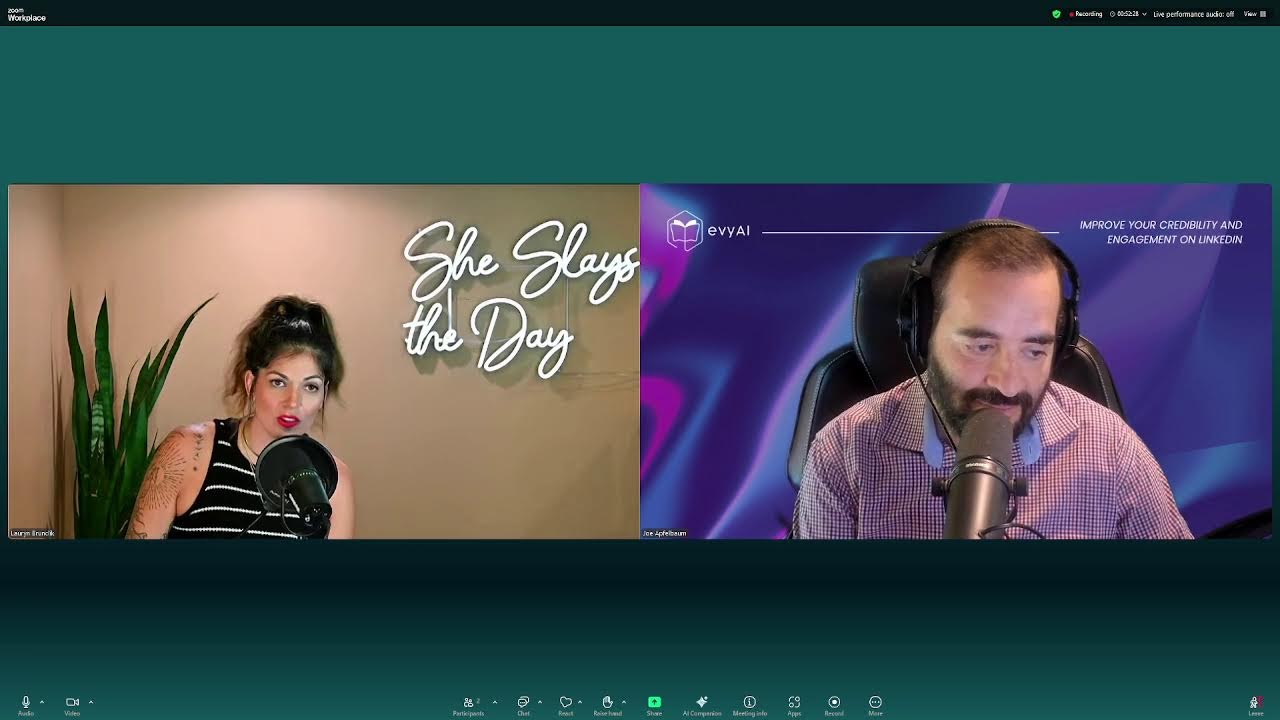
In this interview, Joe Apfelbaum shares his journey from a self‑taught web developer and former rabbinical student to a LinkedIn and AI‑driven marketing strategist who helps healthcare professionals, especially chiropractors, grow high‑value practices. He explains why traditional online marketing (Facebook, Instagram, SEO) often attracts low‑ticket patients, and why LinkedIn—home to 1.2 billion professionals and the wealthiest users—is the optimal platform for securing referral‑rich, high‑spending clients. Joe outlines a concrete LinkedIn workflow: defining an ideal client, sending personalized connection requests with notes, using a “greeting‑feeding‑meeting” cadence, and maintaining a 15‑minute daily checklist (send connections, comment, post, follow‑up). He details the anatomy of effective LinkedIn posts (hook, main points, CTA, ≤3 hashtags) and cautions against common mistakes. The conversation covers the distinction between personal profiles and company pages, the value of paid LinkedIn features (profile views, Sales Navigator), and how AI tools can automate content creation, messaging, and even phone/text agents. Joe also addresses cultural concerns (perceived salesiness, gender dynamics) and offers mindset shifts for embracing phone outreach. The interview concludes with actionable next steps for Dr. Brunclik, including expanding connections, posting original content, leveraging AI demos, and using a dedicated domain (joelinkedin.com) for easy contact.
Chapters
Well, then I don't do any fancy intro because I don't, I don't like doing fancy intros in front of people.
We don't need to do fancy schmancy intro. I mean, the intro was us just saying hello to each other and it was—
You are officially intro'd. So, Joe, how long— so where would you say you like started? Because you're in AI, you're in LinkedIn, you're doing a lot of things, but like, what was kind of your gateway drug into this world? Have you always done this?
Yeah, my gateway into this world was when I was 20 years old. My father wanted me to become a rabbi, like, as a teenager, and I decided to listen to my dad and go and become a rabbi. I spent many years learning and became a rabbi, and then at some point I realized I'm not gonna make any money doing this, and I, I want to have a family, you know what I mean? Like, I want to—
Did you think that was the first time that came up?
Yeah, I was like, I was like, hang on a second.
Okay, actually, I just gave you shit. When there is like 99% of our audience had no, like, complete blinders on? Because I would imagine it's a career of passion and fulfillment and feeling like you were called. Like, a lot of the people listening in healthcare truly feel called to do this work. And then they get there through a lot of schooling. And then about 5 years later, they're like—
Yeah, yeah, yeah. What's the business thing? So, for me, it wasn't actually a passion. It was my dad's passion. Sometimes you do something and it's somebody else's passion, and then you get to a certain place and you're like, okay, what is my passion? And so I went to my mother and I was crying to her. I was like, I'm not gonna be able to make money. She said, get in the station wagon. She drove me to the library and she said, go in there. The Brooklyn Public Library. She said, go in there. She said, self-education— um, she said formal education, like going to college and whatever and becoming a professional, will make you a living. She said, but self-education will make you a fortune. So go in there, read some books, and learn. So I right away went to the computer section. I didn't have a computer at the time and I wanted to learn about computers and I thought technology was pretty cool. And I loved like advertising and things like that, but I had no idea how anything worked. Um, and so I got some books on it and I became really good at building websites for people. I bought a computer from J&R Music and Computer World, which is out of business now. I bought a Compaq Presario computer and I started learning how to build websites from like taking courses and hiring coaches and kind of just like learning the process. And I became particularly good at it. I was building 100 websites per year. And you know the famous saying, if you build it, they will come?
Right.
I built it, nobody came. Kind of like building a chiro— like building a chiropractor practice and nobody coming. You know what I mean?
None of us can relate to that at all.
If you build it, they will come. So you got the storefront, you got the website, you got the social media profiles, and people are like, okay, you built me this website, you charged me thousands of dollars for it. Now what? What do you, what do we do now? And I was like, build it, they will come. And they're like, no one's coming. Figure it out, Joe. So I had to figure out how to make people come to your website. And the way that I did that was through a concept called search engine optimization, SEO. But SEO brings you a certain type of client and not the clients that maybe you don't always know if they're gonna be good. And maybe you'll give them a good massage and really fix them up. And then they give you a 1-star review because they came early and your store hours are clearly 9 to 5 and they came at 8:45 and you weren't there and they got upset. And those are not the people that you really want.
Right.
What you want is you want referrals. You want people from like a networking group that can become a recurring customer that want to invest in all the other alternative healings that you can offer them. Maybe they're a $10,000, $15,000, $20,000 client over the course of time so you can holistically heal them and their entire family and their entire staff. That's the type of client that you want. And those are the types of clients you get from networking on LinkedIn because LinkedIn has 1.2 billion people and the richest people on it. And so I discovered this and I started getting clients off LinkedIn. And then people started asking me, Joe, can you teach me LinkedIn? And I'm like, I'm a CEO. I'm not a, you know, I grew one of the fastest growing companies in America. I'm not teaching people LinkedIn. But then I realized, you know what, I really enjoy like nerding out and teaching LinkedIn. So I just started teaching like other CEOs and other, you know, doctors and lawyers and professionals how to use LinkedIn. And they started getting results. They started generating hundreds of thousands of dollars in new business as a result of what I was teaching them. 'Cause I wasn't just teaching LinkedIn, I was teaching them Like how to network, how to get referrals, how to connect, how to get recommendations. You know, I looked at your LinkedIn profile and I could see that you're— you can use some help. And you know what? I would love to help you after this. And disclaimer, I know you're not managing it yourself, but, but if I gave you the right strategy, you know, like, you know, my mother tried to build her store in the Lower East Side, and after 10 years of trying, she eventually went out of business, Lauren.
Oh wow.
That That really pained me a lot.
Yeah. Yeah. Closing after 10 years, that's heartbreaking.
And it's not because she didn't have a good product and it's not because she wasn't a good salesperson. It's not because she didn't work long hours. She worked 16 hours a day.
She didn't have the leads.
It's because she didn't have a strategy to get the leads. And that, and that is, that's the key, the strategy to get the leads. 'Cause I believe the right strategy will save you a decade. I've been able to generate millions of dollars in revenue over the past 10, 15 years of me doing the thing that I do in my marketing agency. And the reason I've been able to do that is simply because I understand strategy now. And I'm on a mission to help more people with their strategy and then also give them the tools. And now with artificial intelligence, you can easily have all your stuff being created with AI in seconds. But if you don't give AI the right strategy, it'll be problematic.
Yeah.
So giving you a combination of strategy, community, and technology is the name of the game. So, If I'm gonna help you, the first thing I'm gonna be like, all right, who's the most ideal client for you? Not the person who's gonna leave you a 1-star review for coming 15 minutes early, but who's the real ideal client? And you're gonna be like, a CEO that cares about their health and nutrition in my local geographic area. So I'd be like, okay, who are those CEOs? Let's find them. Let's make sure you're connected with them. You might say a senior executive.
But what if they're not? Okay, all right, hold up, hold up, hold up. We gotta take a couple steps back here because you're blowing my mind a little bit. First of all, So what we have is the concept of— and you're like, I know this is kindergarten stuff, but we're taking— this is LinkedIn 101. So I— how are most healthcare professionals, if they have— all right, so I start a business, I know I need a Facebook page, I know I need an Instagram page, I know I need a good Google SEO, like I need my testimonial. That's kind of like where a lot of people start in this day and age of like, all right, that's my online bucket. Now, maybe they see like, I should have LinkedIn, but I would venture to say that most of them don't even see that that can provide— like, that that's a necessary thing. So you're saying B2C situation, they can get great new patients from LinkedIn?
Yeah, B2C can get great new patients from LinkedIn because LinkedIn is the world's largest professional social network, and it has the most people there with the most money. So if your ideal client spends $10,000 with you, not like low ticket, not the one, the person who hurts themselves in their car and wants to go to the chiropractor because the one time they hurt themselves and they just need some help one time to get adjusted. No. You want the person who is the type of person who's biohacking, who really wants to take their fitness to the next level, who really wants to come to you twice a week for, you know, like for a year. You know what I mean? Like a person who's worth more than $10,000. Those people are on LinkedIn. Those people are not as much on TikTok or Facebook because the people on TikTok and Facebook, you know, look at 80% of the people in, in even in your local area in Wisconsin or whatever. You look at, you look at the people there, you'll notice that most of them are, are, don't have money. You know, 80% of people in the United States are living paycheck to paycheck and they don't even have, uh, they don't have $1,000 in savings. You think they're going to pay you out of pocket like that? No.
Mm-hmm.
And, and many of them don't even have insurance these days, unfortunately, because of what's going on in the world. And, and the government's getting even worse about that. So you want to find people of means, and LinkedIn is a place where you find people of means. And the other thing about LinkedIn is, When you show up to Facebook, Instagram, TikTok, or whatever, you're not there to network. You're there to get entertained and to build relationships and maybe some people even to date. But on LinkedIn, you're there for one reason, to build professional relationships, to network and make referrals. Dr. Lauren—
This is, this is the BNI group.
This is the global BNI group that gets you unlimited referrals, unlimited networking, and unlimited top of mind 24/7. So if you want to build a 7-figure practice like you did, if you want to be able to build maybe even 6 figures in profit in your business, you can use LinkedIn. And let me tell you something about LinkedIn that most people don't know. You can get up to 30,000 followers on LinkedIn by just adding connections because every connection becomes a follower. If I follow you on, on, on Instagram, for example, that doesn't show me— that doesn't follow me back. automatically. That doesn't happen automatically. If I follow you, say on Facebook or something like that, doesn't automatically follow me back. If I follow you on TikTok, that doesn't automatically follow me back. But if I follow you, if I connect with you on LinkedIn, then you automatically connect with me back. You automatically follow me back. And when I post content, that automatically shows up. That for me is such a powerful thing. And also, I have everyone's emails. I have most people's phone numbers. You know, I have doctorandyourlastname@gmail.com. It loaded up when I just did— when I just pushed a button, it loaded up your Gmail. It loaded up your 715-220-8146 number.
It just worked. Well, thank you so much for reading that out loud!
No, but it's— I just pushed a button and the agent did it. If you watch the replay of the behind the scenes and watching me do research on you, You're going to see that I just push buttons and it just appears like it's on the internet already.
Can I— okay, so why— this should not be mind-blowing. This really, really shouldn't, because I'm not saying that this is going to sound so stupid, but all right. A lot of what we have been told in healthcare is that the mother makes the decisions for the family. And so this is why I think we put so many eggs In the basket of new patients and leads of creating Instagram Reels and creating educational carousels and like this or that, because that's where mom is. Oh, okay. For all my— calm down. We understand that mom can be the CEO and dad. We're like, I'm just saying that is like, we want to get to mom. And like so many people who have listened to you for the last 10 minutes are going like, oh, but I don't want the CEO. My ideal avatar is mom and she's got 4 kids. And it's like, okay, but hold up, let's be honest. They also want to go to BNI groups. BNI groups seem like this dying thing because people, we don't have one in my area, but if there was, you bet your ass I would be going. You bet your ass. But now I'm thinking about it like, oh, Well, dads often do get in the way of moms spending money and like, it would actually like, duh, they're in my town. I guarantee you all of the CEOs, they're on LinkedIn and how easy to just connect.
Yeah. And also groundbreaking.
This shouldn't be, but it really is.
If you search mom on LinkedIn, a lot of moms will proudly write mom of 4, mom of 3, mom of 2, whatever. And a lot of them are executives. They don't have to be CEOs. They could be CFOs. They could be directors of HR.
Most directors of HR, for sure.
I mean, I mean, but think about this. Most HR professionals are women. That's the reality of it, because women—
I'm just making a joke based on the most recent Coldplay situation of like, yes, yes, chief people officer.
Yeah, yeah, yeah. But most, most, most of the, of the human resources departments that, by the way, can bring you into a corporation and have you do a presentation On how on holistic health, which you guys are experts at. I mean, that's the most lucrative thing to do is to show up in front of 297 employees and do a quick presentation on how to improve posture. Like, oh my gosh!
The same people. So that was kind of my point is the same people who are like, no, my ideal avatar is a mom of four and like da da da da da would be tripping over themselves to have an opportunity to go into an industry in town, the school district in town, whatever, and give a presentation to 200 people about.
All the school administrators are on LinkedIn. All the teachers are on LinkedIn. All the professionals that want to network professionally are on LinkedIn. There's 8 billion people in the world. There's only 1.2 billion on LinkedIn because the cream of the crop is there. You want to be where the cream of the crop is. You want to get referrals. You want to grow your business. You want to be able to maybe open up another practice in another part of town. The other chiropractors are on LinkedIn. You think there's no chiropractors on LinkedIn?
No.
They're on LinkedIn. They're on LinkedIn professionally because when they finish medical school, they go to LinkedIn, they connect with their peers, with the alumni, because that's the way to do it. And think about that. You went to a school, you went to college. Why are you not connected with all the people you went to college with on LinkedIn and see what they're up to for a living and see if they want to come in for a massage and then upsell for some chiropractor sessions? So LinkedIn is still cool because it's not just cool. LinkedIn is where the money is.
I think money is cool because I think like, so I'm a millennial, so I saw the rise of Facebook, right? And then now Facebook's like, and now it's like Instagram and TikTok. But like the whole corporate world is still like, LinkedIn is where we're still at.
It is still— Most corporations will block most social media from their workers, but LinkedIn they'll allow. So think about it. What are they doing during work?
They're, they're getting any dopamine hit they can. They're doing—
They're on LinkedIn. And by the way, LinkedIn is owned by who? Microsoft. Oh, so it's built into the Microsoft ecosystem. Microsoft paid $26.2 billion for LinkedIn. They are growing it at a rate of 3 new members every second. Millennials, Gen X, Gen Z, There's everything on LinkedIn, everything you could think of— men, women from every country. I have clients in 37 countries around the world now as a result of LinkedIn. Think about that.
So do you think— okay, so let's take a brick and mortar. Mine is a little different because I don't use LinkedIn well at all, but I don't— I use it, uh, not for local new patient or leads at all. I use it for more my digital things. So let's take someone who has a brick and mortar.
Where? And the location?
Let's do Madison, Wisconsin.
Perfect. A chiropractor in Madison, Wisconsin. Okay.
So they are going to start looking for local connections and just like asking for a connection.
Yeah. What's gonna happen is you are a chiropractor in Madison, Wisconsin. Okay, your name is Travis, let's just say, and you realize how important it is for you to grow your practice. And so you start connecting with local business owners and local professionals in Madison, Wisconsin, and you gain 1,000 followers like this guy named Travis Gerhardt, who's leading the charge at the Super Vital Journal of Best Health Corporation, whatever, whatever he's doing there. And he's a chiropractor for the Ultimate Wealth Center and then for the Ambient Gallery and now in Madison, Wisconsin. He's the founder and super vital officer, the chief super vital officer, and he creates products and services for people who want to take their life to the next level. But he has a brick-and-mortar place in Wisconsin, and he connects with people, and then he gets on the phone with them, and then they love his attitude and his personality, and they just want to come meet him. And he's like, why don't you come for a session? And they come for a session and they refer all their friends because they can't stop talking about how good they feel. And now Travis has 100 new clients as a result of his 1,000 followers on LinkedIn because he had a few of his connections come in to just check out his office, do a selfie with him and talk about it. And actually one of his clients posted about the fact that he went there and all of their friends in Madison, Wisconsin learned about him. Like, wow. And who do you think they're talking about? They're talking to their wives. They're talking to their friends.
Okay, but I need you to teach me like the culture here of like, okay, so I reach out and I make a connection because I have like—
I have no idea how to make a connection. Okay, you never even used it. You never even used it. So let me teach you what to do. You find someone in Madison, Wisconsin that's, let's say, an attorney. It's high stress. And you send them a connection request. When you send them a connection request, you can include a note. We have an assistant that will draft a note for you. We'll read your— their profile, read your profile, know exactly what to say. Hey Ashley, I see that you're a real estate attorney in Madison, Wisconsin. I actually live here myself and I'd love to connect with you, learn more about what you do. Would you be open to connecting with me on LinkedIn? Ashley says yes. Now you guys are connected. You have Ashley's email, cell, and everything. You send her a message. You say, hey Ashley, thank you for connecting with me on LinkedIn. Looking forward to getting to know you. And Ashley replies, oh, thank you. Looking forward to getting to know you as well. You reply too. I noticed that your birthday's coming up in three days. Doing anything special?
Oh, that's creepy.
Why? Because it says it right on their LinkedIn.
I know, but that's creepy.
Okay, maybe if you think that's creepy, then we take a step back. We take a different approach. We say step two.
If I came in, I'd be like, I am regretting this connection right now.
Okay. Do you think that that if it says it, if if she put it there, she wants people to know.
Do you think that because— okay, do you think this is because I'm a woman who gets too many, like, hey girls?
This is a different—
or do you think Instagram culture is different?
Because, like, on Instagram, you don't do that. You don't do that on Instagram.
Okay, so I'm just so used to Instagram where, like, if somebody started following me and then, like, immediately they were in my DMs, like, hey, thanks for the follow. Like, oh, I see you just went to whatever.
I'd be like, yeah, but— But people don't network on Instagram. You're not there. This is what I said earlier. You're on Instagram to promote yourself or to do entertainment or to have fun.
On LinkedIn, this is expected.
This is like if you went to a BNI group. It would be weird if you didn't say thank you for connecting on LinkedIn. You're like, I walk into your house and you don't even say hello to me? We're networking here.
Okay.
This is not weird. Now, if you go on LinkedIn, you need to become a networker and build relationships and have the networker mindset. Now I get it. That as a beautiful woman, it's a very difficult thing to deal with other people giving you attention in an unsolicited way because you think they want something more than business. But let me tell you right here, I am not interested in anything more than doing business with you and having a great time doing it because I'm a LinkedIn networker. I'm not there in an unprofessional way to swipe.
Yeah, this is just the culture.
Yeah.
This would be like if I were at a BNI in person and someone said, hey, can I have your business card? I wouldn't be like, you're trying to get my phone number? Like, it's just— it's a different culture. Okay.
Also, all right, also, I'm keeping in mind that you get hit up a lot from people asking you for your phone number on the street or wherever it is, making you crazy. I get that because that doesn't happen to me very often. It happens to me once in a while, but it doesn't happen to me very often.
Well, it's not even the woman thing. It's the being sold to thing where it's like, oh, damn it, you know, like, okay, I accepted your connection and now you're going to tell me how you can get me 3,200 more new patients a day. And I'm like, oh, Yeah, you're just coming in hot.
Yeah, exactly. That's why I, I take a different approach. I take the approach of greeting, feeding, and meeting to really have a real relationship.
Greeting, feeding is the like pointing out something about their profile.
Yeah, making an observation or asking them, say, what type of people do you work with? Would love to make an introduction. Or asking if they want to come to an event with you. Say, I'm going to a virtual event for people in Madison that are getting together. If you want to meet more professionals, I'm happy to bring you as my guest. You seem like you have a really interesting background. Or I noticed that you love dogs and you're doing some work in a shelter as a volunteer, that I see it on your profile that you wrote that. Would love to learn more about that. I love to slay my day with my slay dogs or whatever, you know, my dog slays. But that's the— but that's the idea. The idea is just getting to know the person a little bit. And if— and then if they go back and forth with you, you say, would you want to get on a quick Zoom to get to know each other? Or do you want to come by my office and we can have a kombucha together? Is that weird?
No, it's not. So I think this is not weird. I think what it is, is I have forgotten. I've gotten really comfortable in practice. So I'm 15 years in practice. And on the podcast, I'll call it, you've lost your new girl energy. And whether you're a boy or a girl, in the beginning, you're in hustle mode when you really— and so I guarantee you, Half of the people listening, if you ask them, like, do you want to see more new patients? Do you want to grow an extra half a million dollars this year? They'd be like, yes. But they are literally, as you're describing networking and marketing, they are receding of like, oh, this sounds like a lot of work. I don't want to. And so it's pointing out the dichotomy from like, this is what we did in the beginning. We walked around door to door handing out business cards and this this is how you grow a practice.
I mean, you have to be doing that forever. Like, if you want to grow your business, you have to actually enjoy the act of getting to know other people, building real relationships, and that's how you're going to be able to get to 7 figures plus. If you're already at that place, then you can hire other people to run your thing and move on. But if you, if you are the type of person who's an entrepreneur, who's a business owner, who really wants to grow their practice, Adding networking as one of your skill sets, and it is a skill. I wrote a book called High Energy Networking, and you can check it out on Amazon. highenergynetworking.com takes you to the Amazon page. It's not something that most business owners have a skill to do.
Most people are not high energy.
But they're not even networkers. They're not even— they're like, they're like, you want to do business with me? Get out of my office if not, you know? But otherwise, what I would say is like, oh, Sally, hello, welcome to my office. Thank you for joining. You're not ready to do chiropractic. I get it. Tell me more about your life. Do you have any pains? Does anyone in your family have pains? Oh yeah, my grandmother, she's very ill, but her neck hurts and I always hear it cracking every time she looks at me. And why don't you just bring her in and I can adjust her? And you're like, you know what, I'll bring my grandmother in. And then he brings the grandmother in, the grandmother's like a ninja, and then you just crack it all, crackety crack crack. And I'm like, ooh, it's like popping one of those, like, you know, packing materials. It's so much fun. I'm addicted to this. No wonder why you love this so much. Anyway, bottom line is You built a relationship with someone. You build— you're either a relation— you're either a people people or you're a transactional person. And if you want to be a transactional doctor, good for you. Don't use LinkedIn. But if you want to build real relationships with people and turn people into real clients—
It sounds so time-consuming.
It can be, but my recommendation is 15 minutes a day. I'll give you a checklist. I'll give you the exact blueprint, a checklist, and then I'll give you an AI that sits on the side of your browser. That will help you do 90% of the work. And all you have to do is follow that checklist once a day. And then the rest of it is just having 5 conversations a day with people that are 15 minutes max, just to get to know them.
Is there like an amount of time that you're doing— I know this is—
The checklist?
Yeah. So like, I asked you to connect, you connect. Is it weird if I'm like right away? Or is it like, be cool, like, you know, don't be too overeager, send it within like 6 hours?
Yeah, I would say it doesn't really matter. It just like—
Doesn't matter.
What is your workflow? Because people don't see everything right away. So what's your workflow? Let's say every day from 9 AM to 9:15, you're going to spend 15 minutes a day doing the checklist. So during that time, that's when you do your work. That's when you send out 20 connection requests. That's when you send out your 10 messages. That's when you leave 5 comments on people's posts. That's when you post. And you do that once a day, every single day for 15 minutes a day. And if someone messages you, you reply to them. You be a nice person. You be a mensch. When you see it, you reply. You don't gonna reply every second. You're not gonna worry about, did I do it too soon? This is not a dating situation.
Yep. Well, that's what it feels like, Joe. I am learning a whole brand new skill set here.
Is it because you're dating right now? You're single? Is that why?
No, no, no, not at all. No, not at all. It's just like, this is a whole new—
You have your guards up. You're like, your guards are way up. Yeah. But also, like, you don't want people selling you. And let's take a moment and take a step back about that. It's like, why are we viewing selling as a bad thing? That's number one. Why don't we view selling as something that other people need to do? And if they're doing it wrong, we can just either ignore it or educate them because they're just doing it wrong. You know, like, a lot of people do sales wrong. They do it in a sleazy way. They're like, hey, you want to buy my car? You want to buy my car? I'm like, well, why would I want to buy your car? You didn't even qualify me. I have 100 cars already. I don't need your stupid car.
Yeah.
But instead, you could build a relationship with me and get to know me and learn about me, which is what people really want. So it's just like selling without consent is sleazy.
I think that's where, that's where my guards are up is like, I don't want to come across as icky salesy.
And, and, and there is a fine line between building a relationship and networking and being a salesy person. And it all depends on the person and the context. And on Instagram, it's not acceptable. On Facebook, it's not acceptable. But on LinkedIn, it's the culture of how we operate.
Yep.
So, and also it's not, not everyone knows that. And some people will feel icky because you exist.
Right.
That's the reality. And you have to take a risk. And, you know, sometimes somebody will walk into your store and you'll be like, hi, how can I help you? And they'd be like, stop talking to me. Stop trying to sell me your chiropractic services. You literally walked into my store and I said hello because they have their guard so high that you're going to close them on a deal. I have customers call me and I start talking to them like, why are you trying to sell me something? I was like, you called me. You literally called me to ask me about my products and services. I'm asking you questions about your business. No, just tell me the price. How much is it? Tell me the price.
Yeah.
I was like, I'm not telling you the price. You can go to the website to see the price. What I want to know is I want to learn who you are. They're like, that's a tactic of manipulation. I was like, that's not a tactic of manipulation. That's simply me learning about your business. But if you see it as a tactic of manipulation, maybe we shouldn't be talking on the phone. They're like, I'm sorry, I've been sold to so many times and I hate it so much. I was like, but you called me, remember that? You know what I mean?
Yeah. Okay. So you kind of went through the checklist here. You're commenting, um, you're like circling. Posting, engaging, messaging.
Yep. Okay.
Let's talk about posts. On there? Because I have a feeling posts on LinkedIn are different than what we know over on Facebook and Instagram.
They are. They are. On LinkedIn, you want to include 4 elements. You want to include a hook, main points, a call to action, and hashtags. You don't want to include more than 3 hashtags. You don't want to include a link in your post. You want to make sure that people actually read the headline, the hook, the first part, so that they want to read the rest of it. And you want to write in a way that doesn't sound like it's AI, that doesn't sound like it's garbage. But that is authentic, like you would at a networking event. You don't want to be like, hey everybody, newsflash, we're selling chiropractic services today. No, you don't want to do that. What you want to do is you want to tell a story about something that happened with one of your patients and how, you know, one adjustment not only changed their physical being, but it changed their spiritual being as well. Or something interesting that makes people think and want to comment. And our AI is really smart at, at learning your voice, writing like you, and helping you be able to say all the right things at the right time, both in the posts and in the comments. And look, being part of a community of people that are willing to comment on your post will help get your post out to thousands of people. But most people, they're not actually building relationships with their connections. You know, the, the reason why LinkedIn calls it connections versus Instagram calls it followers is because on LinkedIn, you're actually building a relationship with people, whereas on Instagram, you're talking at people. I put up a poll on my Instagram. I have thousands and thousands of followers on Instagram. I said, do you guys actually want to get to know me or do you want me to get to know you? And most people on Instagram, they don't want me to know who they are. They just want to be lurking and they want to know me, but they don't want me to know them.
Okay, so on Instagram you did a poll and everybody said, I just want to get to know you, don't ask me anything about me. Yep, which makes sense. That's, that's the Instagram world. That's where as soon as somebody's in my DM, I'm like, ah, Exactly.
What do you want? What are you trying to sell me? Or, you know, like, what do you want to take from me? Versus on LinkedIn, I put up the same poll and people were like, we actually want you to get to know me. And I'll tell you the difference. When I'm on Instagram, I just see your screen name, Big Betty 2473. But on LinkedIn, I see your first name, last name, company name, your birthday, where you work, where you worked before, where you worked before that, where you went to school, how long you went to school, who you went to school with. I see your recommendations. I see our mutual connections. I see your location. I don't see 90% of that stuff on Instagram. So it's like you show up on LinkedIn as you, the real person with all your profession and all your education and all your experiences and all your relationships. So you're a real person. You don't have a bag on your face. Whereas on Instagram, you're showing up with a bag on your face, with a mask, showing up to a place with a lot of shame, Not wanting someone to know you because you're $20,000 in debt and don't even have $1,000 in savings. That's how a lot of people show up, as fake.
So when you have someone that has a brick and mortar as a revenue where they're really, you know, that is a different LinkedIn than like, okay, now all of a sudden. So for me, I have, I can imagine what this LinkedIn would look like As I'm a chiropractor serving Barron County and like, I am looking to make connections. I'm talking about a patient. Hey, pollen's really high. And so this patient came in, I recommended this, like, I can picture that. But then all of the healthcare providers that I want to connect to, to be in my program and listen to my podcast, they're not going to find that interesting. So do people ever have like dual LinkedIns? How would you manage that? Because that is a common thing for a lot of them of like, oh, you have Do you have multiple chiropractors that work for you or just you? Yeah. Yep.
So each chiropractor that works for you needs to have their own profile on LinkedIn as a person. So when someone looks them up or somebody looks you up, they find your professional profile. Then you can have a company page as well on LinkedIn that represents your actual chiropractic practice. Now, if you're just a solo, a solo person, you don't necessarily need that. But, you know, like if I want to, for example, if I'm— if I Googled, if I did a Google search for Barron, Wisconsin chiropractors, there's a company called Owen and Kerstic Chiropractic or whatever that comes up. I click on meet the team. I see Dr. Steven Owens. I do see Dr. Aaron Kerstic. I see Samantha Randell and I see Jessica Bamberger or whatever. I see a bunch of people. The first thing I'm going to do is if I want to know if this is a good doctor, I'm gonna search Dr. Steven Owens and I'm gonna look him up and I'm gonna notice that I can't find him anywhere on LinkedIn and I can't find anything about him online other than on his website. Right, he's retired or whatever, but he still comes up on the first page of Google, which is crazy. But if I would've found his LinkedIn and then I would've seen his posts and I would've seen his recommendations, I'd be much more likely to trust him.
How does LinkedIn help, um, In the SEO world, like if I have a number one, it's number one.
You Google my name; it'll be number one across the board. You Google my name. I Google your name. If I Google your name right now, Lauren Brunzlick, Brunz Click. It's click, right?
Well, yeah, but it's you just say lick. Yeah.
Okay, let me. I'm gonna misspell your name. I'm just gonna Google it. You're on the first page of Google. I'm Googling it right now. First page of Google, Dr. Lauren. Brunzlik, right there. Boom, you're right there. I click on it, I click on it. The first thing I notice, you have, um, over 500 connections, you have 800 followers. I see that you're reposting stuff, you're sharing, you're doing things wrong, you're doing things against the algorithm, so you're not going to really get a lot of traction.
This is LinkedIn, right?
On LinkedIn.
Okay. Yeah, yeah.
Okay, but I see—
Okay, hold up, how do I have 500 connections but 800 followers? Because I thought—
500 plus. So when you have over 500, it shows 500+ connections. Um, but you have actually 800+ connections and, you know, but you can follow someone without connecting to them as well. That's a feature.
Okay.
Um, but most of the people will hit the connect button and when they hit the connect button, it says, do you wanna add a note? And you can, you know, you can send 'em a note. You know, here's the other thing. 38% of people on LinkedIn are actually paying for LinkedIn, Lauren. Did you know that?
No, I'm probably paying for it.
Oh, you actually—
what is the difference between paying for free?
I'm not. You're actually not. I can tell. It would say— it would have a gold icon if you paid for it. The free version allows you to basically have a profile, but you won't be able to see who looked at your profile.
Oh, if it's paid, you can see who's looking.
Yeah, who's looking. So I've had, um, thousands and thousands and thousands of people look at my profile. And when someone looks at my profile, I can then click on their name, find out their email and phone number, and call them and be like, hey, I noticed you looked at my profile.
Okay, Joe, that's creepy no matter what platform you're on.
Well, not really, because on LinkedIn everybody knows. Everybody knows that when you look at—
I didn't.
I mean, once you start using it, you'll be on— you'll just know. You'll, you'll be like, okay, is there a less invasive way? Yeah, I would. Yeah, you can connect.
Because I don't even know if that's legal for in healthcare. Like, unless you went to a dentist, could he— could their front desk call you and be like, hey, we saw you looked at so-and-so's?
Like, if I— you would be fine. Well, I don't know, but if— let me ask you the following question. If you came to my house, and when you came to my house, your face showed up on my Nest, my Nest, my Ring, my Ring doorbell, and the Ring doorbell told me what your name is and your phone number. And then I called you and be like, hi, I noticed you came to my house. How can I help you? Or you walked into my store. Walking, coming to my LinkedIn page is like walking into my store. If you walked into my store and you had a name tag with your name and phone number on it, Can I call you? And you left. You walked into my store, I was in the back, and you left. And you left your business card there with your name and phone number. Would it be weird if I called you? No, it wouldn't be weird. It's the same thing. It's not like— it's not like I'm randomly going to your house and then calling you and knocking on your door. I'm not doing that. You came to my house.
You came to my house.
That's why we sell people—
I didn't buy anything.
It doesn't matter. It doesn't matter. You showed up to my house, you left your footprint in my house. I want to know, did you come to my house because you needed something or were you just browsing? And the person will be like, oh damn, thanks for reaching out to me. I was actually just browsing, or I actually need your services, or I came because I listened to your podcast and I loved it so much and thank you for reaching out.
So I could just send a message instead of calling?
You could, you could.
I'm really freaked. I'm getting my cell phone number off there. Like, this is—
I mean, I mean, listen, you could either get some therapy around not loving the phone. Because that's something that I would recommend. Start loving the phone.
Okay, Joe, how old are you, though? This comes down to an age thing because—
How old do you think I am? Based on my look, do I look 20? Do I look 20 to you?
No, but I'm deducting that you went to the library to learn about computers. You bought this or that, which is slightly, I would guess, mid-40s.
Correct, correct. Yeah, yeah. Most people think—
And like what you were saying, I was like, ah, he sounds like he would have been like 5 to 7 years ahead of my technological—
You nailed it, you nailed it, you nailed it, you nailed it. I'm right on the cusp over there. But you know what, most people think I'm in my 20s when they meet me because of my energy. They're like, oh my God, you're in your 20s, right? And I was like, if that's what you guessed, I'm not going to argue with you. You know, like that's, that's the thing. But like, at the end of the day, it's like when I started my business, I just called people and I got them on the phone and had a conversation with them and they turned into clients. Like you have to get, it's a relationship with the phone thing. Like if you have a terrible relationship with the phone, if you don't like when people call you, you're not gonna like calling people. What I would suggest is look at the belief you have of how you feel when someone calls you, shift that belief. And what ends up happening is you're gonna start feeling more comfortable calling other people. How many people in your life right now can you call out of the blue without feeling weird? Your mother, your father, your sister, your brother?
Yeah, yeah.
Your friends?
20 to 50.
20 to 50, 50 people that you can call out of the blue, it's not weird at all.
Yep.
That can be expanded dramatically when you expand your mindset. Because I would suggest that every one of your clients deserve a thank you call Once a year. Every one of your clients that ever did business with you deserves a thank you check-in just to say, hey, once a year, I'm gonna call you. You can call them on their birthday. You can call them on a special date, the date that they came, and just say, hey, I was looking through my records of last year. I noticed you came. You haven't been here for a year. So I'm just calling to make sure everything's okay with you and ask you how you're doing. And they'll be like, wow, that was sweet of you. Thank you. Actually, I need to come back for a session. Do you have any sessions available? Boom. Now you have a new client. Or, actually, I'm doing really well, but my heart is melted that you called me and that you thought about me. I actually— I have a friend who was just in a car accident that actually needs help. Do you mind if I send her over to you? Oh, no. I actually was looking for you. I lost your phone number. Thank you for calling me, doctor. I'm actually wanting to come to you. You're the best doctor I've ever had in my life. Wow. Because you made that freaking call.
Mm-hmm.
And by the way, you don't have to be the one that calls. You can have someone call for you, but just as a relationship call. And you have that reputation of like, when the phone rings and Joe calls, it's not going to be, I need something from you, but I want to give you something. So now you want to pick up the phone, you know? So shifting that mindset can be really powerful. When, when I get a random call from someone, I actually pick up the phone because I think it's a gift from God.
I think you might be unique. One of us is not normal. And I will say that there's a chance it's me. But there's also a chance it's you.
We're both not normal because normal, normal would be that we're not on a podcast and that we're afraid of our own shadow. That's normal.
Yeah. Yeah. Because you're right. Calling a patient should not be weird. Let's even say current patient, like calling a current patient and just saying like, hey, I just wanted to let you know that I really appreciate you referred so-and-so. Like, this is like the most easy, like, oh yeah, you should be able to do that. And there's a part of me that's just like, Oh God, I don't really wanna get on the phone because I wouldn't want to have that conversation.
There is a weird way of doing it. I had a friend recently reach out to me and told me that her male chiropractor doctor reached out to her via text message. And he said, I noticed you haven't been with me in 3 months. And I feel really bad that you haven't been here 'cause I really miss you and I love your energy. Can we at least be friends? And that she took as, As an assault.
Now, if he would have sent it on LinkedIn, would it have been okay?
It probably would have been different because it would have been more professional rather than a text message to a woman that you were her doctor and now you want to be friends with her. Like, ooh, you know?
Yeah.
But on LinkedIn, you wouldn't say that. You would be like, hey, I noticed that you recently got a promotion on your job. Congratulations. Miss you at the office. Hope you can come to us soon. We're actually running a summer special or whatever. You say something sweet and you connect with them and you you comment and you support them versus sending them a private text saying I want to be friends with you. Let's go out. No. Yeah, that's weird.
Yep. No, that is. That definitely is. And yeah, don't say his name. Okay. Maybe they were at Coldplay. I don't know. Okay. Well, I I know that this has. likely been super, super elementary for you. But for me, this has been mind-blowing. And you've definitely inspired me to actually look at what is happening over on my LinkedIn. Okay, so my LinkedIn— kind of one of my last questions. Okay. Quick audit, knowing I am B2C— no, sorry, B2B. I am trying to get in front of other chiropractors, dentists, veterinarians to listen to my podcast that is geared towards business. It's not patient-focused. What could I be doing better?
What you can be doing better on your LinkedIn is connecting with more people. You can connect with up to 30,000 people on LinkedIn. So that would be number one. I noticed you're only connected to 800 or so. So you, you should have your assistant be connecting. You should make her a list of 1,000 people. People that are veterinarians, chiropractors, and so on, and make sure to connect with them, especially if they're actively using LinkedIn. So that would be number one. Um, get more connections.
Is there a way to— I guess so that it probably is a good filter too of like where to spend your time is like if they haven't posted in 2 years, not necessarily.
Yeah, I mean, not necessarily, but you, you could also see if they're leaving comments, if they're liking stuff. Okay.
You can see that.
You can see everything. You can see on LinkedIn is Complete transparency with everything. So every comment you've ever left, every post you've ever liked, you can see everything.
Even with the unpaid view?
Even with the unpaid, you can see everything about everybody on LinkedIn. So that's, you know, you can't see if they looked at your profile if you didn't pay, but, and you can't see what profiles they're looking at, but you can see if they commented or any activity that they did from an engagement standpoint or posting standpoint, you can see. You can't see what a company page does, but you can see what a person does. Um, so that's, that's a pretty powerful thing, but I would say expand your connections. That would be number one. Um, start posting. You're actually not posting on LinkedIn. You think you're posting, but you're reposting your company page content. It's not the same as posting. So you're not posting at all.
Okay.
And don't make the 18 mistakes that most people make on LinkedIn. You're making many of the 18 mistakes.
Do you have a, do you have a lead magnet somewhere that I can—
I do. I have an, I have an article that you can read or whatever. You can send me a message on LinkedIn. I'll send you the article. I have it as a template.
That will be Lauren's first thing. How do I log in? And if I can find Joe and send a message, where is that?
Yeah, that is my challenge. You could find me by looking at, um, all of the comments on any post that you've ever posted. You'll see me all over the comments and you'll find me right away. You look at your notifications, you'll find me right away. Okay. Um, and I'll also send you a message on LinkedIn through, through something called Sales Navigator. Have you ever heard of Sales Navigator?
No.
Um, Sales Navigator is a version of— Really?
You, from this conversation, you think I know what Sales Navigator— no. What is that?
It's the, it's an upgrade of LinkedIn that allows you to be able to message people that you're not connected to. Oh. So you can message anyone on LinkedIn using Sales Navigator. So if you, you know, there's a limited amount of me— of credits that you get each month. Okay. And you can message people you're not connected to. And that's a good way to kind of get in the door with people because they won't see your message until they accept your connection. 100%. Yeah.
Okay.
Yeah. Um, so that's, that's a really powerful thing to do. Um, you know, even if someone didn't accept your connection request, you could still message them. Um, that's, that's really, really powerful stuff. So I would say that. Um, and then, you know, sending messages to your existing connections, getting them on the phone, you know, setting up a meeting with them, building a relationship. Like if you're already connected to chiropractors, why are you not booking meetings with them and getting to know them? You know, like, why are you not building a relationship with them? That's what I would say. Build a relationship, get to know them.
Yeah.
Yeah, you might not want to do that. But I would say 5 people.
I can do this. I can do this. This seems like— because this is essentially what we're kind of doing, trying to do on Instagram. I'm trying to create relationships with— but over there. Okay, I can do this.
You for sure, you for sure can do this. I can show you how to create $100,000 in profit from your consulting business within a short period of time using LinkedIn. That's what we specialize in.
Okay. Well, talk about dropping a sexy hook.
Like, okay. That's sexy.
Okay. So, so for people who want more of you, where, how can they work with you? What are your options?
Yeah, it's really easy.
Go to LinkedIn and find him.
You could go to, you go to joelinkedin.com. I bought the domain, forwarded it to my LinkedIn so everyone remembers when I'm on a podcast. joelinkedin.com goes to my LinkedIn. So that would be number one. Number 2 is you can send the word demo to the following phone number. So if you're driving, pull over to the side, 973-841-8868. Send the word demo to that phone number and one of my AI agents will reply with a demo of my technology.
How cool is that? Okay. What service are you— because that's not your cell phone number.
That's not my cell phone number. That's my—
Right.
That's one of my AI agents that you can just call or you can just text. So if you text my AI agent, so I build AI agents for people as well that will answer your phone for you, that will have regular conversations with people, that will text people for you and reply. So if you have a phone number on your business, wouldn't you want a person to pick up 24/7 that's an AI person? And then have conversations with you.
So I could have on my website, curious about becoming a new patient, text us here.
Yep. And then it will reply 24/7. 24/7. It'll reply AI agent through text message or through WhatsApp or through Live chat, like on the website, just live chat or through a phone conversation. You could have a regular AI just jump on and just say hello and just start talking. Uh huh. Yeah.
Okay. So I will get that cell phone number and you can text demo to that.
Yeah.
If you text the word demo to nine and then you'll teach me how I can implement that in my 100 percent. I'll teach you. I can get an AI agent for both companies.
Correct. Correct.
Okay. Fantastic.
Yeah. For both companies, you can get as many as you like. You could also have AI update your social media. You can also have AI reply to every Instagram message you get.
Shit.
Yeah.
Okay.
Yeah. You could do all that. That's, that's something that, that we can help you with. But you know, at the end of the day, it's just—
So I can learn, so I can spend my time sending messages to people on LinkedIn.
Hello. No. So, so you can spend your time having—
Happy birthday.
No, but you could spend your time having actual conversations with people like we're having right now and getting to know people.
Yeah.
Like I'm getting to know you and you're getting to know me and we're building a relationship that's a business professional relationship. And sometimes it crosses into a friendship because we like each other's energies or whatever. But a lot of the times it just stays as a professional business relationship and that's fine. But a lot of my friends I've met was through business. I got to know them through business. Through at a workshop or at a conference or something, and then they become friends with me. We start off talking about business, but then we're like, you know what? We both like Fortnite. We both like going out and traveling and whatever. And then so why don't we do a trip together? And why don't we do ayahuasca or whatever? And then we end up just having a good time.
Okay. Well, we will have the phone number below. So if you were driving and you didn't pull over, we'll have that phone number below. Text demo to that. Go to joelinkton.com. Genius. Genius. I'm excited. I'm excited. Okay, Joe, this was wonderful. Thank you very, very much. We will make sure we have those connections below for people. And yeah, if you found this interesting, like if this— hopefully I'm not the only freaking one. Like somebody send me a DM and be like, no, Lauren, seriously, he was blowing my mind too. Or if 100% of you were like, girl, where Where you been? You just been hanging out, living on Instagram for the last five years? I have, but I'm expanding. I'm growing. So shoot me a DM. Share this episode so other healthcare professionals can find it and find Joe. And until next week, bye.
Woo hoo!
Thank you so much.
It's my pleasure. That was fun. I had a good time too. Thank you for okay.
Well, hopefully, hopefully you did actually. It wasn't a waste of your time like this. It wasn't my no no.
I I do love hearing the perspective of people. that are not LinkedIn users because, yeah, you know, like, our AI also works on Instagram and Facebook and it works everywhere. It's not just LinkedIn. I'm just obsessed with LinkedIn because that's where the money is. But yeah, you know, I want more people to learn about this, especially—
You really have no idea how many, like, mind connections you made in that. Like, I'm sure you're just like, really? Okay. But it's like, oh, because so many, so many of the listeners Like, would shut down of like, CEOs, that's not my ideal. And it's like, bitch, yes it is. Yes it is. Yes it is. Go ahead and keep saying like, you can keep doing your Instagram stuff for moms, but like, no, you want the CEO with 200 employees.
You want him or her.
Like, don't pretend you don't.
Or the head of HR.
Yeah.
Or the CEO and the head of HR at a Coldplay concert.
More from Joe




How to Beat the Algorithm: Remove Hidden Watermarks & Scale Content with evyAI






