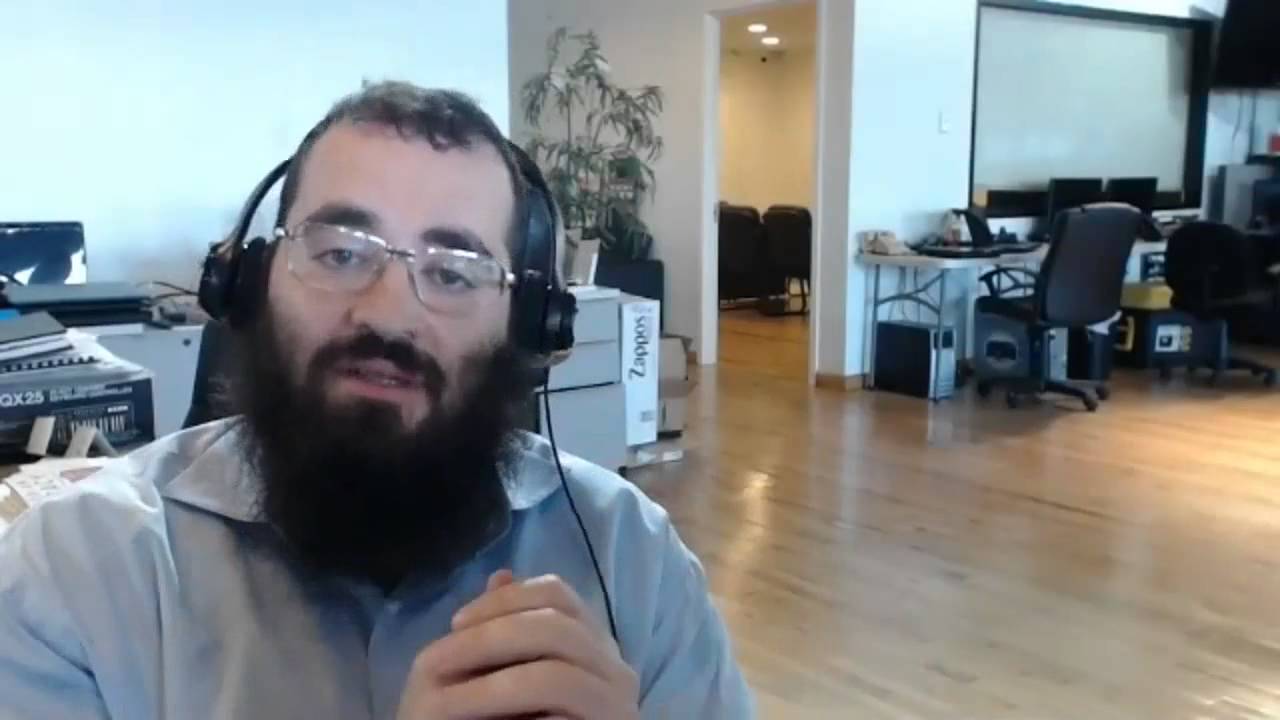
In this EO Thought Leadership Forum episode, host Joe Apfelbaum brings together James Ashcroft (EO South Florida) and John Toda (EO New York) to discuss practical ways entrepreneurs can choose topics for thought leadership content. James explains how reflecting on personal and business experiences—such as employee relationships, family life, and defining success—can surface authentic story ideas. John emphasizes that storytelling is the backbone of any format (blog, book, video) and stresses the importance of interweaving personal anecdotes with clear value for the audience. He shares concrete tactics: capturing ideas instantly with tools like Evernote, looking for common threads, creating a table of contents or outline to structure a series, and consistently producing content. Joe adds his own habit of writing a weekly email based on a striking conversation or observation, and highlights the power of writing to a single, imagined reader rather than a vague mass. Throughout, the panel underscores authenticity, audience focus, and disciplined habit formation as keys to generating compelling thought‑leadership topics.
Chapters
Welcome to the EO Thought Leadership Forum. My name is Joe Apfelbaum and I am from Brooklyn, New York, EO Brooklyn. And today we have James and we have John. Please introduce yourself.
Hey, I'm James Ashcroft. I'm from EO South Florida down here in Fort Lauderdale.
Awesome, thank you.
And I'm John Toda. I'm with EO New York here in Manhattan.
Okay, great. And today's topic that we're going to be talking about is how to pick a topic for thought leadership. We're all leaders, entrepreneurs, CEOs, and we have a lot of ideas that we want to disseminate. But when we're sitting down to write an article about something, it's sometimes difficult to come up with an exact concept of what you want to write about, or if you want to do a podcast, or if you want to come up with a series of something. So what would you write about? Obviously, you know, maybe write about your business, write about your interests, write about your hobbies. You're constantly pumping out content. You have this flow going. What do you do to come up with concepts?
Well, you know, I think it's easy to get stuck into the whole, um, what do I have to write about? Um, but, you know, looking at myself as a 41-year-old business owner and family man, uh, if I sit down and really think about my own experiences, there's usually quite a bit of content, whether it's personal Or business or combination of the both. I mean, I think business is very personal to me. So I kind of reflect upon some thoughts I've been having lately. Um, and, uh, usually something pops out. I mean, it could be anything from employee issues. Um, for example, um, and I start thinking about my relationship with my employees, uh, and my history with employees and what I've learned. from having employees within my company. And that usually starts a snowball effect of information that I can just dissect and start building out in my writing. So on a professional front. On a personal front, I've been married for 12 years now, and with my wife for 19. And that provides a lot of interesting points of reference to discuss, anything from how to be a good husband or a good dad. Or how to combine work and being a good dad. So once I just start kind of sitting down and breaking it down like that, I usually find that I'm more of an expert in things than I think I am just out of the gate. So usually those are my starting points for my writing.
Awesome. And John, you have a business that helps other thought leaders craft their, their thought leadership, organize it, and then monetize it. Tell us about how you help people come up with concepts when they kind of don't necessarily have them.
Yeah, and I think what, like you said, what we really specialize in is working with thought leaders, helping them, you know, really crystallize what their concept is, what they're passionate about, where they can really add value. And I think it really comes down to storytelling, you know, with all of this. And like James said, it's, you know, what really means something to you, what are you passionate about? Certainly we all have our business expertise, but I do feel when they can kind of interweave personal experiences, whether it's the things that are going on in your own business or in your personal life, but weaving that in with a real value-add, a thought leadership piece, Makes a big difference because the storytelling, you know, like we always say, when it gets down to it, in whatever form that you're developing content, it's storytelling. You know, whether you're writing a book or you're doing a blog post or you're doing social media posts, in one way or another, you're telling a story. And if it's not intriguing to you, it doesn't feel like it's interesting when you're telling it, then it's probably not going to be that interesting to your audience. And And that's kind of for us the way we benchmark what's worth putting out there on the web. And, you know, my thing with everyone is just, you know, you just do it, you know, get down and write every day, post all the time, create videos, and it just gets easier and better as you do more of it.
For me, I send out an email every Sunday, and before I sit down and write the email, I really think about, What is that one conversation that I had, or one incident, one observation that I had in the past week that really made me think twice? That really made me say, whoa, hang on, let's stop this for a second. What just happened here? And if it makes me have that feeling, chances are it might have somebody— it might make somebody else have that feeling. When I'm writing for my business, I might think about what are some of the questions that people are constantly asking me? about my business. We're in a marketing business, so for us, people are always asking us how to create a budget, how do I get results, what's my guarantee, things like that. And I tend to write things around that. James, do you find that you have a similar experience when you're writing?
Yeah, absolutely, Joe. Just going back to your point, I certainly think about things that have kind of got my attention over the past few days. And then I think it's just taking that experience and then personalizing it and coming from an authentic space within me of my own experiences and putting it out there. And it's generally a good reflection back from people in their own lives that connects, that they say, yeah, I'd have the same thoughts. So just going back to our own personal experiences and the storytelling. Coming from that place of experience. Absolutely. I just find it's— those are the best posts and those get the best responses. And those are the topics that I'm best at, that I have personal experiences in.
Oh, awesome. So, John, when you're telling somebody to come up with a series of articles or a series, do you sit down and you first bullet point all the topics that you're gonna come up with? Or are you more just do whatever you feel and let it come out? What's the approach that you typically take with thought leaders?
Yeah, so there's a couple different things. And to your point before, one of the things that we always tell people to do is use some kind of an app, you know, like I know I use Evernote for note-taking and things like that. But something that's with you all the time because you never know when you're going to get inspired by something. Like you see something on the street, you take a snapshot of it. Something comes to you while you're on the subway or whatever it might be, and keeping those notes and And then really compiling them all. And then what we look for is some type of common thread that can tie that all together. So, you know, ideally in a perfect world, you have a plan, you know, that, that has been kind of crafted that'll last several weeks or even months if you're lucky. And you're not— you may not write it all initially, but you do have that outline. I think probably the best best practice that we use is we tell people to create a table of contents essentially. And as if you were writing a book, it's a table of contents for the content you will put out there. And then that becomes essentially that outline that you start working towards and it gives you some structure to ultimately what you want to put out there.
James, have you written about a specific brand that you have that you represent, or is it more just like writing about things that have your attention? Like some people, are constantly writing about, you know, whether if they're like in HR or whatever, they'll constantly write about HR issues. But I see your work is more around like self-improvement or self-awareness, or what is it that you're kind of like, how do you kind of like, where are the borders of what you write about?
Yeah, well, mine's a work in progress in itself. You know, I started writing with just discussing my thoughts about Anything from, you know, my professional life, my family life, and just kind of finding my way. And as I'm writing, I'm actually developing my own topic, if you will. And for me personally, it's kind of redefining what success means. I was just writing today about the fact that we have all the success in the world, but we end up, you know, losing our marriages or missing out in kids' events, you know, as they grow older? And is that really a successful life? So that's just, for me, is something that really pulls at my heartstrings and it means a lot to me. So I'm entering kind of more of a specific niche within my own writing. So I don't really have any boundaries, but it's kind of more what I'm naturally gravitating towards because I have experience in, you know, operating businesses and having a great marriage and And a strong relationship with my kids. It's what I know and it's what I'm passionate about. So I kind of, if I write in the context of that but don't limit myself to just pure business or pure personal, I find it provides a lot of content for me naturally.
Yeah, and that's pretty powerful. John, do you have people think about who their audience is when they're writing? Like for me, I found it super helpful. To think about one person. When I'm writing something, think about one person. Who's that one person I'm talking to? And what am I saying to that one person? Because I used to write to many people and it was like vague, like everything that I wrote was vague. There was very little emotion because I was talking to many people. But when I started talking to this one person, to you, to the individual, all of a sudden it became much more powerful and much more impactful. Or at least that's what the people reading it are telling me. John, what do you think about that?
Yeah, I think in our process, I believe it's like the first step is determining who your audience is, because it's going to really— everything, you view everything through that filter, because you could take the exact same set of content and craft it 3 different ways for 3 different audiences, and you want to make sure they're getting value out of it. And so what we look at is first and foremost is who's the audience you're trying to reach? And then how are you gonna ensure that they really get value out of what you're talking about? You know, is it, you know, if you're talking about, you know, how to have a good marriage and how to raise your kids properly and have a valuable lifestyle at home, you know, you wanna make sure that you're getting to the people who have, you know, wives and families and that you're crafting it for them. And so, yeah, I think determining the audience is first and foremost for us. And then, you know, to that point, just having fun with it. I think what James mentioned too is really big with me. Like, I started in my career as a screenwriter, and I wrote film noir, like hitman movies. And they were really great scripts, but, you know, a studio said to me, you know, it's clear you've never actually been a hitman yourself.
Hmm.
And, you know, and it was— I looked at it and I said, wow, I followed the craft exactly right. It was structured, you know, 3-act screenplay, it was structured right, it was the right length, everything was perfect, good dialogue. But the reality is it didn't ring true with the audience because I wasn't actually that person. And I think like what James referred to before is like spot on, is if you're not talking about the stuff that's truly all about you and something you're passionate about and something you know, the audience ultimately will see right through it and know that it's not really you. Awesome.
I had a lot of fun doing this thought leadership forum, and I hope you guys had a lot of fun too. Anything that you guys want to add before we wrap up?
No, Joe, it's been a real pleasure. And John, it's been great having you on board too for this topic.
Awesome. And we look forward to doing this again soon. We're going to continue to try to pump out some of these, kind of like a test pilot to see what it turns into. And hopefully we'll have other exciting EO members that are part of it and, and awesome experiences that we can share.