EO Thought Leadership Forum Episode 003
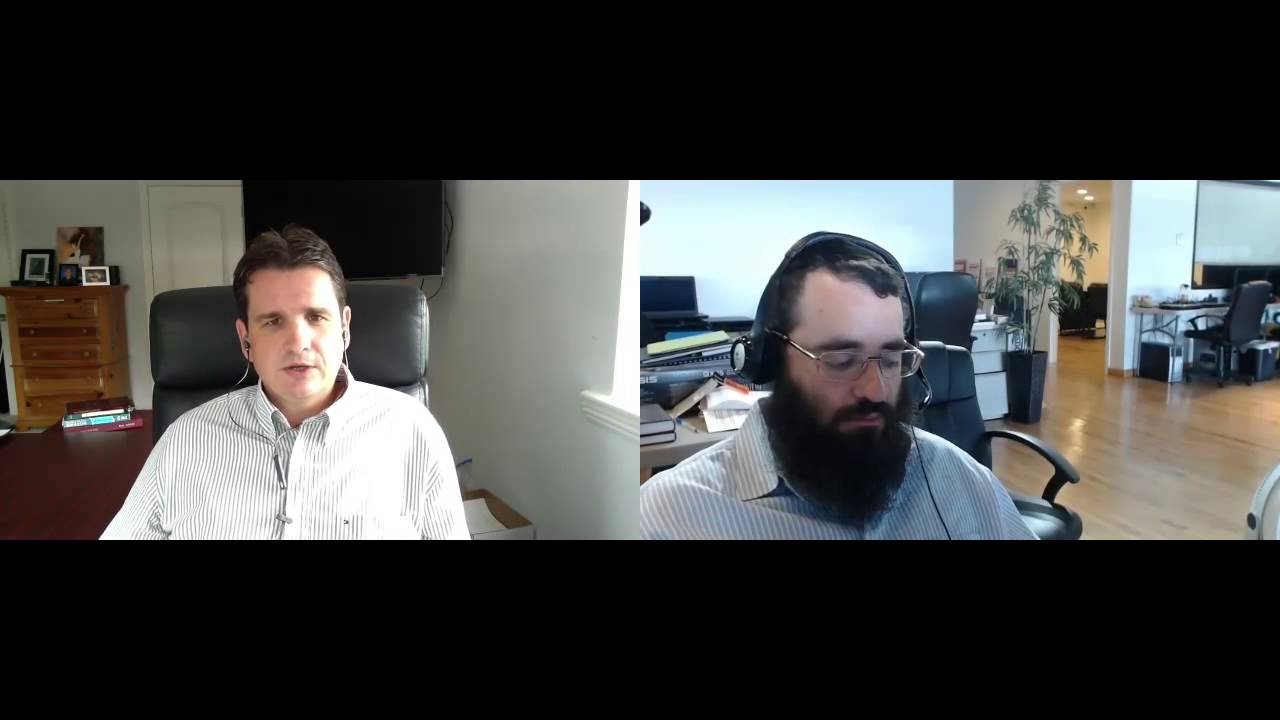
In this EO Thought Leadership Forum episode, host Joe Apfelbaum and guest James Ashcroft explore the elusive question of personal purpose, especially for entrepreneurs who have achieved financial stability. They discuss why purpose matters—linking it to EO’s core value “Make a mark”—and share practical exercises such as the gravestone/funeral visualization and revisiting childhood curiosities to surface deeper motivations. The conversation highlights how personal experiences, challenges, and values shape one’s mission, illustrated through examples like a woman entrepreneur focused on supporting female founders. They argue that purpose can be uncovered by committing fully to any activity with passion, developing diverse skill sets (public speaking, writing, video, fitness), and then connecting those skills to a unique niche. Throughout, they reference books (Robert Greene’s Mastery, Peter Thiel’s Zero to One, The Science of Happily Ever After) and share personal anecdotes about skill growth, health transformations, and the importance of showing up in key relationships. The episode concludes with a call to live each moment purposefully, using thought leadership as a vehicle for impact.
Chapters
Welcome to the EO Thought Leadership Forum, Episode 3. My name is Joe Apfelbaum from EO Brooklyn, and today we have with us—
James Ashcroft, and I'm from EO South Florida.
So last time we spoke about how to pick a topic, and we had John Toda as our guest, and we had a really great conversation, a lot of good take-home value about thought leadership. But today we decided that we're going to talk about purpose.
It's a highly, highly talked about topic in my forum, Joe. I don't know about you.
Yeah, no, we haven't really gotten there yet. We have a lot of issues to work out that were constantly coming up, and no one like really perked up in their presentation and said What is my purpose? Or why am I— Oh, really?
Yeah.
I know that people are wondering it all the time. That's the lifelong question. Like, why am I here? What am I doing? What am I trying to— what's the end line? And when an entrepreneur is financially stable and he's successful and he gets to a certain place in his life, he starts asking those types of questions. How am I making a contribution to society? What am I doing? What's my legacy? How do I make a mark? One of EO's core values is Make a mark.
Right.
So thinking about that and, and thought leadership is a great outlet to help you make a mark, whether it's through writing, through video, through what we're doing right now. Um, so, so what does it mean to you? What does it mean to me? That's the conversation that we'd like to have today. So, right.
Well, um, I'd be lying if I said that I have the answer. You know, I think, I think it's in many ways, uh, the question that we ask throughout our lifetime. You know? Um, I think, I think the question of what is my purpose or the word purpose is a modern-day variant of, uh, what is the meaning of life? Um, and it's been asked for thousands of years from the great Greeks, you know, um, had these, uh, conversations. Um, so, uh, for me, It's more of, you know, what is the meaning of my life? Um, it's a desire for, um, fulfillment and feeling like my life matters and the work that I'm doing is important.
So, uh, there was a mentor, there was a mentor that once, the, the, the first question that he asked when we were talking about purpose and talking about how to create a meaningful life. And he said, when you die, what do you want it to say on your gravestone, on your headstone? What do you want? What do you want people to remember you as? And he's like, think about each relationship that you have, every meaningful relationship that you have, and think about how— what they would see or what you would want them to see on your— on a customized version of the headstone that's for them. What did they see? Sure. And how are you going to build that relationship and how are you going to live your life in that way? So ultimately, the reason you want to find out what your purpose is, is because what are you going to do each day? Right.
Correct. Yeah. I mean, there's, there's, uh, there's some really good exercise like that right along the line of the, uh, the one, you know, your gravestone, or what do you want people to say about you at your funeral? You know, do you want them to get up there and say, hey, he was a really good so-and-so as a profession? Or do you want them to say, he, you know, he left a mark on, you know, our community? Or, or, uh, you know, what do you want it to say? Predefining that and building that life. So I think that just comes back to having a deep connection with what you are doing to ensure that your life matters. And I think that's the human condition, isn't it? That we just want to, um, do work that matters.
And ultimately through writing, through expressing myself on a regular basis, through going to forums and through speaking and through just talking about these deep ideas, it kind of becomes more real and you start realizing what really matters. What are your values? What do you really value? And from that you can kind of see, okay, these are the things that matter to me. These are the things that really irk me. These are the things that I really want. These are the desires that I have in my life right now. Whether it's you want to be a public speaker, a motivator, or you want to build a world-class business, or you want to change something. A lot of it also has to do with what you went through. In order to become who you are today. So if you're 40 years old and you're watching this, what are the trials and tribulations that you had to go through to become the person, the man, the woman that you are today? And ultimately, your mission might be around that. Your purpose might be around that. So if somebody had to have a certain illness, a certain sickness, or they had children that had a certain thing, or they had to go through fundraising. I know a woman that's— very active in the fundraising, teaching other women how to raise $1 million. That's what she does because, you know, as a woman entrepreneur, which there's a very few amount of women compared to men, there's not that many opportunities for women. There is much more now than there ever was, but you know, how many women do you have in your chapter?
I don't know the count, but it's definitely—
Definitely less than— definitely a minority. In the New York chapter, I think maybe we have 10% women. In the Brooklyn chapter, we have probably 30% women. Globally, maybe it's like, it's less than 10%. I think it might be even 8% globally. So, you know, she, she took that to heart and her purpose is to help women entrepreneurs. And she started a company that does that. She's writing a book about that. And that's her contribution to the world. That's her purpose. So ultimately it has, it has somewhat to do with what you went through.
Absolutely. I couldn't agree more. It'd be really interesting to talk to her. about her life experiences that got her to a point where she had that moment. She goes, oh my gosh, this is like a niche that fulfills me and can create an impact in the world. You know, um, you know, we just talked about the funeral, um, exercise. The other exercise is to look at your childhood, right? What, what, what made you curious, uh, as a child? You know, and then look to the present. What keep— what, of those childhood curiosity moments still apply today.
Um, uh, what excited you, right?
What excited you, right? Um, and really getting back to that place. Um, I think it's a painful process a lot, a lot of the times, you know, if you look back on it, I think you can oftentimes feel regret that you didn't continue down a certain path. Um, And then, um, or even changing your direction midstream can be painful. It's a slow process. There's lots of external forces, you know, what society dictates you should be doing, what friends have to say, your family.
And choosing a path is sometimes very difficult because you're afraid that if you choose the wrong path, you're going to be wasting your time. So you'd rather not choose any path.
Right.
But as an entrepreneur, I could say that choosing whatever path you're right, you're on right now and just going for it, whether it means if you're going to start writing or speaking, or doing something that's thought leadership-centric, just get down and dirty. I mean, you're a great example of somebody who just literally may not have it all figured out right now, but he's sharing his experiences through his lens, putting it all together, and providing value to the people that are actually reading it.
Yeah, absolutely, Joe. I mean, you know, like I said at the beginning, I can't claim to know my life purpose yet. I think I'm getting there through all my experiences in business. Um, my experiences being a married guy, my experiences of being a friend and—
A son.
A son, an artist. I mean, everything, everything comes together, right? Um, I just need to figure out the direction that leads me to give me the most happiness and fulfillment. Um, so it's, it's an open-ended question for me. I don't think— I mean, it's easy to look back on history I just read a wonderful book and I used 2 of the examples. Um, it's called Mastery by Robert Greene. I don't know whether you've read that, Joe.
No, I haven't. Right now somebody just mailed me this book here. The, uh, yeah, the Zero to One.
I heard that's fantastic.
Yeah. Someone literally just mailed it. And I'm in the middle of reading this book about love. Did I, did I mention this book to you?
No, that was cool.
The Science of Happily Ever After. No, it's a great book about Um, what love really means. What does it mean to love?
You know, yeah, that Peter Thiel one I heard is really great.
Yeah.
Um, really, really inspiring stuff. But, you know, um, it's easy to look back on history and I'm going back to Robert Greene's book and he just takes 2 of his examples. So let's look at Einstein. It's easy to look back at Einstein and be like, oh my gosh, this guy was, you know, had an intense purpose his entire life to figure out, you know, the cosmos, right? And physics. The reality was that he was a mediocre student and he worked in the patent office, I think at the trademark and patent office. And in the, in the meantime, while he was working there, he would just daydream about the cosmos. So he wasn't in love with physics. He was in love with just the concept of all these invisible forces that control the universe. And that gave him that childlike curiosity to look at it in a different way that ultimately led him to be the pioneer of astrophysics. But it was never him sitting down and saying, I'm going to become—
Right. He didn't have a whole strategy session around, okay, how am I going to make a difference in the world? Right.
He had a childlike curiosity, something that really, really, um, inspired him on a deep level. He had the background, some of the education to apply that into a way that, you know, he can translate the cosmos and the physics and everything. But it was the blend of the two that, you know, gave him this just super level of skill that ultimately became arguably his life's purpose, which was to explain how the universe works, you know, much like, you know, John Coltrane. You know, one of the greatest jazz saxophonists, you know, he wasn't, he wasn't playing music for the sake of playing music. He just found a medium to express huge emotions. And so he was an average saxophone player in high school. He just said, man, this is, this gives me that, that emotion, um, media that I've been looking for. And then he became like, Just the most incredible practice.
You're saying like what, what gets you super, super excited?
Super, super.
Like out of your skin excited?
Right. So John Coltrane was a shy, quiet guy. He got on stage and he, he practiced like nobody else, and then he became like transcended the instrument, and he could get on stage and just take people to levels they've never been to. He could, he could now relay that powerful need to express his emotion. to a group. Um, you know, it's interesting to think that he could have ended up being a painter or, you know, it would have been amazing to see what would happen had he not died, you know, at 40 years old. But, you know, it's, it's a tough one to say, what is my life purpose? It's a, it's a lot of, um—
There's something that you once said a while ago, um, about creating passion.
Yeah.
Because ultimately people say, oh, I don't have my purpose. So whatever I do right now, I'm not going to do it all the way. I'm just going to do it. And when I find my purpose, I'll be super passionate about it.
Right.
And what you said, something that I still remember to today, this probably maybe 6 months ago or maybe a year ago, you said, live every moment, everything that you do, do it with passion.
Right.
Maybe if you do that, you will find your purpose because suddenly you're doing everything with passion. And then what do you end up doing? Like, what do you actually end up doing?
Right. So yeah, the whole concept was instead of just saying, what is my passion? What is my purpose? Just get to doing passionately. Right. So you take up a new job or a new hobby or just do anything. Don't do it.
Don't do it halfway.
Yeah. Just do it all the way. And if it's not working for you, look for a parallel something and just start doing everything everything passionately, you'll develop skill sets and become an expert in something, and then combine 2 expertise and find that niche that gives you or taps into your unique gift, what makes you you, and then your work becomes a purpose. That's my, that's my take on it.
That's a great one. That's a great one, and you should totally attribute that because I don't think I've heard anything so— of anyone talk about like do everything passionately. definitely to find your passion. If you haven't found your passion, just be passionate about everything.
Yeah.
Which is a powerful message to people that are currently doing things and they're not excited about doing things. They're kind of dragging their feet and so on. That's a great message. And the same thing could apply to your purpose. You know, if you don't know what your purpose is, do everything purposefully. You know, do it well. Do things as if this is your purpose, as if your purpose is to go into work every single day and inspire people or whatever it is that you do in your line of work. And instead of saying, I haven't found my purpose, say, this is my purpose. My purpose is the moment.
Right.
I heard somebody talk recently about, you know, what does it mean to, to like live a life that was lived well? It means to identify your top 5 relationships, your 5 relationships, and show up fully to those relationships. When you're there, prepare a little more in advance, be a little more mindful, listen a little more actively, just be aware while you're there and try to give a little more of yourself and show up completely. Maybe that's your purpose.
Absolutely. You know, just be, yeah, absolutely. Be the best you can be. Bring passion to, to, to everything you do. Um, Learn different skill sets and then try and connect the dots between different skill sets.
So what are the skill sets that you recently learned? Like, for example, by me over the past 3 years, I definitely learned how to take a selfie, which is a great skill set to have.
You take selfies, Joe? I think you own a hashtag now, don't you?
Yeah, I do. Thanks to Matt Soraki, I own, uh, #PhotoBaum, which I haven't, I haven't used properly. I used it one time, but I'm gonna, I'm gonna take one with him after this.
Yes.
And we'll post it with Photobomb and see if I can keep up using that hashtag with people or have other people take photos with me and then them put it up and use that hashtag. That would be really funny.
Sign me up. Good.
But some of the other skills, it's like public speaking, something that I didn't have a good skill and I was always shy. And then after training over 10,000 people over the past 3 years, or during the process of doing that, I would— and doing many, many, many seminars and webinars. That was a huge skill that I had to learn, which is helping me tremendously. It helped me lose 63 pounds. It helped me become more self-aware. It helped me be able to do these types of things.
Right.
Another skill would be writing. You know, you remember seeing my emails back in the day and what they are today. People are telling me— I don't see so much the difference, but people are telling me I'm a much like 10x better writer than I was a year ago or a year and a half ago or so on. Doing videos, putting videos online and just doing videos, I used to be afraid of that, frankly, and I used to really suck at it. But after doing it many, many times, you kind of get better at it. And I was watching, I was watching our first thought leadership thing and I kept saying, um, um, um, and I was getting annoyed at the amount of ums that I was saying.
Right.
But that's because I need to slow down and I need to think about what I want to say instead of just umming it. You know, it's like, it's annoying to um and it's annoying for people to hear it, but that's just what people do. It's like a normal thing. Like if you didn't hear any ums, you would think it would be kind of weird. You know, ums kind of soften the conversation. So what are some of the skills that you learned recently?
Yeah. I mean, you know, right along the lines, certainly, you know, taking the time to write my thoughts. Um, and it's a direction that's leading me to places that I never imagined I'd be, uh, be exploring. Um, it's been wonderful for me to get feedback from people. Actually, I just had lunch today with someone who read, um, one of my posts and it was, uh, um, they wanted to meet me for lunch and, and just share the experience of reading something. It was very deep for them. Um, it was just, which was amazing. Um, you know, health, you know, I think you and I share a similar path, you know, um, a couple of years ago I was about 40 pounds heavier. Um, and I got into triathlon and whatnot and health, and then just kind of opening my eyes to that. So that's a new skillset that I have of running and the physicality of, of, uh, of life.
Uh, yeah. Yeah. Getting up early in the morning.
Right.
Another skill. Yeah. To give you more time in the day. Having a mindset change, self-awareness, all those things are really, really powerful. And those things will help you come closer to living a more purposeful, more meaningful, more passionate, more exciting life and be able to contribute with avenues like thought leadership. Well, thank you very much everyone for joining us today. This concludes our 3rd episode of the EO Thought Leadership Forum, and we hope to see you next week online.
Take care. Thanks, Joe.
Thank you.
More from Joe




How to Beat the Algorithm: Remove Hidden Watermarks & Scale Content with evyAI






