EO Thought Leadership Forum Episode 008
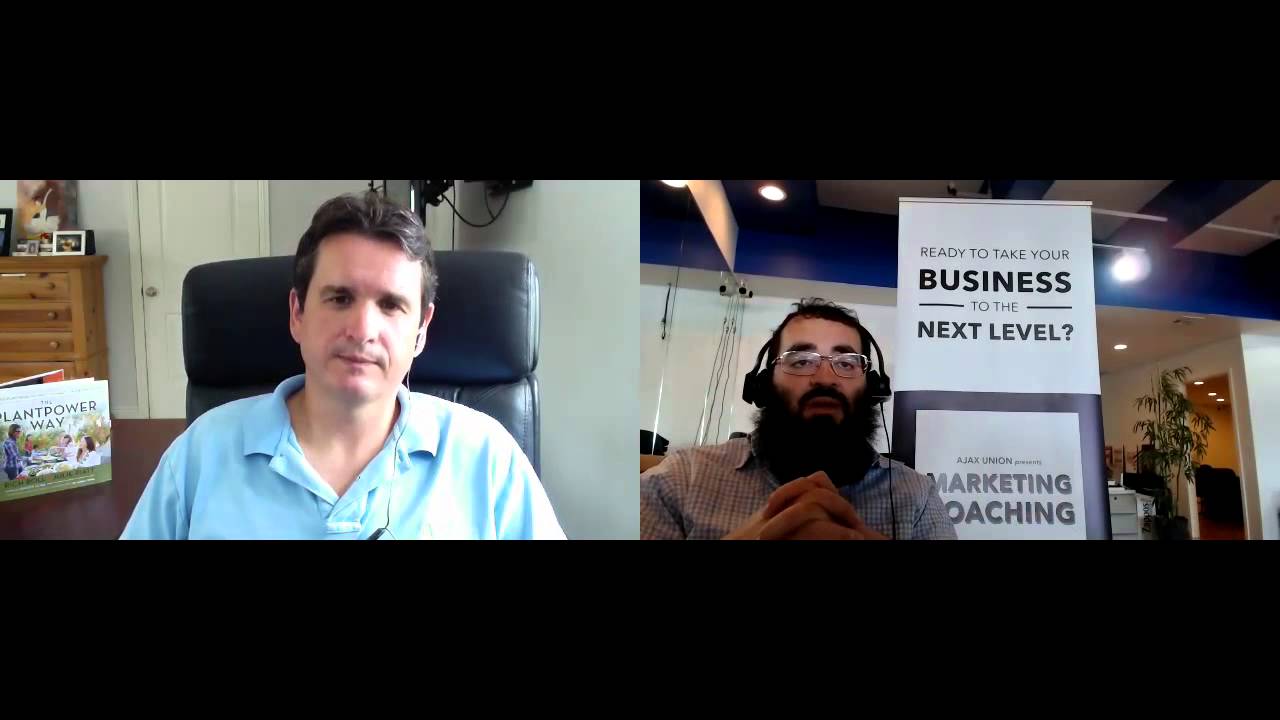
In this EO Thought Leadership Forum interview, host James Ashcroft talks with internet‑marketing expert Joe Apfelbaum about the realities of search engine optimization (SEO) for small businesses. Joe explains why many owners chase the illusion of "number‑one" rankings without understanding SEO’s true purpose, emphasizing that sustainable growth comes from identifying high‑value keywords, delivering genuine value, and aligning SEO with business goals. He argues that the most practical starting point for small firms is a Google AdWords (PPC) campaign to discover which keywords actually convert, then using that data to inform organic SEO efforts, content creation, and link‑building. Joe also stresses the importance of dedicated landing pages, quality over quantity in traffic, and the role of coaching or outsourcing for marketers who lack expertise. Throughout the conversation, he shares anecdotes from his agency’s experience with over 1,000 clients, illustrating common pitfalls—such as relying on vanity metrics, hacking outdated SEO tactics, and neglecting product‑market fit—while offering actionable advice for building a durable online presence.
Chapters
Welcome to the EO Thought Leadership Forum. We are at episode 8. I'm James Ashcroft from South Florida, and I'm happy to be sitting here with Mr.
Joe Apfelbaum from EO Brooklyn.
How you doing, Joe?
I am doing fantabulous today.
Great, great.
Is that even a word?
Sounds good to me. You know, is ginormous a word? I'm not too sure. I use it all the time, you know, so That's a ginormous word. It is, it is. So today we're going to be talking about internet marketing, which is fully in your wheelhouse. So much is changing in the business landscape these days. Social is just a force to be reckoned with. I'd like to hear some more thoughts about SEO from you and the importance of that and just pick your brain basically about your industry.
Yeah, happy to discuss it. I'm doing a panel tomorrow. night. There's going to be 300 people at the Manhattan's— one of Manhattan's WeWork through NYEBN.
Fantastic.
And I'm going to be talking about SEO. So this morning I was talking about it to the moderator and he's like, Joe, what do you want to speak to in terms of SEO? Like, what concepts do you want to talk about? So I said, for the average Joe, for the average person that's out there, they don't necessarily need to know all the technical details. of SEO. They don't even know what SEO is. People that speak to me confuse social media and SEO. They just think anything that's organic, or, you know, I have people confuse SEM and SEO. And, you know, people just hear the word SEO so much and they want it for whatever reason because everybody obviously wants to be number one. But people don't understand what it really means, what it really is, and how it can really help you.
Well, this is a great segue, Joe. So why don't you tell us what it means and how it can help us?
So the reason why so many small business owners want search engine optimization, want SEO, is because they want this feeling of being number 1. They have this hope, this hope that if they can rank number 1 on Google, suddenly all their woes will go away and they will win the lottery. It's kind of like a lottery mentality.
Right.
I'm going to sit there, I'm going to hack Google, and I'm going to be number 1, and suddenly I'm going to make millions of dollars. And what they don't realize is, first of all, just because you're number 1 for all the keywords in your industry doesn't mean anyone's ever going to buy anything from you. And number 2 is just because you're number 1 today doesn't mean you're going to be number 1 tomorrow.
Right.
So creating a sustainable model for your business, realizing what are the words that are the most important words for your business and how are you going to monetize them and what value they have for you is much more important than just doing SEO. A lot of people like to just doing SEO, just doing social media. Let's just do it. Let's just blog so that we could rank. And it's not about just blogging so that you could rank. It's thinking about how you can add value. Google's goal is to give people information that they want. When you're looking for something, Google's really good at predicting what you are going to say, what you're going to think. Some people say that Google knows you. Better than you know yourself.
Ooh.
Because they can predict what you're going to be typing in based on your search history. You don't even know yourself what you're doing online. You don't know what rabbit holes you're going through online, but Google knows that. They know what you're clicking on, when you're hitting the back button and going back and clicking again, and what you like, and what websites you're spending time on, and all that. So with big data, I mean, they really, really know everything about every single person's habits. based on their MAC address, based on a lot of things. So your goal as a business owner, as a thought leader, is to give people information that has value to them. So it starts with recognizing who are those people, who are the people that you're trying to capture, and how can you add the maximum amount of value. If Google gets an indication that everybody wants you, that everybody's interested, that everyone's looking for you, they will make you rank automatically for the things that you need to rank for. Obviously you can help them. By identifying the words that people are using in your industry and including them on your website and getting links from other websites, which are, you know, very simple staples of SEO, making sure that you have the words and Google can see the words that you want to rank for, and also making sure that other places are vouching for you. Those are the 2 basic things. Anything more than that, if you're going to start putting tons of time and effort and energy into all these Hacks that are probably not going to last. Like, the things that worked a few years ago don't work today. The things that worked last year don't work today. Google's getting smarter and smarter to combat the people that are trying to hack its system, and there's a lot of people trying to get free traffic because they want to have that one-hit wonder. You know, I was speaking to a guy and he's like, oh, I have this video with a million hits. I told him I would rather have a web series that has 1,000 people looking at my video every single week for a whole year than to have one video that a million people saw.
Sure, that makes sense.
The value in that is so much more, so understanding that the boundary between quality and quantity, you know, SEO plays a big role. There's a lot of garbage traffic that people get. We've serviced over 1,000 companies in the past 6 years, and the vast majority of those companies we did SEO for. and we successfully got many, many, many of them to rank, many of them still went out of business. Many of them still didn't do well because they didn't have the right people, they didn't have the right product, they didn't have the right process, they didn't have a sustainable business. You know, you could be number 1 on Google and if you don't work on your business and have a good business and you don't have a good product and you don't have a good reputation, that's not going to help you. So you think about it from that perspective.
Right.
You know, most small businesses just go out of business after a few years. They don't last that long and it's because people are tapping into this hope that if you build it, they will come. If you build it, they will come.
Right.
They're not going to come if you build it. If you add value, significant value, they will come, they will enjoy, and they will refer their friends. So SEO is more about how can I optimize my search engine experience, how can I optimize my business, how can I optimize my thought leadership to add value. Yes, you want to make sure that you're including the right words, so identifying which words people are searching, what phrases people are looking for, what are the top 10 questions people are always asking you. People are not only asking you those questions, they're also searching those questions on Google. So if you can provide value, create videos around those questions, um, what are the top 10 questions that people should be asking you? So thinking about those things and talking about them and writing about them and including content with that information is very, very significant to be able to rank because not only will Google notice that you have those words, those questions and those answers on your website, but also other people will link to you, which will give you more clout on the internet.
Gotcha.
And the more clout you have, the better off you are. If you take a look at the links that Ajax Union has, We have— we're on the Wall Street Journal, we are on the— we're all over the place. We have these very influential websites. Mashable.com links to us multiple times. All these industry websites are linking to us because we are out there putting out thought leadership, putting out value, putting out information. Entrepreneur.com links to us and we get tons of direct traffic from entrepreneur.com, but also Google notices that and as a result we rank for some major keywords. Now does that mean that we all of a sudden are going to get tons of qualified leads? No. We get a lot of spammers, we get a lot of non-qualified leads, we get a lot of people that want to sell us stuff as a result of being number 1 on some major keywords. So just to sift through all that stuff to try to find some gold in the rough, there are better ways to do things. There are better ways to generate leads, and that's what we specialize in.
Sure. Let's, let's pull it back a bit. So I'm a small business down here in South Florida. Um, what would be the most actionable things to do in order to improve my Google clout?
The first thing you want to do is you want to identify why do you want to improve your Google clout? Like, what is your goal? Like always starting with your goal, just like when you're a thought leader and you, you want to start writing, what do you want to accomplish with your writing? What do you want to just become a better writer? Do you want to influence people in a certain way? Do you want to change a mindset? Do you want to create a movement? What do you want to do? Once you understand what you want to do, why you want to rank, and it's not just to rank or just to feel good, but you have a very specific mission. You want to be the most influential person in your neighborhood, in your local area. You want when people are searching for something, you have this branding, or you want to generate actual leads that will convert. Depending on what your goal is, then, you know, let's say for example, your goal is that you want to generate leads. A lot of people that I speak to, that's what they want to do. They want to generate leads.
Well, let's use my company as an example. I have a life safety company, so we do fire security systems here in South Florida. My goal would be to get more inbound leads to my sales team, right?
So the first step that I would do is I would set up a Google AdWords campaign. Okay? People in your local area that are specifically looking for alarm systems or sprinkler systems or whatever it is that you do specifically, People are searching for those things. With Google AdWords, within a few hours you can have an ad campaign up and then you can start seeing who are the people, what words they're actually clicking on, and if those leads are qualified leads.
Right.
Once you understand that, once you understand that these are the most important words, then you make sure to take those words and create a campaign around those words to not only be able to capture the leads from a paid standpoint, but also from an organic standpoint. So you create a whole campaign around, okay, these are the 10 most popular words that have given over the past 6 months, have given us X amount of leads, which results in X amount of revenue. As a result, we also want to invest that into search engine optimization. So we're going to be doing things that add tremendous amount of quality to the industry by writing articles, having an ebook, creating videos. starting a podcast, and just in general going out there. And let's say, for example, you service the healthcare industry, right? You could start blogging to the decision makers of those healthcare places that help them understand what safety is all about. Do you have a safety plan? Do you have a checklist? Do you have a— is your security system up to date? And you talk to them about all the different options and all the latest trends in the industry. And then not only will you rank on Google for those things and for the right words because you know those words convert, they're converting on AdWords, they're going to convert on SEO as well.
So it all starts at AdWords, getting the conversion.
For a small business that doesn't have a really big budget, focus on AdWords initially so you can identify which are the most valuable keywords because could you imagine if you invest 6 months to a year on an SEO strategy, right, because it was your idea to have these keywords and then once you rank for those keywords you're getting traffic but all the leads that are coming in are completely not qualified leads. They're leads for, you know, let's say you're selling to businesses, they're leads for residential. And you're like, how am I supposed to know that? And you have to— you wasted a whole year of optimizing and working on it and ranking for those words where those, you know, you just assumed that those words would work. So it's so important for you to like know which words work. And also, if you have a good sustainable cost per acquisition on PPC, on Google AdWords, It makes sense for you to acquire leads that way. It just makes sense, especially if you're on a local level. It just makes sense to do because if it makes dollars, it makes sense.
Yeah. Nice, Joe. That's very cool. Very cool. So, um, that's great. So my big takeaway from this is, is you start at the AdWords for all the small businesses out there, all the people listening to us who have their, um, who have their businesses and might be a bit skeptical of SEO, and I know that it takes a lot to find the right company, the right partner to do your marketing. A good starting point would be to throw some money at the AdWords, figure out where your keywords are, what convert, and then go from there and kind of build your toolbox there.
Here's another concept. While you're doing that, you need to make sure that you have a good landing page. Don't just send people to your homepage and hope for them to find your Contact Us And when you get to your Contact Us, hope for them to actually call you. Make sure that you set up a landing page that revolves around what they're searching for. So in your case, what would somebody be searching for?
Well, they, you know, commercial fire system or fire alarm, commercial fire alarm.
So somebody types in commercial fire alarm into Google, you have the number 1 result, you're paying $5 for every person to come to your website. Wouldn't it make sense to land them on a page that specifically talks to them about the projects that you recently did and has a little form for them to fill out for someone to come down to their office and give them a custom quote about all the different options and blah, blah, blah, maybe have a video there. That's where you want to send them to. The likelihood of you converting that visitor into a lead is much higher if you customize a landing page for them.
That's powerful stuff, Joe. That makes a lot of sense, you know.
And sometimes it's the obvious things. I mean, that's— for me, that's like super obvious. If you go right now and type in a commercial fire alarm into Google, you'll notice that most of the advertisers don't have landing pages and they're just— they just set it and forget it. And probably the words that they're targeting are just like targeting in a general way, so they're just targeting, you know, fire and anything you type with fire. So you got to really be careful to optimize it. You know, if you're doing this, if you really have a really small business with a really small budget, find somebody that can actually help you and guide you through the process. Hiring a coach, hiring a consultant, if you're going to be doing it yourself, get somebody to help you. I know when I started writing, I didn't really know what I was doing, so what did I do? I hired a writing coach. When I wanted to build my personal brand, I hired a personal brand coach. When I wanted to become a more effective CEO, I hired a CEO coach. Hiring— same thing with fitness. You want to take your fitness to the next level, hire a coach. So when it comes to marketing, if you're going to be doing it yourself, get somebody, even if it's a friend that knows what they're doing, or if it's a fellow colleague that owns a marketing company to give you advice. Listen to podcasts, check out seomoz.com, check out theppcblog.com, learn how to do it. Google has a lot of certifications that you could do for free. There are many websites like lynda.com that you can go to learn yourself how to do these things. But ultimately, if your time is more valuable than that and you're busy actually producing revenue and you have a business, then just outsource it. Outsource it, but understand it before you outsource it. The worst thing that you can do is just hand your keys over to a contractor and say, just build my house for me. I don't know what I want, just take care of it. And then you come back and the guy builds you a tent. You're like, why'd you build me a tent? He's like, I love living in a tent.
Gotcha. That's great. That's powerful stuff, Joe. So on that note, we're going to end this show, wrap it up. Thanks so much for your expertise there and sharing. It's really, really great content. So, um, we will see you next time.
Take care, everybody. Bye.
More from Joe




How to Beat the Algorithm: Remove Hidden Watermarks & Scale Content with evyAI






