EO Thought Leadership Forum Episode 011
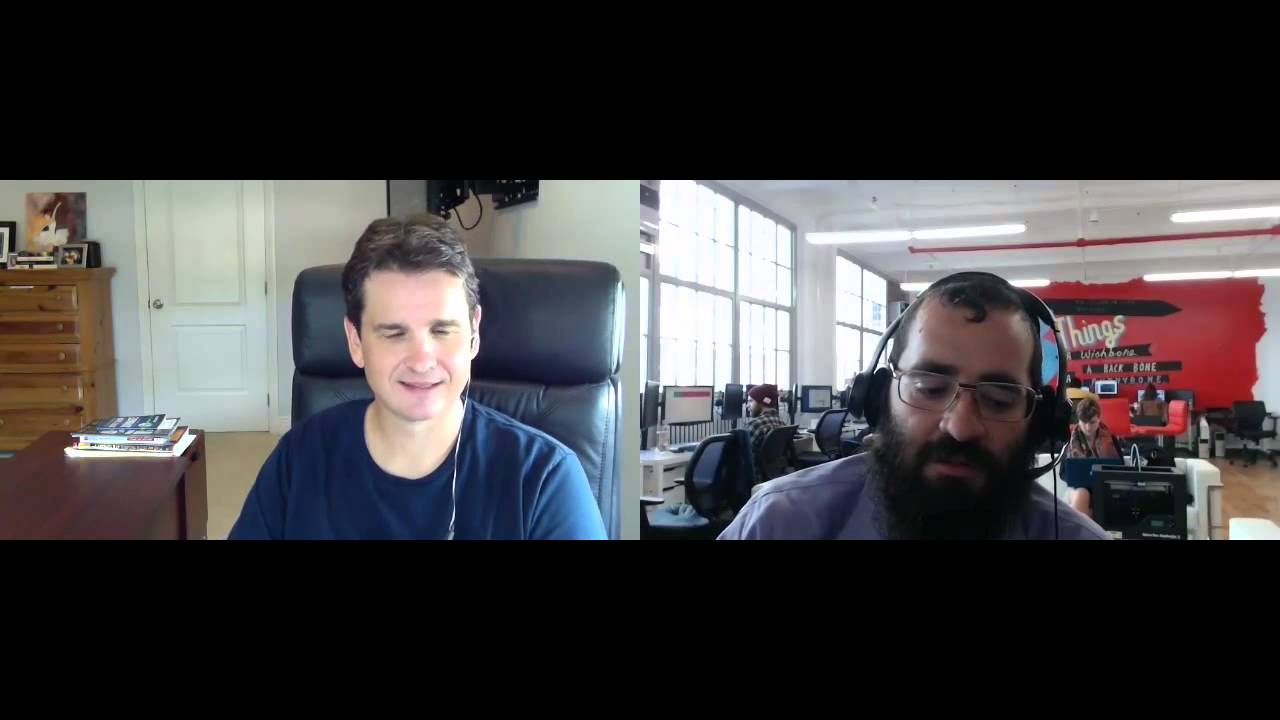
In this EO Thought Leadership Forum episode, host Joe Apfelbaum and guest James Ashcroft discuss the challenges entrepreneurs face in maintaining focus while writing. They explore practical strategies such as setting self‑imposed deadlines, leveraging mastermind groups and accountability partners, and repeatedly asking "why" to uncover deeper purpose. Both share personal routines, including weekly writing coaches, daily huddles, and the use of productivity tools like Freedom. They reference Stephen King’s disciplined 2,000‑word‑a‑day habit, the importance of a dedicated writing space, and the need to balance reading with writing. The conversation also touches on the role of apps, the concept of a "focus muscle," and how to tailor habits to individual preferences. Throughout, they emphasize that consistent, purpose‑driven habits and external accountability are essential for entrepreneurs to produce written work such as books, articles, and newsletters.
Chapters
Hello everybody and welcome to the EO Thought Leadership Forum, episode number 11. My name is Joe Apfelbaum from EO Brooklyn.
And I am James Ashcroft from EO South Florida. How you doing, Joe?
I'm doing fantastic today. I'm so excited to be doing this episode. I can't believe we got over the 10 hump. You know, I, I kind of think we did more and they got kind of lost in the abyss because the technology just Went haywire last time, but I'm glad that we're at 11 because that means that we, we passed the 10. It's a whole nother level. It's a whole nother digit. You know, when your business is doing like $100,000, $200,000, $500,000, and then you finally qualify for EO and you're doing a million, you have another digit. You know, doesn't that feel great?
It does. And I, I think if we only had a microphone set up for every time that we talk, we could probably be into the triple digits by now.
Yes. Yeah, you're absolutely right. I'm so grateful that I have a friend like you to talk about all the amazing things. You know, one of the highlights that I keep going back to is me and you running. When I think about us and I think about recent highlights, and I do that sometimes with the people that I care about, one of the highlights that I think about is me and you running at 6:00 AM in Nashville, Tennessee.
Uphill.
Uphill, because you were like, in Florida there are no hills. I have— but I don't have the hills and we're running uphill and you're just, We're both pushing it, you know, and, and just like, you're like talking about the hill.
Yeah.
Right.
Yeah. I mean, it was, uh, um, I don't know. It's, as you know, it's so flat down here in South Florida. The only hills I get to climb are the drawbridges. You know, it's a real treat to get some, uh, get some, uh, topography going, you know?
So, so today we wanted to talk a little bit about focus. Like, how do you, How do you get yourself to actually focus on writing? We all know that, especially for entrepreneurs, writing is super important. It's important to communicate your thoughts, communicate your messages, especially if you're in a business that you want to grow and you want to get the word out there about your business, about yourself, especially if you have a message. But how do you focus? James, how do you focus?
Deadlines. I mean, that's my one-word answer. I have to have them. If I don't, I will I become so all over the place, um, whether it's, uh, you know, a self-imposed deadline, telling a friend, hey, listen, I need you to hold my feet to the fire here. Um, I actually woke up this morning and I was thinking about this book that I'm writing, uh, as you know, and, uh, I do have some self-imposed deadlines, but I was almost thinking about calling you up and putting like a grand in escrow and saying, if I don't have this thing, if I don't have this thing done in the next week, then, uh, And we'll make some money.
I'm trying to think right now all the things that I would buy for $1,000 right now. Like, what would I buy for $1,000?
So we laughed, but that was actually quite a serious thought because otherwise I just, I struggle just making that the all in my life, like the one thing in front of me.
Deadbolt.
I will naturally find other things to work on. So just having that accountability, you know, and I think it's a great tie-in to things like forum that we can then, you know, set goals with and have people accountable, hold us accountable, and having that group dynamic or even one-on-one. Like I said, just meeting with someone, a coach or whatever. It's just, I've got to have it, otherwise stuff never gets done.
So talking about a deadline, give me an example of a recent time that you set a deadline And that if you wouldn't have set that deadline, you would not have achieved that writing success, whatever, whatever that looks like.
Well, let me, let me put it this way.
You did get some writing done recently. You sent me a significant amount of writing.
Right. So I'm in a mastermind. So on Wednesday we have a meeting and I told them I want to have something online, whether it's the final draft. I mean, it's, you know, 90% there. I'll just put it up and get it out there. I told them that if, um, if I didn't have that done, then don't let me into the meeting. You know, I put significant resources into this, this mastermind program and, uh, it'd be a real shame to miss it because I didn't get off my you-know-what and get it done. So right now I'm kind of frantically trying to get feedback from, you know, a close inner circle of friends and getting it to where it's, uh, as good as it Not as good as it— it's going to be better. I know it's not the final copy, but, you know, have, have, have the book 90% there.
So tell me about this mastermind. Where did you find it? What does it cost? How did you get to it? Is it a writer's mastermind? Tell me more.
Yeah. Well, um, I'll have to, you know, not disclose the cost. I'll leave that, you know, for someone to find out themselves. It is, it is quite a significant, um, financial, um, uh, commitment. But the theory behind that is that anything that's free, you're not really going to value it very much. So that's the theory, is that you got some serious skin in the game. And I've heard that across multiple masterminds and even EO to a extent. I mean, it's not cheap and by the time you do university and Nerve and all these things and your retreats and it is significant chunks, you want to make sure that you do get value out of it. I found my mastermind through a podcast. I listened to a guy named JB Gossinger. It's his mastermind. He's also known as the Morning Coach. And it's great. It's full of people who are either trying to start new careers, or meaning not new careers as just starting another business, but really looking to do something and leverage the internet and things like that. So it's full of a lot of people who have businesses, but they want to elevate their game to do speaking and write books and things like that. That's really what it's geared towards.
That's awesome. And masterminds, first of all, deadlines and then having the accountability of a mastermind, especially if it's costing you money, is significant. I think for me is understanding why I'm doing what I'm doing and not just asking the first why, but asking multiple whys. Okay, so why are you doing that? Okay, but why are you doing that? And kind of going deeper into the why. And figuring out, why do I really want to write a book? Why am I publishing articles? If I don't have that purpose behind it, and I'm just doing it to keep busy, I'm not going to be motivated to actually go and do it. So for me, I need to have that why, and then I can focus on the most important aspects, and that'll kind of get me aligned into, okay, this is what I need to write about, this is why I need to do it, so now I need to focus and actually do it, because otherwise— It's not going to happen. So that helps with, with my focus. If I know why I'm doing it, it helps with my focus.
Well, give me a recent example of you then.
So somebody recently asked me, Joe, why are you writing the book that you're writing? And initially I wasn't really thinking about it. And that's why I wasn't spending the right amount of time. So when I thought about it, I came up with some answer that wasn't really the core to it. I was like, well, I want to make a mark. Right? I want to leave something behind. And like, but why, why do you want to leave something behind? I said, because I don't just want my life to kind of just be a life that came and went. And they're like, yeah, but why, why do you want it to— why do you— why does it matter? Why does that even matter?
Right.
And then I started getting to the heart and to the core of it. And I came up with this reason that really like got me to have to focus. Um, And that, that is something that I realized that, um, I got back, I was off the swing of things for a while and I got back into the swing of things. And that little question of asking why got me to really focus and say, okay, I really need to do this because now I have a purpose that's kind of bigger than just, oh, because I want to leave a mark. Right. So if you get down to the core of it, that's where the focus is.
So you have this big why as to why you are writing this book, but, um, but Is a why enough, or do you need to now set a deadline to say, absolutely, I'm gonna have this done in the next night? So let's say by January 1st, right?
I have a, I have a writing coach that holds me accountable once a month. I speak to her and I make commitments to her, and she actually holds me accountable. So I know that every single month I'm speaking to them. I have an EO forum which I speak about my writing and all the different things that I need to do, and They ask me, okay, done or not done? Every single morning I have a call with my administrative assistant, and we have a done or not done section of our huddle, and I get held accountable, and I have to look at my accountability and say, did you write the amount of words that you needed to write or not, or did you do the things that you set out to do? So I have multiple accountabilities, and also I have a branding coach that I speak to a few times a month. So I have all these people and then I have friends like you that are saying, okay dude, what's up? I need to read something. You know? Um, and then I have my weekly Sunday email that I need to write. So there's a lot of different things, a lot of different components. And I have people actually holding me accountable to that. So that is super, super important. But a lot of times I have all that accountability and I have all the deadlines, but I end up not focusing on it and I'm focusing on something else.
Yeah.
That's why it helps me a lot.
Sure, sure, sure. So, so how far along in your book are you?
Well, so I wrote— I finished the first chapter. I have 7 total chapters. The biggest part of the book is that I have a clear vision of what it's about, and I have a clear vision of each chapter, what each chapter is about. And now it's actually creating, just creating the content for each one. So first chapter is done. I have another 6 chapters to go. And the book, the Stephen King book that you recommended, the book on writing—
Fantastic, right?
Just such a great eye-opener in terms of helping me identify how to get to the truth, how to get to the description. And he writes there, listen, writing is hard work. You've got to put 2,000 words a day on paper or your book's not going to come out. If you're not doing that, if you're not— he writes, the first draft, do with the door closed. And after that, do it with the door open. And frankly, focusing— talk about focus— he has a great tip there. His tip is get a space that works for you. Your space needs to be your space. If you want to write properly, you need to be in your zone, in your space, and your door needs to be closed. You need to get rid of the internet, you need to get rid of electronics, you need to get rid of gadgets, you need to get rid of telephones, you need to get rid of everything. And then you need to know that you're doing it like a habit, like you brush your teeth every morning, like you take a shower, like you wash your hands. You need to have a habit of writing every single day. And his habit is write 2,000 words a day, don't leave the house before you finish your 2,000 words. Like, sometimes I'm done by 11:30, he writes. He's like, sometimes I'm not done by 2 PM and I'm pulling my hair out, but come hell or high water, I am writing 2,000 words every day. Yeah, I can't do that, but, you know, but he's like, if you can't do that, do 1,000 words.
Yeah, well, he's a professional writer, obviously, so that's his, his, his thing. I just, just to note from that book, it's very interesting to me that At one point, his writing room, with all the success he has, was a laundry room.
Yeah.
You know, with a little desk because it's the only place that he found in his, that particular house was further privacy.
But you gotta carve out a space. And the same thing with, you know, getting productive. Like for example, I'm reading a book called Getting Things Done by David Allen, which you're a big fan of as well. And one of the things that he writes, if you want to get productive, you need to have a productive space. Your space around you needs to be a productive space. And if you don't have a productive space, you're never going to be able to be productive.
Right. The space is something that's very heavy on my mind. You know, I do, um, I have a couple of offices, so I'm bouncing around, but I do spend a fair amount of time here at the house. Um, and I am questioning with all the distractions, it's great because it's my house, but there is definitely, uh, um, something to be said about taking a shower getting in your car, going, finding a space. It makes it— getting into that mode of focus, actually finally leaving the house, even if it's a crowded coffee shop with lots of action, I actually find lots of focus. And just to go back, you know, the 2,000 words a day, it is interesting. You know, I think the big takeaway from that is that's what works for him. You know, there's other writers, I can't remember Who it was, uh, maybe Steven Pressfield, but I'm not too sure. But, um, where they actually write and they do an amount of time. So it might be 3 hours, 4 hours, and then as soon as that time's over, even if it's mid-sentence, stop. And a lot of these writers actually enjoy that stopping mid-sentence, midstream, because it actually gives them some, um, something to come back to the next day. You know, it gives them something to get excited about, get out of bed, hit the fire up the computer. Hey, listen, I've got to finish that sentence. It gets them going. So I think, I think the big takeaway from, from that Stephen King part was whatever works for you. And I think over time you figure out what works for you.
Absolutely.
Just, just really one cool app I've actually started using is Freedom. I don't know whether you're familiar with that. It actually disconnects your internet on your, on your device, your laptop or your desktop for a predetermined amount of time. The only way you can get the internet back is let that time expire or you have to reboot your computer, which is a total pain because you have to sit there and reboot. Is it really worth it? And if you're sitting there, it doesn't make it easy just to hop online and check the latest.
That's definitely a great app.
Yeah, it's pretty cool. It's a few bucks, but these are all kind of hacks. And I know that, what's his name, Neil Strauss, I don't know whether you're familiar with him. He wrote The Game and I listened to an interview with him where he actually got to the point where he would just work around all those apps. Nothing worked. So he put one of those search, those internet nanny services on his, uh, we have to like manually put in a code just to get your own internet Wi-Fi. And he, um, the only person who knows that code in his house is his wife.
Oh my goodness.
So when he says he's got to work, she has to like disable it and, you know, get her Wi-Fi. But that's the system that worked for him. So it all comes back to what, works for you when you focus, you know?
Yeah.
I've been really thinking about this a lot lately because I, I really feel like it is a muscle, you know, that there's like a focus muscle. And I think that sometimes, um, especially writing this book and even like re— my book is just a short ebook. I mean, it's designed to be something that can be read and accessible. Uh, there's some inordinate, inordinate amount of, uh, books that are bought and never read, right? I mean, it's something like 90% of books, you know. I just want someone to download it, read it in one sitting, and just going back and reading that repeatedly, it takes like a focus. And I feel my brain sweating, like sometimes it's screaming, saying, go, like, go, go make a cup of tea, or go eat something, or go walk around the neighborhood. And I have to sit there and really Focus, focus. I think the more you do it, you know, the more it becomes easier to do. Absolutely.
I used to, I used to not like reading. I used to think that reading was a waste of time. And, um, the reality of it is it's, if you're not reading, you're not learning. And if you're not learning, then you can't figure out how to make your time more efficient. So, you know, Stephen writes in his book, he's like, you have to read 10 times more than you write. So if you're going to write 2,000 words a day, You need to be reading 20,000 words a day. Yeah, that's, that's a lot of reading. He said he spent his whole day reading, you know. So think about that. Think about how much reading you need to do in order for you to become a good writer.
Right, right. I mean, I've read some authors— I think James Altucher even speaks about this— that they kind of get into their groove. So what he does is he wakes up and he spends a couple hours reading first, kind of getting in that mindset of of reading a good author or getting new ideas.
But that takes focus. Reading takes focus too. It does.
It's deliberate reading. I mean, you gotta approach it like everything else, like working out or healthy nutrition or going to the office. I mean, it's like you gotta wake up early and say, I'm gonna read for an hour. I mean, and actually carve out that time in your day. One thing that's nice, audiobooks are great for that. I mean, you can just run and read at the same time, you know?
If that works for you, then yeah. But like you said earlier, it has to work for you. And if it doesn't work for you, it's not going to work. So ultimately what I'd love to hear from all the people out there watching is what works for you? How do you focus? Why don't you put it in the comments below if you're watching this video on YouTube, if you're watching on Facebook, Facebook as well, and let us know what you think. We'd love to hear your feedback. We'd love for you to share this video. If you found value in it, and we hope to see you at the next EO Thought Leadership Forum. This is Joe Apfelbaum.
And James Ashcroft. Thanks, Joe.
Thank you so much, everyone. Take care.
All right, bye.
More from Joe




How to Beat the Algorithm: Remove Hidden Watermarks & Scale Content with evyAI






