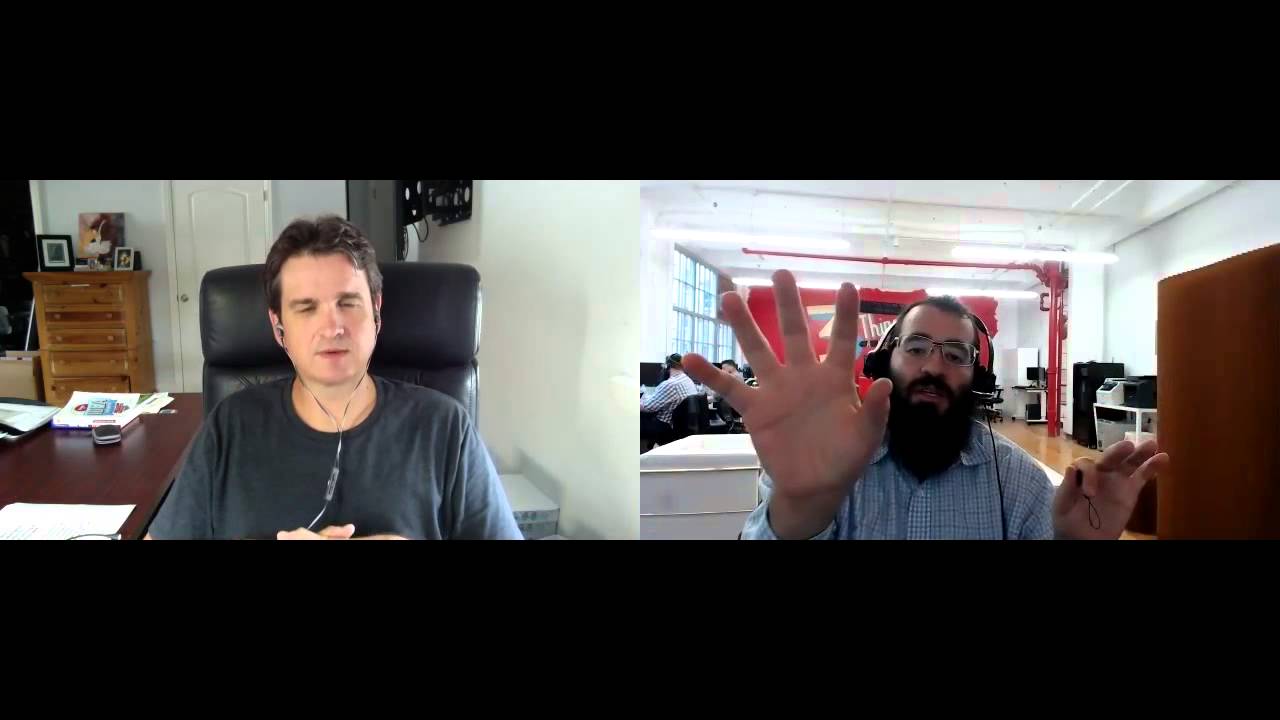
In this EO Thought Leadership Forum episode, hosts Joe Apfelbaum and James Ashcroft discuss practical methods for generating and amplifying ideas both personally and within businesses. They share their habit of writing ten new ideas each day for a hundred‑day stretch, a practice inspired by Claudia Altucher’s "10 ideas a day" concept, and describe how they catalog ideas on Medium and LinkedIn. The conversation moves to techniques for combining disparate lists—such as locations, morning routines, smells, and experiences—to create novel, “insane” concepts. They emphasize the importance of a no‑judgment brainstorming environment, citing rules like “no bad ideas” and encouraging free flow. The duo illustrates the approach with real‑world examples: brainstorming dog‑related activities, improving Disney cruise payment plans, and a “marketing powwow” that produced 100 ideas for their company Ajax Union. Personal anecdotes about weight‑loss journeys and morning routines highlight how ideation fuels personal growth. They also reference the book Borrowing Brilliance and the idea‑muscle metaphor, underscoring that regular ideation builds mental stamina. The episode concludes with a call to action for listeners to adopt daily idea practices, hold collaborative brainstorming sessions, and share the video to spread the habit of idea generation.
Chapters
Welcome to the EO Thought Leadership Forum, episode number 15. My name is Joe Apfelbaum from EO Brooklyn.
And I'm James Ashcroft from EO South Florida. How you doing, Joe?
I'm doing fantastic. It's raining in New York today and we went to a helicopter training center where people get trained as to how to fly helicopters and it was very interesting. To go there and speak to the owners and talk to them about their marketing was really exciting. So I had a really good day so far. How about you?
Nice. It's been a very good day. You know, I'm getting back in the rhythm of waking up early, which is always good. You know, I always feel more productive when I do that and get things done, you know?
Yeah.
Yeah.
That's getting things done is what my last quarter is all about. I'm reading that book inside and out and I'm just, I'm just going crazy on it. And one of the things that I recently thought about was how to come up with ideas, how to come up with great ideas. And I wrote up this document with 100 ways to come up with, uh, things to ideate about, um, 100 different ways. And I put that on medium.com. And, uh, and my goal is to write 10 ideas every single day for the next 100 days. And so far, the past 3 days, I've written 10 ideas each day. Today I wrote 10 amazing things that I can do in Brooklyn or places that I want to go tour in Brooklyn. Yesterday I wrote about a good morning routine. I put it on my LinkedIn, so you should read that. 10 things that you can do in your morning routine. I'm all about ideas. Ideas energize me. What do you do to come up with ideas?
Yeah, it's interesting actually because I don't know whether this is part of your practice today, but when I said to you, hey, let's come up with some topics, you like shot back an email within 3 minutes of like 10 topics. So I could tell that your brain's kind of gearing up for that, uh, for the idea discussion. Um, I love your idea about writing 10 ideas down. And, um, actually got this book. I think I mentioned it to you before. Um, uh, Claudia Altucher, uh, James Altucher's wife came up with a book and it's, it's basically come up with 10 ideas a day and they present a topic. And the idea is that you flex your brain, uh, idea muscle. And the more that you flex your idea muscle, muscle, the quicker then you get results. And that's a good segue with your health kick because I did see your Facebook today and big props to you, 192, 2 pounds away.
2 pounds away. I've been pushing that goal for 3 years and I didn't think it was possible at first because when you have several babies inside you and you're a man, it's very difficult to get rid of all the burgers, even if they're kosher burgers. It's very difficult to just push them out of your system. I abused my body for a really long time and not even realizing it. I just ate and ate and ate and ate. And you know what? People gave me a lot of ideas about how to lose weight, all these diets and everything. Nothing worked.
Nothing. Nothing. You know, it's— well, congratulations. I've been there myself. I'm down about 35 pounds myself since my apex of my weight. So I know it's a very, very good feeling. You look back on it, it's amazing how delusional we were. We looked in the mirror, we're like, hey, we don't look too bad, you know? And it's just, it is crazy to look back and see those photos of me. I actually looked completely different because my cheeks kind of pushed up on my eyeballs.
Wow.
Yeah, it's pretty—
Wow. Yeah, the same thing, and the same thing with me. But the same thing works with ideas, you know? It's like one day at a time. You know, if you came to me 10 years ago and said, Joe, whip up 10 or 100 ideas about how to write ideas, I wouldn't have the courage to do it. Forget about actually knocking it out and doing it. And so I think, I think coming up with ideas has to do with allowing yourself, like freeing yourself from the judgment that we judge as, oh, that idea is stupid. Or—
Well, that's the thing. That's the thing, right? I mean, you do, you've got to kind of do these lists without getting ahead of yourself and judging yourself. You know, you just make a list and not, not every idea is going to be great, but it's just getting in that idea flow. You know, I mean, I write down ideas and I just, I look back on them or look at them after, as I'm doing them. That's kind of silly, but, but it's just the process of just getting to the idea gym, right? Just getting there and doing the repetitions. And, um, you know, I'm reading this book right now called Borrowing Brilliance and, uh, it's about a guy who, uh, whose career is to come up with ideas. And, um, this, this really, You know, the best ideas are borrowed, and then there you're taking 2 ideas and then you're marrying them together to create new ideas, you know. So this is where this whole idea about building lists of 10 ideas, 10 ideas, and then finding a combination to create a new, fresh, unique idea.
That's very interesting. That's very interesting. Like, so for example, if I have 10 places in Brooklyn that I want to go to, like Prospect Park, Coney Island, Dumbo, Bay Ridge, Williamsburg, whatever. And I make that whole list, and then I have 10 morning routines that I want to do, and then I can merge them together and say, okay, which morning routine do I want to do at which location, and photograph myself doing it. And then I add another list of like, you know, 10 smells that reminded me of things from my past and 10 experiences that I want to have, and I kind of combine all those ideas in different ways That could come up with like insanity ideas.
Yeah, that's it. You know, it's, uh, it's just the, the, the birth of, of 2 ideas together can just create— I tend to do that a lot when I'm thinking about, um, uh, things to do, you know? So if I, if I start thinking about, hey, how can I— what do I love to do? I love to walk. I love to be with my dog, right? I, I'm a real dog nut. I just love my dog, right?
So let's go. What are 10 things that you can do with your dog? Go.
Well, I mean, I could take him to the park, right?
Take him to the park. Good. That's one.
I can train him to do a new trick.
Oh boy. Everyone loves to see a trained dog do some funny stuff. You could do a photo shoot.
I could do a photo shoot. I could take him to children's hospital.
Children's hospital. You could start a Facebook page for him.
I could. I could take him to a senior citizens.
You could dress him up for Halloween on any random day and just see what people do.
Correct. I could mix my running schedule today with him and take him for a run with me.
Take him for a run with you.
That's a good idea. So I get to spend time with him and run. So those are what I'm talking about, that combo, you know.
You could put him in the water and see if he floats.
I could do that. Or I could, yeah, just take him on a run.
You could introduce him to somebody else and let him have fun, maybe create more babies.
Exactly right. So I mean, those are, those are things, but that's a good list.
10 ideas.
This is fun, right? Because it just exercises your brain to think about things.
And then you take that list and you put it with 10 ideas of how to grow your business. And suddenly you're dressing up your employees in Halloween costumes.
Exactly right. But I mean, I think, you know, to provide some value, they've all got headphones on. So I don't think they got too scared, but, uh, you know, I really believe that the more you do this, the more ideas start popping in your head. Once you get in the flow of writing these ideas. You know, last night my wife— and not to go off on a tangent too much, but I want to give an example of— actually thought about idea lists and the power of ideas last night because my wife showed me— we love Disney, right? We have 3 young kids. We go on Disney cruises. We go to Disney World. You know, we do all these things. We love Disney, right? So Disney sent out this thing in their packet, their book where they send out to their passholders, and it said, hey, listen, we've got this new payment program for their cruises. The cruises are expensive. I mean, just Alaska, 7-night cruise, like $14,000 for a family of 5. I mean, it's expensive, but now they're basically setting up a plan. It's almost like a savings account under the Disney name, make it fun, very interactive. I haven't really looked into it, but I'm sure you log in, open up an account, then you put your money towards it. And I said to my wife, I said, immediately the first idea that popped in my head was they should allow you to be able to actually book the room even though you don't have the money to keep you motivated, right? So you're saying, hey, listen, we're gonna open this account and sign up for this cruise and actually have a reservation, you know, so we feel like we're building towards something. I didn't see them doing that. So it was just an idea they had. So what can you do with that idea? You could write 9 more ideas for Disney on their cruises or ways to make their reservation systems better and send that to Disney and see what happens. You know, you never know.
Yeah, absolutely.
So it's just, they're very powerful, these ideas. You know, we're living in a time where ideas are just—
I was sitting with a friend of mine, a rabbi, and we were going to the rabbi's convention. And, you know, I was telling him about me ideating, and I read him my list of 100 ideas to create and 1,000 ideas. And he's talking to me and he's like, I don't really see the value in this. I really, you know, like, fine, okay, you know, you're coming up with ideas, but how's that really going to help me in my organization and my thing. I said, you know what? Let's ideate on the way, because the bus was stuck in traffic and I wanted to get our minds off us just sitting on the bus with no— you know, they had a plug there, but the plug didn't work, so his phone was dying, and it was just an annoying ride. And so I said, okay, let's brainstorm. He's like, okay, what are we going to brainstorm about? Let's say how to build a relationship with people. I said, okay, let's brainstorm how to build a relationship with people. And I said, okay, let's try to come up with 100 ideas right now with how to build a relationship with someone. What do you think? How do you build a relationship with somebody? And he's like, 100 ways to build a relationship? Okay. I don't know. What do you think? I said, okay. He starts with, what are their hobbies? Okay, hobbies are good. That's a great way to build a relationship with somebody, knowing what their hobbies are. I know you're a musician.
Yeah.
You know I love technology. You may have looked at my Facebook and saw that I collect coins and that I play guitar and whatever. Great. What about your personal interests? What personal interests do they have or personal preferences? Okay, what else? Sports teams. What sports teams do they like? And we start going at it. Are they a morning person or evening person? Are they engaged in religious activities? What type of religious activities? What's their family structure? Where do they come from? Do they like praise? How do they like to be recognized? What charities do they support? Do they have any loss in their family? Vacation preferences? Full name and origin? Hometown? Favorite drink? Vices? What do they do for fun? What grounds them? Fitness routine? Pet peeves? Personality traits? We start going through this whole thing and before you know it, the bus gets there. And we're like, oh, wait, wait, but we're up to 65. We got to keep going. Like, no, we got to get off the bus. And we realized that we're just sitting on the bus coming up with ideas. When before we were all bent out of shape that we were in traffic. And now we're like, no, we don't, we don't want to get off. We want to finish this list. Now we got to get off. You know, the bus driver needs to leave.
Yeah. Yeah. So it's almost like giving yourself permission just to be creative again.
But it's like, it like puts you in a whole nother world where like, I didn't feel like I was having a miserable time in this hot, stuffy bus anymore. Now I'm like in a different world. It's like Viktor Frankl's book, you know, tapping into your imagination and just leaving no matter how bad your life is. If you can ideate, no matter how incredible the area that you're in is, you can create more incredible experiences by ideating more and by generating more ideas and by coming up with ways that you can improve your life and improve the life of others.
Correct, and just to come full circle with the EO part of this, I mean, as far as businesses, I mean, we should be sitting with our employees, with our organization, with our business partners And we should be brainstorming like this and having fun. You know, you know, if you sit down with your crew and come up with 100 ideas of how to better market our company, there's gonna be some diamonds in the rough.
We did that, and we did that like 2 weeks ago. We said, okay, we need to come up with some fresh ideas how to market Ajax Union. And we sat down, we literally came up, we had, uh, 10 of— 10 great people. We bought beers, we had snacks, and we just went there and we had— we called it a marketing powwow. And we literally knocked out 100 amazing ideas about how to market ourselves. And it's just amazing. Like, you know, we literally filled up 10 flip chart, you know, things on the wall, and then we rated it. And we had such a good time. We're like, we got to do this again.
Yeah.
This is so much fun. And so I highly recommend any company to go out there, brainstorm with your employees. Remember, set ground rules, no judgment. There's no bad ideas, everything goes, and you'll be able to have a closer team, some good ideas that can be a game changer for your business and for your clients. Thank you very much for doing this with me today, James. Thank you all for watching, and if you enjoyed this, please comment and share this video so other people can take their idea generation to the next level. We'll see you at the next EO Thought Leadership Forum.