EO Thought Leadership Forum - Episode 10
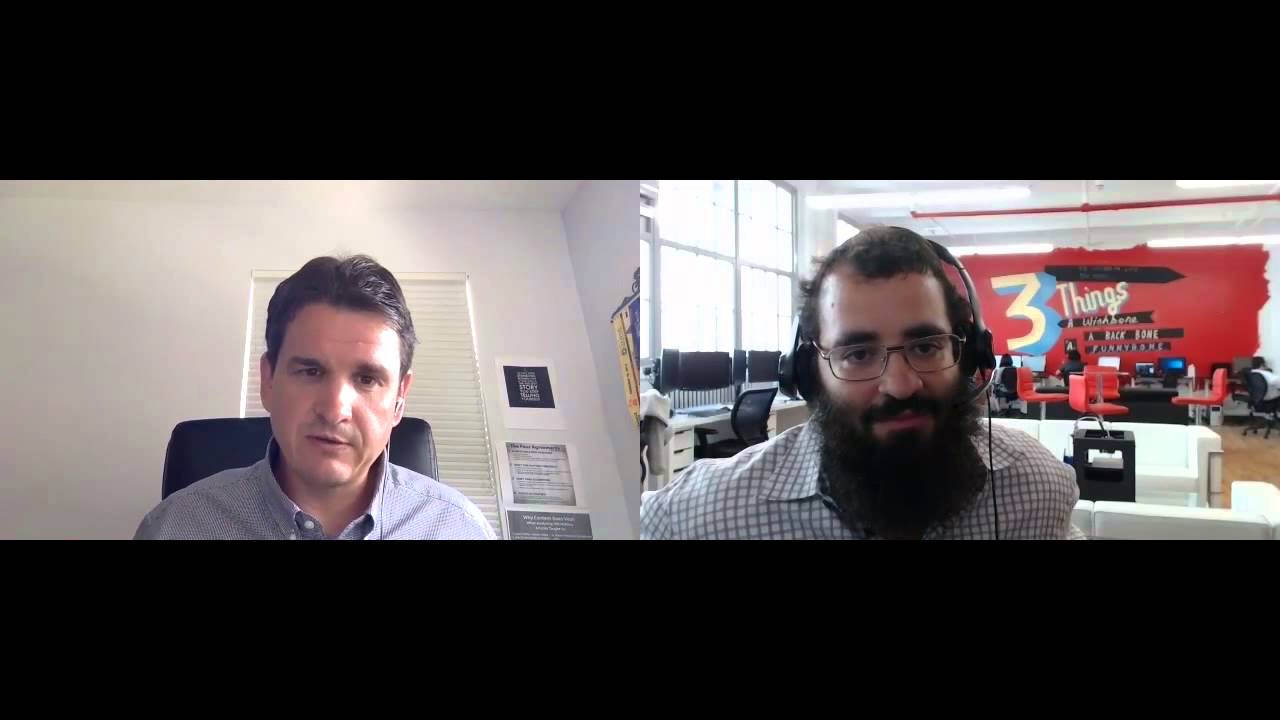
Joe Apfelbaum and James Ashcroft explain why writing is hard for entrepreneurs: lack of time, energy, clarity, and fear of vulnerability. They argue that irregular writing makes it exponentially harder to resume, and that impactful content requires stepping into polarizing topics and facing criticism. The first mile is the toughest, but essential.
Chapters
Hello everybody and welcome to the EO Thought Leadership Forum. This is episode 10. Woohoo, we made it! My name is Joe Apfelbaum from EO Brooklyn.
And I'm James Ashcroft from EO South Florida. Hot, hot, hot down here, Joe.
It's super hot in New York too. I was just upstate and let me tell you, the weather upstate in the mountains is incredible. It's 50 degrees in the morning. 80 degrees during the day, the sky is clear. You know what I noticed while I was upstate? That you literally see more sky than you do in the city. Like, I look up in the city and I see this much sky.
Yeah.
And upstate I see this much sky. It's like, whoa, there's more sky? I know, it's amazing.
I mean, there's no lack of sky down here on the beach, as you well know. But I tell you what, I've been running, uh, and there's about a 15-degree difference between What the temperature says and then what it feels like.
What it feels like, yeah, especially in Florida.
Hot, hot, hot.
So today we're gonna talk about why people find it so hard to write, and it's a challenge that I know almost everybody I know has writer's block. Even the best writers have writer's block, but especially people that are just getting started, they just— it's like, I don't have time, I don't have the energy, I don't know what should I write about, like, like what? What should I do? And I know that me and you have been on a mission to just write, to put it out there, to put our ideas, our thoughts, to blog, to email, to write articles, and we're doing it. And it's hard. It's hard for us as well. We're not consistently putting out content like the way that we'd like to. But why is that, James? Why is it hard? Why is it hard for you to constantly write as much as you want to?
Because it's hard. I mean, that's the simple question. I mean, anything that's worthwhile is going to be tough. And, and, uh, you know, it, it needs to be treated like a job. It needs to be scheduled. You need to create momentum. And I find that when I don't write consistently, meaning every day, then it becomes exponentially harder to get back in the gear that I was at when I'm writing consistently.
So you have to be— you're right now, you're being inconsistent. You're being consistently inconsistent.
Right now, I'm just going to be honest with everyone. Right now I'm being very inconsistent. It's actually been a couple of weeks since I sat down and did a post. And right now it is so hard for me to sit down—
To get back into it.
To get back into it. I am literally doing like—
Pulling your hair out.
Cleaning my desktop on my screen.
Moving the icons around, right?
Moving the icons around and looking for things to do, like pulling out my to-do list. I'm just being honest. And I know— so yesterday I said to a friend of mine, I said, I'm gonna write a post tomorrow and you're gonna hold me accountable. And so here we are at 2:45 and I still haven't written it. I went for a run. I know what I'm gonna talk about, but I still haven't written it.
Wow.
So I know that once I write it, okay, I'm gonna wake up tomorrow and be like, oh, okay, that feels good. I got one under my belt. I need to do the second. I need to do the third. And I've set a challenge, you know, I'll do like 10 posts in 10 days. To build some momentum, and then by the time I get to 10 days, I feel like a machine again.
Yeah, yeah, yeah. I feel like what you said, the first thing that you said, was so powerful. I just want to underline that for a moment. Like, why is it hard to write? Because it's hard to write.
It is.
It's a hard thing to do. Why is it hard to exercise? Because you have to put in your effort into it. You have to— it's not a comfortable thing to do. Writing is not comfortable. Putting your ideas out there, being vulnerable, Sharing your thoughts, it's not like relaxing on the couch. It's work. It's hard work to put yourself out there and to get in the zone and produce quality content, just like it's hard work to make any type of art— music, art, crafting. That stuff is work. But if you're fueled by passion, if you know why you're doing it, you start saying, okay, this hard work is worth it.
Absolutely. I couldn't agree more. It makes your brain sweat if you're doing it. You're right. I mean, you gotta, you gotta come up with the ideas, you gotta put them onto your first draft, you gotta do all the edits. And once you've got everything ready and you still—
Is it good enough? Is it good enough? Is this idea good enough? Maybe there's a better idea. I can't decide on it.
The voices start in your head and you're, oh my gosh, am I gonna write about this? Is it, you know, is this too, too personal? And I always, my benchmark for writing is, If I'm not very uncomfortable when I hit publish, meaning, oh my God, people are going to hate it, people are going to think I've lost my mind. I've had people email me like, are you okay?
Seriously. That's kind of messed up, right? I love that. I love that. That's what makes an impact. That's what actually has a punch.
It is really great because I kind of look at it like, it's great to be loved and people are concerned, but they're like, really, are you losing your mind? And I think that's a good— That's a good benchmark to have.
You're riding the border of creativity there, pushing it.
Yeah, one of my mentors said that a good metric is that if you're doing writing correctly and you're really putting yourself out there and being vulnerable and questioning a system and coming up with new ideas, that 50% of people are going to love you and 50% are going to hate you. Or you can say 50% are going to agree with you adamantly and 50% are not. You don't want to be in the middle, right?
Right. You don't want to have mediocre content. You want to be pushing the limits.
I call that blah. The middle is blah.
There's a lot of blah on the internet. Most people— and is it harder to blah or is it harder to ride the edge?
It's easy to be blah, I think. I mean, Joe, we could sit here and talk about— let's just pick a business topic and you and I could spit out how many words in the next hour about core values of culture. Culture or techniques for hiring.
KPIs. Yeah, KPIs.
We could sit there all day. And you know what the sad part is? Probably get published and, you know, and like, because it's safe, right? And, and, and it's, and it's, you know, it's, it's blah.
But talk about, you know, taking yourself as a leader to the next level and being vulnerable and dealing with very difficult issues in your personal life and in your business life and partnership issues and all those things. Those things are not comfortable. Dealing with, with government and dealing with politics and dealing with, With legal issues. And, you know, like for example, recently Zirtual just basically exploded.
Yeah.
Have you heard of that?
No, I saw you post on that.
I was like shocked because I had— I was a customer of theirs and suddenly bam, they just— bam, they're just gone one day. I'm like, really? My admin— it's Monday morning. My admin's not gonna be calling me at 9:15 for our daily huddle? I mean, like, what about the like 50 tasks she was in the middle of doing? Like, really? She's just gone? And I contacted her and I was like, what's going on? She's like, yeah, I have no idea.
Yeah. Crazy.
I mean, I was just—
It's a crazy world.
Blown away. They grew in 4 years to $10 million in revenue. They had thousands of customers, hundreds of employees, and just like, okay, we just closed the door. Yeah, we just did that. And I don't blame the CEO for doing that. I blame about how they communicated. That's an issue. But like, really? Just like closing like that? Like, I think to myself, we as CEOs have a responsibility. And the reason why it's so hard to do what we do is because it is hard. It's going to be a hard thing to do, but also it's because we don't have clarity as to what we want to do. When a person doesn't have clarity, if you don't know what you want to write about, it's going to be really hard to write.
Clarity is hard.
Yeah, it's hard to get to clear zone, but once you're in clear zone and you have a plan and a strategy, it becomes a lot less hard to write. I think that it'd be very difficult to start when you're not sure what you want to write about. I think it's very difficult there.
Everyone talks about finding your voice and certainly that's a process, right?
But I'll get bored of my voice. If I decided one day that I just love talking about ADD, right? Just why not choose ADD, right? Totally random topic. What were we just talking about?
That's kind of how this is going.
Exactly. But if I decided to choose any topic and, you know, will I be able to stick to that topic? I don't know that I would. I don't know that I would be excited. excited and passionate about talking about the same topic over and over for the rest of my life. I want to be diverse. Yes, I could talk about motivation and I talk about feelings and this and that and the other thing. And if I'm making an impact, I'll keep talking about it. But I don't know if that's my personality.
That's the blah zone.
Yeah, it really is. Just chewing, mulling over the same stuff over and over and over. It doesn't excite me.
I mean, just getting back to our initial topic of, you know, why it's so hard. I think you hit on it. It's the vulnerability, right? I think my favorite authors and people that I follow, those leaders have such a sense of vulnerability in their writing voice.
They put themselves out there. That's what you're saying.
They put themselves out there. They say, listen, I don't know it all. These are my thoughts. Everyone might think I'm crazy for putting this out there.
They will. They'll harass me. They'll say I'm nuts.
Sure. Because their public image is maybe someone who has it all together and they're saying, no guys, I'm being honest with you and vulnerable here. I don't know it all and I've had success despite myself. But I always find those people the most interesting and they end up getting the people rallying around them. They build this community that ends up elevating them because they connect with people.
You have to be okay with the haters. That's something that Arnold Schwarzenegger says. You have to be okay with the naysayers. Naysayers.
Yes. Yeah, no.
That's how he says it. He's like, the naysayers.
It's easy. You're not going to get naysayers in blah land. You know? Right.
You're not going to get that.
You know, if we just post an article about KPIs or, you know, the latest things of ADD, everyone's going to be like, okay, cool, whatever. You know?
But if you talk about why publicly traded companies like McDonald's and Coke Are the cause of ADD, then suddenly you're like, okay, really? Really? We're talking about this now? Or like, you know, something to do with, with the, with the system, that the system is broken and really challenging how people think and the status quo and, and discrimination and racial profiling or whatever it is. You're in the hot zone.
Or a leader saying, I really, I'm not entirely sure about why we've been so successful, or this was my reasoning. It wasn't some genius plan. Those are interesting stories. Those are really interesting to me anyway.
But most people don't want to share that.
No, they don't. They don't. It makes them look stupid. It can, probably to the 50% of people out there who are like, I can't believe he would write something like that. But the other 50% of people who are successful too, saying, you know what, I'm not entirely—
I can relate to that.
Absolutely. And those are the people that connect. So I think that's why writing is so hard if you're doing it correctly and being vulnerable and personal and putting a story out there. It's incredibly hard to come up with that, to write that, to edit it. And then press publish and share it with the world and then sit there for 4 hours while no one responds and you think you're losing your mind and people are checking in with you, friends going, I can't believe you wrote that. You know, it is, it's a hard thing to do, but I believe in my heart of hearts, it's a great, great way to elevate yourself above all the blah that's out there. At least you're interesting.
Yeah, yeah, yeah. You know, are you the person at the bar that has nothing to say? Are you that vain person that just wants to talk about other people? Or do you want to share ideas? And I was just talking to somebody the other day, and I told them something that I heard. And I said, if you want to have the things that nobody else has, you have to be willing to do the things that nobody else does.
Correct.
And there's not a lot of people that are writing, and the people that are writing are not writing quality stuff. They're not putting their heart and soul out there. Take a look at, for example, in the world of musicians, right? You have a lot of musicians out there, but how many of them are really successful? And you take a look at the ones that are really successful, they're putting their heart and soul into it. They're putting their guts into it. They're vulnerable. They're putting themselves out there all the way. And those are the ones that are the most attractive from a music standpoint because you're like listening to this and you're like, wow, that person's really killing it.
Exactly.
They're, you know, you watch them and they're like, wow.
Yeah, they're just attractive because you connect on a human level of, of, um, like, why do people love babies? People aren't built, you know, with this like invincibility, you know. They'll put on a front, but everyone, everyone goes home and has self-doubt. They have the voices in their head.
I don't think babies do. I don't think babies have self-doubt. I don't think animals have self-doubt.
No, no, no, I'm just, I'm talking about like adults, right? Yeah, you know, by the time you've come out of school and you've got all the garbage floating around in your head. And so for me, it's so interesting to listen to successful people say, listen, I doubt myself. I go to those meetings and sometimes I feel like I've got nothing to contribute, when the reality is that they're just looked upon as having all the answers. Those are just really interesting people to me. And they're the people that really separate themselves. So just coming back full circle here, why is it so hard? I think writing— let's just expand this a bit. Writing is not hard. Writing killer content is hard, you know, that really pulls people in.
And the way to do that is to be vulnerable, to have clarity, and just to do it. Literally, just know that it's hard, put your pen on a piece of paper, and just start practicing. And if you can do that, Even though it's gonna always be hard, it's always gonna be a roadblock, you're gonna be able to bear the fruits of that. And the same thing with running, the first mile is always very, very difficult. It's always gonna be difficult out of the gate. I don't know if it's difficult for you, James, but for me, the first mile is always the hardest mile.
Yeah.
Once I get into my routine, I could run 7 miles. I ran 7 miles last week and it felt amazing. But the first mile was just horrific. I wanted to quit after half a mile. I was like, I don't know if I can do this. I think my leg is gonna break.
Yeah.
My brain starts sending all types of strange messages. Oh no, no, I might be sick. I might have diabetes.
I don't know. Right. It's building that momentum.
Once you get going, suddenly you're like, wow, this feels good. And the same thing goes with writing. You have to build it up. And if you can do that, you can truly be successful. You can make a mark. You can leave a message. And ultimately, you're going to be able to add a lot of value to this world. So I want to thank you, James, and I want to thank all the viewers. If you're watching this on YouTube, go ahead and leave a comment.
Please read it.
Share it on Facebook, and hopefully we'll get more people to write it as a result of this. Let us know what you think. Your feedback is super important. Thank you all for watching episode 10 of the EO Thought Leadership Forum, and hopefully we'll see you again at the next one.
More from Joe




How to Beat the Algorithm: Remove Hidden Watermarks & Scale Content with evyAI






