Interview John Dwyer The Institute of Wow - 127 LinkedIn Live 2024 with Joe Apfelbaum
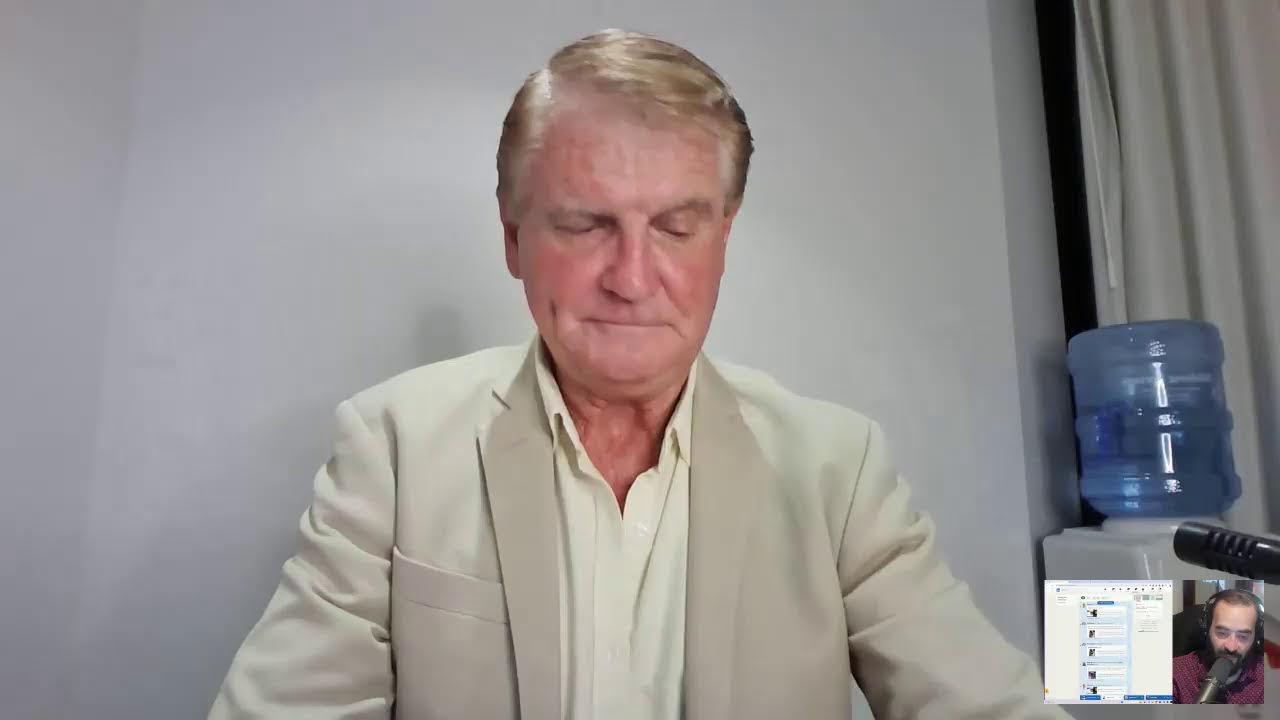
In this LinkedIn Live interview, host Joe Apfelbaum talks with marketing veteran John Dwyer of the Institute of Wow about his "wow factor" approach—using incentives to shift customer focus away from price. Dwyer explains how traditional incentive models like McDonald’s Happy Meal toys can be adapted for small‑to‑medium businesses, outlines a direct‑response marketing framework (problem, aggravate, solution, proof, call‑to‑action), and shares several case studies: a home‑loan promotion that bundled a free vacation and featured Jerry Seinfeld as a spokesperson, a contest‑driven aluminum‑fence campaign, and a turf‑farm beer giveaway. He contrasts the effectiveness of Facebook versus LinkedIn for reaching decision‑makers, describes a Connections Dashboard that isolates CEOs within his 18,000‑connection network, and highlights his free resources—the "WOW Manifesto" and "Avalanche Leads Formula"—available at wowmanifesto.com/free. Throughout, Dwyer stresses the importance of adding deadlines to offers, tailoring incentives to the target audience, and using contests to generate high‑quality leads. The conversation ends with practical advice for CEOs of $2‑5 million revenue companies and an invitation for viewers to schedule a free consultation.
Chapters
Welcome, welcome, welcome. This is another episode of LinkedIn Live. My name is Joe Apfelbaum, and today we have John Dwyer. He's a marketing and advertising expert with the Institute of Wow. His LinkedIn is right here in front of us, as you can see, and he's based in the great— the Greater Brisbane area. John provides proven marketing strategies that astonish business owners to the level that they say, wow! Oh my goodness. Oh my gosh, John, welcome to the program. So glad that you're here.
I hope they say wow. I don't think that happens all the time, but it happens a few times.
Tell us, tell us about the wow factor. What's this like wow thing? Because I'm the boom guy, like on LinkedIn, I love saying boom all the time. Like I'm like boom this, boom that and all the comments, but you're the wow guy. Can you tell everybody what wow is about and how it got started?
Well, it sounds like we might be, we might be blood brothers because boom and wow is pretty much the same thing, I guess, in my mind. Look, I've been in the advertising game since the 1800s. I've been doing this for quite some time and I used to be a marketing consultant to some of the bigger companies, the McDonald's and the KFCs and 7-Elevens. And as you can tell from my accent, I'm from Down Under. And about a dozen years ago, I swapped across to provide this wow factor mentality to smaller businesses. And what it's all about is just taking people's eyes off the price by giving them a wow factor. And generally speaking, Joe, that wow factor is an incentive. And McDonald's have been doing it for about 40 years with that toy in the Happy Meal box.
Wow. An incentive. An incentive. Can you describe more about the incentive concept? Like, what does that mean? What does an incentive mean?
Yeah, good. Okay. And look, the thing is, Joe, I have to point out right up front, pretty much 97% of businesses, big or small, have never used incentives. They're too busy, you know, using price as their marketing tool. And if you look around, then Amazon are very clever. Their Prime membership club has the incentive of getting free movies and free music and preferred shipping. McDonald's have been doing it, as I said, with the toy in the box. Kellogg's have been doing it, you know, way back since the Flintstones toys were in their cereal boxes. But, and even the coffee shops, even your cafe down the corner has probably got that little card where, you know, you buy 9 coffees and get stamps on your little card and then you get the 10th coffee for free. But most businesses don't use it and it's very, very powerful. All it is, is making sure that you provide your customers or clients with a free reward, a gift for, you know, shopping with you or buying from you. Now, that could be a movie voucher for 2 people, it could be a dining voucher, it could be gas discounts, it could be any number of things. But the whole idea of using an incentive is to attract them to your business versus your competitors and at the same time to take their eyes off the price.
When you say the eyes off the prize, what do you mean by that?
Yeah, so if the price for your refrigerator is $1,000 and your competitors are down the road selling that same sort of refrigerator for $950, the only way normally you would beat them is to drop your price less than theirs. And my view is you don't have to do that if you do what McDonald's do. Because if I asked any parent in America or Australia or anywhere around the world, have they been to McDonald's and bought a Happy Meal, they'd probably say yes. And if I said to them, well, what did that Happy Meal cost? 9 out of 10 of them couldn't tell me because, you know, pester power kicked in. Their children were going, mummy, mummy, or daddy, daddy, I want the Happy Meal because of the Disney toy. And it's that toy that takes their eyes off the price. And so my view is that if you're running a business and you are not the 40-ton gorilla, you know, if you're a normal retail store and you've got a Costco across the road and you think you're going to beat them on price, then you're on drugs. Okay, you're not going to beat Costco. But if you actually said, look, when you spend $1,000 with me, I will give you a free vacation or I'll give you a free movie pass or whatever it may be, then Costco would have 6 months with the committee meetings just trying to work out how they could combat you. So it's actually a way for particularly small to medium-sized businesses to make their mark in field where they might have a Coca-Cola competitor.
When did you come up with this concept? You know, like you kind of decided when you, when you started doing like the Institute of Wow, right? Like that's your thing, theinstituteofwow.com. When did you decide to really focus on the wow factor?
Look, in my early days, you know, my 20s, like, you know, most people, I worked for some of the bigger businesses. And so therefore, I was messing around with the McDonald's of this world and the KFCs and so forth, 7-Elevens. I was involved with Rupert Murdoch's Fox Network. Work. And when you're in those big businesses, they tend to be brand conscious. Well, of course they are. I mean, we buy Kellogg's because it's Kellogg's and we buy Toyota because it's Toyota. And there's nothing wrong with that. Of course, we buy brands. But what I found as I started to provide my consultancy services to smaller businesses, these were businesses that were perhaps doing a few hundred thousand or maybe just a couple of million. They weren't doing $100-200 million. I found that they you know, they certainly needed to, you know, build their brand. There's nothing wrong with that, but they needed to put food on the table the next day. And so instead of vanity metrics where they, you know, they're sitting around the dinner table tonight, Joe, and they're telling the kids that they've got 300 likes today, but the kids are going, thank you, Daddy. Any food on the table?
Right.
Those vanity metrics, as you know very, very well, are completely useless if you're not making money. And so therefore, I, you know, I studied this direct response marketing mantra and that's what it's called. It's called direct response marketing and basically the 5 components of this are tell them their problem. Okay, so therefore whatever your product is, tell your audience their problem, aggravate that problem, provide them with the solution, then provide them with proof that your solution is real. In other words, testimonials and then provide them with a call to action. So if you were a weight loss company, you would say, look, you know, if you're overweight, not feeling good about yourself, then you might like to come onto our program. And then you aggravate the problem by saying, do you know that spring or summer is just around the corner? Don't you want to look good in your swimsuit? Then you provide the solution, which happens to be your dietary program. Then you provide proof where people come on and say, look, I used to be overweight, but now I'm, you know, I'm very fit and I'm healthy. And then the call to action, you know, go to blah blah blah dot com. And if you go through that problem solution scenario with just about any product or service, you will smash your competition.
Okay. And so, making sure that you're going through the problem solution, because most people are really focused just on their product, their features. They say features tell and stories sell. And so, focusing on that product solution is really the game changer here when you're talking about making sure that people are responsive to what you're selling or what you're offering, because— People just care about what's in it for them. They don't really care about you so much, although you care about you. They don't care about you. They don't know about you. And so you understand how to be able to walk a business through this concept. Can you talk about the idea related to you and Jerry Seinfeld? Like, what is this thing about Jerry Seinfeld and you?
I worked with Jerry for a few years for one of my clients down under, which happened to be a bank. And it was some years ago, but I've milked the daylights out of it, Joe, for the last last number of years. And I guess, you know, like anyone would if you got to work with Seinfeld for 3 years. What it was, it was an Aussie bank and it was called the Greater. It was a building society, but they're a bank.
Okay.
So it was the Greater Building Society and I became a consultant for them and I could see that they were up against in Australia the Wells Fargo sort of banks, you know, and we don't have Wells Fargo in Australia, but the big banks like Wells Fargo. And this was a challenger brand. They're still a big business. They're the 250th biggest business in Australia. So they were not a small business, but nonetheless, they were small compared to the big 4 banks in Australia. And what they were doing is trying to sell home loans on price. And I said, guys, I don't know what you're smoking, but you're never going to beat the Wells Fargo sort of banks on price. Whatever your interest rate is for the home loan, 6.4%, they're going to be 6.3% in 5 minutes and you will never win that race. And they said, well, what do we do? I said, look, I've been actually doing some infomercials on television for a wholesale travel company. How about I introduce you guys and you get together and instead of giving a 1% honeymoon rate to, you know, husbands and wives when they're getting their loan, that is really normal throughout the financial industry whereby you give a 1% honeymoon rate for the first year to get them in the door and then it goes back up to whatever the interest rate should be. I said instead of doing that because every bank does it, that's, you know, you're not going to distinguish yourself by doing that. Why don't you give that 1% to the travel wholesaler and they'll give you a, you know, $5,000 holiday for $2,000. And they said okay, let's give this a shot. So we came on television and social media and we said get your home loan from the Greater Building Society and you will get a free vacation and it went nuts, absolutely nuts. They had a call center 15 ladies answering the phone. They had to increase that to 45 people within the first 3 months and they took billions. Like this idiot who you're talking to, Joe, didn't do a door deal with the increase in home loans. I charged a consultancy fee. I wish I had done a door deal. I would have bought my own private island. But they actually had billions and billions of dollars worth of new home loans came in. And then about 4 years into this promotion, I took to another level. I convinced Jerry Seinfeld to be the spokesman for this Aussie bank. And so I flew backwards and forwards to New York often, and Jerry stood outside what was a makeshift bank. We found an empty delicatessen shop and we just built the Greater Building Society Bank there. And he did stand up outside that particular, you know, fake bank and he told everyone, get a home loan from the Greater Building Society and you get a free vacation. It went absolutely nuts. And yeah, I mean, I have to say Jerry was a joy to work with because he was exactly the same as you see on his TV show. Wow.
Incredible. It's nice to see that people are exactly the same about how they are on their TV show. By the way, I did a little bit of research on you to see where you're most active, uh, like LinkedIn versus say, uh, Instagram or TikTok or YouTube or whatever. And what I noticed is, just FYI, and the way that I did this research is I'm using this, uh, AI called Evy AI, evyai.com. And now we just added a feature called Search Profile, which allows you to search anyone's profile on Facebook, Instagram, Google, X, YouTube, and TikTok with one click of a button. And what I noticed is that you are really focused on Facebook, um, because it looks like you updated your Facebook August 31st, whereas your LinkedIn, you haven't really updated in a few months. So my question to you now is, why Facebook? Like, what do you love about Facebook right now that, you know, and we're streaming live on Facebook, by the way. I sent you a friend request on, on Facebook. Facebook if you want to accept it and you can repost the Facebook thing. But if you're more popular on Facebook right now and you're really leveraging that, can you just talk to, as a marketer, what do you love about Facebook and why is Facebook important to you?
Yeah, look, I love LinkedIn as well. The only thing I found with LinkedIn is that because our target audience tends to be businesses doing under $5 mil, I mean, we have businesses that are doing $10 to $15, $20 mil, but they're minority. Okay, the majority of our businesses are small to medium-sized businesses doing under $5 mil. What we found is that when I was spending quite a bit of time on LinkedIn, that we had a lot of middle management and they couldn't make a decision. And so, for example, Joe, as a result of the Seinfeld, you know, home loan, get a vacation promotion, I was contacted by a travel company and they've given us the license to actually provide vacation vouchers like this to businesses that are worth $1,000 for less than $50. And so therefore we say to businesses, look, buy a packet of 50 of these vouchers and give them to your customers as an incentive when they buy your product or service. And it's gone nuts. Okay. But the thing is that when I market that as a packaged promotional concept on LinkedIn, I am hitting a lot of the audience who are middle to senior management that can't make a decision until they have 16 committee meetings. And that's the only downside I found with LinkedIn. I love it. But by the same token, on Facebook, The decision makers are the people who, you know, basically contact me. So what we found is that there was a long gestation period for getting people across the line for my consultancy purposes on LinkedIn, whereas with Facebook, when they make the inquiry, I can close them within 48 hours.
Wow, interesting. Very, very interesting. So you got more traction from Facebook than you did from LinkedIn. You know what I always tell people? It all depends on the people that you're actually connected to. Like, if you take a look at who If you're connected to a lot of middle managers on LinkedIn, then you're going to get a lot of middle managers. But most of my connections are the decision makers, are the CEOs. So I connect with CEOs of Inc. 5000 companies, of YPO members, of EO members, of Vistage members, and those are all typically the decision makers.
Yeah.
So when you're going out to connect with people, my advice to you would be to make sure that you're connecting with those decision makers. So right now you have 18,000 connections, and we created for you something called the Connections Dashboard.
Yeah.
That allows you to be able to see all your connections, and we can easily determine from your Connections Dashboard how many of your connections are actually CEOs and how many of them are middle managers. And you can really zero in and start reaching out to those CEOs and decision makers faster rather than the middle managers. And you can also use artificial intelligence to tell you the size of those companies to help you even navigate further to only target companies that are $5 million and under in revenue. Because, you know, a lot of companies, most companies in the world are doing under $1 million in revenue, like 96% of businesses in the United States are doing under $1 million a year in annual revenue. So very, very few percentage are even doing over $1 million. But I think the sweet spot for you would probably be somewhere between $2 million and $5 million. Am I right?
Pretty much. Yeah, pretty much. Because the thing is, is that if they get a promotion from us, and, you know, we've got win $1 million sweepstakes promotions, and we have, you know, gas discount promotions, we have the vacation promotion with this. What we find is that the businesses that come to us want a packaged promotion. They don't have a lot of the resources in-house to actually do these things themselves, or they don't even have the creativity. And you're dead right, Joe, that exercise that you did for me when we spoke to each other a month ago, that is invaluable. Your skills in that area are absolutely brilliant. And I've actually just put someone on to do exactly what you've just suggested, and that is go through the segmentation that you've created for us and hit those businesses whereby I can speak to the decision maker. So well done, thank you.
Oh, thank you so much. And I'll just give the audience a quick insight into just taking a look at the, the actual dashboard and what it looks like. So if you guys take a look over here, this is the actual dashboard that we're able to create, and John has this type of dashboard. Now if you take John's ideas of the incentives, and then you apply that to what he's talking about here. That's really, really powerful. Now, you did mention that you had a gift, and I don't like waiting till the end before we give out the gift. Can you share with the audience what the gift is? So this way, and we'll also put it in the comments. And if you guys want the gift, just write gift in the chat, whether you're watching the live or the replay. Wow, look at that. Look at that massive gift. Can you share what that gift is about?
Yes. Okay, look, because it's called the Institute of Wow, I've got to be a show-off. When, you know, they asked when I hit the seminar circuit, which was about a dozen years ago, I didn't realize that, you know, you have to write books. And as it turned out, the promoter who was putting me on stage in front of business owners said, JD, my name is John Dwyer, but I get JD. He said, JD, you've got to write a book. I went, oh God, here we go. So I did and I wrote this one here, which is called The Avalanche Leads Formula. And that shows business owners just how to get avalanche leads, not just leads. And then after that, he said, you've got to write a second book. I thought, okay, well, I'm gonna have to do something different. And so therefore I wrote this one. This is the size of a tabloid newspaper. Okay. And yeah, it's called the WOW Manifesto. And in here is the last 15 to 20 years of all of the direct response marketing ideas that actually worked. I didn't put the ones in here that didn't work, by the way. I thought that would be silly. And so in here, it is a swipe file from, you know, WOW heaven. And I can just say to anyone who's watching this or listening to this, if they grab this, they will have a a coffee table book or a desk book that they can relate to and just pull ideas out of this whenever they need them because you've got case study after case study in here.
Wow, that is epic and that is such a beautiful gift. Guys, write wow in the chat and write gold if you're interested in getting this incredible piece of gold that he's offering right now. That is amazing, amazing, amazing. Well done.
So if you wanted to, I can give you the link that everyone can go to and just download.
Yeah, but not everybody, some people are driving their car or whatever. So we'll let them write wow and gold, but You could definitely mention the link, and we'll also put the link in the comments for those of you that don't want to wait. Um, tell us what the link is.
I created a page for, uh, this actually, and it's very simple. It's wowmanifesto.com/free. So wowmanifesto.com with a forward slash.
And, and, and, uh, for those in the US, it's a forward slash instead of a forward stroke. That's, that's really, really cool. By the way, I did a little bit of an while you were talking and I'm going to pull it up right over here. This is your LinkedIn connections dashboard right here. And as you can tell, these are all the CEOs I was able to pull out from your dashboard. So you have 18,000 connections.
Yeah.
And out of the 18,000 connections, approximately 800 are CEOs. So I would say like 90, over 90% of your connections are those managing middle managers. So it's not surprising that when you were doing LinkedIn campaigns, you are getting hit by people who couldn't make decisions because less than 10% of your connections are able to make decisions. Right now, about 5% of your connections are able to make these types of decisions. And so if you just did a micro campaign to these 800 people and you message them, say, over the course of 30 to 60 days, and you message every single one of them with something compelling that will wow their socks off and give them some type of free gift or something, I suspect that you're going to have more leads, like that avalanche book that you heard. Yeah. I suspect that you're going to have an avalanche of leads because you already have built a relationship with many of these people. I could see some of these people you've been connected with since 2010, since 2012. You've been connected since 2013, 2014, 2015, and this is one of the benefits of going through your dashboard and recognizing, strategizing, and prioritizing because you'll be able to create an avalanche of leads. need support, John, are you available for consulting for people who need consulting? Like, how do you work with people?
Yeah, absolutely. You look— and mate, thank you very much, Joe, for that. It's funny how you can be the painter that lives in the house that's not painted. And if you're, you know, a car mechanic, you drive a bomb. Here I am, a marketing expert, but it's taken you to actually highlight that to me. And I thank you very much for that. And I'll be having this new person who starts with us in the next couple of days dig into that and do exactly what you've just said for me. So thank you. Yeah, look, with regards to, yeah, the consultancy, we provide all sorts of businesses from A to Z with consultancy. So if anyone's interested in that, they just go to my website and it's theinstituteofwow.com and you'll see my contact details there.
Amazing, amazing. And I'm gonna make sure to put his intro inside the description. John, if you want to go to my profile after, find this video and just hit the repost button, feel free. You can also hit the reshare button. on Facebook as well if you'd like when you get a chance or have your team do it. And this way, this video will go out to your whole audience. What would you say is the biggest mistake that you made as a marketer that you see a lot of people making? Because that's something that people are really keen to understand.
Yeah, I think the biggest mistake I made, and fortunately I made it when I was a, you know, a lot younger, was not putting a deadline on offers. Okay, we all as humans sit on the fence. That's just what we do. We're in Australia. I'm not sure where the you use the term in America, we call them gunners. I'm gonna go on a vacation. I'm gonna buy that house. I'm going to get a new job, you know. So we call them gunners because they're gonna do this. And most people do sit on the fence for quite some time. And I woke up to that probably in my late 20s when I set up my own business. That business at the time was called Dynamic Ideas and very similar to the Institute of WOW, we created ideas and, you know, basically marketing campaigns for people. And I learned that unless you put a deadline on an offer, I mean, first of all, you've got to the offer. And of course, to me, price discount is not a good enough offer. So therefore, whatever the offer is, whether it's a free vacation or whether it's a free movie pass or whether it's a free dining voucher, whatever it might be, but you've got to put a deadline on that offer because if you don't, then you will miss out on a bucketload of sales. So therefore, what we teach businesses now is to come up with a wow factor, come up with a Happy Meal toy for your business, but make sure you have a deadline.
I love the Happy Meal toy concept. Like, what is the Happy Meal toy for your business? That is an epic thing. Like, in your business, you just shared your Happy Meal toy, right? That's your gold book, your book of gold of all the swipe files and everything.
Yeah.
Can you give people ideas for different Happy Meal gifts that people give so people have an idea of things that— obviously, if they want to create the most ideal Happy Meal gift, they would need to contact you. And speak to you about creating their perfect Happy Meal gift. But can you share some ideas for things that you've done with clients like that really have wowed their audiences so people can kind of understand that?
Yep, sure. And Joe, before I say this, and please, I'm not trying to flog the vacation thing stupidly, but the reason that the vacation voucher has been so successful is that it appeals to all ages and both sexes. So over the years, whether it be movie tickets or dining vouchers or gas discounts, at the petrol station or whatever it might have been. I've tried everything— skateboards, microwave ovens, you name it. Okay, but what I found through the Seinfeld campaign with this bank, which led to me doing this vacation program, by the way, if anyone wants to look at it, it's vacationsincentive.com. But the reason that I'm so excited with that, when this travel company knocked on the door and they said, look, we've got access to unsold hotel rooms around America and right around the world, would you like to package this up and put it into a promotion, if you like, a Happy Meal toy for businesses? And I said, yeah, hallelujah. The thing is that a vacation is appealing to all ages and both sexes. You don't get many Happy Meal toys that do that. Okay, because if someone gave me a skateboard, I'd say, thank you, but I don't need it. Oh, well, here's a microwave oven, a free microwave oven when you bought the motorcar. Sorry, I don't need a microwave oven. But if you give me a voucher to have 3 to 7 nights in Vegas or Orlando, I will hug you and I'll say, thank you very much. But a good example outside of that is a turf farm that we had some years ago, turf as in grass. And this particular company had miles and miles and miles of grass and their major client were landscapers. They only made, you know, a certain amount of money if they sold it to mum and dad who wanted a front yard's worth of grass and then a backyard. But a landscaper might come in and buy 3 or 4 homes worth of turf at a time. And they said to me, look, this, you know, sort of direct response marketing stuff, What can you do for us? And I said, okay, well, if your target audience are landscapers, which 99% are men, then they like beer. And they normally drink just a regular beer, but let's give them a premium beer. And in Australia, the premium beer is the one called Crown Lager. It comes in a very fancy box, 24 bottles, the labels are gold. And normally a landscaper probably wouldn't afford to drink that. Okay, we just wouldn't because he's a tradie. And so we said, look, for every home's worth of grass that you order from this turf turf farm, we will give you a carton of Crown Lager. And about 6 days after we sent out the email blast and we sent out letters because a lot of these landscapers are not tech savvy, so we sent out a brochure and a letter. About 6 days into the promotion, this guy rings me who owns the turf farm and said, JD, we've got a problem. I went, oh God, what is it? He said, we've run out of 6 miles worth of turf. All the turf is gone. I said, what? He said, we're sourcing turf from other turf farms, our competitors, to keep up with the demand for the I said, what? He said, look, I had one guy who was always price conscious. He would always say to me, look, if it's $6 a yard, I can get it for $5.50 a yard down the road. He rang up yesterday and asked for 18 homes worth of turf, and he didn't care when the turf got there. He needed the 18 cartons of beer by Friday because he had a party.
Wow, that's incredible. That's such a good idea. That's such a good example also. That's That's like very, like, like that really gets me thinking like, hang on a second, there's something to this. I was thinking like, like if somebody is a CEO, like they're not really gonna care about the incentives. But then I'm thinking to myself, everybody cares about incentives. Everybody cares about something.
Mm-hmm.
What do you think, like, uh, if you're targeting a CEO of a $5 million company or of a $3 million company, what do you think the incentive, what do you think they would care about other than marketing? 'Cause marketers would care about the swipe file, but maybe CEOs might not care so much about the swipe file. What do you think a CEO of a marketing company would be or of a CEO of like any type of company would care about? Like what are some ideas related to that?
Okey-dokey. Look, I have to say that social media has given us now, and no surprise to you, Joe, it's probably no surprise to any of the viewers or the watchers or the listeners, but it's given us the opportunity to do this, to create avalanche leads. And let me tell you one which whoever's watching this or listening to this, they can use it tomorrow in their business. If they want to contact us, we'll probably make it more savvy for them because we've made all the mistakes and we can help you not make them. But this idea came a few years ago when a client of mine sold aluminum fences. Okay, we say aluminium in Australia, but aluminum fences and for the backyard. And he said, well, Facebook's not working. I've tried all the older suburbs with the fences that would be made out of wood and they're falling down. He said, I put brochures in the letterbox, I did the Facebook advertising, nothing worked. And I said, let me have a look at your ads. Well, of course, his ads were full features. It just showed a picture of the aluminum fence, which is not really going to give you hard nipples, right? And I said to him, look, okay, get out of the way. I said, look, you're showing the features, not the benefits. And if the features were to sell, then the weight loss companies would just show a bowl of rice. Okay, they don't. They show the transformation. And so I said, look, how about we do this? We'll look after it for you. So we ran the ugliest back fence in Australia contest and we zeroed the Facebook ads, obviously laser targeted into the older suburbs that had 35-year-old homes. Homes and of course their paling fences were not really flash, they were falling over. And we said take a photo of your falling down paling fence and submit it onto our page and you will be in the chance to win a $5,000 aluminum fence makeover. $702 and 3 days into the Facebook campaign, he rang me and said we've got to stop it, I've got 6 months worth of leads with all of the people sending all their details. Not only did they glow in the dark, saying, look, I need an aluminum fence, but they took a photo of their bad fence and gave it to— you don't get much warmer lead than that. And so we started doing it for kitchen renovation companies, the ugliest kitchen in Australia, give us a picture of your kitchen and you're in the chance to win a kitchen renovation and so on and so forth. So what we've created now is what we call the Facebook contest formula and it doesn't matter whether you're the CEO of a business, you know, that's marketing white goods or furniture or whatever it might be, Hold a contest and it just makes sense. I mean, this is so simple. Hold a contest for people in your target audience to have the chance to win your product or service and you will give one away, of course. But guess what? If you get 1,000 entries, you give one away, you got 999 people who have glowed in the dark and said, I want your product.
Wow, that's really, really smart. That's really smart. Giveaway, do a giveaway, do some type of giveaway on a regular basis. And sometimes I think about doing giveaways for my own products and I kind of get carried away, but working with someone like you, you can really help people zero in, figure out the best type of giveaway based on their ideal client avatar. And that's why it's so important to do strategy with companies like yours to help them be able to determine the best type of giveaway to have the most effectiveness. Are you currently taking clients on?
Yes, look, I've had 6 kids and they're millennials and they've all left home these days. And so therefore, as much as I'd like to say that I'm at an age where I would buy my own private island and my wife and myself would just go live there, the 6 bastard kids took all the money. So I'm joking, I'm joking. We love them dearly. But when you've had the Brady Bunch, then yes, you might just keep working for a little while.
Wow, wow, wow. That is fantastic. Incredible. I love that so much. Thank you so much for sharing that. And people, if you're looking to meet with John to have a conversation, do you do like free consultations to have conversations with people or free initial calls?
Yes, I do. And in fact, look, I'll give you my private email address. I know that's not the thing, but I'm not that important. So therefore, I'm happy to do that. It's simply john@theinstituteofwow.com. So it's john, J-O-H-N, @theinstituteofwow.com. And absolutely, what we do is that if you just email me, then I will email back you our Zoom calendar link. And then we just do what we're doing now. Uh, we'll just book a Zoom call and I'll have a chat to you. And if I can help you, I'll do my best.
Guys, if you're a CEO, you're doing over $2 million in revenue, under $5 million in revenue, you want to be able to wow people, you want to be able to take your customers to the next level, John can help you in your business. If you know somebody that needs to see this interview, please forward this to them and they can get that golden gift from John. And that will do them a favor because the ideas that we shared here today were really next level. Let's take a moment and just thank John for being here. John, thank you so much for being here with me. Thank you for— I'm gonna just pull up your website here. The Institute of—
Yep, theinstituteofwow.com.
I misspelled it, but it's okay. Google helped me out over here. This is the Institute of Wow. Guys, check it out. Go check out his website. Go check out his videos. Go check out all the information. It looks like he has a book over here that you guys can get instant access to his book. He has case studies. He has videos. He has testimonials. He has so much information here. I highly recommend you check him out. He's a real superstar and it seems like he really knows his stuff. He has so many years of experience. If you want to get your Happy Meal for your business so that people forget how much you charge and they start understanding the step-by-step process, you start understanding the step-by-step process to create an avalanche of leads, then definitely have a conversation with John. John, thanks for being on the program and we'll see you again soon. Boom. Thank you very much.
More from Joe




How to Beat the Algorithm: Remove Hidden Watermarks & Scale Content with evyAI






