Joe Apfelbaum Presents at the JBiz Expo - Digital Marketing Strategies
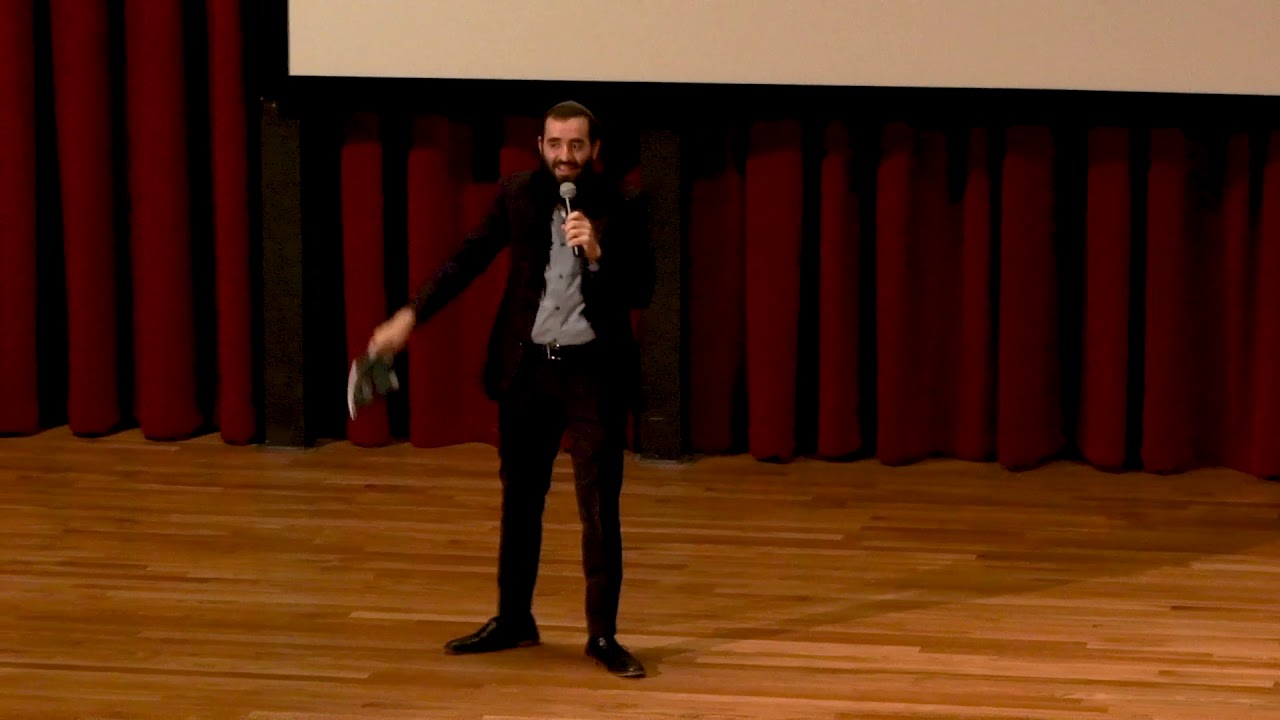
In this energetic presentation, Joe Apfelbaum shares the core of his digital‑marketing methodology, distilled into three actionable steps: (1) set SMART, revenue‑driven goals; (2) define a razor‑sharp target audience and craft a value proposition based on customers’ pains and gains; (3) build messaging that establishes authority through ethos, logos, and pathos. He illustrates each step with personal anecdotes—from growing up in his mother’s lower‑East‑Side store to scaling a company that served over 1,100 clients and earned Inc. 500 recognition—while emphasizing concrete tools such as lifetime‑value (LTV) calculations, recurring‑revenue models, and marketing‑budget alignment. Joe also critiques common pitfalls (e.g., “target everyone” and feature‑first pitches) and demonstrates how reframing scripts to focus on the client’s desire for new customers dramatically improves conversion. The talk concludes with a call to action for a low‑cost virtual bootcamp that guides attendees through the three‑step process and offers his book and consulting services.
Chapters
First of all, I know Mandy for a really long time. Let's give Mandy a round of applause. I know Mandy back in the day. We used to chill in 770. Anybody here been to 770? Raise your hand. Okay, we got everyone here been to 770. That's amazing. So on my drive here, I did an Instagram Live. I don't know if anybody here follows me on Instagram, but I decided that I'm going to talk to my audience a little bit about some of the things that I'm going to talk about here. And a story came to mind. I think this story— I went through all these stories. I was talking to an entrepreneur that walked into my office and he said, Joe, I want to build my business. And I said to him, I said, you want to build your business? Okay, that's cool. Tell me a little about your business. He starts telling me about his business. He has this big vision. He wants massive, massive results. He's like, the reason I came to you, Joe, is because you've helped over 1,100 companies and you're one of the fastest growing companies in America. What's your secret? What did you do? So I said, okay, I'll give you my secret, but first I want to know, tell me more about your business. And he started telling me all his big visions and all the big things he wants to create. And I said, okay. So he's like, so what do I do? What's a good strategy to create it? I said, in order for you to get somewhere big, you have to start somewhere small. And he looked at me, he's like, what do you mean? I can't start small. If I start small, I'm not going to get anywhere. And I said, you really have to take yourself and put yourself like into— like, you gotta dream big. You gotta dream very, very big because you can do what you want to do and you are dreaming big. But when you're starting, you have to be very, very, very specific. He's like, how specific do I need to be? I said, you need to be SMART: specific, measurable, attainable, relevant, and time-bound. And he's like, but if I'm specific, I'm going to limit myself. I want a lot. I said, okay, you know what? How big do you want to build your business? How big do you want to build your business? He said, as much as possible. And I heard this over and over and over from failed entrepreneurs because if you take a look at statistics in the United States, there are 34 million businesses in the United States. And if you ask me what percentage of them are doing over a million dollars in revenue, I would have thought that the majority of them are doing over a million dollars in revenue because the average business does about maybe 10%, if you're lucky, on the bottom line, maybe 5%, right? So in order for somebody to get a decent salary or make a decent amount of money, you need to be doing over a certain amount of revenue. But when I looked at the numbers, I realized that 96% of the 34 million businesses in the United States are doing less than a million dollars in revenue. And so when Google hired me to be a certified Google trainer and to talk on behalf of Google to small businesses to teach them, and I started asking them this question, how big do you want to build your business? Almost all of them, 9 out of 10, would say, I don't want to limit my success by putting a number on it. Can anyone resonate with this? Raise your hand if you can resonate with this. A bunch of people can resonate with this. People don't want to limit their success by putting a number on it. Why? Because they're trying to get lucky. Now, I grew up in my mother's store in the Lower East Side. And I don't know if anybody's been to Orchard Street in New York City, but back in the day, people had stores there, and all the department stores in the mall would be open on the weekends, and her busiest day was Sunday, and they would close down the street. It was so amazing. And I watched her try to grow her business, try to grow her business. Every single Sunday, I would go down after yeshiva and help her out. I'll stand on the street and try to get people into her store. And after 10 years of her trying, she never hit the million-dollar mark. And eventually, after 9/11, she went out of business. Like most businesses, she went out of business. And I was thinking to myself, what did I do different? Why was I able to build my business to $1 million, $2 million, and keep doubling to be one of the fastest-growing companies in America year after year? And then I realized when I set out to build my business, I had a very, very specific goal in mind. And so when I talk to business owners now, I say there's a 3-step process to creating a marketing strategy. And people look at me, they're like, marketing strategy sounds fancy. fancy. It sounds fancy to have a strategy because small business owners, they don't want red tape. They're like, stop planning so much, stop meeting so much, let's get something done. Anybody resonate with getting things done? Like, just get things done, stop planning so much, right? You just want to get things done. What are you going to get done? What do you want to get done? What are you selling? You have a new website? What do you sell? News advertising. News advertising. Look at this. How old are you? 14. 14. Let's give him a round of applause. Amazing, amazing. When I was 14 years old, I wasn't doing— I was getting kicked out of yeshiva after yeshiva after yeshiva. My parents sent me to Montreal, and I wasn't thinking about starting a new site like you. Amazing. Congratulations. I didn't even own a computer until I was 17. So I'm thinking to myself, how can I help small business owners really understand marketing strategy? Because it sounds complicated. It sounds like for the Fortune 500. But the reality is marketing strategy is not complicated. I'm going to give you a simple 3-step process so that you can really understand what it means to have a written digital marketing strategy. You guys ready for it? Yeah. Okay, good. A little louder, yeah? Come on, get excited! It's time to get motivated here. See, I wrote this book, I wrote this book called High Energy Secrets because I used to be very low energy. I don't know if you guys know me, but I just posted a thing on I just posted a post on my Facebook from six years ago, and I was this real. Does anyone see the post that I posted this morning? I share. Okay, we got a couple people there that saw my post. But I posted a post on. So I have a few thousand people following me online, like ten thousand on LinkedIn, a couple thousand on here, a couple thousand on there. So you never know who sees you. When I walked in here, people are like stopping me, and I'm like, "Who are you?" I have no idea who you people are. Like, "What do you mean? We're best friends. I see your videos every day." I'm like, "Okay, okay, chill." Anyway, so I posted a video of myself, and the amount of energy that I had was so low. I was not—I knew the low energy secrets. I didn't know the high energy secrets. I knew that when I stopped eating at Kosher Delight, they went out of business in all their locations because what happened was I did not know that all the things that I was eating was taking away my energy, and I was working really hard in my business, and I wasn't working smart. So having a strategy— like, I have my goal. See, I set a goal to sell 125,000 copies of this book. My wife came out with a book about 2 weeks ago called Millennial Kosher. Anybody bought it? Let's give her a round of applause. Yes, amazing, right? She sold 15,000 copies in one week. Yep. And that's probably the best-selling kosher cookbook of all time, definitely on Amazon, but probably of all time. Within one week, Artscroll's freaking out. They're like, oh my God, how'd you do this? It's a very specific strategy, a plan. So there's 3 steps to creative strategy. If I want to be able to sell 125,000 copies of my book, I need to have a plan. But the first step to creating a plan is having a goal. Okay, so having a goal, a very specific goal. So your strategy, your goal is what? What's your revenue goal? Does anybody here have a revenue goal? What's your specific revenue goal? Okay, one person raised their hand. Now, for the people that didn't raise your hand, either you don't have a goal or you don't even know what I'm talking about. You're not listening, maybe, right? Maybe you're on Instagram or something, which Which is cool. If you're on Instagram, you better be looking at my Instagram and hopefully taking videos of me or whatever it is. But if you don't— if you didn't raise your hand because you don't want to limit your success, you didn't set a goal because you didn't limit your success, then I'm telling you here that I see business owner after business owner go out of business because they're trying to get as much as possible. So you got to eradicate those words from you. You have to set a specific goal. So what's your goal for your business? Goal is to finish the website. And once you finish the website, how much money do you want to make? I have no clue, right? You have no clue. But if you had to decide, if you had to decide how much money you want to make off your business, what number would you throw out? $500,000. What are you going to do with $500,000? You don't know. Okay, awesome. But think about it. You see a boy, he's 14 years old, pretty amazing, right? He's starting a business. He has a website that he's going to launch. Unbelievable. And he's going to generate $500,000. Why? Because he decided to pick a number. Now, most people don't pick a number. I remember there was a website called Crownice.info. The guy came to me when he was launching his website. He said, Joe, I want to launch my website. Do you have any advice? So back then, I was like, you got to get your keywords in order because I'm an SEO expert. And that's what I knew. Digital marketing strategies when I started my business. I was an SEO expert. So what I decided to do was to create a very specific plan, and I wanted to sell this plan to 1,000 customers. And I wanted to get $10,000 a year from each customer. That was my plan. And I went off and I sold it to 1,100 customers. And when I got there, I realized that not every customer is created equal because 96% of them are doing less than $1 million in revenue. They're going out of business even if they're number 1 on Google. You could be number one on Google and still go out of business if you don't have the right plan. If you don't set a revenue goal, if you're just trying to do as much as possible. My mother always had that attitude. I want to do as much as possible. She was a very big fan of the buffet, the all-you-can-eat. Let's get as many customers as possible. Let's make as much money as possible, and let's hope for the best. And that doesn't work. So you have to set a specific revenue goal. The reason I'm drilling this into you, it might seem obvious. You might be saying to yourself, Joe, I know this already. Let's get to the kicker. But most of the things that people don't have in their life, it's because they're not doing the things that they already know they should be doing. Does that resonate with you? Yes? If it resonates with you, say yes. Yes. When people read my book, they're like, really? Water? Really? A 5% drop in hydration is a 30% drop in energy? Are you telling me you don't take drugs to have that much energy? I say water is my drug. Energy doesn't come from food. I haven't eaten anything since yesterday. And some days I fast for 3 days in a row because I know how much water I need to take. I know how many electrolytes I need to have. I know what I need to do in order for me to get energy, and it doesn't come from food. As a matter of fact, this is all about strategy. And the reason it's low light, you're going to see, I'm going to connect it all somehow. I'm telling you right now, I'm going to connect it all. The reason is because you put stuff into your business, you put stuff into your life, and it just takes up resources. The most resources— your brain takes up about 20% of your calories every single day. It's the most intense. The smallest part of your body takes up the most, the most energy out of you. But your brain's 80% water. You don't have water, you got a 5% drop in hydration, you're gonna, you're gonna try to survive. You're gonna go down in energy. So what I tell people is there's something draining your business, and the thing that's draining your business is you thinking that the more you eat, the more energy you will have. And I'm here to tell you that food takes up a lot of resources. Hiring more employees takes up a lot of resources. I had 75 employees, and they were taking up a lot of my resources, 3 locations, and I wasn't turning the profit that I want to turn because I just wanted to grow as much as possible. At a certain point, I was like, you know what, let's double again. Let's double again. And I wasn't bottom line centric. And when I started to work on myself, I started thinking to myself, you know what? I think it's time. I think it's time for me to start being more bottom line centric. It's time for me to have more energy. At the end of the day, when I get home and I want to play with my purpose, with my children, I didn't have the energy to do that after 16 hours of work and eating at Ocean Delight and all the other places that I would eat. I did not have the energy. And now I have tons of energy. So if you want to get energized by your business, you've got to set an energizing goal. So who here wants to throw out a number? Throw out a revenue number that you want to hit. Go. What's the number? Say it. If you don't say it, it won't happen. You have to say it. Go. $30,000. Give me a number. Increase the company's bottom line to get a raise. Okay, so you want to get a raise. What number do you want to get? Be specific. There's a book, it's called Think and Grow Rich, and in chapter 2 it talks about desire. And desire is all about writing down what you want. If you don't write down what you want, you're not going to get it. The first step to a successful digital marketing strategy— by the way, all of you in the back, I'm not going to be finished in 2 minutes, so if you want you can sit down. There's like 1,000 extra seats over here, so feel free to come down, and I don't mind if you come down and sit down. And there's a whole empty row in the front. Thank you. And I'm not going to pick on you. I'm not going to spit on you or anything like that. So feel free to come down if you want to. And if you don't, just feel free to stand there and cross your arms. That's cool. I'm cool with that. Anyway, so where was I? Is anyone— what number? What number? The numbers. $1.2 million. Ah, so we have $1.2 million. Anybody else? $10 million. $10 million. Who else? $1 million. $1 million. Good. Give me a number. Say your number. If you say your number, you're going to succeed. You're going to get there. You don't have to— see, a lot of people think they have to know how to get there. You don't have to know how. You just have to know where you're going. If you want to get somewhere, you have to know where you're going. So where do you want to go? I want to sell 125,000 copies of this book. And I keep saying that because it's a very specific goal. It's not 20,000. It's not 30,000. It's 125,000 copies. And I'm going to show people my royalties to prove that I actually went and did it because I just came out with the book. So I want to know for you, How much money do you want to make? Throw a number. $250,000. $250,000. Good. By the way, if you don't want to say the number because you're too shy, you're afraid you're going to get judged or whatever, it's totally normal. We're human beings. But at least write the number down. When I wrote down that I want to generate $1 million in annual sales in my business, I had no idea how I would do it. I had no idea. But suddenly one day the idea came to me. I was working full-time at a company called thewatchery.com. I was the CFO of The Watchery. I had 200 people under me. And I had 7 side businesses at the same time. I was completely depleted of energy. All the businesses sucked, especially the sukkah business. And when I started, I was building sukkahs for people in 5 towns and multi— and water park and flatfish in 5 towns, even a newer shelving hut. Got good corn. The customers, 3 crews. It was so much fun. But again, I did not have a clear plan, and I didn't have a goal to get to any number. I was like, as much as possible. And my business was stuck in the 5 figures. And when I when I set a specific plan, I said I want to get to a million in revenue. In order to get to a million in revenue, I need a hundred customers. I need each customer to pay me X amount of dollars. I was very specific, and this is how many I'm going to get. And I'm going to hire a sales rep first, and he's going to do this. Da da da da da. I wrote it down on the back of a freaking napkin. You don't need a big complicated marketing strategy in order for you to write your goal down. So write your goal down. Be very specific. That's number one. Number two is write how many accounts you want. How are you going to get there? Be even more specific. So for me to get to $1 million at $10,000 a customer, I just need 80 accounts. I said 100 because we're going to have some churn. Churn means the accounts leave. I also learned that there's something called recurring revenue, right? Does anyone know what recurring revenue is? Raise your hand if you know recurring revenue. You sell it once and you keep making money over and over and over instead of needing to sell it and sell it and sell it, right? It's a great model. I was doing websites. I was doing 100 websites a year, and I was charging between $1,000 and $2,000. I was making a nice living, but I wasn't making enough. I wasn't making enough in order for me to be able to do everything that I wanted to do. And every year I had to get 100 new customers. But how do you think I built to 1,000 customers? The way I did that is by building recurring revenue. I got a client, made sure they're happy, and they're a client for 7 years, right? That's what you want. What I didn't know is that most small businesses go out of business within 3 years. So at one point I was adding 50 new customers a month, and I was at the back end, I was losing 50 customers because they were going out of business even though I got them to be number 1 on Google. I got them to be number 1. I drove their traffic. They had the right amounts of conversions, but they couldn't afford to grow fast enough because they didn't have a proper digital marketing strategy. Step number 1 is have a goal. They didn't set goals. Step number 2 is know how many accounts you want and the size of the accounts and whether they're recurring revenue and all the information about those accounts. And step number 3, you have to have a marketing budget. And by the way, this is the biggest issue that small business owners have, is that they don't set a marketing budget. Now people will be like, Joe, if you got me results— I get this all the time, by the way— if you, if you got me results, there's no limit to the budget that I could spend. I could spend billions with you. And I was like, really? You could spend billions with me? You really can? He's like, well, if you get me results, eventually I could figure it out and I'll go get a loan and this and that and the other thing. I was like, do you really want to have a billion-dollar business? They're like, I don't know, maybe, maybe I want to have a billion dollars. I said, do you know how many zeros are in a billion? He's like, a lot, a lot. I'm like, yeah, there's a lot of zeros in a billion, but there's a lot of infrastructure you have to build to handle a billion dollars worth of revenue. Do you know how much infrastructure I need to have in order to sell 125,000 copies of this book? Nothing. Amazon will do it for me. I just send people there, and then I'll put my wife's little tag there so she gets a 7% commission on every sale. Great, right? So we double dip. We get money from both sides. I don't need any infrastructure. I could say I want to sell a billion copies, but it's not— I'm not going to sell a billion copies because that's not a SMART goal. I need to be specific. I need to be measurable. I need to have it attainable. It needs to be relevant, relevant, and it has to be time-bound. By when? So the third thing is setting a marketing budget. So I'm going to give you a quick tip on how to set a marketing budget. If you don't have your goal set up, you're not going to be able to set up your marketing budget. It's just not going to work. So you first need to set your goal because your budget and how many accounts you want, and then you need to understand what is the lifetime value of a customer. LTV. Write this down. If you haven't written it down, write it down. Lifetime value. Lifetime value is the most important thing because I was actually spending— I was spending more on my customers to get my customers than I was making on my customers in the first 3 months. Okay, so I had— if I didn't have that, I would be like most people that would get stuck not wanting to invest. So I invested in trade shows, I invested in PR. I got into— I spent $26,000 to get onto Fox Business News. Think about this. I spent $26,000. To get there, $6,000 a month as a lady for a bunch of months, that's all she got me. And after that, we basically said, okay, listen, obviously it's not going to work out because, you know, you got us into Fox Business News right away because you had a relationship with somebody there, right? So PR worked, it was great, it was a global network, 35 million people saw my video. It was the first time I was ever on TV globally. And we got one person that called me, a guy from California, a rabbi from California called me and he said, Joe, I I saw you on television and I want a donation. You must be doing really well. I said, why are you watching television? Aren't you supposed to be a rabbi? I'm not going to give you any money for sitting there watching television. He's like, it wasn't me, it was somebody else, right? So think about that. I only got one call. It was a donation call, which was great. But you know what? At the end of the day, that's not what I use the PR for. I use the PR at seminars because when Google hired me to be a certified Google trainer, I first started it off with a big video of me on Fox, and I was like, look at that person. They were on Fox. They're like, wow, you're on Fox. And then I put it on my Facebook and my LinkedIn and all over the place. But I had to overcome a lot of my own self-limiting beliefs to be able to leverage that PR. So it ended up being worth the $26,000, but not just to be on TV, to take it later, cut it up, put it all over the place, and send it to all the people that already knew me to build credibility. Make sense? So this is another way for you to leverage that stuff. But your budget needs to be based on your revenue and based on how many accounts you have. So I need help with the budget. Step number 1 is understand your lifetime value. Once you understand the value of a customer— so who knows the value of a customer for them? Raise your hand if you know the value of a customer. Okay, nobody knows. Okay, so in order for you to know the value of a customer, you have to know how much will this customer spend with me over the, over the next couple of years. So if a customer is spending $100 a month with you, that's $1,200 a year. Right? So for me, in the sukkah business, I used to charge $175 to put up your sukkah and $175 to put down your sukkah, right? That was the average price that I would charge, and plus tips, right? Of course, tips. You got to— and I have to be the person collecting the money, so I collect the tips as well, right? I have to send the crews out, and I'll be like, I'll collect the money, and then I'll obviously distribute the tips to everybody, so it makes sense. But what's the lifetime value? The average customer— I did the business for 10 years when I was a buffer. I was very young, all the way up to like my early 20s, till I gave up the business when I started Ajax Uni. My partner said, Joe, you have to get rid of all your businesses. Your 7 side hustles is not going to work. You want to get to $1 million in revenue, you have to focus on one business. You got to put all your eggs in your basket, in this basket. You got to watch the basket. Otherwise, it's not going to work. And I did that. I had faith in it. And boom. And we got the business to $1 million, then $2 million. And we kept doubling and doubling. So if I take a look at the Zooka business and I ask myself, OK, what's my revenue goal? I didn't have a revenue goal. But if I had a revenue goal, The revenue goal would be, let's say, $50,000 a year, whatever the number is, or $100,000 a year, right? Reasonably. How many— how much am I willing to pay for a customer that's willing to pay me $175,000 up and $175,000 down? How many years is he going to stay with me? So if he stays with me 10 years, right, so the customer will spend over $3,500 over the course of 10 years. Now, am I willing to spend $3,500? No, because there's a certain profit margin that I get from the customer. So if my profit margin, let's say, is 50%, So it's 50%. I actually bank $1,500. So am I willing to spend $750 to get that customer that's going to last for 10 years? So that's the question I need to be asking myself in terms of lifetime value. If I want to grow my business, number one is what type of customer do I want to have? How many accounts? And what is the lifetime value? And how many customers do I want? So now if you understand what you're willing to pay for each customer based on your gross profit, based on your lifetime value, and how many customers you want, now you've built your marketing budget. Does this make sense to everyone? Yes? If it makes sense, say yes. Yes. Okay, good. Now most people don't know this, and that's why they don't have the foundation, which I call goals. The foundation to your marketing strategy is step number 1 of 3, is to be able to have these goals set up. Step number 2 is what companies are you looking to go after? If you're in the B2B space, you're in the B2B space, you're selling advertising on a website, right? So who's your most ideal client? You're under construction, but when you launch, who's going to be— who's the company? What type of company would you want to advertise to? All different companies. See, most people think like that. Most people think, I want all different, I want everything, I want it all, right? And if you're all different, you're not going to be able to succeed. What you need to have is you need to be very specific. You need to target a specific audience. So you might say, I want companies in Lakewood that are due— that have more than 15 employees, right? Companies in Lakewood that have more than 15 employees that have been around for more than 3 years. Most companies go out of business within 3 years, right? So you want something that's not going to go out of business, because if you're paying a lot to onboard the customer, you want to make sure that the lifetime value makes sense, right? So once you start figuring out who those customers are, then all of a sudden you're like, oh my gosh, you know, Joe, there's only 7 companies in Lakewood that fit that criteria. So I'm like, so now you have a list of 7 people that you're going to have to go out and sell. Instead of using all your resources to get every single person in the world that's later not going to pay you, or they're going to ask you for a refund until you're not profitable, or a discount until you're not profitable. You get the right 7 customers, and you're able to actually make profit and grow with them. Does that make sense? Right? So that's the key for you to understand who you're targeting. So when targeting, you have to know what companies you're targeting if you're B2B. If you're B2C, you want to know what people you're targeting. That's step number 2, is what people. Who are the people? How much money do they make? What are they up to? Be very, very specific. Most people are afraid that if you're specific, you're not going to succeed. I was talking to a very successful videographer, and he said, Joe, I want to be able to get a double-digit 6-figure business, and I'm not able to break the $100,000 mark. What do I do? I said, very simple. Who are you targeting? I understand you have a goal. You know what you're willing to pay for each customer, but who are you targeting? He said, everybody. If you're targeting everybody, you're targeting nobody. It's kind of like the guy that goes in to hunt, and he goes out to hunt, and he goes out with every type of weapon, and he sees a bird, he's running after the bird. Then he sees a buffalo, he runs after the buffalo. Then he sees a deer, he's running after the deer. He doesn't catch anything, and he goes home hungry. And then he has to find 9 Ancient Secrets to learn how not to eat and learn how to still have energy, right? Because otherwise he'll starve. Otherwise his heart will stop working if he doesn't have enough potassium or whatever it is. So the key is for you to focus and know who you're targeting. Now I want you to think about this for your customers. What do they see? What do they hear? What do they do? These are the things that will get you rolling because not every customer is created equal. Think about the fanciest furniture store in Borough Park. Does anyone know the fanciest furniture store in Borough Park? Accentuations, right? What's the difference between Accentuations and IKEA, right? IKEA is a type of store we have to drive to the end of the world Find a place over there. Then they walk you around 1,000 miles until you get your thing. Then you've got to schlep your thing yourself to your house. And by the time you build it— you have to build it in Brooklyn. You've got to build it outside so the garbage people can take it, because it's already broken by the time you build it. And 6 months pass, and that's it. Your kids are already out of the house. You don't need the crib anymore. It's done. But the other place doesn't have that. It's right in the center, right outside your house. So what if the furniture costs $100,000 for a little crib? So you think about that. Catering to different human beings. The person that goes to IKEA is not the same person that goes to Accentuations, right? Does this make sense? So you have to know who you're targeting, and that before you create any advertising, before you do any social media, before you do any SEO, before you create a website, know who your target audience is. Now here's the kicker: once you know who your target audience is, someone told me, he's like, Joe, I know who my target audience is, but they don't want to buy from me. I was like, why not? He's like, I don't know, they don't like me. I was like, no, no, it's not about you. Why don't they want to buy from you? So he's like, I don't know. I said, probably it's because they don't get value from what you're offering them. He's like, how do I identify my unique value proposition? How do I do that? I said, it's very simple. There's something called pains and gains. Write this down. It's called pains and gains. What does it mean? People are motivated either by running away from what? Pain. Pain. Or by running towards? Gains. Gains, pleasure, right? That's what motivates us. That's what drives us. Somebody was standing outside, he said, Joe, 99% of people love schnitzel. You're not going to take my schnitzel away from me. Don't tell me your high-energy secrets. I was like, it's all a habit. He's like, no, you can't tell me that. It's not my fault. It's not my fault that I love schnitzel. I love it, and that's why I eat it, and that's why I'm overweight. I'm thinking to myself, I used to think that way. It's not my fault that I was 265 pounds. I just love food. Or I would say, I just have big bones. Or I had all these other excuses. But the reality is, I valued food, eating food, more than I valued energy. So I would eat on Thanksgiving. Has anybody ever went to Thanksgiving dinner? Not too many people. Or Friday night dinner, right? Yeah. So either Friday night, Thanksgiving, whatever it is, right? You eat so much. Do you have more energy at the end of the meal? Or are you like out on the couch like me? Out on the couch every Friday night, I'm out. I eat so much. I ate the entire challah, not one slice. Now I eat one slice and, you know, I dip it into everything in it. But you eat the entire challah or 2 challahs or 17 challahs or whatever's there, you just eat it all, right? Because you want more energy, but it doesn't give you more energy, right? It gives you less energy. The same thing in your business. If you're about— if you're targeting the wrong customers and you're giving them a value proposition that makes no sense to them, no one's going to buy from you. No one's gonna buy from you. I once pulled up a dentist. We wanted to start targeting dentists because why? We found that most dentists, in order for you to be a dentist, you have to do close to a million dollars in revenue. Like there's 300,000, a little over 300,000 dentists in the United States. You have to do more than between $500,000 and a million, like 90% of them do $500,000 to a million. So okay, great, this is a great demographic to do what? Search engine optimization, marketing, redo their website, whatever, right? So I made a list of dentists. And we said, you know what? We're going to call these dentists up and we're going to say, hey, do you want a website? Do you want marketing? And we called up a thousand dentists, and every single one said, no, we don't want a website. We don't want marketing. Go away. Go away. Go away. Go away. Go away. Go away. And we kept calling and calling and calling until my sales quit. Like I'm done. This is never going to work. So then I said, you know what? Let me change the script. I learned about value proposition. I said, let me change the script. Instead of saying, do you want a website? I asked them. Do you accept new customers? Are you looking for new customers? And so we changed the script, and right away we got yes after yes after yes after yes. And every single person says, yes, I want new customers. So we started asking them, who's the ideal customer? Well, different dentists had different ideal customers. So when we figured out the right dentist that we wanted to work with, we started telling them we had dentists that wanted to do cosmetic surgeries, right? So those were the best dentists because they made the most profit. So when we call them up and say, hey, we have tons of people that want cosmetic surgery and we specialize in helping dentists be able to get cosmetic surgery clients. Do you take new cosmetic surgery clients? And what do you think they said? Hell yeah, let me put the dentist on the phone with you now. Don't hang up because that's exactly what they do and that's what they want. They don't want a website, they don't want marketing, they don't want all the stuff that we're trying to throw down their throat because we're busy in features land. Write this down: features tell, stories sell. You have to tell people stories, and this is the story I just told you, right? So you guys got it. You get epiphanies by me telling you stories. Your brain starts working the same way my brain works when I tell you a story. So think about the stories in your business. So once you have the value proposition, then you need to go into messaging. So step number 1 is goals, step number 2 is target, and based on the pains and gains of your customer You can identify what your value proposition is that it needs to be, right? So you want to know who you're targeting. Are you targeting the person who wants to spend the least or the person that wants to spend the most but wants that service? Do you guys know why it's important to pick your target and how you can fit your value proposition out of your target? Once you— you can't give this— it's kind of like an oxymoron to try to do the same value proposition to 2 different types of people in the market. You have to be able to know who you're targeting and have the confidence to decide. And by the way, decide is like pesticide, it's like suicide, it's cutting off all other options. So you have to decide who you're going to be targeting. For me, it was very difficult for me to decide. It was very, very difficult to decide that I was going to turn away 90% of my business. Turn away. I had 1,100 clients and I said I'm no longer servicing more than 30 accounts. And everyone's like, you're nuts, Joe. You're nuts. You're going to lose your entire business. And no, my business is thriving. It's making more profit than it ever made. It allows me to come here and chill with all you folk and do my thing and promote my book and do 50 seminars this year because I don't have to worry about just noise. There's so much noise in our businesses because I set a goal, because I knew what accounts I wanted to go after. I decided I want accounts that are $10 million to $100 million in revenue. Very specific, in a specific geographic area, specifically B2B companies that have a sales team, that have a marketing director. I don't want to deal with ADD entrepreneurs that are making me crazy and they're switching their mind every 2 seconds. I want blue. Did I say blue? I meant yellow. I meant— whatever. They make you crazy, right? Right. Right, exactly, right? He's like, right, they make me crazy. Must be a web designer, right? Or a content director or something like that. Anyway, so bottom line is, for me, I have to pick, and I have to cut off all other options. That means turning away business. That doesn't mean I don't have competitors and other people that I send the business to, which is really great. And it doesn't mean I can't come up with a cookie-cutter plan to offer to entrepreneurs. Like now, we started a very specific plan for entrepreneurs that want appointments on LinkedIn. And so what we do is we take over their LinkedIn account and we're very specifically go out and get them appointments on LinkedIn. And we manage their account, we send out 100 invitations every single day, and we build up their account using this specific methodology to get them results, and they're getting results, and they're getting appointments with their ideal customers, not random people, because the messaging has value proposition. That's what takes me to the third thing, which is messaging. There's something called authority. Now, a lot of people are afraid to share their authority. I want you to ask yourself, what is your authority? Why are you the number one person? What gives you the right to get up on stage? So when I started, when I started talking this talk right here, I had to show you guys my authority, right? So I can tell you, I grew up one of the fastest growing companies in America. We were number 178 on the Inc. 500, on Inc. Plus, of the 5,000 fastest growing companies. I can tell you, we serviced over 1,100 companies, right? I was a certified Google trainer. All these things. Why I say all these things? Why did I say that I was on TV? Why did I say all these things? It wasn't because I'm trying to show off. It wasn't because I'm proud. It was because there's a concept called ethos, logos, and pathos. That if you want to influence somebody, you first have to establish yourself as what? As an authority. As an authority. Very good. As an authority. You are the authority. And if you come in as the authority, no one's gonna ask you questions. Let me ask you a question. If you walk into a doctor's office and the doctor sits you down and says, excuse me, sir, please remove your clothing, would you run out of there and start screaming all types of things? No, he's a doctor, right? He's wearing a white coat. Authority. Boom. Same thing. If it was a random person walking over to you, I don't know, then you would— you'd probably call the cops, right? I suggest you call the cops. Then in closing, you have to understand 3 things when it comes to messaging. And by the way, if you guys want to take a 3-hour boot camp with me, go to email amazing@ajaxunion.com or go to ajaxunion.com/bootcamp. I can talk for hours and hours and hours on end about this stuff ad nauseam, but we put together a 3-hour program that's virtual, that's online. Where you can have your own written digital marketing strategy in 3 steps: setting your goals, getting your target with your value proposition, and all the exercises. We generally charge $15,000 to do this for businesses, and we're doing it for a few hundred dollars as an online virtual course for anyone who wants to sign up. So email amazing@hxcube.com and Svetlana will send you the information, or go to hxcube.com/bootcamp. You can watch a 15-minute video describing that. Say it slower. Slower? Here, watch this. Yo yo yo! My name is Joe. I'm the B to B to B to B sales pro. I do 10x conversions. I make it rain. You should hire me so I can solve your pain. I do seminars and webinars about lead gen. I run a company called Ajax Union. Thank you. Anyway, so I'm gonna say it real slow, then I'm gonna wrap up. So this is the deal. Amazing. ajaxunion.com is the email address to find out about the boot camp. And I want to leave everybody with this: if you want to grow your business, you need to do 3 things. Number 1 is you got to set goals, and we got very into what it means to set goals. Number 2 is you need to know who your target audience is. And number 3 is you need to have the right messaging, which is your authority, your positioning statement, and your brand promise. Like I said, I'd be going on for hours and hours and hours to show you how to do this, but we prepared a nice presentation. And if you want a signed copy of my book, I only have 9, so whoever wants to pay the most can get them. Thank you very much.
More from Joe




How to Beat the Algorithm: Remove Hidden Watermarks & Scale Content with evyAI






