The Connected Leader - Coaches Lou and Michelle with Joe Apfelbaum
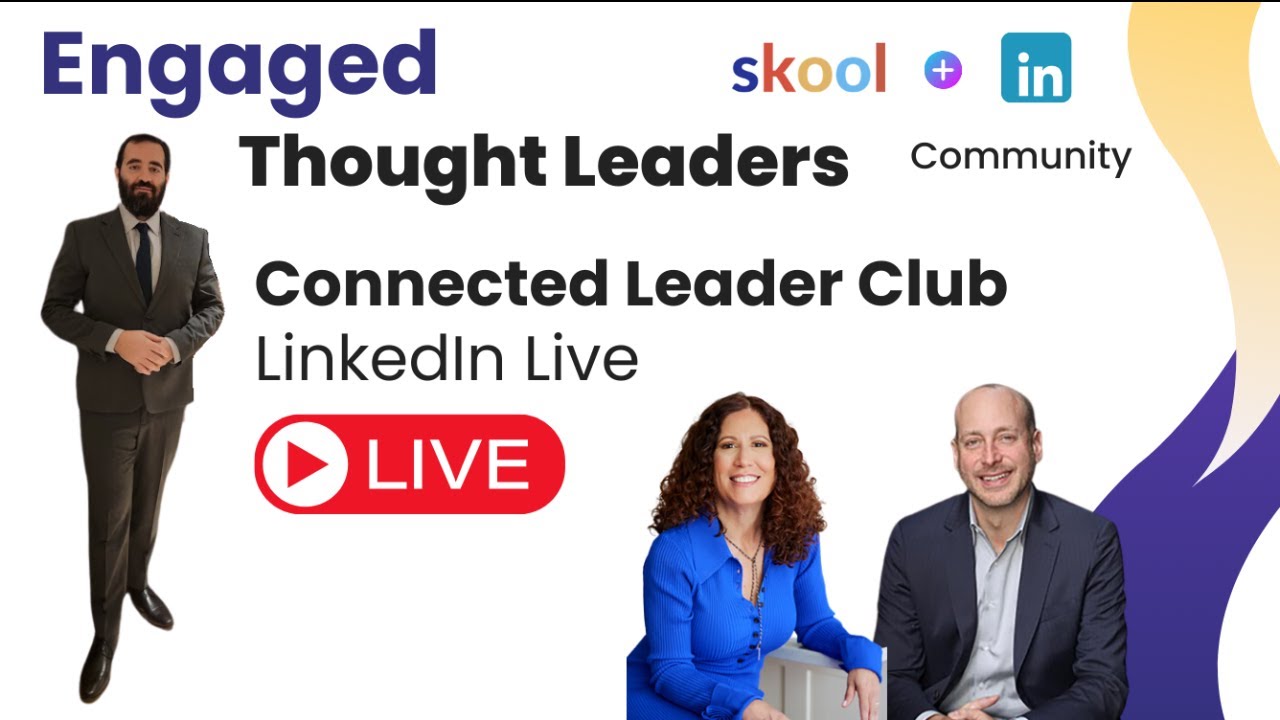
In this live interview hosted by Joe Apfelbaum, coaches Lou Diamond and Michelle Tillis‑Lederman introduce and explain their new program, the Connected Leader Club (CLC). They discuss the motivation behind the program—helping leaders who struggle to say “no” and who lack a relationship‑first approach—to develop a leadership brand, improve listening, curiosity, trust, and coaching skills. The course is delivered as a semi‑synchronous cohort with 23 short videos (total ~1 hour 45 minutes) and live sessions that include coaching, networking, and community challenges. Core teachings include a relationship‑first mindset, an “open” mindset (being open to being wrong), and practical steps before, during, and after conversations. They emphasize the benefits for individuals (better influence, sales, retention) and organizations (higher engagement, loyalty, reduced turnover). Participants become certified Connected Leaders and gain membership in the CLC, which offers ongoing content, thought‑leader access, and a forum for sharing. The program is industry‑agnostic, with cohort sizes ranging from a minimum of 8 to low‑20s, and offers an early‑bird discount ($300 off with code “EB”). The interview highlights the importance of community over isolated learning and positions the CLC as a solution to modern loneliness despite increased connectivity.
Chapters
Hey everybody, welcome, welcome. So glad to see you guys here on LinkedIn Live, YouTube Live, Facebook Live, wherever you're watching us live. My name is Joe Apfelbaum and I'm gonna be your host today. I have 2 special guests today that we're gonna be talking about networking with Lou Diamond and Michelle Tills-Leaderman. They are both members of the National Speakers Association. That's where I met them originally. And one thing I have in common with them— I have many things in common with them— one of the things I have in common with them is that we all wrote books on on networking, and we're all very passionate about building relationships and getting to know people and using networking to build our businesses and to help people also learn how to do that. And so now they— I was having a conversation while I was running with Lou, and one of the things that Lou told me is, hey, I got together with Michelle and we created this new course and this new program for people who are leaders that want to be able to learn how to network and how to be more connected and how to leverage their connections. And so I'm really excited to interview you guys, to ask you guys about how did this come to be, what are you guys teaching. So Michelle, do you want to quickly introduce yourself and tell everybody? I know you're first on the website, so I figured I'd pick you first. So tell everybody what you guys are up to, what are you doing, how this came to be, and then we'll put Lou on stage.
We are making sure that the people out there are leaders that employees want to follow. And it actually came about because I had to say no too often, and I don't like saying no, but there's only one of me, and, you know, you just don't have the capacity to say yes to everything. So I wanted to find a way to support leaders who are not getting what they need in their organizations, who understand that a relationship-first approach is going to make the difference in their influence and their impact. And so I was at I was at Influence and I was kind of telling Lou, I think I'm gonna go to this thing. I think I need to take on a partner. And he said, the Lou and Michelle Show. And I said, we should talk.
Wow, that's interesting. Yeah, no, that's awesome. And Lou, tell me more about like what you guys are gonna be doing. You had a really very clear agenda with how you guys are doing what you're doing. So tell me a little bit more about that.
Yeah, we found and recognized one very big problem in the world here, and that is we, as many means and ways that we can be connected, but we're not really connected. We're very disconnected. And the importance of being a connected leader is something both Michelle and I coach and work with some of the top performers at many different companies. And a lot of people don't have access to us. So when Michelle had mentioned that she hated saying no to people, I was in the same boat. And the two of us recognized our content connected together was one really powerful tool that leaders can understand. And we can build not only community inside organizations, but across organizations that can benefit from the skills that we help coach others to connect. So that's what kicked off the Connected Leader Club. And we created the forum, the course, and the ability for others to understand and reach out and connect with one another, which is something we've been doing our whole careers. You as well, Joe, a perfect example of this. Someone who's an unbelievable networker across many different platforms, technology, LinkedIn. You are like Mr. LinkedIn. And we recognize how valuable this is, and we want to help other people become this connected leader through the skills that we've combined together.
So I want to hear from you guys about some of the things that you're going to be teaching inside this course and this forum. Is there particular skills that people will come out of this program with? Michelle, do you want to go first and tell us, like, what do you guys plan— have planned here?
Absolutely. And we can go through a lot of the content, but one of the things is not only do we need to connect outward, we need to connect inward. A lot of people aren't connected with themselves, their own leadership brand, how they want to be perceived by others. And I always say your dinner conversation, what do you want them to say about you at the dinner table? And so that's actually how we kick off the content is learning how to determine and drive your leadership brand and helping the participants get clear on how they want to be seen. And then understanding if there's a gap between how they are seen and how they want to be seen. And then we build on those skills. We hit things like curiosity and listening and trust and how to take a coach approach and how to put relationships first and how to build and nurture those relationships. And I'm missing pieces. Lou, what am I missing?
You're missing all the— you're not missing much, but you're right. We're putting in how you can communicate and collaborate, how you can build relationships and adopt a relationship-first mindset, how you can also, by the way, build a leadership action plan. And along the way, I think it's important to understand that if you utilize all of these skills of building your own leadership brand and how you want to be seen, you could connect with others in achieving to do that. And we have lots of different ways on how we go about teaching and exploring this through the work that we've combined together.
Yeah, there's a lot of moments of self-reflection, but it's also a lot of sharing because what we wanted to create was not just an isolated experience, but what I call a semi-synchronous learning journey where we come together as a cohort 3 times so that there is live interaction, there's live coaching, but there's also live connecting. And that was really important for us.
So I see that you guys are teaching leaders how to advance in relationships, how to take their life to the next level, to be the leader that people actually want to follow. What does it take to really be a connector? And why do people need this type of training?
I'll let Michelle go first. And she's first on the website anyway.
One of the things I always say is there's only 2 things you really need to do to be a connected leader. And one is to show your people you care about them as people. And the second is to show your people you care about the things they care about. But there's a lot of things that go in to actually implementing those 2 ideas. And we don't necessarily think about those things when we have deadlines and we have, you know, demands on us. We're not focused on those 2 aspects of connecting. And Lou, I'll let you handle the second part of the question.
And I think the other part is we combine 2 big things, which is kind of how you need to be going into these situations before, during, and after you're making the connection, and And the other part that we really drill down on is how you actually can have better conversations and connect with them. Combine all that together, that's like all the years of Michelle's and my work together mixed together in all these different ways on really being the best leader you can be. So all the skills that you're scrolling through over here on the site in the course, we've plucked out not only the key aspect, but we recognize that you need this today. You need this today to be a better leader, to be a better teammate, to close more business in your sales. You have to be the connected leader and actually bring all of these connected skills that we have to business, to sales, to account relationships, to client relationships, and how you lead your company. The disconnected part, Joe, is a lot of people don't feel like they're gonna stay at their companies long, and there's a lot— there's a huge retention problem out there. We're trying to help organizations and leaders solve that so they can connect better with their teams so that they wanna stay longer and be more connected to the companies they work for.
And it is not just the retention, it's also the engagement. I love that you paused on the course outcomes because this is really what, what people will derive from the course. But it's not just the people, it's the organization that they're with because that's the benefits exponential because it's not just in that one-to-one relationships, but it is about, as you said, the loyalty, the retention, but it's the engagement and the discretionary effort that people put in because people don't work for organizations, they work for people. And they don't quit organizations, they quit people.
Yeah, and people don't know how to listen. They don't know how to navigate interpersonal dynamics, to reduce misunderstandings. These are the things that people need to learn how to do. And you guys don't have the time to necessarily do this one-on-one with people in the way that people sometimes might want it, but doing it in a forum, doing it with a course, putting the right people together in the right seats Can really help people be able to determine their leadership brand, embrace curiosity, communicate, collaborate, be focused on communication, productivity, leadership, and all the great things that you have here. In terms of mindset, I know that a lot of people talk about mindset and what is the mindset of a connected leader. Can you— I know that, you know, some people say that mindset is almost like 95% of your success. I've heard that many, many times. I'm sure you guys have heard that as well. What are you guys teaching in terms of mindset when it comes to this stuff?
There's 2 areas where we kind of hit mindset. One is obviously in the relationship-first mindset. How do we prioritize relationships in our interactions, in our communication, and everything we do? And there's a lot of different ways you do that. You do that through determining what level of listening you should be listening on. We do that through flexing our style to accommodate a more influential communication and, you know, more effective interaction. But we also focus on mindset when we talk about having an open mindset. And this sounds a little trite, but a lot of people think about openness as, you know, I'm open to you and I'm open to your ideas, and that's great. But I also talk about being open as being open to being wrong. And that's really hard nowadays. We get really ingrained and have a lot of conviction in what we feel and what we think. And sometimes we don't leave an opening to being wrong. And for me, that's an open mindset.
Yeah, I love that. Lou, what about you? What do you think about mindset and how does it play?
Picking up on that is we actually teach you what you need to do to step into those mindsets. You know, a lot of times we actually need steps to get us ready, almost like a warm-up, if you would. What's the thing you're going to do before you enter in a conversation to connect with somebody? What are you going to do during that conversation as it changes? And maybe most importantly, something that I think everyone knows is when a lot of people are not very good at the follow-up, but understanding the mindset of that leader of what you need to do before, during, and after is huge. So we give you those steps and we also work with you and show you different examples of that. Michelle mentioned the semi-synchronous nature of the course. There's a lot of great recordings of the two of us where we look spectacular, I might add. But also, we also are providing great content in our sessions live within the cohort where people are getting to share their stories. And we've created a great forum where they can post their videos of certain instances, talk about their personal stories and where they can connect. We would not be drinking our own Kool-Aid if we really didn't incorporate a connected culture within the Connected Leader Club, something that we think is absolutely essential. And we want to mirror all of the things that we've been living and breathing each and every day within our work.
That's really powerful, bringing people together. showing them how to be a connected leader in the forum and the conversations, giving them the training, giving them the mindset. It's a no-brainer for organizations to get involved. Are there particular organizations that want to benefit the most from this type of training or this type of program that you guys are thinking?
I always say we're a little industry agnostic. We actually want the cross-section. In our current cohort, we have entrepreneurs, we have internal corporate professionals. And at first we thought like maybe we should have just an entrepreneur cohort and just a, you know, corporate cohort. We're like, no, there's so much powerful sharing and learning that can happen across the way. And I, I love how Lou said, you know, we drink our own, our own Kool-Aid or so, um, in that we really wanted to create connection with the course. And so in every module there's a, a challenge question or a conversational starter so that we can create conversation both within the course, as well as when we come together live, so that that is a continuous conversation. We don't want people taking the course in isolation, which is why we do it as a cohort.
Are there examples of things that people have said about your programs? Maybe, Lou, you can share some things that people are saying about this or that I've said about it.
Yeah, well, it's early on. We've had our initial cohorts going on right now, and just the general energy, by the way, very loving, and we will be promoting more of this over the next few weeks as we're recording this here in the summer. We are building up to a very important big fall cohort when everybody seems to not want to be on summer vacation, but really want to be able to use it. The things though that people are saying is that they're starting to see immediately how they can look at their own personal brand and rethink about how they're positioning themselves as a connected leader. and how to take those skills and the techniques to put into play every day so we can start changing behaviors. That's what people are starting to love within our interactions. And that's what I think, but they're also getting a chance to get a little bit of Ask Lou and Michelle within these group sessions as well, which is a lot of fun bringing our coaching skill sets to the many. And we love doing that as well. And obviously we play well off each other. She's my connecting sister from another mister and I'm her connecting brother from another mother. So this is the perfect place where you wanna feel like you're in a family of other connected leaders.
It's interesting. Go ahead.
I was going to say, I'm going to embarrass Lou right now because just today he was telling me about somebody who's in the cohort who emailed saying that this 30 minutes, this little piece of advice that I got during our live session had a huge impact on how she approached a conversation. Lou, you can say it better, but—
That sounds good. People are putting into play what we're doing right away, which was also a big thing that we wanted to do and be able to make it actionable. And also make it something that they can learn from and help others and teach others with. This is the coach approach that we talk about here is we're not only creating connected leaders, we are creating connected leaders who can coach and lead to that next level so they can move to that next plateau, so they can exceed within their organizations or their entrepreneurial endeavors, whatever it might be. That's where our biggest goal is. We know how to help people get there. We want as many people to use this methodology because we know It works.
You mentioned something on the website about being certified. Can you speak to the certification process or any of that?
I'm trying to remember where we talked about being certified. We're both certified coaches, if that's what you mean.
Well, no, I think he's talking about the fact that once you've completed the Connected Leader course, you have the opportunity to join and become part of the Connected Leader Club. And you've been certified for our certification after you've taken the CLC course. And with that, there's a lot of other benefits where obviously we are creating that community of the CLC where those who've taken the course now have access to many other types of programs, great thought leaders, great industry expertise, a library of content that you cannot believe how much stuff we've had that isn't even in the course, other additional stuff that's at your fingertips. But also most notably, we're also trying to create an army of connected leader Coaches who can use this certification also to help possibly lead other cohorts down the road where we can actually bring that certification to the level. It's in the early stages yet, Joe, but that's the goal and that's the plan of where we're having people go.
It's really—
I'm so glad you knew what he was talking about.
It says what on the website? It says become a certified connected leader. So that's kind of like what I thought. Okay. Yeah. But I see that you guys have that going on, which is really great. And I feel like a lot of organizations They, they don't put enough emphasis on getting their leaders to be those connectors in the organization. And that's why people leave, because they lack a sense of community. And a lot of companies are seeing this right now. And, you know, like, school's becoming all the rage because of the whole community aspect. We have several communities in school, and people are like not even valuing courses as much as they're valuing the community that comes with the course these days. People are like, join the community, you'll get the classroom as part of it. Before, they used to say, join the chorus and you get a group as part of it. Now it's kind of like the main thing is community. People are more connected than ever, but they're lonelier than ever. And that's a real big thing going on right now. So you guys are teaching people how to do that. So kudos to you. And organizations that invest in this are going to be the top organizations because they're going to have the top people.
That's a really good point because we were— we built this thinking it's for these individuals who weren't getting what they need, who had that drive, who had that motivation. to continue to excel. But what we found was that instead of one person coming from our organization, the organization is saying, I want to do a private cohort. And so we're loving seeing that as well. We're now running a couple of internal cohorts, which is amazing for that, what you just talked about, that connection to the organization and creating a better communication across their organization. So in one organization, They have leaders that don't work together at all. It's a huge organization. None of the leaders work together, but they're all coming together for this cohort and building those cross-functional relationships.
That's incredible. That's incredible. And having organizations that you're able to do those cohorts together can be really helpful, especially when you guys have the systems, the processes, the skills, the frameworks, the checklists, all the things that people need to do. How many hours does somebody need to spend learning inside the program?
It's not as much as one would think. That's actually a really good point. We were dripping out the content for those that are in the cohort when they have it. And the videos, 'cause we both have a mantra of be brief, be bright, be gone, really short, getting to the point. And we don't want people to not take the content we have and worry that it's gonna be too much of a burden. What was the cumulative number of hours, of minutes that we had or hours that it was?
It's an hour and 45 minutes. It's 23 videos. Average length of video is less than 5 minutes.
Right.
So we did want this to be an easy lift. There's activities at the front that will take a little time, which is why we are opening up the fall cohort now and letting people kind of come in the early bird so that they can do some of that leadership brand work so that they can work on some of the initial connection stories and assignments. In time, because once the drip content comes, you might be spending 10, 15 minutes a week. The activities are not heavy lift.
Okay, awesome. Are there any books that people should be reading that you guys recommend? Obviously, besides the books that are behind your wall over there.
I don't know if they can see my wall. Well, there we go.
No, but are there any things that people should be reading or any programs that people need to be taking besides 130 minutes or whatever, the 125 minutes or whatever?
I mean, nothing above and beyond what we're already bringing to the table here.
There's—
we've taken what is probably about 6 books worth of content and bringing that connected skills into the course. It's kind of like the best of within that. And we also recommend certain other thought leaders and whatnot who have great content. But our goal in this whole thing is to take the content and figure out how you could look at it on yourselves. I think a lot of times people have it very generalized and when they get different concepts or ideas, we're trying to put the ideas right into play for the people who are in the cohort so that they can say, how could I use it for myself? And that's what we're trying to do, connect all of this great content to you. And that's what we'll do. So the content is kind of all of our content in the past, Joe, put together. We may recommend a couple of guest speakers in the club down the road. I think there's somebody here with a really nice California tan who would be really, to speak to the group of Connected Leaders himself.
We're definitely tapping you on the shoulder, Joe. But that's part of what the community is about. Our goal is to create foundational skills, a common language, and start building those connections from the start. And that's what the course is about. Once you've gone through and you've become that Certified Connected Leader and you're invited into the club, that's when the doors fly open. And that's when we're bringing in people like you and Dorie Clark and, you know, Michael Bungay Staner and all these amazing authors and speakers and thought leaders to kind of just sprinkle their expertise in the community. We've created an ask-offer format so that people can give value and derive value and be okay with asking because asking isn't easy. We really encourage the ask. And, you know, all the content that we didn't want to overload people with, in the program, that they have access to it in their own time based on the topic that's most important for them to dive into deeper.
When somebody signs up to the program, do they get like lifetime access to the courses or how does that work?
So when you complete the course, and we'll give you all the plugs right at the end here where everybody can go, you are then, after you've completed the course and you become certified, you will have, you basically have earned the right to become a member of the CLC, the Connected Leader Club. And at that particular point, you'll be able to join. And that club annually will have a membership where you can have access to all this content and all of these incredible thought leaders that we have in our connected community. So it's a first step into getting into that community of very powerful connected leaders, other CLC members, if you would, like those out there that we've already taught and those that have already had the experience from some of our great learnings in the past.
Awesome.
But for the course, yes, they would have access to everything within the course. I don't think there's a time limit for their cohort.
Okay.
How many people are in a cohort?
It ranges.
It ranges. So we usually say we want a minimum of 8. So when we're doing the cohort within an organization, we usually say you want at least 8 people because you want to have that conversation. We haven't capped it yet, but we might.
Yeah, I think a sweet spot of this goal is in the low 20s is probably right for the cohort. And that's—
I might have said teens, but that's okay.
Just giving it in the range, because one of the things, Joe, we've learned is there are some exercises and interactions within the live sessions that people have. But in the same sense, we want the ability to have the access to the people that are there. What Michelle and I have been figuring out, at least for this initial fall cohort, is based on how many people come in and how signed up, we may break the cohort into multiple cohorts. So that there's the right mix of people that we can have, that people can get that networking opportunity. So we're judging it to see what works best. We know what works best from a lot of in-person stuff, but we want to see how this all works starting the fall.
Awesome. So if somebody wants to sign up, now's the time to do the call to action. Go ahead.
Yeah, there you see, I learned from the master here. Head on over to connectedleaderclub.com. You can do— there's lots of links and you can actually go connectedleaderclub.com/learn. The-course, or just click Join the Club, and that's going to take you right to signing up for the fall cohort. It is— we're recording this here in, in June. As this airs throughout the summer, we will be doing more communications. But again, it's connectedleaderclub.com. Click any of these buttons. It's going to point you to the fall cohort starting in September.
And we do have an early bird special.
Yes.
Okay.
I'll tell you all about it.
Yes. Flip to her so the other people can see the early bird special.
So if you use the code E for early and B for bird, 300, you'll get $300 off the course. And I think we're having that through the end of June. So, and as soon as you sign up, you can go right in and start working and start connecting.
I love that. I just tried the code and it works. Well done. Well done. All right. Well, thank you so much for being here. Any final words? Michelle first, then Lou second, because that's how it's on the website.
I can't wait to connect with everybody out there. That's my favorite part is the live sessions. So we can see you, but I'm on every comment. I am there with you. And that's what we wanted to create. So keep connecting.
For those in Joe's network, and I'm part of that network for many, many years now, this is right up your alley. All of the great content that he messages and talks about, the CLC is right on brand with everything that you're familiar with. And you get a chance, if you haven't had access to Michelle or myself, you'll get a chance to really dive in and understand the power of this connection and what it can do for you in becoming a CLC, a Connected Leader Club member.
Awesome. Thank you very much, Lou. Thank you, Michelle. And we'll see you guys on the other side. Appreciate you guys coming over. Make sure that if you guys are watching this on LinkedIn, give it a like, leave a comment, and hit the repost button so more
More from Joe




How to Beat the Algorithm: Remove Hidden Watermarks & Scale Content with evyAI






