Assumable Loans – The Hidden Advantage in Today’s Market
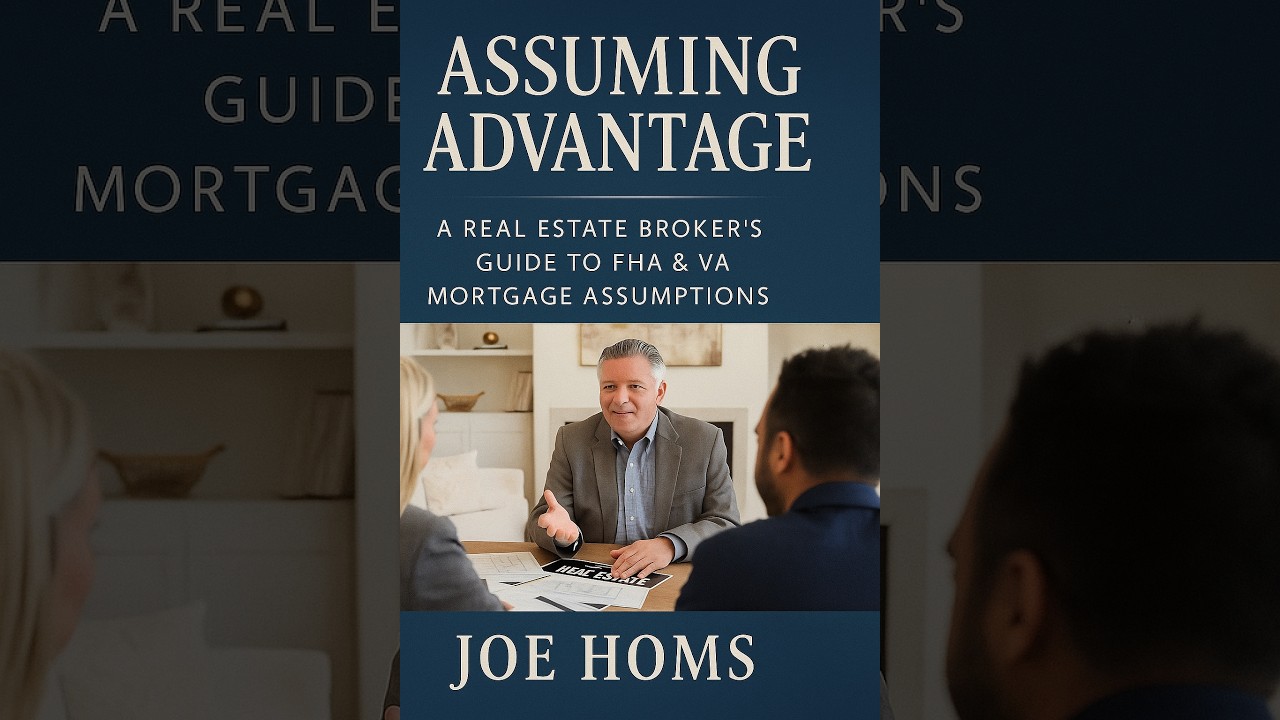
In this hour‑long BiggerPockets webinar, seasoned flipper and mentor Joe Homs walks a live audience through the concept of assumable financing as a strategic tool for real‑estate investors and agents. He begins with a brief bio, then defines assumable loans, explains which loan programs (FHA, VA, USDA) are assumable and why conventional loans are not. He outlines the assumption process, qualification requirements, typical timelines, and how to handle the equity gap with cash, second mortgages, seller carry‑backs, or private money. Homs delves into VA entitlement nuances, including how assuming a VA loan affects the seller’s future borrowing. He debunks common myths about assumptions, discusses lender attitudes, and identifies scenarios where assumables add value—large interest‑rate spreads, motivated sellers, and moderate equity. The session covers practical sourcing tools (Pelago, ROAM, PropStream, RetroRate), demonstrates live property searches in California, Indiana, and other states, and walks through deal analysis, cash‑flow calculations, and offer structuring. Homs shares a market outlook for California, tax strategies such as cost segregation and step‑up in basis, and offers free resources (books, website, Calendly). Throughout, participants ask questions about cash‑flow targets, seasoning periods for cash‑out refis, commission structures, MLS advertising, and multi‑state entitlement. The webinar ends with networking introductions and a reminder to access the recording.
Chapters
I think, I think that was the computer talking to me. But, um, I think some of us have met you at, uh, at the bigger, uh, the BPCon conference there in Vegas this past year, and you were really willing to share your knowledge. We all definitely appreciated that and your wealth of knowledge. So I think we're going to get a ton of value out of this. I hope you don't mind, but I kind of stole your bio from your web page. So I figured I could just share a little quick recap with everybody. It's, you know, for those of you that don't know Joe, Joe brings over 50 years of real estate experience as a full-time professional house flipper and mentor. He actively sells more than 20 homes a year and has closed over 600 transactions in the past decade. Known for strong negotiating skills, Joe helps buyers secure deals, often saving them an average of $10,000 through his exclusive home acquisition system. While helping sellers maximize value with professional marketing, contractor support, and quick all-cash options. As an experienced Orange County flipper, Joe brings deep market knowledge and a hands-on approach to every deal. So just a quick little bio of Joe there, and if you want, you can go ahead and get started. We definitely appreciate you taking the time though, Joe.
Okay, let me, uh, let me share my screen here. I mean, everybody see that, correct?
Yeah, we can see it, Joe.
Okay, perfect. We're talking about assumable financing, and this is something you can do anywhere, honestly. And that's what I'm going to talk about. Again, who am I? And some, some of this we're going to go through quickly. It is being recorded. So if you want to go back later and take a look at it, I guess I need to update my slide here, but it is pretty much me in a nutshell. Here's my direct contact information, and if you need to get a hold of me, there's some other options as well that I'll go over later. So, you know what we're going to cover today? Building a team, what assumable loans are and what they're not. Which loans are assumable, how assumption works for non-veteran buyers on VA loans, equity gaps, cash requirements, creative solutions, common myths, lender pushback, and how to navigate the real-world obstacles. When assumable loans make sense and when they don't, how agents and investors can use assumables as competitive edge. Enlisting and negotiation. We're going to talk about sourcing deals. We're going to actually analyze some deals. We're going to look at making offers. We're going to look at case study. And then at the end of the day, I'm going to go into my market outlook, which is my crystal ball and what I think is going to happen here, real estate related, in the future. Um, hold on real quick. Let me let some more people in.
Um, I got a question.
Yes.
How much money, like, would you say all this would start ringing in realistically?
Money in which way? What do you mean?
Like, as in, like, like just an average salary, because I'm looking into, like, doing all of this.
So.
So I will go over that in the slide. But the bottom line is you need to be able to qualify for a loan. to be able to buy an assumable. So if you can go to a lender and they can qualify you for a loan, and you're looking up that price, which is what I'll show you later, you would qualify for something like this. It's not something that you're going to take over subject to or anything like that. This is an actual purchase of a home. It's just that you're assuming a low interest rate. Okay. As you're out there, you know, you're gonna be talking to real estate agents. Make sure that they're knowledgeable. They must be respectful to VA sellers, and I'll go into that later. You can use Pelago. Pelago is my website here in California and some other states. I'll go through that as well. Escrow and title is important because escrow needs to— and we use escrows here in California. I know some of you In back east, use attorneys. So make sure whoever you're working with, bottom line, is somebody that's knowledgeable in doing this stuff. At the end of the day, you know, stagers, photographers, home inspectors, appraisers, all that you need to, you know, kind of be ready to do. There's another person. Let me let them in. Okay, what assumable loans are and what they're not. An assumable loan allows a qualified buyer, like I said, to take over the existing mortgage term, including interest rate and remaining balance. The ones that work are FHA, VA, and USDA. This is not for conventional loans. This is only for government-backed loans. Why assumable loans? So many are 2.5% to 4% range. Market rates remain significantly higher right now. Buyers gain lower payments. Sellers gain larger buyer pools. Investors gain creative leverage. FHA is fully assumable with lender approval, and that's kind of the crux of it. You do have to go through an approval process and the lender has to agree to this. I'd say 90% of them, maybe even up to 95%, approve, but there's always those few that say no and you just have to deal with it because they may not be government entities, but it is a government-approved loan. VA are assumable by civilians with entitlement considerations, and we'll talk about that. USDA loans assumable with income qualifications, and that goes for all of them. And again, conventional loans are not generally assumable. Basic assumption process: you put the property under contract, buyer applies with loan servicer. And that is literally, you ask the seller, hey, you know, I'm interested in assuming this loan. And the bank says, okay, well, here's our cost to do that. And please come in and assume the loan. And here's our paperwork and here's the process. Okay. Underwriting approvals, just the same as any other loan. Assumption agreement executed, title transfers. Typical timelines, 30 to 90 days. Right now we're averaging around 45 days.
Okay.
The equity gap problem, and it's, you know, depends on where you're at and what you're looking at, may not be a problem, and we'll go over that as well. Buyer must cover the difference, so the purchase price and then the remaining loan balance. So, for example, if you're purchasing something at $500,000 and the loan balance is $500,000— I'm sorry, $300,000— then obviously there's a $200,000 gap there. So solutions for that is cash, second mortgages, seller carrybacks, or private money.
Money, money.
VA loan entitlement. Uh, hold on a second here. I'm gonna take care of money, money there. Okay, money, money goes. Uh, if you're a non-veteran, you can assume a VA loan. The thing is, the seller's VA entitlement remains tied up with that loan. Veteran may lose ability to use VA again. Release of liability, entitlement restoration are critical. So in a nutshell, what this means is that yes, the veteran can say, let's— I'll let you assume the loan, but he needs to— he or she needs to understand that he cannot go out and get another VA loan someplace else. Okay, the stuff that we're closing, the veteran passed away. The wife needed to sell the home, so it was kind of a non-issue. The veteran has very little or no equity in the property, and they're getting deployed someplace else, and they need to sell the property. I mean, what other choice do they have? They can rent it out, but a lot of them don't want to do that, so they'll give up their entitlement. So there's lots of different reasons. I'm working with a couple right now that's getting a divorce. And really, it's, it's either divorce or foreclosure and do a VA assumption on the loan. So that's kind of where we're at. And those are the, those are the ones that agree to it. Common myths. They're automatic. That's not true. Banks hate assumptions. Partially true. They take forever. That, that really depends. Most of the time, like I said, it's been taking about 45 days. Only veterans can assume VA loans, and that is totally false. Anybody can assume it. It's just that they lose the entitlement. So that's something that you have to be respectful of, of the veteran, and make sure that they're aware of that, and then they can move on to another property at some other time. They do get their entitlement back when it's paid off, but You know, if you're buying something to assume it, and we'll talk about that a little bit later, what my plans are, it's, it's going to stay in place until it gets paid off. When assumable loans make sense: large interest rate spread, moderate equity, motivated sellers. I don't even look at assumable loans until they're on the market at least 45 days or more. I let the— especially if it's a VA, I just let that go through the normal process. If it's FHA, that's a different process. FHA, you actually have to live in the property. So you want to look at them right away and they want to accept you assuming that loan. It's a normal transaction. It's not anything different than what they would receive from anybody else. It's just that you're assuming the mortgage. Payment-sensitive buyers or creative investing. Agent investor strategies, market assumable listings aggressively. I'm talking to those who are listing agents out there, or agents. Prescreen buyers for cash gaps, structure secondary financing. We'll talk about that later as well. Educate sellers early, build lender relationships. Remember, the seller has to agree to all this stuff. So If you're a listing agent and you have an assumable loan that you've discovered on a property, make sure that you educate your seller so that everything goes smoothly at the end. Final thoughts: assumable loans are not shortcuts. They're financial instruments. Professionals who understand financing win in a tight market, which is what we're in right now. Very tight market. Sources of capital, how to fund your deals, money flows to the deal. If you don't need the money first, learn how to find distressed properties first. There will always be a buyer or partner if the numbers are good. There are more— there are more money— there's more money available than deals. And that's what we find out here in California. The problem with us in California is there's not enough deals. for us to buy as flippers. Wholesalers have kind of taken over the market, and they are just incredibly crazy in the amount of money that they want in between. And those deals aren't for the professional flipper. They're for brand new amateurs who think that they can flip property, go into the market, and end up losing money at the end of the day. Okay, so let's kind of get into the nitty-gritty. I'm gonna go to my website first. And if I can get to it here, hold on. Okay, so this is the PELICO website, and we're gonna go into Riverside. I'm gonna get rid of Orange County here, but I've made a couple of assumptions here, and the biggest thing is has assumable loans. And so now this is going to click through all the properties that have assumable loans. And then the other assumptions I'm going to make is I want at least 5% income. So again, you can see it as it sorts out. So we'll take this first one for an example. The website says that you can rent it out for $5,000 a month. The PITI on this is $4,400. Hold on, let me let one more person in here real quick. $4,447 a month. And if we, if we click on it, it'll go through the website there and it'll give you all this information from that property. This is what Pelago does. So you can see all the ARV and in the area you want to try to stay as close as possible. This one looks like it's the closest one. And maybe a little bit smaller. That's why it is increasing the size here. But at the end of the day, this goes through everything you need as a flipper if you're going to flip this property. And obviously, the way you're looking at it now, it does not have any rehab costs. Normally, 10% is what I use for rehab. So if I were to put this in 10%, I'm looking— oops. That's more than 10%. I'm looking to lose $84,000, which means I can't purchase this price— purchase this property at that price. I'd have to purchase it less. So let's go down to— whoops, let's go down to $600,000. And this website's free. You just sign up and you can use it for free. Not a problem. And you can see that if I were to purchase this property for $600,000, Put 70 into it, carrying costs, selling costs, everything. It's got about a 2.9% return. What I usually look for is a 10% return on properties like this. So if you're looking for something in California, this website also works in Florida, Oregon, Washington, parts of Texas. If you're not in those areas, then we're going to jump over to Rome. And ROAM is, it's called With ROAM, and it's going to give you the same basic information that you have on Pelago, but in different states. And so let me jump over into a state. Does somebody want to give me a state that they want me to look up? Mark?
Indiana.
Okay, let's try Indiana. Okay, so we're gonna plug in Indiana.
Is your test done?
Yeah.
Hooray!
Hey, iPhone, you're unmuted.
Yeah.
We're gonna do a little bit of sorting, and I'm gonna do— let's do less than 400,000. Just kind of sort things down. And we're looking at a little down. We're looking at less than 4% interest. And so you can see it starts sorting these properties on the right here. So let's find one with a really kind of small interest rate. 2.6, 2.7. 2.6 looks like it's probably the least expensive so far. Let's go back up to the 2.6. Are you familiar with, uh, Mark, uh, with Indiana?
What was that, Joe?
Are you familiar with Indiana?
Yeah, I'm further north up near South Bend. I know last time you and I checked, it seemed like there was more assumable loans down near the Indy market, which is where this particular property seems to be.
Okay, and as you can look here, you have— this is a VA loan, 2.6% interest. This is the loan amount, $251,000. It's on the market for $299,000, so you can literally buy this property with $47,000. Um, the next thing you'd want to do is figure out, okay, um, you know, I've, I've got the mortgage payment. which is right here, $1,550 a month. Then you need to figure out how much the taxes are, and then you need to figure out how much I can rent it for. So this won't give you all that stuff. What I use is PropStream, and we'll jump over onto PropStream real quick. Let me log in. PropStream is a wealth of information. It is literally Nationwide. So I'll put in the address here. It'll find it, and it'll give me pretty much all the information that I'm looking for. So let's go into details. Estimated value is $294,000, and then we were back here. It is— where'd it go? Nope, not that one. This one, uh, it— the home price is $299,000. So you can see it's probably a little bit overpriced right now, which is not a problem. But what I want to do here is I want to go to the mortgage. I want to confirm that it's a VA loan, which is it, which it is. It's 2.9%. And then this is the estimated payment on the loan. Okay. And so again, you need to figure out, um, you know, how much this would rent for. If you go on here, you can see that the rent is $1,766 is what PropStream is telling us. So from, let's call it $1,200 to $1,700, you have another $500 there of a gap. You have to remember you have taxes, you have insurance, you have all that stuff. At the end of the day, if I could cash flow on this property, then this would be an interesting property that I would look at acquiring on a VA. So these are properties that, you know, not necessarily here in California, but if you're looking at other states and you're looking to invest in other states, you know, find properties like this and, you know, put offers in them. I've honestly, I've seen them as low as a $10,000 to $15,000 gap in between. Which means you could buy the property for $10,000 or $15,000. Um, as long as it cash flows, it's, it's a good deal at the end of the day. Uh, so that's, that's my recommendation, and that's what I am looking to do, is buy properties here in California. Um, I want to buy them, and I want to, uh, do a cost segregation on them. I want to start pulling out my money from my 401, and as I purchase these properties, I should hopefully have enough cost segregation write-off that I'm not going to have to pay any money on the money that I pull out from my 401. So that's my game plan at the end of the day. Does anybody have any quick questions on this before I move on? Okay.
Did the 2 websites, Pelago and ROAM, is only single-family residents, or is it also multifamily?
They're both supposed to be multifamily, but I have not found any multifamily.
Okay, thank you.
Yeah. The other one you can go to is RetroRate. RetroRate's a little bit more different in that it is literally for agents. If you're an agent, you can subscribe on there for free. If you're not, then they may charge you per month, and there's no reason to pay per month. You can go to Rome and get the information for free. We just went through this Pelago Rome retro rate, and this is kind of a little like, you know, if you're looking to invest, you know, don't worry about So much about how much time it takes, just focusing on your best deal possible. Um, at this point, it's, it's very important lesson that you need to understand. Don't let emotion take over the deal. It's inevitable that you're going to be excited, so be calm, stick to your numbers, and get ready for that real excitement. Don't ever show your emotions when you're looking at a home or speaking with seller. Okay? And that's— this is probably one of the first things that I teach my buyers, especially when we're going to open houses, and especially nowadays everything's recorded. Like, if you got questions, wait till we get back in the car and you can ask me those questions. Okay, uh, your offer is only as good as the agent you're working with. Uh, please make sure you're specializing with somebody that knows what they're doing, especially, uh, if it's a VA loan. Uh, your chances of acceptance, especially on VA loans, after 30 days on the market If it's an FHA loan, then yeah, go ahead and put an offer in. Uh, VA offers require a credit back for non-allowable fees, and this is normal in a VA transaction. So when you put an offer in, you're going to have to ask— and here in California, we ask at least a $10,000 credit— and those are non-allowable fees that are going to be paid by the seller, even though you're not a veteran.
Mm-hmm.
They, they go through the same process. It's not any difference. So you need to ask for those fees back. Make sure that your loan contingency remains in place. I'll be done in a minute.
Make sure you—
make sure that your loan contingency remains in place until the full Approval of the bank, and we have a special, uh, CAR form here in California where I check that. Okay, so make sure that you check that, that, uh, it's in place until the end of the transaction.
Okay.
Barbecue bacon burger, barbecue bacon burger. Jeffrey.
You're not muted.
Okay, uh, make sure veteran knows they will lose their entitlement, so be respectful, uh, of that. Uh, case studies. Okay, so here's one of the properties that I have an offer on currently. VA purchase. It's a VA— did you have a question real quick?
No.
Uh, VA purchase with, uh, purchase price of $429,000, 4-bedroom, 3-bath, 2,176 square feet. MLS listing, believe it or not, 633 days on the market. It's a divorce situation. Rent rate is $2,600 a month, taxes $400 a month, insurance $150 a month. And the mortgage is— Dude, I don't want to go to Epstein Island. So let me get rid of one more here.
I wonder where those came from, Joe.
It happens. Um, offered at $375,000, countered at $415,000, hopefully get accepted at $410,000 with $10,000 credit and a 3% commission. If I get this property and it's California, and I'm pretty much exclusive to California, I know it's— you're going to say why. I say why every day, but I've always been in California. I don't have any reason other than if somebody's on here and they find a property for me out of state that I'm going to cash flow really well on, that I'm not going to spend more than $50,000 to $75,000 in the gap. Please reach out to me and we can discuss it. But this one's going to cash flow $450 a month. So that's kind of what I'm looking at. If I— again, if I can stay here, this is about an hour and a half away from where I live. Yeah, you know, it's, it's manageable. I manage all my properties as well. So this is kind of the numbers and the process you have to go through on these type of deals. This is the property. That's one of the photos. So what's happening now? Historically low inventory here in California. I don't know about everywhere else, but yes, question. Sorry, just quick question.
I'm curious where that property—
what city is it in, or what county?
Victorville.
Ah, gotcha.
Thank you.
Yeah, Victorville. There was a big boom out there in Right after COVID, um, I know Michelle works for a builder, and I'm sure they were building lots of stuff out there. So right after COVID, the interest rate went down to just about nothing, 2.5%, and that's where you'll find a lot of these properties and, and the reason that they're that low. You'll also find a lot of them near military bases, especially if it's VA financing. You'll find a lot of them. So look around military bases and you'll find these properties. And again, if there's some distress out there, then that's what you're as an investor looking to do. Turning in, it's turning into a buyer's market right now in California. Stock market at record highs. I can't believe it. It's like mind-blowing where it's at. A slight growth appreciation will continue, and I'm predicting that for this rest of this year. And especially going into next year, hopefully the interest rates will start decreasing and you'll start seeing more people come into the market. And what does that do? Supply and demand that drives up the home prices. So if you're looking to buy a house, I would suggest earlier rather than later. Foreclosure rate is extremely low. I mean, I keep seeing YouTubers out there saying it's high. It's not high. Uh, it's still low compared to 2008. It's like nonexistent. Uh, margins will continue to become compressed. I'm talking about flipper margins. And then what the heck will Trump do next? Who knows? It's just you wake up every morning and you see something else happening in the market. Um, you know, I was predicting that we were going to go into a recession. Um, I, you know, it may be 12 to 16 months away. I'm not sure that we're even going to get there. Depends on what really happens this year. Things to watch out for: trade war with China, jobs report, foreclosure rate. Even though I said it was at a low— jobs, you're starting to see a lot more people losing their jobs, especially in the tech industry. You don't have a job, you can't make your mortgage payment. That's going to rise the foreclosure rate. So keep an eye on those things. Um, I want everybody to have a gift, and if you go to my website, johoms.com, and books I have written— I've written 7 books— and if you go there, these are all free. It says buy on Amazon. That's going to be free until the end of this month. So if you want to, you know, grab any of these books that I have there listed, uh, these are the first 4, those are the last 3. Um, I have the one on the top right. I have met with over 500 people from BiggerPockets in the last 10 years, and that's literally in person that I've met with them, and, um, they've been kind enough to buy me coffee or lunch, and I talk about, uh, you know, what is it that you're looking to do in real estate and hopefully guide you in the right direction. And that's it. It's just a cup of coffee or lunch. I don't ask for much. These books, once they're on Amazon, they're like $10. Okay, so grab them before they go on Amazon. If not, it's not the end of the world. It's $10. I'm starting to flip a lot more mobile homes out here in California as well because the price is a lot lower. It's a quicker Turnaround as well. So these books are all available for free, hopefully till the end of the month. Questions? Any questions?
Joe, so that, uh, website in the very beginning, the, uh, Pelago website, you're saying that only works for a few different states, correct? And, and then those states that it doesn't apply to, then it's— ROAM is the, the best option, correct? Okay, awesome. And then I'm assuming you can have more than one assumable VA loan At the same time?
Correct.
Okay, awesome.
Joe, I had a question as far as— so I am retired military and I've got multiple VA loans. If I go out and assume a VA loan, does that totally lock out their entitlement or do they still have the remaining cap For the county that they're in to purchase another home?
That's a great question. Here in California, there's, there's a big gap. Okay. If you sell something here in California, there may not be anything left on the entitlement. But if you're in a different state and you haven't used the whole cap, then yes, you're still entitled to use the rest of it. That's a great question.
Okay. Thank you for clearing that up.
Yeah. Thanks for the content, Joe. I have one question. What is a typical cash flow you look at in California, for example? So I used to say $200,000. $200,000 will get you in trouble here in California. You know, one plumbing problem, you know, may cost you $2,000 or $3,000 for a new water heater. There goes your $200 cash flow. I, I like to go no more, no less than at least $400 here in California. And it also depends on what kind of, what kind of investor you are and what you're looking for. I try to look for as much write-off as possible, and that's what come— I'm going to start using, you know, different ways to write off. The 100% depreciation on the property when you first start is a great way to do that. And at the end of the day, I'm literally going to own these properties till I die. If anybody or everybody's familiar, maybe you're not familiar with what happens when you die on a property. Hopefully you have it structured correctly in an LLC or in a in a trust, and that property, you know, goes to your relatives, there's a tax program that's not programmed, but a law that says they would get a step-up in basis. A step-up in basis is, let's say I bought the property for $100,000, and then 30, 40 years later, you know, like it's your single-family home, now it's worth $1.4 million. If I were to sell that, I would have to pay taxes on that. However, if I pass away and it goes to my wife or to my children, they have what's called a step-up in basis. So the property's valued at the price the day that I pass away. So if they were literally going to sell it the next day for $1.4 million, they would not have to pay anything in capital gains. The only problem is I have to die. So it's not good for me. It's good. It's good for my kids.
Does that step-up in basis immediate amount affect the annual tax rate?
Okay, so maybe can you tell me a little bit more? Well, I just came to mind when you said that, then your, your step-up in basis now says, okay, now I've got the home at this higher price. Does Prop 65 protect me from my property taxes going up that year? Okay. In California, the only way it protects you is if you actually move into the property. So one of the kids or the wife still there is going to have to move into the property. If not, then they are going to reassess that property At the 1.4. Okay, I got it.
Thank you. Yes.
And I don't know how it is in other states. I have no clue, like, when something like that happens, if, if, you know, the taxing authorities come in and reassess the property, because most other states, like, if you don't have any property taxes in some states, but if you do, most of them assess the property taxes every year. In California, we don't do that. We only assess it once when you buy it, and it's 1% of the purchase price, and it can only go up 2% a year after that. Any other questions? Hey, Joe, I have a quick strategy question for you. From your perspective, what's, what's the real advantage of targeting homes with assumable loans as potential flip opportunities? Because I'm just trying to understand, like, where the leverage is in that. I don't, I don't know that there's much leverage in that other than if you found something that, you know, was $5,000 or $10,000 gap. But, but then you're, you know, you're comping that out at The ARV. So assumables are more for a buy-and-hold situation. And I know you're in California, and I know you're in the Bay Area. You're just as bad as me down here with the prices. There's not much in California that cash flows. This is an opportunity to find something. Yes, it's going to be remote. But they can cash flow. And if you don't, you know, necessarily want to go to another state, then, you know, this is an opportunity for you. And also, if you're looking to buy— like, if somebody's looking to buy a house for themselves and only wants to put a little bit of money down and assume a really low rate, this is a perfect opportunity for them to buy something and move into it themselves. FHA, you have to live in the property. VA, you do not.
Okay, thanks.
That makes sense.
Anybody else? Any other questions? Any questions about real estate in general? California? Who's going to be the first one to find me a property out of state? The cash flows and Make sure you come with a property manager as well, because I can't do that from here.
Hey, Joe, I got a question. So I have a 6-unit under contract right now, and I'm doing like a value-add play, like over this year if I get the property. At what point is there like a seasoning period of like seeing that new boosted NOI to do a cash-out refi, or can you just do it right away?
Um, you say they want a year of seasoning before you do a cash out?
No, no, I'm just completing my value-add through this year. And like, once I have it at the new NOI, is there like a certain amount of time a lender wants to see at that new NOI, or is it— you can—
Okay, so let's say, let's say you bought it January and then, um, you fixed it up February, the lender's probably going to want at least 6 months to a year of seasoning there. But again, you can check with your local lenders to find out what they're looking for. There's lots of lenders out there that do lots of different things.
Okay, thank you.
Is that a BRRRR play, Tyler, that you're doing with that multifamily?
What was that, Mark?
Is that a BRRRR play you're doing?
Yeah, I mean, it's gonna be a light BRRRR. It's not too much on the renovation side. It's more getting the last owner kind of mom-and-popped it. So like, the financials are out of whack and under rent.
So buying it at a good, at a good price, bumping up the rents, and then exactly adding some value to it.
Yeah, get the NOI up.
It's awesome.
Any other questions?
Mark, I'm sorry. Hold on.
Go ahead.
I was just going to make a comment. I know in one of our calls in the past you had made mention of, you know, maybe you bring this approach assumable loan to a selling agent and maybe they're not familiar with it and you got to maybe coach them through. how it can be in the best interest of their seller. Maybe it's been on market for a long time. Would you mind touching on that a little bit?
Yeah, and that's kind of what I was talking about when you are doing deals like this. And I would definitely send you to my website and download the book on assumables. Everything's in there that you need to know. Really, it's an education process. You're gonna get, you're gonna get agents that say, oh no, you can't do this. You're gonna get agents, it's against the law. You're gonna get agents, oh, is this subject to, uh, no. And you literally have to educate them in this process that it is a doable deal. I've had agents come back to me and say, my broker won't allow this, it's against the law. And I say, okay, well, moving on, because it's not against the law. I do it all the time. I even send them my book. I said, here, read, read my book, and, you know, maybe we can put a deal together. And what you have to remember with agents, the number one goal of any agent is to make a commission at the end of the day. So if you can explain to them how they can make a commission on this transaction, it may be a little bit different than normal, then they should have their ears open. If not, they're listening to the, to the wrong people.
Joe, how do they get paid their commission on an assumable loan?
It's just, it's a normal deal. All these deals that I showed you are on the MLS, so it is a normal deal. They're going to get paid by the seller, by the buyer sometimes because of the lawsuit a year and a half ago. So it just depends. But yeah, they'll get paid a commission.
Joe, does the MLS allow for the advertising for a seller's agent to advertise a listing with an assumable loan?
Can we advertise that? Absolutely. Absolutely. Ask me how many agents actually know that. Not a lot, I'm assuming. Not a lot. It's there. It always has been there. We, we even have a, a check mark for subject-to financing as well. Yes, trust financing. Just, there's a lot of things on the MLS that a normal first-time agent may not know that is there. It's available. It's ready. Yeah.
Thanks, Jim.
I'm just, I'm just saying, if you're California, just look at the Pelago website. That's an easier way to find it than to search through the MLS, but it is there as well.
Joe, do you have a link to your book?
Uh, link to my book? Go to my website. Here, let me put it in the chat. Uh, go to my website and you'll find it there. Go to my website. I'm just going to give you my website, but It's in there. Look around. The more time you spend on there, the better it is for me, but you'll find it. It's on there.
Thank you, Joe.
Anything else? One more thing before I let you go, and then Mark, you can take over and You know, if there's something else you want to discuss, or let me, let me get out of here real quick.
Okay.
So this is my calendar website. So calendly.com, and let me copy this and I'll put it in the chat. Anybody that's interested— where am I? Oh, let me throw it in the chat here. Anybody who's interested in reaching out to me, this is the best way to reach out to me. A 15-minute phone call if you're local. I love lunch. 30-minute online Zoom meeting if you want, if you want to ask more questions. about this or anything real estate related. Remember, I am in California, so I'm not an expert anywhere else but California. Starbucks, uh, you know, I got all types of lunches here. The one I really want to go to says the New and Experienced, uh, podcast. If you're interested in coming on to one of my podcasts, I do it every Thursday, uh, at 4 o'clock. We used to do it live. We can do it live. Or we can do it over Zoom. These are the times that it's available every Thursday at 4 o'clock. If you're interested, I'd love to hear your story. It's my business partner Alex and I who would be interviewing you. Don't be afraid, we don't bite. And, you know, we'd love to hear, especially brand new people getting into the business, what they're looking for, offer suggestions, things like that. So best way to get a hold of me is, is go here. And, you know, if you want to talk to me in person over Zoom, whatever, I'm available pretty much all the time. So with that, Mark, if you want to take over or go into the people who are from BiggerPockets, I don't know if you wanted to do introductions or whatever it is you want to do. For the rest of you who are from here that I invited from California, you're welcome to stay and listen to the rest of this.
Joe, I know I can speak for the whole group here, and we just really appreciate you taking the time and being willing to share your knowledge. This was very helpful. I think it's an approach to finding deals that a lot of us may not be familiar with. It's something that, like, I, I haven't— outside of, you know, meeting with you in the past, it's not a deal approach that I've seen in the past. So I just really appreciate you taking the time to share this with us today.
So yeah, absolutely. And I'm looking forward to meeting everybody again at BiggerPockets later on this year. Um, I think they just posted that it's official now or whatever I saw on BiggerPockets, but, uh, Anyways, again, Mark, I, you know, I don't know how you handle the meetings in the past, and if you want to, you know, make, make further introductions or whatever, that's up to you.
Yeah, I think for people who want to introduce themselves, we can certainly take the time to do that. I can introduce myself. I'm a full-time W-2 employee in the RV industry. I'm on the manufacturing side. Uh, in the sales department, just got into real estate investing a little over 3 years ago. I'm up to 12 single-family homes, looking to scale to— really, the goal is 50. I know Joe and I've brought that up to you in the past. You said that number is really low and that I should probably make my goal a little bigger. But that's my initial goal right now. I think getting to 50 homes, and once they're paid off, it gets me to my financial freedom number. So that's my goal there. And yeah, if anybody else wants to take the time to introduce themselves, that would be appreciative. We don't all have to jump at the same time here.
I'll jump in here. Um, so as, as I stated, uh, what was it, September, I retired from the Air Force. Um, through, like, over the years, I've basically acquired homes, VA and seller financing. Um, ultimately, I want to get to like 10, 10 doors. I've been told as well that I'm not dreaming big enough. Um, but. Through, through chats like this and going to BPCon and meeting people and growing my network, um, I, I really hope to, I guess, get to that goal and surpass it over probably the next 2 years or so. Right now I've got 4 doors and 3 vacant pieces of property, and the vacant properties I want to develop.
And where are you at?
I'm right now in Tacoma, Washington, but I own in Alaska, Washington, and Arizona.
Alaska. Wow.
Yeah.
Were you stationed up there?
I was. Yeah.
Yeah, that's what usually happens with veterans. They kind of start buying where they're stationed at, then move on to the next project. Yeah, definitely. As Mark said, thank you for your service.
Appreciate it. And I'll reach out to you. I'd like to connect with you and potentially get onto your podcast.
Okay, that sounds great. I'd love to hear all that.
Yes.
Hey, Joe, I'll go next.
Okay.
Hey, I'm Oksana. I'm in the Bay Area. And I actually went to a BiggerPockets conference last October for the first time, and I loved it. I absolutely am so committed to continue going every year, and I will definitely see you there this year. I primarily invest in multifamilies in Sacramento. I made 2 purchases 2 years ago, and they're not great purchases. I didn't do my homework. I didn't know how to do my homework. I'm just now really learning about how to run multifamilies. My goal is to continue actually acquiring multifamily units, but hopefully now with a better understanding of how to crunch the numbers. So I'll also be reaching out to you. I need a little bit more understanding on how to make it cash flow.
I've got a multifamily calculator on my website, so if you go there, you'll, you'll find it.
Yeah, yeah, yeah, yeah. Okay, yeah, I have your website pulled up. I'll check it out.
Thank you, Joe.
I'll go next. Um, Tyler Hinkle. I'm out here in Chicago, Illinois. Another Midwest boy like Mark. Um, I kind of started similar to Scott. I, uh, with my VA loans— I'm a Marine Corps veteran, so I have 2 duplexes right now, and my entitlements are low. So I'm starting to look at different financing strategies, and I want to move my portfolio into commercial multifamily. That's kind of where I want to take this. And this 6-unit, if I get it, will be my first entry. And the goal is to get into, uh, syndications eventually and be a lead GP. That's kind of where I want to take this. So got to start somewhere. But yeah, nice to meet all you guys. And I bet—
Nice to meet you. Nice to meet you, and thank you for your service as well.
Appreciate it.
Who's next? Anyone want to take the chance to introduce themselves here to the group?
I'll go. My name is Tommy McNeil, and I recently relocated back to Southern California, which I'm a native, from, uh, working in Boston as a project manager for Condominiums and apartment buildings, as well as doing acquisitions for existing apartment assets and repositioning and refinancing them, but utilizing different components such as tax credits and all of that. It's totally different. But I've also owned my own portfolio of real estate assets in Indiana, so I'm experienced with that. I'm a licensed real estate broker in California, Indiana, and Georgia. Also a general contractor and HVAC contractor in California. So my objective is to network in addition to— you can never know enough, but yeah, definitely like to increase my portfolio.
Tommy, you cut out a little bit there. Mark is asking where your properties are in Indiana.
In Indianapolis and in—
I mean, okay, you're cutting out. Maybe type it into the chat. We heard Indianapolis. While he's doing that, anybody else want to introduce themselves? I mean, this is your— this is your chance to tell us why you're the best thing since sliced bread.
I can go.
Okay.
My name is Crystal, and I'm actually out here in Southern California as well. And I actually have about 13 years background in medical sales, and I left corporate America about 3 years ago to focus just on real estate. So since then, I got my real estate license, flipped a couple properties. However, I found that to be challenging because as you mentioned, after the wholesalers get their hands on things and whatnot, the margins are difficult to find. And so it's hard to find them boots on the ground. And I purchased Airbnb out in Nashville and I'm currently looking for multifamily, primarily out of state. So yeah, just, you know, running numbers and waiting for the right property to come along. And it seems that when I do run the numbers and they look favorable, it's challenging to get that offer accepted. So here to just network and meet other people. So pleasure to meet you all.
Welcome. Nice meeting you as well. Anybody else? Okay, if we have nobody else, then Mark.
Yeah, Joe, I mean, I think we can wrap it up. I know it's getting a little late here for us out on Eastern Standard Time, but I appreciate everybody joining today. Hopefully we can do it again here in the near future. Joe, thanks again for taking the time to present to the group. I definitely appreciate it, and I know everyone here does as well.
Okay, well, thank you, everybody. I appreciate you listening to me talk for an hour.
And then, Joe, one last thing. Will you be able to share the recording with the group there on the WhatsApp group?
Yeah, it should come in automatically if you signed up via an email. If not, please reach out to me and I'll send it to you, and I will put it on the BPCon WhatsApp group when I have it.
Okay, awesome. Okay, thanks a lot, Joe. Thanks everyone.
Okay, take care.
Thank you.
See you guys.
More from Joe

Practical Tax Planning Strategies For Real Estate Investors with Jason Malabute, CPA


Did you know you can buy a home in Orange County with a 2-3% mortgage rate right now? Here's how — A





