Construction-Savvy Investing: Avoiding Pitfalls and Maximizing Value with Dustin Kelter
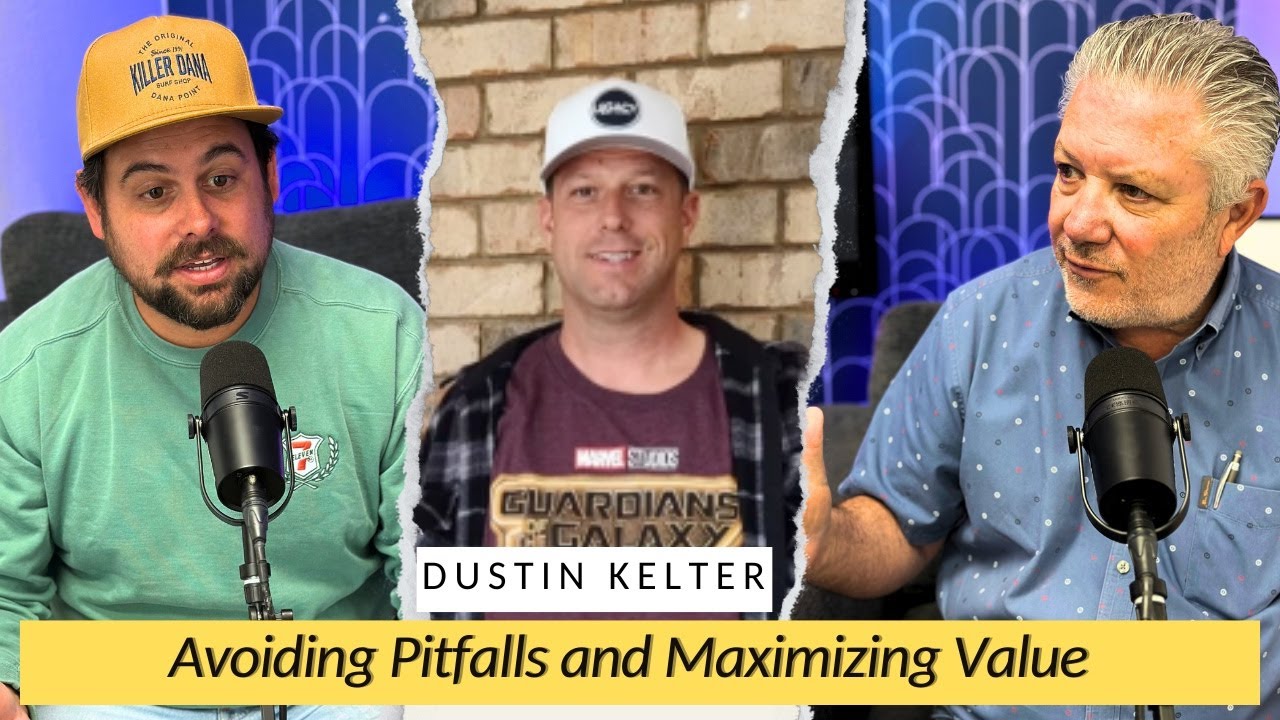
In this live episode of the New and Experienced Investor Podcast, hosts Alex Barnett and veteran co‑host Joe Homs welcome guest Dustin Kelter, a California‑based real‑estate agent with a construction family background. The conversation covers Dustin’s upbringing in Huntington Beach, his time in the Navy, and how growing up around custom home building shaped his real‑estate perspective. They discuss the differences between residential and commercial investing, the appeal of wholesaling, leasing, and property‑management, and practical strategies for generating leads such as door‑knocking, Zillow, and open houses. The hosts and guest also examine evolving architectural trends in Southern California—metal‑styled exteriors, reduced yard space, and the shift from indoor malls to outdoor mixed‑use spaces—and how zoning, city approvals, and design choices affect both custom builds and investment decisions. Throughout, they share anecdotes about family‑owned projects, the importance of adding bathrooms and flexible floor plans for future needs, and advice for new investors on starting with single‑family wholesales before moving to multifamily or commercial deals. The episode ends with a plug for an upcoming June 30 meetup and contact information for Dustin.
Chapters
Hey everybody, welcome back to the New and Experienced Investor Podcast. Today we're talking about how specific experiences can help you as an agent. It's gonna be a really good show, definitely one you don't wanna miss. I'm one of your hosts, Alex Barnett. I'm the new guy.
And I'm Joe Homs. That makes me the experienced guy.
That's right. And today we did it again. We have another amazing guest. He's gonna be talking about what it's like being an agent in today's market. Before we bring them on, let's talk about our meetup we have June 30th.
We have a special, special, special guest speaker, special, that's gonna talk us through wholesaling A to Z. Alex Barnett.
That's right. I'm going to be getting up there on the mic talking about wholesaling, how to get your deals to the finish line. So if you've been on the sidelines waiting, this is the gateway to all real estate investing, wholesaling.
And real quick, I met with a 19-year-old a couple of weeks ago, got him started on wholesaling, came in today. Told us that he made 100 calls. Just texted Alex that he's got somebody on the line possibly ready to do a deal. Yeah, that's what you need to do. You need to make those calls.
Yeah, stop, stop making excuses.
Take action.
There it is. I always like to remind you guys this is a live show, so go ahead, share it far and wide with any new or experienced investor. in your life. And because it's live, we have a chat, so you can jump in the chat, ask as many questions as you want. We're going to pick some towards the end of the show. It's my favorite part of the show. So let's go ahead, bring him in. Here's our guest today, Dustin Kelcher. Dustin, what's up, man? How you doing?
Alex, how you doing? Joe?
Good.
Great, great, great. Um, go ahead, pull the mic just a little bit closer to you.
Yeah, for sure. Yeah, give it a little tug.
You won't break it.
Yeah, you can pull it.
How's that?
That's good. Right on. So go ahead. Why don't you introduce yourself to everybody in the audience? How'd you get into real estate? What were you doing before? And how's it going right now?
Well, thanks once again, Alex Barnett and Joe Homs, for bringing me on the podcast show. Big fan, Alex. Interested in that wholesaling on June 30th.
Nice.
But yeah, just Same thing. Uh, just kind of started, uh, you know, um, raised up in construction and, uh, the residential was like, you know, everyone's dream, right? And, you know, here's the commercial, you gotta, you gotta get to work. And, um, just kind of learning different things in the trades as my parents were, uh, custom home builders. And then I just kind of really worked from with my dad, like one-on-one for a while on the commercial side. And Kind of saw how that is and, you know, was just fascinated and just, you know, before the show asking Joe, you know, that commercial investing is just off the charts, like, and, you know, how residential is being an agent, you know, and everyone's after it. So it's a great business to be in. I love being an agent. You know, I've been doing it for a year. But I've had my license for 2 and, you know, just learning every niche of the house, you know, from, from the day I was born, basically, you know, just even learning all the laws and, you know, the land and stuff. So it's a pleasure to be on the show, guys. Thank you for inviting me.
Everything you've been doing with your parents, has that been here in California?
Yes. Yes. So I grew up in Huntington Beach. You know, just kind of down by by the beach downtown. And as you know, the area is predominantly like in the beginning was like for like oil wells and oil fields and stuff. So I just kind of as a kid, you know, just saw my dad like with his backhoe like cleaning up stuff and just as soon as I was sixteen, I was on it, you know, just checking things out and just kind of realized, you know, like going to the high school there and. Yeah, the oil boom's kind of over now. It's everything's modernizing. So, um, you know, architecture and land and, uh, real estate, you know, what a, what a great place to be. So, you know, by the beach, construction by the beach, you know, and, um, the houses just, you know, turned out great, you know, whether they were custom builds with a pool, um, jacuzzi or a pool house. Uh, you know, we, in the beginning when I was a kid though, that we had some problems because of the, uh, zoning and, uh, private streets and stuff, you know. So things modernize and you know gets now you get city sewers and stuff. But I mean we we used to even have an airport over there, a tiny little airport. But yeah, I mean it was a great it was a great you know childhood growing up. But you know it's just the market is so lucrative now. You know that's why I was you know kind of talking to you about the commercial side of things. Just you know the buying and selling in the commerce. You know it's just. Wow, it's so fascinating, you know, and it's such a good way to stabilize your income, you know what I mean?
So growing up in the business, I mean, was, was this your dream as a child, or was it like, Dad, I don't want to go with you to work? Like, I could imagine if that's your family business, to you it's just completely normal. Like, was that what you wanted to do, or growing up in Huntington, you wanted to be a pro surfer?
I mean, that's, that's every, every kid's dream, you know? I mean, especially when your parents are building, building houses by the beach, you're surfing. But, um, yeah, I mean, it was just like you're saying, Joe, um, kind of just getting, uh, getting with my dad to work and, um, you know, hey, now I'm with mom and she said go surfing and, uh—
Wow. Mom let you off the hook.
Yeah, it was awesome.
You were supposed to be at work and mom's like, no, let him go surf. It's fine.
Exactly.
Okay.
Exactly.
Classic. Gotcha. Okay. But I guess you picked up some stuff. Now you said you've had your license for 2 years. What? That seems like you were a kid learning the custom home stuff. Fast forward, you've had it for 2 years. What's going on in the in-between part?
You know, like every, every, uh, young adolescent, you know, I had my ups and downs and traveled the world. I, I did sign up with the Navy for a bit.
Um, okay.
That was like about 10 years ago.
And, uh, nice. Thanks.
Yeah, just went to school a lot, did some self-improvement stuff like that. Things you experienced probably too in life, Joe, or your family members and stuff. Nothing as great as your experiences, Alex, but I mean, I'm definitely into wholesaling. I'm 100% at the table for real estate every day. Just everything I learn is just like from the niche and cranny to all the way up to the home. And it's just amazing to see time evolve. But yeah, you got to experience life.
Okay. Gotcha. And so the time in the Navy, what have you brought from that into real estate?
Wow.
US, we got a lot of ships. We got a lot of stuff going on. So You know, being over at other sides of America, you know, just just seeing the East Coast prices and then you know the evolution of New York. I mean, it's just it's just unreal. But I I just am a California boy from from heart and from growing up and just love it down here. And it's interesting to see the the homes you know modernize and and you know see what What's changed about some of my childhood experiences and the homes I've been in. But you know nothing, nothing changes better than America, and that's that's kind of why why we where we stand. You know USA and you know around the world. But um it just opened up my eyes a little bit, you know, and then learned to adapt a little bit. And I just saw the prices were just so completely opposite, you know, to California.
Oh yeah, for sure. So now you you come back from the Navy, you're ready to get back into real estate. Like did you go to your parents first and say like, "Hey, I want to." Are they are they still? active and to where you could jump into that business?
Or, um, you know, that, that was probably something I wanted to do. Um, um, you know, unfortunately I never did it because, uh, a man's got to find his own way.
Okay.
You know, and, um, you know, my dad, my dad has, um, some nice stuff going on and I just took a look at one of his places, um, today and what they did to, you know, re-improvise the custom home. Uh, you know, I think one of the new guys was a steel owner, so he just showed me all the gates and stuff that I used to work on. And, um, he put a big awning over the pool deck and attached to the, uh, pool house and just, um, really cool things. Like, as you can tell, the architecture's changing in real estate, especially over here in California.
You know, what are you noticing as far as architecture?
Um, you know, just a lot of, a lot of like metal looking, uh, steel, like, you know, upright. Of course, you know, the city, they just kind of approve just, You know, high rises and stuff now, or that's what they want. They want, you know, it's a supply and demand. So those things usually pass pretty quick. And versus like a custom home, you know, you got to spend like X amount of money, you know, quarter of what it's probably going to cost you just to get them to look at it. And then you got to go pay for an architectural review and all the architect and all that, you know. So it's just, um, yeah, they look, they look great. I love the, the, um, The lighting, the electrical work and stuff. And they're just, um, just a lot different from, you know, probably when you guys were growing up, especially probably in the, you know, earlier days, you know, just a home's a home, right?
I was wondering which decade he was gonna pick.
I didn't want to say.
Is he calling me old?
I think he skated around it, but that's fair game.
Okay.
Well, you can tell the cars have changed too.
Yeah.
Yeah.
Everything was like—
We didn't have cars back then.
We didn't have cars.
Horse and buggy.
Every house was like a 2/1 or a 3/1. 3,900 square feet for some reason back in the day.
And horse and buggy parking.
And horse and buggy.
And 1 bathroom.
That's right.
Yeah.
Yeah.
The 2 bathroom was like a completely modern invention.
My wife grew up in a 1 bathroom, 3 bedroom house in Garden Grove. And she's got 3 today. But it's like, how did you do that? You know, it's like, Wow. Yeah, 3 of you using 1 bathroom.
Same with my dad. I think it was like 5 in 1 bathroom.
Wow.
I don't know how he did it.
Yeah, crazy.
Yeah, he's always like looking, he's like, I don't even know how he did it and he lived through it.
Yeah.
Yeah.
Well, that's something Burton brings up every time too, is a list to look for.
Yes.
1 bathroom. Um, target the 1 bathroom folks because chances are they're going to be wanting to upgrade, sell. You know, get a house with 2 bathrooms.
Just add that extra bathroom there. Yeah, absolutely.
Add it on.
Now I can only live in a 4-bathroom minimum, just me and her, just in case. I mean, just in case it's like one second—
You're in a 1-bathroom, aren't you?
No.
Oh, you guys have 2?
Of course.
Oh, really?
It's like 2 master suites type thing?
Uh, 1 guest.
We're in a 3-bedroom.
One guest, one primary.
Oh, okay.
One office. Got it.
One office.
Got it.
Yeah.
Okay. I like it when there are like 2 primaries.
I know.
Yeah, that's pretty nice.
Yeah.
That is pretty nice.
I mean, you have roommates. That's really nice.
It is.
Yeah. But it's just usually 2 bedrooms.
Yeah.
But they're both primaries.
I know. That's cool.
You have 3 bedrooms, then it has to be just like you just said, it has to have a door for the other person. Yeah.
Yeah.
Got it.
Um, custom home building. What, what are the big ticket items that people always go for?
Um, well, I just wanna chime in one, one second. 2, 2 bathroom minimum required, right?
Yeah.
That's gotta be hard for, uh, your wife growing up. But, and you know, you know, it's great that she, she came out like 3, 3 spots, but, um, yeah, she made it.
Yeah.
She made it to the end.
She married into it actually.
Yeah, she did.
Mr. Joe Homs himself.
Yeah.
So yeah, I mean, Back to the question, custom home building is, is, is very, I want to say, like, difficult, because unless you're the actual custom builder, you know, it varies, because you're, you know, like I said, I just revisited my dad's place today. And it's down by the beach in Huntington. And this guy owns this big steel company. And so he just decked it out with steel. But, you know, back in the, when my dad was making it, it was like about tile, you know, and marble, and, you know, We'll add an extra couple bathrooms and bedrooms because we can, you know, or we'll add a whole nother pool house, another garage, you know. So it's just tricky. And you'll see that in, in the modern houses and how big they look and, you know, what they're just adding as many bathrooms as they can. Yeah, you know, as many bedrooms as they can. So, you know, the city, you know, they'll let you build 3, 3 levels usually, you know, they're Right now, like I said, they're just doing big massive OKs. I don't really go down to the city a lot, but it's just very difficult trying to approve things. And next to that, I think on the same note, so when my dad started, he started with his brothers. They were engineers from Long Beach and they kind of went for those apartment high rises and stuff. So they're zoned currently for that. That that should be coming soon, hopefully. But the custom home building is is just it's a tough business. And and the reason why I'm saying is you know my mom was also in it. She's a contractor. And you know I remember being a kid and I was like I want a lot of windows, right? I want a lot of windows, Liz. Who who doesn't want decks and windows, right? So it's like okay she put five or six of them and it's like whoa whoa now it's like okay I should have thought of like sliding glass doors or something. You know do we need do you need this many decks because you know you're creating problems later on. I mean, now you have those new laws and stuff for decks, and then you got to maintain those decks. And especially if you're renting it out, it could be a risk and things like that. So the custom home building, it went from like cushy kid luxury to, okay, this is a job and I need to like wake up and use my mind a little bit better, take a few more classes because You know, it's not about putting a jacuzzi in anymore. It's not about a barbecue. You know, it's it's you're looking at the future now. Like you know, like I said, it woke me up when I went to the East Coast because I was just like, whoa, some prices in Virginia are really low. You know, like and then there's New York. Yeah, I can barely get in there. You know, so it's just custom home building is is it's awesome. But you know, for the most part, it you know, it's modern architecture now. It's it's you know, it's just what the architect, the designer wants. And my mom still does design for people and stuff.
Oh, nice.
You know, mostly inside, but, you know, interior. But it's expensive too, you know, doing all that. I mean, we had, you know, tile people that are just, you know, caking on rock on the pool and, you know, just doing turtles, you know, I mean, for the bottom and just water fountains. And then, you know, you got to upkeep those things. And it's, you know, as you know, the water fountains and stuff, you know, it's not always, uh, you know, up to what you want it to be. But growing up surfing, back to your point, um, you know, we put in a couple showers in. And, you know, just like you guys were saying, you want to put as many bathrooms, as many bedrooms as you can. You want to maximize it because you're spending this money, you know. And so I think I think the city let us go like 3 levels. It was always a fight with the city, you know? Okay, we'll give them this much on the 3rd level. And it's not a bedroom, you know?
And then we just put in— No, it's a loft.
Yeah, so we just put in doors later. I mean, there's always, they don't want it high.
I like that.
But then they approve all these mega things, you know?
Well, and I'm noticing like in Seal Beach, 'cause we lived in Seal for a while, they just got rid of where the house was set back and you had a yard. They'd rip that out and build lot line to lot line.
Boom.
Just a box.
Yeah.
You know what I mean? So it's like the yard is gone. People don't have yards anymore. It's just, you open your front door and you're on the street basically. So, um, that's kind of interesting.
There was one house in Seal Beach that some guy built, custom home. And because he couldn't go more than 3 levels, he had this genius idea to build a basement next to the beach, so it kept flooding because he was hitting the water table.
Oh my God.
Yeah, it's like, I don't get it, I keep throwing money at it, you know?
Yeah, but, uh, yeah, yeah, exactly.
I think he did abandon it eventually, but yeah.
I mean, yeah, it makes sense. But, uh, yeah, I guess, I guess, you know, the, the city has all those rules for a certain amount of time, and then, you know, the new guard comes in and they approve Whatever they call it, like the— what was the mall that they built?
Bella Terra?
Or no, the other one, the new one on PCH. Yeah, yeah, yeah, yeah. So stuff like that. But because they're, they're doing that whole—
Huntington Beach is a pretty tough city council. Yeah, them and Newport as well, they're pretty tough. They're very restrictive on lots of things over there. Okay. Yeah.
But like Alex was saying, you know, the— when the commercial comes in it, you know, because, uh, we wouldn't do a basement or anything. The hardest thing we would get is like an elevator. And those were usually both of my parents' custom homes. And, you know, as you could tell, like, the elevator was just like the cheapest one you can get because it's so small, it's so expensive, and it's so hard to approve it, you know.
Right.
And then you got these big malls that, you know, they'll get You know, escalators and elevators, whatever, galore, because, you know, they got to keep up to the ADA standards and all that stuff. So, you know, I mean, when something big like that gets approved and you probably remember Bella Terra and it was just like boom. And now they're already thinking about redoing that. Yeah.
Yeah.
Yeah.
No, totally.
It's just, yeah, I need an elevator.
You're just going to move to the bottom floor. You're fine.
How about an escalator? And then I'll never— oh, one of those chairs. Oh God.
Yeah. Sit down in a chair and go up.
Yeah, I like those.
Yeah.
The problem is no one has straight stairs.
It's true.
Yeah, but that'll be fun because I'm going around.
You're like, yeah, damn it, I forgot something downstairs.
Yeah, and I have to go back down.
Um, so how does that experience growing up around the building and everything, um, allow you to provide I guess, additional information, or how are you using that experience as an agent with the clients that you have?
Mostly I get a lot of people trying to look for a place to rent. But when there is a buyer, or even if it's a widow or something, it's like, okay, let's check this house out. Little by little with my construction skills, I've just kind of told them what they need to do or even help them do that. And, you know, if I need some opinions, I'll ask my mom for like design. And if there's like major questions, you know, or like they're gonna sell, I mean, I, I try to get like down to the bottom of it. But you can tell kind of just what a house is worth by, you know, the comps. And then, you know, Everyone kind of really—I grew up a lot on Zillow, but I didn't like it. I don't like it much anymore. But you know, it's just quick, quick ways of getting estimates, right? But you know, for the most part, if you get a two-story, it's great. You know, you're gonna make some money. You know, you got one story; it's easy to work on. You know, no problem. So fortunately, we haven't sold much besides. My dad did sell his, his beach home down downtown. That was 3 stories, but he bought something better, you know.
Oh, okay, nice. Where's the ranch?
Um, it's in like Santa Ynez, but—
Oh, cool.
It's a 1-story. I mean, so as you know, as Joe was saying, it's, it's harder to get up, up and down the stairs, you know, in when you're a senior and stuff. I mean, it's, it's not harder, but it's, it's not desirable, right? You know, so my mom did the same thing. She got a 1-story. So it's just, it's one of those things that, um, You know, like I was telling you earlier, I wanted 5 or 6 balconies with French doors. And it's like, well, you know, this is awesome. But is this going to be awesome in 20, 30 years? You know, you could have just done a sliding door, you could have just done a big open-end window or something, you know.
So something to think about.
Yeah, I mean, porches and stuff are cool. And, you know, like you're saying, the yard is just obsolete anymore. But, you know, we always, you know, when you're a custom designer, you always want to create something like that, especially, you know, like my dad was always into that with the pool and the yards. Maybe that's just how he grew up or something, and now he's ranching. So it's just one of those things, you know, if you guys, you know, know being married and stuff, you know, have later on you got the dog, you got the kids, you need, you need the yard, you need like the porch, you know, stuff like that. So, um, those, those are, are key things to play into your clients, you know. And, and that's one thing, um, I, I do look out for that, you know, as much as, you know I get that question, hey, I need something to rent, you know, real quick. And it's just like, okay, what do you got? You know, so we help you out real quick, you know.
Okay, nice. So you're doing mostly leases?
Yeah, mostly, mostly just leases in my first year. But it's been fun, like, you know, growing up doing all that and seeing the sales and stuff. And then, then they go up and they, you know, go down and it's just like, all right, everyone hold on. Everyone's looking at the market and the mortgage rates and stuff. And so, you know, it's just one of those things that, you know, Yeah, it— like you're saying, back to your Seal Beach one, the architecture's just changed. It's just like, here's a box, you know? Yeah. And it's like, well, where's the modern family, you know? But, you know, the modern family is, is a little bit smaller now, you know what I mean? So, yeah.
Apparently people aren't having babies anymore. That's freaking everyone out. Have you ever seen the movie Blank Check?
Um, I think I've seen it one time. I heard about it. Yeah.
Remember that? We're like, this kid finds a blank check on the ground And he, I forget what he does, but he like basically like writes himself, like, it's like in the '90s. So it's like $1 million was like a lot of money. So he gets all this money and he like makes this like house that a kid would like, where in his, uh, bedroom there's a slide that like goes down to a pool. And then there's like all this, you know, it's like a video game room and it's like VR and all that stuff. So that's what I picture you as a child being like, this is what my custom home is gonna be like.
Yeah.
Then you get older and you kind of realize what is important. Is that accurate?
Oh, it's totally accurate. I mean, I mean, I was just gonna go, uh, back to Joe and, you know, that, that's the life though, man. Through all the girls in one, one bathroom, you know, they probably had the best, like, time of their life, man. Oh yeah, grade school and high school and stuff.
There weren't any fights. Definitely not high school.
Liz, they, they probably had the looks though, you know. Come on, they had fun with their hair and stuff, you know. So, all right.
Right, right.
Um, okay, nice. So tell me about this, like, the, the leasing thing, the, um, you starting off as a leasing agent. Is that something that your brokerage decided to have you start on, or that's the path you went down?
Well, like every, every, uh, brokerage, um, you know, they're— they need sales. The broker needs sales, right? You know, so, um, just, just talking to you guys about And we'll get into the commercial a little bit more. But yeah, I just that's the way I was kind of taught. And like I said, my first on real estate, my first idea was like Zillow, and it's just like a total market for just blah, you know, just everything. So it's just learning that, and then you know, hey man, maybe I could make a make a hustle out of this, or maybe I can make a living out of this, and you know, and. Just timing back to Joe, you know, now instead of one, one bathroom growing up, now she's got, you know, whatever, X amount of 3 houses, you know. So it's, you know, it's just what you're kind of taught, what you learn along the way, you know. And, and, you know, um, you know, I like my company. We've been up and down and sales, you know, are, you know, are the goal of every broker. But, um, you know, I just, I'm so good with leasing and, um, I get, I get a lot of calls and stuff. A lot of people are into Airbnbs and, you know, they're into this and my company is too. So, and that's cool. And I just, I kind of like the property management style because just growing up in construction, you know, just staying busy and, you know, fixing things. It's just a good feeling. Yeah. Kind of pays off itself, you know.
Gotcha. Gotcha. Okay. So you mentioned working with Zillow or what is that like as an agent? Like what do you get? They get you leads or what? How do you work with Zillow?
So when I was originally looking at Zillow, I was actually going to go and work for them. But as you know, it's pretty much just a computer now. So it's just, it's a way to get leads. It's an easy way to market. It's not as formal for the laws of being a realtor. And so you can kind of just market and get leads and help people find places. Because most of the time when I'm talking to people, if I'm not going out knocking on doors, um, putting my flyer out, I'm, I'm pretty much just asking people where they live, what they need, you know. And it's just, it's the same old question like that I would have got off, you know, Zillow or something. So, um, you know, knowing that, um, it's just, it's just like an app tool, you know, for me. Um, it's not, it's not the highlight of my life. But, um, you know, um, going back to the, uh Um, the commercial and, and the property management. I think that that's the most honest, lucrative way to make a living. And we, we kind of agreed on that, you know. What's your experience, Joe?
I don't do commercial. No. Yeah, that's totally different animal for me. I've always done residential.
Yeah, yeah. I mean, residential is so plain and cut and dry and so, so honest and good, right? You know, and And commercial's so risky, you know, and it's so hard that, but that's pretty much how the company started, you know. Oh, my broker. Oh, nice. Yeah. He was doing a commercial sale. I can't speak too much of it because he, you can hear it on his podcast, but okay. That's how they kind of started. Then Brian came in from Sotheby's and Red. So, you know, it's a good outfit. They got 100 agents, but, you know, as far as me growing up, just watching my dad with his custom home building and the frustration there, that was nothing compared to his commercial life. And I was just like, wow, like, I don't know how he does it, you know? Um, and, and now I kind of understand why he's on a ranch in the middle of the, you know, middle of the—
Relaxing. Yeah, really. So he built commercial buildings or he purchased and—
Yeah, he helped build and then purchased, kind of sold. But unlike my boss, he kind of kept it. Okay. Um, so he kept it going. And, um, it's just, uh, businesses, you know, it's you know, like a restaurant, you know, you guys living in Seal Beach, you probably know how that is, you know.
Right.
It's, it's a hard, it's a hard business, you know. So, um, you know, luckily he, he's, he's been through the gambit, but he, you know, seems to come up, come up on top, you know, if he's messing with the agriculture life. And yeah, you know, I mean, but going back to his custom home, it was just beautiful looking at it. I'm just like amazed the privacy now there and, and just How he upkept it, upkept the whole place. And he's just asking me, hey man, today, can you can you get me this lot? I'm like, I can't. I don't know. What about this one? Well, this guy's in Florida, you know. And it's just like people, they have these car collections. They have these things they want done, and they want to, you know, emphasize it. How like they're like you're saying back when I was growing up, just drawing out my custom home, you know, as a kid. Yep. And it's just like they want to make it a reality. And that's what's cool, Joe. You know, it's just— but I think a safe way, you know, if you guys can get into it, I mean, I'm still always looking to commercial investing and stuff like, you know, I mean, wholesaling is great too. I love, you know, I've been to some cool wholesaling events and—
You can wholesale commercial too. Yeah. Yeah. So yeah, look into that. Are you looking at apartment buildings or what are you considering commercial, like industrial, flex space?
Apartments probably is a safe bet. Like Joe was saying earlier, he's just, you can get, you start with one home, you get 2 or 3. And that's one easy way for the honest American to try to get into real estate and investing and stuff, but rent 'em out. So apartments are always a lucrative A lucrative way to invest, you know? Right. I mean, that's, that's the only way I've made it so far, but.
Okay. Nice. Yeah. Right. You're, are you a part of some apartment deals?
Um, you know, just, just from growing up with my dad and stuff and just doing some of that, you know, he has a few units. Um, there's a lot of other developers out there. I, you know, I can't really, just like realtors, I can't really speak about it. So it was just, things are changing so quick, you know? Right. But like, like you're saying, you know, this mall popped up, that mall's getting a remodel and now they're putting more homes in. Yeah.
Yeah, yeah. Wow. Can't stop the progress. That's it. Um, awesome. Well, this is the part of the show where I have— I pulled up a couple videos, uh, curated a few videos, so I'd love to get your take on it. Producer, what do we have?
Things people should know before building their custom home. Here we go.
In this video, we're going to cover items that most people wish they knew before building their own custom home. Most custom builds take longer than originally planned. This can be blamed on both the builder and the homeowner. Both parties can cause the project to slip. It's just part of a very complex process with a lot of moving parts. The schedule isn't perfect, but more of an art form, so don't get anxious when you see the schedule slip. It's just part of the process, and if you keep this in mind, you'll enjoy the project more. It's really It's hard to see into the future, but when designing your house, try to be thinking what the future could look like. For example, if you only plan on having 2 kids and design the house with only 3 bedrooms, what are you going to do if a 3rd child comes along? Or you have an aging parent needing to stay with you for a while, is there room for them on the first floor? These are some of the things you need to keep in mind when designing your home and planning for the future. In this Thoughts?
Well, why don't you guys go first? Because it sounds just like how I grew up.
Well, it's really to get your reaction. Yeah, I mean, it's—
he's totally on it, on it. And just as we were all talking about, like, the family has changed and stuff. But, um, yeah, I mean, that, that's usually how it goes on a construction site. It never goes as planned, you know. You gotta coach all the trades to get them going, and, you know, Schedule it right. You know, that's why they say it takes so long. You know? Yeah.
Well, I mean, that would be what a what a builder would say. He's like, hey, the timeline's gonna go over. It's just part of the process. So if you could get over it, you you would really enjoy the project.
But that's a good idea to you know set expectations up front and let them know that you know this is what we're going to do, but this is not reality. It may take a little bit longer.
Well, okay. Here here's I would push back on that and say, well, why don't you just give me? Why don't you, you know, under-promise, over-deliver?
Because what if Susie at the permit office just doesn't like you?
Oh, okay, I get all that. But like, what if you're like, okay, it's gonna take 18 months and then you get it done in a year?
Then you get paid extra.
Yeah, exactly. See, there's one more year to sell.
Under budget, on time, right? Yeah.
I'm following a guy on YouTube. He did a full house in 60 days.
Wow.
Yeah.
No.
I don't think you can even get a permit in 60 days.
Yeah. A-frame. You know? Yeah. He's like, yeah, but I don't know. It probably wasn't like a giant super sick house, but, but anywho. All right. What do we got next?
Next. Uh, Cal— Commercial versus residential.
Should I go with commercial or should I go with residential? If I'm just starting out, should I get involved in multifamily real estate or single-family real estate? My answer to you is if you are brand new, you don't have resources, you don't have credit, you don't have credentials, you're just starting out, you need today money, you need to get a wholesale deal under contract, wholesale that deal and have a check within 30 days, single-family all day long. You have 1,000 less things to learn.
They're way easier to comp, way easier to underwrite.
There's way more people to help you, way more resources, way more agents understand residential over commercial. Commercial agents are very polite, but they're also about that money. You are not going to get the time and attention of a commercial broker who's doing big deals. So build your momentum, build your experience, build your— I call it your poop sheet— all the crap that you've been through, stack up your credentials, and then when you're ready for multifamily, you can convert or start dabbling in it a little bit. Should I go with?
What say you? Very honest.
I mean, just like we were saying, it's it would be great to get into commercial, you know, and it's so lucrative. But you know, it just goes back to leasing and and you know big deals and commercials. But if you if you get a custom home building or even if you go into multi homes, I mean, you're you're a lot safer off. You know, obviously in a residential. And, you know, as an agent, you can, you know, make your own choices. As a builder, you can build it how you want, you know.
Amen to that. Nice. What else we got, producer?
We got one more.
We do? I thought you said 2.
No, there's 3. There's always 3.
There's 3, Joe. How to generate leads as a real estate agent.
Here we go. Open houses are a great way to get leads as real estate agents. And on my second open house, I actually got a lead that came in there Walked the property, and he said, "I want to make an offer." And boy, I was so nervous. I did not know what to do. So I went. I called up a friend of mine, another agent that knew the business, and kind of said, "What do I do?" Since this was like literally my second week in the business, and he kind of explained everything to me. But at the end of the day, I just want to show you guys that open houses are a great way to get leads, and that you should start doing them. Open house.
Very honest, guys. Very honest. Real buyers. As you know, I told you what I did already to get, to get some leads and I go door knocking and—
Hmm.
Yeah, I mean, so I mean, the Zillow is just a kind of a computer, but it generates what it, what I, what I need to sort out and stuff. But just if you do an open house, I mean, that's the best way to, you know, get, get real leads. You know, okay, you know, real buyers.
So what do you think the, the goal and the purpose of doing an open house is for an agent?
Well, you're going to market the house, you know, and you're also, as an agent, you know, that's, that's the goal— sales, right? At the end of the day, right? Sign, sign this, sign that. Um, so it's just changed a lot, you know, with, with technology and the laws and stuff, but to To, uh, to be all honest, I mean, uh, the, the goal of an open house is just to, just to sell it or, you know, whatever you're gonna do with it, you know, rent it out or, you know, lease it. So, um, you gotta show it, you know, it's the law. And, um, it's, it's just, it's just a perfect way to get, get like the perfect family in or, or, you know, sell the house, you know, just easy way to do it.
Got you. Yeah, I've only— I've gone to a couple open houses with her and it's not a fun time.
Take your shoes off.
It's pretty boring. And then most of the people that come in had agents already, so I don't know.
Like, I'm pretty introverted too, so it's like a high anxiety situation for me.
Yeah, you're like, you're gonna like be buzzing around the person while they're like looking at it and they're like opening up the thing. You're like, yeah, so it's like fully custom vanity right here. Like everything they look at, you're like, yeah, so the backyard is, is she doing the open house or you?
I wish he would do it.
Yeah, it sounds like more like you're doing it.
I know like what needs to be done, but—
My first open house, I got an angry neighbor who like slammed every cabinet door in a remodeled house. One of our flips was just like, look at this, like, look at this shoddy work, was just slamming all the doors and stuff. And then she left me a nice surprise in one of the restrooms.
So yeah, didn't flush. We were like, these people are animals.
Yeah, it was awful.
So that was— that must have been out in Hemet.
It was. It was. Okay. Okay. I wouldn't put it past anybody though.
I don't do open houses in Hemet anymore.
Yeah.
We've gone to a couple scary mobile home lots.
I never liked open houses either.
Yeah.
You always had good tips though. Like if someone says—
It's a good way To get leads.
Yeah.
Absolutely. Yeah, if you want good leads, that's where they're at. I mean, they're coming to a house. Why are they coming? They're either neighbors, right? Or they're actually looking for something. And so you have to kind of pick and choose, kick the neighbors out, right? And focus on the people that are actually looking for a house. There's your lead right there.
Then you like turn it on, you're like, hey, how's it going? They're like, I'm the neighbor. You're like, all right, never mind. Go back and sit down. Yeah, go ahead and look at it.
Yeah, go ahead. Those cookies aren't for you. Yeah, don't take any of that stuff.
Yeah.
It's not for you.
But they're like, oh wow, this guy's nice. Uh, Dustin, thanks so much for coming, man. This has been a great time. Um, how can people reach out to you if—
We do have one question.
Oh, okay. Yeah, I forgot.
Yeah, hold on. Let me pull it up here. So Liz is in the chat. She says, with years in residential property management and a decade in commercial, what major trends have you noticed shaping the industry today?
Um, just, just kind of what we, we talked about.
Yeah, reiterate it, dude.
Just take it, take it home. Yeah, uh, you know, it's just modernized. You can even tell just driving by commercial and the, in the mega malls and stuff. And, you know, I don't know, it's not really so much as a thing of like an indoor mall anymore. It's just like now everything's like we were talking about Pacific City, it's all outdoor. And it's just my dad was starting to get into that and it's just these these markets are outside, that people, they want to drink outside, whatever, do their yoga. And just, it's just fascinating to see things change. That's just me looking at it commercially, you know.
Right.
The thing of the indoor mall is kind of just, you know, not really so desirable anymore. I mean, unless it's just really nice, you know.
Yeah.
But yeah, it's the same thing with custom home buildings. I mean, who doesn't want the most new modern house on the block, right? You know, with all the windows and all the doors. And, you know, like I was telling you earlier, I wanted a lot of porches. I want, you know, balconies and stuff. So, um, it's just— that's just the biggest thing I see. But, um, you know, as you know, you guys know, being investors and stuff, you know, you got to kind of shoot for what, what's the best for you and your company or your wife or whatever, your family. So, you know, sometimes that might be like apartments or condos or something, you know.
Sure. Yeah, I am noticing there's like Mission Viejo Mall is gonna have the old outdoor section.
Yeah, they're convert— I don't know if they're converting the whole mall or just a portion of it, but yeah, they're bringing it in.
He's right, people want to drink outside. Yeah, they got used to it.
This is California, why wouldn't they?
Yeah, let them drink outside.
Yeah, we went a whole year having our meetup and never got rained on once.
That's right.
Yeah, California.
Try doing that.
And that's why our meetup is so popular, is because it's outside.
Yeah, yeah, indoor-outdoor living.
Yeah, we did get a little cold.
It got a little cold, you know, but we got heaters.
And I, and I call it California cold because, yeah, oh, if you've been back east, that's cold.
That's another cold that hurts your lungs to breathe.
Yeah, yeah, yeah.
We get like 65 and we're all like, yeah, Four Seasons humidity.
Yeah. Wow.
Not about it, dude.
Thank you, Liz, for that question. Yeah.
Thank you, Liz. Appreciate it. So if people want help with a lease or a buy or a sell, what, where, how can they reach out to you?
You can just reach out to me on, you know, either Instagram, you know, my name's Dustin Kelter. Okay. Working for Keller Williams. You know, we're now in Santa Ana, but it's, you know, I'll tag you in the Instagram and. Okay. Nice. Or they can reach out to my cell, you know. Yeah, I'll give you guys my card before before we go, you know. Okay, thank you. It was pleasure being on the show. Thank you so much. Yeah, thank you. What a fascinating story, you know, with your wife and stuff. I mean, just just the era would have been so cool, you know. Yep. So I mean, we got to see that.
Do Wop was the newest thing. Do Wop had just come out. Crossing the Oregon Trail.
Amazing. I'm just kidding. I'm just joking.
I think. Yeah, Joe, we can't keep up with nowadays. We have to go outside to go shopping, you know.
I see.
Very cool. Yeah. All right, you guys, we'll be back in 2 weeks because producer has a birthday. So what? Happy birthday! Happy birthday! Oh, nice. Okay, happy birthday. I hit the wrong button, but, uh, I meant to do this.
Oh, okay, that one was kind of cool too.
But, uh, yeah, reach out to Dustin if you're looking for a rental or anything like that, and, uh, we'll see you very soon. Thanks, Alex.
See you later. Thank you. Thanks, producer.
If you want some more advice on real estate investing, reach out to us one-on-one.
More from Joe

Practical Tax Planning Strategies For Real Estate Investors with Jason Malabute, CPA


Did you know you can buy a home in Orange County with a 2-3% mortgage rate right now? Here's how — A





