Emergency Podcast - The State of Real Estate Investing!
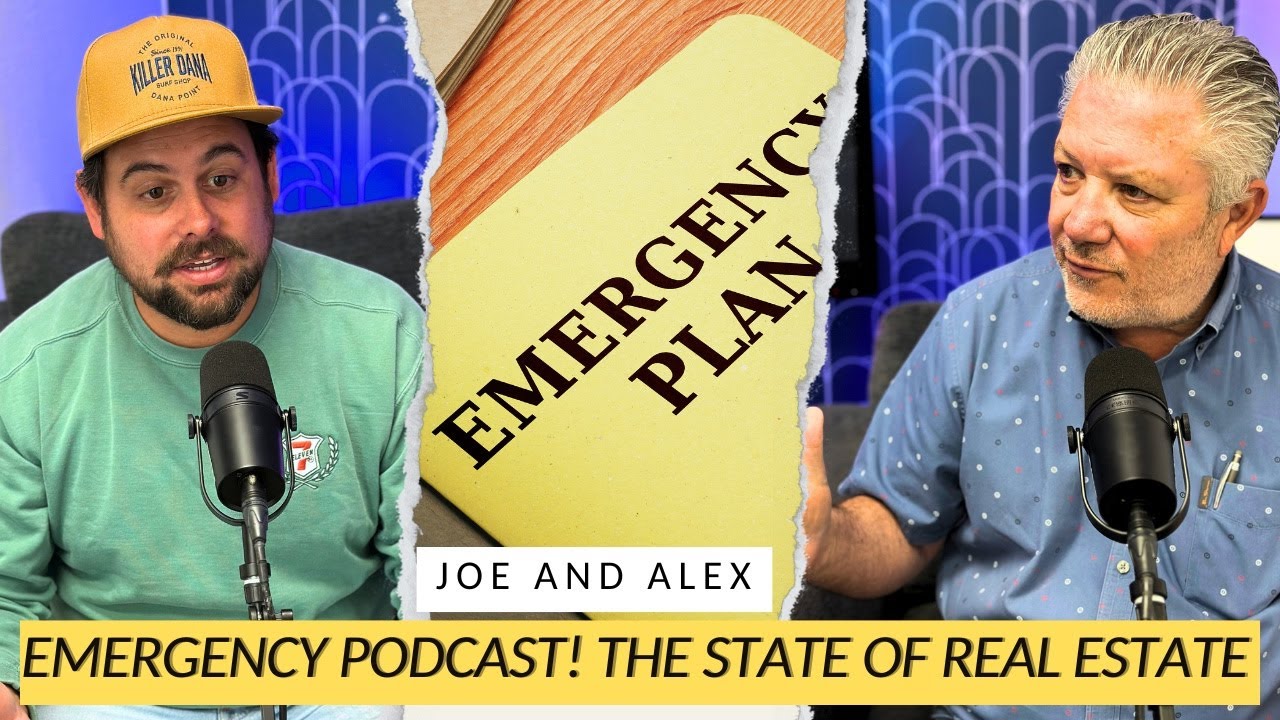
In this episode of the New and Experienced Investor Podcast, hosts Alex Barnett and veteran investor Joe Homs discuss a range of current issues affecting real‑estate investors. They begin by highlighting a fraud case where a developer took investors’ money for custom homes that were never built, illustrating the challenges victims face when state attorneys general are overwhelmed. The conversation then shifts to practical consumer‑protection remedies, especially for baby‑boomer homeowners with substantial equity. Joe outlines strategies such as taking a reverse mortgage, opening a home‑equity line of credit (HELOC) without drawing funds, and self‑imposed equity stripping via LLC‑held mortgages to limit exposure to scammers and predatory attorneys. They stress the importance of holding title in a trust to avoid probate and protect heirs. The hosts also touch on ongoing scams involving escrow, commission, and surplus‑fund fraud, and note increasing state‑level regulation of wholesaling in North Carolina, West Virginia, South Carolina, Illinois, and Texas. Throughout, they encourage listener engagement, promote an upcoming meetup, and tease the next episode featuring guest Andreas Peterson on scaling real‑estate businesses to eight figures through leadership. The episode blends news, actionable advice, and community building for both new and seasoned investors.
Chapters
What's up everybody? Welcome back to the New and Experienced Investor Podcast. Today we're having an emergency state of real estate investing show. It's definitely a show you don't wanna miss. I'm one of your hosts, Alex Barnett. I'm the new guy.
And I'm Joe Homs. And what emergency are we dealing with?
We're about to find out.
Okay.
Um, that makes you the experienced one.
Oh yeah. Yeah.
Yeah.
I'm the experienced one.
I don't know my next line.
We have no guest either. That's why we're in emergency mode.
That's right. We moved our guest today so we can make time to talk to everybody. We're gonna be talking about some things hitting the real estate investing world that you don't wanna miss. Before we dive in, let's remind everybody about our upcoming meetup.
That's May 19th.
This Monday.
This coming Monday. At, uh, normal place.
Hangar 24.
Hangar 24 in Irvine.
Normal place, 6 o'clock. And Rafael Pozas is going to talk to us. See, everything ADU.
Oh yeah.
Accessory dwelling units. For those of you who do not know what an ADU is.
That's right.
A very experienced contractor. I met him 4 or 5 years ago. Um, so I've known him for quite a while.
Okay.
He knows what he's doing. Come and ask as many questions as you can, and he's gonna talk to us.
Yep. Seems to be the play now with— if you have an oversized lot, stick 7, 8 ADUs back there cash flowing.
Yeah, yeah. But who would you stick back there? Would you stick your parents, your grandparents, or your children?
Probably one for each.
I don't know. Would you want like—
Well, and then I'm gone traveling after that.
Oh, are you?
Yeah. You put the grandparents—
I mean, you know, you're trying to get rid of your kids when they're growing up. It's like, you know, get out of the house.
Yeah.
But then you give them a house to live in in the back.
Yeah.
I don't know if that's going to work for me.
You're like, go to your ADU. I don't want to hear it. You talk to your mom like that.
Yeah. It's like, and, and by the way, Are you collecting rent from them?
Oh yeah.
Serious?
Yeah, and you got a padlock. Every time they don't pay, you lock them out. Yeah.
But that's illegal.
No, not when it's your own kid. No, you're allowed to do what you want.
Is there an exception to the rule there?
Yeah, you're allowed to do what you want. That's right.
Wow, I see why you don't have any kids.
As long as you're on this lot instead of under my roof, as long as you're on this lot, you're gonna listen to what I say.
Okay.
That's how it'll work. I always like to remind you guys and say thanks for being here. Uh, this is live right now. We're actually here. You guys can actually talk to us. Jump into the chat, share this far and wide. We want to get everybody in the chat and get your questions answered or just be a part of today's show because we're going to be talking about some really spicy topics. So before we jump into it, Uh, let's go over our 2 tips of the day. I'll start. Make sure you're doing everything on the up and up. Um, we're gonna find out there's a few stories of people working in the, uh, on the, uh, black market, I would say, of real estate.
The black market.
And you know, it always ends up catching up to you. You may have a good run for 4 or 5 years, but as we're gonna find out, people, once you start, you know, doing things illegally, you know, you're gonna get found out, especially in real estate, 'cause everything is, everything is signed for and, you know, people are watching. So that's my tip.
And, and I agree with that totally, 100%. But first I want to give a shout out to the producer who has a new hairdo.
Oh yeah, she does. It is a very nice hairdo.
Yeah.
She got her hair did.
I actually, before we sat down, am now dealing with a situation with one of my agents who closed a transaction, told the escrow company that he was the broker.
Ooh.
Yeah. And in a normal transaction, you get what's called a CDA, Commission Disbursement Authorization, which I sign all of them. The escrow company never got one, was promised one, and closed. And I called the escrow officers. I said, you know, why did you close? Well, I was promised one. I go, what's that have anything to do with it?
Yeah.
You shouldn't be closing this without my authority. Well, I thought that he was the broker.
Yeah.
Well, obviously not. You didn't check, at least, you know, you could have found out. It's like super easy to go on the website and find out.
I know. There, and that's the thing. I think you can get away with it for a certain period of time because All these escrow offices are overworked and they have all these files they're just trying to get through and bang out.
Here you go, Mr. Nice Guy. No, no, no, no.
I'm not saying— I'm saying it's still on their— on them to, to make sure they do their due diligence.
Yeah.
But that's why that happens is people are like, okay, he said it's good. Just, just send it through. Close it.
He, he had said that there was no commission coming to the brokerage. And wouldn't you think that that was a red flag for the escrow officer? How many transactions does she close without Agents getting paid on both sides?
I don't know.
Probably not very many. Zero?
Yeah.
It's like, that's a huge red flag. It's, I mean, I would've had lots of questions.
Right.
You know?
Right.
But anyways, let's get into it. Yeah. Yeah.
No, let's get into it, ladies and gentlemen. So we're gonna bring you some stories from around the nation, all having to do with real estate investing. Some big ones, real big ones. So the first one that we have is, um, Arizona Attorney General has initiated significant legal action against several individuals and companies that orchestrated widespread real estate fraud scheme. And, um, it's 2 well-known wholesalers, wholesaling/realty companies in Arizona. And apparently they were posing as a fictitious charity named Arizona Helping Hands, and they were approaching distressed Homeowners in foreclosure, they would say that in order for them to talk to the lender, you needed to sign this paperwork. They even said, hey, this isn't even a purchase agreement. This is for you to get a loan so you can stay longer in your house. And it was actually a purchase agreement. And so a lot of people, basically the people's houses got ripped off from them and they went for a significant amount of time. I'd say like 4 or 5 years.
Mm-hmm.
And then obviously the complaints came in, and it was enough that the actual you know attorney general stepped in and got involved. So pretty interesting. I actually have a video if the producer wants to pull it up and play it.
Let's take a look.
Yeah, this was a big deal. So the AG says the defendants running this scam were running this scheme for almost a decade. They'd find people facing foreclosure, trick them into. Signing over their homes. We started looking into this case back in 2023. A lifetime of memories getting loaded into a U-Haul. None of it's particularly organized. This was never supposed to happen, and I just never thought I would leave. Claire Bataille bought her home in 2004 and planned to live here forever.
That's the person.
A couple years ago, she fell behind on her mortgage and was facing foreclosure. A man named Cameron Jones swooped in to save the day. He said he was from Arizona's Helping Hands.
I thought he was such a wonderful person at the time.
Claire remembers signing one piece of paper. She says Cameron used that signature to take her home from her.
It was only a loan.
It was never, I'm selling my home.
He told you that? He said this is a loan?
Yes.
All of a sudden she had an online court date.
Yeah, of course.
And she was being evicted.
He's taken far more than my home, my memories, my heart.
It's called equity stripping. Why is it called equity stripping?
These scammers are stripping away the equity from the home that, that you, that, that the victims have built up.
Arizona Attorney General Kris May says this is part of a sweeping scheme that starts with public foreclosure notices. Once those notices are posted, May says people pounce, knocking on victims' doors and tricking them into signing over their homes for way less than the actual value.
Here comes a company with a very nice-sounding name And it's— or a quote-unquote nonprofit that says, we'll help you, and all you have to do is sign here. Sometimes people are only getting $5,000 or $10,000 when the house is worth— it could be worth $500,000 or $800,000. And even with the mortgage being paid off, they could be getting $300,000 or $200,000. And these scammers are not telling them that part of the story.
They're stealing people's homes.
They're literally stealing people's homes.
Now, Mays is suing 70 people and companies for consumer fraud and racketeering. She says Cameron Jones and Samuel Sutton led the network that included title companies and attorneys. How many properties are involved in this?
We don't know exactly how many, but it is at least hundreds. We estimate that there are hundreds of houses in this case alone, but we also estimate that this fraud has grown and metastasized so badly throughout Arizona that there could be tens of thousands, if not hundreds of thousands, of homeowners who were the victim of this kind of fraud by other bad actors.
Will there be criminal charges coming?
You know, I don't want to speak to that. Obviously, if if there's a reason to file criminal charges, we'll look at that down the road. Right now, we're focused on the civil case. Yeah, it's a big property.
That's weird.
Carolyn Singer was facing foreclosure because of a reverse mortgage paperwork problem. That's when she says Cameron Jones and his crew showed up. He apparently didn't want to be on her security camera.
He just said that he could. Help get it out of foreclosure. Of course, he wanted me to, you know, sign some papers. He covered up the top part so I didn't see what it was, but I thought it was paperwork to keep it out of foreclosure.
It wasn't.
The house has been transferred to Cameron's LLC.
Fortunately for Carolyn, someone else in the real estate industry stepped in to help before she lost her house.
I'm going to help you get some documents that'll lock it up.
And she was able to stay here almost until the very end before she passed away.
So yeah, there— of course it's like the news picks the person in the wheelchair and then all that stuff, but— and, and the way they're explaining it, it's like unless you've done this sort of transaction, it's not— they're not, they're not actually being truthful about the situation, I would say.
Who, the news or the guy buying the houses?
Well, both people.
Yeah.
So the news is basically saying, okay, they're in foreclosure. That's not their fault that they're in foreclosure and not making their payments. And so who knows how much is actually— who knows what's actually owed? And so they're saying, well, their house is worth $800,000. And these people are paying $500,000 and stripping them of their equity. So they're basically saying if an investor buys a house for not full market value, they're ripping people off. Is that what you got?
No, no, no.
That's what it sounded like the Attorney General was saying.
That is honestly a very, very incompetent person. How do they know? How do they not know how many people are victims of this? If this person is putting the properties in a company name, all they have to do is put the company name into their records and find out how many houses are in the company name. There's all your victims right there. Like this person, and this is a civil case.
Like, hello.
So yeah, this should be a criminal case. And it, you know, it's wire fraud. It should be referred to the FBI for investigation as well. This is not a hard case to prove. It really isn't. Everything's there. Everything's documented, right? You know, it's not a hard case to prove. But I will tell you this, if they've been doing this for 10 years, if they convicted him of all these fraud cases, They'd be lucky if they spent 2 years in jail.
Oh, yeah?
That's it. This is a white-collar crime. They're not going to spend a lot of time in jail. And that's why they, you know, do these things, because they can get away with it at the end of the day.
Right.
You know, the investigators who are investigating this are going to spend more time on this investigation than they will in jail.
Yeah.
Guaranteed.
Yeah, I think this was more— I do think— I do see what you're saying, Al, like the AG was kind of looping everyone who gets property in a foreclosure situation at a discounted rate into this type of scheme. But the misrepresentation as a charity—
Oh yeah.
The signing over the property misrepresented as a loan when it's actually a sale.
Yeah.
Um, that's just—
wow.
That's kind of mind-boggling.
No.
And, and, you know, we've worked with people in foreclosures. It's like they're getting bombarded, like she said.
Yeah.
By everybody. Everyone's spinning some sort of story.
Yeah.
And I think I even read where they're saying if the property went to foreclosure, these people would actually make more because of the Whatever, like the auction, the auction. And they make it seem like, I don't know if Arizona just pays them the difference. Do you think that's possible? Or it goes into a state?
I don't know how the laws are in Arizona, but here we, we call that surplus funds. So if the bank is paid off, because that's all they're owed, they're not entitled to get the whole amount. And if somebody like me, a flipper, goes in and buys this property for more, whatever the excess is, is called surplus funds, and that has to go back To the seller of that property. Yeah, they don't— the bank doesn't get to keep it.
Right. But where does it go? I mean, it doesn't just automatically— a check get cut?
No, no, no. It stays with the company that is hired to foreclose, and they put it in their little trust account, and they're not sending letters out to the sellers. And there's a whole other industry that, you know, blossomed Yeah, Alex, you know what? Yeah, I'm sorry that you had a foreclosure, but there was a flipper that paid more than what was owed to the bank. And looks like you have a couple hundred thousand dollars headed your way. But if you'd like to have me help you find that money, you know, my fee is half.
Mm-hmm.
So I'm going to make $100,000 out of your $200,000. And you're thinking like, I thought it was all gone.
Right.
So I'd rather have half than, you know, zero.
Yeah.
So then there they are, they're getting taken advantage of again.
Yeah.
You know, when all they needed to do was contact the person that foreclosed, the company that foreclosed on them, and request those funds.
Oh, wow.
That's it.
Okay.
It's not hard.
Yeah.
That's it.
The other side is if they do go into foreclosure, they take that hit. So there's— is there a benefit to selling to an investor before It goes into foreclosure.
Yeah. I mean, if they knowingly do it, do it the right way, that's not what you saw.
Right.
You know, you saw Grandma there, you know, poor thing passed away. Then that's who they pick on. They pick on uneducated older people.
Right. You know?
Yeah.
So, are you guys going to protect me when I get a little bit older? Because I'm already old, you know? So, it's like, are you gonna protect me?
Yeah.
Heck yeah.
Okay. So I'll run all these scams by you and you'll say, oh no, remember Joe used to tell us about that? No, I forgot.
Oh, this seems like a really nice young man.
Okay. Yeah, I invited him over to the house.
Wow.
Yeah, he was covering the top of the piece of paper, but you know, I, I thought he was just covering it. I know.
Yeah, that's just to read the contracts.
That's pretty savage. I mean, you know, these people are going through a lot and there's like You put the real estate jargon in front of people, they don't know.
Yeah. You know, you were talking earlier about ChatGPT. I encourage everybody, if you get a contract from anybody that you want to do business with, my God, throw it into ChatGPT and just type in there, uh, you're a real estate attorney and you're reviewing this for me, and please tell me the good, the bad, and the ugly. And ChatGPT does a wonderful job. It'll tell you everything. It'll summarize everything for you.
Wow.
Yeah. It's like, it's a good tool. It really is a good tool.
Yeah, it's pretty powerful. So yeah, now that's what people probably are going to start doing.
I hope so.
You come over with this paper. Hold on a second. You can even take a picture of it with your phone and it'll read the words and Yeah. Come up with all that stuff.
And I mean, I have to say, this isn't just limited to, like, like this guy was definitely defrauding people, but what would you call when someone goes to a real estate agent and they're in foreclosure and then you have the agent doing nothing to move this property? I just talked to an investor asking for some advice. This woman hired a real estate agent. He's never put the property on the MLS. He brought in one cash buyer who did not perform. And then when she went into full-on foreclosure, he said, oh, now my commission is going from 3% to 6% because you're in foreclosure. And the only other thing he's done to market the property is now submit it to Opendoor. So to me, I'm like, that's just, that's, you're, you're dealing with someone's like life, an outcome of like the biggest purchase of their life.
Yeah.
It seems very unethical.
The first call is to his broker. To either cancel the listing, you know, or get somebody else that's actually going to help her.
Yeah.
And, and then the next call in that case, because he changed the fee that he was going to get, would be to the Department of Real Estate.
Oh yeah, good to know. Yeah. But yeah, we see that all the time. Agents just not taking the foreclosure timeline seriously.
And like, no, it's true. It's, it's absolutely true. They need to be called out.
Well, and that's why I think, you know, the Attorney General, I think in her mind is just saying, okay, they're in foreclosure. If their house is worth $800,000, they should put it on the market and receive $800,000. Not taking into account the repairs, the timeline, any of that stuff.
No, I don't think she was saying that.
She's not?
No, she—I don't think she was saying that at all, you know. And plus, we—we didn't—we don't—they never showed us the condition of the house. They just showed us the trailer and all that stuff she had, which is normal. So we—we had no idea, right? You know that she was just saying that they came there with some papers and defrauded this person out of their home.
Yeah, yeah, you know. Yeah, coming as Arizona's helping hands—that's pretty.
Yeah, yeah, that's pretty—
so yeah.
And see, you know, another thing, another thing with that is, uh, you need to hire an attorney right away. The attorney could put a lis pendens on the property and cloud the title. Yeah. And then if the first trustee, which is the bank, decided to foreclose, they would foreclose. But this person who says, yeah, I'm the owner now, right, he wouldn't get anything.
Yeah.
You know, so there's remedies to what's happening out there. It's just these people aren't calling the right people with the right information.
Yeah, absolutely.
Yeah. There's ways to stop this. They just, yeah, they just need to call the right person.
Yeah, exactly. Yeah. And, and so that's the whole thing, you know, with, with when you get into wholesaling, some, some of these people that are working in a gray area just because there's no, It isn't just— the bar is so low. Yeah, you don't have to know anything, really. Nothing. So you could just straight up be a liar and looking into people's eyes and lying to them. Yeah. And it gives everybody a bad name, I guess. Unfortunately.
True.
So stay on the up and up, you know. That's, that's sort of, uh, because now more people are going to be scrutinized. After this comes out.
I hope so.
And if you actually have a mission of helping people, not just naming your company that, helping people out of situations, providing solutions for, you know, tricky real estate, um, uh, transactions, then I think you'll be better off as a whole instead of, you know, acting like a shark taking advantage.
Yeah, straight up. If you guys have any comments on that story, please let us know. Drop it in the chat. What do you guys think? What do you guys think of that one? Uh, story number 2. She was gonna say something.
Oh, I was like, I feel a little somber after that.
I, I know, I know that these stories are a little like, oh, you get the— yeah, you get the grandma who died in the house, and then you have the like disabled lady and the guys in the sling. It's like How are you guys hurting yourself so bad? Just falling all over the place?
I've fallen and I can't get up.
Yeah, but either way, it's just like—
Yeah, I don't know.
Visually, it's—
I'll let you know in a couple years.
Oh God, Joe comes in on crutches.
Yeah. Oh God, don't. I just fell at home. This guy came over, he made me sign this paper.
He's like, hold on, I, I'll help you. He like gets Put your hand in his hand.
Yeah.
Signs it. There you go. There you go. We're gonna help you out.
Yeah. You know, um, I learned a long time ago, marketing 101 trick that I learned a long time ago. Um, oh, wait, wait a second here. Could you do me a favor and sign the bottom of that piece of paper right there? Yeah, just sign it. Just sign it. Just sign it. Yeah. So, what you're witnessing is that when you give people a pen, they kind of automatically say, okay, well, I'm supposed to do something with this pen. And he just asked me to sign that. And he did. He signed it. Okay?
See, he's not even elderly and he's a sucker.
No, I know. And it's like, you know what? If you sign that piece of paper and it says, you just signed your house over to me. That's how easy it is.
Yeah.
To get caught in these type of traps. It is. It's very simple. And believe me, when I go to listing appointments or whatever, I've got my pen ready there. It's like, uh, now we do everything electronically, but we used to do things in paper. And I said, okay, well, you ready to list your home here? I've got my pen. Just sign right here and initial a couple of pages. And We'll be ready to go. It's like, what are they gonna do? Say, I'm not ready yet, Joe. No, no, they're gonna sign. Yeah.
Wow. There we go. Get yourself a pen, ladies and gentlemen.
Okay, let's go to number 2.
Get yourself a pen. And story number 2, wholesaling real estate is becoming restricted in certain states. Now it started off— oh, I know it started off in Illinois. And South Carolina, I think, were the biggest ones.
Who wants to live in Illinois?
That's where Chicago is.
Yeah. Who wants to live there?
I don't know. Some people like it. But now other states are jumping on board one by one by one.
Let's see. Let's see.
Let's see. See a little bit of this video, a little bit of the summary here.
Now, as of this recording, there are 2 states that have introduced new bills on regulating wholesaling. And they are North Carolina and West Virginia. Now, at this point, they are just bills and not yet passed into law. And let's hope to God they don't because both are not good. I'll be monitoring closely and I'll pin at the top of the comments below any updates as these bills progress. So let's review each separately and then discuss what to do next. First is North Carolina. Now, North Carolina should not come as a shock to anyone. Last year, South Carolina passed the most aggressive regulation we've seen so far, basically making it illegal to transact traditional wholesaling. When South Carolina passed their regulation into law, there was a lot of confusion in the industry, and later South Carolina came out with a letter clarifying its new law, their position on it, and they made it abundantly clear that you are not allowed to wholesale. And I did a video that breaks down the South Carolina law. I'll put that video in the description below for you. Thankfully, North Carolina didn't take the same approach as South Carolina, But it's still not good. Instead, they followed closely what Pennsylvania did. Introduced on April 7th, 2025, known as House Bill 797, also known as the We Buy Houses Homeowner Protection Act. This bill first defines wholesaling to include soliciting homeowners for purchase contracts and negotiating, marketing, or selling purchase contracts. This bill also makes wholesaling part of the real estate broker definition and requires a real estate broker's license. But that's not all. This bill uses explicit language that it aims to protect homeowners from the unfair and deceptive practices of wholesaling and grants a homeowner the right to cancel a purchase contract that is part of a wholesale transaction for any reason within 30 days. It also requires that the wholesaler discloses in 14-point font The seller's right and the process to cancel the contract. The bill also authorizes the Attorney General to enforce the law and gives the North Carolina Real Estate Commission the right to implement rules on how to implement it. So here's my stance. Okay, North Carolina takes the position that wholesaling is brokering and requires a real estate license.
Okay, thank you. So that's the gist of it. These 2 new states are, you know, Putting the bills into the House here to see if it'll pass. We also have Texas, I think, permits wholesaling but requires individuals to hold a real estate license and operate under a licensed broker. So now I think the workaround is going to be just getting a license.
Yeah. Before we go any further, like, was he in jail or something?
That hat was—
No, no. Everyone's a cowboy now.
Yeah, but like, he looked like he was in a jail cell and the 2 bunks are to his right. Yeah, it's like, did they like give him a chance and put his hat on and do this video? It's like, anyways, um, so tell me who you think is sponsoring these bills.
Uh, probably something to do with agents.
NAR.
Yeah. Right. Okay, so you've got the right answer there. Good job. So now the next question is, should wholesaling be illegal in the U.S.? No.
Okay, why? Because wholesalers do have a— provide a service where they can— they can provide contracts to Cash buyers and buyers, and you know are usually working the hardest situations where an agent may not have the skill set to perform just a normal listing.
Okay, but the previous video was somebody defrauding right people. Okay. Don't you think that licensed and trained real estate agents would do a better job of this?
Not necessarily.
Okay, so why do you think that? Now let me ask you this before you get to that. If I had a piece of property and it was in terrible condition, I mean the worst condition, They're still living there, but it's in the worst condition. It's a hoarder house. Okay. Do you think you as a wholesaler can get more money for it than I can as a real estate agent? Oh, putting it on the MLS and exposing that property to millions and millions of buyers, potential buyers. Who's going to get the most for this person?
Yeah, probably the agent.
Okay. Yeah. So Why do you think the wholesaler is better off? I mean, can do a better job besides wholesalers like you that are very well educated, right? And you're like a helper. You are a helper. You try to help people out of bad situations.
Right, right. Well, no, I guess, yeah, in that circumstance, the agent's gonna just be able to provide more eyes on it. So then, You don't even need the wholesaler, then buyer can just find it.
Okay. Yeah. So back to the question, do we get rid of wholesaling?
Yeah, 100%.
How do you deal with a client though that goes, I hate agents, I'm not paying a commission, I don't want any inspections, no walkthroughs. How do you deal with that clientele?
You say, unfortunately, this is the way it is, so I'm going to need my 6%. I mean, it, it, yeah, I guess it just provides another option too.
She has a really good point.
I know. Yeah.
You hear that all the time, right?
Yeah.
All the time.
All the time. I don't want to, I don't want to hear what, I don't want to deal with. And plus, I don't want to have the embarrassment of somebody coming over to my house and looking at it because everybody has to come over, right? Even you as a wholesaler goes over.
Yeah.
You know, but at least they know that, you know, that's why you're there. It's not to, you know, look in their underwear drawer or anything like that.
Yeah.
I don't want my friends and neighbors knowing I'm a hoarder.
Right.
Pictures plastered all over the internet.
Yeah. So maybe, maybe there is a role for, you know, wholesalers.
I think the majority of people that Alex has worked with, and he's moved more out of the wholesaling now, but The majority of people are fully aware of what is going on, and that we are working with investors. If we're not taking the property down ourselves, we we're pretty point blank about how this is operating. So I think when it comes down, you have wholesalers again, and maybe this is what's giving everyone a bad name. Hey, I'll give you five thousand dollars, but they turn around and sell the property for like a hundred k. I mean, that seems like. That might not be very fair to the person that owned this home and put money into this home. So, yeah.
Well, like, you know, there's good and bad with about everything. So everything, you know, that's why we're discussing this, right?
Yeah, that's exactly why. Yeah, no, totally. And, and I think more states are going to be jumping in as more states are passing it. Yeah. So get ahead of the curve here. And either get your license or, you know, maybe switch to flipping where you actually purchase the property and, you know, accomplish it that way. I don't know.
No, no, absolutely. You're correct. If you're flipping the property, you're not wholesaling it. You're just— you're putting it under contract for yourself. Yeah. You're buying it, you're rehabbing it, then you're putting it back on the market. That's perfectly fine. Yeah. There's nothing wrong with that at all.
Yeah.
Yeah. And in some cases you don't even necessarily have to fix up the property that much. You can just list it on the MLS.
You like those, don't you?
I mean, I don't know.
I think everybody likes those. Yeah. Lipstick on a pig.
That's pretty much it.
It's pretty hilarious. The ones we just did like that, I like walked into 'em and Alex is like, these aren't that bad. And I'm like, We're gonna list these?
Well, and we don't— we list them below market values. Yeah. And if you're a homeowner and you want an affordable house, here you go. Yeah. You may have to do some work for it or, you know, fix it up yourself, but okay.
People love doing that. In that situation that you just talked about, why didn't you just send it out to your normal investor group? Why did you list it on the MLS?
Yeah, there were, there was a lot of moving parts. So there was tenants in each that needed to be relocated. Okay. And the previous owner didn't want to deal with any of that.
No, I understand. Yeah. But now, now you have possession of it.
Right, right.
You could have just said, here's my investors, I'm going to send it out. Why did you decide to put those on the MLS?
Because the invest— all the investors that I know want a really good deal. Okay. So they weren't willing to pay a higher price.
So that's what you're saying. I rest my case. You can get more if you put it on the MLS with an agent. Absolutely.
Yeah, yeah, no, totally. And so now we have a walkthrough on Saturday with a retail buyer, but who's a cash buyer. Okay. So they're going to want to live in the property, so they're willing to pay a little bit more. Okay. But also, It's cash.
And you're taking the Febreze with you to walk around and—
Yeah, cook, make cookies before.
Yeah, make cookies before. Okay, got it. Yeah, very good.
Yeah.
Okay.
Um, so that's that. Um, if you guys are wholesaling right now, how do you feel about these regulations coming to your state?
Um, I'm honestly, I'm just shocked it's not here already.
I know.
Especially California.
Yeah.
Wow.
It's currently legal, but there is increasing scrutiny and potential for future legislative changes in Arizona and California.
Yeah, it's coming. Be prepared. Well, go get your license.
Go get your license. What's funny too is, um, Jerry, yeah, Jamil Pace, and the 4th horseman— I don't know who it was— but, um, they're trying to start a board, a wholesaling board That's nonprofit, so they're not going to get paid anything, but they want to have like the trainings and the all that stuff. Maybe, maybe you get a license through that. I'm sure they're gonna like monetize it eventually.
Yeah, it's called dues.
Yeah, yeah, probably some dues in there. Okay, but I don't know, that's just another thought. Okay, I don't think the, um, Board of Realtors will go for that. No, they're like, we've already done that, so you don't need to do that. Just make them our agent. Yeah. Exactly. What do you guys think? Let us know in the comments below. Story number three. Now this is an uplifting one. This is one of joy. We need one. This is something that brings you joy. I think we need one. Yeah, I think this is something that would bring you joy.
It's very little that brings me joy.
I know, but this is one of them. It has a couple of your favorite keywords. Trump, okay, is bringing back 100% bonus depreciation.
Nice.
Yes. So what does this mean for real estate investors? Um, you know, this allows investors to deduct the full cost of qualifying improvements in the year they're made rather over instead of decades. So maybe you can elaborate on that since you're a tax guy.
Oh, there's a video?
No, there's a video.
Oh, let's look at the video.
Yeah, let's watch the video.
Let's look at the video.
What's up everybody? So bonus depreciation on your real estate properties might be back in this one new big beaut— one big beautiful bill that we've all been hearing Donald Trump talk about if you've been listening to the news at all. And in this bill, he's bringing back bonus depreciation. And bonus depreciation is a way that you can buy real estate and offset a lot of your taxes depending on your status, but offset a lot of your taxes either from passive income or from active income. So basically it gives you a huge tax benefit by bringing this back. Now I'll share with you one that I did not too long ago, and I'll share with you kind of some of the numbers And I'll share with you a little bit about this bill and what's been proposed. The Republicans just proposed this bill, and bonus depreciation has been something that's kind of been phasing out, but they might bring back this bonus depreciation, which basically is a fancy way of saying instead of taking the tax benefits over 27.5 years, you get to take the tax benefits all up front, which is just a huge benefit, especially if you're trying to offset taxes right now that you're making. So I'm going to share real fast. Here's a cost segregation study that I did on one of my co-living homes, and just to give you guys kind of the sense for the power of this, I'll zoom in here a little bit more on this if I can, is the additional year 1 tax deduction was $114,229.64. So if, if 100% bonus depreciation comes back, I could take 100% of that in year 1, which that's really powerful. It's like over 25% the value of that house in year 1 that I get to depreciate because of this cost segregation study. Now I use a company called Cost Seg E, like the letter E and then Z to do my studies. And what a cost segregation study is in a nutshell is basically instead of just taking your depreciation little bit by little bit, you go in and you kind of have an engineer go in, even though they don't actually have an engineer walk your home. This kind of cost seg EZ just estimates it. And they say, well, the whole house shouldn't be depreciated over 27.5 years. Like the tax code normally allows for. There's some things that should be depreciated faster, like the hinges and the countertops. And I'm just making up stuff. I don't know exactly what goes into it and the asphalt and the landscaping, all these things. And so you're just trying to front load the depreciation so you get it faster, which is pretty cool because like a lot of times you don't hold a property for that long, 27 years. A lot of times you hold it for 3, 4, or 5 years, right? I've sold several properties after 3, 4, or 5 years. And it's nice to be able to just get that bonus depreciation right up front. So here's kind of the thing. I'm gonna go through a couple of quick things if I can figure out how.
So that's a little bit of some of the benefits. And the thing we gotta, this is just, this is just a bill that's being proposed right now. It's still gotta make it through. All the, all the sectors. What do you— what does your crystal ball say? This thing go through?
Uh, my crystal ball says that he did not disclose a lot of things. Oh, and let me start out with, I am not a CPA. I am not an accountant. Please don't take my advice other than I've been doing this for 50 years.
And you do taxes as a hobby at this point?
I do taxes as a hobby. But anyways, I mean, please check everything that you hear about this. Yes, it's awesome that I can buy my Cybertruck and write the whole thing off in the first year. But you still need to be a real estate professional.
Mm-hmm.
Because if not, then there's a problem because you can't write off more than $25,000 loss. Because if not, then you have to carry it forward until you recapture all that loss. That's number one that he did not talk about. And number two, at the end of the day, when you do sell this property, you have to recapture that depreciation. You only have to recapture 25%, but it's not like they're giving you all of it for free. It's— I mean, it's pretty close.
Yeah.
You know, and it's awesome. And Um, especially if you're a real estate professional, you can get your taxes down to zero easily by doing stuff like this. Um, you may get audited, but as long as you have all the documentation that he was talking about with the cost seg and all that stuff, you'll be okay at the end of the day. But, um, don't think that the federal government is giving you something for nothing because they always have a catch. At the end of the day. So I like what he said. He just needed to be a little bit more specific, right, as to how to do this. And, you know, if, if, if you're in real estate, you should learn how to play the tax game. And that's exactly how it is. It's literally a game. I can write this off, I can write that off, I can write this off. Um, they only let me write this off for 5 years. Let's say it's an appliance or something like that. Um, so you buy it and you write it off for 5 years. You know, what he's saying is if you buy that appliance today after they pass the law, you can write the whole thing off today, which is fine. Not a problem. I like it.
It is nice.
I like it. So you're gonna buy a Cybertruck?
Of course.
Yeah, yeah. After— yeah, yeah. Producer? No. Yeah, okay.
I don't know about that.
It depends. Um, another thing in the bill is this Section 179. You heard about this? So, um, increasing Section 179 limit to $2.5 million, that means smaller investors who don't use cost segregation or bonus depreciation can still fully expense equipment and improvements up to that cap.
Cars, trucks.
Okay.
Yeah, that's what they're talking about. Cybertrucks.
Cybertrucks.
That's what they're talking about there.
Okay. And then the other part is the benefit only lasts through 2029.
Yeah.
It gives you a 5-year window to accelerate acquisitions, upgrades, tax strategies.
Yeah.
So now use it as soon as possible, I guess.
Yeah. No, absolutely. Yeah. Start buying all the equipment that you need and write the whole thing off.
Yeah. And so, you know, it's good for obviously keeping more of your income. You can reinvest that money so then you can just compound all that, offset gains, and then boost cash-on-cash returns. All the things. Copy. I mean, he did this once before.
He did.
He did the last time as well. Right. Yes. So, and it's been phasing out over the years. And I think it's down either to 20% or 25% that you can write off on the first year. So it's still there. It's just not 100%.
Yeah.
He wants to bring the 100% back.
I think, I mean, it's been a couple of years, but it was, we got like 80% when we got our car.
Yeah. I think ours was the following year or something.
Yeah. She does your accounting.
You can tell, right?
Taxes. Taxes. I just look at the bank account and I'm like, that's how much we have? Okay, good to know.
He doesn't have banking access, or he— that's not where he finds it? Or does he ask you? No, I have it.
I'm saying I log in.
Okay.
And I'm like, after taxes, I'm like, oh cool.
Are you like, uh, I wrote the check for a million dollars. I thought since I had checks in the checkbook, it would clear.
Oh God, no.
No?
No.
Okay. Just want to make sure.
No, I'm keeping track of it all. But when it comes to taxes, Okay. I go, make sure we spend— we don't give them anything. And that's as far as my advice goes.
It's good advice. Thank you. That's good advice.
Try to get it to zero.
Joe, can we write this off?
Yeah.
Yeah. Like my daughter, I don't want to pick on her, but when she first started, she goes, I want to get some really cute clothes. Can I write all that stuff off? Sorry, no.
If you go to the right tax attorney or tax accountant.
Yeah.
I thought you could if it was like Suits and stuff? No, no, no.
It has to be related to your business. Business.
Or your influencer.
But your business has to be, um, is something that— okay, so let me give you an example. If you're a police officer and you have to buy your uniform, you can write that off, right?
Yeah.
Okay.
Okay.
You can also write off the laundry, cleaning, and all that stuff for that uniform because it's required for your business.
Yeah.
That nice suit or whatever you want to call it, pantsuit, dress, blouse, for real estate? No.
Marketing material.
No, that's not.
That's just marketing material.
That's marketing material.
Material.
No.
For marketing.
No.
You gotta look good.
No, no, sorry.
What if you get a car, a watch, a suit, and you put it on a billboard? You know, and you're like, people recognize me from this.
Technically, it's a costume and props.
You might be able to get away with that.
Okay, so—
Sweet James.
What you need to do, we talked about this earlier, what you need to do is have children.
Oh, okay.
When you have children, you put them on your advertising.
Oh yeah, they go all over.
You pay your children up to a certain amount. They don't pay taxes on it. Put that into their account and you write that off. Right. Boom. Easy.
But I want to be able to spend it. I don't want to give it to them.
Just kidding.
Just joking. We'll split it. Okay. But, um, okay, let's go back to story number 4. We've got some more fraud. Uh-oh.
Waste and abuse.
Yeah. Be careful. Be careful. Not Doge stuff, but, um, there's the real estate agents in Arizona again. I don't know why it's a— they call Florida the sunny place for shady people, but it might be Arizona.
Looks like they all went to Arizona.
Yeah, it looks like they all went to Arizona. Another lawsuit over alleged allegations of fraudulent real estate practices. This involves where basically they convinced a homeowner to transfer ownership to them through a gift deed, and then they got a loan attached to the house. After they got the title, and the lady basically got her house stolen from her.
Yeah, that's, that's kind of equity stripping is what she was referring to, right? Yeah, what actually was happening in the first one, it was just, just fraud, just title fraud, just title fraud. This is— that description is more equity stripping.
Oh, more of a legitimate way to do it. She gifts it to us. Yeah. Now it's ours. Yeah. We go and get the loan. Yeah. So, um, but this one's interesting because they have an audio recording where basically they incriminate themselves. And then this all came out on social media and there was a big backlash. Let's go ahead and play it. This is brought to us by Rich Wonders, Mr. Novation himself.
Okay, here we go. Oh.
Oh yeah, I think you gotta hit the little—
Okay, hold on, let me fix it. How do I rewind it though?
You can't. You probably gotta close it and then reopen it.
Okay.
Yeah, it's not as easy.
It's alright, let me—
So you gotta clackety clack.
Try again. Okay, second time's a charm.
Property in question. All right, so this gift deed transfer right here, January 18th, 2024, this is when Destiny Robles lost ownership of her home. This is the hard money loan taken out by the Wentz, Lauren and Brandon Wentz. This is what I want to talk about right here. Why would you take a less than $50,000 loan where the payments are less than $600 a month and then take out a $200,000 With $3K a month payments where the market rent is like $2,000 or less.
We have $36,000 in mortgage payments.
That's going towards the hard loan?
No, it's just interest only.
Oh, that's the problem. It's like, it doesn't matter how long we hold this note, we owe what we borrowed.
All right, so here's where it says the property appraised for $202,000. And they took out a $200,000 loan. Okay, so that loan was taken out against the Augusta property on 2/14, and what, 2/20, $150,000 put down by Crystal Clear View LLC on this property here in Scottsdale.
I don't want to keep kicking the horse. It's just we didn't invest.
Like, the money, the money's been sitting.
We like weren't expecting— last year, the flips that we did, we either did them completely solo. I'm gonna be like brutally honest right now. The market was volatile. So we only flipped last year either by ourselves or with partners that had equal liquidity. Because if we win together, we have to be able to lose together too. And we lost on 6 properties last year.
No purchase and sale agreement. No accounting of where the money went. Never transferred to the mutually owned LLC, and this was the proposed solution that led to the lawsuit.
What's legal for you guys? Can we give it back to you? I am not. This is the thing: How am I going to give you this? It's not going to sit right with me. I gave I came to you with the property that owed well, let's just say forty nine thousand dollars. Boom. Okay, and now I'm walking away that I have to buy buy it from you. Well, that's not going to sit right with me. The mortgage. You're not buying it from us. You're buying it from the hard money lender that's holding the note on it. We're not getting that money. Where— so where's the rest of that $200,000?
We're literally working out right now. I'm gonna like show you, uh, because we took $60K.
And that—
you, you've double-checked that?
Yeah, we double-checked in our messages. We've double-checked that and we have record of that. And that appraisal report, I'm not accepting it. You already said that. Listen, I'm not like fraudulently sending you a letter.
Let's sell it and let's sell it for more. Like, that was what we were gonna have to refinance for. That's not what I'm saying it's worth. Let's fucking list it at what do you guys think it's worth and let's list it at that. Part 3.
This is the address of the property in question.
All right, so this gift deed transfer So, as you can see, there's some shady stuff going on. And what's funny is they admit they lost on 6 flips last year alone. Why?
I want to be totally brutally honest with you.
Oh gosh.
When you hear somebody say that, yeah, the next words out of their mouths are lies.
Oh, oh, let me be honest with you. Yeah, let me be completely honest with you.
It's like, expect the lies to flow after that.
Exactly.
It's like, why are you warning me that you're going to be totally honest? I thought we were having a conversation and we're all adults here and it should be an honest conversation. Why are you telling me this? Because now that's a red flag for me. It's like, I know that the lies are coming after this.
Yep.
You know? Yeah, this is total fraud. They didn't get a loan for $200,000 and whatever. You know, the appraisals are fraud as well. They put a note on this property saying that there's $200,000, and at the end of the day, they're just trying to get some money from this person, right, to release that note. So this is like, this is total fraud from the beginning. This is easy fraud that you can look at, and you can use their documents against them and throw them in jail. This is, again, this is not a hard one. Not a hard case to prove if you have somebody competent and knows what they're doing. This is an easy case to put together and prosecute these people for it.
You know, there's no real estate police.
No, there's not.
So like, I mean, if a cop's going to be looking at this or an investigator, they're not going to know what they're looking at.
No, they do.
They do?
Yeah, no, most, most big police departments have fraud details or agency that handles nothing but fraud.
Right.
I mean, in New York, I think they've got a bureau or a fraud detail that deals nothing with paintings, like, you know, a Van Gogh.
Right, right.
And that's their expertise.
Yeah.
They have people that do fraud.
Yeah.
And I know the FBI does as well.
Okay.
You know, but the problem with the FBI is They're not going to look at this because it's not enough money. They need to deal with millions and millions of dollars in losses before they look at it because it's just not worth their time. That's what the local PD is supposed to do.
I know, but then the local PD's not doing that. No, they do.
They do?
They do.
Oh, okay. They're supposed to.
They're supposed to.
They're supposed to.
Well, and when I was researching some of these cases, I found one of a guy that was a developer and he was supposed— he took all this money from people building these custom houses, never builds one. They're all sitting half done. So the lady that kind of took charge to get their money back sent it to, I think, the attorney general or of the state. And he's like, we— okay, we'll look into it. We reached out to the guy, we couldn't get a hold of him, so we have to pass. And she's like, what, that's it? And he's like, we get 20,000 complaints a year. Unless there's a big group of people or it's a certain amount of money, we can't— we just don't have the resources for it. So like, these people may get off scot-free.
Yeah.
That's crazy. Or yeah, they just have to keep suing them and then maybe it never goes anywhere, or I don't know what the outcome is, but it's kind of insane.
Yeah. Uh, and I don't know if we are going to talk about it Um, or if we're kind of at the end here.
Well, we can talk about whatever you want.
So let's talk about remedies for this.
Yeah.
Okay. And baby boomers are the perfect example of what I'm going to tell you. Baby boomers, they've been in their house for 40 years, 50 years. It's paid off by now. There's nothing there. So How do you stop these scams? Well, there's a few ways to do it. Again, you have to talk to somebody who's educated enough. You can put a reverse mortgage on the property and mortgage that property as much as you can. Okay, you can take a home equity line of credit. Now, I'm not saying that you have to use that money, but at least there's a piece of paper on there that says My house is worth $1 million. My home equity is $700,000, $800,000. So now they only have like $300,000 to fool with. Okay. Instead of that whole million dollars that they have to fool with.
Yeah.
And a home equity line of credit, you don't have to take the money. It can just sit there, but you have a piece of paper that says, I owe $700,000 to this bank.
Right.
It's not until you call the bank and say, how much does Joe owe? He doesn't owe us anything. He never took anything out. Oh, really? Okay. Okay. So those are a couple of ways to protect your property.
Okay.
And you can do equity stripping of your own, in that you can record a mortgage document on your property saying that I owe $900,000 to this LLC, which is what they were doing.
Oh.
Okay.
But who owns the LLC?
You do.
I do.
I saw somebody talking about that as like a play to keep attorneys from coming up on it.
Yeah, absolutely. There's a lot of ways to do stuff like that. Yes. So if you're looking, you know, to protect yourself because you have a lot of equity in a piece of property from attorneys, from scammers like this, Then yeah, definitely look into, you know, a HELOC, you know, or even equity stripping yourself with, with, you know, you're the one that's loaning yourself the money. There's nothing wrong with that. You can loan yourself money. At the end of the day, you know, when you go to sell this property or your kids sell this property, they're gonna go, yeah, he doesn't owe us anything.
Right.
Okay, so yeah, paid off. I'm gonna sign a piece of paper, send it to escrow that It was paid off. Yeah, they don't know when it was paid off. It could have been paid off the next day. It could have been, you know, paid off 2, 3 years after. They don't know. You know, they just— escrow knows there's a lien on there and I have to contact this person and they have to tell me how much is owed. And you write back saying, yeah, they don't know anything. Okay.
That is good.
Some ways to protect yourself.
That is some nuggets there, folks. Some nuggets there. So yeah, we want to hear from you guys. What do you guys think of, um, sort of the state of real estate investing around the country? We've got scammers alive and well. Scammers have been there since the beginning of time. There will always be a scammer.
Ask Doge.
There will always be a scammer as long as there's lots of money to be made. Yeah.
Yes.
But, you know, when you get into real estate, you start making more money and you like, it gets intoxicating. You're intoxicated by—
Okay. You know, not to pick on baby boomers, 'cause I'm a baby boomer, but let's pick on baby boomers. Yeah, let's do it. Number one, how is your home titled? Is it, if it's in your name, it's like, come on.
I'm calling you. It's in your name.
Come on. It has to be in a trust. Okay. At the very least, put it in a trust and that way you can pass it. To your heirs, okay? Without having to go to probate, like okay. And then find out from you know your parents, your folks, or whatever how much equity is in that house and how to protect it. Yeah. I just showed you three ways to protect it. Just like yeah.
But you try to bring that up; they're like yeah. You think you know more than me? Ha ha ha! Well, yeah.
Then that's just something that you have to deal with. Okay. You know with them. Yeah. You know I'm just trying to protect you, mom and dad.
Oh, you sure you want my equity? You've always wanted my equity.
Exactly. You're going like. I really, honestly, what I really want is your money after you're gone. You know, like, who are you going to leave it to? Uncle Stacy? Like, is he really your uncle? You know, I know they keep telling you that, but he's not your uncle. Okay?
And then you find out they gave it away to a cat sanctuary. They're like, when I pass away, I want all the cats to have my home.
Yeah.
That's where mine's going.
I know. That's what she said. Yeah. Okay, that's what she said.
I'm just— I think, I think there's a cat home right off the Ortega.
Oh, don't— I'm still so disturbed by that.
Okay, that's for another episode. Yeah, yeah, yeah. Don't ask us about the Ortega and cats. Nope.
They're starting to build back there too.
I can never drive. Who knows what they're gonna find.
Okay, okay, that was a fun one. So we just wanted to bring this up to your guys's attention. We're gonna be back next week with our guest Andreas Peterson, who's going to be talking about scaling to 8 figures through leadership, because 7 figures isn't enough for some people.
Not anymore.
We're going to 8.
We're at 8. And please, please, please come to our meetup on Monday, okay? I don't know how many people have signed up. Do you know?
Uh, I looked at it the other day, but it slips my memory.
Do you have a short memory? Is that what you're saying? Just let me, let me look because this is important.
Roasted.
Oh, come on.
You can pull it up faster.
Are you?
No, I'm looking right now.
Oh, we only see— we only have 52 people. Come on, we usually get 75 to 100.
Come on, y'all.
So the other, uh, the other 25 that out there that haven't signed up or haven't RSVP'd, please RSVP, sign up. Let's go, let's go, y'all!
It's good food and drinks there. Yes, plus amazing real estate friends.
Yes, exactly. So thanks for joining us, you guys. We will see you on the next one.
See you on Monday. Bye-bye. If you want some more advice on real estate investing, reach out to us one-on-one.
More from Joe

Practical Tax Planning Strategies For Real Estate Investors with Jason Malabute, CPA


Did you know you can buy a home in Orange County with a 2-3% mortgage rate right now? Here's how — A





