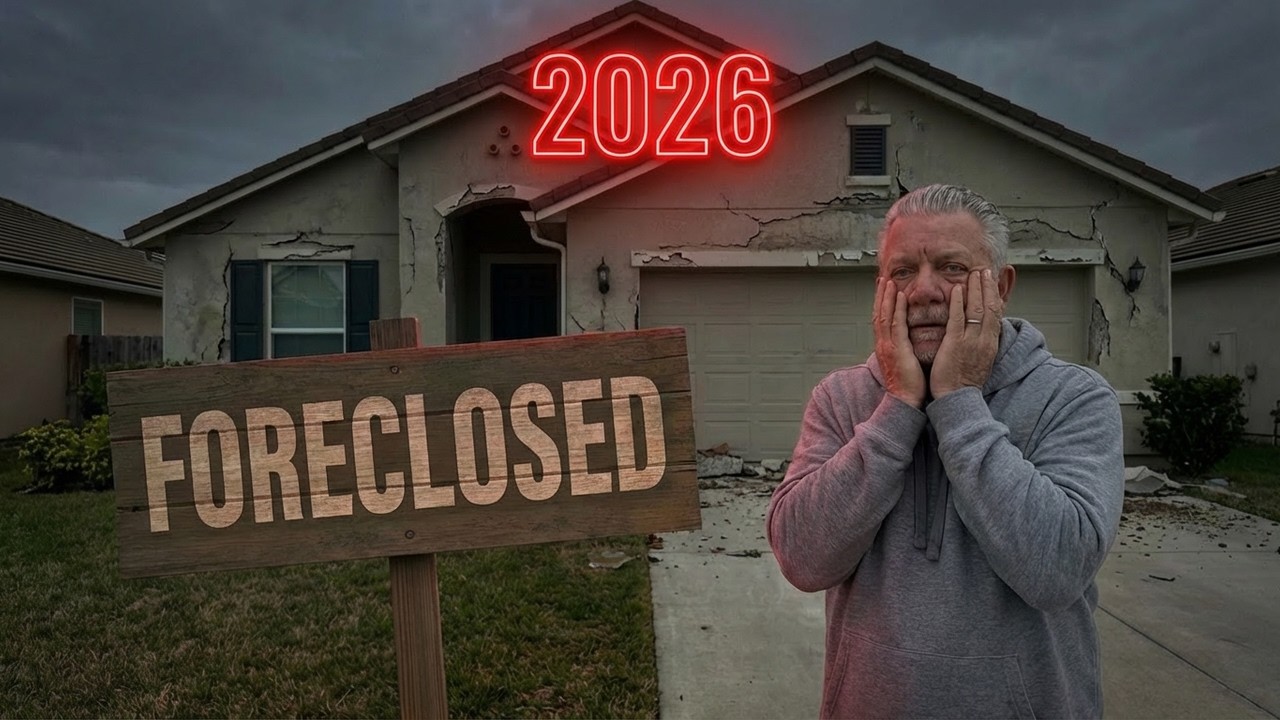
In this March 3, 2026 YouTube video, Joe Homs explains that U.S. foreclosure activity, which had declined for over a decade after the 2008 crash and nearly vanished during COVID‑19 due to government moratoriums, is now accelerating sharply. Citing Nolo (Jan 7 2026), ATTOM and First Street, he shows that filings jumped nearly 20% in 2025, with more than 35,000 new filings in September 2025 and over 72,000 properties entering foreclosure in Q3 2025 – a sustained, not a one‑off, increase. The surge is driven not by collapsing home prices but by a “slow squeeze” of homeowners’ cash flow: rising insurance premiums, property taxes, HOA fees, utility costs and locked‑in high mortgage rates erode margin. States with high insurance costs, volatile job markets and disaster exposure—Florida, Delaware, Nevada, Indiana, South Carolina (and also California and Texas)—lead the nation in filings. Climate‑driven insurance risk is a wild‑card; First Street estimates a 1% rise in insurance costs yields a 1% rise in foreclosures and projects a 380% increase in foreclosures over the next decade, with climate risk accounting for 30% of foreclosures by 2025. Homs warns homeowners that a single bad year can trigger foreclosure, and he outlines warning signs (insurance hikes, HOA delinquencies, tax liens). For investors, the rising tide creates opportunities: motivated sellers, distressed inventory, and off‑market deals that never reach auction. He ends with a call to action for viewers to engage for market‑specific advice.
Chapters
Foreclosures are rising in 2026, and most homeowners are not ready. If you think the housing market is stabilizing in 2026, the data says the opposite. Foreclosures are now up nearly 20% nationwide, and the states being hit the hardest are not the ones most people expect. If you own a home, are buying a home, or invest in real estate, this trend is about to affect You. And by the end of this video, you are going to understand exactly what is happening and how to protect yourself. For more than a decade after the 2008 crash, foreclosures steadily declined. Then during COVID they almost disappeared. The government stepped in with foreclosure moratoriums, forbearances, and emergency relief. That is why foreclosure numbers in 2020 and 2021 were some of the lowest ever recorded. But those protections are gone now, and the bill is finally coming due. According to the January 7th, 2026 update from Nolo, foreclosure activity started rising in 2022. Continued in 2023 and 2024, and then surged in 2025. ATTOM reports that foreclosure filings jumped nearly 20% in 2025 compared to the year before. That is not a blip. That is a trend change. Here's what that looks like in real numbers. In September of 2025 alone, more than 35,000 homes received foreclosure filing. In the 3rd quarter of 2025, over 72,000 properties entered foreclosure. That was a 16% increase from the same quarter the year before. This is not one bad month. This is sustained pressure building. This is not 2008, but in some ways it is more dangerous. Back then, loans were bad. Today, payments are bad. Homeowners are being hit from every direction at once. Insurance payments are exploding. Property taxes are climbing. HOA fees are rising. Utility costs are higher and mortgage payments are locked at elevated rates. Even people with good loans are losing financial breathing room. And when people run out of margin, foreclosures follow. That is why foreclosure rates are rising even though prices have not crashed yet. This is a slow squeeze. Not a sudden collapse. Attom released the states with the highest foreclosure rates in late 2025. Florida was number 1. Delaware was number 2, then Nevada, Indiana, and South Carolina. Florida alone had more than 4,600 foreclosure filings in a single month. California and Texas also were near the numbers at the top. These are not random. They are high insurance states, high HOA states, disaster-prone states, and states with volatile job markets. That is where pressure shows up first. And now comes the wild card, climate-driven insurance. A research firm called First Street found that foreclosure rates rise about 1% for every 1% increase in insurance costs. They also project that foreclosures in the US could rise 380% over the next 10 years due to floods, fires, wind, and climate-related disasters. By 2025, climate risk alone could drive 30% of all foreclosures. That means entire neighborhoods can become financially unlivable even if prices stay high. If you own a home in a high insurance or high HOA area, you are sitting on a ticking Even with a fixed mortgage, everything else is variable— insurance, taxes, HOA, repairs. One bad year can wipe out your margin, and once you fall behind, foreclosure moves fast. For buyers and investors, this is where the opportunity lies. When foreclosures rise, motivated sellers rise, distressed inventory rises, and off-market deals rise. The best foreclosure deals never show up at auction. They are sold quietly to people who know how to spot distress early. Insurance hikes, HOA delinquencies, tax liens— those are your warning signs. If you want to know how to spot foreclosure opportunities before everybody else does, you're going to hit that like and subscribe button and comment the city you invest in. I will tell you your market is in danger zone or not. And if you are a homeowner and worried about what this means for you, reach out. The earlier you act, the more options you have.