🌍💼 Join Julian Retegan in International Co-Living Real Estate Investment! 🏠💰
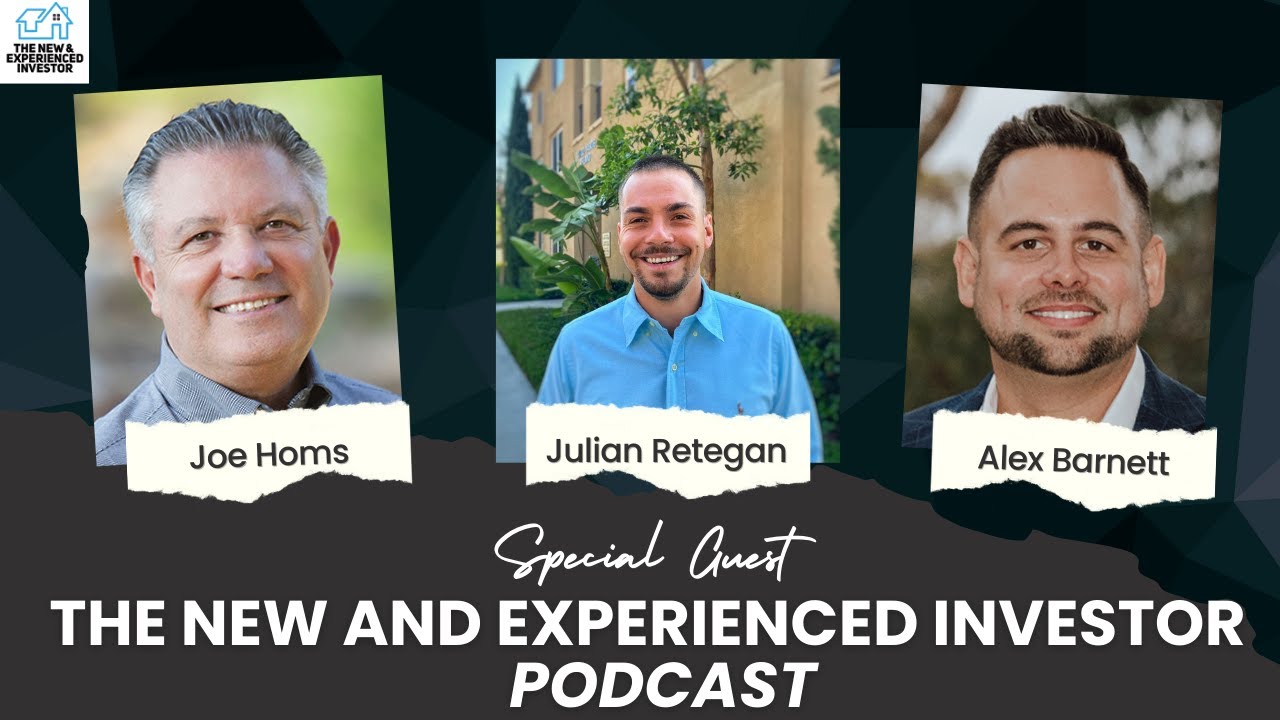
In this episode of The New and Experienced Investor Podcast, hosts Alex Barnett and Joe Homs interview Julian Retigan, a co‑living entrepreneur who specializes in housing international interns and J‑1/H‑2B visa holders across the United States. Julian walks through his business model, explaining why he prefers 6‑12 month lease terms over week‑to‑week rentals, how he sources already‑furnished properties or adds furniture himself, and the economics that let him recoup investment after roughly six months. He discusses operational details such as landscaping, regular maintenance visits, security (CCTV, lighting, signage), and insurance requirements for both tenants and the company. The conversation also covers challenges like landlord trust, zoning compliance, and the importance of meticulous tenant screening. Julian shares lessons learned—moving from an overly‑optimistic, opportunity‑chasing mindset to a more calculated, question‑driven approach—and highlights the need for partnerships with overseas and U.S. agencies to feed a steady pipeline of interns. The episode ends with contact information, a call for more property leads, and promotion of an upcoming investor meetup.
Chapters
Hey, what's up, you guys? Welcome back to the podcast, The New and Experienced Investor Podcast. We're the real estate podcast that brings investors from all walks of life together. I'm one of your hosts. I'm Alex Barnett. I'm the new guy.
How come you paused there before you introduced yourself? I was waiting for that.
Well, I forgot what I was gonna say.
Oh, that makes me the experienced guy. My name is Joe Holmes. Welcome again. We've been doing this now for over a year, right?
Yeah, over 40 years.
Not 40.
Oh no, no, that's your experience. Yeah, the podcast, probably over a year, over a year or two.
And we got some new equipment.
Yep.
So we're testing it out, testing it out. Producer's not up to speed yet.
Yeah, I pretty much buy the gear and then figure out how to use it on the fly.
Really?
Yeah, it's not good, but okay. Well, yeah, we're having fun. Um, yeah, we have another guest in studio. It's, uh, my brother from another mother. Super stoked to have him in today. We're gonna be talking about co-living. That's the new buzzword out there.
Co-living?
Yeah, short-term rentals are dead. Um, yeah, everyone's doing co-living now.
Nice.
So there we go. Uh, you heard it here first. But before we do that, let's talk about our meetup that we have coming up.
Hangar 24 on the 23rd, correct? Monday, yeah, 6 o'clock.
Yep.
We're gonna have Burton from PropStream speaking again. Yeah, uh, he's a great speaker. He's got good information. If you're not using PropStream, probably a good time to show up and listen to what he has to say.
Absolutely.
And, uh, there's a subscription link that gives you, I think, 7 days for free or something like that. So you can check it out before you get to the meetup. So yeah.
It's gonna be great. And it's— I love having him there because we were kind of talking about this today. People wanna come and they wanna learn how to flip. They wanna partner with us. They're like, what can we do to kind of get started? We're like, find a deal.
Find a deal.
How do I do that? You know, this, this is a big part of that. So we use PropStream to pull lists. We just did it, um, with mobile home on land. Uh, we pulled a list of about—
Shh, don't tell 'em.
I'm gonna tell 'em.
It's all good.
No secrets here. I, I tell everybody. Uh, 5,000 records, mobile homes on land. We direct mailed them. We've locked up about 3 already.
Shh, don't tell 'em.
And, uh, and we're closing one next week. Yep, we're gonna profit close to $100 on it, aren't we?
Pretty good for them mobile homes.
Don't tell, don't tell, don't tell. Everybody else will jump in.
That's okay, that's all right. It's not as easy as you think, but yeah.
Well, it is if you're working with us.
That's true. Yeah, we will make it easy.
We'll hold— we'll make it easy for you. We'll hold your hand, we'll teach you how to do it.
Yeah, simple. Yeah, there you go. But this is a very big tool that we use in our business, so you You might wanna be there. You definitely wanna be there. And then it's great overall because you meet a bunch of other people that are doing different things, contractors, money lenders, all that stuff.
And weather-wise, we know it's not gonna rain. So what's the weather gonna be?
Probably a cool 75.
It was like 105 last week or—
Yeah.
You know.
I know.
Earlier this week and—
Yeah, it was hard to sleep.
It's finally starting to cool down. So you're the weatherman. So—
I'm the weatherman. Yeah. So we're going about 75 degrees. clear and sunny.
Okay.
And it's going to be beautiful.
Okay. And if it's not?
If it's not, I will not be there.
We'll blame you.
Yes.
Okay.
So I'll go, I'll set everything up, and then I'll slowly exit out the back. That way, by the time you bring it up, I'll be nowhere. That's kind of my plan.
Sounds good. All right. Sounds good.
So, um, let's go ahead and bring in our studio guest. Uh, welcome to the show, Julian Redigan. How's it going?
Hey, brother. Thank you so much. Thank you so much for having me here, guys.
Yeah, absolutely. Bring that mic just a little bit closer. Yeah, get in there. All right.
Yeah, perfect.
Girlfriend. Yeah, get up in there. Get real. Yeah, Joe's, uh, yeah, he's ready to wingman for you. Yeah, definitely. Um, awesome. Thank you for being here. Why don't you go ahead and introduce yourself to everybody? What were you doing before real estate? How'd you get into real estate? And we'll go from there.
All right. Sounds good. So I'm Julian Retigan. I'm originally from Romania. I got to the United States back in 2017. I stayed in New Jersey first time, couple months there. I was working as a— I was like an international student. It was like an exchange program for students. I stayed there for a couple months. I moved to San Francisco. In San Francisco, I started working in the industry, restaurants. I did almost all the jobs that you can think about in a restaurant, starting from dishwasher, busboy, runner, waiter, bartender, all of them. Right. And yeah, when the pandemic came 2020, in the end, that was the moment when I realized that working in the restaurants, it's good for the moment, but it might not be that good, you know, like in the long line, just trading your time for money. And I was looking at different type of career opportunities, and that's when I got in real estate. Yeah.
Yeah. Awesome.
What were your living conditions when you came here to the United States?
Well, in New Jersey, I probably were like, I think we're like 8 students from Romania living like in a 2-bedroom apartment.
Okay.
Yeah. So these are like 2 bunk beds, uh, no, 4 bunk beds in each room. And the apartment has like 2 rooms. So it was like this. So this is where I kind of understood the, uh, the situation, you know, with the co-living and everything. 'Cause I was, I, I, I I see how I live. And I know that if I were ever going to do it, I'm going to do it the right way. I'm not going to put like 8 people in a 2-bedroom apartment, you know?
OK. Gotcha.
So that's kind of where you got the idea.
Yeah. Yeah, that's right. Yeah.
And these are people you've never met before.
Yeah, no. I came— actually, I came— when I came to the United States, first time I came, I think I had like $400 in my pocket. And yeah, luggage. And I got to New York. And I spent my first $100 on a taxi to go from New York to New Jersey. And $300, there you go. Yeah, welcome to USA.
Yeah, how much, how much money you have in your wallet now?
Uh, I don't have any money right now. I have credit cards and debit cards.
Oh, the American dream. Okay, nice, got it.
Cashless society.
Okay.
Yeah, I mean, in like in college, that is pretty normal because like I stayed in the dorm rooms and they have pretty much like 3 to 4 people in a cinder block freaking room.
Yeah.
And they're just like, well, you're a student, so it doesn't matter.
Yeah.
Yeah.
So that's not out of the ordinary. I don't know what the conditions were of this New Jersey—
Where'd you go to college?
Cal Poly Pomona.
Really?
Yeah.
I never knew that.
Yeah. For music business.
Oh, for the music business.
Yeah.
Oh, were you together with producer then?
No, no. She was probably like 8 years old. I'm just kidding. I'm just kidding. No, there's an age difference, but it's not that bad. Yeah.
Yeah, okay, we won't go into that.
Yeah, okay. Yeah, yeah. So, um, but you know, so I mean, did you end up being friends with those people or like?
Yeah, actually they were like super nice. Probably was one of the best summers even in the beginning.
Oh, awesome.
Yeah, yeah, yeah. Because basically what we're doing, we're just working all day and in the night we're just partying a lot. So yeah, it was in New York. This was New Jersey.
Oh, New Jersey. Okay.
Yeah, yeah, yeah. So it was a— it's the city is called Wildwood. It's close to Atlantic City. I'll say probably like one hour away.
Uh huh.
And yeah, it's a town. It's full of students, and everybody does the same thing: working hard during the day, partying even harder during the night.
So yeah, after this, gym, tan, laundry. Yeah, that's the Jersey thing.
Yeah, yeah, apparently.
GTL.
Yeah, gym, tan, laundry. Okay, so now fast forward. I know we we were doing some wholesaling together. Right when we both started.
Yeah.
And we were kind of sharing tips. We were doing the texting at the time.
Oh yeah.
Then you worked on some sales gigs and then now you're doing sort of like what you're explaining right now with the international students and then creating like a co-living situation. Is that correct?
So basically I got my real estate license once I moved here in Orange County from San Francisco to Orange County. I was a— I'm still— I still am an agent with Joe at Pelago. Great brokerage, by the way.
Thank you.
He was more like a mentor to me, always, you know, like when I have any type of questions, always there, always helping me. And yeah, I think I try probably different stuff related to real estate, right? I tried the conventional way, the retail way first. After this, you know, when I get in contact with you, the wholesaling and everything, the trying to be, you know, like the middleman or trying, you know, like to the wholesaling. I think with Joel we have a deal together. Like, we get like— I'm not sure if it was like a retail or like a wholesale deal, but me and Joel, we got the deal together. Uh, fast forward, I jump into construction. I got like in the sales. I did that for like a year and a half with different companies. I even managed my own company on that. And last year I, um, I got into this, uh, uh, co-living housing, uh, you know, company. And yeah, I have a partner right now, and I'm not, I'm not gonna say it's necessarily like something crazy, but we're just doing really good for, you know, what we're doing for ourselves. So yeah.
Yeah, I mean, you gotta, you gotta have a runway to, you know, building up a company. So yeah, that's really great. And then, you know, what, what's like your clientele? What's your avatar of the person that stays at one of these?
Okay, so being one of these international students myself, I realize what are the difficulties when you are coming here in your first year. Because basically, for the first month or second month, you don't have any bank statements, you don't have any Social Security, you don't have, you know, like anything like that you can prove that you have like a good financial situation here. So most of the people, they're not going to rent to you because they're going to look at you and they're going to be, oh my God, he presents no credibility. He doesn't have this, doesn't have that. So your best scenarios, you're going to finish in a hostel room or in a motel room or anything like that, right? No kitchen, shared bathrooms. So the conditions are really bad. So we recognize this opportunity and we know that these international interns, they are coming every year. We know they are coming with serious contracts. They are working for like big hotels and, you know, big resorts. And we know they're getting paid. We even see their contracts. We understand their visa. And us being part of— both me and my partner being part of this process ourselves, We kind of understand that the risk is not so high how it looks from outside. So we, we, this is our, basically this is our avatar, like the international students or the interns, they're coming here every year.
That's amazing.
And so your part in this is to find them housing and you're using your information and your credit and you're letting the landlord know this is what you're doing, correct?
Yep. Yeah.
Okay.
So I'm not using necessarily my own credit or I'm not using my own information. I'm not acting as a guarantor or I'm not cosigning for them. I just, you know, like I have like a housing company and I just tell them like I'm straightforward right away. I say, this is who I am, who am I? This is the name of my company. I give them my website, I give them, you know, my real estate license, my insurance, my bank statements, everything else. So I'm super transparent with everything. And I even explain them. I was I'm showing them who is gonna live on their property. So I give them copy of their passports, or I give them their work contract, everything else. So I'm like super transparent with both of the parts. And yeah, it's it worked pretty well so far.
Do you have any pushback from landlords?
Yeah, yeah, yeah, yeah.
What's the biggest pushback that you get?
They usually it's like it's like I'll say probably like you know like it's it's like in the wholesaling where you need to find the motivation, right? Because this is something that you like you have in the mindset. So for example, sometimes I'm getting these leads from Zillow, right? And I'm calling and if somebody's just posting their properties, has like 5 or 10 days on market, 15 days on market, they might say, no, I'm actually looking for a family, or no, I don't have so many people unrelated living in the same household, or no, I don't want this, or I don't want— right? But on the other one side, when the property is sitting on the market for 60 days or 90 days, well, now they're going to accept, you know, they, they, they can accept like a couple compromises, right? Because sometimes it's the number, because we like to put at least like 4, 5, 6, even like 8 people living in the same household. So sometimes they are worried and they are telling us, oh no, I'm not really comfortable with that because how about if this or that happens? But, you know, our rebuttal basically is like, okay, no worries at all. We're just going to increase the deposit. So we put more deposit or whatever.
And where, where are you setting up these places?
As of right now, we are out of state only. We have a couple of properties in Florida. In Texas, and we're gonna go probably at the beginning of the next month. We're gonna go to Utah.
Wow!
Okay. What made you pick those markets?
I'm not picking the markets. The markets are kind of picking me. So okay, whatever it's a demand, and wherever they want me to go, this is where I go.
So they say, "Hey, we need housing in here. We need housing here.
We need housing here." Yeah, basically they're telling me the market.
So this this is this is from your marketing relationships with the companies overseas, correct?
That's correct. Yes, yes, yes. I'm I'm I have a relation. relationships with the agencies overseas, Facebook groups, you know, like even here I developed a couple good relationships with agencies here. So yeah, they're the one telling me where they're gonna need the housing for their interns and I'm doing the search and I'm finding the properties based on their criteria.
Okay.
I know of what they need.
Oh, that's great. So it's more of an arbitrage rental situation, right? Is that, 'cause you're not like purchasing a property and then doing it. So it's like, it's somebody that has a rental, You're agreeing to their lease, and then you bring all the people in, and then you make the difference minus expenses.
That's correct.
Okay.
Yeah.
Gotcha. And what kind of spread can you get? I mean, is there a sweet spot as far as the rental that you are on the hook for versus putting 6 or 8 people in there? What kind of spread do you see?
Yeah, so basically that's why we try to work only with groups of 5 or more, because this is where we can still keep the pricing very affordable for the interns. So they're going to pay the same no matter what, right? And this is where we can recoup the investment. So if I were to break down the numbers after, because we have costs with the furnishing the places, we have costs with flying there, we have costs with the furniture, with installing the furniture, putting the internet, all of this stuff, right? So I would say the first 5 or 6 months is us just recouping of our investments. And the last 5 or 6 months, no, the last 6 or 7 months of the year, it's going to be us getting the profit.
Okay, nice. All right. And then you just keep it going from there. Is there turnover or what are you seeing as far as people staying there and then jumping to maybe their own thing or what's sort of the lease, typical lease?
So no, we have like a 1-year lease signed with them and we have 1-year lease signed with the landlord. So we are very transparent from the beginning where we tell them, guys, If you, you know, like if you sign one-year lease with us, you need to be staying here for the for the whole year. So we don't do any type of like a short-term. Oh, I'll be there, but I'll just be like for like couple weeks until I find something. No, nothing like this. We are like very transparent. We explain the whole process from the beginning. They understand and yeah, we didn't have any type of problems so far.
Excellent. And these these are people coming into the U.S. legally with papers and all that stuff.
Yeah. Yeah. When we do nothing at the south border in Texas, we don't. Yeah, right.
Yeah. Okay.
Yeah, no, everybody's coming. We have their visas, we have their work contracts, we have all the paperwork from the Department of State. And yeah.
What hurdles have you had to jump over? Like, you know, you bring somebody over, maybe they get homesick or something and they want to go back. Have you had any of those type hurdles?
We didn't have anything like that so far, and I hope we're not going to have, but Even if they get homesick, right? People coming from overseas, they make a huge investment, right? Because they need to pay for the, let's say, the cost of the program. It's a couple thousand dollars. The play, the cost of the tickets, it's a couple thousand dollars. After this, they pay the deposit and the first month is going to be a couple. So this, a lot of time, these come, these guys coming from overseas, they, even if it's going to be a little bit hard in the beginning or they, they don't really want to give up. because they have a financial burden if they're going to give up. So they usually, they don't do it. I mean, you know, like, because I was one of them too. And, you know, in the beginning maybe it was a little bit hard, but you definitely don't want to go home and say, oh, yeah, it's not only you failed, but you failed and now you need to pay $6,000, right? In a country maybe where like the minimum wage is like $600, let's say. So you definitely don't want to do that.
And so what, what, if any, difficulties have you encountered with The property, the people inside?
Yeah, we have, we have a little bit, uh, uh, we have a little bit of a situation in the beginning where, you know, like, uh, we have some, somebody like crossing, you know, like, um, how do you call that, coming on the property.
Trespassing.
Trespassing, exactly. So we put cameras, we have a little bit of situation there, we put cameras, we put, you know, like, uh, alarms, and, you know, we have a couple problems, you know, whenever it's gonna be like, uh, The restroom is clogging or a pipe or anything like that. But we have like, we have like boots on the ground. We build a very good relationship with one of the handymen there and we just work with him. You know, we trust him. We give him the code from the house. He's going there repairing everything, send us the invoice. We take care of him, he takes care of us. And this is how it goes.
Nice.
Yeah.
So yeah, you're, you're— sounds like you're prepared for anything that comes up.
Yeah.
I mean, pretty much. Yeah.
Yeah. We—
this is what we like to do in the first week when we're going there. We try to find like a handyman to help us in the beginning. We inspect the property. We inspect the property. And yeah, if we like the handyman and everything, we just say, hey, we are here for the long term. You know, we're going to need somebody to check the air conditioning filters, to cut the grass for us in case we're going to have a problem. You're going to be our The person that we want to call, want to build a relationship with you, and that's it. Shaking hands and we keep our part of the— yeah.
I know you told me when you did Florida that you and your partner actually went over there and furnished the place. What was that all about?
Yeah, yeah, actually my partner, he's really good at that. Uh, he's, uh, he's really good with this, you know. So, uh, we fly there, we take everything, you know, like we bought like 12 mattresses, 12 bed frames, uh, Couple sofas, couple TVs.
Yeah.
And probably got us, I think, like 4 days. And we furnished 2 properties by ourselves. It was pretty good. Tiring though. Very tiring.
And you were telling me that when you were buying the mattresses, you were actually trying to make a deal where you were buying them from. Tell me about that.
I didn't know that you can negotiate like a mattress in the store. It was funny, right?
Yeah.
So I got there and I look at the price and the lady, she asked us, hey, what you guys are looking? What's important for you? Right. She was giving us the pitch and everything. So I was looking, not, let's say, not the cheapest, but one of the most affordable, right? Like good quality, but still very affordable. So I was looking at one of them and she was like, oh, don't take that. You know, that's not good. Take the other one and I'll give you a good price. And boom, you know, working in sales, I was like, wait a second, what do you mean by good price?
Yeah.
Yeah.
Yeah. And she was like, oh yeah, you know, if you're taking this one, I can negotiate with you. Like, okay. I was like, how about if I take the other one? It's still a little bit of room for— yeah, but on that one— and I knew exactly right there.
Yeah, yeah, yeah.
I was like, listen, I'm gonna buy 12 of them, right? So I was like, please give me the best deal you got.
Yeah, nice.
Yeah, it was like probably like 30 minutes of negotiation, you know. By the time I— my partner, he was going outside because he was ashamed of me.
Oh no, no, no. Yeah, some people— proud of you. Yeah. Wow.
Yeah, I'm proud of you.
Some people can't handle that, but You know, I mean, especially if you're a salesperson, they're all about it, you know?
Yeah.
If they're gonna, they're gonna have 12 sales in one day, they're gonna, that's gonna look good.
It was like 8:30 PM in the night. I was like, look.
Oh, that's good. Yeah. And it closed at 9, right? Yeah. It's like, okay, let's get this thing done.
Yeah.
And I knew exactly what I was saying. I was like, look, you know, I might, you know, like I might go out, I might think about it. I might find another price. I might do this. I might do that.
Why not?
Make it happen right now.
Let's make it happen.
Yeah, love that. There you go. Awesome. Yeah. Um, so I guess what, what's in it for the future? I mean, are you planning on purchasing properties and then doing this model, or is it good right now just having other people own the properties, handle the taxes, insurance, and all that stuff, and you're just, you just got to pay rent?
I think I like this idea of arbitrage for the moment, right? Because how you say, everything comes with a price, right? Because let's say you, you're buying the property and you think, okay, I buy the property and I'm gonna equity in time and I'm going to do this, I'm going to do that. But they're like, maintenance on the property is going to be the property tax, it's going to be this, it's going to be that. So it's going to be each set of opportunities come with their own, you know, like backend type of like small problems, right?
Absolutely.
So for the moment, I think I'm just going to stay in this arbitrage model where, you know, like I'm just going to try to find more agencies, trying to find more, you know, like sponsors who's going to help me with, you know, like send more students in my way, send more interest in my way. And yeah, I'm just gonna focus on what I'm doing right now, I guess.
Where are you seeing as far as the people coming over here? What are the countries of origin? Is it all over or is there a certain spot you focus on?
Russia? No. North Korea?
Yeah.
This is just something I know.
No, actually they are coming so far. We have India, Philippines, and Indonesia.
Okay, so all the VAs are coming over here again. Yeah, yeah, yeah, yeah, makes sense.
That's a good idea. Yeah, you have any VAs local? No, you said they're all working at restaurants, right?
Yeah, yeah, they're working resorts right now.
Now do they all work at the same resort?
Yeah, really? So they're coming together, right? So this, like, this, uh, big hotels or big resorts, sometimes, you know, like, they like this diversity, or they're coming and they are working like chefs, or they are working different type in those Hospitality, and yeah, they like the diversity. They like they are hardworking. These guys, you know, there is nothing like oh my alarm didn't. Yeah, there is nothing like that.
Oh, I was saying no American excuses.
Got it. Seven a.m., you know, if they need to work seven a.m., six forty-five, they are there. You know, yes ma'am, no ma'am, yes sir, no sir. So they have a different work ethic. You know, they are very good. So yeah, I think we definitely see an increase in the number of Interesting students coming every year.
Are there other companies providing this service? Or, I mean, if it's a resort, you got to think they're, they're probably trying to import, or I don't know what you call that, hire a lot of workers from out of the country. If you're housing 6, 8, 12, 16, and it doesn't seem like that much, I mean, maybe there could be a lot more.
Yeah.
I mean, you know, like we definitely As much as it's gonna be a demand, we're gonna be there to provide for them. So yeah, if they need for 10, we're gonna try to find housing for 10. Yeah, they need for 20, we're gonna try to be there for 20. And yeah, wow. Yeah, yeah, we, we don't really have like any number that we say, oh, if it's more than A, we don't want to take them. Nothing like that. As long as the numbers make sense for us and the number makes sense for them. And you know, I showed you a couple of our properties, how they look inside, and they're gorgeous.
Yeah, they're like, they're like Some of my flips. Yeah, that's what they look like.
They're nice. Awesome.
Very nice properties. And then he furnishes them.
Yeah.
And, uh, you know, has one living area that has a TV and internet, Netflix, Google, everything. Yeah.
Got me 5 years to live like this.
Yeah, really? Yeah. Nice.
Yeah, he sets it up. I think, you know, I always tell flippers, the first-time mistake that you make is you flip like you're going to live there. But I think that's what he does because he went— he's gone through this and he goes, God, I wish I would have had Netflix. Yeah, internet and all that stuff. Yeah, he, he's suppo— you supply all that stuff, right? Yeah, that's part of the package and stuff. Okay.
Yeah, that's great.
It's, it's a mixed crowd. It's, you know, men and women. Yeah, right.
Yeah, yeah. But we kept—
not in each room, but yeah.
Yeah, no, we keep them like individual, uh, rooms. Boys with the boys, girls with the girls.
Yeah.
Yeah.
Okay.
But yeah, we try to make, to give them the best conditions. So in this way, they can focus on why they came here, you know, to embrace the American culture and have a good time, work hard, make their money, travel, you know. They do their stuff. We do our promise to them is, you know, to offer them like a safe and, you know, like comfortable environment. And this is what we're trying to do for them.
And the guarantee that the hotel gives them, and I'm assuming here, I'm asking, Do they guarantee that they're going to be employed for the year? Is that what they tell them? Like, what happens if a month down the road they don't like this person anymore? Can they fire them?
Yeah, I mean, I'm not sure. I can't really, you know, like, uh, discuss because I'm not sure what's their, like, internal, uh, policies. I guess they do in the end of the day. I don't, you know, but probably they, they, there's like some set of rules where they need to give them like warnings, I guess, or because They are coming here and they spend all of this money up front to be part of this internship program. So yeah, I don't think it's always like, oh, you've been late for like 15 minutes, take your, you know, suitcase and go back to Indonesia.
But you haven't had any of these issues that somebody's been there for 3 months and, and they get fired? No. You know, so they can't pay?
No, we didn't have, uh, that's good.
Yeah.
And this is one of the reasons that we—
yeah, knock on wood. Yeah.
That's one of the reasons that we kind of having like 5 or 6 or more in the groups because we kind of take precautions where, okay, let's say one of them or 2 of them is not going to be able to pay the rent. At least, you know, like we're not going to take such a big, like, financial hit.
Got it.
Mm-hmm.
Good planning. Yeah, that's very good planning. Yes, that's right. Yeah. I mean, because I come to this country and a month later I'm out.
Oh yeah.
I'm traveling by myself.
Yeah.
I got here. You know, see what the rest of the world— they used to call them hobos.
Yeah, a knapsack and a stick and jump on the train. Yeah, yeah, you got me here, that's all I care about.
Yeah, exactly. I'm gonna head west.
But, uh, it sounds like they're more disciplined than that.
Oh yeah, no, definitely.
It's not like anybody's looking for them if they leave.
No, no.
Yeah, there's like, well, you're 15 million people running around.
I think your visa is like kind of that what that does. You have to be here for a specific reason.
Oh, that's a great question. Do you keep their visas? Oh no, no, no, no, nothing like that. Look, because You know, when you go travel to another country, if you go to a hotel, they ask you for your visa, and I think they hold on to it while you're staying there.
No, I would not give my visa.
I've never heard that, but I've had it happen to me.
No, where were you?
What were they doing, making copies of it or something?
Yeah, they're like, we got to watch this guy.
Joe almost got trafficked.
Oh my God, I hope so. It didn't happen.
I mean, maybe they need a copy of it. Yeah. Um, but I don't know.
They asked me for it and they kept it. That's odd. They said, I will give it to you when you leave.
Really? Weird.
Yeah. That's never happened to you?
No.
Oh my gosh.
Maybe that was only—
What country was it?
Yeah.
Maybe it was in the old days. France. Oh, friendly France.
I haven't been to France, so I don't know.
Oh, okay.
Yeah.
Probably somebody got some loans in your name right now in Paris. You don't know.
Exactly. Like, I'm gonna need to see that.
Yeah.
And your passport. Social Security card.
I did 23andMe a few years ago, but I'm good.
Okay. Nice.
Yeah. I'm good.
I'm good.
Everything checks out.
Everything checks out.
Yeah. So how high is the demand right now? Is there— are they— are these companies, like, they're going out and recruiting the people, right? And then you are in talks with them. They say, hey, we got, you know, 8 people coming over in May, so we need something then. Is there— is there— do they give you, like, A heads up or—
Yeah, yeah. Usually we like to ask at least for like anywhere like from 4 to 6 weeks heads up. Sometimes they give us the heads up, you know, like in time. Sometimes everybody's writing us on the, you know, like in the last couple of days. Sometimes we can help them out, sometimes we can't. If for any reason, you know, the numbers are not making sense for us or it's not going to be the number of students that we need or the interns that we need, we usually we just, you know, like try to connect them with somebody in the local market. Or we're going to give them the websites or we're going to find the Facebook groups for them, you know, like Rent-A-Room or anything like that. It's not like we're just letting them and say, okay, yeah, it's not working for us. Good luck. You know, we kind of still try to help them out with all the information that we have.
So excellent.
That's the nice guy in him.
I know.
Yeah, the nice guy.
Because I can imagine some people just be like, here's your room. It's like a mattress on the floor. Like, this is America. Get used to it.
Yeah.
Yeah.
Throw a dog bed on the floor. That's what you get. That's what everyone Yeah, no, they're starting to eat dogs and cats, aren't they?
I guess.
I don't know. Yeah, okay, yeah, we heard that.
Yeah, yeah, I heard that's, yeah, a thing.
But so I don't know.
Yeah, we're not sure. Um, cool. So we're in Florida, we're in Texas, we're in Utah. Anything in California?
That's right. Well, with the California, we actually have some demand for California, but we were kind of afraid of 2 things, right? The first one is going to be the, the high price for the market where, you know, like it's— they're already expensive. So in order for us to make sense, you know, like, and if we try to make a profit, we're just going to need to come on top of that. And it's already so expensive. And, you know, like that was one of the reasons. And the second reason, we have actually some demand here for Orange County, but that was not with the public transportation and everything. We couldn't really accommodate just because, you know, like we have only one building where we find and the price was so high. We send them the offer and yeah, basically the numbers didn't work out. So we just tell them like, no, this is what we could do for you guys. Please check this website.
We, we have very good public transportation here in Orange County. I don't know if you've ever looked inside a bus as it was driving by you. There's nobody inside. Yeah, it's like maybe you see one person in there. So yeah, we have really good public transportation. Nobody takes it, but yeah, it's there.
Yeah, I was looking for the routes actually, so, you know, like maybe I was just, uh, I was looking for the routes for the Laguna Beach and not too many buses like go there. So, you know.
Well, during the summer all the kids jump on there and go down to the beach.
We have free trolleys during the summer. So it's like a local trolley that goes—
You're in Dana Point.
Dana Point. And then there's one in Laguna. I don't know about San Clemente. There's one in San Juan.
Yeah.
So you can hop on and off to each city pretty much.
I've been on the San Clemente one. I haven't been on the Dana Point one. Is that higher end, Dana Point?
Yeah, it's super high end. You get a massage while you're going.
Really?
Yeah, it's really nice.
We haven't been on it yet.
It's free, right?
It's free.
Yeah, it's free. Yeah, nice. Yeah, they drop you off at the, you know, good parts of town, not the bad.
Yeah, I know, stay away from the bad.
Is there any bad parts anymore in Dana Point?
Yeah, we haven't really—
I don't know, kind of by the mobile home park. Oh yeah, yeah, across from Costco. Well, not the mobile home park, but near it there's like one little strip of like old retail. Oh yeah, I know where you're talking about. And then there's like an apartment building behind there. They look a little Yeah, that's around the edges.
Used to be bad and always has been bad.
Yeah, yeah, because it's just like tucked back there, so it'd be good to do bad stuff better back there. It's a good— it's a good place to do bad stuff.
I was scoping it out. No, no, I don't need to do various activities.
I'm just saying it's a good place to do bad stuff if you're into that. I don't know.
Moving on.
But anywho, um, Okay. So what's it like running a business that is primarily out of state?
Well, I would say the amount of, the amount of work once we already have, once we have the property set up is not necessarily like a high amount of work, right? How I was telling you, we have like every month something maybe it's getting, you know, it might be the restroom or it might be something like the window or it's the grass or this or that. I'll just say you can do everything via cell phone. We have the handyman there. Yeah. And once we're good, once we have the boots on the ground, then we just call the guy. Our guy's going there, send us the invoice, send us the pictures that everything looks good. And yeah. Okay. Yeah.
What about communicating with everybody in the house? Are you guys managing it? Are you property— are you considered the property manager? So then everyone talks to you?
Yeah, exactly. So we do have a WhatsApp. And if you guys know WhatsApp.
Yeah.
Yeah, right. We have a WhatsApp group where everybody's involved and everybody, you know, uh, we actually have this serious discussion with them in the beginning where we tell them like, guys, please don't try to hide anything from us. If something is broken down, we're gonna take care of it, but please let us know in time. So in this way, we're not gonna have like a huge problem in the end. Let's say the fridge is not working or the washer or the dryer is not working or, you know, Please let us know when this is happening. Don't wait 3 months because you think, because you put like some, I don't know, shoes inside and that's why it's broken. And now 3 months we need to throw it and to bring a new one. And, you know, so please let us know everything ahead of time. When something is not working properly, let us know. We're going to send somebody there and we're going to fix it. And it's like free, free of cost for you. We'll be taking care of everything.
That's— I think that's very, very important that you have this conversation with them up front. I have a conversation with anybody and everybody that I rent to. I mean, the first conversation is, you know, that rent's due on the first of the month, okay?
Yeah.
And there is no late. It's late if you don't pay me on the first. That is the most important thing. And I go through everything else like you just said. If anything breaks, please let me know. We'll get somebody over here to fix it, you know, as soon as possible. So I go through the same thing. So good for you.
Yeah, thank you.
Yeah, good for you.
Yeah, yeah, yeah.
What do you do if someone's late?
Uh, sanguito.
Yeah, no, don't worry.
I have 2 Romanian friends back in Florida.
Have you had anybody late?
No, not so far.
Oh my We're just, we're just joking.
Yeah. Okay.
No, I do have like a late fee penalty in the agreement. So, but we never use it.
Yeah.
Yeah. So everybody's like with the, with the rent on time, you know.
And how do they pay you? Like Zelle or any, you know?
Yeah, we use Zelle or if not, they make like bank transfer or Zelle or whatever works the best.
Yeah.
I always try to give them as many options as possible and I always tell them whatever works the best for you. You want to go to the bank? Do it from the bank. You want to do Zelle? Do it from Zelle. You want to send me like a pigeon with put $2,000 and just send it to me?
Yeah, that'd be hard. Yeah, he'd be tired by now. Who does, who does your accounting for you? Do you do that yourself?
Uh, I have my, uh, my partner. He's a little bit better, you know, like good with the numbers and everything else. So he has like QuickBooks and, you know, he's taking a look on that.
And we also have an accountant who is making, helping us with the Okay, so I mean, you have a file that says, I got the money from Alex, I got the money from producer, I got the money from Michaela. Oh, wait a second, I'm missing money from Julian this month, so I need, I need to reach out. You're okay? You're doing all that?
I'm doing that, yeah. But how I was telling you, like, we don't— usually on the first of the month the rent is paid, and yeah, yeah, everybody knows first of the month the rent is paid, you know, like if If for any reason something like this will happen, probably I'll be the one reaching out to them and say, "Hey, you know this or that." But we didn't have any type of situation so far. Okay.
Mm-hmm. Got it.
Now with co-living, it's basically like having like five roommates. So in a roommate situation, there's always somebody that's like clean. There's always somebody that's dirty. So you know different clean lifestyles. Dirty doesn't. I leave my cords everywhere. That's pretty much it. Um, so how do you deal with those little like roommate situations that maybe pop up?
Or—
Yeah, actually we don't really, uh, get to deal with them. We just tell them, guys, as long as you, you know, like, you know, we're giving you the properties, we have 2 or 2 of each, uh, 2 per room, right? If you guys want to change or you don't like your friend anymore and you want to live with the new friend or this, this is on you guys, you know. Like, we, we are not getting involved in what you guys doing as long as, you know, You maintain the property and everything works well. It's, you know, I'm not going to tell you when to do your dishes. I'm not telling you when to do your bed. I'm not telling you who's going to be your roommate. That's on you. You know, they are grown boys and girls. So yeah.
You don't, you don't have any like maid service or anything like that, do you? It's, it's like, here's the house, here's the people, they have to take care of it.
Yeah. Yeah. But we send them like, we send them every couple of months, we send them like cleaning. I have a cleaning company in Florida. So in this way, I'm asking the cleaning company to take some pictures and some videos and make sure that everything, you know, still— it's still in good shape. So once, like, every, like, 3, 4 months, we send, like, the cleaning company there. So in this way, we're taking a look, we're making sure.
Another great idea.
Yeah, I like that.
Yeah, I mean, if there's any damage or if there's any smell or anything like that, or any, like, signs of mold or anything, I would prefer to to know ahead, you know. So in this way I can work. I'm not going to wait for the whole year. And when I'm getting there, it's like, oh, we need to repaint the whole house or anything like that.
Yeah.
Mm-hmm.
So yeah, we're doing this with the— yeah, I think I, I took a lot of these like small ideas, you know, like from Facebook groups, like Airbnb, like this and this. And I'm just, you know, I'm just using them.
Now, do you have one contract for the whole house and they all sign, or do you have one individual contract The same, and you have each one of them sign it.
I have each and one of them sign.
Yeah, same contract basically.
Yeah, it's like the same contract, but I have a contract with each individual person that lives in the household. Okay. Yeah, because in this way I don't want to have any type of situation where like, oh, but he said this, she said that, oh, I was thinking this, or I was thinking that, you know. So in this way we have like individual contract, and yeah, everybody knows. Ahead all the steps of the process, I guess.
I like it.
Yeah, it looks— it seems like you figured it all out. I'm trying to see where the—
yeah, where's the next question?
I'm trying to see how can I get in on this is my next question.
Yeah, well, definitely if, uh, we can find a way, you know, like to, to, to work together. Yeah, because I know you do a lot of, uh, deals With the flipping and everything. And yeah, if it's going to be like anything here in Orange County, we might need a little bit of help in the future. And if that's going to be the case, I'll make sure I'll bring the deal to you and Joe, see if we can do something together.
I would prefer, and I know Producer would too, if we— if you had a deal in Hawaii, we'd be happy to go over there and furnish the place.
I mean, they have resorts, you know.
Yeah, I'll furnish it.
Yeah.
Yeah, it might take a little longer than usual. Yeah, like a couple months or something to get it done.
Yeah, it could. Yeah, Hawaii would be a good spot to send.
Yeah, I know Joe has the, the shirts ready, you know.
Yeah, yeah, exactly.
I mean, speaking of good spots, we have Chad in the chat and he says check out Lake Tahoe. There's a huge shortage of J-1s being able to secure housing every year. Would be a great business to help out that area. Okay, and then he also he also mentioned other big mountain towns like in Colorado, Park City, Utah. Tons of J ones.
Yeah, we're gonna go over there in in Utah.
For those of us who don't not know what a J one, including me, what is a J one?
I don't know.
J one is their visa. How they how they come. J one it's a type of visa for the international students. And they can have the J-1 visa for like three or four months, or they can have it for the whole year. But it's still like a J-1 visa. It's like you know J-1, H-2B, you know all of these. They're like visas. And okay, it's a special visa.
But then after a year it expires, and then everybody what do they do?
Yeah, they go back, and you know they go back.
And do they actually go back?
This is not my problem anymore.
He's like, all right, see ya again.
We have We have 15 million that came here and they're still not back.
Yeah, I'm not sure what they— but yeah, ours, ours then so far, yeah, they, they go back.
Wow. Wow.
Okay. Maybe.
Yeah. Well, you never went back.
What?
You never went back. He's like, huh? What did you do with your visa? How did you change that?
Oh, I've been through a lot of, uh, through a long process. To do all the adjustments.
Yeah.
Mm-hmm.
Okay.
So my process—
but that's something that you decided at the time. You, you said like, I'm not going back. How do I stay?
Yeah.
And then you figured out that process.
Yeah.
Yeah.
Yeah. It's, it's a pretty long process if you want to stay after that, you know, J-1. But, you know, you do it and yeah, then you're good.
Nice.
Okay. Can you vote?
No, not yet.
Do you want to vote Republican? I'll get you a ballot.
He has ready for me.
We're printing out extra ballots.
Yeah, they just send them. Yeah, in California they just send it. Yeah, you know, it's not like it's really going to make a difference here. It's like, okay, we got one more Republican, big deal.
Yeah, that's fine.
Yeah, like, okay, it doesn't matter. What do we have, videos?
We got videos.
Oh, let's look at some videos.
Okay, the first video is 3 important co-living tips.
The 3 most important rules to implement in your co-living rent-by-room property is number one, ideally no guests. You just want as little drama as possible.
You need house rules, which includes cleaning up common areas, not keeping your own stuff in common areas, and then quiet hours, making sure either 11 to 6 or whatever that is Make sure you're being a good neighbor.
The three rules.
Yeah, probably. It's it's a little bit different, right? Because in the co-living, I'm not sure exactly how that is working, right? Because they probably you need to have the the housing rules, or you need to have like a different set of rules. Like how I was saying, like as long as they are happy there, I'm not gonna tell them like hey, I need you two guys to put the music down, or I need you. As long as everybody's happy and I have no complaints, everybody's happy, right?
I think that's a good way to do it.
Yeah.
Yeah. Because I think with like traditional co-living, they're renting it like almost week by week. So they collect weekly the rent. So you can come and go.
Oh.
And then you can just, there's a lot of, I mean, it's a chance for turnover where this is more long-term.
Yeah.
Which is nice.
Yeah.
So if you're going to be a long-term, you don't want like rules. Like you're going to tell me I got to be quiet at a certain point.
Yeah.
But I mean, it makes sense if you're going to have a lot of people in a neighborhood, maybe. So I don't know, could be some good tips.
Yeah.
Yeah.
No, one of the first rules that we kind of tell them and say, please maintain the property clean and make sure everything looks good. And we also, as long as none of you guys is— none of you is sending us messages, hey, I can't sleep because my roommate is doing this, or I can't We're not gonna interfere what you guys doing here, right?
Yeah.
And yeah, we kind of keep it that way.
You're just like, just go take care of it.
Yeah.
If I think if I was living in a co-living situation, I would like, and not for what you think I'm going to say, but I would like it to have more women.
Oh my God.
Okay, see, that's not what I mean.
Yeah.
Wow. I mean, I like more women because they're clean.
Yeah.
So they're gonna be cleaning all the time.
That's true.
And you know, cooking. I don't have to. Yeah, you get to know them and they're gonna be like treating you like, you know, a boyfriend, a husband, or whatever.
Just open the fridge, all left alone.
Oh my God. As long as you stack it with food, they're gonna be doing, you know, all the chores.
That's amazing.
That's true.
I never thought of that. Yeah. And just, you know, there— I don't, I don't want to go any further.
But— oh no, I know you guys are gonna get in trouble. I know. Imagine though, like the common area, like all the movies they would put on though.
Yeah, that would be— you'd have to deal with the chick flicks.
Legally Blonde.
Yeah, yeah. But then they'd go to bed early, and then that's true, you know. Oh my gosh, the TV ready to go, you know. Wow. What time do you go to sleep? And you've got a witness here. What time do you go to sleep at night?
I'm the night owl.
Really? Yeah. Oh shoot, I picked the wrong one.
Yeah, yeah.
And I'm probably the messier one too.
Oh my gosh, it's like opposites. Well, you're talking about a different generation.
a woman. Oh yeah, the millennials. Millennials, they don't know how to cook.
Anybody's gonna get in trouble with you.
Hey, hey, I do know how to cook. I'm just kidding.
Yeah, you do know how to cook.
Yeah, but the cooking—
I do all the cooking and cleaning, basically.
Really? Yeah.
No, no, I'm just kidding.
I'm just joking.
No, no, she's nice.
50/50, right down the middle.
Okay. Yeah, we're a good team.
Yeah, good team.
Next.
All right.
We got, how long should co-living leases be?
Common questions I get about co-living is, what are the length of your leases? Are they a year long?
Are they 6 months? Are they month to month?
In our case, we do a minimum of a month, and then from there it's week to week. When you have a bad tenant, you want them out as quickly as possible. And also, if you think about the perspective of the tenant, would they rather sign a year-long lease or would they rather pay week to week? That's how we design our co-living. Common.
Now that's more short stuff, short term.
Yeah, it's— they're not tied to a job, which is kind of like— I don't know, it's a really cool niche because it involves—
I think your model is way better. Yeah, I, I mean, can you under— can you imagine this guy managing people moving out every week? Yeah, like, wow, what a headache.
Yeah, and I like your model way better. The deposits and this and that, always in the cleaning, or this guy did that.
No.
Yeah, yeah. I think probably the, the, the shortest program that we're gonna work is gonna be the 6-month one, if in the future. Yeah, nothing, nothing shorter than 6 months. 6 to 12, that's all, like, you know.
Yeah, yeah.
And over there, probably we're gonna have a— because we tried to do this in the past, but again, the numbers didn't make sense for, for, you know, like the interest. But we try to find like this, like already furnished properties, right?
No.
Where we don't need to come with any type of furniture, where we just, you know, like we can just like middleman the whole transactions, you know. And yeah, we actually, if it's gonna be the case, we're gonna have like for the 6-month program, it's gonna be where we're not gonna have the cost with the furniture, but we're just gonna, you know, like put our company and everything else and we're gonna guarantee that, you know, like the intern or the student is paying the rent and, you know, we're gonna keep the property in a good condition. So that's something that we're gonna look in the future.
It's not as easy as finding a place to rent and renting it out and just, you know, like, I'm done. You've put a lot of thought into this.
Yeah. A lot.
Yeah.
Where did all that come from? From your stay in New Jersey or, you know, your life experience while you've been here? That's a lot of thought and planning.
Yeah, I guess so. I was always fascinated of this idea where, you know, like, I like to, you know, like manage stuff, or I like to, you know, like being in the middle or make the connections or trying to help people out. And yeah, probably me staying in the first couple months in New Jersey in that co-living situation, and I realized, you know, I, I could see the opportunity back then, but I couldn't really see how it's gonna make sense if you don't own the property. Because those guys, they're like some of the Romanian guys, they were owning the property, right? So for them was making sense because they were They were putting like, let's say, 4 people in a bedroom, another 4 there, 5 people in the living room, 4 people there.
Oh, wow.
It was crazy, you know? It was fun, right? Because we were like 21, 22, 23. It was lots of fun. So many people, you know, like always good times. But I couldn't see— I didn't know what's like arbitrage. I didn't know what's, you know, like a lease. I didn't know what means like lease in the name of a company. I didn't know all of this stuff. So years and years go by and I got a little bit of information from here with a little bit of information from here and this and that. And everything kind of worked out.
Wow. So if you were to buy or get a property that's already, I'm assuming maybe an underperforming short-term rental, it's already furnished. That's what you're saying would benefit you even more.
As of right now, the honey spot for us is where it's like we're going to have the contract for the whole year and we're going to be the one who's doing the furniture. We're going to be the one who's—
Oh yeah.
So you want to be the one to put the furniture?
Yes.
Right. Okay. Okay. That's what I was going to say.
The numbers makes more sense in that way. But exactly, if I have like, let's say, contract of 6 months, which is going to be where, let's say, in the future I'll have this 6-month program, it's not really making sense for us to do the furniture because if you're gonna do the furniture, it's not going to be any more profit for us, right?
Right.
So this is where we're gonna look for property who are already furnished. Yes, because they have all of these specialty websites. Yeah, you can go there and you can, you know, like, uh, find these properties. So over there it's going to be the property, it's already furnished, but But maybe the landlord is not feeling comfortable to rent the property to somebody who's coming and is lacking all the financial statements, like the bank statements and everything else, or credit score. So this is where we're going to come and say, listen, we're going to be the one who guarantee that the financial, the payment's going to be done on time, the property's going to look good, and this and that. So we're kind of exploring that idea too.
I like that. Yeah, because I was going to say, I mean, any sort of turnkey situation, you kind of end up losing your profit margin. Like, if you weren't the one to put the furniture in and somebody just had all that ready for you, I guess they would be wanting a little bit more. So exactly, profits would go down.
That's why we, that's why we like to, to make everything right from scratch, you know, like going there, you know, like putting all the furniture, putting all the— yeah.
And then now you're saying after the 6 months, that's kind of like for you to catch up all your expenses, then from 6 to 12 is the profit. Really?
Approximately. Yeah, yeah, yeah. 5, 6 months, probably. It's like we could recoup the investment and everything. After like 6 months, we, we go in like on profit.
Nice. I think there's some websites and stuff. I mean, I'm sure you already know where you can get furniture for like super cheap.
Mm-hmm.
Yeah. Usually for the mattresses and everything, we kind of like to buy everything new.
Yeah.
Because, you know, it's like mattress. So, you know, but everything was sofa, you know, like kitchen table or, you know, like stuff that, you know, like for the coffee co-living area, we go with the Facebook Marketplace or, you know, like all the other websites.
Okay.
Facebook Curb Alert.
Oh, there you go.
Yeah. New search unlocked.
They throw it out there and they say first come, first serve. Yeah.
Yeah. Joe just fills up his Cybertruck with that.
Yeah.
Nice. What about the Olympic Village cardboard furniture?
Did you guys ever see that? Oh, that's right.
Yeah. Yeah. They were sleeping on cardboard beds.
I just couldn't believe that. I'm like, these— they're expecting these athletes to compete at their highest level and they can't even give them a real bed.
They didn't have air conditioning.
I heard about the air conditioning.
It's eco-friendly. Well, that's what they can say. They're like, no, we're saving the planet. Well, I mean, no, you're a cheap landlord.
It was in France too. Not all— like, a lot of Europe doesn't have air conditioning.
They don't have air conditioning. They don't put ice in their drinks. It's a travesty, actually. Yeah, I know.
We do have in Romania, we do have AC, but we don't put ice in our tea, right?
For sure.
Yeah, yeah.
What's the first ingredient of iced tea?
They don't have iced tea.
We don't really drink iced tea.
Yeah, no, see, no, it's just tea there.
Yeah, it's just hot.
Yeah, those of you out there who don't know, it's ice.
No, I remember going to like a McDonald's or somewhere when I was like touring, and I'd go get a Sprite, and I'm like You're like, is there ice? They're like, no, just a hot Sprite.
And you're like, oh God. I, I, again, I was in France and it was a McDonald's. Yeah. You know, when the kids were like this big.
Yeah.
And, uh, we went in and got some McDonald's and I go, uh, can I have some ketchup? And she goes, a dollar.
Yeah.
Oh, I go, what? Yeah, we get ketchup for free.
Exactly.
Well, you're not in the United States, you're in France.
Yeah.
Okay.
That's how they pay for their free healthcare or whatever.
Yeah.
They gotta charge you everywhere else.
Free refills in Europe aren't very common either.
Yeah, yeah, yeah. No free refills. That's true. You pay for ketchup, you pay for mayonnaise, you pay for everything.
Yeah, but you don't have to tip.
Yeah, yeah, no tips, no tips.
So there you go.
Okay, all right, uh, we got one more video if you guys want to do that. Let's see here. This one is how Pad Split gets around Zoning issues. Um, that was weird.
The lawyer for PadSplit said, we have never had one house get shut down due to any zoning violations. When I heard that, I was like, how do you do that? He says, trash cans and grass. I said, what? He said, the way that we do it is twofold. The first one is trash cans and grass. And so he said, the biggest key with co-living is you have to have your homes looking just as nice. He goes, where people get into problems is where they, they'll get a quality home and they don't take care of it. The trash cans are over on the streets, people are parking all over the place, and the grass isn't taken care of. People are just not taking care of their house. And if they don't take care of the house, guess who's gonna call? And he's like, that's 98% of the problems right there— trash cans and grass.
The lawyer for PADS— what kind of grass?
Kentucky blue. Oh, not—
oh, I'm sure.
I don't know.
Yeah, I don't know.
Maybe they supply them with—
that's right.
Yeah.
Pay off the code enforcement guy.
Yeah.
What do you think about that?
Yeah, we, we have the somebody going cutting the grass for us. This is not going to be on the tenant, it's going to be on us. So we have somebody in it like 30 days. I think in Texas like 30 days, in Florida that's 45. For any reason in Texas it's just growing a little bit faster. So we have somebody every 30 days, you know.
What's that cost you? Typical landscaping, I think a mowing blowout.
$45 or $55, something like that.
It's not bad.
Yeah, typically that's about right.
Yeah.
And usually this is like when we have our guy going there for the grass, we tell him, take a look, make sure everything looks good, or make sure the AC filters are changed, or make sure. And this is the moment when we ask the tenants, hey, is everything working good in the house right now? If the guy is going to be there, let's say Monday, if everything is not working perfect, let us know. So yeah, it's working perfectly like this.
He's such a nice guy.
Wow.
You know, very conscientious landlord. Very.
Yeah. I would've been collecting the checks and been like texting them less, a little bit less. Nah, they got it.
Yeah.
I've got their visas.
Okay. They're not going in.
That's a different business. They're not going in.
We wanna run. Yeah.
What about some of the common tasks like taking out the trash? Is there always like one Nerd who volunteers.
What? That's the guy's job. No, okay, the women are cooking.
No, no, yeah, that's right.
Yeah, yeah, okay. You were serious when you said that.
I was like, I didn't understand good. I don't have my head on.
So it's one nerd?
Yeah, I'm not sure how they're doing it, but we have—
Oh, you don't even care? That's on them.
Just tell them like, hey, you know, Monday. Yeah, Monday or Wednesday is the day.
The women do It in my house.
Okay. They take out the trash?
Take out the trash.
Take out the trash.
Nice.
Absolutely.
It's good. Yes.
Yeah.
No. Joe's got like a Handmaid's Tale situation going on. It's pretty good.
Yeah.
Oh my God. Yeah.
My wife doesn't listen to this podcast, so I'm good. I can say anything I want.
I'm gonna tell her.
No, you can't tell her.
This is a special episode. Yeah, you need to watch it.
Wow, that's great. Okay, because yeah, I know it's like some people just— I don't know how they do it. I guess you gotta designate somebody to take out the trash. Well, no, I mean like co-living situations.
The woman. The woman.
Yeah, except one rule: the women take out the trash.
But the trash gets so heavy.
No, in that situation, the guy would take the trash out.
Oh, every time.
The woman is like, I'm cooking for you, what else do you want?
Yeah.
Yeah.
Every time I go to the trash can, I tie it up. I just go, I can't pick it up.
So heavy. It's too heavy.
Yeah.
And then he goes over there mad. He picks it up and then it all falls out.
No, he doesn't get mad.
I don't get mad.
Never gotten mad before.
I've never seen you mad.
That's right. I've never gotten mad in my life.
Lauren, that's a different story.
Yeah, I can get pretty mad.
She's a sensitive artist. Yeah, it happens. Do we have any other questions from the audience?
Yeah, we got a couple. What ways do you— or do you provide any extra security or safety to your tenants?
Yeah. So when we have that small situation with the trespassing, first thing we did, we put cameras and we put CCTV and we put extra lights and we put signs with no trespassing and this and that. And we have everything, you know, like under surveillance, so to speak. But yeah.
In the bedrooms?
No, not like Big Brother type of thing.
In the bathrooms? No.
The intercoms?
Just outside.
Pick that up.
Nothing inside.
Yeah.
Do you have any insurance in place or do you make your tenants get like renter's insurance in case, you know, there was like a burglary or anything like that?
Yeah, we have, we have all of them doing the renter's insurance and we have our company insurance as Well, so yeah.
All right, one other question. Um, what do you know now that you wish you knew when you first started this?
Oh, this is a good question. Let me think. Well, I say probably now, uh, I'm, I'm not getting so excited. I, I'm, I'm usually getting like super— I used to get like super excited Always about opportunities when they were coming in my way. If somebody was saying like, hey, listen, I can sell you this with $5, you make everything good, you can sell with let's say $8 down the road, right? I was always getting like super excited. Oh, imagine this! How about I sell a hundred? How about I sell? So this was like always my mindset. But right now, I'm I would say it's like I'm more calculated. I'm breaking down the numbers more careful. I'm asking more questions. How about this? How about that? Why you are not doing this? What's making you say this? I'm asking like way, way more questions before I jump into opportunities. Yeah, because this is basically it's like probably my third, let's say, business where you know like I I want to take care of it. I want to grow it, and you know I'm not saying the first two they were not good. They were still good businesses, but you know like I learned a lot from them. But you know, yeah, it was like learning curve, like a pretty big one.
Oh yeah, just being overly optimistic will bite you in the ass in business for sure.
Yeah.
Because then, then at the end of the day you get the check and you're like, oh, that's how much I made. I spent all this. Yeah. So I guess underwriting it and being conservative.
Yeah.
It's better to be conservative than—
100%. Yeah. It pays off to be conservative.
They know.
Hence, that's why I listen to producers.
I know. I'm getting better. Julie and I, and I are working on it.
Okay. Okay.
Before I'd be like, yeah, easily gonna make like 250. Yeah, you get like 50 grand.
Yeah, no, us cynics need you opportunists as well.
So yeah, you got to partner up with someone who's like a negative person.
Yeah, I'm just so negative.
I'm just joking. More realistic, I guess.
Actually, my partner right now, he's more realistic. Yeah, shout out to my partner David. Yeah, right. Yeah, yeah, yeah, yeah, yeah, he's very realistic because me and I have this thing, you know, like where I see the opportunities and is I need to put my blinds off because, you know, I always want to jump or I always want to try new stuff. But I'm like, all right, take a deep breath.
Yeah, that's why we got along so well.
What do they call that? Shiny object syndrome.
Shiny object. Yeah.
And Lauren has to pull him back.
Slow down, slow down.
Yeah, slow down.
I just kind of let him run with it and I'm like, oh, okay. And I'm like, he'll probably burn out before he actually does anything on this.
Yeah, she knows. I'm like, babe, we're going to RV park owners. And then like the next week, I was like, what is it?
Oh yeah.
We used to do some of this in the band too, especially between like Alex and our drummer Chris. They'd get these like crazy ideas for artwork or a song or something to do with our stuff. And I was like, oh yeah, okay, we'll try that out. And then like a week later, it's— yeah, they forgot.
So there's one we're gonna put out a PR That Tom Hanks was at our show.
Oh yeah. By the way, you cannot wear that shirt here anymore.
I know. I'm sorry.
That's not allowed in this office.
Taylor Swift is.
Yeah. No, that's not allowed in this office.
I just like the way it fits.
Oh yeah.
Sorry. Wear it at home.
Well, I don't know. Yeah, it's. I don't. Too bad she made it political.
But well, I said earlier, she all of her hit songs are about choosing the wrong person. So maybe take that as a sign.
There you go.
She chose the wrong person. Yeah, right.
Well, that's what they've always had. They've always had like the entertainer. Don't make excuses and all that stuff. But we'll see what happens. Anywho, Julian can't even vote, so it doesn't even matter.
He's gonna vote this year. I'm telling you, he's gonna vote.
Yeah, okay.
Very cool. Well, that was fun. Yeah, I want to get in on it. Let me know. Let me know what I can do.
Hawaii.
Hawaii. Yeah, they have resorts there.
Go over there. We'll find a place. We'll set it up.
Start bringing Filipinos.
Julian, just just bring them in. Yeah, yeah, just bring them in.
All right.
There you go. Your job.
Yeah. Let's see.
Do they ever send them to Hawaii? They never do.
Actually, I'm not sure, but you're gonna be surprised. These resorts are all over in. United States. So it's not only, you know, Florida or Texas or this, it's— they're all over, you know. Yeah, they have them, they have them even here in, uh, uh, Laguna Beach. They have them in San Francisco, all over, you know. It's— yeah, like they have them like in the remote locations a lot, you know. Yeah, they're all over. I think— I'm not sure the exact number between different type of visa, but they're like, I would say anywhere from 50,000 to 75,000 of interns or J-1s or H-2B Travelers coming every year with this program. So yeah, you'll be surprised.
Wow! Wow, Albert!
They're all you.
Yeah.
Yeah.
That's cool.
Thank you.
Yeah.
Well, how can people reach out to you if they want to? You know, maybe they have an apartment or something that they could send to you, or yeah.
If they want to go on Instagram and my Instagram is Retegani R E T E G A.
Okay.
And they can shoot me a text and I'll get back to them.
Nice. What do you need right now as far as like, I don't know, for your business? Like more properties?
No, properties, I think, you know, like I kind of got that settled. You know, I know how to find the properties. I know the process and everything. Probably I just need to, you know, build more partnership with agencies in their home countries or agencies here in the United States. And yeah, I just need more people to be sent in my way.
Oh, gotcha. Yeah, like more demand.
Yeah.
And you know, like the numbers, you know, because we have a lot of requests, but they're like 1 or 2 or 3, 1, 2, 3. We cannot really, you know, like help them out. We just provide them with the websites and we provide them with maybe with a referral, but that's about it. We cannot really make any type of profit there, you know.
How do they get grouped in bigger groups? Like how do they— how does that happen?
So let's say I'm just giving an example. Let's say, you know, like a big chain hotel They need like a workforce, but they need everybody coming at once. You know how it's like 10 people or 12 people and they are just, they are making the request for the agency. The agency is starting the recruitment process. They go through all of these recruitment, you know, steps. And after this, they just send them here. Yeah.
He needs more women that cook and men that put out trash. That's what he needs. So if you fit that bill, get a hold of him.
Awesome. Well, thanks so much, man. Yeah, such a cool like niche and yeah, let us know and come back in the future and yeah, kind of give us.
Thank you so much for having me. By the way, the studio and everything looks impressive. Thank you.
Yeah, yeah, we're getting there. I spent a lot of time on this studio.
We're getting there.
A lot of time.
Super, super professional. Super professional.
Thank you.
Yeah, appreciate it. Right on. All right, you guys. Well, we will be back here next week and we got our meetup coming up, so make sure to RSVP. Meetup.com or ocinvestormeetup.com. And, uh, yeah, we'll be back here. We love spending time with you, so make sure to share this with other investors in your life, and we'll see you next week.
See ya.
Thank you.
If you want some more advice on real estate investing, reach out to us one-on-one.
More from Joe

Practical Tax Planning Strategies For Real Estate Investors with Jason Malabute, CPA


Did you know you can buy a home in Orange County with a 2-3% mortgage rate right now? Here's how — A





