📈 Mastering Commercial Investment Management with Anna Murphy! 💼
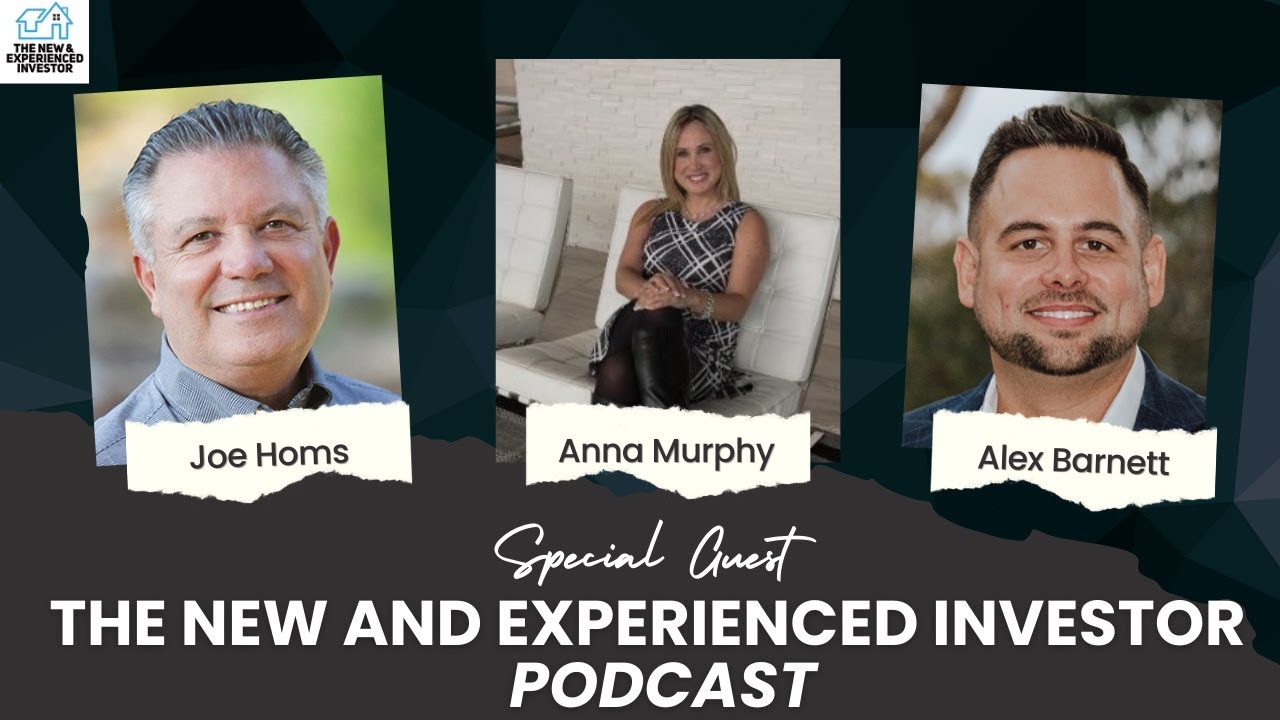
In this episode of The New and Experienced Investor Podcast, hosts Alex Barnett and Joe Homs interview commercial real estate professional Anna Murphy. Anna shares her 20‑year career trajectory, beginning in residential real estate in Nova Scotia, Canada, and expanding into U.S. markets through her firms PIR Commercial (Canada) and PIR Investment Management (California). She explains the mechanics of a capital stack, emphasizing the advantage of cash purchases in a market where interest rates have risen and vacancy rates are climbing. The conversation covers current market dynamics—interest‑rate softening, discount opportunities on multifamily assets, and the impact of a looming “wall of debt.” Anna describes her consulting services, fee structures, and how she assists developers across asset classes (apartments, senior living, hotels). She outlines her plan to launch a REIT focused on 400‑plus‑unit apartment assets in gateway cities, detailing fundraising timelines, capital calls, and the 36‑month window to close deals. The hosts also discuss senior‑living opportunities, land acquisition, development timelines, zoning challenges, and preferred‑equity strategies for distressed assets. Throughout, the dialogue is informal and conversational, peppered with jokes and personal anecdotes, but consistently returns to actionable insights for investors looking to navigate commercial real estate in the U.S. and Canada.
Chapters
What's up, you guys? Welcome back to the podcast, The New and Experienced Investor Podcast. This is the real estate podcast that brings investors from all walks of life together. I'm one of your hosts. I'm Alex Barnett. I'm the new guy.
And I'm Joe Homs, and that makes me the experienced guy.
It sure does. We had somebody in here one time that was, uh, less experienced. Remember when we had John? When you were gone, we had John as the host.
Oh yeah.
Then there was just 2 new guys.
That was, that was like the, the comedy guy.
Yeah.
Yeah. I was on a cruise. I, I was actually watching it. Yeah.
It got wild. I hope Lorraine wasn't watching it.
Yeah.
No, no.
Okay, good.
Yeah.
Alex goes off the rails when Joe's gone.
It was weird. We didn't really talk about— I tried to keep it on real estate, but it was, It was all over the place.
It was.
But, uh, so never leave, please, is all I'm asking.
And producer's back. Welcome back.
I'm back. Thank you.
Yeah, glad she's feeling better, manning the buttons— womaning the buttons. She's not manning the buttons.
That's right.
Okay, very good. Uh, we have—
The rumors are not true.
They're not true.
They're not true.
Not true yet.
Yeah.
Okay, Joe's making up his own rumors.
We have an amazing guest in studio today. We're super pumped. Um, we're gonna be talking all about commercial real estate. Uh, we're gonna be talking about what it's like to live in the United States from another country. We're gonna be talking about multifamily. We're gonna be talking about getting rich with real estate.
Nice.
Yeah.
So, but before we bring her in, uh, let's talk about our meetup coming up.
September-ish.
September-ish. Yeah, September.
Hangar 24, 6 o'clock.
23rd. September 23rd.
September 23rd, Hangar 24, 6 o'clock. Be there. Yeah, we have no idea who's speaking yet. Yeah, TBD.
We have a few people lined up.
We'll find out. Yeah, who's speaking, and then we'll broadcast that out to everybody. And yeah, then obviously next week we'll talk about it as well. So we need to pick somebody In the next week.
Yes. We will announce on the next show who it's gonna be. You're gonna be very excited cuz you're gonna learn a lot cuz we bring in some heavy hitters.
Heavy hitters. Yes.
It's amazing.
Heavy hitters.
Uh, so anywho, let's stop dilly-dallying around. Let's jump on into it. Let's bring in Anna Murphy. How you doing?
Hi. Good.
Awesome. Thank you so much for being here today.
Yeah.
Happy to be here.
All right. Excellent. Um, so go ahead, uh, introduce yourself. What were you doing before real estate? What got you into it? And how's it going now?
Sure. Well, I guess it's been a little while. I got into real estate about 20 years ago in Canada, and I've been down here in the US since June. And yeah, I have a Canadian company, PIR Commercial, and a US LLC, PIR Investment Management.
Amazing. Okay, so you're all commercial?
Mostly commercial.
Yeah. Okay, cool. How'd you get into that?
Well, I actually started in residential.
Okay.
Yeah.
Makes sense.
many years. And my business kind of brought me towards commercial. And then I had kind of different clients that wanted me to help them kind of like introduce capital sources to them for their larger commercial real estate projects. So I got involved in, started getting involved in development, different asset classes.
Okay.
And yeah, basically I wanted, I had clients that wanted exposure to the US and that kind of brought me down here.
Excellent. Are there any buildings that I would recognize?
Sure.
Yeah. That you developed?
Different apartment buildings. Excellent.
Yeah.
Which ones? There's, well, I guess in Canada.
Yeah.
For the most part.
Okay.
Mostly in Nova Scotia.
Perfect.
On the east coast of Canada.
Love that.
Yeah.
Okay.
That's where you grew up?
That's where I grew up.
Wow.
Yeah.
And now, okay, now you're in 101-degree heat.
Now I'm dying of heat.
Okay.
Gotcha.
Hope you got You caught us on a bad week. It's not like this every day.
It's very hot here.
Yeah, you caught us on a bad week.
Yeah, so what's that like bringing your business from Canada to the US? Do you have some of the same connections, or do you have to— is it all new, like networking, or how does that work?
You know, it's, um, like the— it's, it's the same, but it's different. So, um, back home, you know, there's, uh, developers are mostly kind of like high net worth individuals that are building their own buildings. And kind of like as you move to different parts of Canada, like Toronto as an example, is a big market. So it's more like institutional capital in the larger markets. In the US, it's a lot of times like on the development side, it's national apartment developers. So it's less kind of high net worth, you know, from what I've seen or experienced.
Right.
And it's a little bit more organized. than it is in Canada. So there's a lot more kind of that detail that's disclosed, or that, you know, is more commonly accounted for. And then kind of like sliding that capital into that, I guess, formula or capital stack, it becomes a little bit more of kind of like, you know, a puzzle piece, but, you know, having that capital stack kind of come together a little bit differently.
Gotcha.
Yeah.
Okay. And are you, go ahead.
What is your role in all of this? What, I mean, do you set up a syndication? You go look at the property? What, what, what exactly do you do?
Yeah. So over the years my role has changed a little bit. So originally I started off kind of like in a place of brokerage and I am getting my license here in the US. I'm just finalizing some of that detail. But then, you know, I started moving more in towards consulting and sort of, you know, on the money side, just, you know, ensuring that clients, you know, had what they needed to be able to kind of break ground and get the project completed. So that kind of brought me into different asset classes. So whether it be senior living or apartments or hotels, kind of like brought me into various asset classes. You know, as I'm sure you all know, you know, different investors have different appetites or different, you know, ways that they like to invest. So it just kind of you know, allowed me to kind of expand my client base. So down here, you know, I still have the company in Canada, the consulting company. You know, I have clients a lot of times, either investors or the developer will come to me and, you know, I'll look at their capital stack. I'll, you know, they'll engage my services and then I'll help to kind of fill in, you know, or provide some guidance on you know, where to go from, you know, the current status. My investment management company in California, the purpose of that is actually to manage a REIT that I'm going to be launching that's coming up.
Nice.
So yeah, so the companies kind of complement each other.
Yeah.
Thank you.
What's a capital stack?
Yeah, so basically it's kind of like how the cookie crumbles when you're doing your money stuff. Okay. Yeah. So, um, you know, in any, let's say it's, you know, let's say it's only, let's say it's your, your acquisition. You're gonna go, you know, you're gonna buy, uh, you know, an asset. Let's say it's a million-dollar asset.
Mm-hmm.
You know, maybe you decide it makes sense. Maybe you don't have a million dollars, right? Maybe you have, how much money do you wanna have?
I'm gonna have $300,000.
$300,000. Okay. So you're an easy, easy peasy.
No, that's pretty good.
Yeah.
I wanna see how this stack goes. I'm gonna, okay.
$300 million.
What's That's the difference.
Oh, okay.
Okay.
Well, I thought she was going to stack it up.
No, that was good.
No, I thought that was a good, that was a good example. No, that was a good, that was a good example. It really was. Yeah. So, you know, in that particular example, you'd probably go to the bank and get a 70% mortgage, right? Because if it's $1 million, you know, you have 30% down payment, the bank's going to look at that and say, yes, we're going to give you 70% of the money. As long as, you know, some other criteria in there, like, You know, some boxes are checked and, you know, maybe it's, maybe it's a cash-flowing asset. So the income supports the debt or, you know, the business plan supports everything, you know? So it would be likely that you'd get, you know, your first mortgage loan at 70% of the value.
Right.
Right. But let's say, let's say you told me less than that. So that's kind of like where I would come in and we would talk and strategize as to how we're going to come up with, Or what strategically makes the amount of sense to fill in that 30%. Maybe you only have 5, maybe you only have 10, right? So essentially the value that I would bring is kind of filling that in. Yeah.
By getting like other investors to look at it and—
Exactly.
Maybe like private money or something like that.
Yeah. Yeah. So depending upon like what the asset was or where it was or who you are, you know, all of those different factors would influence You know, who would be the most appropriate, you know, party that would partner. Gotcha.
Yeah.
What's, what's the hottest thing going on right now in commercial?
I don't know. The hottest thing? I think cash. Cold hard cash. Yeah.
Lose that, people.
I know if you own big, big commercial buildings that you were traditionally leasing out to clients at That's going away.
Yeah. Yeah. So the vacancy rate, you know, so it's really, it's interesting because Canada and the US, the moment interest, like a few years ago now, right? The moment interest rates went up, the market softened, like Canada, US, everywhere. Right? So now we're seeing, you know, interest rates start to kind of move a little bit. You know, it's a kind of a breaking time of, you know, cookie's gonna You know, something's going to happen at some point, right? So, you know, the timing is definitely at the point now where, you know, we're just— many people for a long time have been just by the sidelines. And so, you know, I think the next 12 months, you know, I think that it's a really good time to, you know, have quite a bit of liquidity.
Mm-hmm.
And I think, you know, my personal opinion, Is that, you know, I think now is a pretty good time to move with cash, you know, and maybe take advantage of some of that softness.
Right.
My personal opinion. Yeah, there's a big wall of debt coming due.
And kind of my question is, you know, if you do have cash, you want to look for opportunities, what opportunities are there going to be?
Yeah, I would say I personally think that That money talks. So I guess it just depends on how much money you have at your disposal. You know, I'm open to some further discussion on that. But, you know, I think that, you know, I've seen some trends. I saw a transaction go down in the last 2 weeks where it was, you know, a 25% discount. I think— I forget exactly the size. It was a significant transaction, but it was a 25% discount on assets. But this is the multifamily side.
Yeah.
25% discount on their acquisition price from 2020. So it was interesting.
And that's kind of what I've been hearing too. It's like, I mean, I hear 50%, 60%.
Well, you know, it was more of a, like, a higher profile transaction, and I'm sure they were probably happy to see it go. So, you know, I believe that trend will continue.
Was this a seller that was selling it, or was it already bank-owned? It was bank. It was bank.
Yeah. Yeah, but I don't know if the bank was the only party that owned it or if there were other people kind of in the mix. But yeah.
So do you have like a pool of those type of properties or leads that you focus on or you don't even do that?
So I want to say yes to that. I'm working right now on some of that. And as part of like my fundraising with the REIT, Like essentially, you know, I think that, you know, gathering all those funds into the account to show, you know, I think that that's valuable, right? Because I think, you know, if you're ready to cut a check and close the deal, I think that, you know, that goes a long ways, right? With some of these larger portfolios, large assets and large portfolios, right?
Yeah.
Because there's only so many parties that, you know, are, capable of, you know, doing those deals. But then kind of like in addition to that, you know, you know, on the construction side as an example, right? Like, you know, I haven't seen, and, you know, a lot of, a lot of what I've done over the last number of years has been development. So I haven't actually had a deal sent to me that pencils out in a while.
Yeah.
Yeah.
In a long while.
Yeah.
Yeah.
You know, so, you know, there's, there's buildings that are under construction where they're maybe they're partly leased or not even leased yet, where they're either not getting their last draw from the bank or the bank's kind of knocking on the door. There's a lot of different things kind of going on in the market. And I think we're seeing a tiny bit of movement in the interest rates. I think there's not much, but I think there's some response to what's What about senior living, long-term care facilities?
Are you seeing a lot more of that activity pop up?
I would love to be sent land for senior family in the state of California. Yeah, I would love to see lots of land for that.
There's a lot of land out in the desert.
Yeah?
Yeah, lots of land out there.
Very hot. It's hotter than here.
They like it hot.
They do like it hot. Yeah, their bones get cold. Yeah.
My dad, when he was alive, he was living here.
Yeah.
And it'd be like, it is now 90 degrees and I'd walk in and he'd have the heater on in the house.
Yeah.
To 80 degrees.
I know.
What the hell are you doing?
Yeah.
No, it's like 120 or more in there.
Yeah.
It's like, it's fine.
It's fine.
You definitely need AC.
But you're totally right. Yeah. I mean, that's kind of what Hemet is. It's like older folks and tweakers.
Yeah.
Yeah.
And tweakers. Yeah.
That's kind of an odd mix, but yeah.
I'd love to see land like in different markets, right? Like it's not gonna be just like, You know, there's, I was on a call just a couple of days ago and it was with, you know, someone that's trying to sell me insurance policy. So it's insurance with a cash component, you know, but they have, as part of their presentation, they're going and talking about, you know, there's now a, I think it's under review. I don't think it's a passed bill yet.
Mm-hmm.
But basically everyone's going to be required to have this kind of like old age living Benefit insurance. So it is interesting because the average age here, like I'm from Canada, like the average age there is, I don't know what it is, but it's a lot older than it is here.
Oh yeah. All right. All right.
But is that a problem? Oh my God. Yeah. But there's so many more people down here.
Yeah.
Right. So it's like, okay, well, you know, it is an aging population. You know, like I was, we were at R&D Kitchen for lunch a couple weeks ago and I was having this conversation with an architect, similar conversation. And he was kind of like looking around the bar, you know, looking around. And it was like, he was like saying that like the clientele that are gonna go in these senior facilities, they're all like sitting around.
Yeah.
Yeah.
I was like, okay.
Yeah. But New—
I'd love to find some land in Newport. Newport. Right.
Like, oh, right. Yeah.
You know, because You know, on the senior family side, it's an operating business. It's like a hotel, you know, apartments. It's like, you know, vacancy. You're in, you're out. You know, there's not a lot of like movement in terms of your income necessarily, right?
Yeah.
There's only a few factors where in senior housing or senior living or some of these like special care facilities, you know, it's an operating business in the building. It's not just, you know, Your apartment rents as an example. Like it fluctuates a lot differently.
So I feel like all the seniors in Newport just have the giant houses and they're just like—
But they can't stay there forever.
Well, I know, but the kids are like, we'll take care of you at the end. Mom, give me the Lido house.
I'm not too old to be adopted.
But yeah, that would be a good spot. I'm sure there would be a lot of people.
Yeah, I think so too.
Yeah, it's just fun. You gotta pay like $20 mil for it probably, but yeah, you need some land that's like well-priced.
I know, decent size.
How long does a project like that take?
Forever.
Yeah, well, give me a better forever. Yeah, like 10 years, 3 years, 2 years.
Yeah, it really depends on a lot of different factors. If the zoning's in place, that makes a big difference.
Right?
Like it's, you know, if the zoning's not in place, that's another 2 to 4 years. If the zoning is in place, you know, maybe, maybe, maybe, you know, it can be 6 months to a year, you know, but that's, are the drawings done? You know, there's lots of, you know, are the, is all that ready? Or has, has the previous owner done all of these things and you're just taking over someone's project? 'Cause it's like permit ready to go.
Yeah.
Or are you doing everything?
Are these Canadian timeframes? Because I don't think you've dealt with California.
This is in California, I think.
California, you can double everything you just said.
No, you know what? Development, like, I have spent a good amount of time in a number of different markets on the development side. And, you know, it's kind of the same everywhere. And everyone just complains about it because it is painstakingly long. You know, and there are all of these delays. And then there's this like stupid thing, excuse my language, stupid thing that happens to tie it up. And then there's another thing that's like just this ridiculous detail that like seems super insignificant that like adds another 6 months or, you know, so they do take, you know, and you need, there's, there's a number, a number of different parties that all need to kind of like agree.
Mm-hmm.
You know, that this is a good idea and that, you know, and hopefully the market doesn't change in there, you know, somewhere or you know, vacancy. Like, there's a lot of different factors that go into having a successful project off the ground.
Yeah.
Leased up or, you know, stabilized.
Yeah.
Yeah.
So that's why I think, you know, on the development side, since, you know, a number of different asset classes since COVID have really, you know, seen that change, you know, that risk, because prior to COVID, you know, development returns were, you know, somewhere between, in a lot of cases, 18% to 30% annual IRRs. And now, you know, we're not seeing deals pencil. So that basically, that return has disappeared, right?
Hmm.
So it's, um, it's one of those things where, you know, maybe it's a good time to invest in an asset that is already generating capital because it's a little bit— there's less risk involved. You know what you're getting yourself into. You know, because there's less factors that are going to change. So that goes back to the comment I made about paying cash for something right now, because, you know, if you pay cash for something and you don't have debt on something, your interest rate isn't going to change. You're not going to, you know, you have more control over your investment going into it.
Yeah.
Right. So yeah, that's kind of where I'm coming from when I say that.
That makes sense. I gotcha. Yeah. It's like everyone, when the rates were low, everyone wanted to get super leveraged.
Yeah. Great time.
And then once they popped up even a couple points, they're like, wait, this doesn't work anymore.
This is a terrible idea.
Yeah. Okay. Crazy. Where are you in the, let's say it's like a development deal. Where are you like getting paid, I guess?
Yeah. So normally I have—
Is that appropriate or is that fine?
No, it's fine. I'm just saying it always comes down to money. It's like, that's the money question. Go ahead. Yes, please answer.
Yeah. Normally it's kind of like a flat fee or consulting.
Okay.
Yeah.
Some sort of Consulting fee.
It's a consulting fee for somebody that wants to develop, or is it a consulting fee for somebody who has the cash that wants to put it into something?
Yeah, I'm normally in like 80% or more cases, I am with the developer.
Okay.
Yep.
Gotcha.
And that's kind of where my business has brought me to.
Nice.
Yeah. Yeah.
Okay. So what is, what does actual consulting in that case look like? I mean, You get up in the morning and, and you jump on Facebook or something and you say, here, look, I'm working with this builder. What is it that you do?
Sure. Yeah. So most of my business is actually referrals. So I'll have, you know, any number of different like parties to a transaction. You know, maybe they have an architect or maybe they have, you know, other people, other consultants that are helping them that'll bring me in and then they'll, you know, ask for me to look at, You know, maybe they have a financial model and their budget. So I'll take a look at that. And then normally I'll get engaged at that point if I feel like I can be of help. And then provide, you know, once I have an agreement in place, you know, depending upon, you know, where we get, what type of project it is and where we need to get to, you know, essentially my agreement will be specific to kind of the goals of, you know, if it's a portfolio or if it's single asset or if it's development or acquisition or, you know, Just depending upon what it is, I'll tailor and do a custom agreement based on what the needs are or where I feel, where I can be of most value.
Okay. So you're working with a lot of numbers. So you're good at numbers.
Kind of good at numbers. Yeah. Yeah.
You like numbers?
Yeah. I've always been good at math. So yeah. Yeah. Yeah.
That's unusual. We're not going to go there because I'm going to get bashed if I say something. Yeah. Okay. So that's awesome. So you look, you're looking at this portfolio, looking at these numbers and stuff. Do you base your, you know, income on, I see that you're spending $100 million here. I can get it down to $90 million. Is that kind of what you're doing or no?
No, no, no.
Okay. No, I'm looking at all these numbers.
Yeah.
What, What are you consulting with them about these numbers? That they're reasonable, that they look good?
How to get to the number that they're saying.
How to get, yeah, yeah, yeah. How to kind of get to the finish line and kind of the best strategy to get there. So without kind of like giving the key in the hole, right? Like essentially, you know, that's exactly what I do essentially. So a lot of times, you know, A lot of times it's that teeny little detail that someone needs to know that they don't necessarily know.
What is the teeny little detail?
Oh, I can't tell. I can't give that away.
Oh, what is it? I can save you money here would be— I'm an investor. That's what I want to hear.
Right.
Right. I mean, I don't, I don't, uh, you know, if you came in and I had a $100 million portfolio, if you came in and said, You know, we could do this for ninety thousand, ninety or nine hundred thousand or whatever.
Yeah.
I'd hire you.
You're talking about an acquisition?
Whatever. Yeah.
Yeah. So I think I think I'm gonna repeat what back here.
Your job out.
Okay.
What it is? What it is? What exactly is it?
Okay.
So who are you?
Tell me who you are and what you own.
Why? Why am I hiring you? Okay.
I'm Right, right. But I'm tied to— yeah, tell me what.
Okay, um, I'm gonna build a senior community.
Okay.
Uh, because they're the only ones that have money right now, so why not cater to them?
Right.
Have you done this before?
Yeah.
You've done it before. How many assets do you own right now?
Uh, 1,000.
1,000?
1,000 units.
That's a lot.
1,000 units.
1,000 doors?
Doors, yes.
How many buildings?
Oh, buildings. Okay, that's a better question. I have 3 buildings and yeah, no, Manhattan. That's not a good example. Oh, okay. I have a community of 500 homes. They're all single.
Okay, wait, wait.
Okay, hold on. We're switching the scenario here. Okay, so we went from 3 buildings. No buildings. We have now a single family.
Yes. Yeah.
55 or older community.
Yeah. But that's, that's more residential, right? Kind of a residential play.
Every time you change the shape of the building or the size of the lot or the type of specific property, the scenario changes. The investor changes every time.
And your fees change. Okay.
Yeah.
Okay. Well, you come up with a scenario and then explain to me how you would consult on that.
Yeah. Okay. So do you have like an asset class that you like is your go-to? It's— what's your, what's your bread and butter?
Again, we're, you know, the baby boomers are getting old and they're retiring. And I think we're going to have to start figuring out where we're going to, you know—
I love this example.
Safely put these people.
I love it. I love this example.
To take care of them.
Okay.
If not in Newport Beach at Alex's house, you know.
Yeah, signed Dana Point. Yeah, I love it.
They'll put a face on it and then they'll have like a little casita for me.
Right, right, right. The ADR in the back. Yeah, exactly.
So I guess more of a mass scale.
Yeah.
Okay.
I love this.
Type facility.
Yeah. And you own, let's, let's, let's keep your original example.
Okay.
Let's say you own 1,000 doors.
Okay.
But let's call them beds.
Okay.
1,000 beds.
Okay.
Right? And let's say, let's say, you know, let's say it's in 3 buildings.
Okay.
So you have 3 buildings. So that's roughly 333 beds each building.
Okay.
Right? Maybe they're in the same, on the same lot.
Okay.
Awesome. So that's what you own right now. And you want to develop more. So do you have debt on these or you don't have debt on these? You don't. Do you own everything outright or do you have partners?
I own everything.
You own everything. Oh, wow. Geez, lucky you. You're so—
Generational wealth.
Yeah.
Okay.
All right. So that you're in a great position. Most people aren't in your position. Most people are leveraged to the hilt. That's like everybody.
Yeah, that's what I know.
That's everybody. There's very few people that are in your position. Like almost no one. Like 1% of people. Okay. Okay, so how many more do you want to develop?
Uh, I want to double it.
You want to double it? Okay, so you need 3 more buildings. Do you have the land?
Yeah, right next door.
Oh my goodness. Okay, so, okay, so you— okay, so you right next door.
I just want to expand what I have.
Okay.
And I want to consult you whether I should keep it at 3 buildings, make more buildings, make, make less.
Yeah.
What would you suggest?
Right. So do you have the money to build the next 3 buildings or you need it?
No, no, I have it. Okay.
Yeah. So I probably wouldn't consult with you because you already have the money and you've already done it all. Okay.
I don't have it anymore. Alex, Alex lost it.
See, you had too much, you got it all figured out. You don't need any help.
Right? Okay. True.
Okay.
You don't want partners.
We're stepping back.
Okay.
Look at his shirt. He just got back from Vegas.
He lost it all on black.
I lost it. I only have half the money now.
Okay.
Okay.
So you have 50% of the money?
Yes.
So, okay. Do you have a construction budget?
Yes.
Okay.
Do you have a builder?
Yes.
Okay.
So you have a— they provide you construction budget. You have a builder. You have 50% of the money. Have you been to your bank?
Uh, yes.
And what do your banks say?
We're not going to loan you any money.
Why?
I think they're a mean bank. Yeah, I don't know.
He has a gambling problem.
Have you tried a different bank?
I like that response a lot. I can tell you, you don't give up very easily by just listening to that response.
Yeah.
I went to another bank and they said they would give me up to 60% of the total build.
Okay.
I had 50%.
Yeah.
So they would give me 10 more.
Okay. And why didn't you want to take another 10% so you could have more liquidity?
I could, but don't I need more than that to finish this project?
You told me you had 50% of the money and that they want to give you a 60% loan. So they're giving you more money than you need.
No, no, no, I'm sorry. I have 50%. They're willing to give me another 10%, so now I would have 60%.
Okay, wait, back it up, back it up, back it up, because you're confusing me.
You're the numbers girl here.
Okay, you said you had 50% of the money cash. Cash. So if the bank's gonna put you at 50% leverage, yeah, they're getting you a loan for—
No, no, they're gonna just give me 10%.
10 what?
Percent.
10% of the money?
Yeah, that's it.
Okay. Well, there's a problem with your capital stack. There's a problem with your income. So if you wanted to hire me, we could look at that. But if they're only giving you 10%, that's part of a bigger problem.
Okay.
Because it means that your income for your operating business is shit or something. There's something wrong. Right? Like if you can be looking at your operating business on the other side and, you know, like It's fine. So let's go back to the other, let's go back to your assets that you own, because I didn't ask you these questions, which are relevant questions. So you own the asset outright, but there's an operating business that's on the real estate, right?
Mm-hmm.
So out of those 1,000 beds that you have, there's going to be staff. There's a whole operating business inside the building. which costs money, right? And there's a whole operating business in there that potentially has revenue. If the beds are empty, there's zero revenue and just expenses, right?
Correct.
If the business is doing well, obviously there's income there. So there's income and expenses. So that would influence a decision if you were looking to essentially recapitalize those assets. We would look at the operating business. And it's doing good. Well, I assumed it was doing good, but I didn't actually ask enough questions to—
You didn't ask enough. Now she's getting to the hard questions.
Well, I figured if you own the asset outright that you had your shit together. That was an assumption I made.
Yeah. See, you said I had my shit together, but everybody else doesn't have their shit together.
Right.
But you didn't ask the right question then.
Well, Yeah, I did make an assumption there on the spot.
I did.
Yeah. But on the other side of it—
Was it because of my shirt or what?
No, I just, you didn't need the money there, right? That wasn't where the need was. So I assumed you were good, but it took going over here to look at what was going on to realize, oh, there is actually something bad going on over here.
Yeah.
Right. So sometimes it takes, you know, diving a little deeper to really like look at that.
How do you consult with me and fix my problem?
Yeah. Well, you would engage my services and then we would, I would kind of go through some of, you know, and it may, it may, may be inside or outside of the scope of what I can actually help with, but then I would kind of point these things out and point you in the right direction of people that could help you, you know, cause I don't actually have an operating business. But I have many, I have several parties that would buy your 3 buildings or possibly partner with you to recapitalize that. Deal.
Deal.
I don't know if it's wholesaler.
She's trying to get a wholesale deal going here. Okay.
There's always someone out there.
No, but that would be the type of asset that would be quite attractive. We haven't really talked about the value, the price, but You know, that would be, that would check, you know, a few boxes on the type of asset that would be quite attractive on an acquisition basis. Right. And sometimes people like to buy things with hair, right? Something that's like, you know, when someone says, when you buy something with hair, it means kind of messy financial situation.
Right.
Which sounds like a Canadian thing. Is that a Canadian thing? Yeah, I think it might be. I don't know.
I haven't heard that.
Yeah.
Really?
I've never heard that before. Yeah, messy finance, just a little all over the place financially, you know, in the financial stuff.
What other Canadian words can you think of?
I don't know. Out and about?
Out and about. Or scotch.
I cruise a lot and there's Canadians that cruise a lot.
Okay, cool.
They're the nicest people in the world.
Oh yeah, thanks.
Nicest, super nice people.
Yeah.
And if you ever want to be in a crowd of old people, just take a cruise.
Where do you like to go?
Up and down the coast here.
Oh, nice. To Hawaii? Do you get to Hawaii?
I don't go to Hawaii because that's like 5 days on the sea. And it's like, I get bored at half a day on the sea.
Okay.
Yeah.
Yeah.
So you go San Francisco?
San Francisco, Seattle, Alaska, down to Mexico.
Wow.
Cool. With all the old people too.
Yeah.
They're a lot of fun. And then when you start to talk to them, it's like if you take a Mediterranean cruise— I know we're off topic, but if you take a Mediterranean cruise or something.
Yeah.
Um, and I'm getting older, you know, maybe 20 years ago we used to run into people that were in concentration camps.
Oh, wow.
And we would talk to them and it's like, oh, wow, is the expression. These people would tell us like, you know, the Germans were right behind us and we hid in a barn. Me and my brother hid in a barn. Next day we woke up and the Germans were right there. I kept hiding and they took my brother and I've never seen him again.
Oh my God.
Yeah, it's like, oh wow. Oh my God, let's move on to dessert. Yeah, wow. Yeah, it's pretty bad. Yeah, crazy. Anyways, back to real estate. Yeah, back to real estate.
Okay, nice. Um, if you guys have any questions for Anna, drop them in the comments and, uh, we'll, we'll get your questions answered. Um, We had a guy on last week. He was saying multifamily is a little shaky right now just because of all the debt that's owed. What would you say to that?
Yeah, I would say that he's right on the money.
Okay.
Yeah. And just depending on like what class of asset it is. So Class A would be like new or newer buildings, Class B or Class C, you know, like I've had, you know, a number of different folks that have, you know, tried to get like the preferred equity play going. I don't know if you guys have seen that or not.
Mm-hmm.
So it's, you know, coming into portfolio that maybe it's like 100, 1,000 units, 700 to 1,000 units, and have like existing investors in the mix. And so their strategy, you know, because they're upside down, they're paying out, you know, they're bleeding basically. They're paying out a lot more money every month than they're bringing in. So essentially their strategy is to bring in new money and to offer those investors like a preferred return. So maybe an investor might think, you know, 8% kind of like from the get-go, you know, instead of 8%, maybe they're offering them 16%. So they're the first, first to get paid essentially, like when the asset is sold.
Right.
So that's been a strategy that I've seen, you know, but the asset, you know, hasn't sold yet. We're still kind of like, everything's still in a, I think a lot of people want to call it like a holding period.
Right.
Not much really has transacted in the last few years. So kind of like wait, a lot of people have been waiting to see what's going to happen. But those people, in that particular case, they've had their insurance prices go up 20%. So they bought with the intention to To kind of rent eviction, basically to improve the property. So I think maybe it was a C or a low B when they acquired. And so the plan was to put money into the assets and then change the tenants. And so this was all during COVID So they had problems getting people out. Then they've had vacancy problems, and then the insurance prices have gone up 20%. And so the government sort of gets involved when the tenancy, the eviction process. So there's lots of different factors that influence the profitability or the success of the investment. And so COVID kind of allowed us to kind of see some of the weaknesses, you know, and, you know, some of the exposed risks. And so, you know, some of us are still kind of like working through that, or, you know, there's investors out there that have, you know. And so it's really like, you know, I think educating yourself as to, you know, all of the potential, you know, benefits, pros and cons to, you know, and sometimes things, you know, You expect something to go one way and it goes the other way. You know, you don't know until, you know, so.
Pull your crystal ball out and tell us what we need to do to make a lot of money in commercial real estate.
Okay, you have to invest all your money with me.
Okay.
Yeah. That's number one.
Yeah, you know, I would, for the REIT, I would like to be able to pick up some assets at some good pricing, and I expect that to happen. You know, I'm gonna have, I would say, 36 months to do that. I think over the next, you know, I haven't seen a lot happen. You know, I've seen some acquisitions happen where, you know, I was surprised, you know, they're picking up different things, or I was expecting it to kind of fall down. But, you know, this wall of debt that's coming due is pretty significant.
Mm-hmm.
So, you know, I, um, my personal strategy is to, you know, close The capital, and then, you know, have those funds to show to be able to close at attractive pricing.
Okay. And what type of asset?
Apartments, 400 units or more in gateway cities.
Okay. That's pretty specific. That's good.
Yeah, thanks.
I like that. Thanks.
Yeah.
Nowhere in California?
Yeah, California. Yeah.
Really?
Love California. And you know, I'm all about the senior family too. So, you know, I would love to have a portfolio of senior family here. Just need the land.
Yeah.
Need some land ready to go.
You want it by the coast?
Oh, it doesn't really matter. No, I'd love to be in different markets. You know, I think lots, lots of folks, you know, how, what's the population here? It's like 38 million people.
I know a land guy.
Too many.
I know a land guy.
Too many.
But he's got all his land is like way out there.
That's it.
Well, it's good to have a mix.
Okay.
Old people need to be close to hospitals, right? Hospitals, walking distance to Applebee's, basic necessities.
Sizzler.
Not too far.
Sizzler.
A couple Sizzlers nearby. Yeah, right.
Yeah.
Okay.
So you're still going after the multifamily even though it's like Sketchy right now because it'll—
My plan is to pay cash and to pick assets up at attractive pricing that are kind of like either in distress and we're going to take them out of their misery or just make sure that we're— yeah, basically purchase assets, whether it was distressed properties. Yeah, yeah, yeah. Either on a single asset basis or a portfolio. Okay.
And the intention is to hold them or flip them?
Yeah, to basically to hold them for a 10-year period.
Okay. Yeah.
Yeah.
How do you find that? Like, how do you do the acquisition part or the lead generation?
Yeah, a mix of different activities, you know, having different conversations with different folks, you know, it's part of it.
A lot of brokers.
Part of it.
She can't tell you her secrets.
I can't tell you everything.
I know you keep asking.
Talking to a broker here and there because I always Ask. And it's usually like you hear like, oh, this syndication is like, they're taking it, you know, and it's not good right now. They need to get out. And then that's when you show up.
You're like, hey guys, let me take you out of your misery. Not everyone, you know, not everyone normally you wouldn't have somebody, you know, banging down your door. Yeah.
Right.
No, I got you.
Yeah.
You gotta go find it. So it's like besides brokers, like what else is there? You know, that's what all—
you've been sending letters out and getting some good feedback on that, huh? Yeah, maybe that's— maybe she should start sending letters out to these people.
But it's like, it's all like people, it's all like partners and, and all that kind of stuff.
Yeah.
So yeah, who are you sending it to?
Like, that's—
yeah, that's what— and I'll find out, I'll find out, don't worry. If you don't want to tell me, I'll find out.
BlackRock.
Yeah, it's BlackRock, Larry Fink.
Yeah.
Just reach out to him. I mean, yeah, there's probably a list of people who are in default or that kind of stuff.
So I like referrals myself.
Okay.
Yeah. Yeah. There's nothing better than having a conversation and just being introduced to people.
Yeah.
Yeah. No.
Yeah.
Yeah. Yeah.
Gotcha.
Yeah.
And so as far as the re— you're raising money before you have Any property. That's what it is, right?
Yeah. This is part of the strategy that I can't 100% get into, but yeah. Okay.
That's a good strategy. Yeah.
It's a great strategy, but I'm just like, so ready to go. No, exactly. But you're just like, I'm going to find a property. So put your money in here.
Yeah. So like, you know, real quick, when you raise the money, let's say I want to put $100,000 into your fund. Do you take it right away or you say, okay, As soon as I have everybody's money, then I'll ask you for your money, and then we'll start the business rolling.
Yeah, so because I think it depends on the on the legal part of it, the legal paperwork.
What I'm she doesn't want to answer unless the lawyer is present.
No, okay, okay. No, I mean because I'm not going to give you $100,000.
There's like capital calls. There's a capital calls, but I guess part of my strategy is. To ensure that all of the funds are collected to be able to show that. I don't intend to show everyone's bank statements.
Oh, yeah.
Right? I want it in the central place. And I think that will be to the benefit of the fund.
Yeah.
Right?
Beautiful funds. Absolutely. Yeah.
Yeah.
Yeah.
Okay.
I just, I don't want to put my— I want to be the last one to put my money in.
What's the reasoning? I need to hear the reasoning behind that.
Why?
Well, because everybody else has their money in there. I don't know how long they have to have had their money in there, but they're not earning anything on that money.
Usually the fund has 36 months to close the deal, to spend the money, to invest the capital. So normally, in the way funds are set up— but I hear what you're saying though.
No, but let's say you're starting the fund.
Yeah.
Okay.
Yeah.
Why would you want to be the first person putting the money in?
Yeah, that's— you're assuming this is going to be like a super long roundup, roundup period where the money is just sitting there for like forever.
So how long, how long is, uh, Well, so raising of money period.
Yeah. So I, uh, I would expect that, you know, over the next 6 to 12 months.
Okay.
Yeah.
I'll talk to me at 12 months. Okay.
Well, you know, I'm happy to talk to you when, you know, when it makes sense to.
Okay.
Right.
Okay.
If you're interested.
Yeah.
Yeah.
Yeah.
Happy to.
When you have everything good to go. Oh yeah. Yeah. Yeah. You ready to pull the trigger?
Right.
That's when you can talk to me.
Okay. Sounds good.
Okay.
I love it. Okay. I, I believe it.
Yeah.
I trust that.
What are we gonna do? Some videos? Yeah.
We got some videos.
We got some videos we're gonna show you. Give us your 2 cents.
Just 2.
Just 2.
On the videos?
Yeah. Yeah.
Okay.
All right. Double your money with multifamily.
Nice thing about multifamily real estate is that unlike single-family homes where the value of a house, The value of your house is based on the comps and based on what other neighbors are selling for. And multifamily and commercial real estate in general is completely different because the value of the asset, the value of the property is not based on what the neighbors are selling for. Instead, it's based on how much income it produces. And so the nice thing about that is that you could force the property to appreciate in value by increasing its income. Just to kind of give you an example, Let's say I find a property and that property is producing $100,000. If I take that property, clean it up, bring in better tenants, improve it, and do all of these different things to it, I might be able to take it from $100,000 to $200,000. Nice thing about multifamily—
Thoughts?
Yeah, so this strategy was kind of like the strategy I was talking about earlier. So basically buying, you know, a property that needs some money facelift and then fixing up and selling it. This guy's obviously had success in doing that. Not everyone has that same success, but yeah, like the fix and flip or, you know, but it's an income property. You know, it's definitely a strategy that many have had a lot of success with.
And what do you, you're going to hold onto it for 10 years. What's the 10 years about?
Stabilized income for a period of time, basically. Yeah.
Okay.
Stable. You know, it's just consistent cash flow.
Right.
Yep.
Okay.
Yeah, it's new assets. So that particular strategy would be older assets that need to be fixed up. I'm talking about like brand new or like very new, you know, that don't really, you know, they're going to have like anything that you buy or, you know, even that you develop, There's always going to be little things, maintenance that you need to do. But like, you know, the strategy for the REIT is definitely new or newer, not older. And, you know, that's when, you know, there's things potentially that can come up to kind of like, and the larger assets, you know, to influence kind of, you know, there's a larger risk component attached to that.
With older assets?
With older assets.
Right.
Yeah. Because they're, you know, maybe you take down the wall and there's you know, asbestos, and then you're like, oh, you know, I had a budget of X and I, you know, I need to spend X. Or, you know, maybe, maybe your contractor that you hire, you know, maybe it was like, you know, they quoted you and they're like, oh, we can get this done in 3 months. And then, you know, that contractor sucks and you're like, you did a shitty job and I'm firing you.
Right.
Right. And now I need to start over again. So, you know, maybe I calculated like 3 months of interest or 6 months of interest on that money or my investor's money. And now it's like, taking me double the amount of time to do the work. And maybe in the meantime, the insurance went up and there's other factors that would kind of make it a little bit more of a bumpier road in that particular kind of scenario.
Right.
But maybe everything goes according to plan. And I'm sure that every asset or every individual acquisition, there's things that maybe we weren't planning on that happened. And so, you know, a lot of times it's, you know, do your due diligence, but, you know, even then, you know, there's going to be things that come up that, you know, you need to address. Absolutely.
Thank you.
Yeah, of course.
What else we got?
One of the best commercial real estate investments. Oh, the volume isn't working again.
Where's my mouse?
Done.
Okay, pause.
Sorry, sorry, sorry.
Oh, still nothing.
Maybe a different video, or is it—
Yeah, it's just not—
I can read the words. I can like guess what it says, but you have to start again because I was like, can I only half play?
Okay. Let me restart it.
I saw industrial.
Okay, the great thing about industrial, especially the storage of— that's what we're talking about— is it doesn't need to be particularly well located because people don't go there every day for work. They might go to a storage facility 3 times when they get to put their stuff, 5 or 8 times. Ah, I'm losing steam. Might go every second month just to add something. their pile of junk that they're keeping or take something away, or as the case may be, you can't have it 100 miles from anywhere, but it doesn't need to have really great access. So you can put storage facilities in places that are not suitable for retail outlets or a gas station or a warehouse.
So he's saying storage units are the best.
Yeah. People, you know, some people like storage. I think industrial overall is a popular asset class, you know, especially like over the last number of years, just because it's kind of like, less, I think, less overall kind of like, I don't know if maintenance is the right word, but less overall to kind of like to manage, to take care of. There's less to worry about. Storage specifically, there's a smaller amount of investors that like to invest into storage.
Yeah.
So I think that that's an asset class that there would be less competition in, you know, for those parties that, you know, do like to invest into storage. I personally have 2 storage units on the go. It's a headache and a half, you know.
Oh yeah.
I'm not invested into the storage building. I'm just invested into the storage units. They are well located.
Yeah.
You know, like I'm not driving an hour out of the city to, you know, to go to my storage unit.
Right.
I don't think a lot of people would, you know, I probably don't agree with that statement because like, Who's going to want to pay like your movers an hour out of the way to like go in the middle of nowhere to put your stuff in storage?
Right.
I don't really think that that part of it is 100% what I agree with.
Okay.
But what did I, I think this was on church. Yeah, it was like a sermon at church a couple of weeks ago and they were talking about storage and they were saying, I forget the stat. It was like 1 in 3 people or 2 in 3 people have a storage unit.
Yeah.
Right. So there's a significant amount of people that have storage.
And you don't even know what's in there.
Well, some people know what's in there. Not like everything, like the bigger things. If you haven't seen it in a while, there's going to be lots in there that you haven't seen.
There's some armoire that you couldn't get rid of. That's always what it is.
We call ours a music studio.
Yeah, exactly.
Yeah. It's got all my gear in there. It's a storage unit.
Yeah.
Awesome.
But in terms of one last comment, in terms of income, it's a little bit more stabilized, I would presume. I haven't spent a lot of time in the space, but I would assume it's kind of set it and forget it. You know what you're getting paid. There's not a lot of fluctuations. So in terms of investment, I would feel stable for the most part. Yeah. That income's going to be there.
Yeah. Yeah, it makes sense. Okay, nice. Have you done any like development with the storage units?
None. Okay.
No, but I do like the newer storage units.
Like, she just stores.
I just store. I just pay them money every month and I'm like, oh my God, again? I'm like, what am I doing? That's great. Can someone just go there and deal with all this?
We got a couple questions. Okay.
Okay.
First question is, I've been hearing a lot of capital calls have been coming down in multifamily. How can future syndications prevent this from happening?
Yeah. So, you know, the capital calls would be based on essentially what you agreed to in your original documents when you're making your commitments So, you know, if you don't like being part of a syndication, you know, there's like a number of different factors there, right? If you're in a syndication, you know, you obviously agreed to that when you made that commitment to the syndication. So maybe that is or is not the right investment for you. Maybe a partnership would be better. Maybe a joint venture would be better, you know, or, you know, maybe your strategy needs to change or maybe it's really based on the market itself.
Yeah.
And then maybe as part of that, the more parties that are involved in a particular asset, the less likely that all of the parties are going to agree on the strategy, right?
Mm-hmm.
Or where the market's going, right? So let's say I believe the market's going to get stronger. Right? But let's say someone else, you know, that's also invested thinks the market's going to get weaker. Well, obviously we don't agree. We disagree. So we're going to move differently based on what we believe. Right? So if you're part of it, like right now, as you know, a syndication, and let's say the person that's driving the bus believes the market's going to get better. We're holding on. We don't want to sell this asset because, you know, essentially we don't want to show a loss to our investors because that'll ruin our next acquisition because we're, you know.
Yeah.
Right?
Yeah.
So, you know, you just kind of have to pay attention to kind of the different factors that are, you know, driving that, the different parties, right? Kind of step back for a second and say, you know, and are they making the best decision for me and my investment? Right? Because everyone's going to be in a different position. Everyone's going to have a different opinion, right? Do I believe interest rates are going to go up? Do I believe interest rates are going to go down? And what is my opinion based on what I believe? Right. And how am I going to move based on what I believe? So in terms of like, you know, capital calls, you know, some people might have the liquidity to make those capital calls. Some people might not, might not have the liquidity. And then there's like, sometimes in those documents, there's fines. If, you know, there's, there's different kind of like in that legal jargon that influence that.
Yeah.
So maybe, Maybe there's a sidecar. There's different kind of legal things that you can do when you're originally making your investment to kind of move around or to essentially make accommodations for that type of thing. And I'm not a lawyer, so this is not legal advice.
I got you.
Yeah.
But just in terms of margin calls, if the market's going down, there's just margin calls. I would be, if it was me and you're asking me my opinion, which you may or not be, but I would be tempted to consider selling the asset. But I haven't actually seen a specific example or the circumstances or the investment amount. So there's a lot of missing information.
I gotcha. Yeah, it's a big question to answer specifically. But you're right. Yeah. You gotta look at what you're signing, what you're signing up for, I guess. If you're joining the cult.
You need a consultant to look at what you're looking at.
You need a consultant. She's like, this is crap. Don't do it.
Yeah. You just have to look at, you have to consider all the risks and make sure when you're signing off that you actually understand what they are or what you're committing to. And how you feel today or what you're committed to today may not be what you wanna be committed to down the road.
Right.
So in your head, you have to kind of understand yourself as an investor, what your tolerance is.
Yeah.
And then I met with a portfolio manager for a family office about a month ago. And so in all of her agreements with her family offices, she has a clause in all of her agreements that allows her to pivot. Because that pivot or plan, business plan 1, 2, 3, to account for different factors, which is nice because you can't account for everything. Like, who knew we were going to have a global health crisis? No one could have predicted that. Well, one person, a few people, but like, that's— no one saw that.
No one saw that coming.
No one saw that coming, really.
No, I gotcha. Yeah, that's, that's pretty smart to have like a pivot plan in there.
Yeah, I love that.
You gotta do that.
Yeah. Yeah. Okay.
Well, how can like people reach out to you, um, if they, you know, want to join The Read or they want to get consulting?
Sure.
Yeah.
Um, I guess I'm on LinkedIn. Uh, so my name is Anna Murphy and my LinkedIn profile is, um, under my name and PIR Commercial. My phone number is 747-219-8119. And my email is pir.investment.management@gmail.com.
Heck yeah. Well, there you go, folks. If you want to be a part of this up-and-coming REIT.
Yeah, I'd love to connect. Yeah, definitely.
Very cool. Well, thank you so much for joining us. That was a lot of fun and we definitely learned a lot.
Yes.
Thank you for having me.
We'll make sure to share your information And make sure people reach out to you. And, you know, we'd love to have you back sometime.
Cool.
Sounds good.
Further down the road with that.
Love it.
Awesome.
Awesome.
Thank you.
Right on, you guys. We'll be back here next week. Um, so, and then we'll have the announcement of our speaker by then, hopefully. Yep, hopefully. So make sure you guys share this podcast and we'll, we'll see you guys next week. Thank you so much.
See you later. If you want some more advice on real estate investing, reach out to us one-on-one.
More from Joe

Practical Tax Planning Strategies For Real Estate Investors with Jason Malabute, CPA


Did you know you can buy a home in Orange County with a 2-3% mortgage rate right now? Here's how — A





