🏡💼 Mastering Real Estate: Joe Ramos' Portfolio Building Journey 🏗️
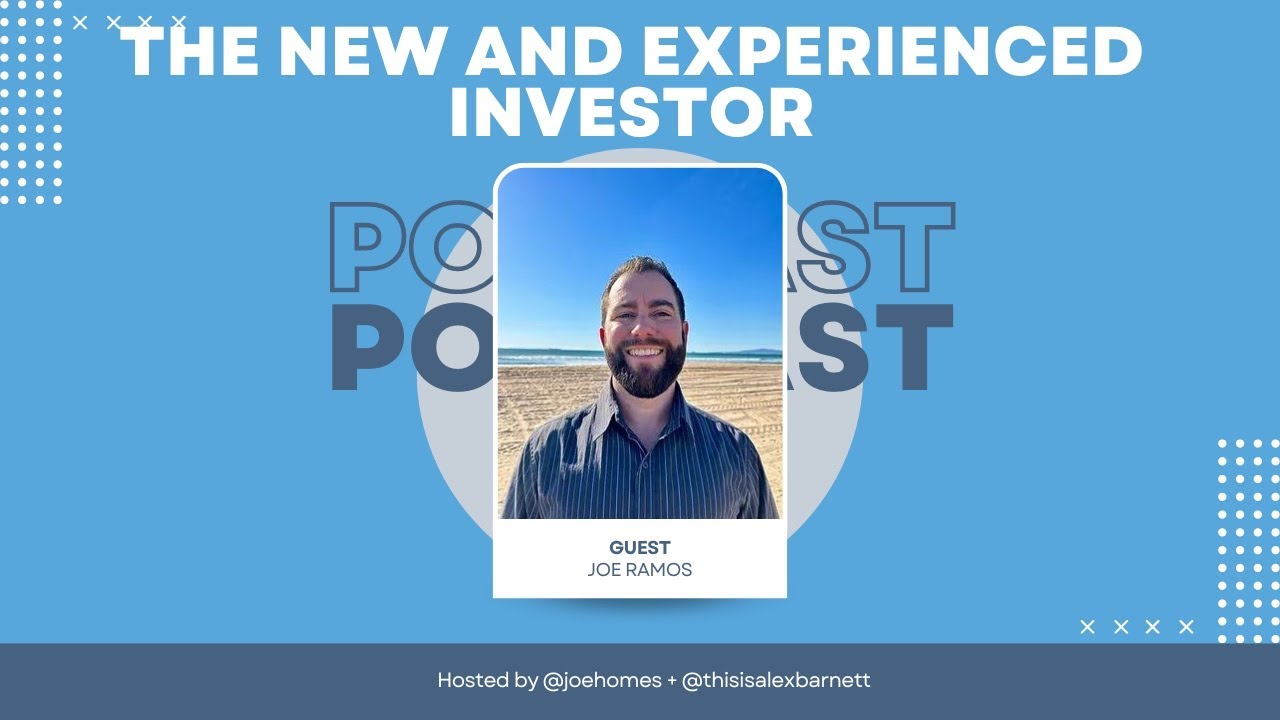
In this episode of The New and Experienced Investor Podcast, hosts Alex Barnett and Joe Homs interview seasoned real‑estate investor Joe Ramos. The conversation walks through the practical realities of house‑flipping, from negotiating assignment fees and avoiding common valuation mistakes to scaling deals across multiple states. Ramos shares his experiences with high‑fee assignments, the impact of inflation on deal economics, and the challenges of cash‑flow‑thin markets like Texas when using sub‑2 and seller‑finance structures. The hosts discuss the importance of thorough due‑diligence, lead‑generation tools (PropStream), and the value of strong partnership dynamics, especially when collaborating with wholesalers such as Chad. Ramos promotes his SoCal Traveler brand, the JSJR Asset Management website, and the PadSplit model for multifamily investments, encouraging listeners to reach out for joint‑venture opportunities. The episode closes with plans for a CPA consultation, reinforcing the need for solid financial foundations while maintaining an enthusiastic, community‑focused tone.
Chapters
What's up, you guys? Welcome back to the podcast, The New and Experienced Investor Podcast. We're a real estate podcast that brings real estate investors from all walks of life together. I'm one of your hosts. I'm Alex Barnett. I'm the new guy.
And I'm Joe Homs, and I guess that makes me the experienced guy.
You're gonna have to just—
And we're on time, by the way.
Oh yeah.
Unlike, uh, somebody I'm not gonna even mention. But anyways, we're on time.
We are on time.
We're on time.
That's right. Yeah, I think the one week when you were gone and we had a co-host, we were late. So when you're not here, the ship gets kind of—
The logo is a lot better. Yeah, I'd asked you to explode that, and so I think it looks a lot better.
Oh, good. Yeah, Joe went on a cruise and he was co-producing from—
I was like a guest. I was like seeing what was going on.
Typing in what's going on. He's like, you got to turn the volume up, turn the lights up a little bit, the logo's too small. Yeah, so we made it happen.
It was actually— I thought it was very good because I could see what people can see, right? And so Yeah, there has been some improvements made.
Okay, 1% better every day. That's what we strive for here. Uh, we have a guest in studio today, super stoked for that. Before we bring him on, let's talk about really quick about our meetup that's coming up.
That's on what day?
The 22nd.
So 22nd, July 22nd. Not the 24th like last month.
No.
22nd. It's just a special one too.
Yes.
Very special, guys.
I'm going to be teaching everybody how to flip a home in less than an hour. Talk about clickbait, huh? Yeah, yeah. I'm going to teach you how to flip homes.
Yeah, yeah.
From start to end. There you go. I've got an hour to do it. So bring your questions. We'll starting at six, or as close to six as possible.
Yeah.
Hopefully there's no power outage. There was one last month, but we, we still had a good meetup.
We did.
It was fun.
We'll be back in the same spot. And please, if you want to get your parking ticket validated, you need to go and buy something at the brewery.
Yeah.
Food, drink, whatever.
There you go.
And they'll validate it for you.
Oh, and the best part is, is as you're learning how to flip in under an hour, all the people, all the partners are going to be there, like, in attendance. So we have, like, private money lenders, there's contractors, or, you know, agents, whatever you might need. Everybody's there.
Wholesalers.
Wholesalers. So all you got to do is connect with the person next to you.
That's it.
You could be up and running before the end of summer.
Yeah, we have a wholesaler here. Yep, we have another wholesaler here.
Yeah, all around.
We've got an agent here.
Got an agent here. So yeah, hit us up.
We have it covered right now.
Yeah. And, uh, make sure to drop your questions in the chat. This is a live show, so we love the feedback. Um, we'll, uh, we'll get our guests in the hot seat here and, you know, get you your questions answered. So let's go ahead and bring him in. Today we have Joe Ramos. What's up, man?
What's up? Thank you guys for having me so much. It's a real pleasure and so fun to come and do these in person.
Absolutely. Yeah, we're stoked you could make it out. And why don't you go ahead and introduce yourself, let everybody know how you got into real estate, what you were doing before, and kind of what led you there.
All right, well, I'll try and keep it short. But, um, so I'm Joe Ramos, and I started in real estate at the end of 2008, um, when I was 21 years old. I bought a house, uh, when I was working in the car business, and I ended up renting out a couple rooms to a friend of mine that worked with me, and then a friend from high school, because, uh, we were literally renting a house down the street and putting the money in this dude's bank account. And it's like, this is ridiculous. And I started making a little bit more money, talking to my tax guy who's a family friend, and said, well, maybe why don't you try and buy something? And, you know, even though the market was kind of really crappy then and everybody thought I was crazy, including my parents, I ended up getting something towards the end of 2008. But it worked out because, as we know, things always go up, right? And so everything from there just kind of clicked for me. So I rented out the rooms for $500 apiece and It was $1,350 a month in the payment. So it's like living for free. And I did an FHA loan, had the Obama credit. So I put $6,800 down, got the $8,000 back. And I mean, I actually got money back on my taxes, which I was like, oh my gosh, this is awesome. So from there, I just kind of ended up trying to figure out a way to keep on buying more, more properties. So, you know, a couple of years later, I ended up buying another one. And I ended up just kind of kept on doing that and buying— bought another one in Riverside. So I was born and raised in Riverside. So it was nice because it was definitely, you know, I don't know, it was more affordable, but everything is relative, right? So I ended up just kind of buying properties. I moved into them, rented one out, and then moved into one and rent them out while I was selling cars. So I started selling cars, you know, around like 19, 20 years old. Didn't finish college, but it was honestly the best thing that ever happened to me because I wouldn't be able to be where I'm at now. So I ended up building my team. My, you know, my tax CPA was one. I had my loan guy and then I had my real estate agent. And I just kept on trying to figure out a way how I can buy more properties because, you know, I've worked commissions. So I had to kind of go to my loan guy, go to my tax guy and try and figure out, okay, how can I buy some? Nope, you can't afford anything. All right. So let's try for next year. But I adjust my taxes to kind of like actually, you know, They'd go against me, but it would allow me to afford more. So that would kind of allowed me because I was doing all on my own. You know, nobody was helping me. And so I just kind of kept on doing that. And then, like I said, I moved out here to Huntington Beach. You know, and so that was like the the fourth one I got. And you know, every time it was always you know a struggle. But the thing was that I just kept on pushing and trying. Kept on. I had a goal. You know, my goal was to do three there. Before I moved out to the beach before I was 30, you know. And so I think that's one thing that I kind of tell people is that to have a goal and work backwards. And so that really kind of, that helped me, propelled me to, because I built a lot of equity and a lot of value in these properties and experience as well, because I'd work on some of them myself. My dad taught me a lot. And then, you know, I just started, I just kept on going and I invested in Big Bear, got a You know, an Airbnb in Big Bear. And then I finally got out of the car business because I had, you know, I had the equity and the, you know, the income from the properties. And so I ended up refinancing out, you know, some money. And then that's when I started investing out of state in Georgia. And I took some money for the first time, I don't know, 2020 or something like that. And that's what really propelled me. And I just bought, you know, I bought a house cash. Refinanced it, got the money back, rented it out. And then from there, just, you know, multiplied that into, you know, 2 other houses. So I got 3 of those just from that, that one set of money that I, that I pulled out. And then after that, I was like, okay, cool. And I figured out DSCR from doing those. And so I did a DSCR out of the 2 in Riverside, which one was almost paid off. So you can imagine I pulled out, you know, tons of money out of both of those and just took that and invested in Ohio and then went to Florida, you know, and met my business— my now, like, my— one of my main business partners, you know, who I do a podcast with. Shout out to Land Shark Financial Freedom Podcast. But, um, and so, you know, we started investing multifamily in Ohio and then investing in Florida. We created a fund to do short-term rentals as well. So that's when I started learning about raising private capital. And come to today, I've got a flip company out in Atlanta, Georgia now because of my establishment of the people that I've had in Georgia kind of helped me. You know, these wholesalers and people are sending me deals and like, oh, you're in Georgia, you want to— you want this? And I'm like, okay. So I started doing flips out there and now we're trying to, with a different business partner, they're my basically my capital partners and they've been you know, putting money into the deals and have friends and family that are putting money into the deals. So we've got 3 currently under construction, 2 completed just in the last 8 months. And so we're trying to ramp it up to 20 a year next year is what their goal is. And so just trying to, you know, build a team and system and everything like that. But I can keep on talking.
I love that.
Let me—
Dude.
Yeah, I have questions. So where's, where's the mindset come from? A 21-year-old starting, you know, most of the time when people borrow money from their house or whatever, they're going on vacation, they're spending it on a Ferrari or whatever. What's your mindset at that point?
So that's a good question because I didn't really tell a backstory of how I grew up. You know, my parents are very hardworking people and they're not wealthy by any means, but they're smart with their money. And so they taught me the value of the dollar. So growing up in, you know, even before high school, I had a recycling business. My dad would drive me around and I'd collect cans and bottles from the neighbors and, and turn them in for money. And we'd go through the orange goes, pick them out. I used to save, you know, the money my parents would give me for food at school, or I'd sell my mom sandwiches. I'd sell water bottles. I don't know why. My mom was a salesperson and she was one of the top in United States for Clear Channel Broadcasting Company. But my parents started with nothing, and they— but they're both very hardworking people, and so they taught me the value of the dollar. So when it came time, like, so in high school I had a lawn mowing business. My dad lent me his lawnmower and I had to maintain it. And I remember one time I was mowing a lawn and I hit the curb and ruined the tires, and they're like $100, and he made me pay for them. You know?
Mm-hmm.
And so, and I was so pissed, but, you know, obviously didn't do that again. And then when it came time to buy a vehicle in high school, I had a Toyota Tacoma I bought. I put the down payment from doing my lawns, and that's why I got the truck to do more lawns. And I had, my dad made me pay interest, and I had a $210 monthly payment in high school. And a lot of friends would laugh at me because, you know, they're driving BMWs and lifted trucks, and I'm over here in my Toyota Tacoma. It just kind of taught me, and that mindset really is what kind of helped me through it. Even though my parents thought I was nuts, and they don't take—they're very risk-averse. So they have two properties, and it's great, and they're paid off. But I mean, at their age, I mean, I've got like twenty, and you know, and it's like the difference in mindset. But you know, they thought I was crazy going buying that first house, but it just—it worked out even though it was a pain because this. It was an HOA, and they're like, oh, don't do it. And I have some stories about it because I'm 21, right? And I'm pissing everybody off in the neighborhood. But, you know, that's kind of where it came from, I guess.
Okay.
That's really where it came from is just the dollar, like, and the thought on that because I'm over here renting a place with these guys and I'm in control of taking the money, putting it into this dude's bank account, like, who we're renting from. And I'm like, What? Like this, you know?
And so I guess, you know, from your Toyota Tacoma to now, what are you driving now?
I have, I have a newer Toyota Tacoma. Okay. But, um, but no, I paid that truck off, um, you know, before college. And then, oh, so that's a good story too. Uh, so I had this truck and I started working in the car business, and I'd pull up and I was living at my parents' house when I came out back from college, uh, and my dad didn't want me living there if I wasn't going to be going to school. So I ended up getting out of school, getting the— and I got this car. I pulled up in this Volkswagen GTI because I worked for Volkswagen. And my mom's like, oh, did they let you borrow the car? I was like, yeah, yeah. She's like, no, you bought it. I was like, yeah, I bought it. Because I bought that car because I wanted to build my credit so I can buy the house a year later. And so that was the whole goal. And I was moving out at the time. batshit crazy— excuse my language— but because he's like, how are you going to afford that? You're moving out. And that was before I ended up— that's before I rented the place, because my parents were charging me rent. My dad didn't want me to live there if I wasn't going to be going to school. And so I was like, all right, I'm out of here.
And so not to keep harping on cars, because that's not what we're talking about, but what's your dream car?
My dream car. Well, right now I have a— Toyota Tacoma 2018 TRD Pro, which has a rooftop tent. And I have traveled across the country and I love that thing to death. And I have a Volkswagen Golf R, which is fun, both paid off. And I've got a 21-foot Wellcraft sitting in my driveway as well. So I would say my dream car is gonna be a Porsche GT3 RS. Okay.
And in your life cycle, How else am I going to say it? In your life cycle, your experience, where does that car come?
Well, so I would say it's different now because my lifestyle changed. I just got married about a year ago. And she is like— I mean, I thought I was frugal, but she's very frugal. And but when you— because in the car business, I made quite a bit of money. And so as you get older and you make more money, you end up kind of living a different lifestyle, right? Even though you're still kind of investing in stuff. But she doesn't really see me having one. But I think once—
She's like, just have the poster on the wall. That's good.
So, you know, I mean, we're planning on having kids. We're starting to try to have kids right now. And so I think, you know, once all that stabilizes, you know, then I feel like Um, you know, I could, I could maybe, maybe get one.
Get the minivan.
No, never, never. No, no, she's getting a 4Runner or something like that. Yeah. Um, but, but, uh, I would say, you know, I don't know, it's not really too important because I've kind of changed my life and my lifestyle. I don't, you know, I've, I've gotten back to going to church and living more for God than I am for myself. And so, you know, those kind of things, even though I do would love to have one, it's not super important. I mean, maybe, you know, one of these times I'll go and I'll take my dad and we'll go and we'll go do the Porsche Experience Center and rent one or something.
I don't know.
That's cool. But, um, eventually maybe when, when it's just like, when it makes so much sense to where when I'm making so much money, like in this flip business, if I'm gonna be making the $300 to $600 that are what our goal is, then, you know, and, and I could write it off and it makes sense, then I'll do one. Because that's what I try to explain to her, but she's a nurse. She doesn't You know, understand that side of things, and that's kind of why I taught her how to get into real estate before we got married.
So okay, like I need to buy this car. You like you don't get it. Otherwise, we're giving this to the government.
Yeah, exactly. That's when that's when that's their answer, right?
The point I'm trying to make is you know you have time. Yeah, you know you don't have to do all these things right away because I know that that puts you behind the eight ball.
That's true. Yeah. Well. Comes to a point where I had an Audi S5 that I had bought in 2013. I leased it, and thank God I leased it. But I ended up selling that car to get my third house because I was buying everything on my own. That $800 payment was kind of going against my debt ratio. So I ended up selling it to CarMax. And good thing I got a great deal on it. So it wasn't really that big of a deal to sell it. And I got another house and leased a cheaper car.
Yeah. So, yeah, that— yeah. And honestly, that's incredible because a lot of people don't even think about that. You know, it's like, here's my goal, and if I have to get there by selling my car and getting something less expensive, then yeah, I can do that. But, you know, people go, no, I don't want to get rid of my car.
I mean, buying houses is just as fun to me.
Yeah, yeah, yeah, that's true. Yeah, yeah, that's—
I love that. Yeah, cool. All right, wow. I mean, that's so cool that you got started so early. I mean, that's, that's amazing. And you know, you'll be able to pass that on to your little ones, right?
For sure. Yeah, well, I mean, I love to teach people as well, and that's why I love to come on these, is because it gives me a chance, an opportunity to tell people about my, my experience. I mean, not everything's hunky-dory. Sure, I've gone through my ups and downs and still do. Yeah, we're constantly learning every day. And that's the thing, is that you have to realize that You're always going to be learning and you can't give up.
Yep. Yep. Lessons every day, especially in the flip business.
Yes, that is true. That's a different animal.
Yeah. Very cool. All right. Well, I guess what made you transition from buying out here to going out of state? What was that decision?
Well, I think what happened was, like I said, when I found this little town outside of Atlanta and I started like looking into this market and I was able to pull out that $100 grand and I was able to buy that house cash and it just kind of like flipped into a couple of different things and the cash flow was just so incredible. Then that, that kind of sparked that. And then when I met my business partner, we started investing in Ohio. It was kind of like the same thing. We— that was where like we got our first one from a wholesaler and bought one. It was like $45 grand, but it needed a ton of work. It was disgusting and gross. And so spent $130 grand but did a cash-out refinance. And it's like, oh my gosh. And then it cash flowed. It's like, what the heck? And then we got an 8-unit apartment building off LoopNet that was, you know, we had to fix up. But then it was like cash flowing like stupid, you know? And it was just— and then he ended up moving out to Florida from Idaho. And, and then we just started focusing on Florida because Florida was just starting to become like, you know, a really good market a couple of years ago. Right. It was just starting to like, Oh, okay, let's go over there. You know what I mean? Made sense. And so that was, it was just kind of how things rolled, you know? And then as you, as you go, then it's kind of easy to transition to different markets because you kind of know what to do and what to look for. You know, you just find the right people on the team to set everything up and then you can really expand from there.
Yeah, I mean, that's great.
Where did you meet your partner and Have you even seen any of these properties that you're flipping?
So yes. So on the flips, I have, I have seen— have we seen them all? No, I haven't seen them all. And I haven't seen all of our rentals either. I haven't seen any— some of like one of the personal ones I have in Georgia, even though I was out there not too long ago, I didn't even get a chance to go and see it, you know, but and then the ones in Florida, We have 2 short-term rentals and I've been and stayed at those. We staged one and did it ourselves. And then one, we had someone stage, but we stayed at it because it was just fun. It was down in St. Pete by the water. And then the pad splits that we have currently, I haven't seen any of those because those are all very recent and he lives out there in Jacksonville. Now, my business partner, this one, my main business partner I do the podcast with, I met him through one of my sales guys. He used to be one of my sales guys at one of the dealerships I worked at because I moved my way up, of course, from sales into management and finance and all that stuff. And so he moved out to Idaho and he's like, hey, you gotta chat with this dude. Like, you guys are like right on the same wavelength and like what you guys wanna do. So he introduced me to him. And then we just kind of like chatted and chatted and kind of got along really well. And then we ended up starting investing in Ohio together. And then from there, I drove out to Florida after I completely stopped working. I took like a hiatus, a break, and whatever. Like I said, I got out of a really bad relationship and changed my life and everything and drove out there. And that's when we started the podcast. And that's when we started a couple of companies and started our fund to start raising money for these short-term rentals in Florida. Florida. And yeah, and then we just kind of took things from there. The people I do the flips with, they are actually— I met them through a group with Amy Majury. I don't know if you guys know who she is, but it's all about raising private capital. And I met them, they really liked me. They saw what I was doing in Georgia because I was doing a flip on my own out there, as well as, you know, the rentals and just everything I was doing. And we just got along really well. And so they wanted to kind of partner up with me. So they brought in all the money on a deal. And instead of me just giving them a percentage on their money, I ended up bringing them as a half and half capital partner because I saw the potential in the future because we worked really well together and we're very organized and they have a lot of good resources. And so now, you know, they're not only bringing in their own money for paying cash for these, these flip deals, they're bringing in other people as well. And so now we're really just trying to scale this. And now it's like, okay, we already got one sold. I got, you know, I had the other one sold. That was my one that I did from raising money from my next-door neighbors and my buddy's dad. And then now we got 3 that are under construction. One should be done by the time we fly. We're gonna fly out there. I'm gonna show them around the area towards the end of July and hopefully meet up with this guy from Floor Decor who is actually going to be putting me on a pilot program. And I said, hey, well, we're going to be out in Atlanta. You're— since you're out there and your headquarters, we have some projects we can just walk right through because I use a lot of their materials. And I have a gal here in Huntington Beach who's been helping me out with some design and some of the tile work. And so, so yeah, we just kind of just are starting to ramp that up. And they're like, Joe, find some more houses, find some more houses. I'm like, okay. So I put in like, you know, 8 offers the other day. I'm battling it out with a couple. And so It's become, like you said, really fun. I mean, it's obviously stressful at times, because we ran into some hiccups with some of them. And not everything goes smoothly. And I could talk about that too. But yeah.
Do you have some sort of partnership agreement with them, or is it just verbal?
No. So we actually, with them, we ended up starting a company together. And so now we're partners in the company. We've got the LLC. You know, Wyoming, you know, corp, and we got business credit cards now. And so because, you know, we work so well together, we want to grow this big. So we want to make sure that everything's legitimate and it's all dialed in and we have the books correct and make sure that every expense for, for each property is, is laid out. And now it's come to this thing where I had this hiccup on a, on one of the projects that we were doing, and I ended up finding a guy who is a flipper in the area. And he like went through a similar situation with the city and now he's our project manager.
Hmm.
And so we decided to give him 10% of the profit of the projects. And now it's making it so much easier for me. That's why I don't even have to go out there or anything or like babysit anybody. And so he is overseeing everybody and putting all the things together. He's so organized, it's awesome. And now that's what's able to help us scale. And that's one thing I think I was telling somebody the other day is like, sometimes you have to give up some to make more. And a lot of times people are so greedy. And that's why I'm so glad I didn't do that with my partners now. You know, I could have said, oh, I'll give you a percentage. But now they're like, nope, we don't want to work with anybody else. We don't want to like put any money anywhere else other than like with you. And I mean us, you know, it's us now.
Yeah.
And so it's really fun. They're cool. They're like my second parents. Uh, you know, because they're similar age and they actually came out here to LA not too long ago and we went to dinner with my parents and it was just really fun because my mom's originally from New York and they are like so similar, it's wild. And so it was just really cool that they had so much fun and we could not only be like partners but be friends as well.
So any, any conflicts, you know, between you and your partner? It's like, you know, obviously it sounds like you own 50/50, but If somebody needs to make a decision, who is that going to be?
I mean, I feel like we make it collectively. I mean, in in this group of people, I mean, it's a husband and wife, and then it's me, right? You know, I mean, you know, none of us are are perfect, but I think we work well enough together to where we can express our you know our opinions, our thoughts, and where we want to move forward. Now, like my other business partner that I have with the podcast in Florida and Ohio and stuff. I mean, sometimes, like, I don't think there's really conflict, but I just, I think sometimes, like, I'm, I feel frustrated sometimes. I mean, my wife would probably tell you more so than, than I. I mean, things get resolved, but it's just like sometimes you work better with some people than, than others. And it's not like we're not working well together because obviously we've done a lot together. But you just, I think you have to realize, like, okay, this is, this is my, what I'm supposed to be doing over here. And then this is your job over here, right? You know what I mean? And so that's why it's important not to have business partners where you guys are both like the same, right? You want to have, you know, different strengths, you know. And so, um, so yeah, I mean, like I said, as far as the people that I'm doing the flips with so far, I mean, I don't see any conflict. I mean, you know, we all are, are different people and we're all going to have like little quirks and stuff and, and that's it. But As far as business, it's business.
Yeah. Yeah. Yeah. It's just so much like personality types and everything. And you kind of get a sense, you know, pretty early on, um, how that's gonna go. But it makes things so much easier, especially when things do pop up and everyone's not freaking out, you know? It's like, all right, let's just figure this out. We're gonna get through it. And so, yeah, it probably helps that like you've had your experience flipping, you've seen some stuff go wrong. You're like, no, we're gonna figure it out. Everything can be resolved, you know? And are gonna do it. So.
Yeah, well, and I mean, I think I'm very fortunate for being in the car business because that taught me a lot. I mean, you know, being in like, you know, retail sales, 'cause I worked at Best Buy before that when I was younger. And, you know, it just kind of teaches you about people and how to like read people. And in sales, you know, you kind of have to be malleable and kind of a chameleon in a sense of, You know, know who you're dealing with and know who your audience is and, and things like that. And so that helps me to like pick out, you know, certain business partners. And that also helps me— that goes to kind of this real estate stuff and why like some of the properties that I have, I have because I, I found, you know, like I went directly to selling agents on some of those rent— all 3 of those rentals that I have in Georgia. And there's some people I call and they're like, oh, just make an offer. Okay, forget it, go on to the next one. And so, you know, kind of like that and just kind of reading the room and And stuff like that really just kind of— it just helped going through all these regular people coming in the door, and you're really learning all these different personalities. And so that helped a lot.
I walked in looking for a car at a dealership once, and I know better. I had my Rolex on. And I got help right away. And it's like, yeah, that's a nice Rolex. Is that an Oyster Perpetual? And I go, yeah. So I, I know exactly what you're talking about. Uh, I, I do the same thing. You know, it's, it's— in fact, we had a little, you know, landscaping issue the other day, and Alex said, well, the landscaper says it's gonna cost $400. I said, $400? It's like a mow and blow type thing. I said, offer him $100 and that's it. And so yeah, he, he took it. $100.
Yeah.
You know, you just— yeah, but Alex is very Nice, let's say. Giving, giving. Yeah, giving. So I, I have to, you know, kind of watch this. Like, okay, no, you can't take the first offer they give you. Yeah, it's, you know, you have to negotiate here. Got it. And that was way too high.
It was really, honestly, it was a simple mow and blow. To me, it looked like a lot of work. I'm not a landscaper. I'm like, that looks like a lot. No, him and Ryan were like, no, that's just— once they have like a term for it, they're like, no, it's a mow and blow. It should be like $50. Yeah.
Oh, okay, $100. We're nice, you know, it's gonna come cost me $25, $30 to rent a weed whacker, and then, you know, probably $20 to go out there, you know, and spend like the whole day going out there because it's like 2 hours away. Yeah. So I said, okay, that's about $100 worth, so see if they'll do it. And they did.
Yeah, they did. So never know until you ask, right?
Yeah, yeah, yeah, yeah.
But, but on the flip side of like what you're saying with the Rolex too, it's like A lot of times, and that's why I think I did well, is some of the people that worked at the dealership wouldn't even help some people because of the way that they looked.
Yeah.
And it's like, I mean, I wear flip-flops, tank top, shorts. I don't care. So, you asked about the car, right? This is my whole goal, was to ride up to the Porsche dealership on my BMX bike here in Newport Beach to the Porsche and go and see if someone would help me.
Yeah. You know, because that'll be a good video. Yeah.
It's one of those like, because I mean, seriously.
Well, the young guy that is just, you know, hired a month ago, he's the one that's gonna help you. Mm-hmm. You know, the experienced guys are gonna like, uh, yeah, you take 'em.
Yeah.
It's so hard to tell now.
I feel like the more money you have, like there's like billionaires that dress like they're homeless guys and you're like, yeah, but those are the smart ones.
Yeah, I know. That's what I'm saying.
Like you can't tell. Or there's like some kid that like blew up on crypto or something and you're like, he's like got $100 million and he dresses like that. Yeah.
We used to buy houses at the Courthouse steps and there was a guy there and he had millions of dollars, you know, because you had to prove that you had the money in cashier's checks to the guy who was doing the auction. And, you know, he pulled out this big giant envelope with like— there was literally millions of dollars in there, but he looked homeless.
That's what I'm saying, you know, can't tell.
It's like, yeah, he buys— he was buying everything near Disneyland at that point. And he was doing Airbnb stuff before they put the moratorium on them.
Yeah, he's the reason they stopped it. They're like, wait a second, our hotels aren't making as much.
Yeah.
Yeah, so true. Well, I mean, yeah, it seems like all your life experiences leading up to you made you a perfect investor.
I'm not perfect.
At least made for it. Yeah, because you got to be able to, like you said, go through the ups and the downs and all that stuff.
Yeah, well, and you got to communicate with people and stuff like that too. I think that really is a big thing is communication, whether it be you talking to the contractor or the real estate agent or whoever it may be or your business partner even. I mean, all that stuff really helps. So I mean, but yeah, I can talk forever on that.
Well, yeah, and then especially once you start using other people's money, that's like— becomes like a serious thing at that point. When you're not using your own money, you're like, okay, I'm willing to lose my own money, I can bite the bullet, but this is somebody else, you're willing to burn that bridge, you know.
Well, and that's why you got to be very calculated and everything. And I think that's why people, you know, trust me, is they've seen me do it myself with my own money, right? And that kind of helped my track record, and that actually helped with the whole DSR. This is something that I didn't really realize until after getting to like a real estate group where people are like, I can't get a DSCR because I don't have experience. And I never thought of that as a problem because I'd always had my own personal experience that I put on the things. It was always so easy for me. So I'm like, well, hey, if you want to buy my experience, I'll help you out. We can partner up. There you go. Yeah. So that's, uh, that was an interesting kind of thing because, you know, DSCR is a, you know, definitely different animal, right?
Yeah. Are you, are you finding that it's still like you're still able to make the DSCR work like in certain areas?
Well, so, so this will go to the pad splits and what we didn't touch on yet is it's really— it'll work with those, maybe not so much as like a single family. I mean, I have— I mean, there are certain deals that it can work if you get the deal for the right amount, right? I mean, it's the same thing. It's always on the buy. So I would love to within these flips, I told my business partners, Like within this company, we should probably like every like 5 flips, buy one to flip into a rental, even if it's not making, you know, a crazy amount of cash flow. It'll kind of help with our, our tax mitigation. And so I think it's definitely possible.
Right.
It still is possible in certain areas, you know, but in different models will work better. Right. You know, if you DSCR into an Airbnb, but Airbnbs are a pain in the butt. I love the long-term rentals or multi, like small multifamily. But the pad splits are doing really well with the DSCR because we're able to DSCR those. And let's say we have a payment of $2,000, you know, a month and we're renting out each room at 10 bedrooms, $700 a month, or even, even if it's like $600 a month. I mean, yeah, you're paying utilities and you're, you know, the maintenance, yard maintenance and stuff like that, internet, you know, but you still have a lot of play in there. Right. So it just depends on the deal. Like, a lot of times everybody just gets so caught up on just like focusing on one thing when they're not like really thinking outside the box. And like, when I buy a property, I want to have at least like 3 exit strategies because then I'm not going to be caught, you know? Yeah. With my pants down.
Yeah. Especially, especially right now. You know, it's like, and, you know, it's like it kind of goes back to Like when you— people thought you were crazy for buying in 2008 or whatever. There's always going to be those, those times where people are like, no, you got to wait till the interest rates come down. It's not a good time to buy. And you're just, you're just like, no, I'm still buying. Yeah, I'm trying to buy a lot right now.
Yeah, yeah, exactly.
Uh, so where are you sourcing your deals?
Um, so I've got wholesalers, uh, looking out for me, and then I also have, um, like agents looking for me. And then I also look at deals for myself. So I'll go on the MLS and I'll look up deals that have been on the MLS for a long time and just reach out to the agents and touch base with them and just make, make, make offers and make educated offers.
So how are you accessing the MLS?
Well, I mean, either the agent will, will be sending me a list Or, you know, I mean, I'll go on like Redfin and look at them. I mean, because it all pulls from, from the MLS. So I just go on Redfin.
Do you use PropStream or have you ever used it?
I have used it before, you know, but I'm not really— we were just using that for like doing some of the wholesaling stuff that we're doing and things. And my business partner has PropStream. But I mean, I don't know, call me old school, but like, I like to call the agents and I will call like I see It's been on the market a while, and I just want to know what's going on with it. You know, and then if I decide, you know, like now I have an awesome agent that's investor-friendly. She's done flips herself, and so I don't even care now on those ones going directly to the selling agent because she is killer. And so I'll call the the agent who's listing it, and I'll talk to them first, maybe, and see if I can get. Yeah, I'm pretty good at finding them and getting hold of them, and then. See what's going on with the property. Okay, okay, okay, cool. And then so I'll hit her up and I'll send my— send her or my guy over there. She'll take video or he'll go check it out and kind of run through and see what it needs. And then, you know, just throw in an offer and we'll just kind of keep on. Like, I mean, last Sunday I put in, I don't know, like 8 or something like that, you know, just offers, just kind of bombing out there. And then now we're kind of negotiating on 3 different places and trying to figure out, you know, because Like I said, we're trying to stack them up. So try to get 2 more here in the next couple months and stuff like that. Hopefully, like, 1 a month will be the plan. And as they sell, they just kind of keep on recycling the money, right? Yeah. You know?
Yeah, absolutely.
Yeah.
Yeah.
Well, I'll put the word out you're looking for properties in Atlanta.
Yeah, dude.
Okay, cool. Let me know. Awesome. So like you mentioned, you're putting in 8 offers. Is the investor-friendly agent writing all these up for you? Yep. Oh, nice. Yeah. Okay.
Cool.
Yeah. And then I, since I have my license here in California, actually right before we left, I checked my mail and I got a referral check from the last house that we bought. And this is why I'm not even sad about like buying them off of, you know, MLS and going through her because she's given me the referral money. And then when we go sell it, I'm like, all right, cool.
Nice. Way to go. Okay, cool. Any, like, are you going to be flipping in like Florida as well?
Or that's kind of a Well, we, we did, uh, try that one in Jacksonville. Market's a lot slower there. Um, it was kind of sitting a little bit longer. And so since it was under— that one was under a hard money loan because that was kind of a different structure. And so we just ended up turning it into a pad split and refinancing out and paying it off. And so I would be open to it in certain areas, right? Because, um, the higher-end areas move a lot faster, um, over there for some reason.
Oh yeah.
And so You know, that's definitely a possibility. I do have like friends in a real estate group that are doing a lot of things in Florida. But I mean, my main focus is going to be Atlanta just because it's just the growth.
Yeah.
And the opportunity is there. One thing we were talking about is maybe even starting another side of the company to do like remodels because we're doing some research and there's a lot of people who want like, like remodels done. So instead of us doing a flip, maybe we just do like a— do a remodel for somebody because They love their house and they want to stay there, but they want it bigger or better or whatever. And there's a lot of opportunity for that as well. But I mean, if you ever go to Atlanta, you should see— I mean, there's just tons and tons of opportunity everywhere. Yeah, really, it really is. And I mean, because like the last guy that bought this house that I just did was near the Tyler Perry Studios, and lo and behold, he worked for the movie industry. Oh yeah. And so I was like, I knew it. Yeah, I freaking knew it. Like, I was like, I knew that was gonna happen. So, um, but yeah, I mean, so, so looking into those, those key points and key areas too, paying attention to that. Like, obviously, you know, Rivian's moving out there to a spot in Georgia, and then, you know, Google or Apple or whatever, both of them I think are thinking about like a certain spot to put something. And then, you know, Tyler Perry Studios, he's got 400 acres right there over by the airport. This is like The busiest airport in the United States. And it's super easy to get in and out of. And that's why my buddy moved out there, moved his company out there, is because of that same reason. And he's really the reason I got invested in Georgia because he told me about that little town 30 minutes outside of Atlanta. And that's another thing I'll tell people, reach out to your resources, people who are living in certain areas that maybe don't know what they know. And then you could figure out from them, where's a good spot? Where's a bad spot? Maybe they could take a look at it for you or whatever, and then it can blow up from there.
Yeah. It's kind of interesting, right? That's kind of how I got into Jacksonville too, was my sister lives in St. Augustine. So I was like, oh, let me just take a look at this market. And then we just started wholesaling and then it was pretty productive. So it's just kind of random how you end up in these spots, but as long as you Like you said, build out a team and get your systems down, you can pretty much invest anywhere.
Yeah, St. Augustine is beautiful.
Yeah, yeah, it's super cool.
Reminds me of Newport Beach.
For sure. Yeah, yeah, plus pirates. Yeah, it's really cool. Awesome. Uh, do we got anybody checking in right now?
We got a few check-ins. You already know who's here, it's Liz. She says hi. Cool. What's up, Liz? And then we got Austin says, hey Alex.
Okay, what's up Austin? That's what we got.
Nice. So cool. Do we want to watch some videos?
Yeah, let's watch some videos.
Okay, cool. Um, we've got— hold on, let me move my thing around here. What you don't know about out-of-state investing.
Most people overlook the most important factor when deciding where you should invest out of state. I use this to successfully purchase 20 properties long distance while living overseas in the military. Most people are concerned with factors like population growth, 1% rule, unemployment, popularity. Screw that. You should care about boots on the ground. When you invest long distance, you're probably doing it because the place you live, which is the best place to invest, is too expensive. So you should pick a place with a lower cost of living that you're familiar with and that has a friend or family member that you trust living there. Investors get into trouble when they invest in locations that they have no one they trust living by the property. It's a recipe for overpaying when you purchase, Ending up in the wrong neighborhood and getting ripped off by contractors. Follow for more stuff like this. Most people. Thoughts?
Mm-hmm. Yeah, just kind of what I was saying. Yeah, exactly. You know, exactly. It really is true though, you know, because like before my my buddy's dad invested with me, so my my friend moved out there. My friend's dad, his his wife died from the COVID vaccine, and so he ended up selling his house out here. in California and moving on my buddy's property because he's got 5 acres and freaking, uh, detached garage with an ADU and all. It's so cool. And so, um, I was buying that first house and, uh, I was like, hey, I'll pay you gas money, just go check it out because I got the inspection and it kind of freaked me out. But it's way different, right, than out here in California, like, because there's so much moisture out there, so much, right, like bugs. And I'm like, I don't know if I'm gonna buy this, but it was a really good deal. And so he checked it out. Oh yeah, it seems like really— it seems fine. So OK, OK. And then I got it. And then I was like, hey, you want to invest with me? So he ended up putting in half. And we ended up starting a company. And then we were an LLC. And we just like— I refinanced it. And then we got our monies back. And then it's like, hey, I found this other property. So the second one I didn't even find. He found it. And of course, it ended up being a lot more. more work than I thought because I didn't, you know, he kind of like found it, but ended up being a really, really good deal on like a nice BRRRR. You know, we got all of our money back out of that one and cash flowed $800. You know, it's like, can't beat it.
Heck yeah.
So, so that's what's interesting is like about getting these people involved because maybe they could be your partner or they could be your private money investor too. Yeah, you never know.
Absolutely. What are some tips you would have that you have for, let's say you don't have like a friend or anybody, like how do you make a connection? Maybe a place—
Everybody has friends.
I've got like 4 friends and they're all in this room.
Oh, wow. OK. Thank you.
So what would you suggest if you have no boots on the ground or—
Good question. So like the lady that we found in Ohio, she actually ended up being really awesome. She is such a cool person. She has actually since then driven down to Atlanta to help me on some of the Atlanta projects from Ohio.
Whoa, nice.
Oh my god.
But she is just awesome. And I think that just goes back to like, Like reading people. And I know not everybody's as good at that, but, um, you know, I just found her on Google. I just kept on calling people in the area because we were looking at that— there's that wholesale house and I needed somebody to go by and go look at it. And I think, you know, even maybe get pictures or better pictures or whatever. And so, you know, it's just like calling people and just kind of like vetting them out, you know. And she was just so on it. She's like, oh, I'll drive over there like right now. Oh, all right, cool. Like, so, okay, so That kind of just— that she just became like an awesome, you know, team member. She ended up being the project manager. She found all the people to do the rehab and everything like that. And she's just super awesome person. I mean, God-fearing person. So that's nice, you know, like we just had a lot of things in common, right? You know, so, and, and now we've become really good friends and, you know, had really deep conversations in regards to trying to, you know, you know, talk each other through stuff or whatever. She's had some life, you know, situations with, you know, her son, whatever. And So I think, you know, just kind of like trying to like build that trust and build those relationships and see how people react to like what you have. Maybe even have like a script or something like that of different questions you want to ask and see how people answer them, see how much time they give you and all those things. It's really not too difficult sometimes, maybe just because I've done it so much, but I can kind of tell like in the way that people talk or what they say, how they react, you know, so.
If they answer their phone.
Yes.
That's like the first green flag. And then she's like, oh yeah, we'll do that. You're like, okay, going well so far.
Yeah, exactly. Oh, I'll go over there right now. Okay, cool.
And then they actually do what they say they're going to do.
Yeah, true. Yeah, true. 100%.
That's great. What do we got?
Best state to invest out of state.
Okay.
These are the top 3 best states to own rental properties. First is Florida, with its 22% year-over-year appreciation, which was the highest in the country. Also, its warm weather, landlord-friendly laws, and no state income tax. Second is Texas, which ranks number 3 in fastest growing states in the nation, landlord-friendly laws that make evictions crazy fast, and a low cost of living. Third is Arizona, with its landlord-friendly laws, low vacancy rates, And a high demand from out-of-state buyers. Like and follow for more.
I think this is from a year ago, and I would say that was true probably a year ago. But what are your thoughts?
Well, mine— people always ask me, like, why aren't you invested in Texas? And, you know, I don't know. A lot of people do that, but I don't really like the whole tax thing. And yeah, and the funny thing is now the business partners I have doing the flips, they have some rentals in In Texas, oh yeah, and now they're like, "Oh, we're just gonna sell these and we're gonna reinvest that money in the flips because this is not doing very well." I mean, so I don't know. I mean, everybody's got their you know thoughts about that on Texas. I guess some of the people that live there, they seem to think that it's like the the best thing in the world, but I don't really think so. Maybe if you got huge huge multifamily, yeah, you know, I don't I don't know. But I mean, Florida obviously, you know, Florida is pretty good because And depending on where it's at though, right, you know, then you kind of dig that down. But I mean, I don't know, I'm biased. Georgia. Yeah, but Arizona is interesting. That's an interesting one. I, I don't know. I mean, I don't really see Arizona, but I haven't really dived into that, dove into that market very much myself. I would say, I would say Ohio, Georgia, and Florida. Okay. Personally. Yeah.
Are you having any issues in Florida with insurance? Or HOA fees?
I do not do HOAs.
Okay.
Yeah, don't mess with HOAs. And insurance has ticked up a little bit, but I mean, it's nothing like super drastic, drastic, you know? Yeah, because then don't buy in a flood zone, you know? So when you go to get the house, what I tell people is make sure you get an insurance quote before you buy the house. Because yes, I am— I wanted to buy this one like, like kind of like a block or 2 from the water in St. Petersburg. And it was like $5,500 a year for the insurance. And the house was a pretty good deal relative to where the location and everything like that. But I'm like, oh no, no thanks. Because you could buy something like the one we have, I think it's like $1,900 a year, which still is not great. I mean, for how inexpensive the house is compared to my house here in Huntington, it's so much cheaper for insurance, but everything's kind of relative, right? Yeah. You know, so I have seen them tick up a little bit, like a couple hundred bucks, you know, a year, but nothing crazy. I would just pay attention to the taxes too. Just when sometimes these lenders go and do the, the tax estimate, they go off the previous person and they'll try and like, you know, kind of put that in there instead of putting in the, the new taxes on the new price from the previous owner because They've gained so much in value, right? So those are things that I would look out for.
Yeah, absolutely. Yeah, it's like one little line item could be off, that's all your cash flow.
Yeah, exactly.
I guess underwriting is, you know, a skill that needs to be definitely worked on when you're looking at all this stuff.
Yeah.
Nice.
Yeah.
Well, speaking of Texas, did you know California— Californians are fleeing?
Yeah, all the people from California are now fleeing Austin, Texas, with California tech transplants now being unhappy with their exodus to Austin. Those people from California complaining about Austin's thick traffic, unreliable public transportation, and 100-plus degree heat. And the result of this newfound exodus from Austin is that the housing market is absolutely crashing, with home prices down a massive 17% from their peak in mid-2022. Meanwhile, at the same time, we're seeing more and more vacant apartments spring up across the city, with many of these apartments having to dramatically slash the rent and give as much as 2.5 months free rent just to get people in the door, making Austin, Texas the perfect example of the boom or bust nature of the housing market in America. The question is, what's going to be the next city that will crash? In 2024, head to www.reventure.app to track the housing markets where home prices are most overvalued and could have the furthest to fall. All the people from California.
Joe Rogan and Elon. Yeah.
This is, you know, this is the stuff that I look at at night on YouTube. Yeah. It's like, I don't know if I even believe a lot of this. Why? Tesla is in Austin.
Why would that guy lie to you?
Tesla's in Austin. Correct? Yeah. Yeah. Yeah. Yeah.
It's like, Uh, yeah, I know a lot of people went there, but it's just all the comedians that went there from LA and now they're like, dude, it's too hot.
Wait a second. They're living in their car.
Traffic.
Yeah, traffic. We have it here. Transportation, you know, transportation issues.
Yeah.
Yeah.
I don't think I've ever taken a bus there.
It's the heat is the main thing.
The heat. What do we experience in East Phoenix?
They want it 75.
It's like, it's hot.
No, I know, but they want it— It's the humidity. The humidity.
Oh yeah, the humidity.
Oh yeah.
But it's extreme weather too, because it's got the other flip side. But one thing I didn't think of that I was going to say before about Texas too is that there's just so much land. I think that's the thing that I was, I was always kind of turned off about because I'm like, well, unlike here, you know, you can't really build a whole bunch more stuff and then, you know, the market just kind of like softens because you have a whole bunch more new inventory. Like, I mean, even in Atlanta, you know, yeah, there's land, but Like in like the certain areas, there's really not a lot of land, but the price is still kept up high because there's developers who are gonna pay the money to turn it into something that's like awesome and expensive.
Yeah.
So that was the thing about Texas I didn't realize. Yeah, it's like a lot.
They're not running out of the land anytime soon.
Yeah.
And people are now like buying between the metros 'cause those are all just like popping up too. But yeah, you're totally right. Austin's the new Joshua Tree, apparently. Boom and bust. Yeah. You know.
I don't know. I don't know.
The guy on the video said, Joe. Yeah.
He's a he's a doomer. I know.
I know. Yeah. That guy. That guy. He's like everything's crashing.
Yeah. Yeah.
We all know him, man.
My mom or my dad will send me like some. I think like my mom. Oh, check this out. Like, stop. Don't even listen. Yeah. Yeah. The Wall Street Journal says.
Yeah.
Okay.
All right, we got one more. This is how to make $100K a year with no money. Oh, here we go.
It's got to be true. Oh, that—
oh, whoops, hold on, my bad.
Let me show you.
Fix it like this. The worse it is, the better it is. Contact the owner and ask them this question: when do you plan on selling? Do the research to see what's a fair price for the home as is, and then write the offer up and then tie it up. Find an investor who want to buy fixer-upper And then sell them the whole contract, including your fee in it. You get an assignment fee for $25,000 for a house like this. You do those four times a year. You make $100,000 a year with no money.
Boom! It's that simple, guys.
It's that simple. I'm quitting what I'm doing.
It's that simple.
Yeah, it is that simple. It is that simple.
It is that simple. Yeah, no, it is. I used to door knock all the time. Exactly. Yeah. I was buying for myself to flip, but, you know, never, never did a lot of wholesale. In fact, I didn't do any wholesaling back then.
Wow, you greedy bastard.
You, you came in a few years ago, and that's when, you know, the wholesaling business came in.
It was good back then too. It was real good.
Oh, I'm sure it was, but, uh, so was door knocking, buying, fixing, and flipping. Yeah, you know, keeping the whole profit. Instead of giving you a finder's fee. Oh yeah, easily a little fee.
Yeah, I didn't want to work with wholesalers.
I'd do it myself, right? Yeah, it's like the gardening out there. It's like, I'm not paying $400 for that. $100 is fine. If not, I'm going out there in 110-degree weather. I'm going. Has to be worth it. I, I'm taking Lauren with me.
No, no.
She would be like, just pay the guy.
Yeah.
Well, I mean, that is true. If you guys do want to learn how to wholesale, I have a group, Joe and I have a group called wholesalingstartupclub.com. You can get on there. We give free lists and teach you how to wholesale pretty much from A to Z. So jump in there. I know you said you're wholesaling as well. Is it more like lead generation to find flip stuff or?
Yeah, so it was kind of like the reason why my business partner kind of started that was because it was just a cherry pick in a sense. But then it kind of graduated into, you know, you know, a couple different markets that just ended up having the leads, right? And then hired the VAs to kind of like filter through everything and then got the, the people trying to like close it. But, you know, I don't know, it's not really like my biggest thing. I'm— I don't focus too much on it. I've tried to help, you know, with connections that I have here and there, maybe with— Right. You know other wholesalers or other investors that I know in those areas, so that kind of helps. I mean, I do the door knocking too. Like there's someone in my neighborhood. I'm really hoping they sell me their house because I already have a buyer for it. But you know, I mean, Orange County is so easy to find a buyer as long as you find the right price. You know, but on the other end, I do love my wholesalers that find me deals. I just am pick. I'm not picky, but I'm. I'm due diligent in my numbers. So you can get a deal and they're like, I mean, like, what?
Yeah, no, dude.
You should have got it under contract for way cheaper. And I don't mind paying them the money and I don't mind seeing them making $10,000, $15,000 as long as the deal makes sense to me because I know I'm going to make way more than that on it. And I'm already out there and in that area. It's not just one offshoot place.
Yeah. I mean, the biggest problem is people are watching these videos where the guys are making $50,000, $100,000 and they're trying to shoehorn that fee into the numbers because they haven't flipped the property. They're into— they don't know the risk, they don't know the repair, you know, they kind of overestimate the ARV, underestimate the repairs. That's what you mostly see. Like, so a lot of it is trash. But when you do find those guys that have their numbers dialed in, then you can get like a pretty good pipeline if you're a flipper, I think.
Yeah, exactly. Just making those connections.
$25 grand is a big fee.
Not out here.
Yeah, it is. Come on. You know, I used, I used to see them for 5 or 10 grand at the most.
It was the '70s, Joe.
Inflation.
Yeah. Inflation. Yeah. That's like poverty level now.
It all depends on the property, right?
Yeah.
You know what I mean? I mean, if it makes sense, it makes sense, but you won't know until, until after you close anyways.
It doesn't make sense.
Yeah. Yeah. It doesn't. Well, let's say you're like doing like multimillion dollar house. You can put it— put a bigger fee in there.
True.
Okay. Well, yeah, yeah. I had a guy tell me though, it's like, it's like some $4 million house in like Newport Coast. He's same thing. He's like, I'm not gonna pay more than 10 grand. It's like, what, dude?
I guess you're not gonna buy it.
Yeah, exactly.
So simple as that. Moving on. Next.
But yeah, so, um, Chad is saying, uh, Texas cash flow is slim to none with the current rates from what we've experienced.
Yeah, yeah. We were trying to do some sub-2s and seller finance stuff out there, and it was like once you put the property taxes in, it was just like, couldn't do it. Like some people were like, I won't take any money, it's fine. And even with all that, it was like we had— we couldn't move them. It's crazy. So that's that, Texas. Get it together.
Then he asked, um, how would you feel paying a $50K assignment if the numbers make sense?
Well, what, what would the numbers have to be? I don't know.
You're gonna make $150K on it.
What if it was a blind, like you liked the price, it was blind, but then when you close, you see Chad made $50K. Would you be upset?
Again, it just depends on how much—
You're gonna make $150,000 profit.
I'm gonna care.
You are gonna care.
Absolutely. Yeah, I'm gonna care. Yeah, but I mean, yes, if I'm gonna make $150,000, yeah, but at the end of the day, I don't think I would buy anything from Chad anymore. Like, he made $50,000, and you know all the hard work I've had to do to make $150,000? It's like, He's, he's shoveling a piece of paper from one person to another.
Well, you don't know how much work he put into it.
Oh, that's what you don't know.
Come on. Oh no.
Come on. He's on the phone. He's really good on the phone, by the way. Yeah, he's really good. Yeah. Yeah.
I mean, you know what goes into it. It's like pulling the list, getting on the PropStream, spending all the money on the marketing, the inbound, talking to the sellers, working it out. Like join in what you're doing.
Yeah. So SoCal Traveler on Instagram, YouTube, Land Shark Financial Freedom Podcast is on Apple, Spotify, Instagram. So plenty of places to find me. Just find me there and I'll send you all the other information.
Okay, perfect. Yeah. So they can just reach out, they can get in on the flips, they can get in on the pad splits. Okay, very cool.
Plenty of investing out there for you. JSJR Asset Management is our website. So, okay, I'll give you guys all the links.
Yeah, yeah, thank you. Perfect. I think we have them in the show notes already. Yeah, reach out to Joe, get in on this gold train. Cool, awesome. Yeah, a lot of, a lot of fun. We have a CPA coming in next week. Yeah, so we'll find out.
I got some good questions for her.
Yeah, I do too. Yeah. So, uh, we'll see how that goes. But this was a lot of fun. Um, it's getting me pumped on investing out of state, doing the PadSplit thing as well. So I appreciate you making the time today. It really means a lot.
For sure.
And, um, we'll see everybody next week.
Bye. See you next week. If you want some more advice on real estate investing, reach out to us one-on-one.
More from Joe

Practical Tax Planning Strategies For Real Estate Investors with Jason Malabute, CPA


Did you know you can buy a home in Orange County with a 2-3% mortgage rate right now? Here's how — A





