Real Estate Guru Loses 15M For Investors
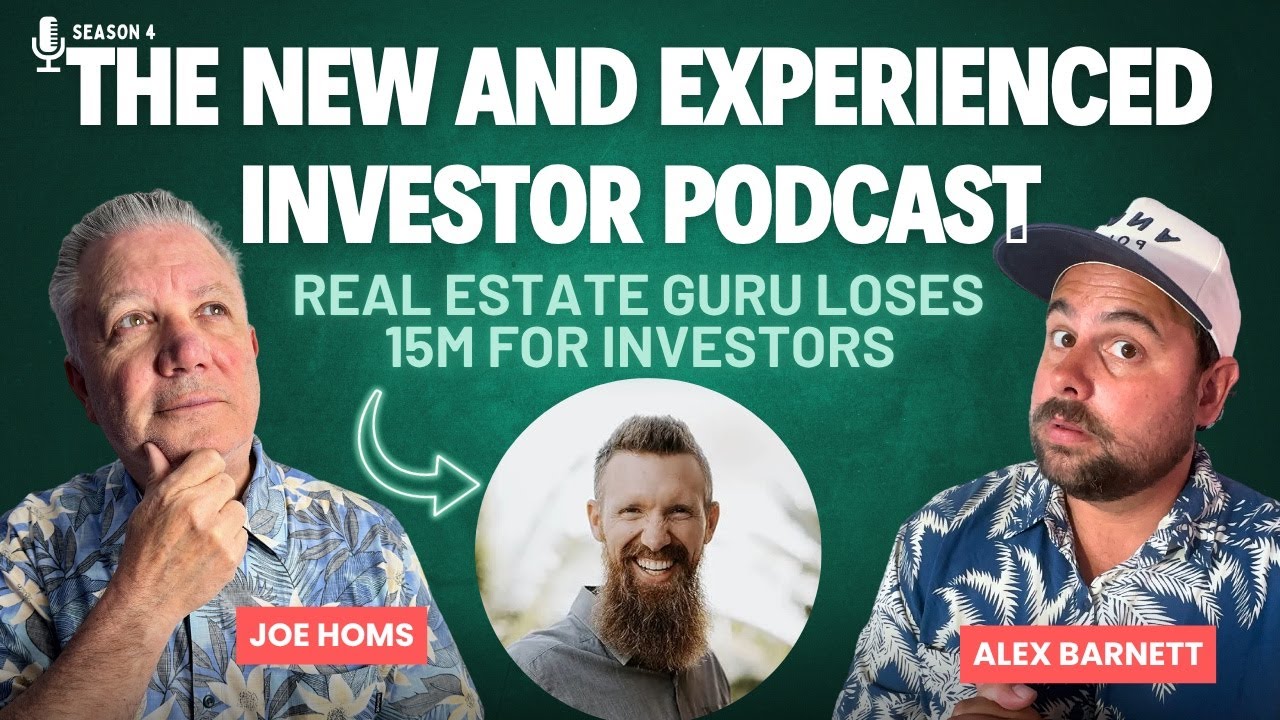
In this episode of the New and Experienced Investor Podcast, hosts Alex Barnett and Joe Homs (Joe Holmes) discuss the recent fallout of BiggerPockets founder Brandon Turner, who lost roughly $15 million of investor capital on a multifamily syndication tied to Opendoor Capital. The conversation covers the mechanics of the deal—purchase price, financing, rent growth, and eventual forced sale—highlighting how rising interest rates and debt refinancing risk turned a seemingly successful operation into a loss. The hosts critique Turner’s communication strategy, sponsor accountability, fee structures (development and acquisition fees), and the lack of transparent accounting. They debate the ethical implications of raising new capital after a loss, the potential for legal action, and the broader lessons for private‑market investors, including due‑diligence questions, the dangers of over‑reliance on influencer‑driven deals, and the importance of understanding promissory notes versus secured liens. Guest perspectives from Brandon Turner, Pace Morby, and other speakers add personal anecdotes about handling failure, the role of transparency, and how investors can protect themselves. The episode ends with a call for more education, upcoming guests, and a reminder that real‑estate investing carries high risk and requires rigorous scrutiny.
Chapters
What's up everybody? Welcome back to the New and Experienced Investor Podcast. I am back.
Where have you been?
I've been at home. Taking care of a child. Child rearing.
Were you being a stay-at-home mom or—
I was being a stay-at-home daddy.
Oh, a dad. Yeah, it was fun.
Yeah, it was fun, but it's time to come out and start investing again.
Thank God, we missed you. It was a little boring here for the last couple months.
Well, that's all about to change, ladies and gentlemen, because I'm Alex Barnett.
I'm one of your hosts.
I'm the new guy.
And I'm Joe Holmes, and I'm the experienced guy that's been waiting for two months for him to get back.
That's right. Thank you. Thank you. Thank you. Thank you. My son thanks you, and I will remind him of that when he's able to talk.
Okay.
Those will be his first words.
A few years.
Few years. Is that how that works?
How long?
I don't know.
I remember it's like been so long. When did they start talking?
I have no idea. I'm just like week by week.
Yeah.
Just started smiling. So.
Oh, there you go.
That's cute.
Mm-hmm.
Um, I have pictures of it in case you wanna see.
Yeah.
But yeah, today we're, uh, we're talking about a serious topic. I don't know if you guys have been paying attention to the real estate investing space. It's been going around like hotcakes. We're talking about Mr. BiggerPockets himself, Brandon Turner. has recently just lost $15 million, not of his money, but of actual investors that he raised for. So that is the headlines. Opendoor Capital, you know, something he's been working on for the last, I don't know, almost decade, just finally took a dump. And it's probably just indicative of kind of the multifamily space in general. And all these, you know, these loans coming due and they're not at the right—
Did his whole fund take a dump? I mean, is he done?
No, probably not. Probably not. I think they're just gonna chalk it up to, you know, you guys read what was, what was happening. No, he's probably already raising for something else.
Wow.
At this point, I, I mean, I don't think anything happens as long as you do it by the book. You really don't get in trouble for that.
Without being a politician, how do you have any credibility when that happens?
You—
I mean, that— well, that's what everyone is saying. He came out on social media and basically broke everything down, and he's like, I'm sorry.
This is how I lost your money.
Yeah, yeah.
Thank you for investing with me. And oh, by the way, I've got something else for you to invest in too.
Yeah, it's double or nothing.
Let me sign up.
The old double or nothing.
Wow.
So, and I guess— and then he came out recently and was like, what I'm gonna do, I'm gonna try and pay everybody back. So what I'm gonna do is I'm gonna sell more courses.
Seriously? No, come on.
I swear, I swear he's gonna like focus on his education. Oh, and try and—
he's gonna take the money from somebody else to pay back the people that were investing with him.
Yeah, just like old Ponzi himself. Wow. So, wow. I mean, and what's, what's interesting, and I kind of want to get your guys's take on it, is, you know, like some people are saying, wow, thanks for the communication, he's, he's really being like forthright and Explaining, because some people probably just turn their phone off and you never hear from them. And all of a sudden it's like, where's my money? They're like, oh yeah, no, we lost it all. So that's that. Some people are like that. And, you know, so other, other people in the space are saying like, wow, that's kind of cool he came out and said—
Do you know if he's getting sued?
Uh, probably. I, I— none of that. It's so new that Um, none of that is out yet. I don't know if he would, if he would even say, but, uh, you know, we can, we can go. I got brought some video clips with me today so we can take a look at some of these.
Okay, um, let's see.
Just in case, just to catch people up and, and see, you know, if you guys have heard about it, if you haven't heard about it. But, um, take a look at this.
It actually was news to me. Thank God you're back.
Yeah, exactly. Exactly right.
Brandon Turner just lost $15 million of investor capital, and these aren't big institutional investors with a million dollars, ten million dollars to put in. Like these are regular people putting in a good portion of their savings into an investment that they thought would do well, which teaches us an important lesson of investing in the private markets and communicating with sponsor groups. So we all know that higher risk, higher reward on average, and that all these investments have risk, and that you should. Expect or be ready to expect something to go to zero, but that doesn't mean that if it did, that the sponsor group can just escape, put their head in the sand.
We're a little rusty here.
We need to put out a comprehensive primer of how this situation even came about.
You already had half of it.
What the mistake was and how they got screwed over. Not to excuse him, but so you know what's going on and not hiding from it like some others will.
Hold on a sec. What if I do this? Hold on, folks. Hold on. Daddy's learning how to ride this again. Okay. Oh, this is what I— this is, this is what I did. Hold on. I know how to fix it here. Like this. Like this. There we go.
All right, we're back, baby.
All right, let's start it over.
Brandon Turner just lost $15 million of investor capital. And these aren't big institutional investors with $1 million, $10 million to put in. Like, these are regular people putting in a good portion of their savings into an investment that they thought would do well, which teaches us an important lesson of investing in the private markets and communicating with sponsor groups. So we all know that higher risk, higher reward on average, and that all these investments have risk, and that you should Expect or be ready to expect something to go to zero. But that doesn't mean that if it did, that the sponsor group can just escape, put their head in the sand. See, he put out a comprehensive primer of how this situation even came about, what the mistake was, and how they got screwed over. Not to excuse him, but so you know what's going on and not hiding from it like some others will. So he gives you the proper context so you can make your own judgment, and that's how every sponsor should do it.
See, so, and then this is like kind of the weird part is like he's getting sucked off for coming out and saying how he messed up.
He did mess up.
Yeah, I know. But the fact that—
This guy who's trying to— it sounds like he's trying to excuse him, right?
He's like—
and he's saying like, you guys are investors and, you know, you put your money and you can— you know it can go to zero. Why would I put my money in knowing it can go to zero? That just doesn't make sense.
Well, and what's funny is probably if you go back to the beginning, he's like, I can basically guarantee a return on this. This is, this is absolutely gonna be the best investment you guys ever— when they're selling it, it's—
And do you know how much he was not promising, but promising, uh, as a return?
Yeah, I think, um, I don't remember now. I don't, I don't have that offhand, but it was—
Well, what, what do you think?
Like 10% or 8%.
Honestly, folks, like 8%, 10%, like you can get that type of return with no risk whatsoever. It's like, why would you do something like this?
Because you believe in him.
You gotta, you gotta be looking at a 20 or 30% return. And then if you start getting any higher than that, And those are red flags, you know? So I don't know why. And like I've said before, the only person that makes money on a syndication is the syndicator themselves.
Yeah, usually.
Yeah.
Usually.
This is literally what happens.
That's what happens.
And how much money as a syndicator did he take upfront?
Well, yeah, that's interesting. I got this article that kind of lays out Oh, no, not this one. This one. This one. Here we go. Okay, so let me—
let me—
can you see it?
Yeah.
Okay, so, um, okay, so yeah, this is just an article about— this is just an article. Basically, he's saying, like, can Brandon Turner do a tell-all?
This is an article on, on him?
Yeah, on him.
Okay.
Yeah. Yeah. Yeah. So it breaks it down and then he says, so yeah, he's basically saying like people were calling this that, you know, close to 100 multifamily properties are now in a position where 100% net operating income goes straight to debt service, you know, because, because of the interest rates.
Okay.
So everyone's gonna cry about that. And they're actually, you know, not going the direction that we wanted. So it's like, Mm-hmm. They were supposed to be going down, and then some days are, you know, they're higher than, than they were. So, um, but I think he points out in this is that, um, uh, you know, he, he came out and basically said, you know, yeah, it didn't, it didn't go the way that we wanted, but he's not offering any sort of like accounting or anything like that. I don't know if they have to. I don't know if they're required to, but there's no audited financials basically. And then I think in this, he mentions that there was a development fee at some point. And I don't know if it mentions it somewhere in here. I should have had better notes, but he took a development fee right off the top. And so some people are pointing to that, that that's kind of, you know, you're You're taking profits off the front end, which it's not good.
I mean, you know, you'd think we're in 2026 now that people would, uh, be awake enough to investigate these type of things, uh, thoroughly before they invest their money. It's like, I've been through 3 up and down cycles, and they happen, right? You know, and it's like, if you don't plan for them, to happen, this is what happens.
This is what happens.
You end up losing your money.
Right.
You know, it's not as rosy as people may think it is all the time.
No, no.
It's just like, you know, like literally like right now, the interest rates are so high, you know, you can't invest in something that cash flows even anymore. It's very difficult, especially here in California. It's impossible.
No, exactly. And, you know, some people are kind of pointing out that, I think that what happens is these people build up their credibility as far as being an influencer.
Mm-hmm.
He was the BRRRR guy. That was his big thing. I'm the BRRRR guy. I know how to do a BRRRR. He builds up his clout on BiggerPockets. And so he tries to jump into a different class that's completely different altogether. So maybe he doesn't know what he's looking for. And I think he breaks it down that he invested with another person who was supposed to be the operator, And the operator basically came to him at the last second and was like, this is going not the way that we thought. But people trust you just based off of everything that you've done instead of kind of what you're saying, like, well, how many of these have you done? Probably not a lot. And on paper, apparently, it hit all the markers of like the NOI went up and all this stuff. But the big thing Which I think people were kind of calling out, is that you're not gonna be able to refinance out and do the exit that you wanted.
Mm-hmm.
And you should have planned for that.
Mm-hmm. So, and, and that's the thing with this space, you know, they, they, they value these properties on, you know, what's happening in the market at the time.
Mm-hmm.
Mm-hmm. Like, If you bought it at a discount and were able to raise the rents and all that stuff, but now you have some notes coming due and you can't refinance and you need to sell it at what's going on in the market right now. It's not literally buying a single-family home in California, knowing that if you bought it in 2020, it's probably doubled in price in, you know, the last 6 years. It doesn't work that way on multifamily.
No.
You know, they, they pretty much, uh, it's almost like a, I would say it's almost like a stock.
Yeah.
And so people are investing with him because they think that he has all this knowledge and stuff and oops.
Oopsie.
Yeah.
And well, and that's the powerful part about the multifamily is like, if it goes your way and let's say the interest rates dropped to 3%, it would be worth like $100 million.
Yeah.
You know? But It didn't do that. And unfortunately, you know, he got caught.
I mean, that'd be a kind of an interesting read, the prospectus, as to, you know, when he started raising the funds and what the projections were, you know, because yeah, obviously you need to predict out for, you know, 5, 6 years, 7 years, whatever your holding period is.
Right.
You know, I'd be curious to see what his projections were at the time.
Yeah, well, and kind of like what the article says, like Ken McElroy has been saying that like a lot of people are just holding on by the skin of their teeth right now, praying that, you know, the interest rates dropped.
Yeah.
And unfortunately, I don't, I don't know if that's happening.
No, it's not.
It's not?
No. I mean, my prediction for this year, remember what it was? 5? Yeah, it's never gonna happen. I think we'll be lucky We'll be like extremely lucky if it happens in 2 years.
Oh God.
Yeah. No, I think we're stuck where we are right now. Yeah. In fact, they may raise the interest rates up, you know?
So, because all the—
my crystal ball didn't work this year. It hasn't worked yet.
Well, that's the part. And I, you know, you could be raising for, you know, you could have been raising money. And you're like, nope, based on my experience, it's gonna go down, you know, and that's what everyone has been hoping. But it's just—
See, that, that's what— come on, I've never done syndication. I don't want to do syndication. I don't, you know, necessarily invest other people's money. I teach people how to invest their money, but it's their money, you know, and at the end of the day, it's their responsibility, you know.
It's like sleeping at night. Is worth a lot.
Yeah.
And if you're doing this stuff and it's not going right, like, you're— you're— I, I mean, he could, he could be the type of person—
I don't know that he is, but he could be the type of person he doesn't give a shit.
No, I was gonna say he is. It's probably good for sociopaths to get into this line of work because, yeah, you're just like, well, I should have known they signed on the dotted line. Which also is a side to this As far as responsibility in yourself and doing your own due diligence. No, no, true, you know, true.
But people, people get lazy.
People get lazy and they just trust.
This is Brandon Turner from BiggerPockets and he's the expert on everything, so let's just invest with him.
I know, you know. Well, and, and did he have his own money in this? I, I— maybe like $150 grand or something like that.
Oh, nothing major?
No.
No.
Wow.
Nothing major. Well, and, and the other part.
Yeah, but he took what, $1.5 million to begin with?
Developer fee.
Yeah.
That's a bit.
It sounds like a junk fee to me. Well, probably a developer fee. Yeah. Wow.
I know. I know.
Wow.
Yeah. So, so he's making the rounds right now. Um, he went on, he went into what?
No, no. I'm just like, oh yeah. Yeah. Okay.
Yeah.
Yeah.
So yeah, he's making the rounds. He's going on podcasts and kind of.
Yeah.
You know, I guess, you know, trying to keep his clout. Because, I mean, the other part is he paints himself— and he's probably like a great guy, like deep down inside. Yeah, you know, he paints himself as like the Christian investor, family man. That's a guy you're gonna trust, you know. And I don't know, maybe he just got in over his head.
Or do you think somebody partnered with him and got him in over his head.
Yeah, that too. Yeah, that too.
And be careful who you partner with.
Oh God, yeah, I mean, that's, that's the name of the game. That's the name of this whole game right here, because you could be getting stuck. But, um, let's hear a little bit of this.
You're like, oh yeah, I take ownership of my life and I take ownership of everything. And it's another thing when people call you, like, you know, you get death threats. I'm up to 4 now. And like, just the Horrible, horrible things people can say, and a lot of it's not true anyway. It's just you have to own all of it. Like, that's ownership.
Um, I think on top of it too, and I've got really good questions we want to get to, the purpose for this is to teach people. And, um, this is my friend Brandon Turner, and I'm not going to spend the time criticizing him because enough people have done that. And I've made some posts on even on X saying I'm sure that Brandon will even admit to his mistakes. We don't need to do that. Let's just respect the guy. That stood up and said he did the thing. I have a lady I told you about a little bit earlier that lost $40+ million in real estate investors' capital and is running around now raising money again saying, I've never lost money. Those are the people that we should be going after and keeping out of this business. But anyway, Brandon, the feeling that you currently have right now, you're in the midst of it, and you could have told me no, and you could have said, let's wait 3 or 4 months until things died down. You didn't. You came in here. And so, I really appreciate that. And I just sat down with Jocko on our stage and same exact thing. I'm sitting there on stage just going, man, people don't really understand how hard it is to really build a brand, to go out and put yourself in cringeworthy situations, to come up with scripts and figure out ways to help people and change their lives. And then do that and change tens of thousands of people's lives. And then one day something happens to you and then your brand has gotten so big that the people waiting on the sidelines that have been cheering on your failure for years and years and years now get to pile on top of you. And that's what's going on with you right now. And so we don't need to talk about that longer than what we just did. Um, I want to make sure everybody learns some examples and some lessons here. So let's start with question number—
what do you think about that?
He said the word friends.
They're friends.
They're friends. He's not going to bash them. You know, you should You know, honestly, you know, he should point out his mistakes. That's the only way people learn.
Yeah. You know, well, and then he's talking, he's saying some lady lost $40 million.
Yeah. Yeah.
And is now raising and saying she never lost.
Yeah.
I, I, I honestly don't like— does that matter? Like, I think you can just do this stuff with impunity and it doesn't matter. I don't know if you ever get held accountable unless you do something illegal.
No. Yeah, there's, there's people that are held accountable. Yeah, there's people. But it's white collar.
So it's not even that bad.
A couple years. Okay, you spend 10 years in jail.
Well, oh yeah, 10. 10's a long— 10's a long haul.
Yeah, 10's a long haul.
I'm thinking like 2 or 3. But then when you get out, you got $15 mil in an offshore account.
Oh, okay. Yeah.
I don't know.
I don't know.
I think that's how these people think. I would never do that.
Maybe, but, um, yeah, Pace, I honestly, I would have not let him off the hook that easy. It's like, I don't care that you came, you know, that's Kudos to you that you came on the podcast. And I don't know what he's gonna say because I haven't seen this podcast, but—
Well, this isn't even—
Don't let him off so easy.
Yeah, this, this wasn't even a podcast. This is like for all of like PACE's—
Oh, this is a private—
Yeah, private thing.
Oh, got it.
We're blasting it out.
And you're, you're part of the group, so—
Part of the group, so we got inside information. That's why you guys tune in. Yeah, inside information. All right, let's see how softball he is. This is the first question he's asking.
Number 1.
Hey, could I, could I jump in with this? I don't know, of course I don't call it disclaimer, but I will say like, I don't have my spreadsheets in front of me. So like, I'll probably say numbers today that are not perfect. And I might, I might just fumble around. I just think it's probably better than me trying to have some pre-planned script. So hopefully everyone's cool with that. Just me winging it like a bunch of friends, like, you know, Pace is a good—
Now, stop for a second. There's an attorney in the background going, hey, stupid, what the hell are you doing?
Just gonna go out there and wing it. Yeah, like that's gonna be Against you.
Yeah, of course, this disclaimer, you know, stuff that you're touting here is like, it's worthless. It's worthless. Did you, Mr. Brandon Turner, did you say this about this and this and this and numbers? And yeah, yeah, but I, I said that that was a disclaimer.
There's a disclaimer. I thought we were just friends, like talking it out.
Like, no, that doesn't work that way. Yeah, sorry. Yeah, you know. Oh my God. Like, okay. Go ahead, move on.
Brand, close friend of mine, and like, uh, yeah, like no matter what I say, I just know that it's gonna be taken weirdly. And like, what's funny, and I'll, I'll shut up in a second, it's like what's funny is that the comments are one of two things primarily. Brandon's— I see a lot of this— Brandon's on some PR, you know, moving around trying to, trying to defend his blah blah blah, and this is the PR stunt. Or Brandon should own it. And I mean, like, talk more about it and tell us what's going on. It's like I can't, I can't win either way. No matter what I say, I get 10 people to tell me why I'm, why I'm wrong. And there's 20 opinions on every 10 people. So anyway, I just hope— yeah, that's why I appreciate the conversation.
And I don't— It's the reason why people hide. It's the reason why. And I've seen a lot of people either intentionally take money. I've seen people run Ponzi schemes. I've seen people accidentally buy a bad deal. I've seen everything in between. And 99.9% of people Turn into an ostrich, put their head in the sand, and they hide. You did not do that, even in the midst of having a massive brand, which you could have just been like, okay.
So very close friend of mine once told me that there's no good that comes from talking to the police.
Yeah.
He's talking to the police.
Yeah. And that's the public.
Yeah.
Yeah. It's like, I'm sorry. You know, you did, you did, you did a bad thing. Unintentional. Okay, unintentional. But it is a bad thing.
Mm-hmm.
You know, if you're trying to mitigate whatever, by saying this, you're literally digging a deeper grave.
I know.
I don't know. You know why? I'll tell you why he's doing this.
Huh?
Because all you millennials—
Yeah.
Want nothing better than to put your face on the screen there and talk it out.
I know, I know.
Yeah.
You didn't learn the lesson that my friend taught me 50 years ago. There's no good that comes from talking to the police.
That's why you have the Fifth Amendment. You just plead the Fifth.
Plead the Fifth. It's like, I'm sorry, I messed up. I wouldn't even say that. No, you don't even have to say that.
Well, and what's funny is everyone's using his— the screenshot of his post, or he did like a carousel, and he probably thoughtfully woke up one morning when he's in Maui and like had his coffee.
Yeah.
And he's like, I'm gonna just lay it all out, everyone's gonna believe me. Yeah, that's what Jesus did, all that stuff. And it's gonna come and bite him in the butt.
So here's what a real man would do. Sell everything you have and pay these investors back. Well, does he talk about that?
I've seen him.
He's even one worse than this is he's in the comments of every video that's coming out and being like, hey, you guys should have me on because like you don't know the full story. But he's commenting and being like, even if I sold A lot of my portfolio, it wouldn't cover. I mean, it's not enough.
He should have thought of that before he started this.
And what's funny is now people are going back into all his social media posts where he's like, I work an hour a day and I spend the rest of my time with my family. And this is true freedom, financial freedom, and you can do it too. And now people are like, shouldn't you have been working more than 1 hour a day to pay attention to what was going on? Move on.
No, I'm not going to talk about this online.
I'll deal with it Privately, and it would have actually in some ways been better for you personally.
Right.
And you chose not to go that route, which is what you were talking about in terms of leadership. So thank you for that.
Yeah, man. Yeah, I had a billionaire buddy of mine tell me this was not about this situation specifically, but he knew that it was coming, and he said his advice was don't talk about it. Don't say a word.
That's why that guy's a billionaire.
Thank God. You're gonna increase the chance of a lawsuit. You've got to be silent.
Yeah, yeah, yeah.
I told my team, and I was like. F that. Like, I was like, I was like, I will probably get— I'm gonna get— we all get sued at some point if you're in business long enough. Um, I— yeah.
Oh my God.
I would rather share the lessons as much as I can.
Okay, okay, okay, okay. If you're these guys, you're always like, you should only take advice from people who are where you're from, you know, where you want to go. And, you know, if a billionaire is coming to you and saying like, you need to shut up, Shut up. Yeah, you shut up.
Like, hello, when you get to be a billionaire, then you can give advice. But dude, if you don't take a billionaire's advice, you know, I don't care who he is, you're stupid. Sorry, you're stupid. And you're not— and you're not— you're a nice guy.
Yeah, that's the problem.
You're a very, very nice guy who started from nothing and, you know, earned a lot from doing this and Decided to be nice and share, but now you're oversharing.
Now you're like, yeah, these are like oversharing. And then and then people are.
So let's let's take keep going. Let's take some notes on what we're gonna sue them.
Yeah yeah exactly.
You know what I appreciate about it is that it's in the moment, and so these are going to be really good lessons for all of us. So let's start with question.
Yeah, I'm a little raw right now, but yeah, it's good. It's good.
Let's go.
Let's get let's hit it.
Okay, for this is for the people that are going to invest or about to invest in somebody else's deal. In fact, Brandon, right before you showed up here, I signed a promissory note. Wasn't a lot of money. It was 50 grand. I know that's a lot of money for some, almost nothing for others, but somebody sent me $50,000 to invest in a deal with me. And I signed a promissory note for the deal. And I was like, oh, this is ironic that I'm about to do a show with Brandon talking about these mistakes and some advice and some lessons, et cetera. And I'm signing this promissory note. I want you to think about these people that are writing a check for 50 grand or 100 grand or $300,000. What are the few questions that they should be asking somebody like me, somebody like you, that would protect them in any deal? What are a few questions you would suggest they ask?
I went and met— I'll tell you a quick story around it. I went and sat in a hot tub with a really, really rich guy a few months ago because I just needed advice. It was like one of the best investors I know, a guy named Russ, very under the radar. I don't even think he has an Instagram, but one of the wealthier guys. This is not the billionaire who told me to be silent, but I sat in a hot tub with him and I just—I flew out to his house in Eastern Washington. I was like, "I just need advice. Like, what do I do with some of this stuff?" And he said to me a quote that I think forever changed my life. He said, "No great company was built without a near-death experience, and no great leader was built without a near-death experience." And so his point was failure and things going bad is not a sign. that you shouldn't work with someone. In fact, it's maybe a sign you should. And so, the question I would ask is, tell me about your worst deal. Tell me about one that went bad. Tell me what happened.
Mm-hmm.
I think knowing the story— and I'm not saying that somebody who's never had anything go wrong ever is necessarily a bad investor, but you don't— I mean, you don't really learn until you've gone through some crap. You know, like, I've grown more in the last 12 months than I've grown in the last 20 years of being a real estate investor because that's where you grow. So much. And so I want to know what people like, what bad deals they've had, what went wrong. And what I'm actually looking for is less of the tactical. I want to know how they tell the story and talk about it. Do they just completely blame every single other person in every situation? Like, I can sit there and go over all the metrics on why this is not my fault. This is all the market. This is all that. At the end of the day, it doesn't matter. My investors didn't follow the market. They're not economists. They don't know what they're doing. I mean, like a lot of them do, but most of them. Like they just follow me. They like me. They trust me. They follow me. It does not matter what the reasons are. And again, we can go through reasons all we want to, and people will fight about them. But they trusted me, and so that's why I apologize. People ask why I'm apologizing. Like am I admitting that I caused it? I'm like, well, no. Like I'm not saying I caused the problems that we faced, but I am in charge. I'm the leader. They follow me. And so anyway, I want to know how they talk about their bad. deals, uh, what they did to try to fix it, what have they done. So that's a big one. I would ask them where they're being too optimistic. If somebody would have pushed me on that, like, where are you being too optimistic back 4 or 5 years ago, I would have said, well, I mean, I assume cap rates will go from 4 to 5, you know, over time. I mean, they've been at 3s and 4s forever, but let's just say they go up to 5. Maybe that's being too optimistic, you know. I think interest rates, yeah, they're going to go up. They can't be historically low forever, but Could they go up higher? And maybe I'm being too optimistic there. And just getting that, like, getting them thinking, will they question their own assumptions, I think is a really important thing that shows ego versus, uh, somebody who's willing to learn and grow.
Um, I think this is good advice too because, um, I—
whoa, he's— he needs a lawyer, like, to be like, bro, you gotta stop.
Yeah, he's just tightening the noose. You know, he's basically saying he's the expert.
Yeah.
My investors are not experts. And this is, this is really all on me. It's literally all on me. And the first mistake I made was, yeah, the cap rate's gonna go up, but maybe it won't go up that high. Well, no shit. How long have you been on this earth? Have you experienced any of this other crap that's been going on? You know, all these 3 different cycles in a lifetime. Oh no. Okay, well, what about interest rates? Oh, you mean interest rates go up? I never knew that they can go up. Like, those are the 2 primary questions that I would have asked if I was investing with him, you know?
Yeah.
It's like, what, what, what is the odds that the interest rates are going to stay, you know, where they're at? And what is our timeline horizon, you know, 5 years or whatever? We're like, Does anybody know what's going to happen in five years? You know, besides my crystal ball. You can join me every December where my crystal ball just tells you everything that's going on. Exactly. You know. Yeah. And it's wrong. Oh my God! It's like wow. I know. He's digging a deep, deep hole, and I don't think he's listening to these billionaires and millionaires. That he's— and, and, you know, that's another thing. It's like, yeah, I just flew up to Washington and met this guy and we were in a hot tub, you know? It's like—
You don't want to say that.
Dude, you know, this story is like, I, I just, you know, I just gave you $100,000 of my money and you're sitting with like a really wealthy guy in a hot tub. I'm not sitting with a wealthy guy in a hot tub. I'm trying to get my $100,000 back.
Yeah.
Come on. And, you know, I live in Hawaii and, you know, only, only work an hour a week. Oh, come on.
I know.
Like, dude, you're just—
You start looking at all that. You should be like, I haven't slept in 5 months. Yeah. I'm, um—
I've been struggling with this. I've been seeking advice. Yeah, you're doing all that, but, you know, why throw in the hot tub stuff?
That was bad.
You know, why throw in that you're living in Hawaii, you know, dealing with this stuff? You know, why throw in, hey, yeah, I met with a billionaire and he told me not to talk, but here I am talking.
I said, screw it.
Yeah. It's like, if I was that billionaire giving him advice, I'd say, you know what? Don't come back for me. Don't come back to me for advice. If you're not going to take it, then, you know, honestly, don't come back. It's just like, what a waste of time.
Yeah. I know.
Trying to keep you out of trouble here, but obviously not.
Oh man, I'm just listening to this like, dude, please stop.
Wow.
But I don't know. And then his first thing is like, well, no, you should actually trust people who have failed.
Oh no.
Which is okay. Yeah. If you had your own money.
If you're a politician.
Or if you had your own money, you're like, I put all my money on black and I lost it all and I built it back up and I learned X, Y, and Z. But When it's everybody else's and you probably— your portfolio is intact.
No.
Everything you built over the last whatever years, and this is like, you know, some guy's life savings.
Yeah. No, do you— don't— you don't mess with other people's money.
Yeah.
You don't mess with other people's kids.
Right.
And you don't mess with other people's dogs.
Oh yeah.
Those are the 3 bad things in life. You mess with those things, you're in a world of hurt.
Yeah. So, he's checked 1 out of 3, as far as we know. I'm gonna do some more digging on the other 2.
Yeah. I don't think that— I mean, he's gonna get sued. There's no doubt that he's gonna get sued.
Oh, yeah.
He said he's already had death threats.
Yeah, there's no doubt that he's gonna get sued. I don't think I don't think that maybe, I mean, I don't know the whole story, but I don't think that he did anything wrong to send him to jail over. I mean, it wasn't— No, no.
It's all on the other guy.
He wasn't pocketing the money or he wasn't transferring it to one of his other assets. You know, he doesn't sound like he was doing that. It was just this one, you know, explosion.
Yeah. Well, what's funny is, I mean, you talk to any other multifamily people, it's like, there's Institutional guys that are, you know, crapping the bed right now because of interest rates. And yeah, they're up against the wall and having to, you know, hey, ditch projects.
Welcome to investing.
Yeah.
You know, I know, but you got to take the good with the bad. But, you know, if you're relying on famous people like this, you know, don't, don't, don't. Educate yourself. And like the one guy at Pace says, the one guy, he just— I signed a promissory note for, you know, $50,000. It's not a lot of money. Well, sounds like a lot of money to some people, but not a lot of money. You know, you know what I'm saying?
Yeah.
Not a lot of money to me. My first question is, why are you investing with Pace on a promissory note? That means nothing. That means I promise to pay you whenever $50,000 that you lent me, you pay me back $75,000. Well, what happens when that time comes? What collateral do I have?
Well, yeah.
Nothing.
Yeah.
Like, why would I give anybody money on a promissory note?
It's kind of like that scene in Dumb and Dumber, which you probably haven't seen, but at the very end they spend all the money, and at the very end they give them a briefcase of all these napkins that they wrote IOUs on.
I did stop it.
They're like, don't— they're like, don't lose this. This is, this is as good as cash.
Yeah.
And it's like, there's no way they're ever gonna pay it back.
No. No. And I have people that come to me and say, you know, Joe, hey, I'm thinking about investing out of state and this guy wants me to send him money for this flip. And I go, okay, well, what's your protection? Oh, he's just going to sign a promissory note. I go, you're not going to be on title? No, no, he's on title. You're not going to have a lien against the house? No, no, no, he's, you know, just gonna do whatever. I think he's gonna borrow some money. Well, what's he need your money for? Well, you know, to do the rehab and stuff. I go, how are you protecting your money? Uh, no, just a promissory.
I mean, the lien is just as easy as the promissory note to do. Uh, yeah.
Um, Joe, I know how you feel. You— I shouldn't do this. He calls me back a week later, says, Joe, I did it. I sent them the money. I sent him $60,000. Now I'm waiting to hear back from him in a few months that he lost everything. You know, it's like, sorry, I, I don't feel bad. I'm sleeping good at night. I gave you my good advice. Wait, he lost everything? No, he hasn't yet, but I'm waiting for that.
Oh yeah, yeah, yeah, yeah, yeah, yeah, yeah, yeah.
And if he makes money, awesome. Great. It's like, yeah, he met this guy at a conference. Oh God, not BiggerPockets, but another conference. Yeah. He says, well, I met the guy and I talked to him and, you know, He sent me this contract and I looked at it and I go, this is basically protecting him. It has nothing to do with you, but he wants $60,000 to invest in his property that he's going to flip. Oh man. Okay. What do we got next?
Uh, this is, um, shoot, what was his name? Do you know Michael? One Rental at a Time guy. Do you know him? No. All right. He's got, he's got some opinions that he may be on the right track.
Memorial Day. We will give you some fun facts about Memorial Day in a minute, but let's start with the one and only Mr. BiggerPockets himself, Brandon Turner. As discussed yesterday in the Daily Financial News, Brandon posted a series of posts, or whatever they're called, on Instagram. I think he's put it on Twitter as well, basically outlining how he lost $15 million of investor capital on a property in Texas. I wanted to run through the numbers with you, talk about it a little bit, and then jump to something that Ken McElroy said that makes me think there are a lot more shoes to drop. So let's get into it. What happened? How did Brandon Turner lose $15 million? Million. A lot more.
Well, Brandon Turner, no, I think other—
oh, it's not as bad, worse if he tried. What does that mean? That means he closed this deal at a ridiculously low cap rate of around 4%. In 2021, he bought this building For $72 million, this building in Texas. He raised $25 million and got a loan for $52 million. So they had about $4 to $5 million in reserves going forward. And again, this was horrible timing. Shortly thereafter, Jerome Powell said there shall be pain, and of course rates zoomed higher. But more on that in a minute. During the four-year hold period for Brandon, he actually did operationally good job, at least with the numbers that he gave all of us to review. What do I mean? Well, he successfully raised rents from five point nine million to seven point eight seven million. That's nearly a two million dollar increase. In rent collection, that's half a million bucks a year. So I would argue that that's pretty good. He actually raised the NOI. He raised the NOI from 2.3 to 3.6. Again, that's almost 50%. That's you know, let's be honest, that's pretty good. But at the end of the day, as I have been warning for years now, it's not the asset, it's not the operator, it's always the debt that blows up. I keep screaming this from the hills. Again, on paper, I can't speak to his communication, I can't speak to his team, I can only share the numbers that he shared with all of us on Instagram. He did a better than average job. How did he get got? He had 3 or 4 year debt. That debt was at 1.4 percent. Now it's 6 percent, 6 and a half. They tried to go out and do a capital raise. I think they needed five or eight or whatever it was million bucks, and unfortunately rates kept going up. And what he thought was $5 million became $15 million, and the deal was dead. So what happened? Well, he had to sell it. He became a forced seller. Think about that. You're operating a building for 4 years, you're busting your ass, you move to Texas, you get the NOI up 50%, you add rents of $500 grand a year, and you still lose. So he ended up selling the building for $62 million. He bought it for $72, sold it for $62. So his Class B investors, all of them, lost $15 million. Now again, there are questions that I have just as a complete outsider. I have no idea how syndications work. I never ever want to do a syndication. I do not want to borrow other people's money. If I'm going to lose, it's going to be mine and Olivia's, maybe Teresa's, but that's it. The question I have is, how did Brandon get paid? And this really isn't about Brandon, it's really all syndicators. I'm gonna guess He got some kind of fee at closing, maybe 1%. He probably got some property management or operational fee, I'm guessing. No idea. And the sad fact is, and again, I hope I'm wrong about this last one. I think those first 2 we talked about, pretty standard, right? Find the deal, get paid. Operate the deal, get paid. This one's gonna hurt. And I haven't seen the closing statement. I don't think any of us will ever see the closing statement. Can you guys hear me? Oh, looks like I'm frozen, but the live tracker is still going, so I'm gonna assume it's still going. So the final thing I have is— I got distracted by my frozen screen, sorry about that— is will Brandon get a check at closing? Will he get a fee for selling the building? And again, I don't have any idea how this works. I'm guessing when there's losses, it maybe he doesn't get paid. Again, I don't know about that last one. So again, you guys are telling me the screen is frozen, but you can hear me. So I'm going to keep rolling. No idea why it's really frightening for me to look at myself frozen. But hey, so let's talk about. The elephant in the room, Ken McElroy. Ken McElroy.
Yeah. So, I mean, kind of what you said, you know, kind of like what you said. I mean, if you start borrowing, once you start borrowing other people's—
Yeah, those are, those are great, great questions. How much did he make up front? Right. Did he make any money on the sale? And is he putting all that money back in? Probably not. Probably not.
I mean, he's probably got legal fees now.
Yeah, he's gonna have lots of legal fees. But that's another great question. Who pays the legal fees? Is it the fund? Is it the fund? Are they going to lose more money? Yeah. Is he personally responsible? Is there E&O insurance that he gets on himself? Do they even have that for this type of investment? I don't know.
That's where you go back through the contract and you actually really read it. Once you— it's not until you get screwed that you actually really—
You throw it into ChatGPT now, you know? Oh yeah, we have chat, so you throw it in there. Yeah. Oh my gosh.
Yeah, it's interesting. I mean, it's happening. It's happening all over the place. We were talking before this how I'm invested in a pad What do we call it? Pad splat. Because—
That's what you called it.
Yeah. Because yeah, I was private money lender with a bunch of other people. It's basically like a syndication without having to be in a syndication. Fractional is a new thing where you can get— I don't know how they get around it, but it's for unaccredited investors, friends and family.
And how'd that work out? Not good.
Yeah. So the one guy was the face of it and then there was an operator. And the guy apparently just had a mental breakdown and he like lost his business on the side, and then he just kind of let these all go. And then he wouldn't return anybody's calls. So he was that guy that put his head in the sand and was like, I can't face everybody.
He's probably the smart one though.
Yeah.
You know?
Yeah.
You can't sue somebody for something that they didn't say.
Yeah. Yeah. And people were like, you know, all up in arms because it essentially He said, if you guys want to take the properties back, you can, but there's just no equity and it's all half rehabbed and there's no reserves and it's all spent and there's no P&L statements. There's no tracking of anything. We can't get ahold of anything. So it's all these—
What were you thinking?
Me?
Yeah.
That was my buddy's thing. So I was like, it wasn't that much. I didn't put that much into it, but You know, um, anywho, yeah.
And then, well, should I call Lauren and ask her how much it was? You know?
Oh, don't bring it up, man. But yeah, it was like one of those things. And then everyone was like, we're going back through the, uh, the contracts and like actually seeing kind of, you know, it favored him. And of course it does stuff.
So yeah, of course it does.
I mean, some people had like 50 grand in there. You know, and it's like, oh my God, yeah, this is— and they're trying to get—
this is a familiar situation. Yeah, because they're trusting, you know, the operator, and then the operator goes nuts. Yeah. Is he living on Skid Row now or what? I hope so.
I mean, at least that would be like the one thing that's like—
well, I could tell you this, if he's missing teeth, Karen Basura is going to take care of him.
That's right. Yes.
Yeah. No, this is out in Texas, so I don't know what he's doing. Yeah. No one can get a hold of him. He's he's here now. He's yeah yeah oh yeah maybe he took a bus probably got you know so free bus ticket out here. Yeah. And then they're gonna count him and make him a voter and yep all that stuff. Yeah. He'll get free free everything actually.
We sidetracked for a second.
Sorry. No. Yeah. The big votes yesterday, so we're all. Fired up. Yeah, about California. But, um, yeah, anywho, that's, that's kind of the, the whole ordeal regarding, you know, losing the investors' cash. And it'll be interesting how it all plays out, especially as he's doing it in public real time. Yeah.
So I wonder if he's going to the BiggerPockets conference at the end of the year.
I bet you David Greene is very happy right now.
Oh, probably, probably so.
Everyone thought I was He was the a-hole. Yeah. Now Mr. Sweet Boy is, uh, taking a fall.
Actually, I don't— I mean, I've been to the last 5. I don't ever— I don't remember seeing him at—
No, no, we saw him at, um, the OCAR thing or whatever it was. Or it was not that, the, uh, what's the agent thing that we go to? It's a— it was in Long Beach and then it was in San Diego.
No, no, I'm talking about Brandon.
Oh, Brandy. Yeah.
Yeah. No, have you seen him at the BiggerPockets?
No, no, he has his own events now. His own like masterminds and so on.
Got it. So he's a guru. He's a guru. Yeah, I mean, look at the beard. But the guru that lost $150 million of other people's money.
$15 million. $15 million.
Yeah. Oh, what the heck? Yeah, I know, right? It's a million.
Yeah, once you say $150, you're like, $15's not that bad. Yeah.
So, okay.
But, uh, yeah, so that was fun. Uh, we always like a good fraud story here, but just to, um, you know, uh, as our— my return to the podcast. So yeah, thank you. We have some guests coming up in the next few weeks. Um, so yeah, I will be ironing those out.
Okay.
And we will be back here next week.
All right.
So back on our regular schedule.
We'll be doing deals. And Lauren, could you please let Alex go to Sizzler after instead of running home to you?
Yeah, I can ask her.
Is she watching?
Yeah, probably.
Is anybody watching? Yeah, yeah, yeah, we have people watching.
We got people watching.
Wow. Hello, peoples.
Hello, everybody. So, uh, yeah, we'll see what it looks like.
Okay.
All right, that was fun. Thank you guys for joining us. We will be back here next week, and we have a meetup at the end of the month, which we'll see you in person.
Thank you. See ya. Bye. If you want some more advice on real estate investing, reach out to us one-on-one.
More from Joe

Practical Tax Planning Strategies For Real Estate Investors with Jason Malabute, CPA


Did you know you can buy a home in Orange County with a 2-3% mortgage rate right now? Here's how — A





