Real Estate Title Insurance Unveiled: Fraud Exposed with Noah Prestwood!
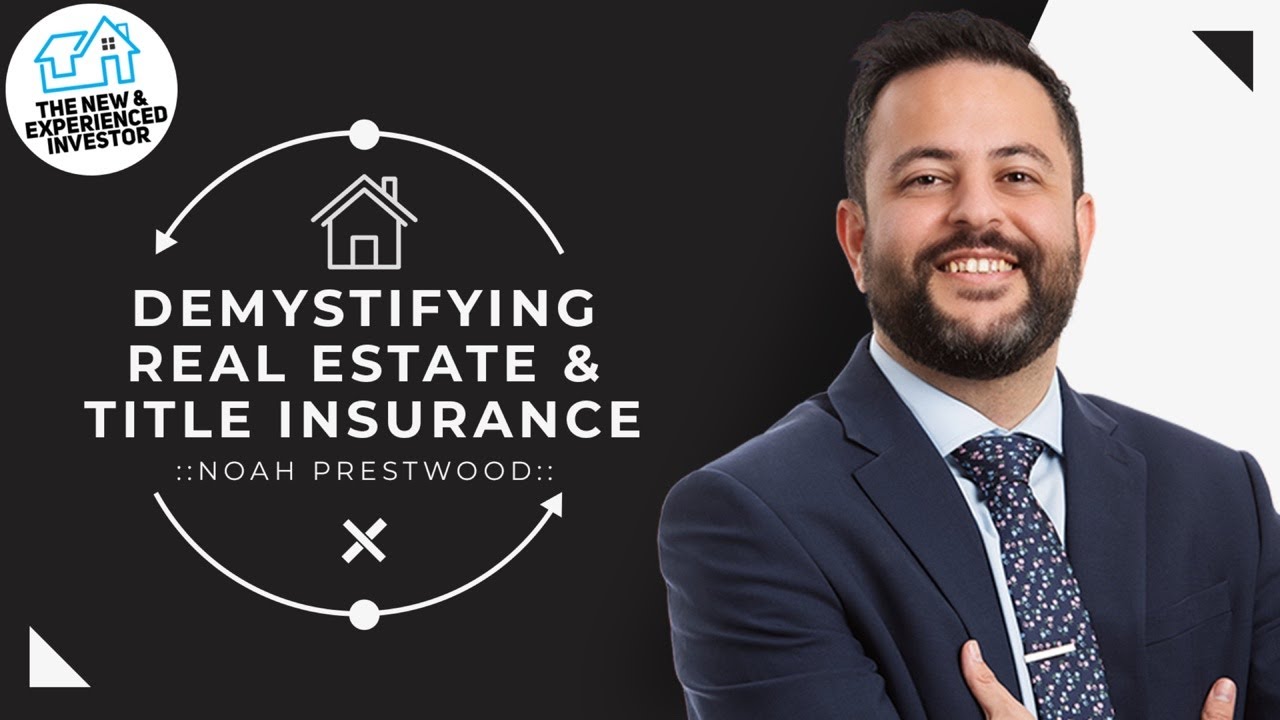
In this live New & Experienced Investor Podcast episode, hosts Alex Barnett and Joe Homs interview First American Title representative Noah Prestwood. The conversation opens with a brief New Year greeting and quickly moves into a detailed explanation of title insurance—what it is, why it matters, and how it protects the buyer’s biggest investment. They discuss common claim scenarios such as mechanics liens that appear after closing, escrow/payoff responsibilities, and the process of handling claims. The hosts explore various fraud vectors, including wire‑transfer scams, impersonation emails, and a high‑profile Los Angeles land fraud case, followed by mitigation tactics like statements of information, rigorous notary checks, welfare/door checks, and on‑the‑ground inspections. They touch on relationship‑driven business practices, recent regulatory changes (SB 133) that curb inducements, and the shift toward more transparent, merit‑based dealings. Operational details are covered, including the role of the preliminary title report (prelim), the importance of the statement of information, typical closing timelines (48‑72 hours to 7 days), and the use of technology—First American’s Ignite RE platform, Title Toolbox, and data services for phone/email acquisition. Throughout, the tone remains conversational, enthusiastic, and occasionally humorous, with anecdotes about past escrow errors, gift limits, and the hosts’ personal quirks. The latter part of the episode shifts to informal banter: a discussion about a proposed 35‑day cruise for undercover work, personal constraints (family, cost, duration), and the impracticality of such travel. Noah shares personal branding details, mentioning his limited Instagram activity, recent fatherhood, and a Christmas photo shoot, highlighting the human side of industry professionals. The hosts also tease the next guest, Rosie from First American Home Warranty, outlining her role in handling home warranty claims. The episode concludes with live‑chat questions—most notably a definition of a prelim and its necessity—followed by closing remarks, calls to action for one‑on‑one real‑estate investing advice, and gratitude for the guest’s participation.
Questions this video answers
A prelim is a preliminary title report that lists who is on title, any current liens or encumbrances, and other relevant chain‑of‑title information. No one can insure a property without it; escrow uses it to ensure all payoffs and demands are cleared before the title can be transferred.
Chapters
Hello everybody. Happy New Year. Welcome back to the New and Experienced Investor Podcast, where we connect investors from all walks of life. Super stoked today. We have an in-studio guest again, starting off the year right. Noah Prestwood is here with us.
Hey, Joe.
He's been an integral part of our investing journey, I can say for myself, but I know Joe as well. So I'll go ahead and speak for you, Joe. I'm one of the hosts. My name's Alex Barnett. I'm the new guy.
And I'm Joe Homs and I'm the experienced guy or the old guy, however you want to call it. And nice to see you. I haven't seen you in a year.
It's been a long time.
Yeah, it's been a year.
Yeah.
Yeah.
It's crazy.
This is a live podcast, so we want to encourage you guys to share this with your friends, anybody who's thinking about getting into real estate. Maybe they've been talking about it the last year and you're finally going to say, hey, let's do this thing. Or if you've been an investor for a long time. So that's the whole rigmarole here. We got both perspectives. Also join in the chat, drop some questions. We're going to be talking about title insurance, so I'm sure you guys are going to have a lot of questions. As we do. Um, before we do that, really quick, I wanna shout out our meetup. Um, you wanna go ahead and explain who we got coming in this, this month?
At the end of this month, uh, on a Monday at Hangar 24. Hangar 24. Hopefully no rain. Um, we've got my son-in-law Ryan Mitchell, and he's gonna walk us through how you buy 83 properties in Alabama sight unseen.
It's not hard.
Not at all.
Not at all. It's not hard at all, people. So stop making excuses. Go out there and buy 83 properties in Alabama sight unseen this year if that's one of your resolutions. So, um, do you have any resolutions?
No. Yeah, I wake up every day is my resolution.
Okay.
Just wake up every day.
Yeah.
Yeah.
Perfect. I love that. Well, let's go ahead and bring our guest in. I'm super excited. Everybody, please welcome to the podcast, Noah Prestwood.
Hey everybody, it's so wonderful to be here. Thank you, Alex. Thank you, Joe. Yeah, really looking forward to it. It's been, you know, I have no resolutions either other than to be on more podcasts. And so this is it.
This is your first one, right?
First live one, that's for sure. Yeah.
Wow.
Yeah, I'm a newbie. I'm a new investor, kind of.
And this is live, so don't Don't be making any mistakes.
I mean, here's the thing. I don't make mistakes anyway. So.
Oh, nice.
I have noticed that about you.
Yeah. No, I can say I have not made a mistake this year yet.
Great.
Yeah. You're— I'm, I'm on a roll.
4 days deep.
Yeah.
That's pretty good.
Absolutely. Yeah. Keep— So, hey, tell us what the heck title insurance is and why you need it in a real estate transaction.
The hard-hitting questions right away there.
Yeah.
Right away.
Yeah. Right away. So title insurance. It's, uh, it's, it's the sexiest part of the transaction, that is for certain. Um, title insurance, there's a lot of ways to explain it. The way I like to explain it is it's kind of like registration, uh, for the property itself. So it doesn't necessarily— it's not insuring the actual home. So if your home burns down, title insurance doesn't cover that, not at all. Um, what title insurance does is it, uh, It keeps a record of anything recorded on the chain of title for your property. We keep track of ownership. We keep track of liens, loans, encumbrances. Anything of record gets recorded on a chain of title. Each home in the world has its own individual parcel number. I said world. That might be a mistake. I might have to take that back.
Oh.
Each home in, uh, the country. There it goes. Let's put it— let's, let's do the country first. Um, has its own dedicated parcel. It's called the parcel number. And each parcel number has a record of a chain of title that corresponds to the ownership record of that property. What title does is ensure that ownership record, when you go to sell that house, any ownership liens or anything that's tied to that property chain is closed and complete. So when you go and you transfer that property to the new owner, the new owner takes prop— takes that property with a fresh, clean slate of ownership. I'm knocking this mic all over the place.
You're good. You're fine. You're good.
Beating it up. So I apologize for that. But that's basically what title does is we ensure the clean transfer from one owner to the next. And anything that that previous owner has done to the property in terms of loans, liens, and encumbrances is closed and complete. So when they transfer the property, the new owner takes a fresh, clean slate of title. Does that answer your question?
Yeah, pretty much.
Okay.
And why, why is it so important in your opinion? Obviously, yeah, you're the rep. Sure, you know, but we want to know why.
It's, it's, you know, it's— you're insuring the biggest purchase of your life almost certainly, right? When you buy a home, your home is generally— I mean, you're a seasoned investor, so how many homes do you have? But it's, it's still, you know, when you make a home purchase, that purchase is one of the biggest investments in your life, and you want to ensure when you buy it that that home and that purchase Is covered, right? And if no one, if, if you get title insurance, once that transaction is complete, no one can come and claim ownership. And if they do, you're protected by us and you're protected by the company. And, you know, First American, shout out to First American Title. That's the company I work for. We do a great job of, of paying claims and making sure that all things are fair. And so, you know, we, we protect our clients, we protect our people. And we stand behind our policy and the insurance that we provide.
I think it's super important. I wouldn't do a transaction without having title insurance.
Yeah.
And, you know, we're all human. We all make mistakes.
Sure.
Including title companies. I mean, they try to mitigate as many mistakes as possible.
That's right.
You know, but sometimes mistakes happen.
Mistakes happen all over the place. I kind of made a joke that I don't make mistakes. Sure, we all make mistakes. Um, but, uh, you know, that's the beauty of title insurance is, is when mistakes do happen, we have a Fortune 100 company that can back them up and, and make it right when things kind of, you know, happen that, that shouldn't have happened. And, and we can clean it up and, and make it right. Yeah.
Can you sort of give an example of, you know, having to make a payout? What, like, what would a mistake look like?
Yeah. I mean, there's so many different claims that are filed literally on a daily basis. at First American Title. And that's not to say we always make mistakes, but that's just to say title insurance, we do title insurance all over the country. So it's not just locally in First American Orange County. That's where I work. It's nationwide. So of course, when you do that many transactions, there's bound to be a couple things that don't necessarily go our way or the right way. But You know, a mistake can be as simple as a mechanics lien that didn't get checked when, when the property went to close. And, you know, there's, there's tons of different types of mistakes. That one is the most common one where, you know, when, when a lien gets recorded, when anything gets recorded on a chain of title in Orange County, we'll just do Orange County specifically because that's my market area. And that's the area I understand the best. There's a 7-day trail time. So anything that gets recorded today won't show as public record for 7 more days. So if we close a transaction today, and that mechanics lien got recorded yesterday, it wouldn't show up on a chain of title.
Mm-hmm.
And so that can— it's not necessarily our fault, right? But that happens. And the mechanics lien is tied to the property address. So the buyer is going to get a bill, and he's going to be like, what the heck is this? I did not do this. This is not this is not my lien. Someone needs to pay this. They file a claim, right? We're like, okay, well, this is silly. We didn't catch this, but we couldn't have caught this because it was recorded after the fact. Basically, it showed up on title after the fact. So we'll go to the seller and we'll ask them to pay, and hopefully the seller will do the right thing and pay. And if they don't, then we'll take remedial actions to. We'll pay, we'll pay the lien, but we'll also still go after the seller to get that money.
Nice.
It's still, it's still that seller's responsibility, right? They're the one that racked the bill up. And so it's not like they get off scot-free. But, you know, we'll take care of it in the meantime, just so all that stuff is resolved. And there's no, you know, additional interest or anything like that. We'll take care of it. But we're also We're going to get it back. We're going to get back. But yeah, that's just one of a bunch of different types of situations in which claims do get paid. Yeah. What else?
I actually had an incident once. It wasn't my transaction. It was somebody else's that I heard that this was kind of a— it was just kind of an escrow error. But at the end of the day, I think Title is also responsible for those errors as well, aren't they? Because don't you guys keep the money?
Yeah, we work in concert with everybody, right? So on, on a, on a transaction where there's payoffs, escrow and the lender, everyone, everyone's money comes to us. And so we're the one that makes those final payoffs to all the people, right? You get your money from escrow because we send it back to them. But escrow sends us the money, the lender funds us the money. And it's our responsibility to make all of those payoffs to all the people that are owed because we want to make sure that everyone gets paid. We love escrow. I mean, they're great, but, you know, it's our neck on the line. We want to make sure that the people that are supposed to be owed money are actually receiving the check to get their, their, their money paid for. And so that's why we feel we can, you know, close the transaction and feel comfortable about it because we know all those payoffs. We know the payoff date. That it's good through, and we're like, okay. They're telling me that if I get $400,000 to close off this loan by this certain date, and I have this check for $400,000, that they're going to be closed and complete. Perfect. Here's the check. We're good. We're not going to necessarily take escrow's word for it that they sent that $400,000 check. We just can't. So that's why we require the money to be sent to us. So we make all those payoffs. And yeah, I don't recall the specific or this is. If I could talk, that'd be good. This is the specific incident that you're referring to.
But yeah, no, you weren't involved.
Sure. Just the title. Just the title. If escrow—
I can tell you.
Sure.
Let's hear it. Come on.
Ring it.
It was a normal closing. Escrow wired, let's say, $300,000 to the seller. Okay. And then the seller called and said, well, it's supposed to be $300,010. And so the escrow person said, oh, okay, I'll wire you $300,010. So instead of canceling the first wire, this person sent an extra $300,010 to the seller.
Mm-hmm.
Which the seller said, oh, thank you.
Thank you. Goodbye.
You know, they tried calling the seller and saying, you know, this is not your money. You need to send it back and refused to. And I heard it went to the attorney level and then to actual law enforcement level at the time.
Yeah, because we're gonna, we're gonna get our money back, Joe.
Finders keepers doesn't work in that situation.
But not always.
But I guess my question is, you know, you obviously have somebody, here's a transaction, you're supposed to send $300. If you get another request to send another 300, shouldn't somebody have said, well, wait a second, you've already sent 300. Why would we send more?
Correct. Yes. Someone in that position. Yeah.
I mean, not only was there an escrow issue, but there was also a title issue with that as well. Yeah. Okay.
Yeah. Yeah.
Got it.
That's not, that's not great.
That's a big one.
We don't love it.
But, you know, that's, that's the thing I like working with you and First American is you guys are one of the big boys out there and You do pay your claims, you know, in a timely manner. Sure. And that's important. Yep.
You know, we do.
It's important.
You know, you guys have filed claims with us too.
Yeah.
And, and we've, we've, you know, hey, we, we're not perfect. We've done, I don't even know. I don't even care to know how many transactions we've done together. We've only had to file one or two, right?
Correct.
And that's like 1,000 transactions probably. Yeah. And so like, that's, That's a pretty good— that's a pretty good record.
I think so.
And, and once we, you know, we're not shy about paying it too. We made the mistake. It is what it is. We made it right. Everybody's happy.
Yeah.
Yeah. It's all good.
I feel like with all this money being wired back and forth, there's, there's a chance for, you know, some sort of fraud to come up. Um, I'm sure that's a big issue. Um, can you sort of explain, um, Like, what does that look like in the title world?
Yeah. Fraud. Nobody likes it. It's everywhere. Fraud is everywhere. There's so many different ways fraud occurs. Just, you know, wire fraud, people impersonating emails that say, hey, I am, you know, First American kind of spelled a little weird on the— yeah. It's just like, what are we doing? But some people fall for it. They send like wire instructions that are not the wire instructions that we at First American provide. They kind of get in the last minute. They, they understand pain points. They understand the jargon and the words to say to kind of get people excited. Uh, like, oh my God, I got to send this email now because this person, this First American person, it's like, no, we're going to send you the wire instructions one time. That's it. Those wire instructions are gold. They go right to our trust. We have our own bank. You wire it to our bank.
It's good.
It's safe. The money is safe no matter what. It's safe. And that's, you know, that's it in terms of like when, when anything like that presents itself, it's always the first wire instruction that you get. Nothing, you know, nothing else like that. But there's, there's like, that's just the wire instruction fraud. There's tons of other fraud. That exists at all times. You know, we were seeing some crazy stuff during COVID when it came to fraud. It was it was the wild wild west of fraud. All sorts of new things were occurring. One thing that happened, which was one of the most incredible things that I've ever heard, was there was I think it was like a five million dollar land purchase in in Los Angeles County. And it was just land. It was vacant land that was free and clear. Free and clear means there's no loans on the property. There's no liens, no encumbrances. So nobody has to cross-reference anything. It's just kind of you sign the grant deed to transfer that property to the new owner, and that's that. We saw some some weird stuff where you know people would impersonate the owner. They would say that I am the owner. They were all masked up. Due to the COVID protocol. So the notary would come, everybody would be, you know, super cautious because no one wanted to get COVID. It was early COVID. And they would claim to be a relative, or they would claim to be the owner, but they were either a relative or someone that knew that that person, you know, didn't know that they were trying to sell the land. And it was a free and clear property that didn't need any cross-referencing. And there was a lot of other things that we that, you know, could have been caught that were not caught. But at the end of the day, they were able to kind of sign that grant deed, get that property transferred. It was like a 7— they tried to do a 7-day close.
Mm-hmm.
And it just kind of— it just got under— got under the radar. And we were doing so many transactions back then, too, that these fraudsters, they're smart. They know what days are good to try to close. They know what days— because towards the end of the month, we're closing a lot of deals. A lot of refis get recorded. So they always try to fit stuff in towards the end of the month when we're looking at so many different pieces of paper. And, you know, it's— there's some tricky people out there. There's some super, super tricky people. Yeah.
I don't want to get into the weeds, but, you know, because we're talking about all this fraud stuff. So there is mitigation that occurs. I know there's a statement of information.
Totally.
And I fill those out all the time. And it's like, You have to put your firstborn on there and guarantee that your secondborn will be used for collateral. And, you know, in case something happens.
Seems fair.
Stuff like that. So there is mitigation that goes on.
100%.
I had an agent literally call me yesterday, and I'm glad you're talking about land. And she goes, Joe, I've listed this property, it's land. And I'm kind of getting suspicious that Maybe this isn't the owner. And I go, okay, well, what's suspicious? Well, I looked on the MLS and it's been listed already with somebody else. And I reached out to that agent. That agent said, yeah, I've never met the owner of the property. You know, here we go, red flags and stuff like that. So I told her to contact the title company. Hopefully she's going to contact you, but maybe she will, maybe not. She knows. And then to at least get some guidance as to how to mitigate this. And I said, I know that the county after the fact, when you close, sends out a letter, hey, Joe, did you just sell this property? And if you did, ignore this letter. If not, then you need to let us know. But that's after the fact.
After the fact.
So I said, maybe you send a letter to the registered owner on this property and say, hey, are you selling this property?
Right.
How else do you mitigate something like that?
I mean, that's the— that's— it's, it's a, it's a great question. And, you know, we're going to do our best on our end with all of the things that you, you mentioned. So a statement of information is, is, is what we use to kind of identify that the owner is the owner. And it identifies— what it really does is, is make sure that if they have any liens and encumbrances on their name, that we can find them. Because if you have a— sorry to get Distracted and, and off track for a second. But if you have any liens on your name, and that could be a bankruptcy, that could be a child support lien, that could be a federal tax lien, a state tax lien, all those liens, when you go to sell the property, any lien that's attached to your name has to be paid for. So we won't let you sell until all of your stuff is, is cleared up. Right? And so that's why a statement of information for us is pretty useful.
Mhmm.
Because we can make sure liens that are yours, stick to this transaction. Because if your name is John Smith, there's a million John Smiths, right? So that we— that's why we kind of get very granular in the statement of information to make sure we're identifying the correct John Smith.
Yeah.
Um, but anyway, back to your— back to your question question. Um, yeah, we, we make sure that the person that is selling the property, to the best of our knowledge, is the person that is signing, right? And so we'll do You know, we have a very— our notaries are pretty highly trained, and we only use First American approved notaries. So to be a First American approved notary—
I didn't know that.
Yeah, to be a First American approved notary, you have to pass a pretty specific and complicated test. And so once you kind of go through that process, we kind of trust that you can identify someone if they're doing nefarious dealings that you can identify that this is a nefarious transaction and kind of quash it there. We also trust our, our people. Right? So, like, if you bring me a client and you tell me this is the person that's selling the home, I worked with you for 1,000+ transactions. I'm gonna think that you're okay.
Yeah.
Right? But if it's someone that I've never worked with, of course, we're gonna take that a, a lot more cautiously, and, and we're not gonna give them the benefit of the doubt generally. But it also comes down to escrow. Like, we You know, we're in Orange County. We're a sub-escrow area, right? We all have our relationships with our particular escrow officers. It's the same thing. If they tell us that this is a good transaction, we're more likely to believe that. But we still go through everything that we can possibly do to make sure that the person who is selling— and we'll tell you, hey, you know, this needs to be this particular person. We need to make sure. And if it's a remote online notary, which we're starting to get our grasp on a little bit better. If it's— it's— we have to make sure it's, it's the right person. And, you know, there's very— there's a lot of ways to do it. Um, but we, we do trust our notary on the ground to, to do a lot of that work for us and our clients too. We trust our clients. They're bringing us a transaction that it's a real—
Yeah.
Real transaction.
Do you have any, uh, First American security personnel that would Like armed security showing up? No, not armed, but just like, hey, this guy's in Texas, because you are nationwide. Sure, this guy's in Texas. Can you go do a door knock and see if Alex is actually Alex or not?
We, we do have people that go, like, when we close a high liability transaction, we always send people the day of closing to make sure stuff is how it's supposed to be.
Really?
100%. Yeah.
And what's, what's a high level?
Yeah, it depends on who knows.
I don't know if I've gotten to the high level. That's why I'm asking, you know?
Oh, wow.
Yeah. I mean, you know, a million-dollar property in Orange County is not what it used to be.
No, unfortunately. That's pretty much—
That's peanuts. Unfortunately, that's no longer high level.
No.
That's no longer high level.
Yeah.
But, uh, yeah, I mean, I've, I've done welfare checks on houses that are—
Really? They send you?
Sure.
Wow.
They don't send—
do you carry?
Yeah.
You know?
Yeah. You know, Joe carries a pen. I carry a pen. I carry a cell phone. Let me tell you, that thing is dangerous. Uh, but yeah, I, uh, yeah, generally there's like an inspector that goes and does that stuff for it. But like, if they don't—
I'm glad to hear that you guys are mitigating all this.
Sure.
Yeah. I mean, this is a big company with a lot of like dollars on the line at all times. And so we have people everywhere that do things that make sure that Things are the way they are supposed to be.
Yeah. Yeah.
It's, it's, yeah. I mean, fraud stuff.
Wow.
Well, I could see how that would be so important because we're dealing with, I don't know if it's a certain type of seller, but you know, it's distress situations. We're talking to them. We're like, okay, like, so is there any other liens that we need to know about? They're like, nope, nope. All good. Nope. All good. And then, you know, we send it over to you and it's like a, a rap sheet. Yeah, from somewhere, like all these other liens on there.
Like, call them back and they go, oh yeah, oh, I remember now. Yeah, that was my ex-wife and I, and I do owe her money. Or, you know, yeah, this child support, yeah, I did have children. You know, it's like, hello, you know?
Yeah, it's crazy. It's one of those things that liens just like— I don't know how these people think that they're going to get away from them. They're, they're attached to you. And so like, we will find it. Um, and, but yes, they, I've heard that story a million times. Mm-hmm. Where the realtor's like, no, they said that they didn't. They said they knew about it, but that they paid it off.
I'm like, great.
If you have a state, if you have a, a demand saying that you paid it, perfect. Let me have it so I can clear it. But if you don't, yeah, I don't know what to say. You gotta, you gotta figure it out.
Yeah.
Yeah.
Wow.
Well, and then there was that one where, um, there was a lien, uh, that was, that was supposedly paid. It was like during when all the banks were like, you know, buying each other. Um, and so it was like a Washington Mutual lien. Chase bought it, then they said it was paid, but then it transferred over and then somehow we got stuck with it.
Um, that's current.
Yeah.
I, I still question that. I really do.
But, but the other title company basically just let it go through.
And I did call you about that one. I did. It was like, And I'm still like today, I, you know, I want the producer to, to call escrow and ask them for a copy of the demand or what do you call it?
Yeah, it's a zero demand.
Yeah, the zero demand.
So zero demand basically says that there's nothing paid.
Maybe we can send it to the lender and say, hey, this is what we have. Did you pay this when you lent the money last time? Because that was like a year ago. You know, I'm still questioning that. I am. Yeah. And then what are you going to do with the bank? You know, it's like, uh, yeah, they send you over demand. It's still on there. It was never removed. It was Washington Mutual. They went out of business. So, I mean, they, they could be asking for money that they're not owed.
100%. And like, the thing is, is like, once we see that there is a full demand for it, we can't ignore it, right?
Yeah.
You're, you're right in, in the sense that they possibly could have been paid. Or because—
and this is an old one. Yeah, this is like, what, 20 years old or something?
I don't know if it's 20 years old, but it's, it's, yeah, an older one, maybe.
Because generally you—
10.
You also said that the—
10.
The property had been refinanced too. And so generally what happens in a refinance is they make sure everything is closed completely too. And so the fact that it's been overlooked twice, yeah, to me is pretty hard to believe. And so I think that There was a recon, a reconveyance that was filed to clear that loan up that just maybe got misrecorded. I don't know what happened.
I'm going to do a recon.
Yeah. You got to do some recon. But it's a pretty strange one for sure. But the second we get a demand, our ears perk up and we're like, we got to—
So don't— we shouldn't have asked for the demand, basically.
Well, he's not going to close a transaction because it's on there. Oh, okay.
That makes sense. All right. No.
All right.
Yeah.
No, it had to be done because When we show it on the prelim, we require the demand, right? So it could be a zero demand saying, actually, we're not owed anything, we're, we're paid in complete. Or it could be a demand saying, hey, we are owed X amount of money. Um, either or, we have to have the demand. Okay.
If we were to fight it, obviously we want to close, so we're going to close it. But if we decided to fight it, what, what do we ask of Chase? You know, how do you prove that we owe you this money, that it wasn't paid along the way someplace?
It's a great question for a lender. I don't know.
I, I email Jamie Dimon, probably.
Yeah, it's just like, oh, I'm gonna see him this weekend.
Yeah, ask him about that.
Yeah, it's a great question. It's just the, you know, we require the demand.
Yeah, that's it, just a piece of paper that says, yeah, you know, you owe us $30 grand, right? And they're like, and I have no idea if we do or not.
Totally. And, you know, generally banks are pretty okay, but when it comes to this, they're not okay in a lot of ways. But like, I haven't necessarily seen a bank just kind of fabricate a number saying that we're owed X, right? Um, but I mean, that's not to say it hasn't happened, but I, I personally haven't seen it. But yeah, sorry, Joe. I don't know. It's crazy. It's crazy.
We're gonna, we're gonna follow up.
Yes.
There we go.
We're gonna make a whole podcast.
That's right. On the follow-up. Investigative podcast.
Yes.
Honestly, what I would do 2, this is the first thing I would do. Here we go. If I were you, I would go, I would figure out who did the refinance, figure out the title company that did the refinance, and then ask them, and then ask them, hey, when you did this refinance— and because like you checked the whole, the full property chain, right? The first refinance after that loan was done.
Yeah.
Because there might be 2 or 3, right? So the first refinance after The loan in question. Yeah. Go find that title company.
Okay.
Ask them if they paid. Like, here's the problem. We don't keep files for 100 years.
Right.
And so like, we won't, we generally won't know, but you never know.
It was my style.
This was recently, and I think I did tell you that the title company said somehow we don't do a full file report, file prelim, whatever. We don't do a full one when it's a refi. So this could have— there's gone through the cracks, so to speak.
That's right.
It was—
There's, there's one of the— it's like there's things that we're willing to forgive on a refi that we aren't necessarily willing to— like, we'll never let a sale go without ever having everything, every T crossed and I dotted. A refinance, you can subordinate a loan, like you can get it in a lesser position, like you can— there's, there's things that you can do. Okay, nobody Like, you can't do it. But nobody—
you know.
Yeah. It was a Saul Goodman title too. So I don't know if that's—
Sure. And Saul Goodman, you know—
I don't know if that's a red flag or not.
He knows his way around a transaction, let me tell you. That good old Saul. Better call him. Better call him.
OK. Wow. You're making title really interesting. So I appreciate that.
Title's the sexiest part of the transaction.
I just know it as like, we send it in, and then we get all these other things back. I got to go back and change the price because These people lied to me.
And here's the thing, like a good title rep and a good title company, you don't really know that we're doing anything, right? It's just, you don't feel it. We don't, like, we work with escrow in general. Like, so our market, like we're talking about, is a sub-escrow market where our escrow is not in-house. Like your escrow's not in-house that you use. It's not part of First American. Most places nationwide, title and escrow is, is one and the same. But a good title rep and a good escrow in our market work in concert to make sure that stuff doesn't necessarily affect you unless it absolutely has to. You guys do a lot of weird stuff. So, like, you're involved a lot. But generally, mostly, yeah, it's just like, you're not going to hear from us. We don't want you to hear from us. We want you selling real estate. We don't get paid until you get paid. And so, yeah.
Love it.
Yeah. We try to keep you out of the weeds.
We don't do weird stuff.
No. I've never done anything weird at all.
We do productive.
That's right.
Stuff.
Yeah, maybe a pig in the garage every once in a while. But other than that, that's pretty standard, pretty above board.
We almost barbecued it in the backyard, but our producer wouldn't have it. So we ended up getting rid of it. Yeah.
Opportunity lost.
That's right.
Yeah.
That was going to be a really raging party too.
That's a barbecue. That's a barbecue.
Actual barbecue.
That's a barbecue.
Yes.
What about days to close? So, you know, when I'm first starting out, you know, I'm telling people like, we can close really quick. Is there a limit to this? I've seen you work some magic before.
Sure.
But is there a number that's a sweet spot as far as a cash offer? We're trying to get these people out of a situation.
Yeah. I mean, 7 days is, is pretty much the fastest we would like to close. Can we close within that timeframe? Sure. But we, we would like at least 7 days to close a transaction. Um, we've done 48 hours.
3 days. 3 days. 72.
72. Yeah. We've done that. But, uh, we'd like to, we'd like about, you know, 7 days would be great for a crash, crash cash transaction. Um, but yeah, what, what, what is really required is, is escrow going through. We, we produce a prelim, right? Why transactions generally take so long is we produce a prelim. There's a loan or 2 attached. It takes some time for escrow to receive the payoff of that loan.
Mm-hmm. Mm-hmm.
It takes some time for escrow to have all of the, you know, items that we need to close and clear all the stuff on the prelim. But once escrow has all of those things, we can close right away. Like, we're ready.
Mm-hmm.
It's, it's about the lender having the money to be ready. It's about many a different thing. For me, my company, you know, we can close a transaction pretty darn quickly provided that we have everything we need in, in, Our prelim is honored, and you know everything we need to clear the prelim. We're good. Yeah, we're good.
That means you have to work with truthful, truthful sellers.
Yeah, no such thing.
Yeah, and nobody that's hiding anything.
Haven't met one yet.
Yeah, that's the problem.
And make sure you fill out those statement of information.
Let me tell you, those statement of information really do a lot of work.
They're annoying, and they're like. Why am I answering this question? But like, let me tell you the amount of things that we catch on those things.
Yeah.
Well, and that was one of them, but where you closed in 3 days, we had to track down some divorce lawyers.
Yeah. Yeah.
And get them to send the payoff.
Yeah.
Statement from them.
Yeah.
And it's, you know, as long as, like we said, as long as everything is, is covered on both items, the statement of information and the prelim, cuz like it's all on the prelim, right? But the statement of information provides a little extra color. Um, and as long as everything is, is You know, there to be, to be closed out. We're ready to go. But yeah, it's, uh, we can move quick, Alex. We can move real quick.
You noticed real quick.
Yeah.
And well, I mean, will you do that for anybody or do you have to know Joe? Do you have to go through Joe to get the, the golden glove?
Like, like any real estate is a relationship business to the nth degree. Now, We trust Joe a lot, right? We've done a lot of deals with Joe. Joe has brought us some chaotic ones, and he's brought us a lot of just easy ones. But we've seen— we've ran the full gamut with him to where we trust what he's saying, and we're like, okay, this is a good client. We can, you know, move a little quicker. We can take his word for it a little bit. You know, we're still going to do our due diligence. We're not going to just— Blanketly trust Joe. But if Joe has a thing that we're—
Blanket.
If Joe has a deal that's a little weird and he gives us his word, we're likely to honor that word a little bit more than someone that's closing their first deal with us. Right.
You made my day. Thank you.
You're welcome.
You did. You made my day.
Yeah, sure.
My word is my bond. It always has been.
Yeah.
I rely on it, but sometimes people disappoint me. But anyways, that's— no, that's totally another subject.
Oh yeah, Joe, this is a new year.
This is—
this is a new year.
It's a new— this is a new, new year. New year, new opportunities.
Yeah, yeah. And in relationships in real estate, whether it's you, title, escrow, whatever, is the most important thing. When I call You guys pick up the phone, Joe, what can we help you with today? It's not like, who's this? What property are you talking about? Have we ever done business together? You know, those type of questions. I, I want that relationship. And when I was working, uh, with your sister before she got promoted to the big job—
Big job.
Um, it was, you know, Joe, I love getting calls from you because They're always interesting. It's, it's never just a normal question with you.
I was literally just gonna say just that, 'cause it's like when I see Joe Homs come over my phone, it's like sheer panic for about 0.5 seconds. And I'm like, this is gonna be crazy, whatever this is. 'Cause Joe doesn't call me with anything that's like easy.
No. Right.
It's like Joe knows the answers to 90% of the questions.
Yeah.
Um, and so it's like, you know, when Joe calls, it's a, it's a 10% Pretty difficult, challenging question. And generally, I would say it's probably 50/50. I'll have the answer for him right away, and then the other times I have to call someone and be like, what is— what, what is— this guy is talking some weird stuff. I don't know what's happening. Uh, can you help me? And he's like, yeah, it's this. I'm like, okay, perfect. And then I get right back to Joe.
It's all good.
And because you have attorneys, you have attorneys that—
We got people everywhere.
Go through this all the time, and so they know. It's like, yeah, he's asking me this. Oh yeah, I've Had one of those the other day, and this is what you need to do.
That's right. And that's the benefit of working at such a large company is we see a lot of transactions, and we see all types of weird, crazy stuff to where if you have a deal and you think it's weird, likely we have done something similar, and we can provide guidance to that and to things of that nature.
If you or your company wants to hire me on a part-time basis to go knock on doors and stuff, let me know. I'd like to go— if I get to pick my area, I'd like to go to Hawaii.
Okay, we have operations out there.
Do you? Yeah, I'm sure you do. So if you've got some— somebody that needs to get there right away, okay, sure, definitely just let me know.
Okay.
I, I, you know, as long as you put me up for a couple of days.
Yeah.
At a hotel, I may do it for free.
Okay.
You know.
What kind of hotels are we talking about?
What kind of what?
Like, do you— is there a star rating that you require? Like, is it— oh yeah, is it 1 star? Is it 1 star suitable?
I mean, yeah, no, 1 star is no more. Yeah, at my age, it's got to be at least 4 or more.
We're only qualified to, you know, give out 1-star rooms.
Oh my God, that'll be like at the same hotel that, uh, the, the person is Hey, you know, you have to live amongst the people to really understand how they move. I understand the people. I've lived amongst them, okay? I know how to find them, and I know how to get whatever it is that you need from them.
He does.
Yes, but, uh, skills. Yeah, but I, I need some downtime in a 4-star.
Okay. Yeah, that sounds like a vacation. So what I'll do— okay, I'm sorry. So what I'll do Is I won't bring that to anybody and I'm just gonna sit on that and then I'm gonna ask them with quotes.
I thought we were friends.
And then, yeah, I mean, we're friends for sure, but I already know the answer so I can just tell you right away. Wow.
Yeah, it's okay. And, and you know, while we're on this subject, how much has changed from the way that not me, but other agents used to do business with title companies and reps?
Yeah.
As opposed to now?
Yeah.
What, what was like, there's this, I know, I know your sister has told me some stories.
Sure.
So this is all before my time. Thank God.
Oh, really?
All before my time. Oh. Um, there was this beautiful Senate bill that was passed. It's called SB 133.
Mm-hmm.
And what it did, basically title reps and title companies, they used to, you know, we had boxes at the Lakers, we had, boxes at the Dodgers. We had, you know, any big event and show in town we probably had tickets to. And then we would, you know, some, some of them, not naming names, would, uh, bring clients to these places. Uh, they would do elaborate ski trips. They would do all sorts of crazy stuff. Um, but that was considered an inducement for business and ruled as not fair, which I agree with. And I think that those things should have been stopped. And so now there's a Senate bill that passed that says we can't do that. And thankfully, we no longer do that. And so you have to earn the business the old-fashioned way, which is just being better and having, you know, just understanding your job a little bit better and making connections and building friendships and truths. And, you know, it's a more honest business for sure.
Yeah.
Yeah.
Yeah. Your sister told me about a couple of agents that wanted her to send them to Hawaii. That's why I brought Hawaii up. Well, that's fair. But I never took advantage of any of that stuff. And then, you know, this SB passed. And so it's like, wow, we went from— I remember she used to drop off, you know, incentives.
Sure.
Okay, at the office. Yeah, I don't see you coming around anymore. And if you do, it's like, I don't even think you'd give me a pen anymore.
I mean, I'm not— I'm permitted to give a gift that is $10 or less. And so you can get it. I can get you a pen. You want a pen?
Where's my $10?
I mean, it'd be $9.99.
Once a year. I have it in the car.
Once a year, $10?
So I have like a little gift for you. It's just, it's our, it's our annual—
You know, I, I used to get like those things where you put flyers and stuff like that. Is that—
Yeah, that's not a gift.
That's not a gift?
That's not a gift. That's a business expense. Anytime you want one of those, you can have those.
Yeah, I'm over that.
Yeah, I know.
I don't do open houses and stuff.
The day that you've ever asked me for one of those would be the first time.
Really?
Yeah.
Oh, your sister, I'm telling you, your sister's—
Oh, get out of here.
I hate to say it, but she's way better than him. You know, it's like way better.
Better looking.
She used to bring, you know, stuff like that.
Do you need those? You know, just like— So you just put it in your office and collect dust?
No, I used to do open houses and it would, you know, be there for the agents and stuff like that.
If you need it, you get it.
Yeah, yeah.
Joe looks for free stuff. You know what else she used to bring is the annual, like, calendar type thing. Yeah, and the desk calendar stuff. But it's like, here's— we're in 2023. Oh my God, we're 2024 now!
2024, Joe, it's a new year.
Yeah, we don't need any of that stuff anymore.
Nobody needs a desk. Nobody wants it.
No, nobody wants it.
Nobody's like, why litter my desk with, like, paper? Like a big huge thing of paper?
What exactly—
what is that? Nobody knows that.
Wow, things, things have changed.
Things have changed a lot over the years. Changed a lot for better.
You're my current favorite, but she was my overall total favorite.
Just nostalgia.
I mean, here's the thing, nothing personal. I know, like, if you know my sister, she's just about impossible to beat, so I don't take any offense. Yeah, I don't take any offense.
Okay, well, in, uh, speaking of New Year, um, I know you guys, you You dropped a new app. You guys are adding new technology.
Yes, sir.
That sort of, I guess, powers the— or who's it for? Like just us customers? Because I've used it a ton already.
Totally.
Yeah. And it's, it's, it's—
so for the longest time we had this thing called My First Dam, which is our property profile, just property profiles on the go, right? You can search any property and, and get information in terms of like what the square footage, what the lot size, what You know, who's on title, the vesting, all that stuff was available on that program. Um, what we've done now is, is do that program, but just a little bit better. It's called Ignite RE. It has all the functionality that My First Ham has. Um, it also has built-in calculators so you can calculate net sheets. You can do all sorts of things. Like if, you know, there's a Prop 19 situation, you can figure out what that's gonna cost. If you can also, like, this isn't the coolest thing. There's supplemental tax bills. Anybody know what a supplemental tax bill is?
I know I don't like them.
Yeah, they're bad.
They're—
it's a tax bill. Yeah. So it's bad. Right? But anytime you, you do a transaction in the middle of a tax cycle, how they kind of account for who owned the property for X amount of times, you know, if you sell in the middle of the tax window, they don't want you paying the full tax bill because you didn't live there the full time. Right? And so there's a supplemental bill that gets issued Where the new owner has to take over the part part of the tax bill that you didn't pay, or that you know you you didn't live there, right? And so we have a calculator that can kind of calculate that what that amount's going to be. So you can tell your buyer, hey, you know you're going to get a supplemental tax bill in a couple months. It should be for around this amount. Just FYI, this is coming. That's a calculator that we provide. We provide a lot of really cool calculators. There's like a rent first buy. little assessment. It's very cool. Um, we also have farming capabilities, which is, which is pretty great. So we've teamed up with this company called Title Toolbox. Um, we give you access to Title Toolbox through Ignite RE. Title Toolbox, really, really great program. It allows you to do a lot of really cool searches. So if you're looking for a specific type of property, if you're looking for a property with a specific type of loan amount, um, you can kind of filter that out. And you can search, hey, I wanna look for VA loans in the past 10 years, whatever you want. You can run it by county. You can run it by zip code. You can run it by however you like to do it. And then you can also, through this program, it gives you the ability to purchase phone numbers and emails. That's great. 7 cents. 7 cents.
7. I just paid 12.
Well, it's 5 cents per phone, 7 cents per email. Combine that, $0.12. Pretty great. Now here's the thing. When you buy data, it's not all perfect, right? So you're gonna get some phones that are wonky. You're gonna get some emails that are wonky. But the opportunity to get phones and emails for any particular address you're looking for exists.
Oh, that's great.
It's right there. It's a, it's a, it's a really, really, really great program. It's called Ignite RE. You have to get set up by a First American Title rep. It's First American exclusive. Um, and yeah, I think, I think it's a really, really, really great program. And you can order title and escrow right from there, which is pretty great too.
And what, it's like $200 a month or something?
Yeah, it's $285. No, it's actually free. Oh, oh, free 99. Uh, yeah. So that, you know, it's, we do it because, you know, when you buy the phone numbers and emails, you gotta pay for those. Those come outta your pocket. Mm-hmm. But any, everything else, yeah, is free. Um, any property lookup, any property search. We, we provide HOA data through the properties little tab. Um, if you're looking for HOA contacts, they're all in there. If you're looking for school information, school information's in there. Um, it's, it's a really, really great program and it's all, it's all free to you. We just kind of like, hey, make sure when you're, when you're using, we're picking a title company.
Yeah.
Please, please use us. If you use our data, please use, use us. It's a no-brainer. Yeah.
Yeah.
So people can reach out to you to get hooked up with that?
100%. They can reach out to me. I would love to, uh, I'd love to help 'em out. Uh, the best way to reach me is via email. And that starts with an N for Noah. My last name is Prestwood, so it's N-P-R-E-S-T-W-O-O-D, and that is at firstam.com.
Cool.
And we'll drop that in the description as well.
Description. Boom. Nice description.
Well, and it's, it's a great, um, tool honestly because, uh, we use, we use PropStream, I guess, which could be a similar sort of You know, uh, tool, but you know, it's $100 a month and you have to pay for any docs associated with it. So when you're trying to look up some of the deed information—
Get outta here then. Don't use that. Use—
I know, that's what I'm saying.
Ryan is obsessed with it.
Oh yeah.
I love it too.
Everybody.
Yeah. You get free docs, right? Everything. Like if you search—
I was gonna say that.
The transaction history, you can pull everything with actual documents. And so how it works too, cuz I know this is kind of a, you know, not just Southern California situation. Um, every county we try to buy data from, First American tries to buy data from. If you search in your county that you're searching for the property that they don't, and there's no records, they're not selling us data. I would say 90% of the areas in the country we're gonna have access to. Um, but there's 10% that like just won't sell us stuff. Uh, and maybe because that's too, they're too small.
Mm-hmm.
Um, they're not digitalized. They don't have the records that can just like auto-populate. That's part of the problem. But, uh, for the most part, Anything you're going to search, you're going to be able to pull up who was on title. You're going to pull up the actual deed so you can see the actual people. Same with the loan. Pull up the loan. It's all public record information. We're not giving you anything you can't go down to the county yourself to get. So all of that, all of that information is public record.
That's amazing.
Yeah, that's great, great stuff.
Yeah, I mean, it's, um, you guys are staying—
it saves a lot of time. Yes. I mean, I don't have to call you every 5 minutes.
You know, I still do.
Oh my gosh. Okay, how are we doing?
Oh, we're good.
Any questions?
Well, that's what I was gonna say. Yeah, we're gonna go to the— let me go to the live chat here and let's see what we got going on.
Got a few that came in throughout the broadcast, but we got Liz says hi.
Okay, Liz says hi.
Great to see you.
From Alex Carrazzo. We've got, what is a prelim and why do I need one?
So we got, what is a prelim and why do I need one from Alex Carrazzo?
It is a great question. What is a prelim? A prelim is a preliminary title report. And why do you need one? Because no one can insure anything without one. The prelim is kind of like the Bible in terms of what we need to, you know, close out a transaction. It's, it's got all the information, including who is on title, And then it reports any liens and encumbrances on that property. And then that is what escrow uses to make sure that they have payoffs and demands for all of the, all of the items that we list. And yeah, it's, it's the most important document that we provide.
And you get that information directly from the county?
Yeah.
So it's not something that you store on your servers?
No. Okay, so we, you know, we have a report template, right? And then we just kind of, okay, we're looking at the chain of title that the county provides, actually that we provide, but it's all county information. And, you know, it changes every single day. Yeah, more things can pop up every single day. And then we just, you know, okay, you know, there's the transaction that put this person on title. Now we report this person's on title and then we report everything that they've done since. And if they've taken out a loan and they paid it off through refinance, we're not going to report that on the prelim. We only report the stuff that's current and active. And, you know, sometimes there's a first, sometimes there's a first and a second, sometimes there's also a third, right? So all of those things will be listed on the prelim. Sometimes there's a solar lien, sometimes there's, you know, whatever kind of lien, anything that shows up on the chain of title, we're going to report on that prelim. And that alerts escrow. To, okay, hey, these are the things that we have to clear before we can convey clear title from the seller to the buyer.
Excellent.
Questions?
Questions? Chad asked, what was the aftermath of the LA land deal that was fraudulent? Did it get resolved?
What is resolved?
Well, no, he said, what is the aftermath of the LA fraud?
No, I, I, yeah, no, I get it.
No, I'm just repeating it for the, for the viewers that can't hear. And then he said, is it resolved?
And you're like—
What is resolved? What is resolved, really? Yeah, what would you consider resolved to be? Yeah, who knows? It's a great question. It's with the FBI.
Oh, okay.
And it was with the FBI from the jump.
Right.
And I, you know, we get told what happens when it happens. And then it's kind of on us to do the follow-up. And let me— I'm going to be honest with you. I haven't done the follow-up, so I don't know.
You're waiting for the movie to come out?
It might come out any day. Let's be honest with you. The way LA works, it could happen quick. Um, but yeah, it's just, you know, it's, it was, it was an unfortunate occurrence. Uh, you know, it's, yeah.
Things happen.
Things happened. People. Yeah. I'm just gonna, I'm just gonna stop.
There you go. I love it.
I'm gonna stop right there.
Very hush-hush.
Yeah. You know, give it to the higher-ups and just let it ride. Just let it ride. Just let it ride.
Chad also added that for Joe's undercover work, he will also need to take a cruise to get to.
Ah, yes, that's true.
Oh yeah, definitely.
Yes.
Thank you, Chad. Chad says I appreciate that. Thank you.
Joe's gonna need to take a cruise.
I'll take a cruise over.
Okay.
That way I don't have to fly.
You're a big cruise. You're a big cruise guy.
I am a big cruise guy.
Yes. So we'll, uh, here, let me run a cruise by you.
Off topic.
Off topic.
Okay.
Okay.
35 days.
That's too long to be on a cruise ship.
He's like, I'm out.
I'm out immediately.
Out.
That's the question.
No, no.
Okay, well, here, let me finish.
Okay, sure.
35 days. You start out in New Zealand, you do Australia, you do all that, you end up in Dubai.
Okay. Okay.
35 days, $1,500.
Oh.
Does that change your mind now? Yes.
But Dubai's—
But in a bad, like the wrong, like I'm still trying to conceptualize how do you go from New Zealand to Dubai?
On a cruise ship.
On a cruise ship. Don't ask questions. But like, it's just the—
It's 35 days, remember? Half of that is—
The answer is still absolutely not.
Yeah, that's because you have a child, you know, and you're married.
$1,600 is a great price. It's a great price. Here's the thing. 35 days on any— anywhere that's not like in active life is just too long. It's too long.
It's too long. Okay.
On a ship.
I'm definitely losing on this, you know.
On a ship. On a ship in particular.
I need to find somebody who wants to go with me for 35 days.
Michaela's in.
Michaela's in.
On a ship in particular, it's just too long to be on a ship, Joe. It's just too long.
Okay.
$1,500 is pretty—
Where were we? Back to questions in there.
Um, that's pretty much it. Chad added, I got you covered, Joe.
Thank you. I appreciate it.
They'll take you.
Chad's blowing up the chat. Okay.
Yeah.
Thank you. Uh, yeah, thanks for, for jumping in there, you guys, and, uh, being part of the, the live podcast here. Um, I know you, you gave your email out. Um, what about Instagram? Are you on there at all?
I mean, sure, but am I? Uh, I, I, it's, it's, yeah, just my first name and my last name, Noah Prestwood. Okay. There's— I don't really do a whole lot.
Can they slide into your—
If they'd like, sure. I mean, there's not— there's, there's a couple pictures of a baby. I just had a baby, uh, in 2023.
There we go.
Uh, and he's pretty cute. Um, but other than that—
I've seen cute ones at the beach recently.
Yeah, sure. Yeah, we did a, we did a Christmas photo shoot, um, which was wonderful. Yeah. Uh, but yeah, it's— that's basically all you're gonna get there. I'm not a— not an active Instagram person.
Yeah, you're out in the trenches. You're, you know, you're keeping everybody safe behind the scenes. Sure.
Yeah, someone's got to do it.
Yeah, exactly. I love it. Very cool. Well, uh, thanks for joining us, man, and then, you know, shedding some light on this title life. It's, uh, yeah, filled with adventure.
It is. And it was a pleasure to be here. I really appreciate the invite. And, uh, anytime you need me, I'm, uh, I'm here. If you need questions answered that don't make it today, then make it later. Happy to answer those as well.
Appreciate it. Who do we have next week?
Um, I gotta, I gotta have the schedule in front of me.
Oh, my body's not even cold yet.
Do you know?
Yeah.
No, the reason I'm, the reason I'm asking that is because I think it's Rosie, and Rosie is your—
oh, it's my counterpart.
Counterpart.
So she—
Rosie, um, home warranty, correct?
So Rosie is, is under the First American umbrella. She is— I'm First American Title.
Next week is Rosie.
She is First American Home Warranty. And Rosie's wonderful. And she handles your, you know, if anything breaks in your house and it's, you have a First American Home Warranty, you file a claim with her and she makes sure that, you know, you're seen to and it gets taken care of. One of the many things that First American does.
Okay. If it's not next week, I know we have her set up for one of these Thursdays.
Yeah, I think it is next week.
Yeah, I think so too. Great. So we're, we're not going to compare how she does because I know she's going to outshine you.
But anyway, whatever, whatever.
Oh, we need our guests to come back.
This guy, this guy's just, just all over me at all times.
Okay, sure, sure. Um, he enjoys it.
I like it.
Yeah, yeah, it's a good, good rousing, you know. Um, but you guys reach out to Noah if you want to get this, um, Ignite, uh, app. It's unbelievable. So definitely reach out to him for that. And if you have anything else to add?
No, thank you for coming. I appreciate it. I know we had some scheduling issues because, you know, well, I was— you are a new dad.
I was a new dad.
I understand.
I was under the assumption that this was a Zoom-in podcast.
Oh no, no, we want you here live in person.
I will never forget it. So on my next appearance, I won't let you.
Your first one. Your first one. You'll never forget the first one.
Never forget the first one.
Never. So yeah, thanks for being here though. Of course, I appreciate it.
Yeah, absolutely. It's, it's been, it's been a pleasure.
Okay.
And I, I really appreciate you guys having me.
Yeah, awesome. All right, you guys, well, uh, we'll see you next week.
If you want some more advice on real estate investing Reach out to us one-on-one.
More from Joe

Practical Tax Planning Strategies For Real Estate Investors with Jason Malabute, CPA


Did you know you can buy a home in Orange County with a 2-3% mortgage rate right now? Here's how — A





